What Most People Get Wrong About Cats: An Expert’s Guide to Feline Truths
Introduction
You think you know cats. You’ve lived with them, loved them, and spent countless hours watching them. Yet, if you’re like most people, you’ve likely spent years operating under a set of deep-seated myths that color your understanding and sometimes, your relationship with your feline companion.
From the persistent belief that cats are aloof and solitary, to the dangerous assumption that they are low-maintenance pets, these misconceptions aren’t just minor errors. They lead to mismatched expectations, preventable behavioral issues, and a failure to meet our cats’ true emotional and physical needs. What most people get wrong about cats stems from viewing them through a human or worse, a canine lens, a fundamental error that obscures their brilliant, complex nature.
This article is not just another list of cat facts. It is a deep dive into the core misunderstandings that separate average cat ownership from truly harmonious cohabitation. We will dismantle the myths, replace them with science-backed and behaviorist-verified truths, and provide you with a roadmap to a richer, more rewarding life with your cat. By the end, you’ll see your feline friend not as a mysterious roommate, but as a communicative, socially nuanced, and deeply affectionate partner whose language you are finally beginning to speak.
Key Takeaways:
- Cats are not solitary or low-maintenance; they are socially flexible creatures with complex emotional and environmental needs.
- “Aloof” behavior is often misread feline communication; cats show affection in subtle, non-canine ways.
- Scratching and other “problem” behaviors are natural, essential feline activities, not acts of spite.
- Understanding cats requires observing their unique sensory world and social structures, not applying human or dog logic.
- Optimal cat care is proactive, not reactive, and is built on environmental enrichment and mutual respect.
Myth 1: Cats Are Low-Maintenance Pets
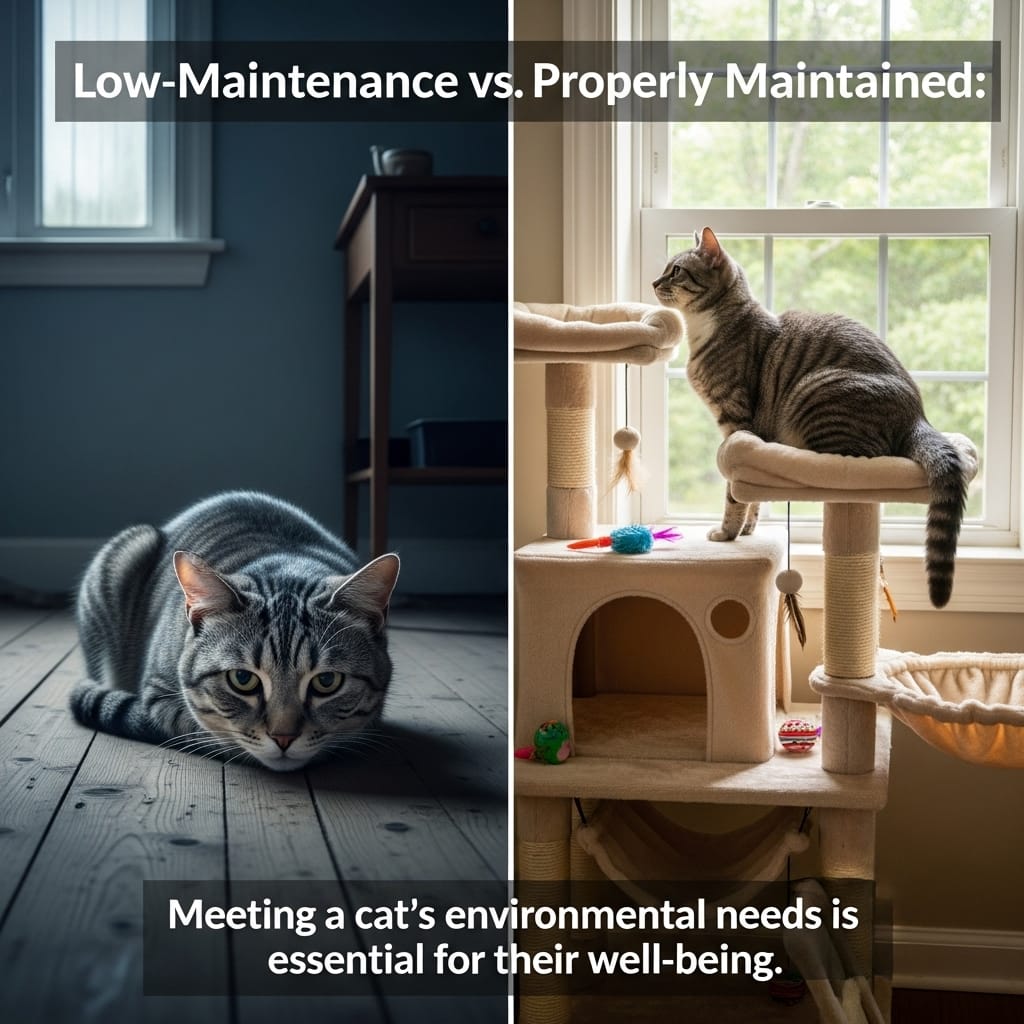
This is arguably the most pervasive and damaging myth. The idea that a cat is a “self-cleaning, independent pet you can leave alone for days” sets up both cat and owner for failure. What most people get wrong about cats here is confusing self-reliance with a lack of need.
Cats are masters of subtlety. A dog with a full bladder will whine at the door; a cat with a dirty litter box may simply start peeing on your bathmat. A lonely dog will howl; a lonely cat may over-groom silently or become lethargic. Their needs are non-negotiable but quietly expressed.
What They Actually Need:
- Environmental Enrichment: A cat’s territory is its universe. They need vertical space (cat trees, shelves), hiding spots, scratching posts of various textures, and window access for mental stimulation. A bored cat is often an anxious or destructive cat. Discover more tips in our guide on creating a calm and enriching cat home environment.
- Social Interaction: While not pack animals like dogs, cats form complex social bonds. They need daily, quality interaction on their terms play that mimics hunting (using wand toys, not just laser pointers), gentle petting in preferred areas (often cheeks and chin, not the belly), and quiet companionship.
- Routine and Predictability: Cats are creatures of habit. Sudden changes in feeding times, litter brand, or furniture layout can cause significant stress. Their need for a stable, predictable environment is a high-maintenance aspect often overlooked.
Myth 2: Cats Are Aloof and Anti-Social
The “aloof cat” stereotype persists because we expect social behavior to look like a wagging tail and constant proximity. Feline affection is a quieter, more nuanced dialect.
Cats who “ignore” you when you come home or sit nearby instead of on your lap aren’t being cold. They are often exhibiting selective social bonding and passive companionship signs of deep comfort. A cat in the same room is choosing to share space with you, which is a significant social gesture in their world.
How Cats Really Show Love:
- The Slow Blink: Often called a “cat kiss,” this is a definitive sign of trust and affection. You can return it by slowly closing and opening your eyes to strengthen your bond. Learn about this and other subtle cues in our article on what your cat knows first.
- Head Bunting and Cheek Rubbing: They are depositing facial pheromones on you, marking you as “safe” and part of their family group.
- Bringing You “Gifts”: While unpleasant, presenting a dead mouse is the ultimate sign of provisioning and teaching, a behavior reserved for family.
- Simply Being in Your Presence: Choosing to sleep or relax near you is a vulnerable act that signifies ultimate trust. Explore the meaning behind why your cat curls up next to you.
Their social structure is fluid, not hierarchical. They don’t see you as a dominant “alpha,” but rather as a large, non-threatening provider and companion sometimes even a clumsy mother figure. This is a core insight into how cats choose their favorite person.
Myth 3: Scratching Furniture Means Your Cat is Spiteful or Bad
This misconception leads to unnecessary conflict and even declawing a horrific and debilitating procedure. Scratching is a hardwired, essential feline behavior with multiple critical functions:
- Claw Maintenance: It removes the dead outer sheath of the claw.
- Visual and Scent Marking: Scratch marks and scent from paw pads declare territory.
- Muscle Stretching: It provides a full-body stretch for back and shoulder muscles.
- Emotional Regulation: It’s a coping mechanism for excitement, stress, or frustration.
When a cat scratches your couch, they are not seeking revenge. They are simply using the best available object that meets their criteria: stable, vertically satisfying, and strategically located (often in a prominent social area or near a resting spot).
The Solution is Provision, Not Punishment:
- Provide Better Options: Have multiple, tall, sturdy scratching posts covered in appealing materials like sisal. Place them near furniture they target and near their favorite sleeping areas.
- Make it Attractive: Use catnip or pheromone sprays on the posts.
- Make the Furniture Unappealing: Temporarily use double-sided tape, aluminum foil, or a plastic protector on the targeted spot.
- Never Yell or Punish: This only creates fear and anxiety, potentially exacerbating the problem. For a comprehensive approach, see our guide on how to stop unwanted cat behavior without stress.
Myth 4: Cats Purr Only When They’re Happy
Purring is a far more complex communication and survival tool than simple contentment. While happiness is a common trigger, purring occurs in a wide range of emotional and physical states.
The Dual Nature of the Purr:
- Contentment Purring: The one we know, often heard during petting, nursing, or relaxed rest.
- Self-Soothing or “Solicitation” Purring: Cats may purr when they are in pain, frightened, giving birth, or severely ill. Research suggests the frequency of a cat’s purr (25-150 Hz) may have healing properties, promoting bone density and tissue repair. A cat purring at the vet may be calming itself, not expressing joy.
- The “Solicitation” Purr: Some cats develop an insistent, slightly cry-mixed purr to get human attention, often around feeding time. This purr taps into our nurturing instincts, making it hard to ignore.
Understanding this complexity is key to being a attentive owner. A purring cat that is also hiding, not eating, or showing other signs of distress needs medical attention, not just more cuddles.
Myth 5: Indoor Cats Don’t Need as Much Veterinary Care
The logic seems sound: no outdoor risks like cars, fights, or parasites. However, indoor cats are prone to a different set of stealthier, lifestyle-related health issues that require vigilant, proactive care.
- Obesity and Diabetes: Lower activity levels and free-feeding of high-carb dry food is an epidemic. Indoor cats need portion control, play, and a diet high in animal protein. Learn about cat weight management through nutrition.
- Dental Disease: Without the abrasive action of chewing bones or prey, plaque builds up rapidly, leading to painful gingivitis and systemic issues.
- Lower Urinary Tract Diseases (FLUTD): Stress (from boredom, multi-cat conflict, or changes), combined with low water intake, is a major cause of life-threatening blockages, especially in males.
- Behavioral Issues: Boredom and stress from an under-stimulating environment can manifest as over-grooming, inappropriate elimination, or aggression. These are medical concerns. Our guide on cat behavior changes that signal illness delves deeper.
The Proactive Care Protocol:
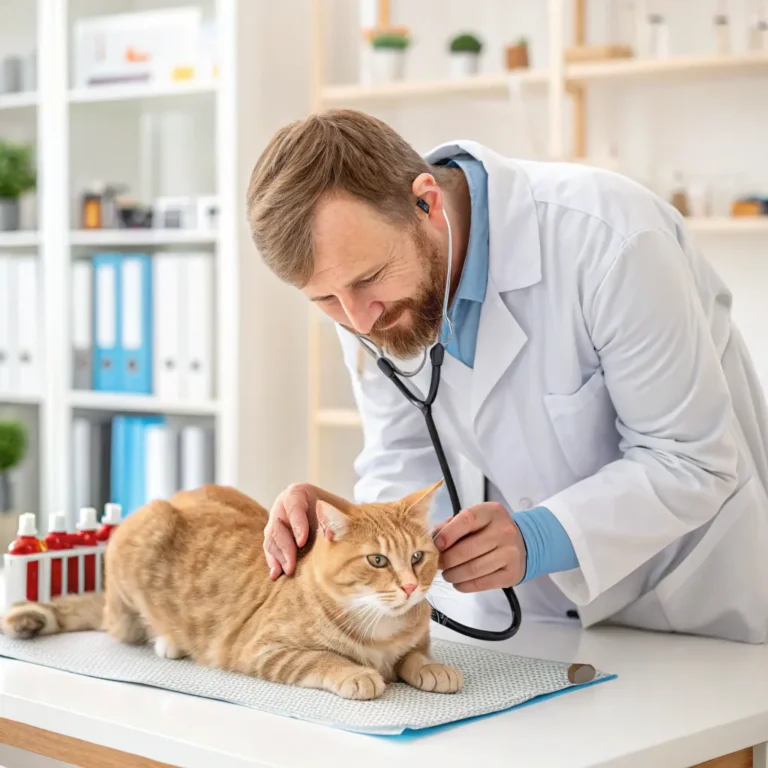
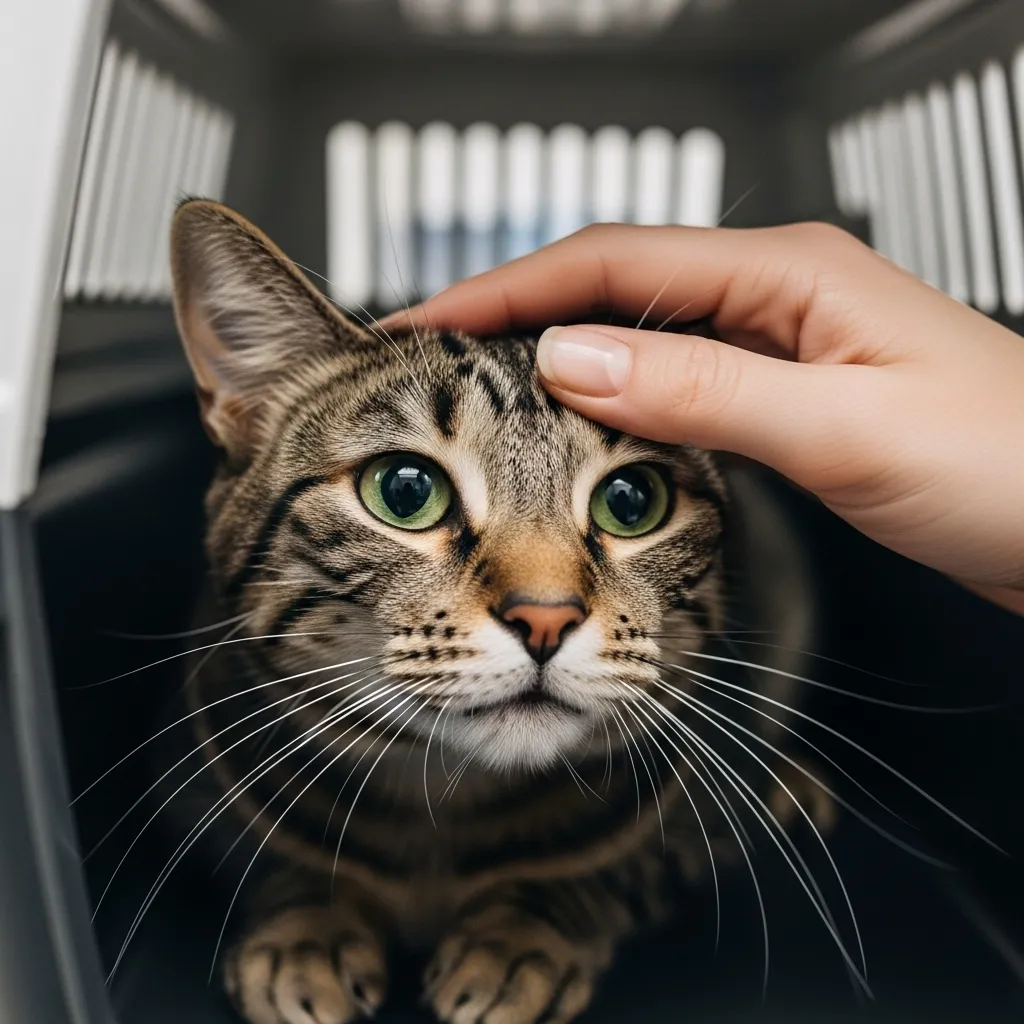
Annual vet check-ups are non-negotiable, even for seemingly healthy indoor cats. These visits can catch problems like kidney disease or hyperthyroidism early. Senior cats (7+) should go every six months.
Myth 6: Cats and Dogs Are Natural Enemies
This cartoon trope ignores individual personality, proper introduction, and the fact that both species are capable of complex social learning. The conflict often stems from clashing communication styles, not innate hatred.
- A wagging dog tail signals excitement or happiness; a swishing cat tail signals irritation or over-stimulation.
- A direct stare from a dog may be curious; to a cat, it’s a threat.
- A dog’s playful bow and bark can be terrifying to a cat.
With patient, scent-first introductions and controlled environments, many cats and dogs learn not just to tolerate each other, but to form genuine friendships. The key is to never force interaction and to respect the cat’s need for dog-free safe zones. For specific strategies, explore our article on cats meeting new animals.
Myth 7: Milk is a Good Treat for Cats
The image of a cat lapping up a saucer of milk is a cultural icon, but a physiological error. Most adult cats are lactose intolerant. They lose the enzyme lactase after weaning.
Feeding cow’s milk can lead to digestive upset, including:
- Diarrhea
- Stomach cramps
- Gas and bloating
While a small amount might not cause a crisis, it offers no nutritional benefit and can disrupt their balanced diet. Fresh, clean water is the only liquid they need. For healthy treat alternatives, see our cat treats nutritional balance guide.
Myth 8: A Cat That Bites or Swats During Petting is “Mean”
This is a classic case of miscommunication called petting-induced aggression or overstimulation aggression. The cat isn’t being suddenly vicious; they are giving clear, ignored signals that they’ve had enough.
Cats have highly sensitive nervous systems. What starts as pleasant sensation can quickly become overwhelming. They often signal their discomfort before biting:
- Skin twitching
- Tail beginning to lash or thump
- Ears rotating sideways or back
- A low growl or cessation of purring
- Turning their head to watch your hand intently
The bite is a last resort. The solution is to “pet with purpose and stop before the stop signal.” Keep petting sessions short (3-5 seconds for some cats), focus on their preferred areas (head and chin), and let them initiate and leave.
FAQ: Quick, Snippet-Ready Answers
Q: Are cats really not affectionate?
A: No, this is a major misconception. Cats are deeply affectionate but express it differently than dogs or humans, through subtle gestures like slow blinks, head bunting, and quiet companionship.
Q: Is it cruel to keep a cat indoors?
A: No, when done correctly, keeping cats indoors is safer and can lead to a longer, healthier life. The key is providing ample environmental enrichment climbing, scratching, hiding, and playing to meet their physical and mental needs.
Q: Why does my cat knock things off tables?
A: This is rarely “spite.” It’s a combination of play behavior, curiosity about cause-and-effect, and a bid for your attention. It often works, reinforcing the behavior.
Q: Do cats always land on their feet?
A: While cats have a remarkable “righting reflex,” they do not always land safely. Falls from high rises (“high-rise syndrome”) can cause severe injuries. Always secure windows and balconies.
Q: Can you train a cat?
A: Absolutely. Cats are highly trainable using positive reinforcement (treats, praise). They can learn commands, tricks, and to use scratching posts. The methods differ from dog training, requiring more patience and motivation. Learn the principles in how to train a cat without punishment.
Conclusion
Understanding what most people get wrong about cats is the first step toward a revolution in your relationship with your feline friend. It moves you from a place of frustration and mystery to one of empathy, clear communication, and profound mutual respect. When we stop expecting them to behave like small dogs or furry humans and start appreciating them as the uniquely sensory, socially complex, and wonderfully intelligent creatures they are, everything changes.
The “problems” often melt away, replaced by a deeper bond. The scratching post gets used, the litter box stays clean, the cuddles become more meaningful, and you find yourself attuned to the quiet hum of a contented life shared with a creature you finally understand.
Your journey to becoming a truly insightful cat guardian continues here. For more deep dives into feline behavior, health, and the joy of living with cats, explore our full library of expert-backed guides on Cat Bloom Haven. From deciphering misunderstood cat habits to designing the perfect cat-friendly home, we’re here to help you and your cat thrive together.