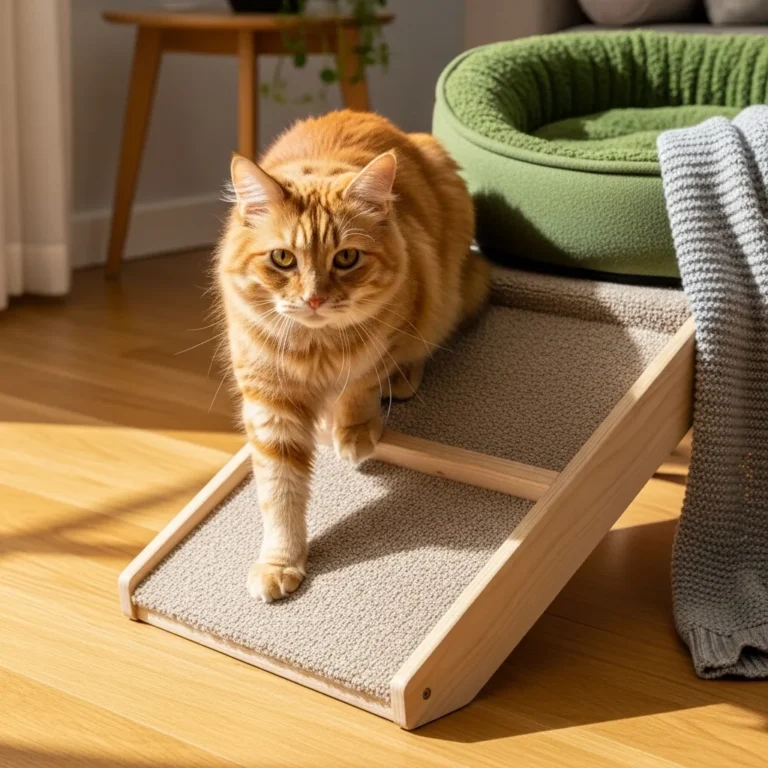
The Secret Language of Slumber: Why Cats Choose Specific Sleeping Spots (And What Their Choices Reveal)
Key Takeaways for Quick Understanding:
- Cats choose sleeping spots based on instinct, comfort, and emotional security it’s rarely random.
- Location selection involves temperature regulation, safety surveillance, scent-marking, and social bonding.
- Sudden changes in sleeping locations can signal health issues, environmental stress, or aging changes.
- You can influence (but not control) where your cat sleeps by creating optimal conditions in preferred areas.
- Understanding this behavior deepens your bond and helps you monitor your cat’s wellbeing.
Have you ever bought an expensive, plush cat bed only to find your feline friend curled up inside a cardboard box, sprawled across your keyboard, or wedged behind the couch? You’re not alone. The curious, often baffling choices cats make about where to sleep represent one of the most common mysteries of cat ownership. But what if these choices weren’t random at all? What if every nap location from the sun-drenched windowsill to the pile of freshly laundered clothes was a deliberate decision revealing your cat’s instincts, emotions, and physical needs?
The question of why cats choose specific sleeping spots opens a fascinating window into the feline mind. Beyond simple preference, these choices are a complex language of survival instincts, social dynamics, and sensory comfort. In this comprehensive guide, we’ll decode this language, exploring the evolutionary, psychological, and environmental factors that dictate your cat’s napping decisions. By the end, you’ll not only understand your cat’s quirky habits but also learn how to create environments where they feel truly secure and content. Let’s unravel the mystery, one cozy nap spot at a time.
The Feline Blueprint: Evolutionary Roots of Sleep Site Selection
To understand modern domestic cat behavior, we must first look to their wild ancestors. The African wildcat (Felis silvestris lybica), the primary progenitor of our house cats, was a solitary hunter of small prey in diverse environments. Survival depended on strategic rest. Every sleeping location needed to fulfill non-negotiable criteria: safety from predators, concealment for ambush hunting, thermal regulation, and a clear escape route.
This evolutionary blueprint is hardwired into every domestic cat. While your home lacks leopards and eagles, your cat’s brain still operates on this ancient operating system. The “perfect” nap spot is one that satisfies these primal checkboxes, even if the perceived “threat” is now the vacuum cleaner or a visiting guest.
The Safety-Surveillance Principle
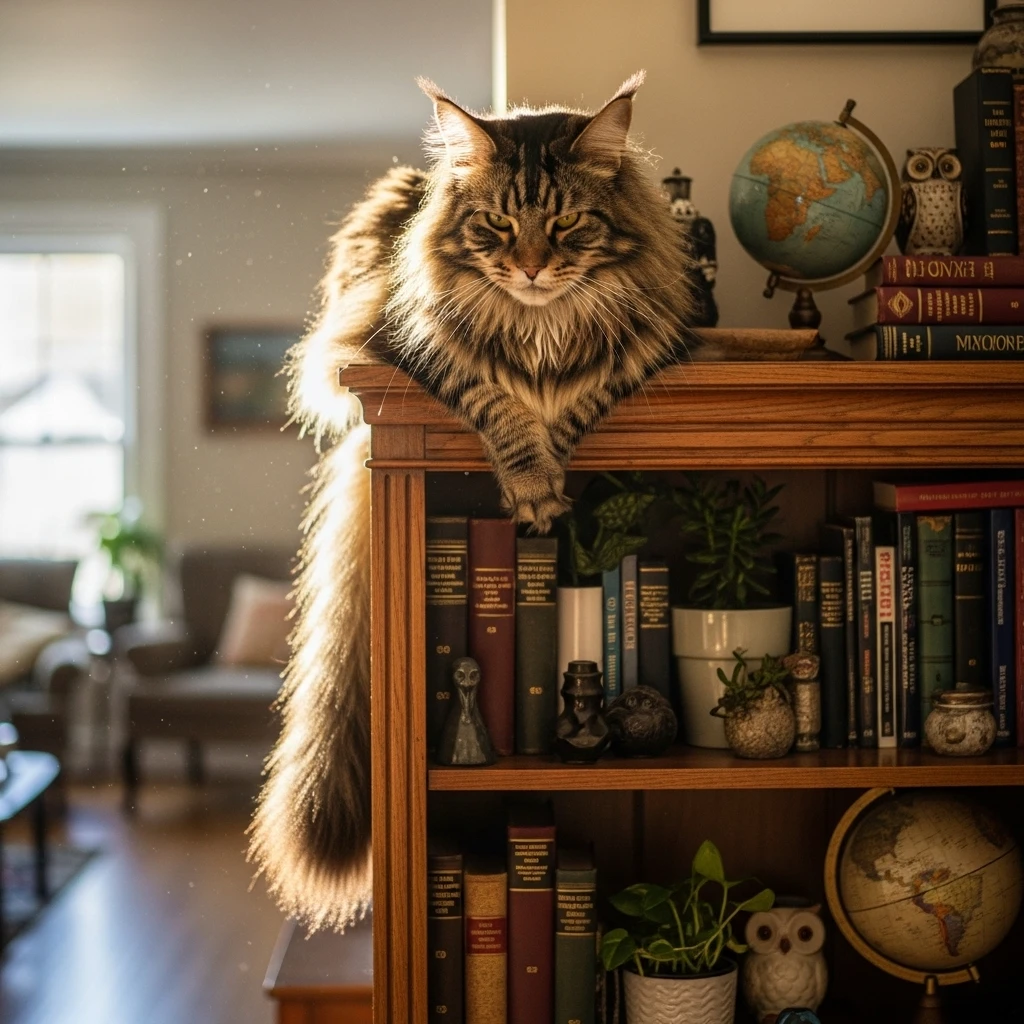
Cats are both predator and prey. This dual status makes them vigilant even in rest. A sleeping spot often provides a tactical advantage a high perch to survey the room (like a bookshelf or the top of the fridge) or a concealed den to hide in (like under the bed or inside a closet). This is why cats often choose spots with their backs protected and their faces oriented toward the room’s entrance. They are resting, but their instincts keep them on strategic alert.
Decoding the Destination: 7 Core Reasons Behind Your Cat’s Sleeping Choices
Your cat’s chosen nap spot is a multi-variable equation. Here are the primary factors at play, often working in combination.
1. Temperature & Thermoregulation
Cats have a higher thermoneutral zone (the ambient temperature they’re comfortable in) than humans, around 86-97°F (30-36°C). They are masters of seeking microclimates.
- Sun Patches: The classic cat solar panel pose. Sunlight provides warmth and vitamin D.
- Heat Sources: On laptops, cable boxes, radiators, or heating vents. Explore our guide on why cats lay on your arm for more on heat-seeking cuddles.
- Cool Surfaces: Tiled bathroom floors, sinks, or shady spots under furniture during summer. Learn about keeping your cat cool in summer for seasonal strategies.
- Your Bed/Laundry: Your body heat and residual warmth from dryer-warmed clothes are powerful attractants. Discover more on why cats lay on clothes.
2. Scent and Familiarity
Cats navigate the world through scent. They have scent glands on their cheeks, paws, and flanks. When they sleep somewhere, they deposit their scent, claiming it as familiar, safe territory.
- Your Pillow or Favorite Chair: These spots are saturated with your scent, the scent they associate with safety and bonding. Sleeping there is the ultimate comfort.
- Inside Shoes or Gym Bags: Intense human scent locations are weirdly appealing for a deep, secure sleep.
- On Other Pets’ Beds: Mixing scents can be a sign of social bonding or, sometimes, territorial takeover.
3. Security and Seclusion vs. Social Connection
This is a spectrum based on your cat’s personality and mood.
- Secure Hideaways: Under beds, in closets, inside cabinets or boxes. Used by shy cats, new arrivals, or cats feeling unwell. Read about cat hiding behavior for breed-specific insights.
- Social Hubs: On your lap, curled against your legs, or sandwiched between family members. This signifies ultimate trust and social integration. It’s also a prime temperature-regulated spot. Understand the bond better in how cats choose their favorite person.
4. Texture and Comfort
While sometimes inexplicable (the hard floor over a soft bed?), texture matters.
- Soft Fabrics: Blankets, plush bedding, wool sweaters.
- Scratchy Textures: Some cats love the feel of sisal, rough weave rugs, or cardboard.
- Cool, Smooth Surfaces: Porcelain, glass, metal.
- Malleable Surfaces: That perfect “nesting” feeling of being able to knead and shape a blanket or pile of pillows before lying down. The act of cat kneading is deeply linked to comfort-seeking.
5. Health and Physical Comfort
Sleeping spots can be chosen to alleviate discomfort.
- Seeking Coolness: Cats with fever, inflammation, or certain illnesses may seek cool tiles.
- Easier Access: Older cats with arthritis may avoid high perches and favor low, easily accessible spots with supportive padding. Our guide on senior cat care covers this in detail.
- Quiet, Dark Areas: A cat feeling pain or nausea may retreat to secluded, stimulus-free zones.
6. Behavioral and Emotional State
- Anxiety/Stress: A sudden shift to hidden, defensive spots can be a red flag.
- Contentment: The vulnerable “belly-up” sprawl in the middle of a busy room.
- Playfulness: A cat waiting to ambush might “nap” in a strategic spot by a door or around a corner.
7. Pure Quirks and Personal Preference
Sometimes, a cat just loves the weird echo of the bathroom sink or the specific draught from under the front door. Individual personality is a huge, delightful factor.
What Your Cat’s Favorite Spot Says About Them (A Location Decoder)
Let’s translate some common feline sleeping locations.
| Sleeping Spot | Likely Reasons & What It Means | Pro Tip for Cat Owners |
|---|---|---|
| On Your Head/Pillow | Maximum scent bonding, warmth, and protection. You are their security person. | Enjoy the trust! Use a pillowcase you don’t mind having cat hair on. |
| In a Cardboard Box | The ultimate secure den: enclosed, concealable, great for insulation, and satisfying to scratch. | Never throw away a good box. Add a soft blanket to make it even more inviting. |
| In the Bathroom Sink | Cool ceramic, bowl-shaped containment (secure), often quiet, and sometimes has dripping water interest. | Ensure the sink is dry and free of residue. It’s a harmless, if quirky, preference. |
| On Your Keyboard/Laptop | Warmth, your attention (they sit where your focus is), and your scent on the keys. | Provide a heated bed or a box next to your workstation as an alternative. |
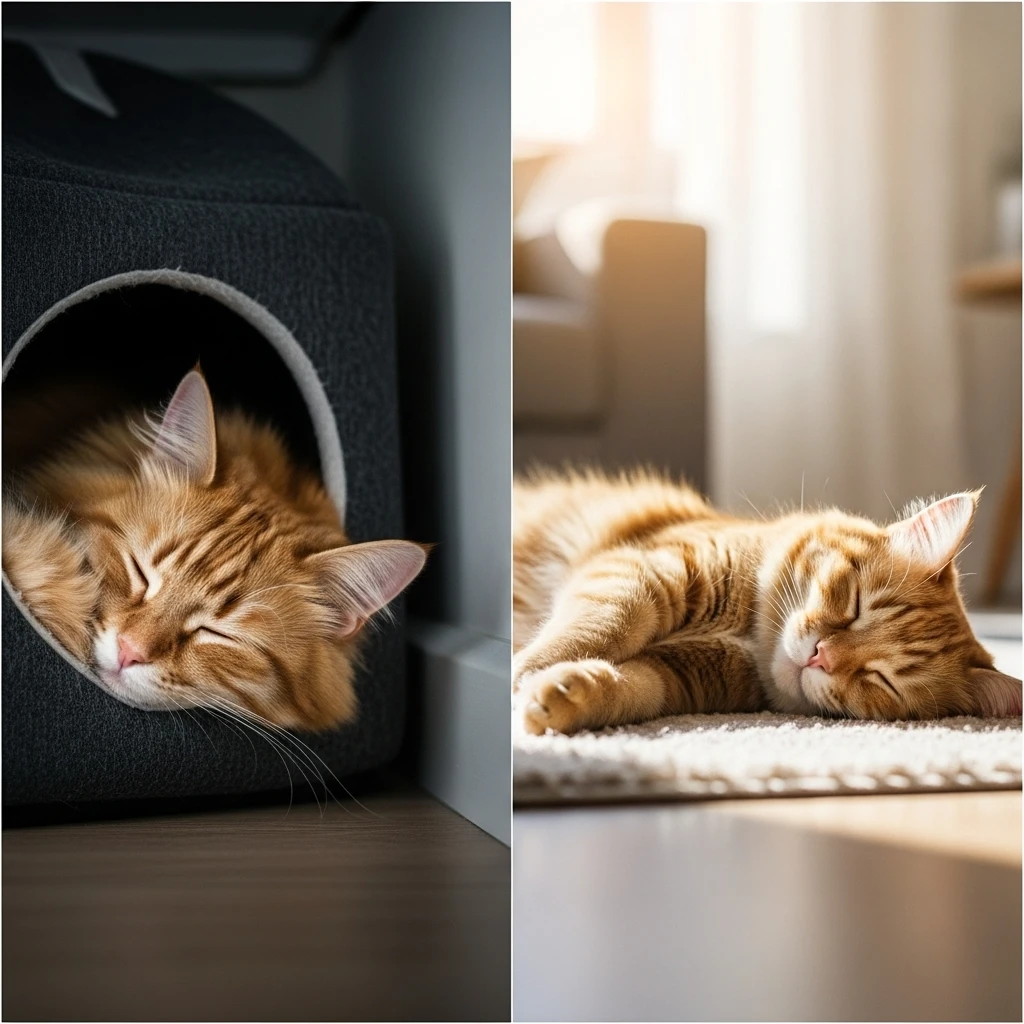
| Under the Bed/Couch | A secure, dark den for cats feeling insecure, unwell, overstimulated, or simply wanting deep, uninterrupted sleep. | Respect their need for retreat. Don’t force them out unless concerned for health. |
| In a Sunbeam | Thermoregulation (warming up), feeling of openness/safety, and instinctual attraction to light. | Ensure sunny windows are safe and have a perch. Beware of overheating in intense sun. |
| Pressed Against You | Social bonding, warmth, scent-mixing, and a display of ultimate trust and affection. | This is cat love in its purest form. Discover more subtle signs of security in how your cat feels at home. |
| On Top of the Fridge | Highest perch available (safety/surveillance), often warm from the appliance, and quiet. | Make it safe for access and descent. Consider installing a wall shelf leading to a safer high perch. |
When to Be Concerned: Sleeping Spot Changes as Health Indicators
A sudden, persistent change in your cat’s sleeping habits is one of the most significant early warning signs of health issues. Cats are experts at hiding pain and illness; behavior change is often their only tell.
- New Seclusion: A social cat who starts hiding under furniture for days may be in pain (e.g., dental issues, arthritis, UTI) or feeling nauseous/ill. See our guide on cat sick signs.
- Seeking Unusual Coolness: Continuously lying on cold tiles could indicate fever, inflammation, or hyperthyroidism.
- Avoiding High Places: An agile cat who stops jumping to favorite perches may have joint pain, muscle weakness, or vision problems. This is common in senior cats.
- Sleeping Excessively in One Spot: A dramatic increase in sleep duration, especially in a secluded spot, warrants a vet visit. Learn about normal vs. excessive sleep in why cats sleep so much.
- Sleeping in the Litter Box: This is a major red flag signaling severe illness, extreme stress, or feeling so unsafe that their own scent-marked “territory” (the box) seems the only safe place. Requires immediate veterinary attention.
Always rule out medical causes with your veterinarian before attributing behavioral changes purely to stress or preference.
The Human Factor: How to Influence (Not Force) Your Cat’s Sleep Choices
You can’t command a cat to love a $200 bed. But you can use behavioral science to make certain spots irresistibly appealing.
- Follow the Scent Trail: Rub a soft cloth on your cat’s cheeks (where friendly pheromones are released) and then wipe it on the new bed or blanket. Place an item of your worn clothing (no strong perfumes) in or near the desired spot.
- Strategic Placement: Put the bed in a location your cat already favors. If they love the sunny window, place the bed on the windowsill. If they love being near you, place it next to your sofa or desk.
- Offer Choices & Variety: Provide different types in different locations: a warm, enclosed cave bed in a quiet corner; a cooling mat in a sunny spot; a simple, flat pillow under the coffee table. Observe and see what gets used.
- Associate with Positivity: Place treats or favorite toys in the new bed. Feed them meals or give them catnip there to create positive associations.
- Respect Their “No”: If a bed is consistently ignored for months, accept it. Your cat has vetoed it. Try a different style or location.
For breed-specific advice, see our guides on the best beds for American Shorthair cats or Munchkin cats.

Frequently Asked Questions (FAQ)
Q: Why does my cat sleep at the foot of the bed instead of next to me?
A: This is often a balance of social connection and temperature regulation. You are a heat source; sleeping at the foot allows your cat to enjoy your presence and scent while avoiding overheating. It also gives them a strategic view of the door and a quick escape route.
Q: Is it bad if my cat sleeps under the bed all the time?
A: It depends. If this is a long-standing preference for a shy cat with otherwise normal behavior, it may just be their comfort zone. However, if it’s a new behavior in a previously social cat, it can signal illness, pain, or significant environmental stress (like a new pet or loud noise). Monitor closely and consult a vet if concerned.
Q: Why did my cat suddenly change her favorite sleeping spot?
A: Sudden changes warrant attention. Possible causes include: 1) A medical issue (pain, illness); 2) Environmental changes (new furniture, people, pets, noises); 3) Aging (seeking easier access or different temperatures); 4) Seasonal shifts (seeking warmer or cooler areas). Investigate by checking for other symptoms and reviewing any household changes.
Q: Do cats dream about their favorite sleeping spots?
A: Cats experience REM sleep, where dreaming occurs. While we can’t know for sure, it’s plausible that the security and comfort associated with their favorite real-world spots could influence dream content, just as our dreams often incorporate familiar places.
Q: How can I get my cat to sleep in their own bed and not mine?
A: The goal is to make their bed more appealing than yours. Use the scent, placement, and positive association techniques outlined above. You can also place their bed directly on your bed initially, then gradually move it to a nearby nightstand, then the floor. Consistency and patience are key.
Conclusion: Honoring the Feline Nap Sanctuary
The places our cats choose to sleep are more than just convenient resting points; they are sanctuaries curated by instinct, shaped by emotion, and fine-tuned by individual personality. By understanding why cats choose specific sleeping spots, we move from baffled observers to empathetic interpreters of their silent language. We learn to read the signs of wellbeing, spot the early warnings of distress, and ultimately, become better stewards of their comfort and security.
Respect your cat’s choices. Celebrate the trust shown when they sleep vulnerably beside you. Provide safe, appealing options, but understand that the final decision be it a designer bed or an empty Amazon box is, and always will be, theirs. It’s this delightful, inscrutable autonomy that makes sharing our lives with cats so endlessly fascinating.
Explore more expert insights into feline behavior, health, and the deep bonds we share with our cats in our comprehensive library of guides at Cat Bloom Haven. From understanding cat sleeping habits to decoding cat tail language, we’re here to help you build a richer, happier life with your feline companion.