How to Calm a Hyper Cat at Night: A Complete Guide to Peaceful Nights for You and Your Feline
If your cat turns into a midnight tornado the second you switch off the lights, you’re not alone. Racing across the bed, yowling at closed doors, attacking toes under blankets, or launching into full-blown zoomies at 3 a.m. is one of the most common complaints cat owners share. The good news? Most hyper cats at night can be calmed with the right combination of understanding their biology, adjusting daily routines, and making a few smart environmental changes.
In this guide, we’ll walk through exactly why cats get hyper at night, then give you proven, step-by-step strategies that actually work long-term. By the end, you’ll have a calmer cat and your sleep back.
Quick Summary: What Actually Works to Calm a Hyper Cat at Night
- Play hard for 15–20 minutes right before bed (hunting simulation)
- Feed a larger, protein-rich meal in the evening (the “full-belly sleep” effect)
- Create a consistent bedtime routine and dark, quiet sleeping space
- Provide nighttime enrichment that doesn’t require your participation
- Rule out medical causes if the behavior is sudden or extreme
Let’s dive deeper.
Why Cats Are Active at Night: Understanding Crepuscular Behavior
Cats are not truly nocturnal. They are crepuscular, meaning they’re naturally most active at dawn and dusk. In the wild, that’s prime hunting time when prey is moving. Your domesticated Bengal or tabby still carries those instincts, even if their biggest “prey” is now a feather wand or laser dot.
Other common triggers for nighttime hyperactivity:
- Boredom and pent-up energy from a quiet day
- Hunger or poorly timed feeding schedule
- Stress from changes in the household
- Lack of mental stimulation
- Underlying pain or medical issues (especially in older cats)
Understanding the “why” makes the solutions much more effective.
Step 1: Burn the Energy The Pre-Bedtime “Hunt, Catch, Kill, Eat, Groom, Sleep” Routine
This is the single most powerful tool for calming an active cat at night.
Cats follow an instinctive sequence after a successful hunt: hunt → catch → kill → eat → groom → sleep. If you recreate this cycle every evening, your cat’s brain registers “hunting is done for the day” and naturally winds down.
How to do it:
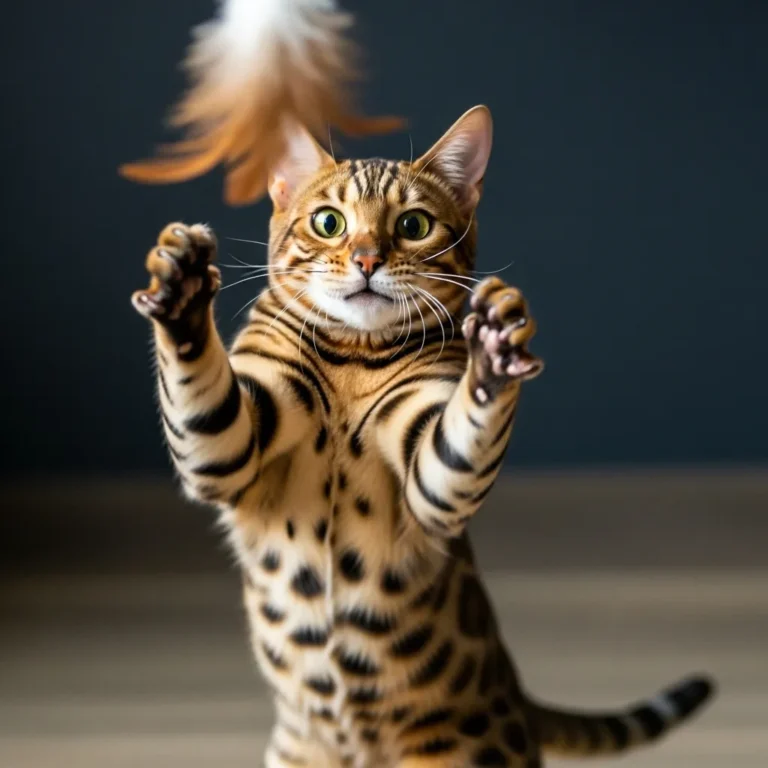
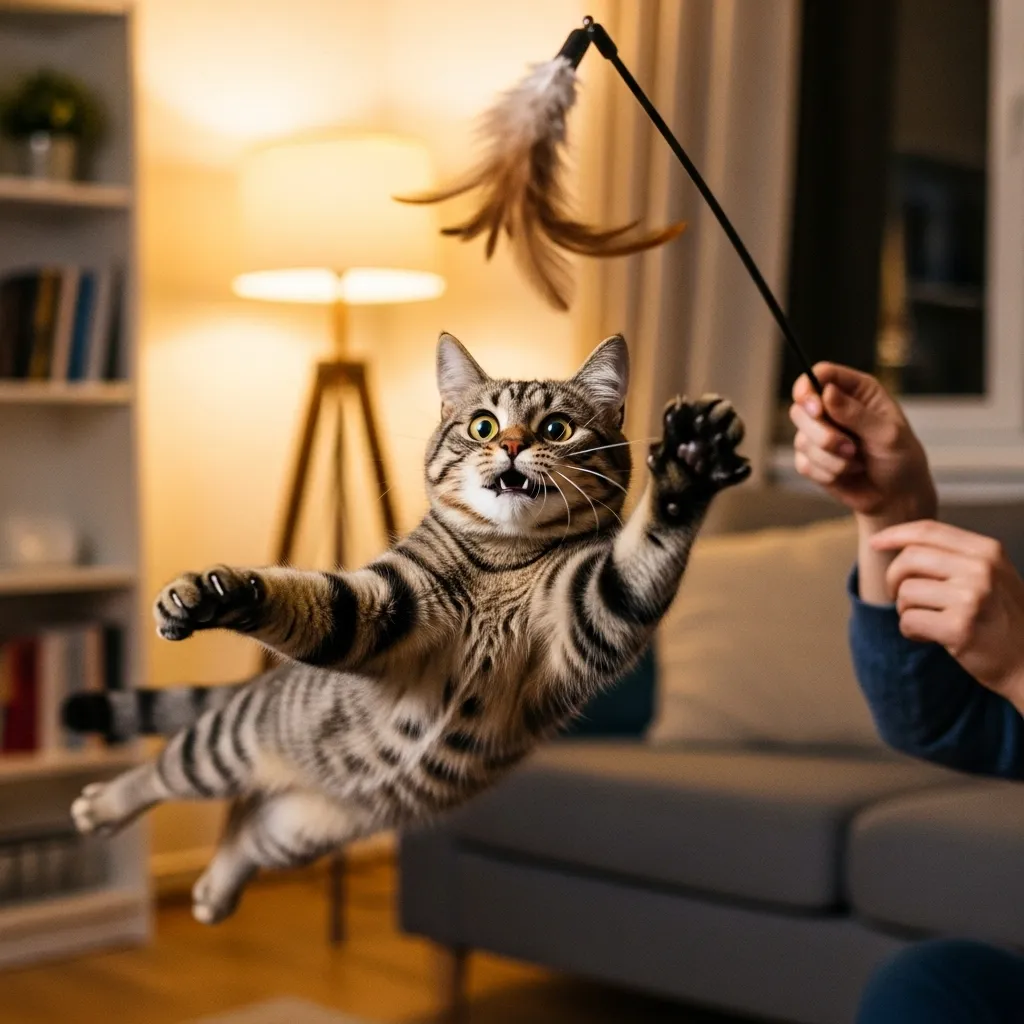
- 10–15 minutes of intense interactive play (wand toys, chase toys, anything that mimics prey)
- Let them “catch” and “kill” the toy several times
- Immediately follow with their largest meal of the day (wet food is ideal)
- Most cats will groom themselves and crash within 20–30 minutes
Many owners notice a dramatic difference the very first night they try this.
Related: See our complete cat zoomies guide for the best toys that trigger hunting instincts
Step 2: Adjust Feeding Schedule and Diet to Reduce Nighttime Energy Spikes
Feeding dry kibble free-choice all day often backfires. Cats get small energy bursts throughout the night and wake up looking for both food and entertainment.
Better approach:
- Switch to scheduled meals (2–3 per day)
- Make the evening meal the largest and highest in protein
- Consider an automatic feeder that opens a small snack at 4–5 a.m. for early risers (prevents door-yowling)
Avoid carb-heavy dry foods as the last meal of the day; they can create sugar spikes that fuel zoomies.
Related: Choosing the best wet cat food for energy control and coat health
Step 3: Create a Calming Bedtime Routine Cats Can Predict
Cats love routine. A consistent wind-down ritual signals “nighttime is coming.”
Simple bedtime routine example:
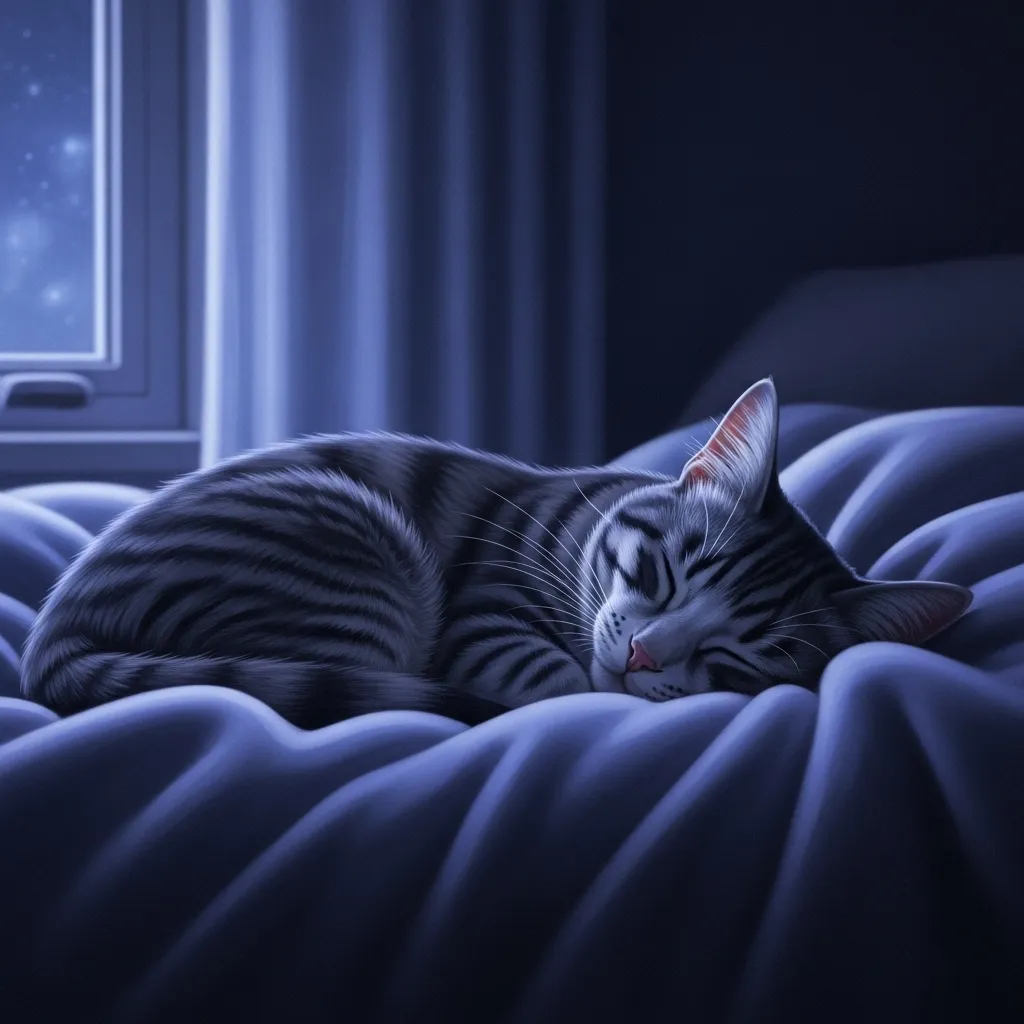
- Dim the lights 30 minutes before your own bedtime
- Short gentle brushing or petting session (many cats find this soothing)
- Turn on a calming soundtrack or pheromone diffuser
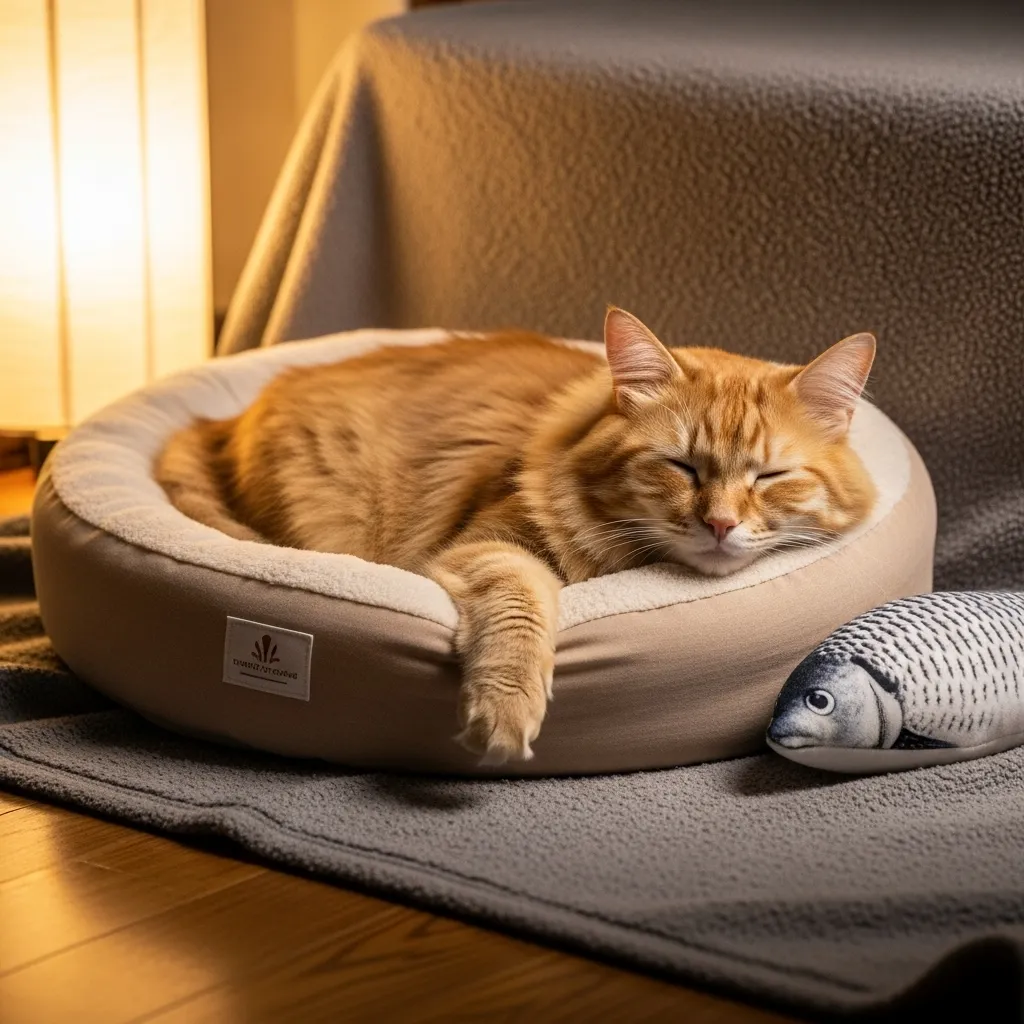
- Place cat in their dedicated sleeping spot with a warm bed or blanket that smells like you
After a week or two, most cats start heading to their spot on their own.
Step 4: Nighttime Enrichment That Doesn’t Involve You
Your cat doesn’t need you awake to be entertained. Give them safe solo options:
- Puzzle feeders with a few kibbles that dispense overnight
- Motion-activated toys or treat balls
- A bird-feeder view window with a perch (with curtains you can close when you’re ready to sleep)
- Cat TV YouTube channels or apps on a tablet in another room (on low volume)
- Heated beds or self-warming mats for extra comfort
Step 5: Environmental Changes for Better Night Sleep
- Blackout curtains or sleep pods to block early morning light
- White-noise machine or fan to mask hallway sounds
- Pheromone diffusers (Feliway Optimum is the current gold standard)
- Keep bedroom door closed or use a door strap so they can see you but not pounce
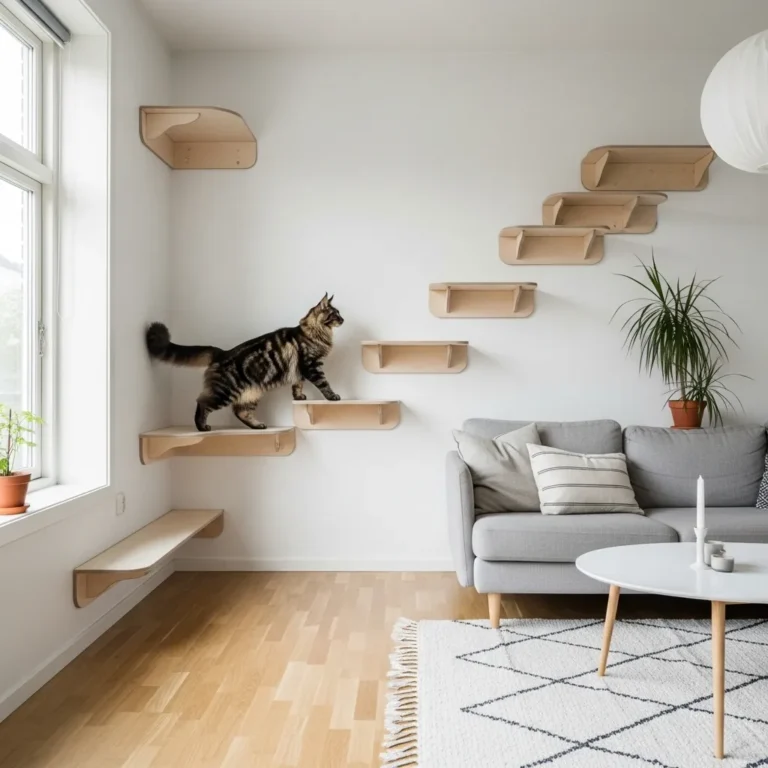
- Multiple cozy sleeping spots around the house so they’re never “trapped” with excess energy
Best Calming Products for Cats at Night (That Actually Work)
| Product Type | Top Recommendation | Why It Helps |
|---|---|---|
| Pheromone diffuser | Feliway Optimum | Reduces stress-related activity |
| Heated bed | K&H Pet Products Thermo-Kitty | Mimics body warmth, encourages settling |
| Puzzle feeder | Catit Treat Maze or Doc & Phoebe | Mental tiredness + slow feeding |
| Calming treats | VetriScience Composure | L-theanine and colostrum; non-sedating |
| Night light (red) | Low-wattage red bulb | Doesn’t disrupt melatonin like white light |
When Hyperactivity at Night Might Signal a Health Problem
Sudden changes in nighttime behavior can be an early red flag. Schedule a vet visit if your cat also shows:
- Increased thirst or urination
- Weight loss despite normal eating
- Vomiting or diarrhea
- Excessive vocalization that sounds painful
- Sudden aggression or disorientation
Common medical culprits: hyperthyroidism (especially in cats over 8), pain from arthritis, cognitive dysfunction in seniors, or even fleas/giardia causing restlessness.
Training Tips to Stop Specific Annoying Night Behaviors
Cat won’t stop meowing at the bedroom door?
→ Ignore completely (even one response reinforces it). Use earplugs for 5–7 nights; most cats give up.
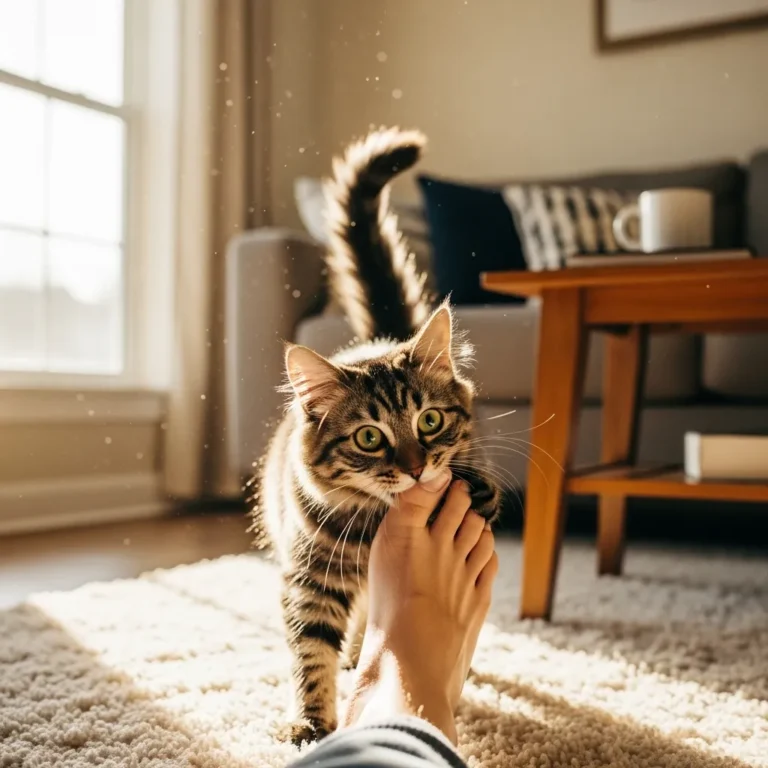
Cat attacks feet under blankets?
→ Keep a toy on a string under the pillow. Redirect the second they start hunting your toes.
Cat jumps on dresser and knocks things at 4 a.m.?
→ Remove rewarding objects, add double-sided tape or motion-activated air canister (never punishment, just gentle deterrence).
Frequently Asked Questions About Hyper Cats at Night
Q: At what age do cats usually calm down at night?
Most cats mellow significantly between 2–4 years old, but high-energy breeds (Bengals, Abyssinians, Siamese) may stay playful longer.
Q: Will spaying/neutering help nighttime hyperactivity?
Yes, especially if hormones are involved. Unneutered males and unspayed females often roam and yowl at night.
Q: Is catnip calming or does it make cats hyper?
Fresh catnip usually excites; dried or silver vine can be more calming for some cats. Test small amounts.
Q: My cat is 14 and suddenly racing around at night. Is this normal?
No. Sudden hyperactivity in senior cats can indicate hyperthyroidism or cognitive dysfunction. See your vet promptly.
Q: How do I stop cat zoomies at night without locking her out of the bedroom?
Combine the hunt-eat-groom-sleep routine with a timed feeder that opens a small snack around the time she normally goes wild.
Final Thoughts: You Can Have Quiet Nights Again
Calming a hyper cat at night rarely requires expensive gadgets or medication. In most cases, it’s about aligning your routine with your cat’s natural instincts: give them a proper “hunt,” a full belly, a predictable wind-down, and safe solo entertainment.
Start with the pre-bedtime play + large meal combo tonight. Most owners see a noticeable difference within three to five days, and many report completely peaceful nights within two weeks.
Your cat isn’t trying to ruin your sleep; they’re just being a cat. With a few thoughtful adjustments, both of you can finally get the rest you deserve.
Ready for more expert cat behavior and care tips? Explore the rest of Cat Bloom Haven – from breed guides to health deep-dives and everything in between.
Sweet dreams (for you and your freshly calmed feline). 🐾