Why Does My Cat Bite My Feet? A Comprehensive Guide to Feline Behavior
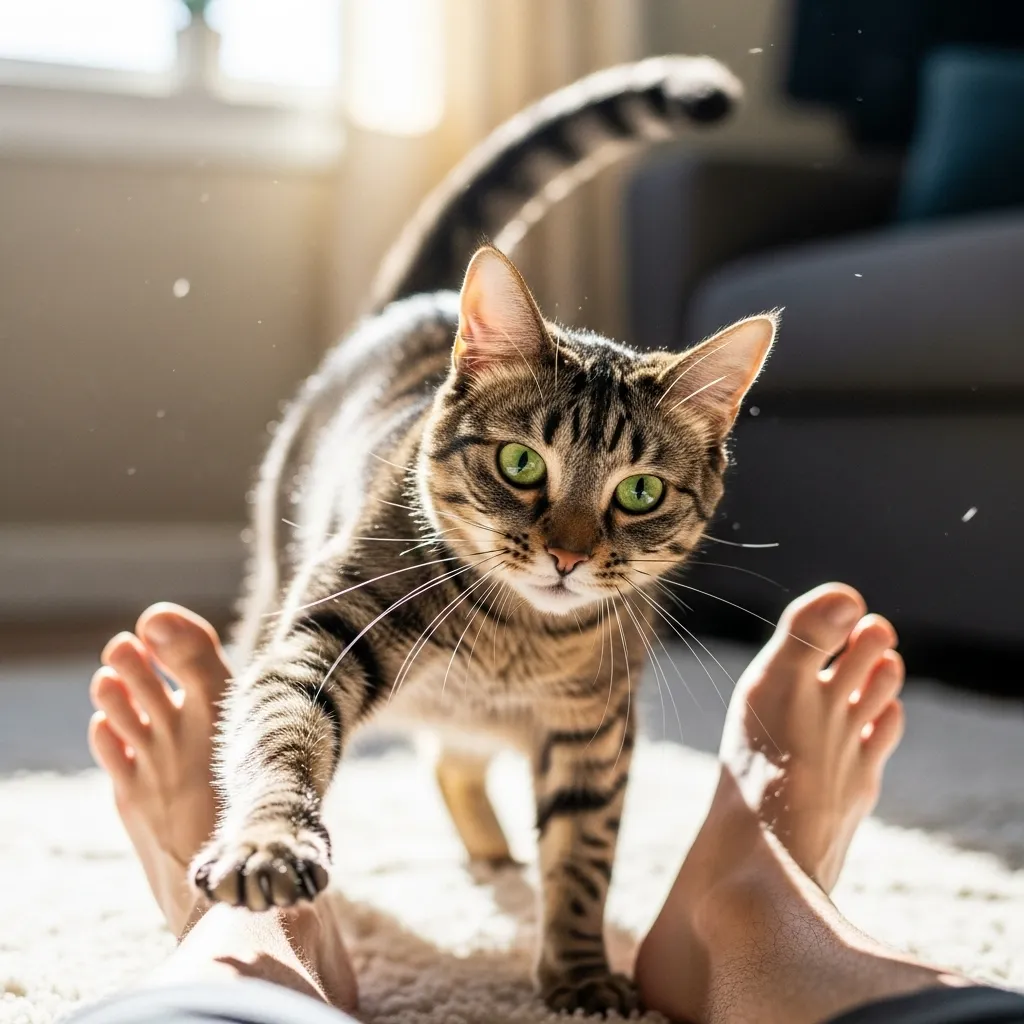
Ever been strolling through your home only to have your cat pounce on your feet like they’re the ultimate prey? If you’re wondering, why does my cat bite my feet?, you’re not alone. This quirky feline behavior can range from playful to perplexing, leaving many cat owners scratching their heads.
At Cat Bloom Haven, we’re diving deep into the reasons behind cat foot biting behavior, exploring everything from predatory instincts to overstimulation, and offering actionable tips to redirect this feisty habit. By the end, you’ll understand your cat’s motivations and have practical strategies to keep your toes safe.
Key Takeaways
- Playful Instincts: Cats often bite feet due to their natural predatory drive, mistaking moving toes for prey.
- Communication: Foot biting can signal affection, overstimulation, or a need for attention.
- Nighttime Antics: Cat zoomies at night and nocturnal behaviors amplify foot attacks.
- Solutions: Redirect aggression with toys, enrich their environment, and monitor for health issues.
- Training Tips: Consistency and positive reinforcement can curb unwanted biting.
Let’s unravel the mystery of cat biting toes and turn those sneak attacks into opportunities for bonding.
Why Cats Bite Feet: Decoding Feline Instincts
Cats are natural hunters, and your wiggling toes or moving feet are irresistible to their predatory instincts in cats. This section explores the core reasons behind cat foot biting behavior and how it ties to their instincts and environment.
The Hunter’s Drive: Why Cats See Feet as Prey
Domestic cats may live in cozy homes, but their DNA still screams “hunter.” Feline play aggression often manifests when cats spot something moving—like your feet under a blanket or as you walk by. This triggers their cat prey drive, prompting them to stalk, pounce, and bite.
- Why feet? They’re accessible, move unpredictably, and mimic the skittering of small prey.
- Kitten behavior: Young cats, especially, practice hunting through play, and kitten biting behavior is often more intense.
- Breeds matter: High-energy breeds like Bengals (Explore our Bengal cat guide) or Siamese (Learn more about Siamese behavior) may be more prone to foot attacks.

Example: Sarah, a cat owner, noticed her Maine Coon, Luna, ambushing her feet every morning. By observing Luna’s dilated pupils and crouched posture, Sarah realized it was playful hunting, not aggression.
Play vs. Aggression: Understanding Cat Biting When Playing
Not every bite is malicious. Cats often use their mouths during play, but cat biting when playing can escalate if not managed. Here’s how to tell the difference:
| Behavior | Playful Biting | Aggressive Biting |
|---|---|---|
| Body Language | Relaxed ears, soft eyes, loose tail | Pinned ears, hissing, stiff tail |
| Bite Intensity | Gentle, quick nips | Hard, prolonged bites |
| Context | During movement or playtime | Unprovoked or during petting |
| Vocalizations | Purring, chirping | Growling, hissing |
If your cat’s bites lean toward aggression, check out how to calm an angry cat for tips.
Overstimulation: When Petting Leads to Bites
Sometimes, cat overstimulation signs like twitching tails or flattened ears signal that your cat’s had enough affection. Foot biting might occur if you’re petting them and they redirect their energy to your moving feet.
- Signs to watch: Dilated pupils, skin rippling, or sudden swatting.
- Solution: Give your cat space when these signs appear and redirect with a toy.
Vet Tip: Dr. Emily Carter, a feline behaviorist, notes, “Overstimulation is common in cats with sensitive nervous systems. Watch their body language to avoid pushing their limits.”
Why Cats Attack Feet at Night: The Nocturnal Connection
If your cat turns into a foot-biting ninja at night, you’re likely dealing with nocturnal cat behavior. Cats are crepuscular, meaning they’re most active at dawn and dusk, which explains why cats attack feet at night.
The Nighttime Zoomies: Energy Bursts Explained
Cat zoomies at night are sudden bursts of energy where your cat races around, often targeting your feet as you shuffle to bed. This is tied to their natural hunting schedule.
- Why it happens: Cats conserve energy during the day and unleash it at night.
- Triggers: Lack of daytime stimulation or irregular feeding schedules.
- Breeds at risk: Active breeds like Munchkins (Discover Munchkin playfulness) are notorious for nighttime antics.

Example: Jake’s Ragdoll, Milo, would attack his feet at 3 a.m. After adding an evening play session, Milo’s cat zoomies explained became less foot-focused.
How Feeding and Playtime Affect Nighttime Behavior
A lack of mental or physical stimulation can amplify cat play aggression at night. Try these tips:
- Evening play: Schedule 10–15 minutes of interactive play before bed using a wand toy or laser pointer.
- Feeding routine: Feed your cat a small meal after play to mimic the hunt-eat-sleep cycle.
- Calming environment: Use a quiet, cozy space to reduce nighttime hyperactivity.
For more on managing nighttime behavior, see why cats get aggressive at night.
Feline Communication: What Foot Biting Says About Your Cat
Cats use biting to communicate, and cat body language and communication can reveal whether your cat’s foot fetish is playful, affectionate, or a cry for attention.
Affection or Annoyance? Reading the Bite
Some cats nibble feet as a sign of affection, similar to headbutts or purring. Others bite to say, “I’m bored!” or “Stop moving!” Here’s how to interpret:
- Affectionate bites: Soft, slow bites with purring or relaxed posture.
- Attention-seeking: Biting when you’re distracted, like working on your laptop (Why does my cat sit on my laptop?).
- Annoyance: Harder bites after overstimulation or if you invade their space.
Pro Tip: Keep a journal of when and why your cat bites to spot patterns. This helped Lisa identify that her Siamese, Bella, bit her feet when hungry.
Deciphering Cat Communication Signals
Understanding cat communication signals like tail flicks, ear positions, or vocalizations can clarify your cat’s intentions. For instance:
- Tail language: A thrashing tail during foot biting suggests agitation (Learn more in our cat tail language guide).
- Vocal cues: Meows or chirps during biting often indicate playfulness.
- Eyes: Dilated pupils signal excitement or hunting mode.
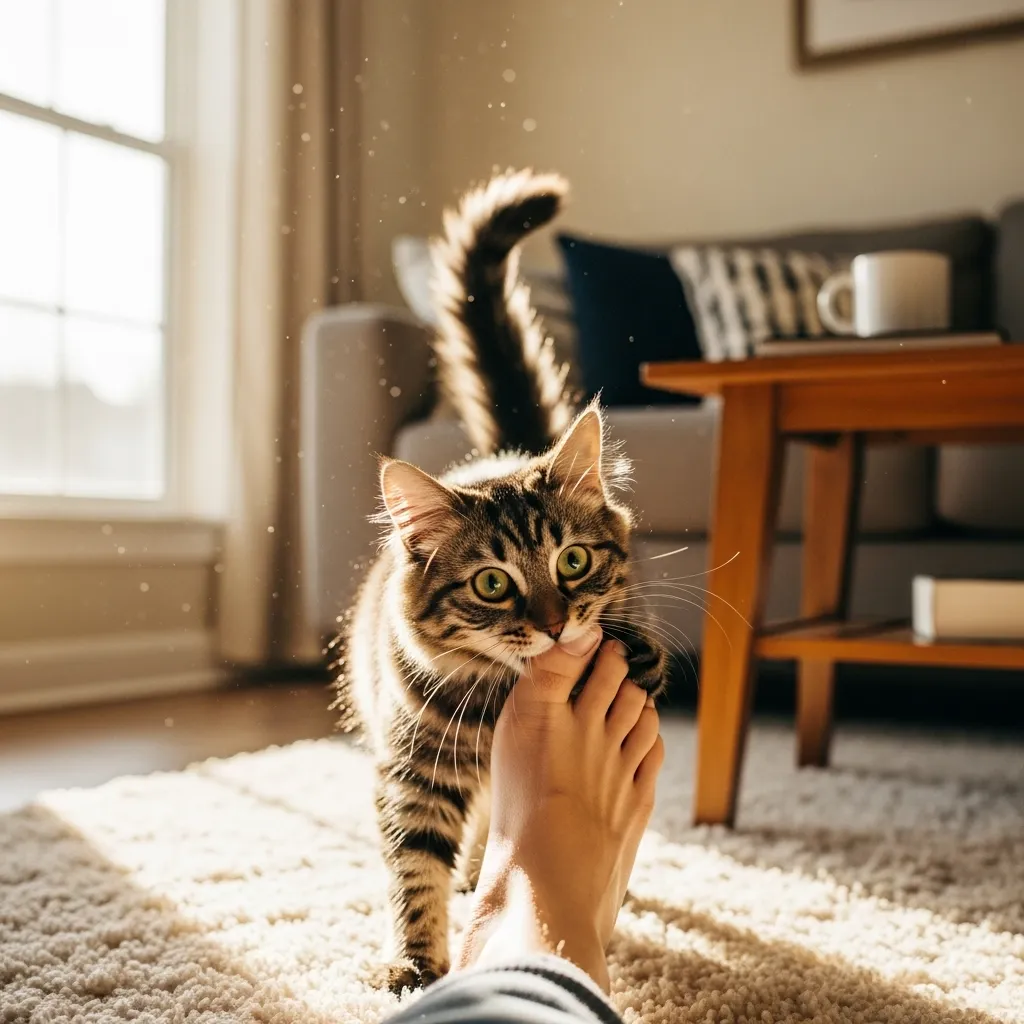
How to Stop Cat Biting Feet: Practical Solutions
Ready to protect your toes? Here are vet-approved strategies to manage and redirect cat foot biting behavior.
Redirecting Cat Prey Drive with Play
Since foot biting often stems from hunting instincts, redirect that energy with engaging toys:
- Wand toys: Mimic prey movement to satisfy their hunting urge.
- Puzzle feeders: Stimulate their brain and reduce boredom.
- Laser pointers: Great for high-energy cats, but always end with a tangible toy to avoid frustration.
Example: After Tom’s Norwegian Forest Cat, Freya, kept attacking his feet, he introduced a feather wand toy. Freya now chases the toy instead, saving Tom’s toes. (Explore Norwegian Forest Cat play tips).
Enrichment for Indoor Cats: A Boredom Buster
A lack of stimulation can fuel cat biting toes. Create a cat-friendly home with these cat enrichment ideas:
- Scratching posts: Satisfy their clawing instincts (Stop cats scratching furniture).
- Window perches: Let them watch birds or outdoor activity.
- Interactive toys: Rotating toys keeps things fresh.

Data Point: A 2023 study from the Journal of Feline Medicine found that indoor cats with enriched environments showed a 40% reduction in unwanted behaviors like biting.
Training Tips to Curb Biting
Training your cat to stop biting requires patience and consistency. Here’s how:
- Ignore bad behavior: Don’t react to bites, as yelping or moving can encourage play.
- Reward good behavior: Praise or treat your cat when they play appropriately.
- Time-outs: If biting persists, calmly walk away to signal it’s unacceptable.
- Positive reinforcement: Use treats to reinforce toy play over foot attacks.
For more training tips, check out how to train your cat.
When to Seek Veterinary Advice
Persistent or aggressive biting may indicate health issues like pain, stress, or dental problems. Consult a vet if:
- Biting is sudden or uncharacteristic.
- Your cat shows other signs like lethargy or appetite changes (Why is my cat not eating?).
- Bites are paired with growling or hissing.
Vet Insight: Dr. Sarah Thompson advises, “Sudden behavioral changes, like increased biting, can signal underlying health issues. A vet checkup can rule out pain or stress.”
Creating a Cat-Friendly Home to Prevent Foot Biting
A stimulating environment reduces cat play aggression and keeps your cat content. Here’s how to build a cat-friendly home:
- Safe spaces: Provide cozy beds or hideaways (Best beds for American Shorthair cats).
- Vertical space: Cat trees or shelves satisfy climbing instincts.
- Routine: Consistent feeding, play, and sleep schedules reduce anxiety.
For more ideas, explore cat enrichment ideas.
FAQ: Quick Answers to Common Questions
Why does my cat bite my feet?
Cats bite feet due to playful hunting instincts, overstimulation, or seeking attention. Redirect with toys and ensure they’re stimulated (Learn more about cat behavior).
What does cat biting feet meaning entail?
It’s often a mix of play, hunting instincts, or communication. Watch their body language to understand their mood.
How can I stop cat biting toes?
Use interactive toys, enrich their environment, and avoid reinforcing biting with reactions. Consistency is key.
Why do cats bite during play?
Cat biting when playing mimics hunting. Provide toys to redirect this energy safely.
Are cat zoomies at night related to foot biting?
Yes, nighttime energy bursts often lead to foot attacks. Add evening play sessions to tire them out (Cat zoomies guide).
How can I tell if my cat’s biting is affection or aggression?
Affectionate bites are soft and paired with purring, while aggressive bites are harder with pinned ears or hissing (Cat body language guide).
Can enrichment prevent foot biting?
Yes, enrichment for indoor cats reduces boredom and redirects hunting instincts (Cat enrichment ideas).
What if my cat’s foot biting persists?
Consult a vet to rule out health issues and consider a feline behaviorist for tailored advice.
Conclusion: Building a Stronger Bond with Your Cat
Understanding why your cat bites your feet is the first step to turning those surprise attacks into moments of connection. By tapping into their predatory instincts in cats, providing enrichment for indoor cats, and using consistent training, you can redirect their energy and protect your toes. At Cat Bloom Haven, we’re here to help you decode cat communication signals and create a cat-friendly home. Explore more expert guides, like bonding with your cat or cat playtime tips, to deepen your feline friendship.
Got more cat behavior questions? Dive into our cat training and behavior guide for expert insights!