Moving Long Distance with Your Cat: A Comprehensive Guide to a Stress-Free Journey
Relocating across the country with your feline friend? Moving long distance with your cat can feel overwhelming, but with the right preparation, it’s entirely manageable. Cats thrive on routine, and a long-distance move disrupts their comfort zone.
Whether you’re driving cross-country or flying to a new home, this guide provides expert-backed strategies to ensure your cat stays calm, safe, and happy throughout the journey. From carrier training to post-move adjustment, you’ll learn everything you need to make the experience stress-free for both you and your cat.
Key Takeaways for a Smooth Cat Relocation
- Start Early: Begin carrier training and travel prep weeks in advance to reduce cat anxiety.
- Pack Smart: Create a cat travel kit with essentials like food, water, and calming products.
- Prioritize Safety: Use proper identification and secure carriers to prevent escapes.
- Plan for Comfort: Choose pet-friendly accommodations and maintain a calm environment during travel.
- Ease the Transition: Help your cat adjust to the new home with familiar items and a consistent routine.
- Monitor Post-Move: Watch for signs of stress or health issues after the move.
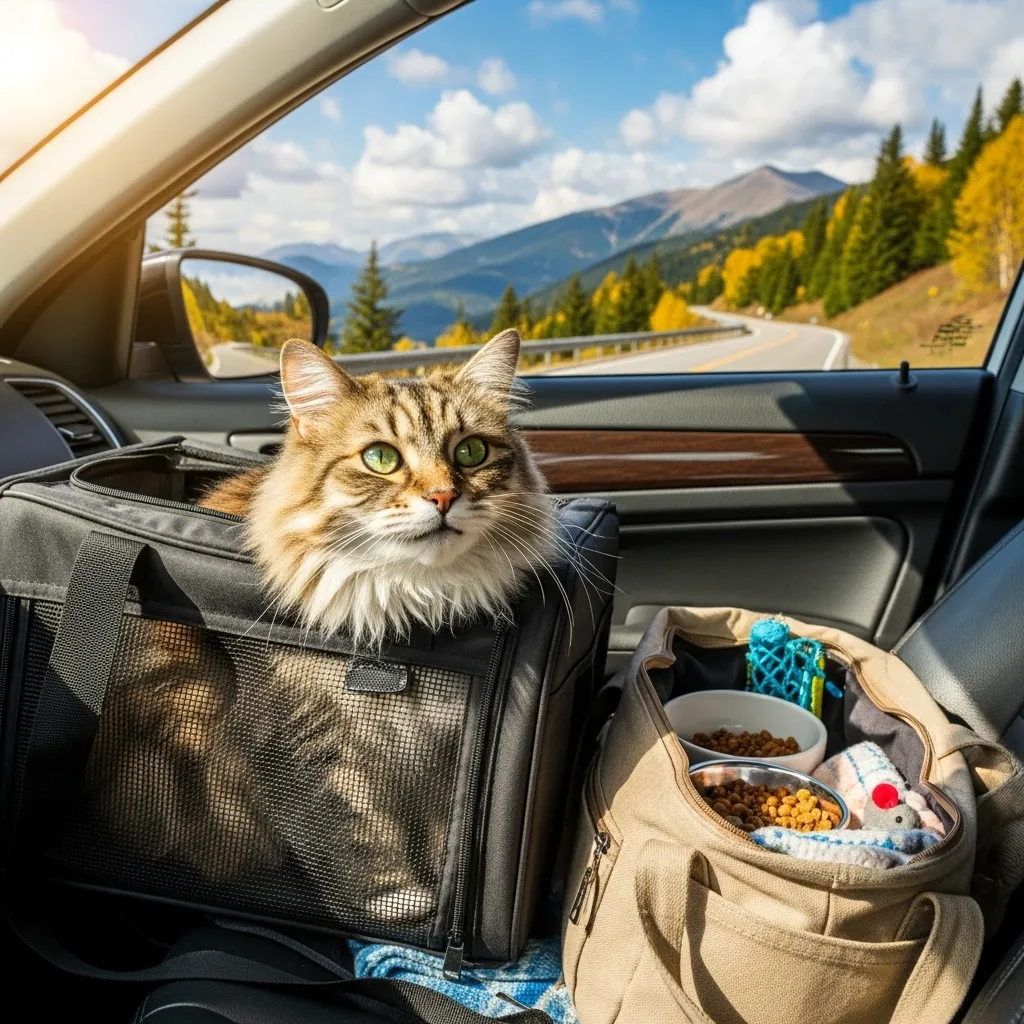
Explore our detailed guide on cat stress signs to better understand your cat’s behavior during this process.
Why Moving Long Distance with a Cat Requires Special Care
Cats are territorial creatures, and a long-distance move uproots them from their familiar environment. Unlike dogs, cats often resist change, making travel stressful. Long car rides, plane trips, or unfamiliar surroundings can trigger anxiety, leading to behaviors like hiding, vocalizing, or refusing to eat. By planning ahead and using proven techniques, you can minimize stress and ensure your cat’s well-being.
This guide draws on insights from feline behaviorists and veterinarians to provide actionable steps for every stage of the move. Let’s dive into how to move with a cat long distance, covering preparation, travel, and settling into your new home.
Pre-Move Preparation: Setting Your Cat Up for Success
1. Visit the Vet Before You Go
A pre-move vet check is non-negotiable. Schedule an appointment 4–6 weeks before your move to:
- Ensure vaccinations are up to date (e.g., rabies, FVRCP).
- Discuss motion sickness or anxiety remedies, like feline calming pheromone products.
- Obtain a health certificate if flying or crossing state lines.
- Update microchip information and get a sturdy ID tag with your new address and phone number.
Pro Tip: Ask your vet about calming sprays for cats or prescription medications for extreme anxiety. Learn more in our cat vet visit schedule guide.
2. Train Your Cat to Love Their Carrier
Carrier training is a game-changer for long distance cat travel. Cats often associate carriers with vet visits, so make it a positive space:
- Start Early: Place the carrier in your home 2–3 weeks before the move. Leave the door open and add a cozy blanket or toy inside.
- Positive Reinforcement: Feed treats or meals near or inside the carrier to build familiarity.
- Short Trips: Take your cat on brief car rides (10–15 minutes) to desensitize them to motion.
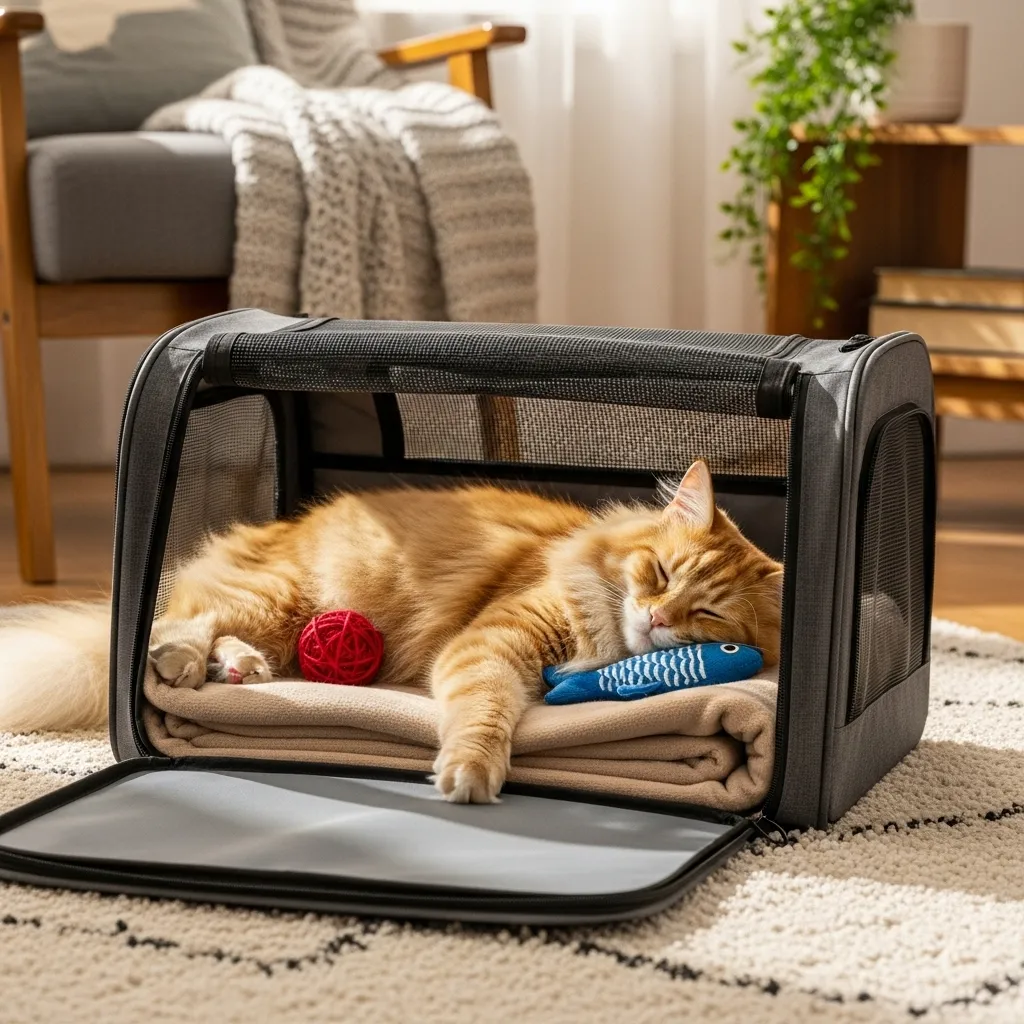
For step-by-step instructions, check out our cat carrier training guide.
3. Build a Cat Travel Kit
A well-stocked cat travel kit is essential for a smooth journey. Include:
- Food and Water: Pack enough of your cat’s regular food to avoid dietary changes, plus portable bowls.
- Litter Supplies: Bring a collapsible litter box, litter, and waste bags.
- Comfort Items: Include a favorite blanket, toy, or bed to provide familiarity.
- Health Essentials: Carry a first-aid kit, any medications, and copies of vet records.
- Calming Aids: Consider pheromone sprays, calming treats, or a vet-prescribed sedative.
| Cat Travel Kit Essentials | Purpose |
|---|---|
| Regular cat food | Prevents digestive upset |
| Collapsible litter box | Easy to use during stops |
| Feline pheromone spray | Reduces travel anxiety |
| ID tag and microchip info | Ensures safety if lost |
| Favorite toy or blanket | Provides comfort |
Discover more in our guide on best Munchkin cat carriers.
4. Research Pet-Friendly Accommodations
If your move involves overnight stops, book pet-friendly hotels in advance. Look for:
- Hotels with clear pet policies (check for fees or restrictions).
- Quiet rooms away from elevators or high-traffic areas.
- Nearby rest stops for safe litter box breaks.
Tip: Call ahead to confirm pet policies, as some hotels limit the number of pets or charge extra fees.
Traveling with Cats Long Distance: Tips for the Journey
1. Choosing the Right Travel Method
Decide whether you’ll drive, fly, or use a pet relocation service. Each has pros and cons:
- Driving: Offers more control over your cat’s environment but requires frequent stops for litter and water breaks.
- Flying: Faster for long distances but involves strict airline regulations and potential stress in cargo holds.
- Pet Relocation Services: Ideal for complex moves but can be pricey. Research reputable services for 2025 at pet relocation services 2025.
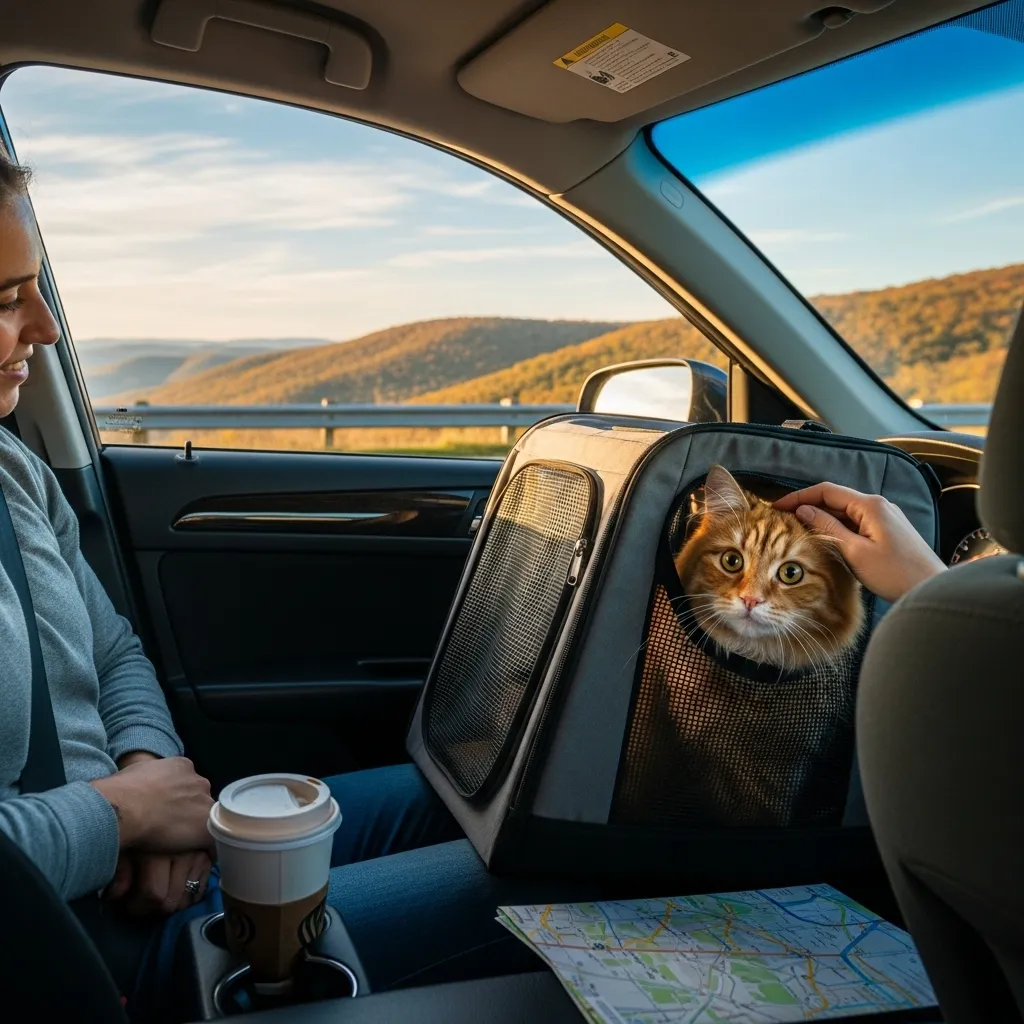
2. Keeping Cats Calm While Traveling
To reduce cat travel anxiety:
- Cover the Carrier: Drape a breathable blanket over the carrier to create a cozy, den-like space.
- Use Calming Aids: Spray the carrier with feline pheromone products 15 minutes before travel.
- Play Soothing Sounds: Soft classical music or white noise can calm nervous cats.
- Avoid Feeding Right Before Travel: Feed 3–4 hours before departure to prevent motion sickness.
For more calming techniques, see our guide on how to calm an angry cat.
3. Safety on Moving Day
Moving day is chaotic, so take extra precautions:
- Secure Your Cat: Keep your cat in a quiet room or carrier while movers are present to prevent escapes.
- Check the Carrier: Ensure it’s sturdy, well-ventilated, and escape-proof.
- Communicate with Movers: Inform them about your cat’s presence to avoid accidental door openings.
Learn more about minimizing escape risks in our cat escape behavior guide.
4. Managing Long Car Rides
For road trips, follow these long distance cat travel tips:
- Stop Every 2–3 Hours: Offer water, a litter box, and a chance to stretch (in a secure space).
- Keep the Car Cool: Maintain a temperature between 68–75°F to avoid overheating.
- Never Leave Your Cat Alone: Cats can overheat or escape if left in a parked car.
Helping Your Cat Adjust to the New Home
1. Create a Safe Space
Set up a quiet room in your new home with familiar items:
- Your cat’s bed, toys, and litter box.
- A scratching post to encourage marking their new territory.
- A hiding spot, like a cardboard box or cat tree, for security.
For breed-specific tips, explore our Ragdoll cat care guide.

2. Gradual Exploration
Introduce your cat to the new home slowly:
- Start with one room for 1–2 days, then gradually open up more areas.
- Supervise initial explorations to prevent hiding in unsafe spots.
- Maintain their old feeding and play schedule for consistency.
Check out our guide on helping cats adjust to a new environment.
3. Post-Move Cat Care
Monitor your cat closely for the first 2–4 weeks:
- Watch for Stress Signs: Hiding, reduced appetite, or excessive grooming may indicate anxiety.
- Maintain Routine: Stick to familiar feeding, play, and litter box routines.
- Schedule a Vet Visit: A post-move checkup ensures your cat is healthy and adjusting well.
Learn more about post-move cat care.
4. Addressing Common Post-Move Issues
| Issue | Solution |
|---|---|
| Hiding or shyness | Give them time and a safe space; use treats to coax them out. |
| Refusing to eat | Offer familiar food; consult a vet if it persists beyond 48 hours. |
| Litter box avoidance | Ensure the box is in a quiet, accessible spot; check for medical issues. |
| Aggression or anxiety | Use calming sprays or consult a vet for behavioral support. |
For more on litter box issues, see our cat litter box frequency guide.
Cat Travel Hacks for 2025
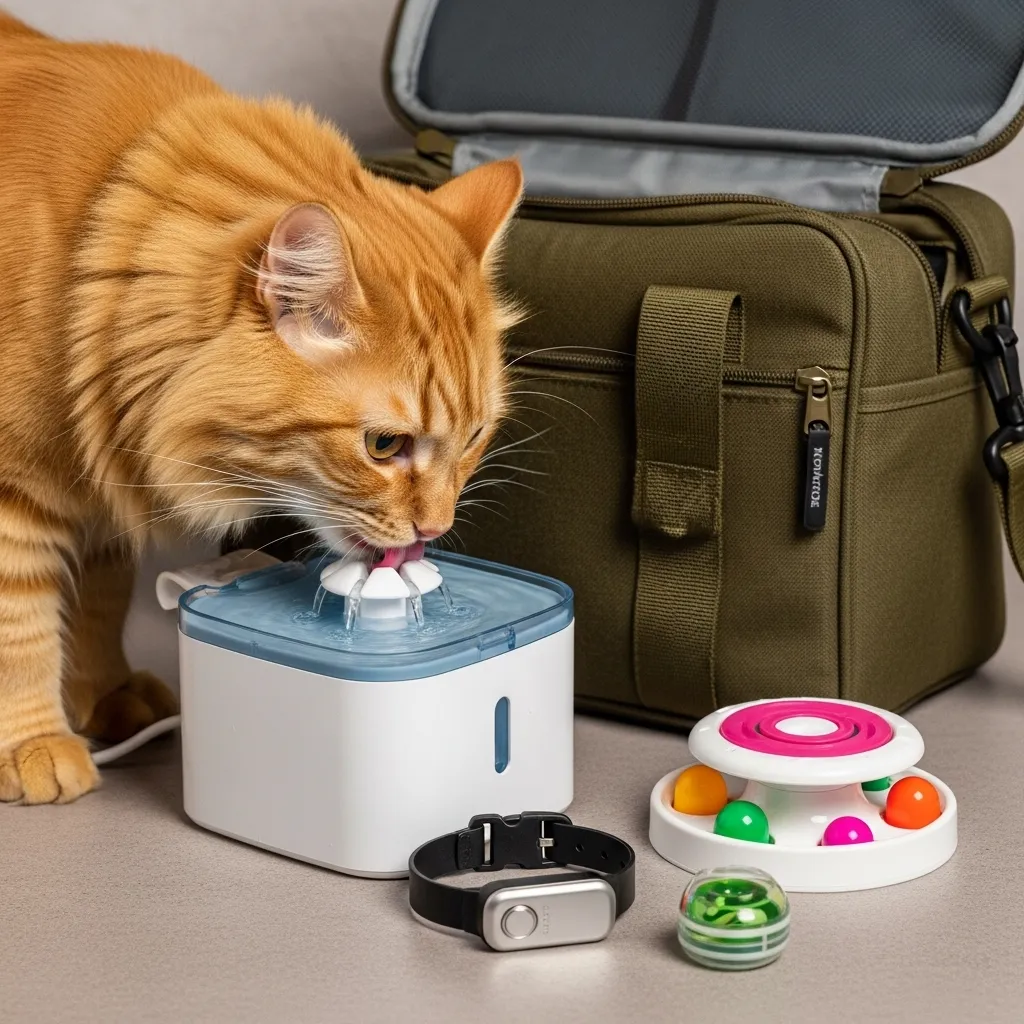
- Smart Collars: Invest in a GPS-enabled collar for real-time tracking if your cat escapes.
- Portable Water Fountains: Cats prefer running water, so a battery-powered fountain can encourage hydration.
- Interactive Toys: Puzzle feeders or laser pointers keep your cat entertained during hotel stays.
- Telehealth Vet Apps: Use apps for quick vet consultations during travel, especially for unexpected issues.
FAQ: Your Top Questions About Moving with Cats
How do I get my cat comfortable with long car rides?
Start with short drives, use a familiar carrier, and incorporate calming sprays or treats. Gradually increase trip length to build confidence. See our cat travel safety tips.
What should I include in a cat travel kit for a long-distance move?
Pack food, water, a litter box, calming products, vet records, and comfort items like a blanket or toy. Check our cat travel kit essentials.
How can I reduce my cat’s travel anxiety?
Use pheromone sprays, maintain a calm environment, and stick to a familiar routine. For more, read our guide on reducing cat travel anxiety.
How do I find pet-friendly hotels for my cat?
Research hotels with clear pet policies, book quiet rooms, and confirm fees in advance. Call ahead to ensure availability.
How can I help my cat adjust to a new home?
Set up a safe space with familiar items, introduce rooms gradually, and maintain routines. Explore our cat relocation checklist.
Why is proper identification important when moving with a cat?
ID tags and updated microchip info ensure your cat can be returned if they escape during travel. Learn more in our cat identification tags guide.
What precautions should I take on moving day?
Keep your cat in a secure carrier or quiet room, communicate with movers, and check for escape routes. See our cat escape behavior guide.
Conclusion: A Happy Move for You and Your Cat
Moving long distance with your cat doesn’t have to be stressful. With early preparation, a well-thought-out travel plan, and attention to your cat’s needs, you can ensure a smooth journey and a comfortable transition to your new home. From carrier training to post-move care, these expert tips will keep your feline friend safe and happy every step of the way.
Ready to dive deeper into feline care? Explore more expert cat care and behavior guides on Cat Bloom Haven to make your cat’s life as purr-fect as possible!