Post-Neutering Changes in Male Cats: A Comprehensive Guide to Behavior, Health, and Care

Imagine coming home to a calmer, more affectionate companion who no longer sprays your furniture or disappears for days on end. That’s the reality for many cat owners after deciding to neuter their male feline friends. Post-neutering changes in male cats often bring a wave of positive shifts, from reduced aggression to improved health outcomes.
But if you’re wondering about the details like male cat behavior after neutering, physical alterations, or how to handle recovery you’re in the right place. As a seasoned cat behavior specialist with years of experience helping owners navigate these transitions, I’ve seen firsthand how neutering can enhance your bond with your pet while addressing common challenges.
In this in-depth guide, we’ll explore everything from the orchidectomy procedure in cats to the health benefits of neutering cats, including how it influences feline hormones and lifespan. Whether you’re dealing with a feisty Bengal or a laid-back Ragdoll, you’ll get practical, vet-backed advice tailored for 2025 trends, like early neutering recommendations. By the end, you’ll have a clear action plan for post-neuter cat care, debunked myths, and answers to your burning questions. Let’s dive in and help your cat thrive.
Key Takeaways: Quick Insights on Neutering Male Cats
Before we unpack the details, here’s a snapshot of the most impactful points on neutering male cats. These are drawn from recent veterinary insights and real-world experiences to give you a head start:
- Behavioral Shifts: Neutering typically reduces roaming by up to 90%, curbs aggression, and minimizes urine spraying, leading to a more relaxed and affectionate cat.
- Health Advantages: It lowers risks of testicular cancer, prostate issues, and injuries from fights, potentially extending your cat’s lifespan by 1-3 years on average.
- Physical Changes: Expect minimal visible differences beyond the absence of testicles; some cats may gain weight if diet isn’t adjusted, but overall appearance remains similar.
- Recovery Timeline: Most cats bounce back in 5-7 days with proper at-home care, though watch for swelling or lethargy in the first 24-48 hours.
- Myths Busted: Neutering doesn’t make cats lazy or change their core personality—it often enhances social behavior and reduces stress-driven habits.
- 2025 Trends: Early neutering at 4-5 months is gaining traction for better long-term outcomes, with emphasis on telemedicine for post-op check-ins.
Implement these insights, and you’ll likely see a happier, healthier cat in weeks. Now, let’s break it down step by step.
Understanding the Neutering Process for Male Cats
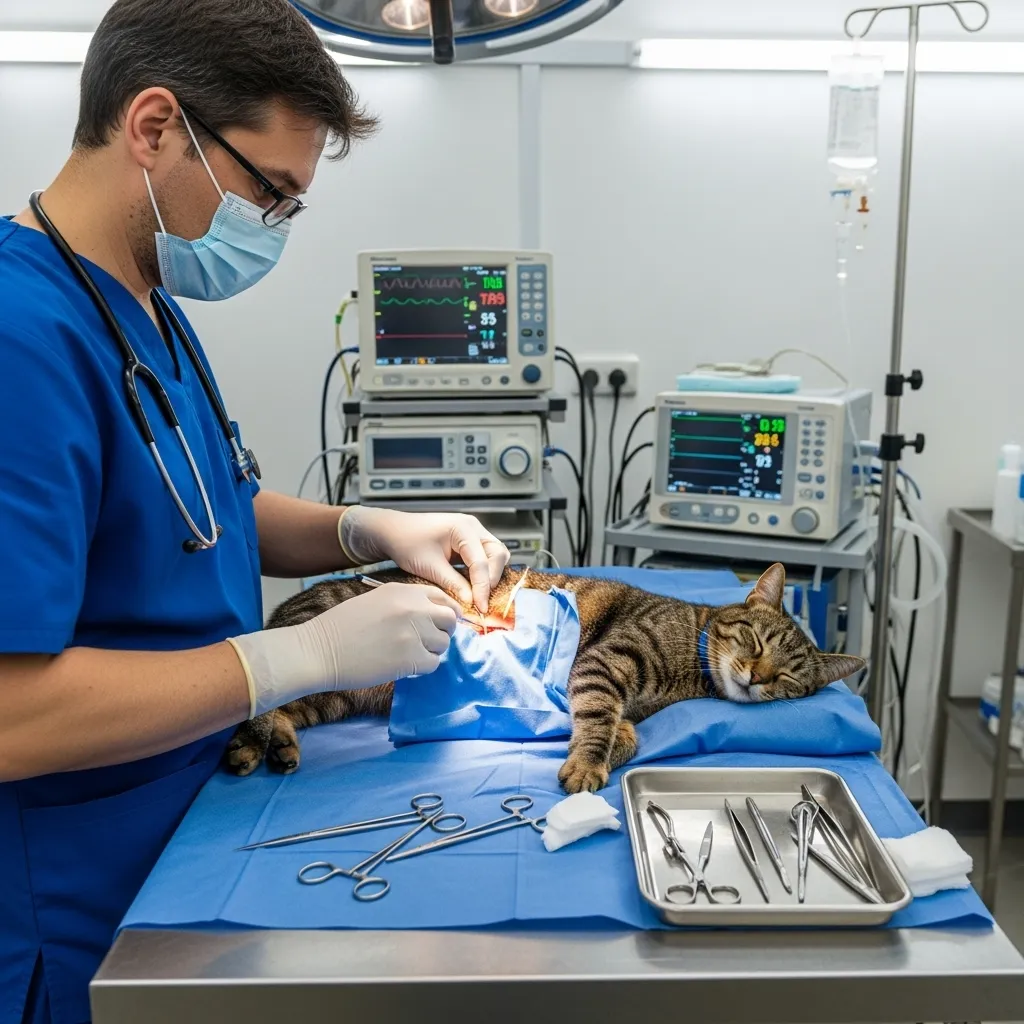
Neutering male cats, also known as castration or orchidectomy, is a straightforward surgical procedure that removes the testicles to prevent reproduction and alter hormone-driven behaviors. It’s one of the most common vet surgeries, performed under general anesthesia, and usually takes just 10-20 minutes. For most cats, it’s a day procedure—they go home the same afternoon.
What Happens During the Orchidectomy Procedure
The process starts with a pre-op check, including fasting your cat for 8-12 hours to minimize anesthesia risks. Once sedated, the vet makes a small incision in the scrotum, ties off blood vessels, and removes the testicles. Stitches are often absorbable, so no follow-up removal is needed. In cases of cryptorchidism in male cats—where one or both testicles haven’t descended—the surgery might involve an abdominal incision, making it slightly more complex but still routine.

From my experience working with rescue cats, including breeds like the energetic Bengal (explore our Bengal cat personality guide for more), early detection of cryptorchidism during kitten check-ups can make the procedure smoother. Costs in 2025 average $200-300, but low-cost clinics offer it for under $100, especially for community cats.
Neutering and Feline Hormones: The Testosterone Factor
Male cat testosterone after neutering drops dramatically, as the testicles are the primary source. This hormonal shift is key to many behavioral improvements, but it doesn’t happen overnight—residual hormones can linger for 4-6 weeks. Think of it as turning down the volume on instincts like mating calls or territorial marking.
One real-life example: A client with a roaming Siamese saw his cat’s escapades halt within a month post-surgery. If your cat shows signs of hormonal imbalance pre-neuter, like excessive yowling, consult our cat stress signs guide for interim tips.
Behavioral Modifications: Male Cat Behavior After Neutering
One of the biggest draws of neutering is its impact on behavior. While every cat is unique, most owners report noticeable improvements in male cat behavior after neutering, driven by lower testosterone levels.
Reducing Cat Aggression After Neutering
Intact males can be feisty, especially in multi-cat homes, due to territorial instincts. Neutering curbs this aggression in about 85% of cases, making playtime less combative. For instance, Bengals with their high-energy traits (check our Bengal cat introduction tips) often become more sociable post-neuter, reducing fights with housemates.
If aggression persists, it might stem from stress—explore our how to calm an angry cat guide for complementary strategies.
Changes in Feline Mating and Roaming Behavior
Feline mating and roaming behavior drops significantly after neutering. Roaming reduces by 90%, lowering risks of accidents or getting lost. No more midnight yowls or escape attempts! This is crucial for outdoor cats, but even indoors, it prevents unwanted spraying.
A trending question in 2025: “Why is my cat more affectionate after neutering?” Many become cuddlier as energy shifts from mating drives to bonding. Neutered cat affection and social behavior often improves, fostering better relationships with family and other pets.
Personality Shifts: Changes in Male Cat Personality After Neutering
Core personality stays intact—your playful Munchkin remains fun-loving (see our Munchkin cat playfulness tips). But expect less hyperactivity and more calm. Studies show neutered cats are less active overall, but that’s often a plus for busy households.
In my practice, owners of Norwegian Forest Cats note reduced “wild” tendencies post-neuter, aligning with our Norwegian Forest cat care guide.
What Does a Male Cat Look Like After Neutering? Physical Changes Explained
Curious about male cat physical changes after neutering? Visual changes in neutered male cats are subtle. The most obvious is the empty scrotum, which shrinks over time. No dramatic alterations to coat, size, or features—your cat won’t suddenly look “different.”
Visual Changes and Appearance Post-Surgery
Before and after neutering male cats photos often show minimal differences beyond the surgical site. Some gain weight due to a slower metabolism (monitor with our why is my cat gaining weight tips), but that’s manageable with diet tweaks. For breeds like Ragdolls prone to obesity (our Ragdoll cat obesity guide has solutions), post-neuter monitoring is key.

Cryptorchid cats might have a small abdominal scar, but healing is quick. Overall, the “what does a male cat look like after neutering” answer: Pretty much the same, just healthier.
Health Benefits of Neutering Cats: Beyond Behavior
The health benefits of neutering cats are compelling reasons to proceed. It eliminates testicular cancer risk and reduces prostate problems by 90%. How neutering affects cat lifespan? Neutered males live longer, thanks to fewer fights and diseases.
Reducing Disease Risk and Extending Life
Neutering prevents hormone-related issues and curbs roaming, cutting injury risks. It’s also vital for cat population control through neutering, reducing stray overpopulation. For health-focused owners, pair this with our cat health care resources.
In 2025, vets emphasize neutering’s role in preventing UTIs in breeds like Munchkins (our Munchkin cat urinary issues guide dives deeper).

The Importance of Post-Neuter Care: Recovery Tips for Your Cat
Post-neuter cat care is crucial for a smooth recovery. Cat neutering recovery timeline: 5-7 days for full activity, with initial grogginess from anesthesia.
Cat Neutering at Home Care Essentials
Keep your cat in a quiet room, restrict jumping, and use an e-collar if they lick the site. Feed small meals post-surgery to avoid nausea. Monitor for male cat swollen after neutering—mild swelling is normal, but excessive redness warrants a vet call.
Cat neutering side effects like lethargy fade in 24 hours. For seniors, see our cat anesthesia senior cats 2025 tips.
Monitoring for Complications
Watch for infection signs: Discharge, fever, or vomiting. How long does it take for a cat to recover from neutering? Most are playful by day 3, but limit activity for a week. If issues arise, our finding the best vet for your cat article helps.
Cat Neutering Myths and Facts: Separating Truth from Fiction
Cat neutering myths and facts abound. Myth: It makes cats fat and lazy. Fact: Weight gain is preventable with proper nutrition (our choosing cat food guide). Myth: Personality changes drastically. Fact: Core traits remain; unwanted behaviors diminish.
Another: Early neutering stunts growth. Fact: Studies show no adverse effects. For more, our cat neutering guide aligns with these insights.
FAQ: Common Questions on Post-Neutering Changes in Male Cats
What physical changes can be expected in male cats after neutering?
Minimal—mainly the scrotum empties and shrinks. Some weight gain if not monitored, but no major alterations to appearance or build.
What does neutering entail, and what is the orchidectomy procedure?
Neutering is the removal of testicles via a small incision. Orchidectomy is the medical term; it’s quick and under anesthesia.
Are there any misconceptions about neutering and male hormone production?
Yes, like it causing depression—actually, it balances hormones for better mood. Residual testosterone fades in weeks.
How does cryptorchidism affect the neutering process?
Undescended testicles require an abdominal approach, but recovery is similar. Early diagnosis prevents complications.
How does neutering affect feline aggression and territoriality?
It reduces aggression in most cases by lowering testosterone, leading to less fighting and marking.
What is the impact of neutering on a male cat’s roaming and mating behaviors?
Roaming drops by 90%, and mating urges diminish, making cats safer and less vocal.
What are the health benefits associated with neutering male cats?
Eliminates testicular cancer risk, reduces prostate issues, and extends lifespan through fewer injuries.
How does neutering affect a male cat’s social behaviors and interactions?
Often increases affection and reduces dominance, improving bonds with humans and pets.
What are the vital steps in post-operative care to ensure a speedy recovery for neutered male cats?
Quiet space, no jumping, e-collar if needed, and daily site checks for 5-7 days.
What potential post-surgical complications should owners monitor after their male cat is neutered?
Swelling, infection, lethargy beyond 24 hours, or vomiting contact your vet immediately.
Wrapping Up: Embrace the Positive Changes in Your Neutered Male Cat
Post-neutering changes in male cats can transform your home into a more harmonious space, with benefits spanning behavior, health, and longevity. From understanding the procedure to mastering recovery, you’re now equipped to make informed decisions. Remember, neutering isn’t just about preventing litters it’s about giving your cat a fuller, safer life.
Ready for more? Explore our detailed cat health care resources or dive into breed-specific advice like our Ragdoll cat care guide.