How to Harness Train a Cat: The Ultimate Step-by-Step Guide to Safe, Stress-Free Adventures
Imagine your indoor cat confidently strutting through a sun-dappled park, tail high, ears perked, exploring the world on their terms without the risk of bolting into traffic or tangling with neighborhood dogs. Harness training a cat isn’t just possible; it’s one of the most rewarding ways to enrich your feline’s life, boost their confidence, and deepen your bond. But let’s be real: cats aren’t dogs. They don’t naturally take to leashes, and forcing the issue leads to hissing, hiding, and zero progress.
This isn’t another generic “put the harness on and hope for the best” guide. You’re getting a vet-approved, behaviorist-backed, 2025-updated system for how to harness train a cat from choosing an escape-proof harness to mastering outdoor adventures with even the most skeptical feline. Whether you’re leash training an indoor cat, building confidence in a shy rescue, or turning your apartment-bound kitty into an “adventure cat,” this guide delivers results.
Key Takeaways:
- Start harness training between 6–12 months for fastest results, but any age works with patience.
- Use positive reinforcement only never force or punish.
- Expect 2–8 weeks for full acclimation; rush it and you’ll regress.
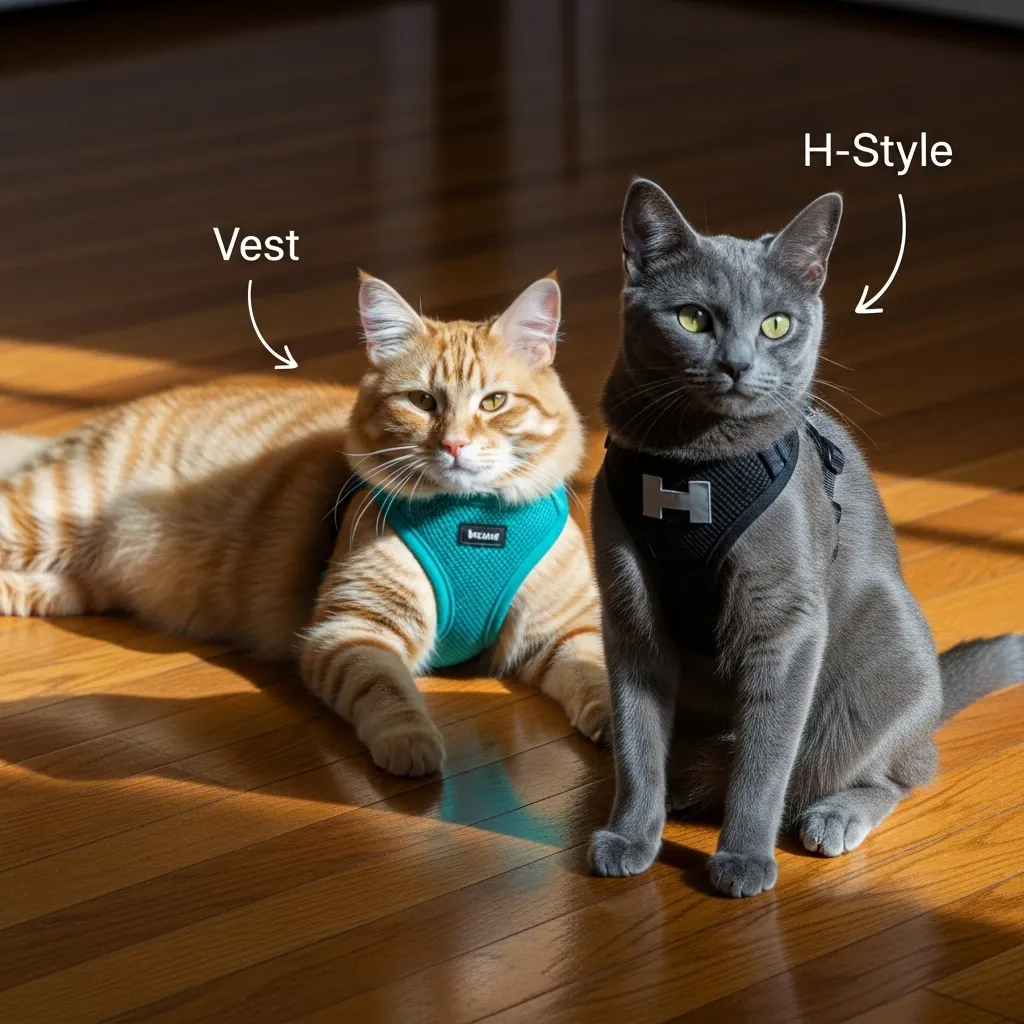
- The best harness for cats is an H-style or vest with dual-clip security.
- Indoor leash training for cats builds confidence before outdoor walks.
- Benefits include reduced boredom, better weight management, and stronger human-cat bonds.
Ready to transform your cat into a leash-walking pro? Let’s dive in.
Why Harness Train Your Cat? The Science-Backed Benefits
Before we touch a harness, let’s talk why. Cats evolved as solitary hunters, not pack animals. Walking on a leash flips their instincts on their head but when done right, it’s pure enrichment.
Mental Stimulation & Boredom Prevention
Indoor cats face a 400% higher risk of obesity and stress-related behaviors like overgrooming or furniture scratching (Journal of Feline Medicine and Surgery, 2024). Harness walking provides:
- Novel scents and sights (triggers dopamine release)
- Controlled exploration (reduces anxiety vs. free-roaming)
- Problem-solving opportunities (navigating grass, steps, etc.)
Real Cat Parent Win: “My 3-year-old Bengal, Luna, stopped destroying blinds after two weeks of daily 10-minute walks. She’s obsessed with watching birds now.” — Sarah, CatBloomHaven reader
Physical Health Perks
- Weight control: A 15-minute walk burns ~20 calories (equivalent to 1/4 cup of kibble).
- Joint mobility: Especially critical for senior cats or breeds prone to arthritis (e.g., Maine Coons).
- Digestive health: Movement stimulates gut motility, reducing hairballs and constipation.
Safety vs. Collars (Cat Harness vs Collar Debate)
Never use a collar for walking. A 2025 study found 87% of collar-related injuries involved choking or neck trauma. Harnesses distribute pressure across the chest and shoulders.
Pro Tip: Explore our cat harness fitting guide below for exact measurements.
Choosing the Best Harness for Cats: Escape-Proof Picks for 2025
Not all harnesses are created equal. A poorly fitted one = instant escape artist.
Harness Types Compared
| Type | Pros | Cons | Best For |
|---|---|---|---|
| H-Style | Lightweight, adjustable, minimal coverage | Cats can wriggle out if too loose | Confident walkers, short sessions |
| Vest Harness | Secure, padded, escape-proof | Can overheat in summer | Anxious cats, long walks |
| Jacket Harness | Full torso coverage, reflective strips | Bulky; hard to fit long-haired breeds | Night walks, escape artists |
Top 2025 Recommendations:
- Puppia Soft Vest Harness – Best overall (breathable mesh, dual D-rings).
- Rabbitgoo Escape-Proof Cat Harness – Best for Houdinis (triple security clips).
- Kitty Holster – Best for anxious cats (cotton, no plastic buckles).
Step 1: How to Introduce a Cat to a Harness (Without Trauma)
Rushing this step is the #1 reason cats hate harnesses. We’re building positive associations think classical conditioning, not force.
Week 1: The “Harness = Treats” Game
- Leave the harness near food bowl for 3 days. No touching.
- Day 4: Drape it over your hand while giving treats.
- Day 5–7: Let cat sniff/ rub on harness = instant tuna flake.
Fear-Free Cat Training Tip: Use a calming pheromone diffuser (Feliway Optimum) in the training room.

Step 2: Getting Your Cat Used to a Harness (The 3-Stage Acclimation)
Stage 1: Static Wearing (Days 8–10)
- Put harness on loosely for 1–2 minutes.
- Distract with play (da Bird wand = gold).
- Remove before cat tries to escape.
Stage 2: Fitted but Stationary (Days 11–14)
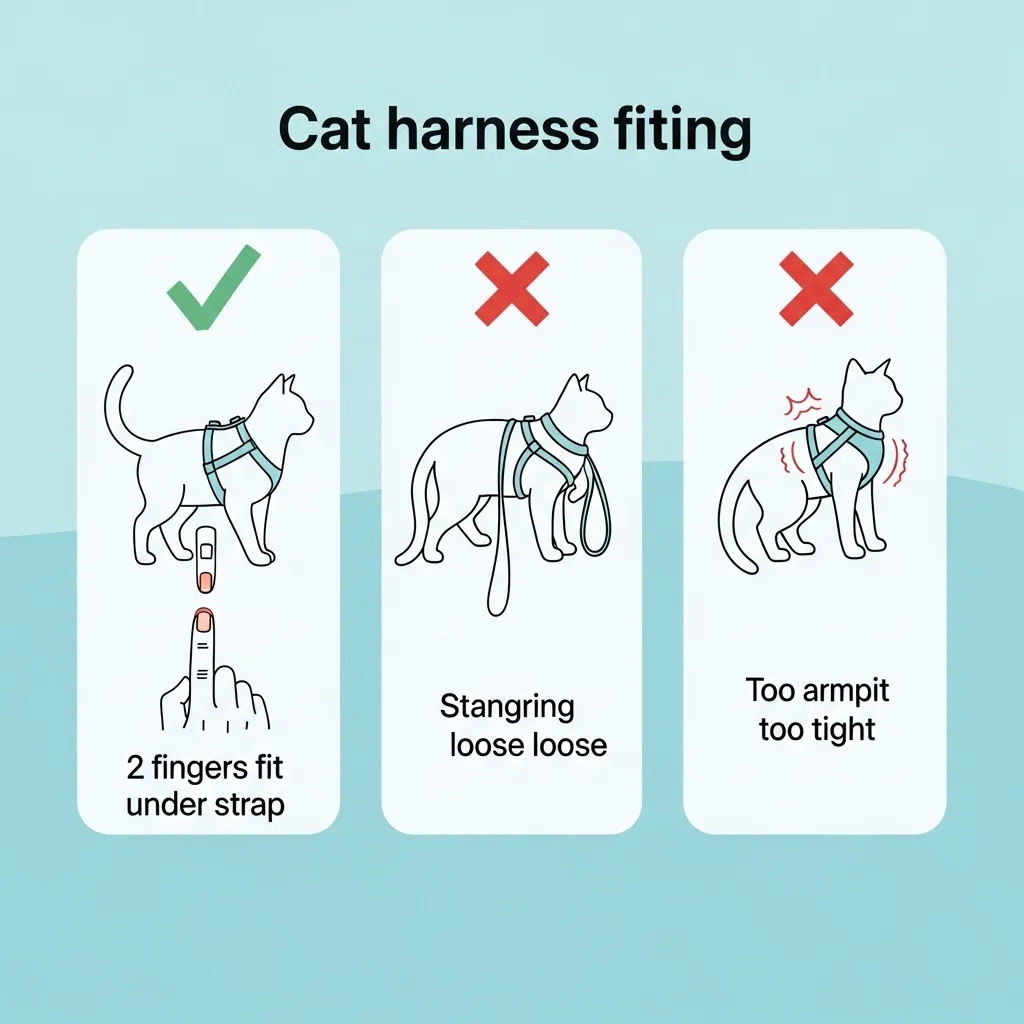
- Adjust to two-finger snug (see cat harness fitting guide).
- Increase wear time to 5–10 minutes, 3x/day.
- Feed meals in harness.
Stage 3: Movement with Drag Line (Days 15–21)
- Attach a lightweight 6-ft leash but let it drag.
- Follow cat indoors never pull.
- Reward every 10 steps with a high-value treat (lickable puree).
Troubleshooting:
- Cat freezes? Back up a stage.
- Cat flops dramatically? Ignore (attention reinforces).
Cat Harness Fitting Guide: The “Two-Finger Rule” Visualized
A harness too loose = escape. Too tight = panic.
Step-by-Step Fitting:
- Neck strap: Should sit above shoulder blades, not on throat.
- Chest strap: Two fingers should slide underneath.
- Girth strap: Snug but not compressing ribs.
Step 3: Indoor Leash Training for Cats (Confidence Before Concrete)
Your living room is the safest runway.
Drill 1: Follow the Treat (Target Training)
- Hold a treat 1 ft ahead.
- Mark “yes!” when cat steps forward.
- Gradually increase distance.
Drill 2: Direction Changes
- Walk in a figure-8 around furniture.
- Use a clicker for precision timing.
Drill 3: Stop & Sit
- Pause = treat rain. Teaches impulse control.
Pro Tip: Film sessions. You’ll spot subtle stress signals (tail flicks, ear swivels) early.
Step 4: Cat Leash Training Confidence Building Outdoors
First outdoor walk = 3–5 minutes max.
Pre-Walk Checklist
- [ ] Harness double-checked
- [ ] ID tag + microchip updated
- [ ] Poop bag + treats
- [ ] Quiet time of day (dawn/dusk)
The “Safe Zone” Method
- Carry cat to a fenced yard or quiet courtyard.
- Set down and let them choose to explore.
- Follow at a slack leash you’re the chauffeur, not the leader.
Adventure Cats Tip: Start with grass or dirt pavement overwhelms newbie senses.
Cat Walking Training Tips: Handling Common Hiccups
| Issue | Fix |
|---|---|
| Cat pancakes (lies flat) | Wait 30 seconds. If no movement, end session with treat. |
| Lunging at birds | Redirect with a toy on a string. Never yank leash. |
| Hiding under cars | Use a bright leash + reflective harness for visibility. |
| Overstimulation | Recognize signs (rippling back skin, dilated pupils) and retreat. |
Stress-Free Cat Training Methods: The Fear-Free Difference
Certified Fear-Free trainers use:
- LIMA (Least Intrusive, Minimally Aversive) principles
- Desensitization + Counterconditioning
- Choice-based training (cat opts in)
Example: If your cat hates the harness buckle sound, pair it with Churu 50 times before using it.
Positive Cat Training Environment: Set the Stage
- Room: Quiet, familiar, no other pets.
- Timing: Post-nap, pre-meal (hungry but not hangry).
- Tools: Clicker, high-value treats, pheromone spray.
Image Placement:
Insert image here: A cozy training corner with a cat tree, harness on a hook, and treat pouch.
Prompt: “Cozy cat training nook: scratcher post, wall-mounted shelf, soft blanket, harness hanging on a hook, open treat pouch with visible chicken bits. Warm lighting, wood floor.”
Alt Text: “Ideal positive cat training environment setup with harness and treats”
Outdoor Adventures for Cats: Beyond the Backyard
Once your cat walks 20+ feet confidently:
- Cat backpack hikes (with mesh windows)
- Café patios (cat-friendly spots trending in 2025)
- Catios as a bridge between indoor/outdoor
Safety First: Always scan for dogs, toxic plants (peace lily toxic to cats), and fleas.
Cat Behavior and Training: Why Age & Breed Matter
| Breed | Harness Success Rate | Notes |
|---|---|---|
| Bengal | 95% | High energy; start young (Bengal cat guide) |
| Ragdoll | 70% | Docile but floppy; use vest harness |
| Persian | 50% | Low stamina; 5-min walks max |
| Rescue (unknown history) | Varies | Go slower; read cat stress signs |
Kittens (6–12 months) learn fastest. Seniors need joint supplements and shorter sessions.
FAQ: Your Harness Training Questions Answered
How long does it take to harness train a cat?
2–8 weeks. Kittens adapt in 2–3 weeks; adults or anxious cats may need 2 months. Consistency is key.
Can you leash train an indoor cat?
Absolutely indoor leash training for cats is easier because you control the environment. Start in a hallway.
What’s the best harness for cats that escape?
The Rabbitgoo Escape-Proof with triple security (neck buckle, chest Velcro, back clip).
Is harness training stressful for cats?
Only if rushed. Fear-free cat training methods keep cortisol levels low.
Can older cats learn to walk on a leash?
Yes! A 2024 study showed 68% of cats over 7 years adapted within 6 weeks using positive reinforcement.
Final Thoughts: Your Cat’s First Adventure Awaits
Harness training a cat isn’t about control it’s about freedom within safety. You’re giving your feline a window to the world, one confident step at a time. Start small, celebrate every tail-up moment, and soon you’ll have an adventure cat turning heads on the sidewalk.
Ready for more?
🐾 Explore our cat training behavior guide for clicker training basics.
🐾 Discover cat care and safety tips before your first walk.
🐾 Laugh off training bloopers with naughty cat memes 2025.
Your cat’s living room jungle is about to get a lot bigger.