What Is My Cat Thinking? A Complete Guide to Understanding Your Feline Friend
Have you ever locked eyes with your cat across the room and wondered, “What is my cat thinking?” Maybe they’re twitching their tail while staring at the wall, or suddenly bolting from the couch like they’ve seen a ghost. Cats are enigmatic creatures, often leaving us scratching our heads over their quirky behaviors.
If you’ve felt frustrated trying to figure out cat body language or decode your cat’s emotions, you’re not alone millions of cat owners face the same puzzle every day. But here’s the good news: this article is your ultimate roadmap to understanding cat behavior.
Drawing from expert insights, real-life examples, and proven strategies, we’ll dive deep into cat psychology, interpreting cat behavior, and practical cat behavior tips to strengthen your cat-human bond. By the end, you’ll feel like a feline mind-reader, equipped to handle everything from cat anxiety signs to promoting your cat’s emotional well-being.

As a lifelong cat enthusiast who’s spent years observing and working with rescue cats, I’ve seen firsthand how tuning into these subtle signals can transform a rocky relationship into a harmonious one
Decoding Cat Behavior: What You Need to Know
Before we jump into the nitty-gritty, let’s lay the foundation. Understanding cat behavior isn’t just about spotting a wagging tail—it’s about grasping the full spectrum of cat communication. Cats aren’t as vocal as dogs, so they rely heavily on subtle cues to express their needs, moods, and even health issues.
The Fundamentals of Cat Communication
Cats communicate through a mix of body language, vocalizations, and scents. For instance, a slow blink from your cat is like a kitty kiss, signaling trust and affection. On the flip side, a low growl might indicate discomfort or a boundary being crossed. Recent studies show that cats can integrate visual and auditory signals to recognize both human and other cats’ emotions, adjusting their behavior accordingly. This means your cat is probably more attuned to your mood than you realize—ever notice how they curl up next to you when you’re feeling down?
To get started, observe your cat in different scenarios: during playtime, mealtimes, or when strangers visit. Keep a journal of patterns; it might reveal underlying cat behavior problems like stress from a noisy environment.
Why Understanding Cat Behavior Matters for Cat Mental Health
Ignoring these signals can lead to misunderstandings, like mistaking play aggression for real anger, which might erode your cat-human bond over time. Conversely, decoding cat behavior enhances mutual trust, reduces cat stress and anxiety, and even prevents issues like inappropriate elimination. Experts emphasize that cats experience emotions similar to humans—joy, fear, frustration—so promoting positive interactions supports their cat emotional well-being.
The Language of Cats: Deciphering Cat Body Language
Cat body language is like a silent conversation—if you know the vocabulary. From the tip of their tail to the twitch of their whiskers, every movement tells a story. Let’s break it down part by part for easy interpretation.
Tail Movements and Their Meanings
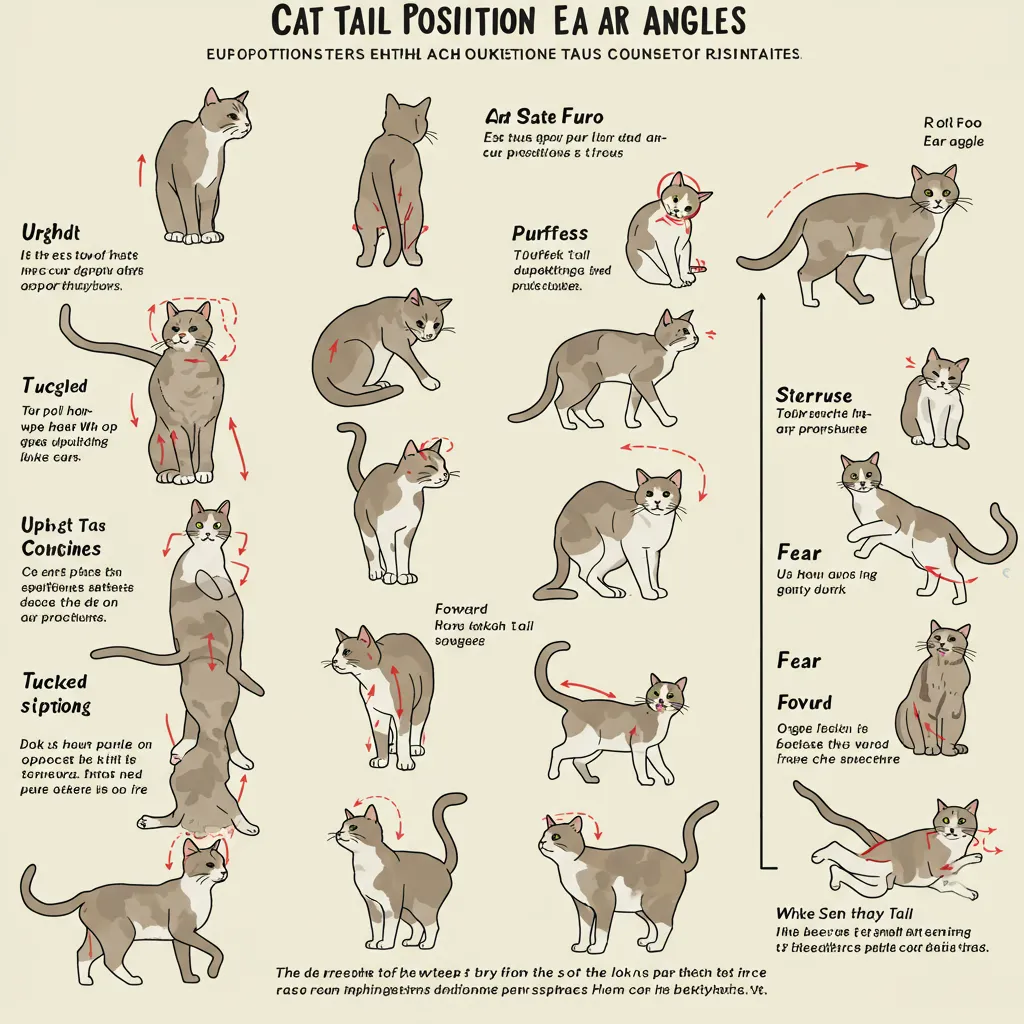
The tail is a cat’s emotional barometer. An upright tail with a slight curve at the top? That’s a happy greeting, often accompanied by a rub against your legs. A puffed-up tail, however, signals fear or agitation, making your cat look bigger to ward off threats. Swishing or thrashing indicates irritation—back off to avoid a swipe.
- High and quivering: Extreme excitement or marking territory.
- Wrapped around you: Affection and ownership.
- Low and tucked: Anxiety or submission.
Real-life example: My cat Whiskers once thrashed her tail during a vet visit, a clear sign of stress that prompted me to use calming treats beforehand next time.
Ear Positions: What They’re Telling You
Ears forward and perked up mean your cat is alert and interested, perhaps curious about a new toy. Flattened ears against the head? That’s a defensive posture, often paired with hissing, indicating fear or anger.
| Ear Position | Meaning | Action Tip |
|---|---|---|
| Forward | Curious/Engaged | Engage in play |
| Sideways | Uneasy | Give space |
| Flat Back | Threatened | Remove stressor |
Eye Signals and Pupil Dilation
Dilated pupils can mean excitement, fear, or low light—context is key. A direct stare might be a challenge, while half-closed eyes show relaxation. The “slow blink” is a trust signal; try blinking back to bond.
Body Postures: From Relaxed to Alert
A relaxed cat sprawls out with belly exposed (but beware, it’s not always an invite for rubs). An arched back with fur standing up? Classic Halloween cat pose for fear or aggression.
Whiskers and Facial Expressions
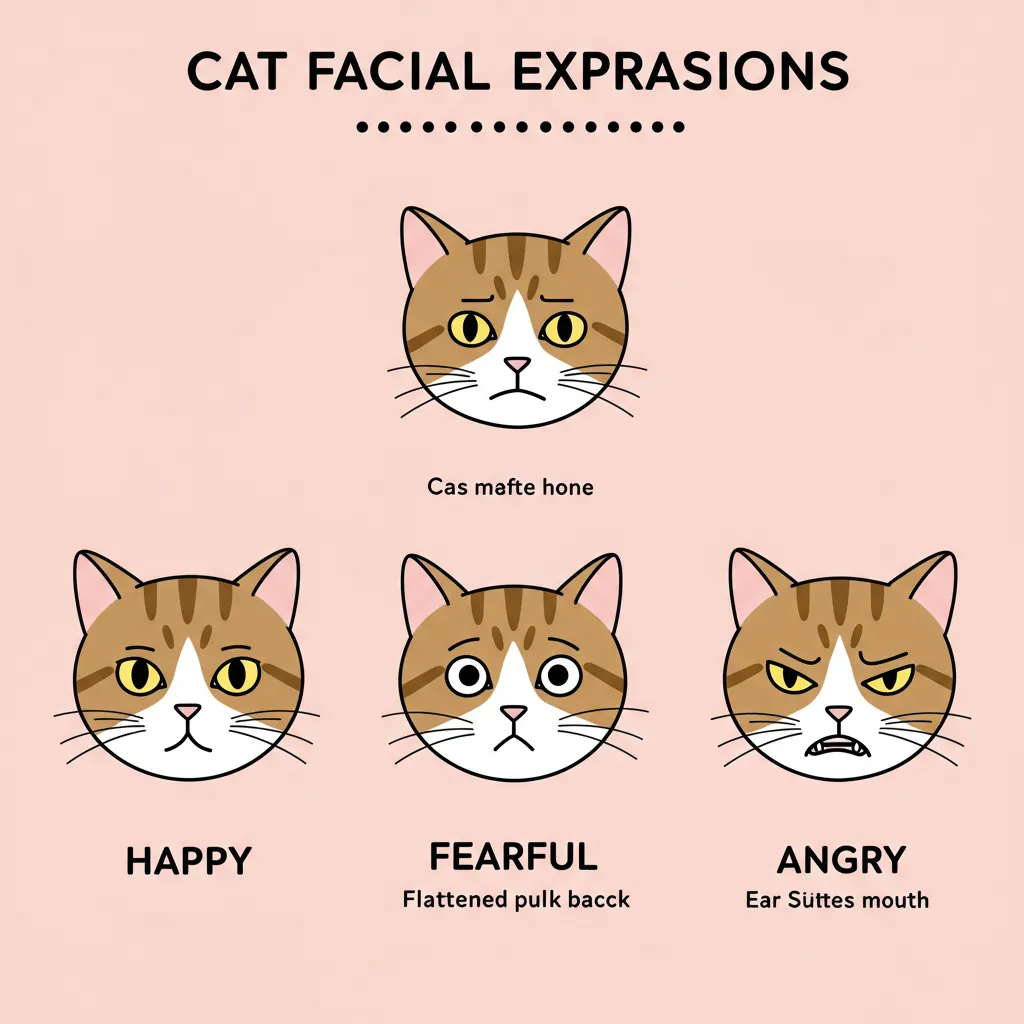
Forward whiskers indicate curiosity; pulled back, fear. Combined with other cues, this helps decode your cat’s emotions more accurately.
The Emotional World of Cats: Understanding Cat Emotions
Contrary to the aloof stereotype, cats have a rich emotional life. Cat psychology research reveals they feel love, jealousy, and grief, often mirroring our own moods. Let’s explore how to decode your cat’s emotions.
Signs of Happiness and Contentment
Purring isn’t always joy—it can signal pain too—but combined with kneading (“making biscuits”) and a relaxed posture, it’s pure bliss. Head-butting or bunting is a scent-marking affection ritual.

Detecting Fear, Anxiety, and Stress
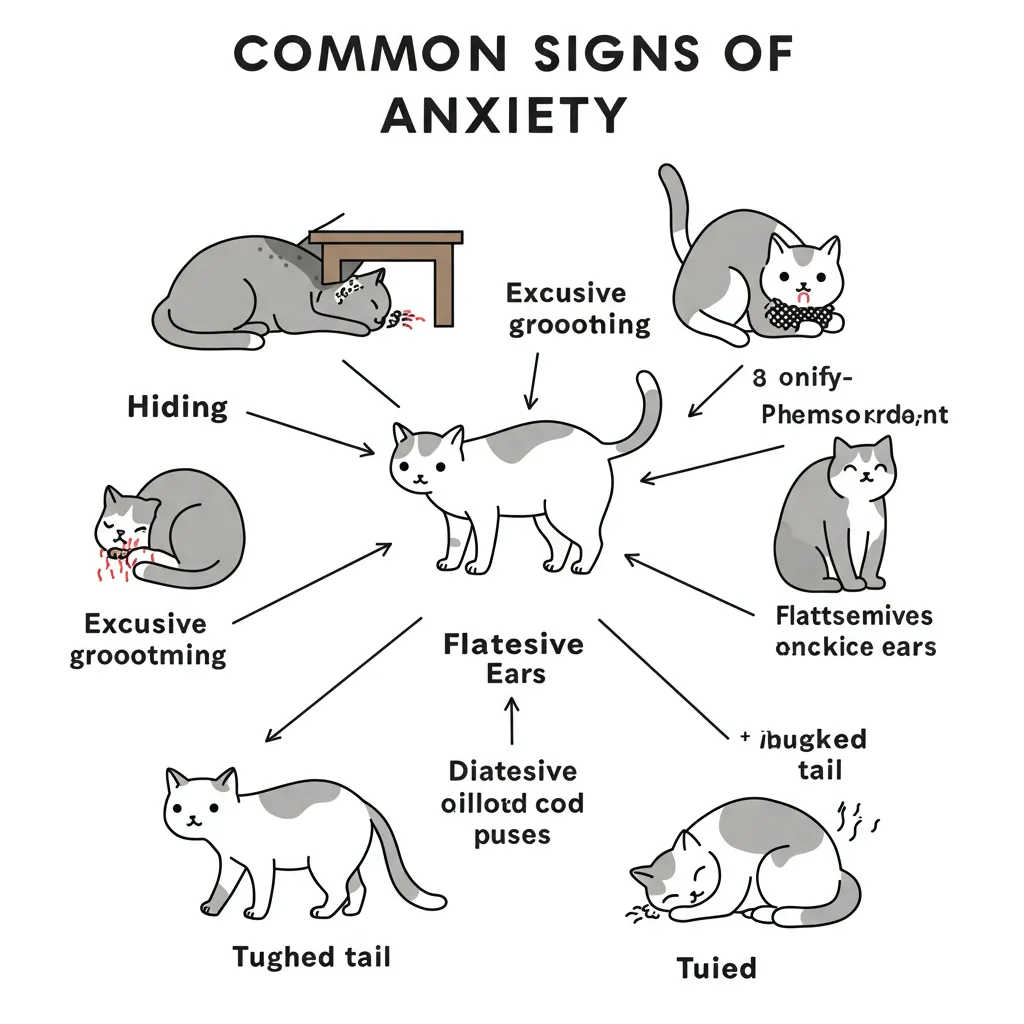
Cat anxiety signs include hiding, excessive grooming (leading to bald spots), or dilated pupils. Triggers like loud noises or new pets can cause cat stress and anxiety, manifesting in restlessness or appetite changes.
Pros of early detection:
- Prevents escalation to aggression.
- Improves cat mental health.
Cons if ignored:
- Chronic stress leads to health issues like urinary problems.
Anger, Aggression, and Frustration
Hissing, swatting, or flattened ears signal frustration. Redirect with toys to avoid bites.
Promoting Cat Emotional Well-Being
Enrich their environment with scratching posts, perches, and puzzle feeders. Regular play sessions release endorphins, boosting mood.
Interpreting Cat Behavior: Tips and Strategies
Now that you’ve got the basics, let’s apply them with practical cat behavior training tips.
1. Recognize Signs of Cat Anxiety
Watch for pacing, trembling, or excessive vocalization. Step-by-step: Observe daily patterns, note triggers, consult a vet for underlying issues.
2. Create a Safe and Enriching Environment
Provide hiding spots, vertical space, and scent-soakers like blankets. Avoid sudden changes.
3. Establish a Consistent Routine
Cats thrive on predictability—feed, play, and cuddle at set times to reduce anxiety.
4. Address Litter Box Problems
Common issue: Avoidance due to stress or medical problems. Clean daily, use unscented litter.
5. Engage in Positive Reinforcement for Cats
Reward good behavior with treats or praise. For example, clicker train to come when called: Click, treat, repeat.
Step-by-step guide:
- Choose a high-value treat.
- Associate action with reward.
- Gradually phase out treats.
6. Strengthen the Cat-Human Bond
Spend quality time: Interactive play, gentle grooming, respect their space. Talk softly—studies show it raises oxytocin levels.
7. Seek Professional Help if Needed
If behaviors persist, consult a vet or behaviorist for issues like aggression.
Common Cat Behavior Problems and Solutions
From scratching furniture to aggression, here’s a table of fixes:
| Problem | Causes | Solutions |
|---|---|---|
| Scratching Furniture | Territory marking, claw maintenance | Provide alternatives like posts; use deterrents. |
| Aggression | Fear, play gone wrong | Redirect with toys; positive reinforcement. |
| Inappropriate Elimination | Stress, medical issues | Vet check; multiple boxes. |
| Excessive Meowing | Hunger, boredom | Scheduled feeds; enrichment. |
Real example: A friend’s cat scratched couches until they introduced sisal posts problem solved in weeks.
Conclusion
Understanding “what is my cat thinking” boils down to observing cat body language, decoding cat emotions, and applying cat behavior tips like positive reinforcement. By interpreting cat behavior thoughtfully, you’ll boost your cat’s mental health, resolve problems, and deepen your bond. Start today—watch those tails and ears, and see the difference. What’s one behavior you’ve noticed in your cat? Share in the comments, subscribe for more feline insights, or try these tips and report back!

FAQ
What can I do to understand what my cat is thinking?
Observe body language, vocalizations, and patterns daily. Use resources like slow blinks to build trust and decode signals.
How do cats communicate through their behavior?
Primarily via body postures, tail/ear movements, and scents, supplemented by meows and purrs for emphasis.
How can I interpret my cat’s body language?
Look at tails (upright for happy), ears (flat for fear), and eyes (dilated for excitement or stress) in context.
Do cats experience emotions like humans?
Yes, cats feel joy, fear, anger, and affection, though expressed differently; research confirms they recognize human emotions too.
How can I decode my cat’s behavior?
Combine observation with expert guides; note triggers and use positive reinforcement to encourage positive actions.
How can understanding my cat’s behavior enhance our relationship?
It builds trust, reduces misunderstandings, and promotes emotional well-being, leading to a stronger cat-human bond.