How to Approach a Cat: The Complete Guide to Introducing Yourself and Building Trust (Even with Stray, Feral, or Terrified Cats)
Meeting a cat for the first time is never as simple as walking up and saying hello. Cats decide in seconds whether you’re friend, threat, or irrelevant. Get it wrong and you’ll earn a hiss, a swipe, or a lifetime of side-eye. Get it right and you’ll unlock one of the most rewarding relationships on the planet.
I’ve helped hundreds of people – new adopters, foster parents, and stray-cat feeders – turn fearful felines into affectionate companions. This guide combines everything I’ve learned from cat behaviorists, veterinarians, and years of hands-on experience. Whether you’re wondering how to approach a new cat in your home, how to get a stray cat to like you, or how to gain a cat’s trust without getting scratched, you’ll walk away knowing exactly what to do.
Quick Summary: The 5 Golden Rules Before You Move a Muscle
- Let the cat choose the pace – never force interaction.
- Stay low, quiet, and sideways – direct approaches feel predatory.
- Master the slow blink – it’s the feline equivalent of a friendly smile.
- Read body language first – ears, tail, and whiskers tell you everything.
- Patience beats treats – food helps, but pressure destroys trust.
Keep these in mind and you’re already ahead of 95% of people.

Why Most People Scare Cats Without Realizing It
Cats are not small dogs. Dogs read direct eye contact and upright posture as friendly. Cats read the exact same signals as “predator about to pounce.” That’s why your enthusiastic “Hi kitty!” and outstretched hand often ends with the cat bolting under the couch.
Understanding this single difference changes everything.
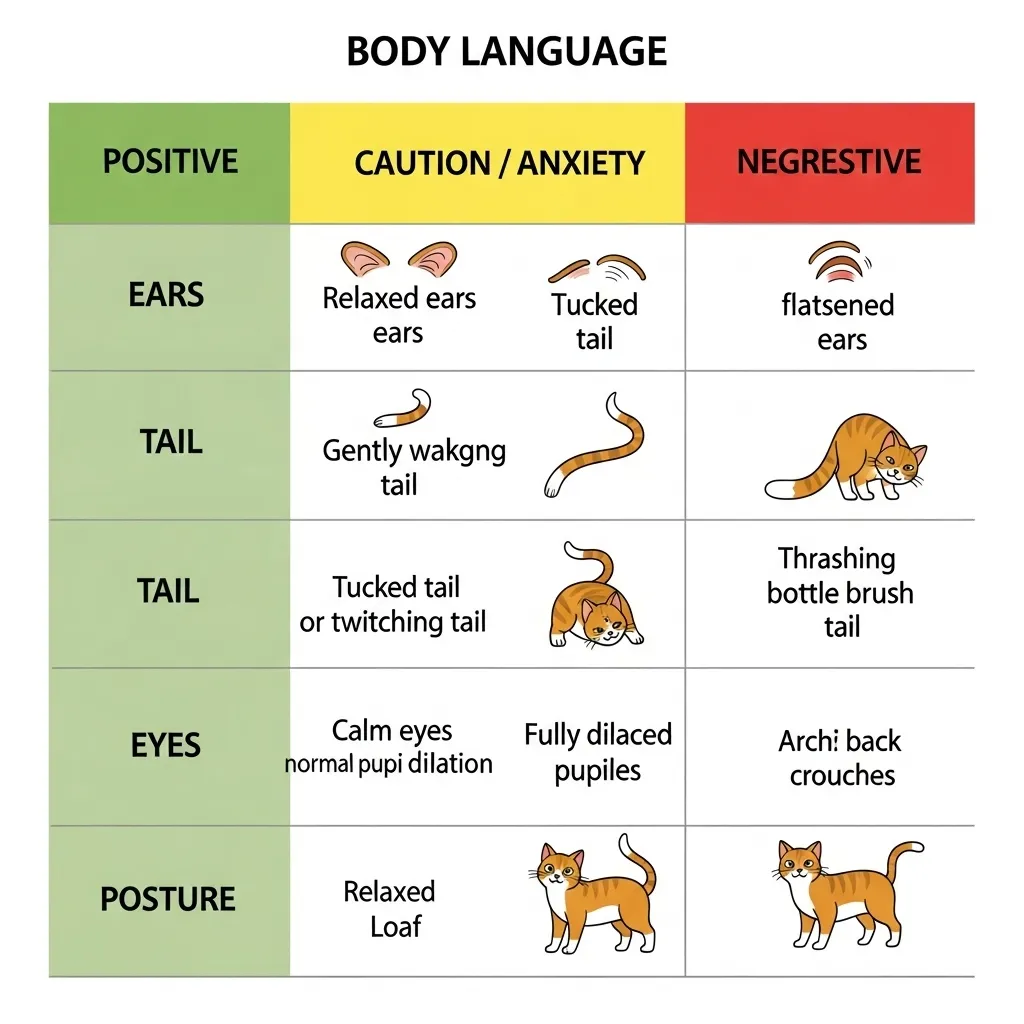
How to Read Cat Body Language: Your Cheat Sheet Before the First Move
Before you even think about moving closer, learn these signals. They’re more reliable than any words.
| Body Part | Relaxed / Curious | Nervous / Unsure | Fearful / Aggressive |
|---|---|---|---|
| Ears | Forward or slightly sideways | Rotating sideways (“airplane ears”) | Flattened against head |
| Tail | Loose, gentle sway or curled | Quick flicks or puffed | Thrashing or tucked tightly |
| Whiskers | Forward and fanned | Slightly back | Flat against face |
| Eyes | Soft, slow blinking | Wide pupils, rapid blinking | Huge black pupils, hard stare |
| Body Posture | Weight evenly distributed, belly may show | Crouched, tense | Arched back, piloerection (fur standing) |
If you see anything in the right column, freeze. Back up slowly. Give space.
Step-by-Step: How to Approach a Cat Without Scaring It
Step 1 – Get on Their Level (Quietly)
Stand up and you tower over them. Sit or crouch instead. The lower you are, the less threatening you appear.
Pro move: Sit sideways. Facing a cat straight-on feels confrontational.
Step 2 – The Slow Blink Technique
Look at the cat softly (never a hard stare), then slowly close your eyes for 1–2 seconds and open them again. If the cat slow-blinks back, congratulations – you just had a feline conversation that means “I’m not a threat.”
This is the single most powerful trust-building tool we have. Studies from the University of Sussex and Lincoln confirm cats are far more likely to approach someone who slow-blinks.
Step 3 – Offer the “Sniff Test” Hand
Keep your hand low, palm down, fingers curled slightly. Extend it no closer than 1–2 feet. Let the cat come the final distance. If they sniff and rub, you’re golden. If they back away, pull your hand back slowly – no sudden movements.
Step 4 – Let Them Make First Physical Contact
The moment a cat head-bunts (bunts their forehead against you) or rubs their cheek on your hand, trust has officially begun. Until then, keep hands to yourself.
Special Situations: Shy, Scared, Stray, or Feral Cats
How to Interact with a Scared or Shy Cat
- Sit quietly in the same room every day without trying to touch.
- Talk in a calm, higher-pitched voice (cats respond better to “cat-directed speech”).
- Place a worn T-shirt with your scent in their safe space.
How to Befriend a Stray Cat
Start feeding at the same time every day from a distance. Gradually move the bowl closer over weeks. Never try to grab. Many former strays now sleep on my bed because I respected this timeline.
How to Approach a Feral Cat (or Decide Not To)
True feral adults rarely become pets. Focus on Trap-Neuter-Return (TNR) instead of forced friendship. Kittens under 10–12 weeks still have a good chance of socialization. Anything older requires extreme patience and often professional help.
Using Treats and Food to Bond (Without Creating Begging Monsters)
Food speeds things up, but timing matters:
- Use high-value treats (plain cooked chicken, tuna, or Churu).
- Toss treats toward the cat instead of holding them – reduces pressure.
- Once trust is higher, let them eat from your hand.
Do’s and Don’ts When Meeting a Cat for the First Time
Do
- Move slowly and predictably
- Let the cat approach you
- Use the slow blink
- Offer a finger to sniff from below nose level
Don’t
- Stare directly
- Reach over the head
- Pick up unless they clearly want it
- Corner or chase
Signs a Cat Is Comfortable with You (and Trusts You)
You’ll know you’ve succeeded when you see several of these:
- Slow blinking at you
- Exposed belly (note: this is not always an invitation to rub)
- Tail up with a little curve at the tip when they see you
- Head bunting or cheek rubbing
- Purring while being petted
- Kneading on you (“making biscuits”)
For a deeper dive, check our article on how to know if a cat trusts you.

[Image placement: After the signs list]
Prompt: Collage of four photos: cat slow-blinking, tail-up greeting, head-bunting a hand, and kneading on a blanket with eyes half-closed in bliss.
Alt text: Clear signs your cat feels safe and trusts you
How Long Does It Take for a Cat to Trust You?
There’s no universal timeline, but here’s what I’ve seen:
- Friendly adult house cat: minutes to a few days
- Shy or previously abused cat: 2–8 weeks of daily positive interaction
- Former stray: 1–6 months
- Feral adult: often never fully (but many become “porch cats” who greet you daily)
Trust is built in tiny moments, not grand gestures.
Mistakes to Avoid When Approaching a New Cat
- Forcing interaction the first day
- Loud voices or sudden movements
- Picking them up before they’re ready
- Direct eye contact + reaching overhead (classic predator combo)
- Giving up too soon most “unfriendly” cats just need more time
Final Thoughts: Respect Is the Foundation of Every Great Cat Relationship
Every cat I’ve ever loved started as a cautious stranger. Some took minutes, others took months. The ones who took the longest are often the most devoted once they decide you’re theirs.
Approach every cat as an individual with their own history and boundaries. Read their signals, respect their space, and let them set the pace. Do that, and you won’t just meet a cat you’ll earn a friend for life.
At Cat Bloom Haven, we’re here for every step of your cat journey from first hello to senior years.
Now go slow-blink at a cat. You’ve got this.
Frequently Asked Questions
How do you introduce yourself to a cat for the first time?
Sit or crouch at their level, avoid direct staring, slow-blink, and extend a loosely curled hand for sniffing. Let them come to you.
How long does it take a cat to trust a new person?
Anywhere from a few minutes (outgoing cats) to several months (shy or formerly stray cats). Consistency and patience are key.
Why does slow blinking work with cats?
It mimics friendly feline communication and signals that you are relaxed and non-threatening.
Should you let a new cat smell your hand?
Yes – it’s how they gather information. Offer it low and still, never push it into their face.
How do you calm a nervous cat when approaching?
Give space, speak softly, sit quietly, and use slow blinks. Never corner or try to pick them up until they approach first.
Can you ever fully gain a feral cat’s trust?
Adult ferals rarely become lap cats, but many learn to trust specific people for food and gentle interaction over time.