How to Keep Dog Out of Cat Food: Proven Strategies for Peaceful Multi-Pet Meals
Picture this: your cat finally settles into a calm meal, tail flicking contentedly, only for your dog to barrel in like a furry missile and devour the bowl in seconds. Sound familiar? If you’re tired of refereeing feeding time in your multi-pet household, you’re not alone. Learning how to keep dog out of cat food isn’t just about protecting portions; it’s about safeguarding health, reducing stress, and restoring harmony at mealtime.
In this guide, you’ll discover practical, vet-approved solutions that work for real homes – from elevated feeding stations to smart training techniques. We’ll cover why dogs crave cat food, the hidden health risks, and step-by-step ways to create dog and cat feeding separation that lasts. By the end, you’ll have a customized plan that fits your space, budget, and pets’ personalities.
Key Takeaways
- Cat food is higher in protein and fat, which can lead to obesity or pancreatitis in dogs if eaten regularly.
- Simple height adjustments, like a 24-inch shelf, block 90% of dog access attempts.
- Combining physical barriers with positive reinforcement training yields the fastest results.
- Automatic feeders and puzzle toys prevent boredom-driven food theft.
- Consistency across all family members is non-negotiable for long-term success.
Why Dogs Eat Cat Food: The Irresistible Allure
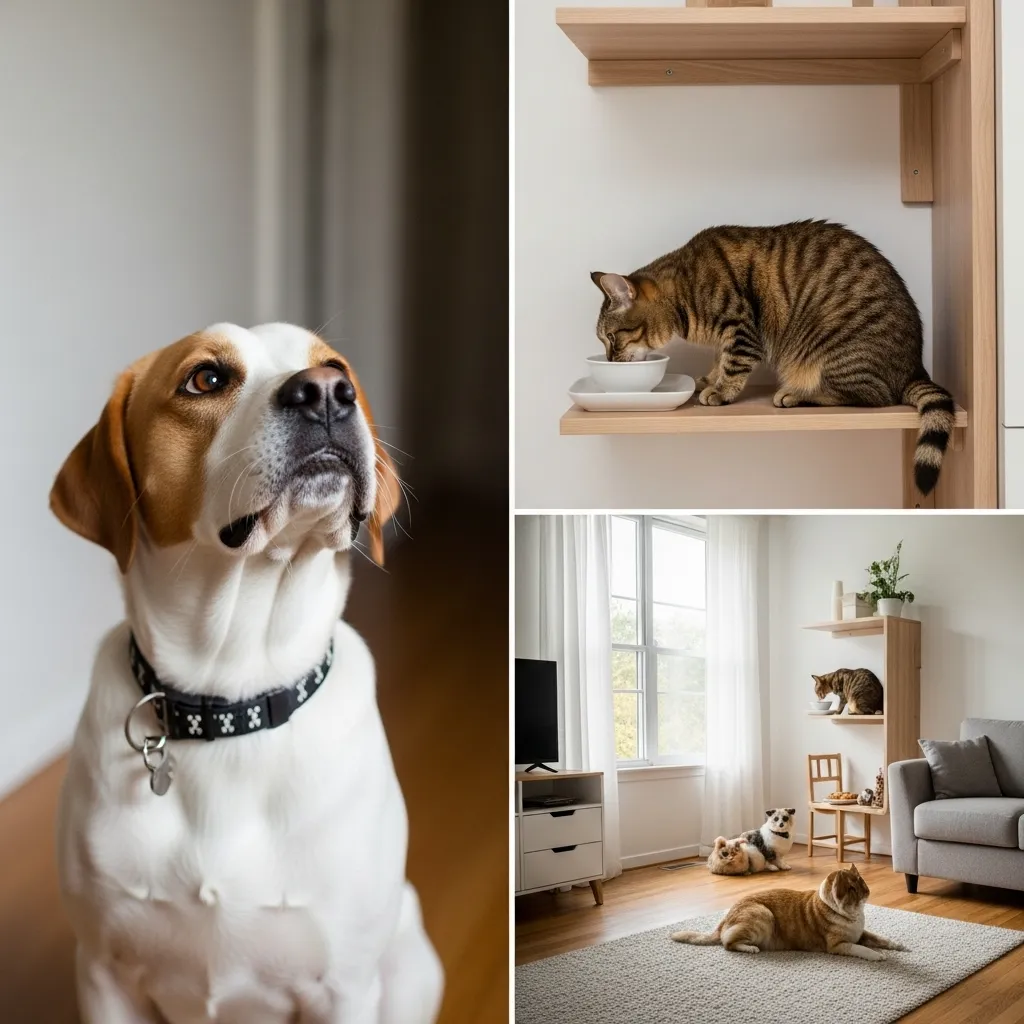
Dogs don’t sneak into cat bowls out of spite. Cat food smells and tastes like a gourmet buffet to them. Most cat foods contain 35-50% protein on a dry matter basis, compared to 20-30% in dog food. That rich, meaty aroma triggers an instinctual “jackpot” response in a dog’s brain.
Add in the crunchy texture and smaller kibble size, and it’s no wonder your pup views cat food as premium contraband. Some dogs even learn to associate the sound of cat food pouring with an easy score, creating a Pavlovian heist every time you feed your feline.
But attraction isn’t the only driver. Boredom, resource guarding, or simply an empty dog bowl can push opportunistic behavior. Understanding these triggers is the first step in dog eating cat food solutions that actually work.
Health Risks of Dogs Eating Cat Food: More Than Just a Bellyache
Occasional nibbles won’t send your dog to the ER, but regular access creates real problems. Here’s what veterinarians see most often:
- Weight gain: Cat food packs 10-20% more calories per cup than dog food.
- Pancreatitis: High fat content overwhelms the pancreas, especially in prone breeds like Schnauzers.
- Urinary issues: Excess protein strains kidneys over time.
- Nutritional imbalance: Dog-specific nutrients like beta-carotene get crowded out.
A 2019 study in the Journal of Veterinary Internal Medicine found that dogs fed cat food for just 30 days showed elevated liver enzymes in 40% of cases. The fix? Prevention through smart cat food safety for dogs.
Creating Separate Feeding Zones: The Foundation of Success
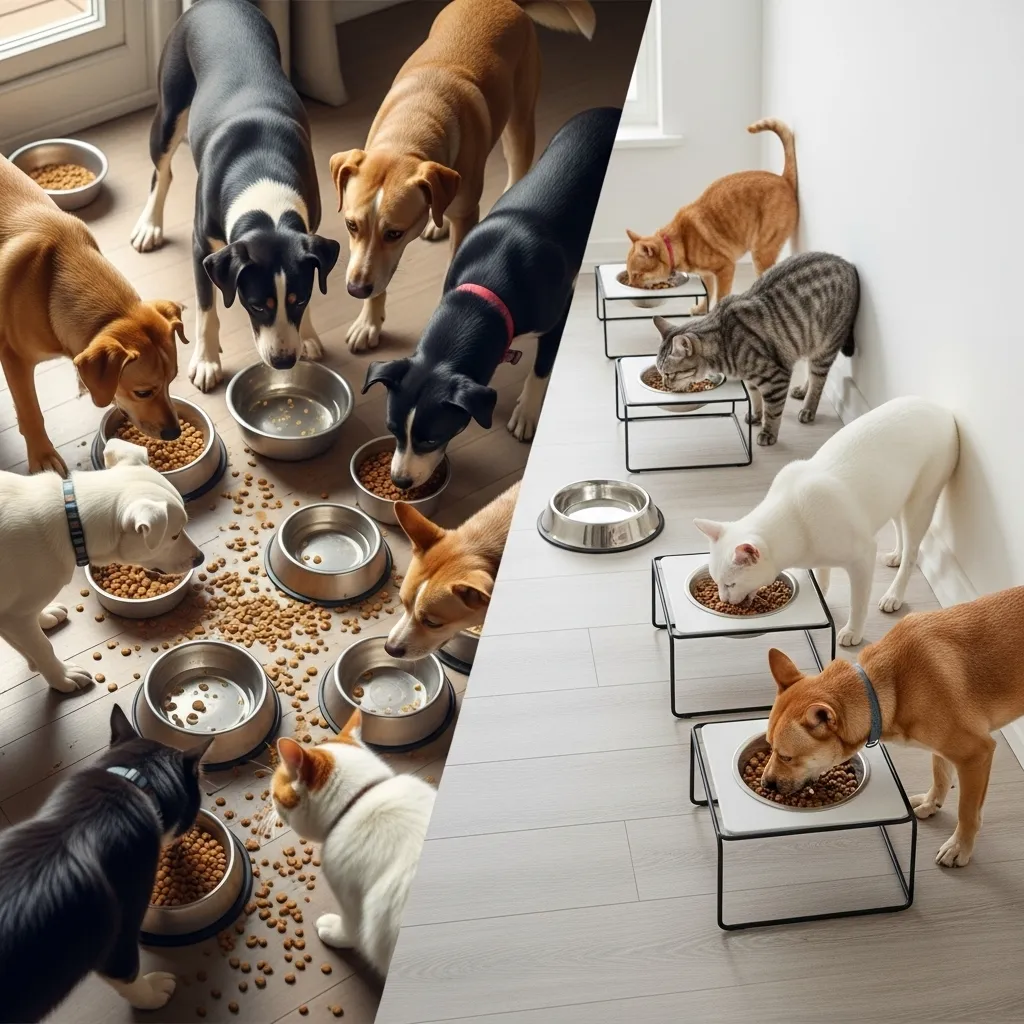
The simplest way to prevent dog from accessing cat food is to ensure they never occupy the same space at mealtime. Start by mapping your home:
- Identify cat-only zones (counters, shelves, spare rooms).
- Measure your dog’s jump height – most medium dogs clear 18 inches easily.
- Choose locations at least 24 inches high or behind closed doors.
Pro tip: Feed cats first, then immediately engage the dog with a walk or toy. This timing prevents hovering and reduces anxiety.
Elevated Cat Feeding Stations: Gravity as Your Ally
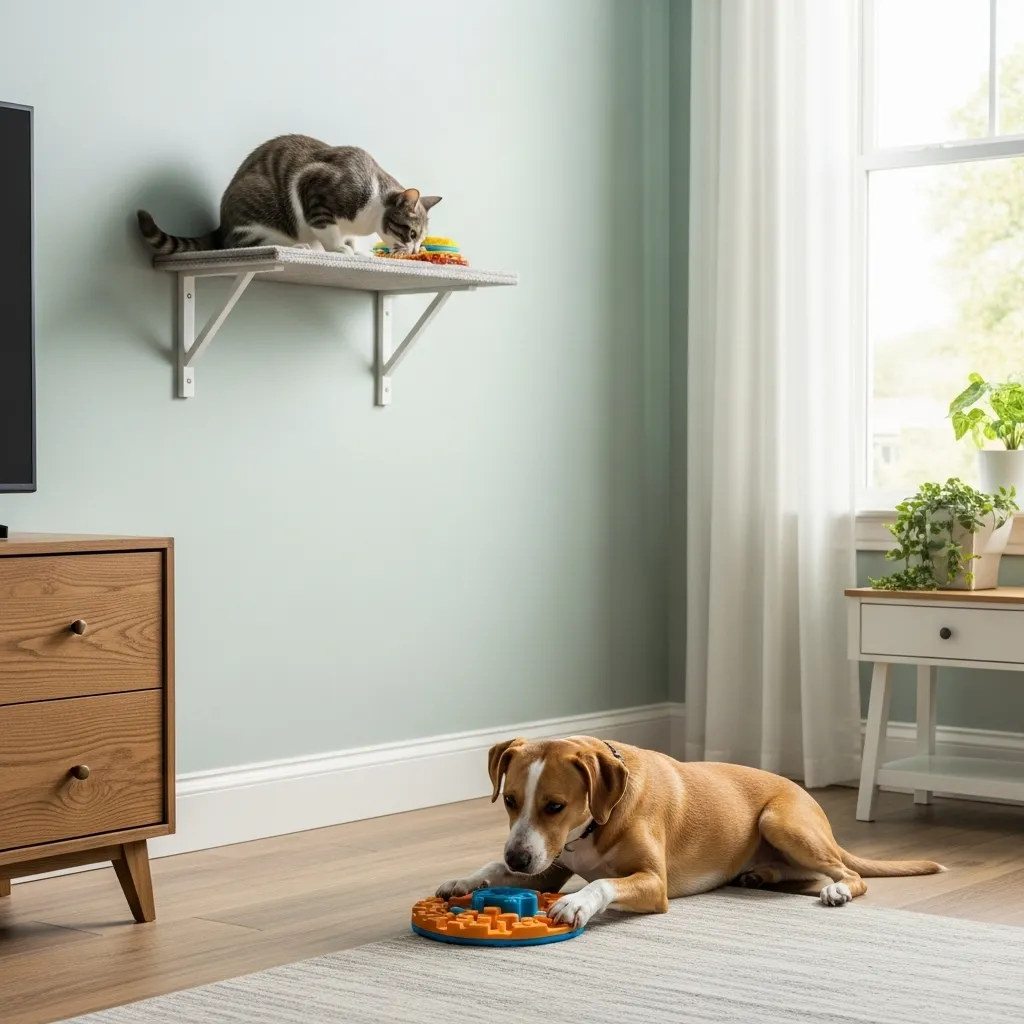
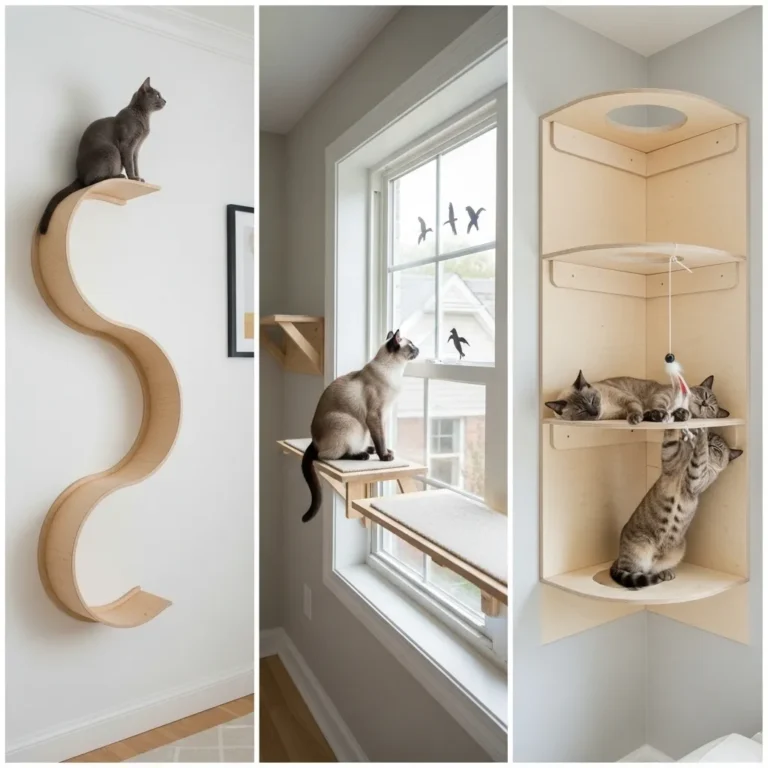
Cats love heights; dogs, not so much. An elevated cat feeding station exploits this natural divide.
DIY Shelf Solution
- Install a 12-inch deep shelf at 30 inches high.
- Use non-slip mats to prevent slips.
- Add a small ramp or nearby furniture for senior cats.
Commercial Options
Look for stations with weighted bases and spill-proof bowls. The Catit High Dining Station fits most budgets and holds two standard bowls.
Real-life example: Sarah from Portland mounted IKEA Lack shelves above her fridge. Her 65-pound Lab gave up after three failed jumps, and her cat now eats in peace.
Dog-Proof Cat Feeders: Technology Meets Training
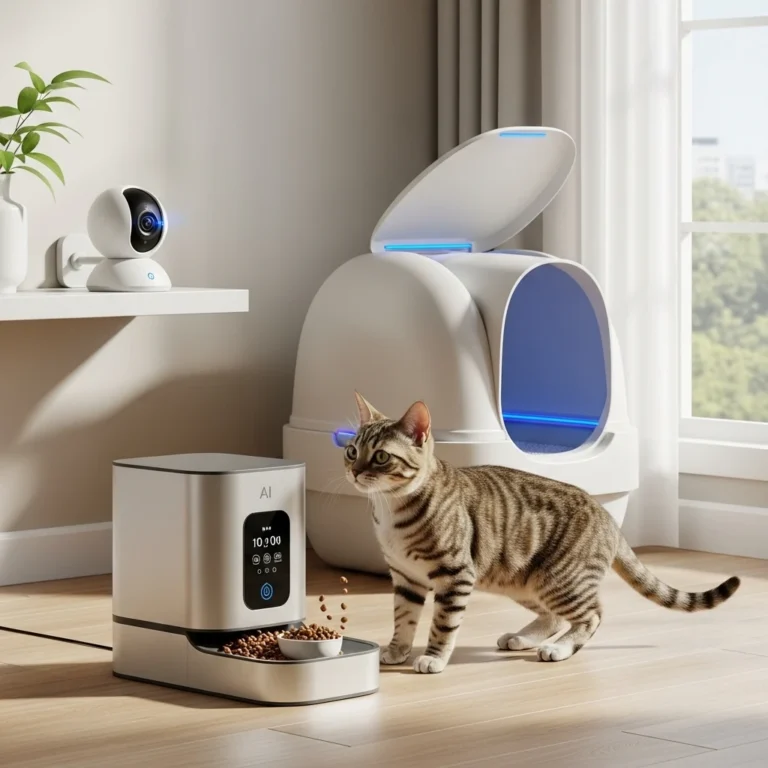
For homes where height isn’t an option, dog-proof cat feeder technology has advanced rapidly in 2025.
Microchip Feeders
SureFlap and PetSafe models open only for your cat’s implanted chip or collar tag. Dogs trigger nothing but a polite “access denied.”
Timed Feeders with Covers
Petlibro’s dual-compartment feeder dispenses cat portions on schedule and seals shut, preventing dog raids between meals.
Setup tip: Introduce the feeder gradually with treats to avoid stress. Pair with interactive toys for dogs during cat mealtime to redirect focus.
Physical Barriers for Pets: When Space Is Limited
Small apartments need creative physical barriers for pets. Here’s what works:
| Barrier Type | Best For | Cost | Dog Size Limit |
|---|---|---|---|
| Baby gate with cat door | Doorways | $30-60 | Small/medium dogs |
| Tension rod + plywood | Counter edges | $15 | All sizes |
| Freestanding pet gate | Open floor plans | $50+ | Large dogs |
A baby gate for pets with a 6-inch cat cutout lets felines pass while blocking canine intruders. Measure your cat’s width (usually 6-8 inches) before cutting.
Training Dogs to Avoid Cat Food: Building Lasting Boundaries
Physical solutions work faster when paired with training dogs to avoid cat food. Use these steps:
- Teach “leave it” with low-value items first, then graduate to cat food.
- Reward with high-value treats (cheese, liver) placed 10 feet from the cat bowl.
- Practice daily for 5 minutes; most dogs learn in 2-3 weeks.
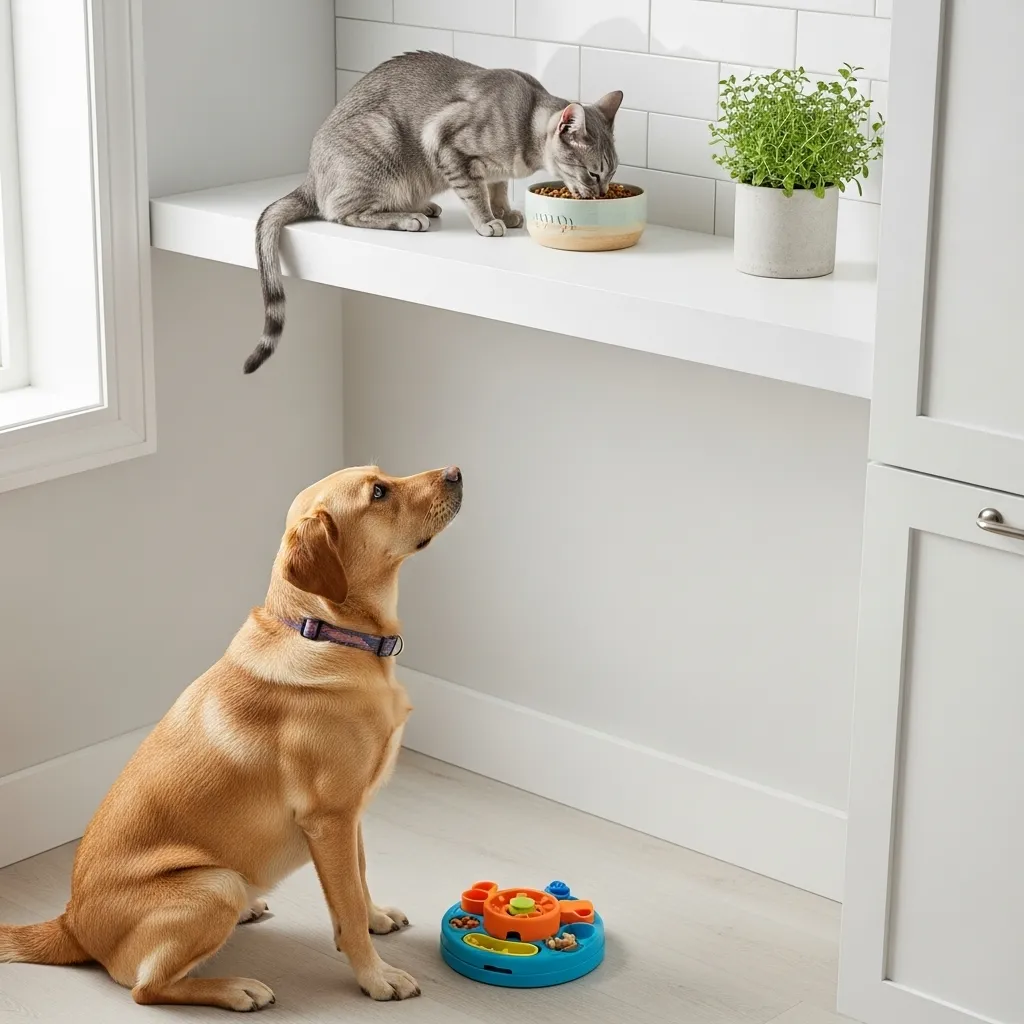
Case study: A client’s Border Collie mastered boundaries using clicker training and slow-feeding dog toys. The dog now waits patiently for his own puzzle feeder while the cat eats.
Distraction Techniques: Keep Dogs Busy, Not Hungry
Boredom fuels food theft. Combat it with dog distraction toys and pet enrichment activities:
- Frozen Kongs filled with dog-safe peanut butter
- Snuffle mats hiding kibble
- Puzzle toys for dogs like the Outward Hound Brick
Schedule these activities to coincide with cat feeding times. A 15-minute mental workout satisfies instincts better than stolen kibbles.
Feeding Pets Separately: Schedules That Stick
Create a feeding pets separately routine:
| Time | Cat Action | Dog Action |
|---|---|---|
| 7 AM | Eat on shelf | Morning walk |
| 12 PM | Auto-feeder | Training session |
| 6 PM | Supervised meal | Puzzle toy |
| 10 PM | Nighttime snack | Crated with chew |
Print and post this schedule. Involve all household members to prevent accidental overlap.
Advanced Solutions for Stubborn Cases
When basic methods fall short, try these dog-proof cat feeding solutions:
Scent Deterrents
Citrus peels or pet-safe bitter sprays around cat areas repel dogs without stress.
Motion-Activated Devices
PetSafe SSSCAT sprays harmless air bursts when dogs approach restricted zones.
Crate Training During Meals
Confine the dog comfortably with a stuffed toy for 10 minutes while the cat eats.
Common Mistakes to Avoid
- Leaving cat food out 24/7 – even “just a little” invites trouble.
- Punishing the dog after the fact – they won’t connect the dots.
- Inconsistent rules between family members.
Maintaining Pet Feeding Boundaries Long-Term
Check setups monthly. Cats grow, dogs learn new tricks, and furniture moves. Adjust heights, refresh toys, and reinforce training to keep your system foolproof.
FAQ
Why are dogs attracted to cat food?
The high protein, fat, and meaty smell make it irresistible. Smaller kibble and crunch add appeal.
What are the health risks of dogs eating cat food?
Regular consumption leads to obesity, pancreatitis, urinary crystals, and nutrient imbalances.
How can I create separate eating spaces for my pets?
Use height (shelves, counters), barriers (baby gates with cat doors), or separate rooms with timed access.
What height-based solutions work to keep dogs away from cat food?
Stations 24-36 inches high block most dogs. Add ramps for arthritic cats.
How do engaging activities help prevent dog eating cat food?
Puzzle toys and training redirect focus, satisfying hunting instincts without theft.
What physical obstacles stop dogs from accessing cat food?
Baby gates, tension rods, freestanding panels, or closed doors create effective barriers.
How do I use baby gates to create a dog-free zone for cat food?
Choose a gate with a small cat door (6-8 inches wide). Secure firmly to prevent tipping.
Are automatic pet feeders good for multi-pet homes in 2025?
Yes microchip and timed models prevent access while maintaining cat schedules.
Final Thoughts
Mastering how to keep dog out of cat food transforms chaotic mealtimes into peaceful rituals. Start with one solution an elevated shelf or microchip feeder then layer in training and enrichment. Your cat will thank you with relaxed purrs, and your dog will thrive on structure and mental stimulation.
Ready for more healthy pet feeding practices? Explore expert cat care and behavior guides on Cat Bloom Haven. From cat feeding habits to pet behavior management, we’ve got your multi-pet household covered.