The Ultimate Guide to Minimalist Cat Shelves: Sleek, Space-Saving Climbing Solutions Your Cat Will Actually Use
Picture this: you finally decluttered your living room, fell in love with that clean Scandinavian look, and then your cat decided the one bare wall is the perfect spot to launch herself at 3 a.m. Sound familiar?
You’re not alone. Thousands of cat parents search for “minimalist cat shelves” every month because we all want the same thing: happy, active cats without turning our homes into a jungle gym that screams “crazy cat person.”
The good news? You can give your cat the vertical territory she craves and keep your aesthetic intact. In this guide, I’ll show you exactly how to choose, install, and style minimalist cat shelves that look like custom millwork but actually work for real cats (yes, even the 18-pound Maine Coon who thinks he’s still a kitten).
Key Takeaways (For Busy Cat Parents)
- True minimalist cat shelves use clean lines, hidden brackets, and neutral materials (wood, matte black metal, white acrylic).
- The best setups create a continuous “cat highway” at least 8–10 feet long with multiple resting platforms.
- Weight rating matters more than looks: every shelf must hold at least 45–65 lbs for safety.
- Placement is 80% of success: cats want shelves that let them survey their kingdom and jump down safely.
- You can build a stunning wall for under $300 if you pick the right pieces.
Ready to create a cat wall that gets compliments from humans and five-star reviews from your cat? Let’s dive in.
Why Cats Need Vertical Space (And Why a Single Shelf Won’t Cut It)
Cats are semi-arboreal. In the wild, they spend most of their time off the ground to hunt, escape threats, and relax. Indoor cats still have those instincts, but we usually give them… a couch and maybe one cat tree covered in carpet that clashes with everything.
Lack of vertical territory is the #1 hidden cause of:
- Furniture scratching (they’re trying to climb something)
- Nighttime zoomies (stored energy with nowhere to go)
- Stress in multi-cat homes (no safe “above it all” spots)
A well-designed minimalist cat shelf system fixes all three problems while looking intentional instead of tacked-on.
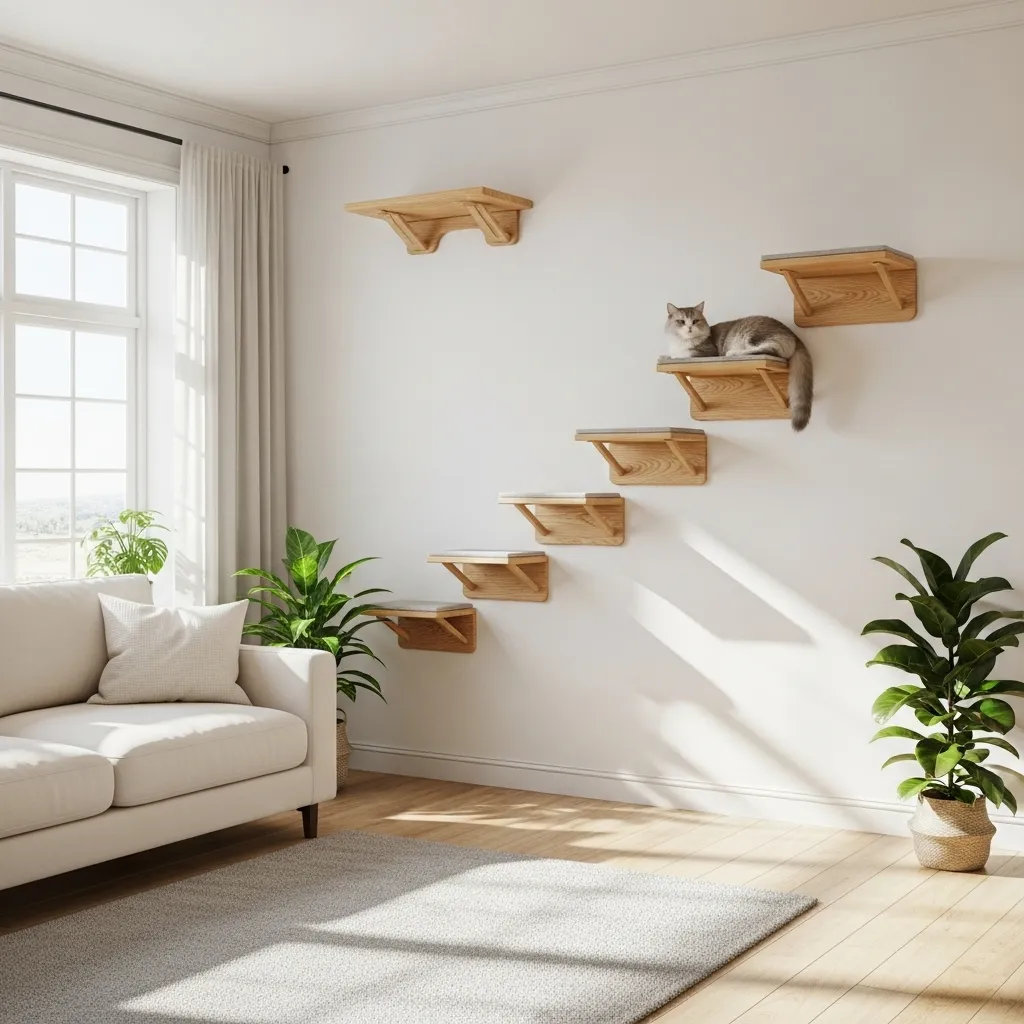
What Actually Makes a Cat Shelf “Minimalist”?
Not every floating shelf qualifies. Here’s the checklist I use with every recommendation:
- Clean sightlines – no visible brackets, carpet, or sisal wrapping
- Neutral palette – white, black, light wood, or walnut tones that disappear into the wall
- Simple geometry – rectangles or soft hexagons, nothing shaped like a cartoon paw
- Flush or recessed mounting – the shelf should look like it grew out of the wall
If it looks like something you’d see in a high-end Airbnb, you’re on the right track.
The 7 Best Minimalist Cat Shelf Designs for 2025
- Solid Wood Floating Ledges (The Gold Standard)
Real hardwood (oak, walnut, or maple) with hidden heavy-duty brackets. These hold 65+ lbs easily and age beautifully. - Acrylic “Invisible” Shelves
Crystal-clear ½-inch thick acrylic. Perfect if you want the cat to appear magically suspended in mid-air. - Matte Black Metal Box Shelves
Industrial-minimal vibe. Great for loft apartments and darker walls. - Rounded Corner Wood Platforms
Softer look that’s safer for wild leaps. - Built-in Recessed Niches
The ultimate luxury – drywall cutouts lined with wood or cushioned fabric. - IKEA Hack Floating Shelves
LACK shelves + hidden steel brackets = designer look for $40 each. - Modular Hexagon Systems
Honeycomb shelves you can reconfigure as your cat’s tastes change.
How to Plan Your Cat’s Dream Highway (Step-by-Step)
Step 1: Map the traffic flow
Watch where your cat already tries to go – top of the bookcase, back of the couch, windowsill. Build the path there.
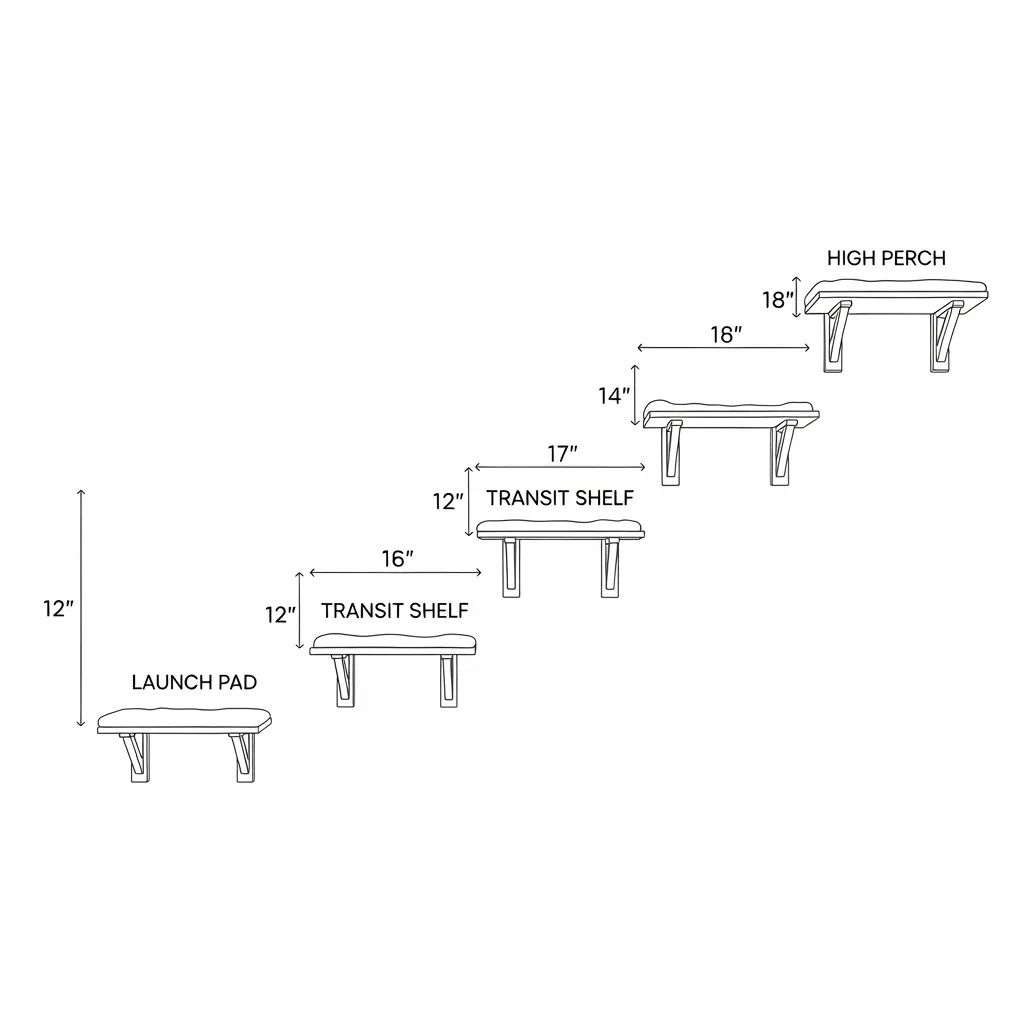
Step 2: Follow the 12–18 inch rule
Jumping distance between shelves should never exceed 18 inches horizontally or 12 inches vertically for most cats. Senior or chunky cats need tighter spacing.
Step 3: Include at least three types of zones
- Launch pad (lowest level, easy on/off)
- Transit shelves (for moving)
- Destination perches (wide enough to curl up – minimum 14 × 14 inches)
Step 4: Add one “confidence” shelf
A wide platform about 5–6 ft up where even nervous cats feel safe.
Installation Tips Most Blogs Get Wrong
- Never trust the anchors that come in the box. Use heavy-duty toggle bolts or find a stud.
- Pre-drill every hole – splitting oak after you’ve painted the wall is heartbreak.
- Level twice, mount once. A 1-degree tilt feels like the Titanic to a sleeping cat.
- Add non-slip lining. Even confident cats appreciate grip (peel-and-stick EVA foam in matching color works perfectly).
Styling Secrets to Make It Look Custom (Not “Cat Furniture”)
- Repeat wood tones from your existing furniture – walnut shelves with walnut picture frames read as intentional.
- Add one statement plant on a lower shelf (cat-safe, of course – check our guide to cat-safe plants).
- Use the shelves for light decor when the cat isn’t looking – small ceramic vases or framed photos.
- Run subtle LED strip lighting underneath for nighttime drama.
Budget Breakdown: Stunning Wall for Every Price Point
Under $200
4 IKEA LACK shelves + steel brackets + cushion covers = clean, modern look
$300–600
7–9 solid oak floating shelves from Etsy sellers who specialize in pet furniture
$800+
Custom acrylic or built-in recessed niches – the “is that for the cat?” reaction guaranteed
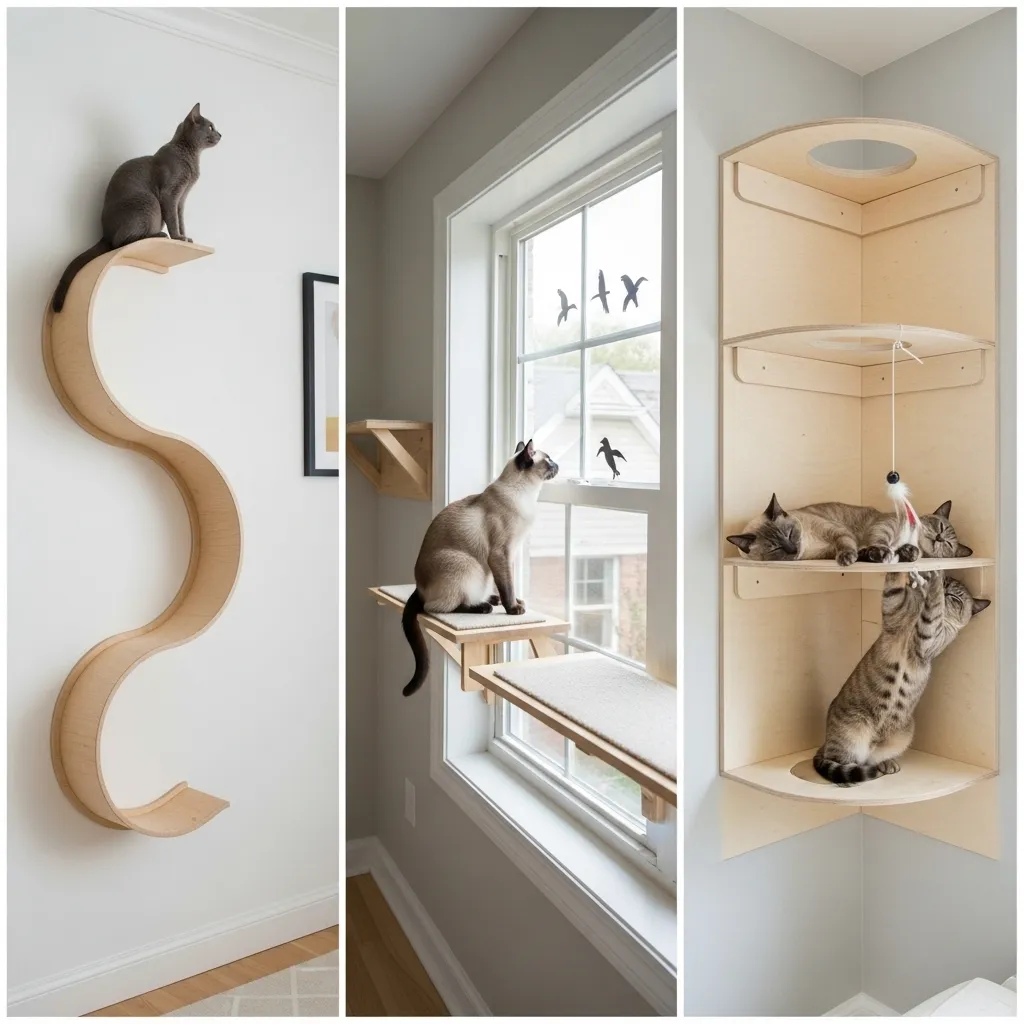
Real-Life Examples That Went Viral (And Why They Worked)
The “Floating River” layout
One continuous wavy line of staggered shelves that looks like art from the ground.
The “Window Lounge”
Two long shelves running directly under a large window – perfect for bird TV.
The “Corner Wrap”
Shelves that turn the corner of the room, giving cats a full 270-degree patrol route.
Common Mistakes That Make Cats Ignore Beautiful Shelves
- Placing shelves directly above the TV (too much action, too stressful)
- Skipping a cushioned landing zone (cats hate hard surfaces for napping)
- Mounting too high without gradual steps (10 ft is not a beginner level)
- Forgetting escape routes (every perch needs two ways off)
Maintenance & Cleaning (Because White Shelves + Cat Hair)
Most minimalist shelves wipe clean with a damp cloth. For fabric-lined boxes, choose removable, machine-washable cushions (bonus points if they match your throw pillows).
FAQ Minimalist Cat Shelves
Q: Will my cat actually use minimalist shelves or just stare at them?
A: 9 times out of 10, yes – if you follow the spacing rules and place them along existing desire paths. Sprinkle catnip the first week if your cat is skeptical.
Q: How much weight do minimalist cat shelves really need to hold?
A: Plan for 50–65 lbs minimum per shelf. A running leap can create 3–4× body weight in force.
Q: Are acrylic shelves safe?
A: Yes, when they’re at least ½-inch thick and properly mounted. They’re surprisingly strong and easier to clean than wood.
Q: Can I install these in a rental?
A: Absolutely. Use heavy-duty removable adhesive brackets for lighter shelves or patch small holes later – most landlords never notice if you repaint.
Q: Where should I put the litter box if I’m using wall space for shelves?
A: Opposite corner, lower level. Cats like to keep bathroom and bedroom separate when possible.
Final Thoughts
Minimalist cat shelves aren’t just another pet purchase they’re one of the kindest things you can do for an indoor cat’s mental health. A well-designed wall gives your cat confidence, exercise, and territory without sacrificing the calm, clean home you worked hard for.
Your cat doesn’t care if the shelves came from a big-box store or a custom carpenter. She only cares that she can finally patrol her kingdom from above, safe and sound.
Ready for more cat-friendly home ideas that don’t scream “cat lady”? Explore our guides on choosing the perfect cat tree for small spaces, creating a cat-safe balcony, or picking furniture that hides scratches beautifully all right here on Cat Bloom Haven.
Your walls (and your cat) will thank you.