The Ultimate Guide to Catio Designs: Safe, Stylish Outdoor Spaces Your Cat Will Love in 2025
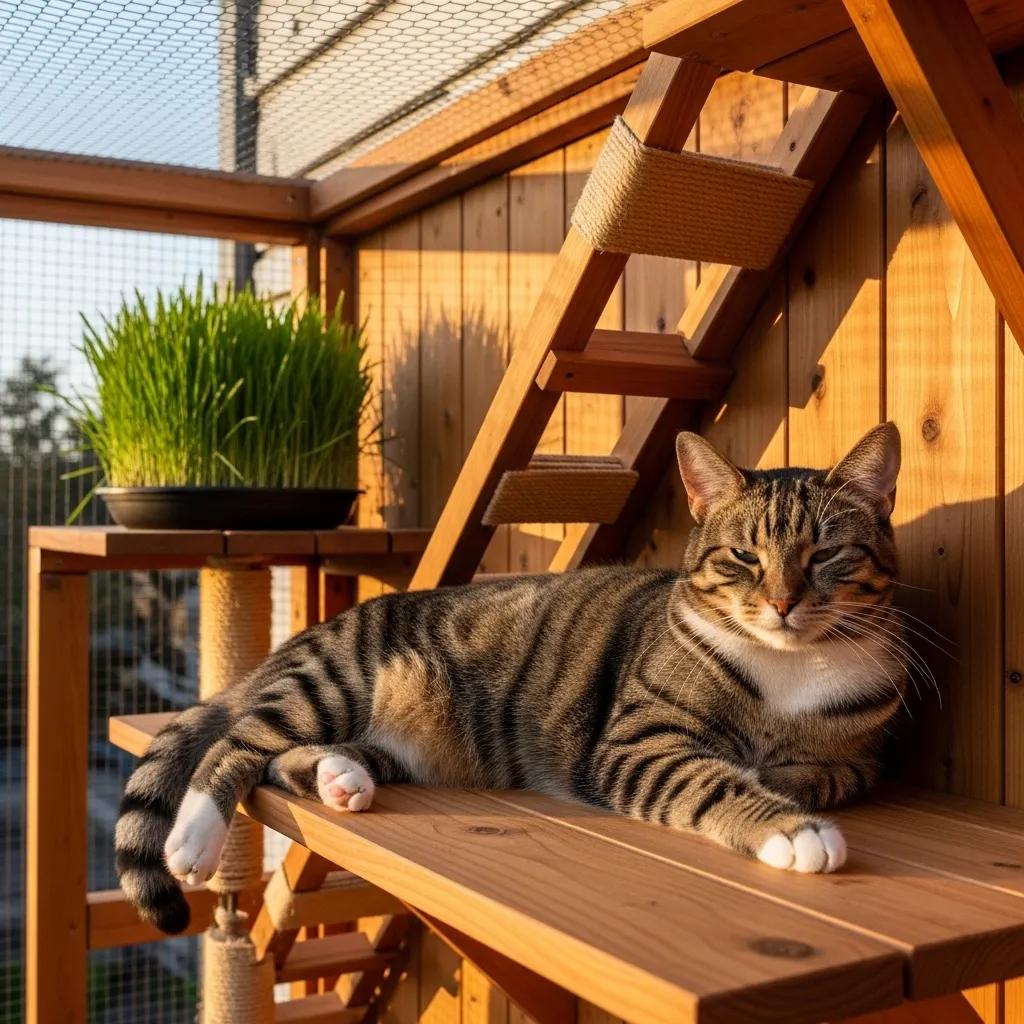
Imagine your cat stretched out on a sun-warmed shelf, tail flicking while birds flutter just out of reach. No risk of cars, no fights with neighborhood toms, no toxic fleas. That’s the magic of a well-designed catio, an enclosed outdoor patio that gives indoor cats the fresh air and stimulation they crave without the danger.
If you’re tired of watching your cat stare longingly at the window or feeling guilty every time you shut the door on those pleading eyes, you’re in the right place. This guide walks you through every style of catio design, from tiny window boxes to full backyard kingdoms. You’ll get real measurements, material recommendations, cost breakdowns, and the little details that turn a simple enclosure into your cat’s favorite room in the house.
Key Takeaways (For Quick Answers)
- A catio is a secure outdoor enclosure that lets indoor cats enjoy fresh air safely.
- Average cost ranges from $300 (DIY window box) to $8,000+ (custom built-in).
- Best materials: powder-coated aluminum framing, 16-gauge galvanized wire, cedar or composite wood.
- Most popular 2025 trends: modular systems, living green roofs, heated floors, and built-in water features.
- Every catio needs shade, escape-proof mesh (no wider than 1 inch gaps), and multiple perches at different heights.
Ready to build the outdoor paradise your cat deserves? Let’s dive in.
What Exactly Is a Catio and Why Does Your Cat Need One?
A catio (cat + patio) is a fully enclosed outdoor space attached to your home or freestanding in the yard. Think of it as a giant, luxurious crate that smells like pine needles and sunshine instead of plastic.
Indoor cats live longer, but they often show boredom, obesity, or destructive behavior because they miss natural stimulation. Studies from the Journal of Feline Medicine and Surgery (2023) show that cats with controlled outdoor access have lower stress hormone levels and fewer behavior issues. A catio gives you the best of both worlds: safety plus enrichment.
9 Catio Designs That Dominate 2025 (With Real Examples & Costs)
1. Window Box Catio – Perfect for Apartments
The easiest entry point. These boxes extend 2–3 feet out from a window and give small-space cats a taste of the outdoors.
- Typical size: 3 ft wide × 2 ft deep × 2 ft tall
- Cost: $300–$800 (DIY) or $1,200–$2,500 installed
- Best for: One or two cats, renters, budget-conscious owners
- Pro tip: Add a heated pad for winter use and a small cat door that locks from the inside.
2. Balcony Conversion Catio
Turn an existing balcony into a full cat paradise with floor-to-ceiling mesh panels.
- Add zip-tied galvanized mesh to railings, a solid roof, and escape-proof door
- Cost: $800–$3,000
- Bonus: Many cities allow this without permits if you don’t alter the structure.
3. Lean-To Catio Attached to the House
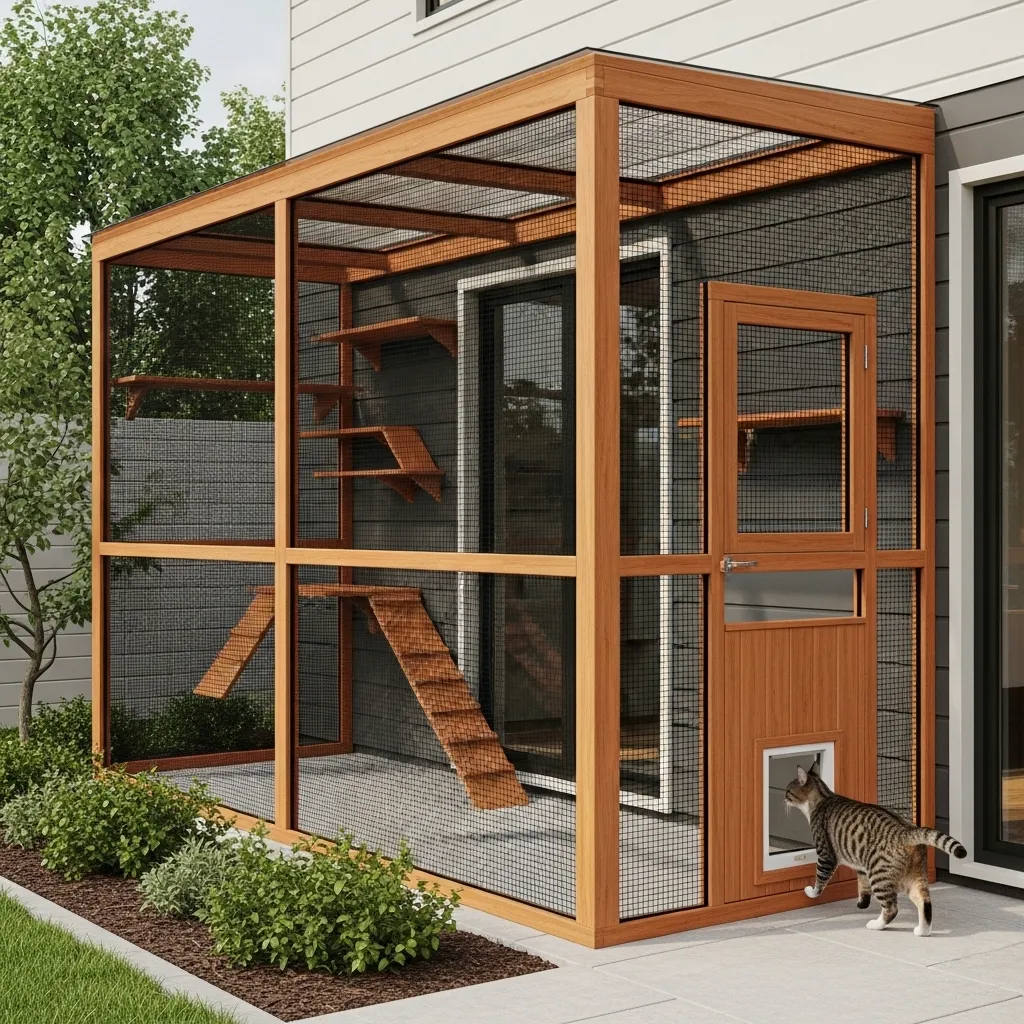
The classic design: a sloped roof enclosure that hugs the side of your house with direct door or window access.
- Sizes from 8×8 ft up to 12×20 ft
- Cost: $2,000–$6,000 DIY; $6,000–$12,000 custom
- Why it wins: Easy human access for cleaning, great rain protection.
4. Freestanding Backyard Catio
A standalone structure anywhere in the yard, often with a tunnel leading from the house.
- Popular sizes: 10×12 ft or larger
- Cost: $4,000–$15,000+
- Ideal for multi-cat households or owners who want a garden feature.
5. Porch or Deck Enclosure
Screen in an existing covered porch. Fastest and often cheapest large-scale option.
- Cost: $3,000–$8,000 for a 12×15 ft porch
- Upgrade idea: Replace standard porch screening with 1-inch pet-proof mesh.
6. Modular Catio Systems (The IKEA of Catios)
Brands like Habitat Haven and Catio Spaces sell bolt-together kits you can expand forever.
- Start small, add tunnels and towers later
- Cost per 8×8 module: $2,200–$4,500
- 2025 favorite: Clear acrylic panels mixed with mesh for winter sun.
7. Luxury Walk-In Catios with Human Seating
Big enough for you and your cat to hang out together. Think Adirondack chairs inside the enclosure.
- Average 200–400 sq ft
- Cost: $10,000–$30,000
- Features people love: ceiling fans, misters, Bluetooth speakers, living green roofs.
8. Tunnel-and-Tower Systems
Connect multiple window boxes with outdoor tunnels along the house exterior.
- Pure cat entertainment; they sprint laps at 3 a.m.
- Cost: $1,500–$5,000 depending on length.
9. Micro Catios for Tiny Yards
Even a 4×6 ft ground-level enclosure with a living roof can change your cat’s life.
- Add vertical elements (tree stumps, shelves) to triple usable space.
Essential Features Every Great Catio Design Needs
- Escape-Proof Mesh
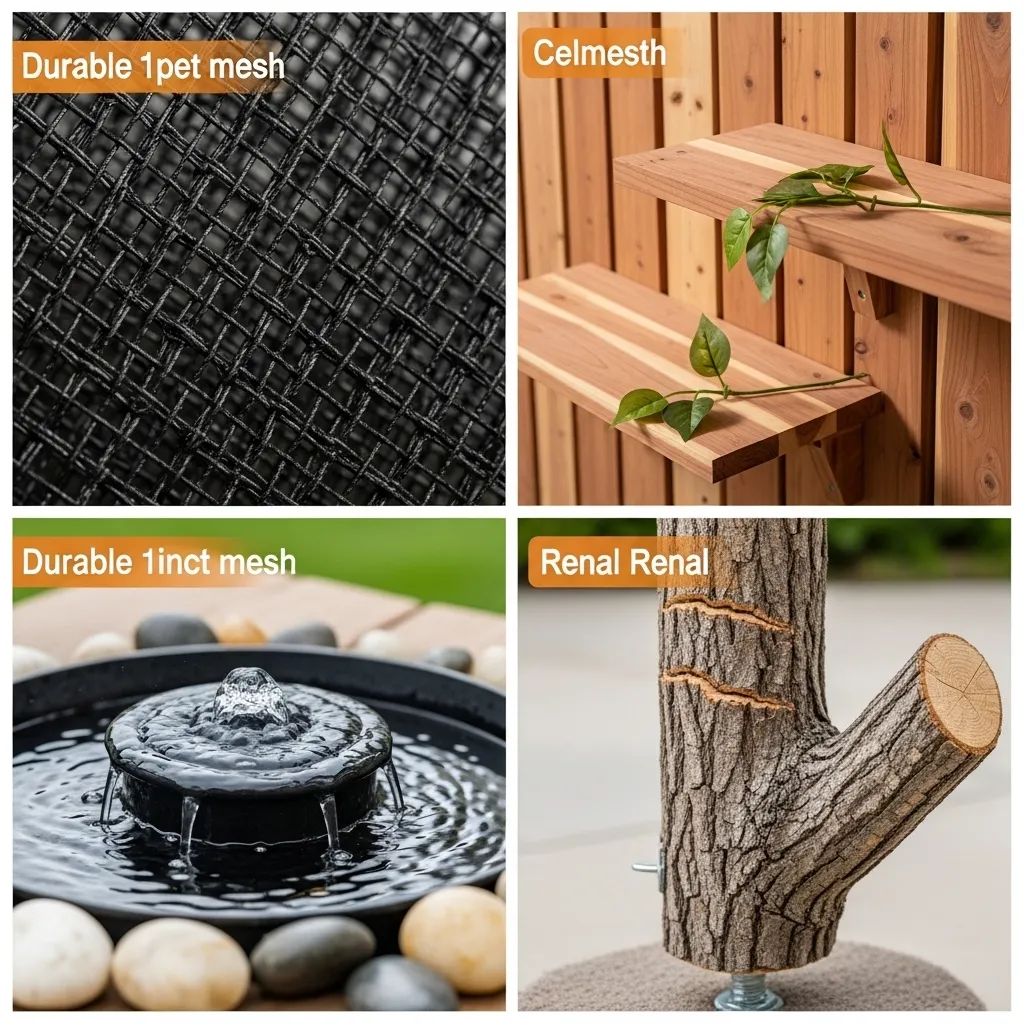
Use 16-gauge or thicker galvanized steel wire with openings no larger than 1×1 inch. Cats can squeeze through 2-inch gaps that look impossible. - Multiple Height Levels
Cats feel safest when they can perch above eye level. Aim for at least three different heights. - Weather Protection
- 30–50% shade (solid roof section or shade cloth)
- Wind blocks on prevailing wind side
- Raised flooring to stay dry
- Enrichment Built In
- Real tree branches or cedar posts for scratching
- Potted cat grass and catnip
- Water fountain (moving water prevents bacteria)
- Easy Cleaning Access
A human-sized door plus removable shelves saves your back forever.
Material Comparison Table (2025 Prices)
| Material | Durability | Cat Safety | Cost per sq ft | Maintenance |
|---|---|---|---|---|
| Powder-coated aluminum + mesh | 20+ years | Excellent | $35–$55 | Very low |
| Cedar wood + mesh | 10–15 years | Excellent | $45–$70 | Medium |
| PVC pipe DIY | 5–8 years | Good | $15–$25 | Medium |
| Standard porch screen | 2–5 years | Poor (claws tear it) | $8–$15 | High |
DIY vs Professional Installation Which Should You Choose?
DIY if:
- You’re handy and love projects
- Budget under $3,000
- You want exactly what you envision
Hire a pro if:
- You want it to last 20+ years
- Local building codes require permits
- You’d rather spend weekends cuddling your cat than drilling framing
Step-by-Step Planning Checklist
- Measure available space (remember human door access)
- Check local HOA rules and building permits
- Decide ground-level or raised floor
- Sketch perch heights and traffic flow
- Choose mesh and framing material
- Budget for extras: heating pad, fountain, plants
- Order materials or book installer
Real Owner Stories That Will Make You Smile
Sarah in Portland built a 10×12 lean-to catio for her two Ragdolls. Within a week her formerly overweight cats lost 2 pounds each just from climbing and watching birds. “They stopped screaming at the back door,” she says. “Total peace.”
Mike in Arizona installed a balcony conversion for his senior Siamese. The cat who used to hide all day now spends hours bird-watching. Vet bills dropped because stress-related cystitis disappeared.
For more inspiration on how outdoor access changes behavior, explore our detailed guide on Siamese cat hiding behavior.
Common Mistakes to Avoid
- Using chicken wire (cats bend it or hurt paws)
- Forgetting winter wind protection
- Only one perch height (causes bullying in multi-cat homes)
- Skipping a roof (rain + cat = misery)
FAQ Quick Answers Google Loves
Q: How much does the average catio cost in 2025?
A: Expect $300–$800 for a simple window box, $2,000–$6,000 for a mid-size attached catio, and $10,000+ for luxury walk-in designs.
Q: Are catios cruel?
A: No. They provide safe outdoor access that reduces boredom and obesity while eliminating risks like cars, predators, and disease.
Q: Can cats escape from a well-built catio?
A: Not if you use proper 1-inch mesh, secure all edges with screws (not staples), and install a locked human door.
Q: Do catios need permits?
A: Structures under 100–200 sq ft (varies by city) usually don’t. Always check local codes.
Q: What is the best flooring for a catio?
A: Composite decking, outdoor tile, or epoxy-coated concrete. Avoid pea gravel (hard to clean) and carpet (fleas).
Final Thoughts
Your cat doesn’t need the whole dangerous outdoors. They just need sunlight on their fur, birds to watch, and a breeze that smells like freedom. A thoughtfully designed catio gives them exactly that, while giving you peace of mind.
Start small if you need to. A $400 window box can be just as life-changing as a $20,000 backyard palace. The important thing is giving your indoor cat a window to the world that’s 100% safe.
Ready for more expert cat care ideas? Explore our guides on everything from American Shorthair playful personality to creating the perfect indoor enrichment space when weather keeps everyone inside.
Your cat is waiting for their outdoor adventure to begin. Let’s make it happen.