The Feline Mind Unveiled: What Veterinary Behaviorists Really Know About Modern House Cats
Key Takeaways
- Myth-Busting Intelligence: Modern cats possess complex social cognition and can form attachment bonds with humans similar to dogs and human infants.
- The Indoor Dilemma: The confined, predictable nature of modern indoor living often conflicts with a cat’s evolutionary need for exploration and predation, leading to common behavioral issues.
- Science-Based Solutions: Addressing feline behavioral problems requires a medical-first approach, understanding of feline evolutionary biology, and structured environmental enrichment, not punishment.
- Expertise Matters: Veterinary behaviorists are uniquely qualified to diagnose and treat complex issues, combining medical and behavioral science for lasting results.
For centuries, domestic cats have been wrapped in an enigma, often labeled as aloof, independent, and mysterious. Today, however, a new generation of scientists and veterinary behaviorists is pulling back the curtain. Armed with rigorous research, they are revealing that modern house cats are not simply low-maintenance pets but complex beings whose behavior is profoundly shaped by the clash between their ancient instincts and our contemporary living rooms. Understanding this clash is the key to solving common cat behavior problems and building a deeper, more harmonious bond with our feline companions.
The Unseen Struggle: Evolutionary Instincts in a Modern World
The fundamental truth guiding feline behavior experts is this: the domestic cat (Felis catus) is an obligate carnivore and a skilled predator whose basic neurological wiring has changed little from its wild ancestors. Yet, we have placed this finely-tuned hunting machine into environments our homes that are often sterile, predictable, and devoid of natural challenges.
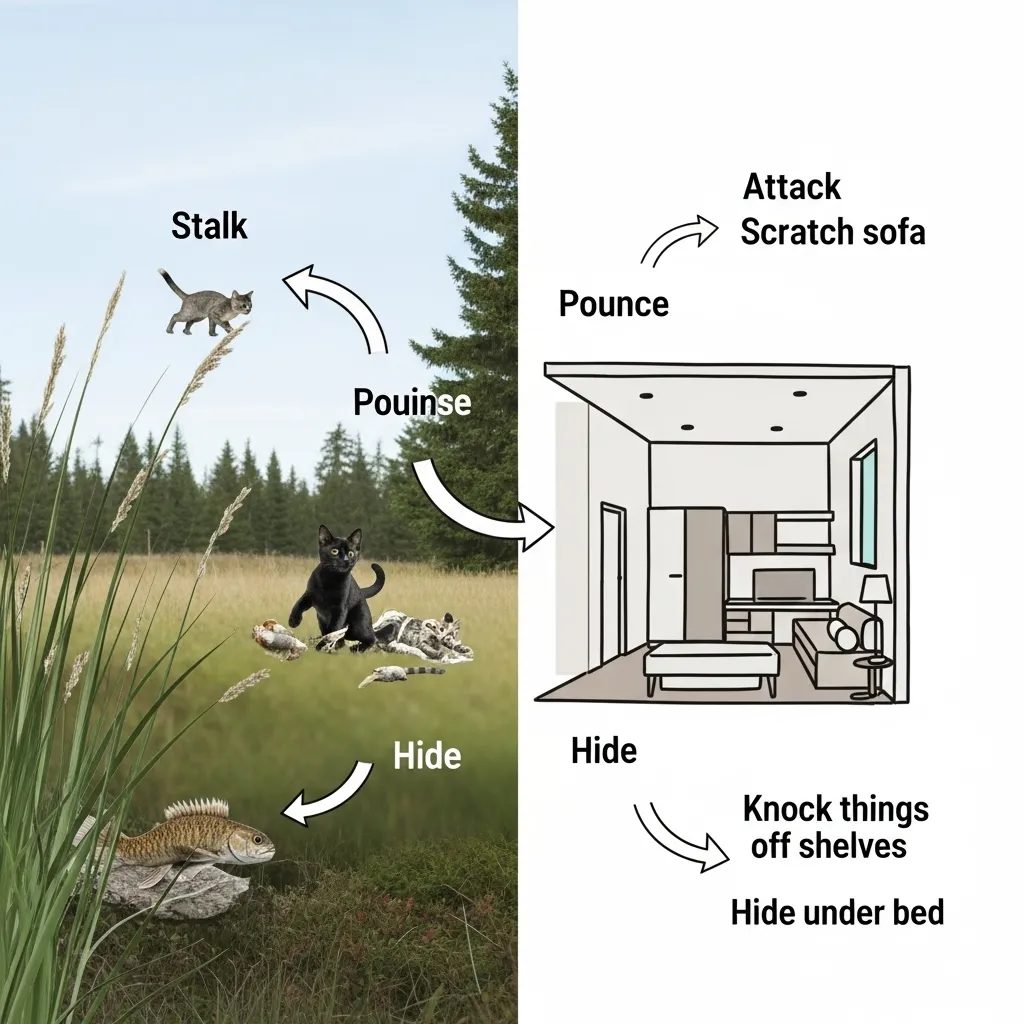
- The Hunting Sequence Denied: In the wild, a cat’s day is built around the hunt: searching, stalking, chasing, pouncing, killing, and finally, eating. The modern indoor cat’s version of this is often a short walk to a stationary bowl of kibble. This truncation of a core behavioral sequence can lead to frustration, boredom, and the redirection of energy into undesirable activities like scratching furniture or excessive vocalization.
- Solitary by Design, Social by Necessity: While the ancestors of domestic cats were largely solitary, thousands of years of domestication have selected for greater social tolerance. However, their social language is subtle. It revolves around controlled proximity, shared scent through rubbing, and gentle allogrooming, not the boisterous, pack-oriented interactions of dogs. Veterinary behaviorists note that misunderstandings of these subtle cues are a primary reason for conflict in multi-cat households.
- The Critical Role of Control: Perhaps the most significant psychological need for a cat is a sense of control over its environment and interactions. Being forcibly held, cornered, or denied escape routes is profoundly stressful. Modern living, with its open floor plans and limited high perches, can often leave a cat feeling exposed and vulnerable.
Decoding the Language: From “Bad” Behavior to Clear Communication
What owners often label as “bad” or “spiteful” behavior is almost always a cat communicating a need or reacting to stress. Veterinary behaviorists act as translators, decoding these actions into a language we can understand and address.
Common Behavioral “Words” and Their Meanings
| Behavior | What It Often Communicates | Expert Insight & Action |
|---|---|---|
| Inappropriate Elimination (outside the litter box) | Medical issue (UTI, kidney disease), litter box aversion (dirty, wrong type), substrate preference, or location anxiety. | Rule out medical causes first. Then, assess litter box number (one per cat plus one), location, cleanliness, and type. |
| Vertical Scratching | Marking territory (visual and scent), stretching muscles, maintaining claw health, and expressing emotion. | Provide appealing alternatives. Use sturdy, tall scratching posts covered in sisal, placed near resting areas and entrances. Never punish scratching. |
| Inter-Cat Aggression | Stress, lack of resources, poor introductions, or territorial disputes. Often silent and subtle. | Ensure plentiful resources (food, water, litter, perches) in separate locations. Re-introduce cats slowly using scent swapping and controlled exposure. |
| Excessive Vocalization | Attention-seeking, hunger, cognitive decline in seniors, pain, or anxiety (especially at night). | Identify the trigger. Is it a learned behavior for food? Schedule play before meals. For night vocalization, increase daytime enrichment and ignore demands at night. |
| Over-Grooming or Pica (eating non-food items) | Often a sign of underlying anxiety, pain (like arthritis), allergies, or compulsive disorder. | A veterinary exam is critical to rule out skin disease or pain. Behaviorists then address environmental stressors and may use anxiety management protocols. |
One of the most pervasive myths is that cats are solitary and unaffectionate. Groundbreaking research has turned this idea on its head. Studies using adaptations of the “Strange Situation Test” developed for human infants have shown that cats display secure attachment to their owners at levels similar to dogs and babies. A securely attached cat sees its owner as a “safe base” for exploration. They may not greet you at the door with frantic wagging, but their subtle signs a slow blink, a relaxed posture in your presence, following you from room to room are profound declarations of trust and bond.
The Silent Epidemic: Stress and Anxiety in Indoor Cats
When a cat’s needs for predation, play, control, and security are not met, chronic low-grade stress or full-blown anxiety can develop. Veterinary behaviorists report that separation anxiety, once thought rare in cats, may affect a significant portion of the population, with cats showing distress when left alone.
Signs of cat anxiety exist on a spectrum:
- Mild: Avoiding eye contact, slight tail flicking, staying low to the ground.
- Moderate: Dilated pupils, ears to the side, increased respiratory rate, hiding.
- Severe: Freezing, aggression, frantic attempts to escape, inappropriate elimination.
Punishment for these behaviors is not only ineffective but destructive. Yelling or squirting a cat with water increases fear, damages your bond, and can redirect aggression. The path forward is built on management and modification: removing or mitigating triggers and changing the cat’s emotional response through techniques like desensitization and counterconditioning.
The Blueprint for a Feline-Centric Home: Enrichment as Medicine
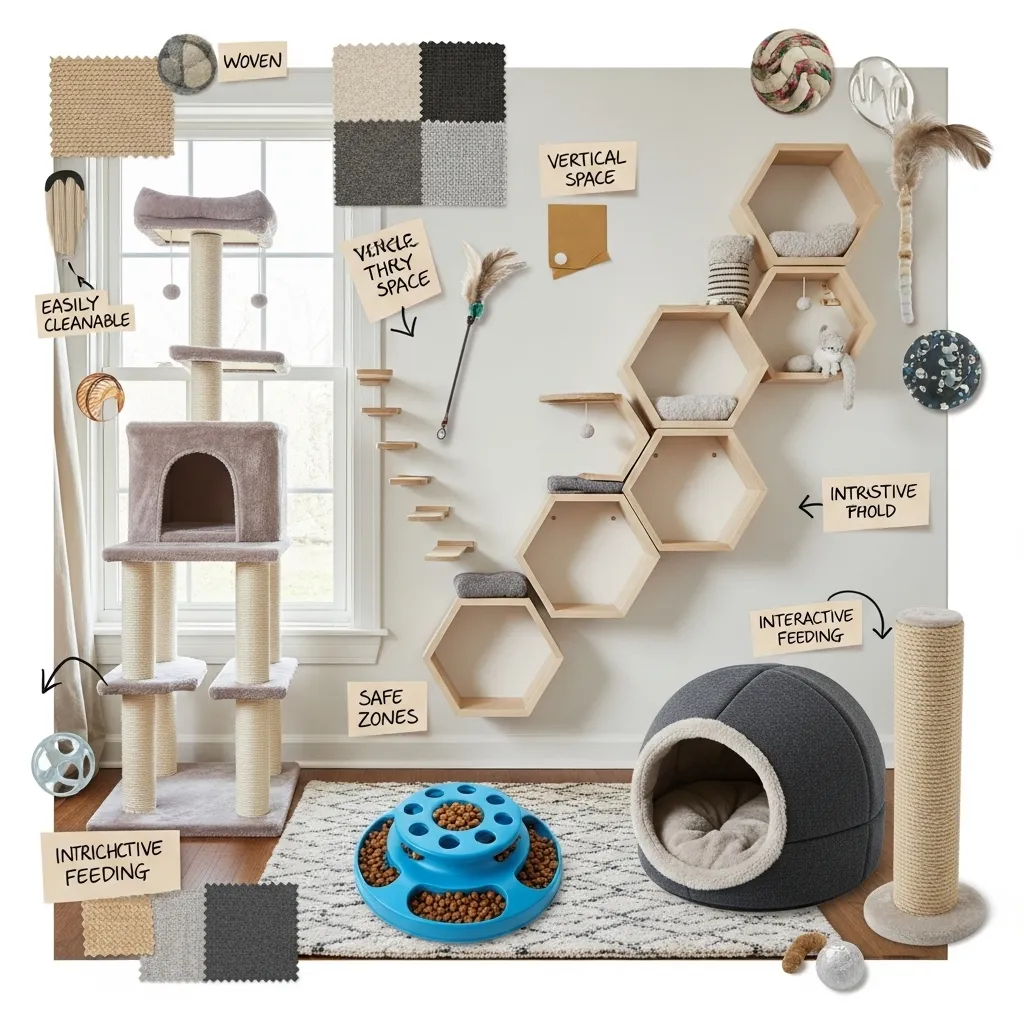
The antidote to boredom and stress is a thoughtfully enriched environment. Enrichment for indoor cats isn’t just extra toys; it’s about designing a habitat that allows for the expression of natural behaviors. Experts like those at The Cat Behavior Clinic create systematic plans based on feline evolutionary biology.
1. Hunt, Catch, Kill, Eat: This sequence is non-negotiable for mental health.
– Food Puzzles: Transition from bowls to puzzle feeders. Start with simple, stationary puzzles and advance to rolling ones. You can even scatter feed kibble on a clean floor or hide small piles around the house.
– Play as Predation: Use wand toys (like Da Bird) to mimic prey. Let your cat complete the sequence by “catching” the toy and giving a treat afterward. This is especially important when using laser pointers always end with a tangible “catch”.
2. Claim the Vertical World: Elevation equals security and status.
– Install cat shelves, window perches, and tall cat trees. These provide escape routes, observation points, and coveted resting spots, reducing conflict in multi-cat homes.
3. Create Sanctuary: Every cat needs a secure retreat.
– Designate quiet, low-traffic “comfort zones” with a cozy bed, like a covered crate, a cat tree cubby, or a shelf behind a chair. This space must be a no-disturbance zone.
4. Engage the Senses:
– Smell: Use catnip, silver vine, or synthetic feline pheromone diffusers (like Feliway) to create calming signals.
– Sight: Provide window access with a view of bird feeders (placed safely out of reach).
– Taste: Grow pet-safe wheatgrass for chewing.
– Touch: Offer varied textures for scratching, resting, and exploring (cardboard, sisal, fleece, carpet)
When to Seek Expert Help: The Role of a Veterinary Behaviorist
While many minor issues can be resolved with environmental tweaks, persistent or severe problems warrant professional intervention. This is where veterinary behaviorists stand apart. They are veterinarians who have completed a residency and are board-certified by the American College of Veterinary Behaviorists (ACVB). Their dual expertise in medicine and behavior is crucial because pain and illness are among the most common root causes of behavioral change.
You should consider consulting a veterinary behaviorist or a certified applied cat behaviorist (who works under veterinary referral) if you see:
- Aggression that is escalating or poses a risk.
- Persistent inappropriate elimination after a vet has ruled out medical causes.
- Self-destructive behaviors like severe over-grooming or pica.
- Profound anxiety or fear that doesn’t improve with basic management.
- Any behavior that is straining the human-animal bond or jeopardizing the cat’s place in the home.
As Mieshelle Nagelschneider, a renowned cat behaviorist, states, to achieve lasting results, it’s necessary to work with someone who can apply the sciences of “gene-encoded behavior, animal psychology, feline evolutionary biology and physiology”. Their approach is systematic, starting with a thorough medical history and environmental assessment to create a customized, science-based behavior modification plan.
Conclusion: From Coexistence to True Partnership
The journey to understanding modern house cats is an ongoing revolution in cat behavior science. We are learning that they are not untrainable or detached, but intelligent, sensitive creatures navigating a world built for human convenience. By applying the insights of veterinary behaviorists and viewing our homes through a feline lens, we can transform potential points of conflict into opportunities for enrichment. The goal is not to have a “perfect” pet, but to provide an environment where your cat’s natural behaviors are not just tolerated, but celebrated fostering a happier, healthier cat and a more profound, mutually rewarding bond.
Discover more practical tips for your feline friend in our detailed guide on how to stop cats from scratching furniture. For a deeper dive into the signs of stress, explore our article on understanding cat stress signs.
Frequently Asked Questions
How do I know if my indoor cat is happy?
A happy indoor cat displays relaxed body language, engages in regular play, has a healthy appetite, and seeks out affectionate interaction on its own terms. It uses its scratching posts, sleeps soundly, and shows curiosity toward its environment. Providing ample enrichment for indoor cats is key to their happiness.
What’s the difference between a cat trainer and a veterinary behaviorist?
A cat trainer typically focuses on teaching specific behaviors or cues (like recall or tricks) using positive reinforcement. A veterinary behaviorist is a licensed veterinarian with advanced specialty training who diagnoses and treats clinical behavioral disorders, often rooted in anxiety, fear, or medical issues, and can prescribe medication when necessary.
Can you really train a cat like a dog?
Yes and no. Cats are highly trainable using positive reinforcement methods like clicker training. However, their motivation differs. Dogs are often motivated by social praise, while cats are typically more motivated by food. Sessions must be kept short (under 5 minutes), and the cat must be a willing participant you cannot force a cat to train.
My cat suddenly started peeing outside the box. Is this a behavioral issue?
Always rule out medical problems first. Sudden changes in elimination habits are a primary sign of urinary tract infections, kidney disease, diabetes, or other painful conditions. Once your veterinarian gives a clean bill of health, a behaviorist can help identify environmental stressors like a dirty litter box, an undesirable location, or inter-cat conflict.