How Sharp Are Cat Claws? A Vet-Backed Guide to Claw Anatomy, Sharpness, Trimming & Care

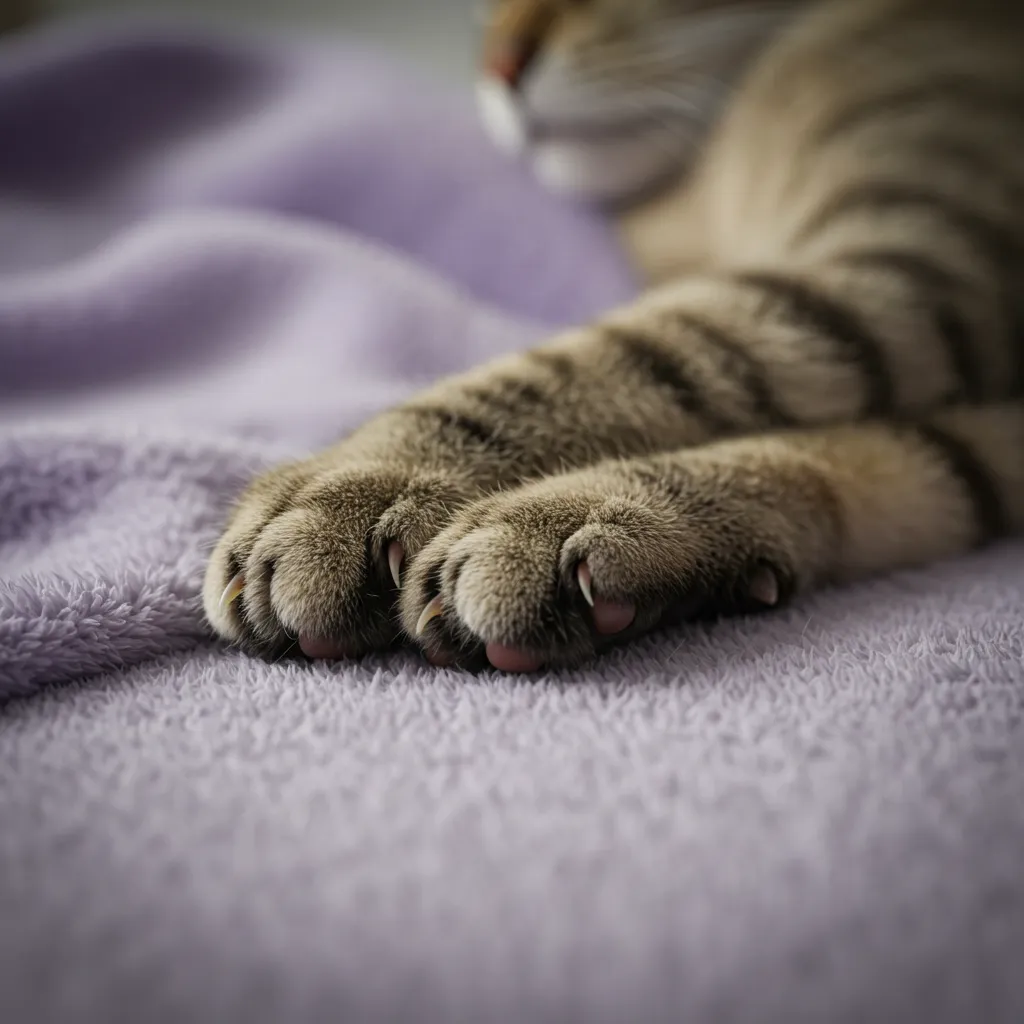
If you’ve ever felt a tiny pinprick from your cat’s paw or watched your sofa slowly become a modern art piece of scratches, you’ve met those famous cat claws up close. But how sharp are cat claws, really and what does that mean for your cat’s health, your furniture, and safe trimming?
This guide answers that question in plain language, explains why claws are naturally sharp, and gives vet-backed, step-by-step advice on trimming, tools, behavior, and long-term claw care so you can protect both your cat and your home.
Key takeaways
- Cat claws are naturally sharp keratin structures designed for traction, hunting, climbing, and defense — the tip can be sharp enough to puncture skin.
- Sharpness varies by age, breed, activity level, and whether the claw is worn by scratching or indoor living.
- Regular trimming (every 2–6 weeks depending on the cat) plus environmental enrichment reduces excessive sharpness and destructive scratching.
- Use the right tools (scissor or guillotine clippers, grinder) and a gentle technique: avoid the quick to prevent pain and bleeding.
- Declawing is an invasive procedure with serious welfare concerns — trimming, training, and nail caps are humane alternatives.
- For anxious cats or tricky trims, break sessions into short steps, use calming cues, or ask your vet or groomer for help.
Understanding the basics — what is a cat claw made of?
Cat claws are layered structures of keratin, the same tough protein in human nails and hair. But claws are shaped and positioned differently:
- Retractable structure: Unlike dog nails, many cats retract their claws into a sheath when relaxing. This preserves sharpness.
- Outer keratin sheath: The visible, hard part you see and trim. The very tip is the sharp edge.
- Quick: Beneath the sheath is living tissue containing blood and nerves (the “quick”). Cutting into it causes pain and bleeding.
- Bone and tendon connection: Claws are attached to the distal phalanx (the last bone in the toe) and controlled by muscles and tendons — that’s why cats extend and retract them so skillfully.
Why this matters: Because claws are keratin sheaths protecting living tissue, trimming them is like trimming human nails — safe when done correctly, painful when you nick the quick.
How sharp are cat claws — measured and experienced
There’s no universal numerical “sharpness score” for claws, but practically:
- A healthy adult indoor cat’s claw tip can be fine enough to break human skin with little pressure; kittens’ claws are often finer and needlesharp.
- Outdoor, active cats may have blunter tips from scraping surfaces. Indoor-only cats often retain needlelike points because they don’t wear them down naturally.
- Sharpness is highest at the outermost keratin edge. Regular scratching both sharpens (by shearing the tip) and maintains healthy length (by removing the outer dead layer).
- Breed differences: Some breeds (like those bred for climbing) may naturally have stronger claws, but individual behavior is a bigger factor.
Real-life example: A playful kitten’s scratch during a tussle usually causes superficial punctures that sting and bleed slightly. An adult outdoor tom’s scratch may be less likely to puncture because the tip is blunter from wear.
Why cats have claws — purpose and behavior
Claws serve multiple survival and behavioral roles:
- Traction & climbing: Claws dig into surfaces when climbing, jumping, or sprinting.
- Hunting & defense: Sharp tips help catch prey and provide defense.
- Marking & stretching: Scratching is part physical maintenance (removing outer claws layers) and part scent/visual territory marking.
- Grooming & manipulation: Cats use claws to hold prey or toys and sometimes to groom fur tangles.
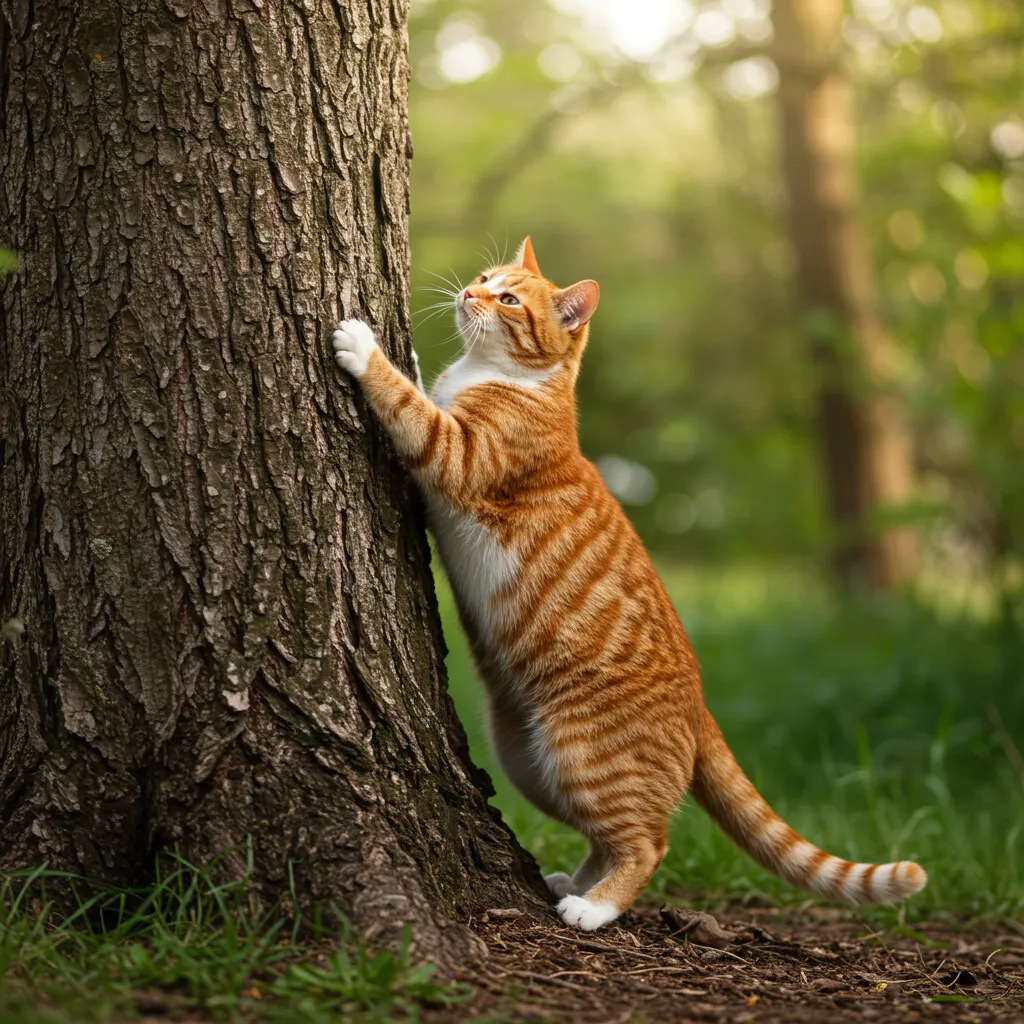
Knowing why your cat scratches helps you design humane, effective claw care and enrichment strategies.
The “quick” what it is and how to find it
The quick is the living tissue inside the nail containing blood vessels and nerves.
- In light nails: The quick is visible as a pink area — stop trimming before that pink starts.
- In dark nails: The quick is not visible. Trim small amounts (1–2 mm) from the tip only; look for a chalky white center before the quick.
- If you cut the quick: Expect small bleeding and discomfort. Apply styptic powder or cornstarch and gentle pressure. Contact your vet if bleeding doesn’t stop.
When to trim cat claws frequency & timing
General rules:
- Kittens: Start getting them used to handling early; trim lightly every 2–3 weeks as needed.
- Adult indoor cats: Every 2–6 weeks depending on activity and how quickly nails grow. If you hear clicking on hard floors, it’s time.
- Outdoor cats: They may need less frequent trimming because outdoor surfaces wear nails down naturally.
- Health signs: Overgrown claws can curl into paw pads — a veterinary emergency. Trim sooner if you see splitting, snagging, or discomfort.
Tools for trimming what to use and why
Good tools make safe trimming easier.
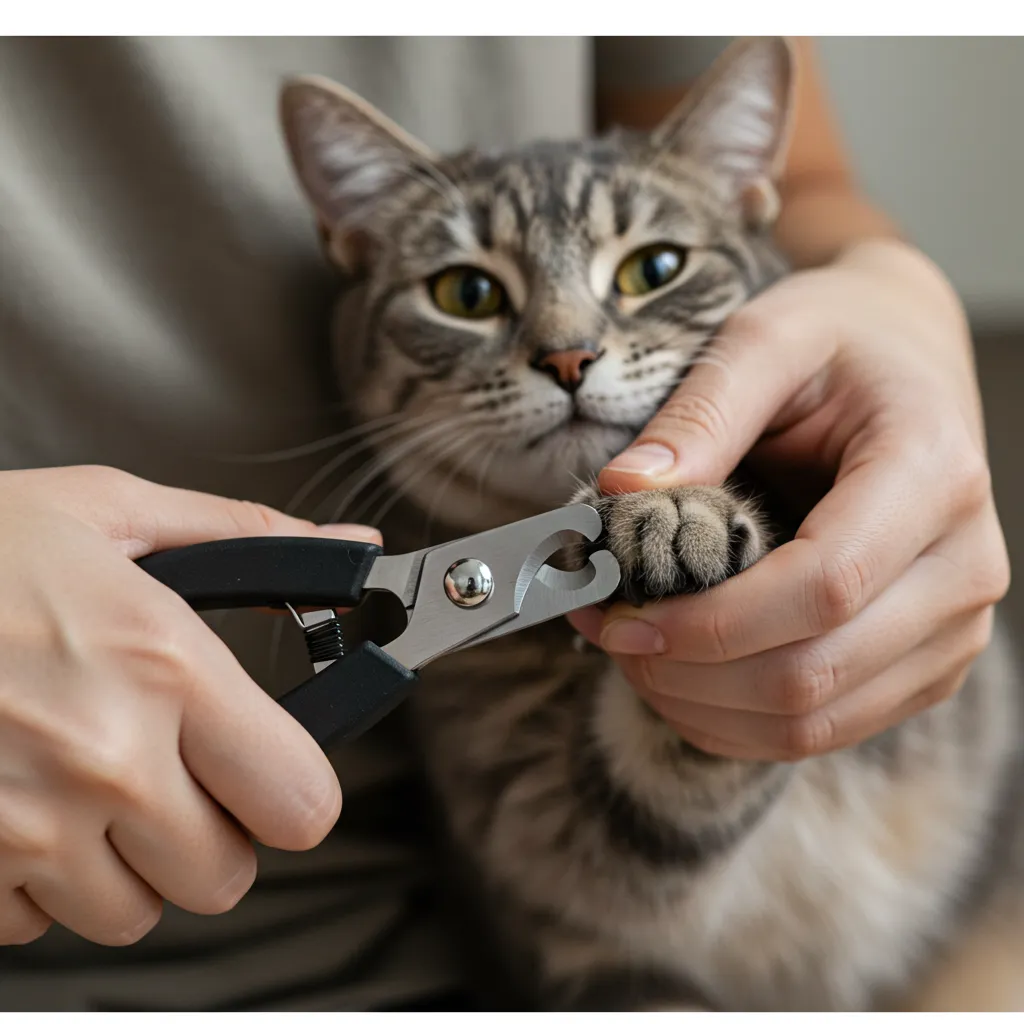
- Scissor clippers: Good for large or thick nails; require a little more hand control.
- Guillotine clippers: Popular, easy for many cat owners — the nail sits into a hole and the blade slices across.
- Human nail clippers: Can work in a pinch for tiny nails but often not ideal.
- Nail grinders (e-files): Great for smoothing edges and blunt shaping; less risk of cutting the quick but need acclimation and produce noise.
- Nail caps: Soft vinyl caps glued over trimmed nails to protect furniture (temporary, requires upkeep).
Pro tip: Keep at least two kinds of tools available: a clipper for the cut and a fine emery board or grinder for smoothing sharp edges.
How to trim cat claws safely step-by-step technique
Follow these steps for a calm, safe trim:
- Choose a quiet place and time. Your cat should be relaxed (after a nap or play session).
- Get your cat used to paw handling. Gently squeeze the toe to extend the claw for a few seconds every day before attempting cutting.
- Positioning: Hold your cat on your lap or a tabletop, wrapped in a towel if needed (leaving one paw free).
- Extend the claw: Press gently at the top of the toe to expose the nail.
- Identify the quick: Look for the pink area (light nails) or stop 1–2 mm from the visible white/opaque part (dark nails).
- Clip the tip: With the clippers perpendicular to the nail, snip the sharp tip in a single, decisive motion. Avoid splintering.
- Smooth edges: Use an emery board or grinder briefly to remove any burrs.
- Reward: Give a treat or praise to create positive association.
- If you nick the quick: Apply styptic powder or cornstarch, hold gentle pressure, and stay calm. Reassure your cat and try again another day.
Cutting technique notes:
- Cut only the curved tip — never cut into the quick.
- For kittens: a small trim is enough; you can do shorter, more frequent trims.
- If your cat resists violently after a few tries, stop and try later. Forcing can create long-term fear.
Calming tips & prepping anxious cats
Cats often resist because they’re nervous or unfamiliar with the process. Use these strategies:
- Desensitization: Handle paws daily for seconds, reward with treats.
- Short sessions: Trim one or two nails, then stop. Build up gradually.
- Towel technique (“kitty burrito”): Wrap the cat gently with only one paw exposed.
- Pheromone sprays/diffusers: Products with synthetic cat pheromones can relax some cats.
- Play first: A short session of playtime tires them out and reduces stress.
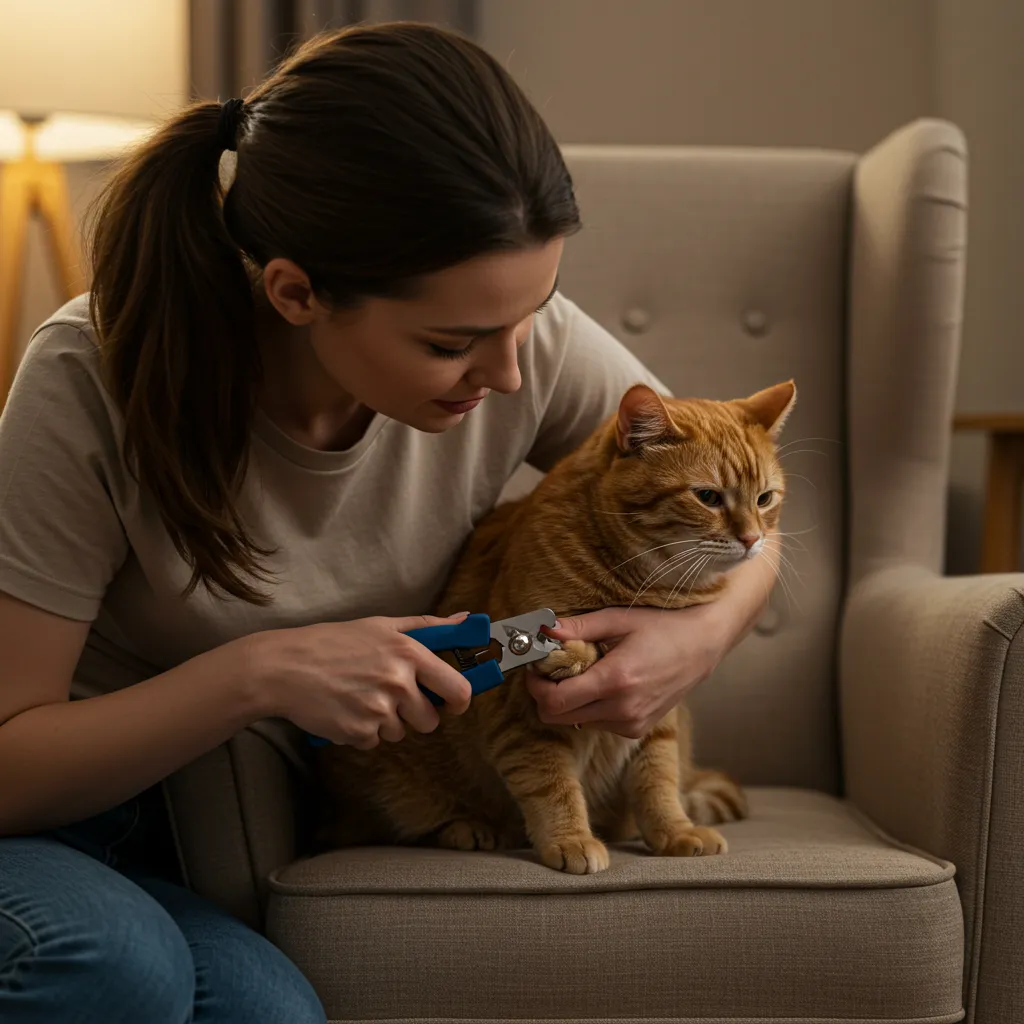
- Ask a pro: A groomer or vet can trim nails under calmer conditions, sometimes using mild sedation if necessary.
Alternatives to trimming when and why
If trimming isn’t workable:
- Nail caps (Soft Paws): Glued on after trimming; they prevent scratching damage for 4–6 weeks.
- Environmental enrichment: Provide multiple scratching posts with different textures and heights to encourage natural wear.
- Regular play: Active play helps cats use claws naturally and reduces destructive behavior.
- Professional trimming: Regular visits to a groomer or vet.
Avoid declawing. Declawing (onychectomy) is an amputation procedure that removes the last bone of each toe — it causes pain, behavioral issues, and mobility problems. Most welfare organizations advise against it except in rare medical cases.
Common mistakes and how to avoid them
- Cutting too close: Causes pain and bleeding. Solution: cut small and slow.
- Trimming without restraint or help: Leads to sudden movements and injury. Solution: have an assistant or use a towel.
- Ignoring claws until they curl into pads: Can cause infection and require surgical correction. Regular checks prevent this.
- Relying only on trimming without scratching outlets: Provide posts, cat trees, and horizontal options. Scratching satisfies the cat and helps natural maintenance.
Claw maintenance plan sample schedule
- Daily: Quick paw checks while petting; encourage scratching on posts.
- Weekly: Short “paw handling” sessions (2–3 minutes) to desensitize.
- Every 2–6 weeks: Trim nails depending on growth and click noise on floors.
- Every 6–12 months: Veterinary check for any paw problems, infections, or growths.
Tools & product recommendations (what to stock at home)
- Guillotine or scissor clippers (quality, sharp blades).
- Nail grinder (for smoothing, if your cat tolerates it).
- Styptic powder or cornstarch (to stop bleeding).
- Soft nail caps and non-toxic glue (if you choose caps).
- Multiple scratching posts (vertical and horizontal, sisal and cardboard).
- Treats for positive reinforcement.
(If you want, I can provide a short product comparison list — e.g., top clippers and grinders — optimized for 2025 searches.)
Troubleshooting bleeding, splits, infections, and overgrown claws
- Bleeding from quick: Apply styptic powder and pressure. If bleeding continues more than 10–15 minutes, call your vet.
- Splitting or cracking: Could be trauma or nutritional deficiency; consult your vet, and consider a joint/nail supplement if advised.
- Infection or ingrown nail: Redness, swelling, or discharge — immediate vet exam needed.
- Overgrown nails curling into pads: This is urgent. The vet may sedate to trim and treat related wounds.
Behavior & training reducing destructive scratching
- Offer acceptable scratching surfaces near problem areas (e.g., next to the couch).
- Use deterrents (double-sided tape or furniture protectors) while providing alternatives.
- Reward good behavior — treat or play when they use a scratching post.
- Rotate textures periodically so the cat remains interested.
- Trim nails regularly so scratches are less damaging.
Explore our article on stopping furniture scratching for deeper behavior strategies — Learn more in [Stop Cats Scratching Furniture].
Special cases kittens, seniors, and medical issues
- Kittens: Start handling early. Keep trims short and positive. Kittens’ claws are extra sharp but grow quickly. (Related: Learn more in [Trim Siamese Cats Nails] about handling a sensitive breed.)
- Senior cats: Arthritis can make stretching and scratching uncomfortable; they may need more frequent in-home trims or professional help.
- Medical conditions: Diabetes, thyroid disease, or infections can affect nail health — ask your vet if you notice unusual changes.
Declawing why it’s controversial and humane alternatives
Declawing removes the distal phalanx (bone) and is effectively an amputation. It can cause chronic pain, behavioral changes (house-soiling), and mobility issues. Many countries and shelters discourage or ban non-therapeutic declawing.
Alternatives: regular trimming, nail caps, training, enrichment, and professional help. For an in-depth humane-care approach, read our vet-backed guides on cat healthcare and behavior. Explore our cat health resources in [Cat Health Care].
FAQ snippet-ready answers
Q: How sharp are cat claws?
A: Cat claws are sharp keratin tips capable of puncturing skin; sharpness varies by age and activity — kittens are often needle-sharp while active outdoor cats may have blunter tips.
Q: How can I measure the sharpness of my cat’s claws?
A: There’s no household “sharpness meter.” Check functionally: if nails easily puncture skin or snag fabric, they’re sharp enough to trim.
Q: How can I care for my cat’s claws?
A: Provide scratching posts, trim every 2–6 weeks, use nail caps if needed, and check paws regularly for injury or infection.
Q: What tools can I use to trim my cat’s claws?
A: Quality guillotine or scissor nail clippers, and optionally a nail grinder for smoothing. Keep styptic powder on hand.
Q: When should I start trimming my cat’s claws?
A: Begin as early as kittenhood to desensitize them — short trims every few weeks. Adult cats can start whenever necessary.
Q: How do I find the quick when trimming my cat’s claws?
A: In light nails, the quick is pink and visible; in dark nails, trim small amounts and stop at the chalky white center before the quick.
Q: What is the best cutting technique for trimming cat claws?
A: Extend the claw, identify a safe cutting point 1–2 mm before the quick, and make a single clean snip. Reward your cat afterward.
Q: What are the benefits of regular claw trimming?
A: Reduced furniture damage, fewer accidental puncture injuries, less risk of ingrown nails, and improved household harmony.
Q: Is declawing a necessary procedure for cat claw care?
A: No — declawing is invasive and discouraged. Humane alternatives (trimming, nail caps, training) are recommended.
Practical daily checklist (printable ideas)
- Check paws while petting — look for cuts, swelling, or foreign objects.
- Offer a few minutes of play that encourages scratching on posts.
- Trim only when relaxed; keep sessions short and rewarding.
- Record trim dates to track frequency.
- Keep styptic powder and clippers accessible but out of cat reach.
- When discussing breed-specific trimming tips, link to Trim Siamese Cats Nails for readers with Siamese or sensitive breeds. Learn more in [Trim Siamese Cats Nails].
- For solving furniture scratching behavior, link to Stop Cats Scratching Furniture. Explore tips in [Stop Cats Scratching Furniture]
- For broader health checks and when to see a vet, link to Cat Health Care. Discover vet advice in [Cat Health Care].
(Use these inline where natural to boost site navigation and authority.)
Final thoughts balancing cat needs and home safety
Cat claws are a brilliant natural tool — sharp by design and essential for physical and mental wellbeing. The goal of claw care is not to remove that natural function, but to manage sharpness so cats stay healthy and people stay safe. With the right tools, gentle technique, environmental enrichment, and occasional professional help, almost every cat can have comfortable, well-managed claws without resorting to declawing.

For more expert cat-care guides and behavior tips, explore more at Cat Bloom Haven. Explore more expert cat care and behavior guides on Cat Bloom Haven.
Short, practical nail-trimming script you can follow right now
- Sit with your cat on your lap after a short play session.
- Offer a treat, reward calmness.
- Gently press the toe to extend the claw.
- Cut the tip (one quick snip), avoid the pink.
- Smooth briefly with a grinder or board.
- Repeat for one or two claws only if the cat is nervous — build up over days.
- Reward with a special treat and praise.