Cat Room Makeovers: Creating the Ultimate Feline Paradise in Your Home
Imagine walking into a space where your cat leaps joyfully across elevated walkways, curls up in a sunlit perch overlooking the world, and has every need met in one thoughtfully designed area. Cat room makeovers transform unused corners, spare bedrooms, or even closets into dedicated havens that enrich your cat’s life while blending seamlessly with your home’s style. These setups go beyond basic pet accommodations; they tap into a cat’s natural instincts for climbing, hiding, scratching, and observing, leading to happier, healthier felines.
Whether you have a playful Bengal or a laid-back Ragdoll, a well-planned cat room makeover can reduce stress, prevent boredom-related behaviors like excessive scratching on furniture, and even strengthen your bond. In this guide, we’ll explore practical ideas, budget-friendly tips, and expert insights to help you create a space your cat will love.
Key Takeaways: Why Invest in a Cat Room Makeover?
- Reduces stress: A dedicated space gives cats territory they control, lowering anxiety in multi-pet homes.
- Boosts physical health: Vertical elements encourage exercise, helping maintain ideal weight.
- Minimizes mess: Confine litter, food, and toys to one area for easier cleaning.
- Enhances enrichment: Combines play, rest, and stimulation for mental well-being.
- Fits any budget or space: From DIY projects to simple additions, options exist for apartments or large homes.
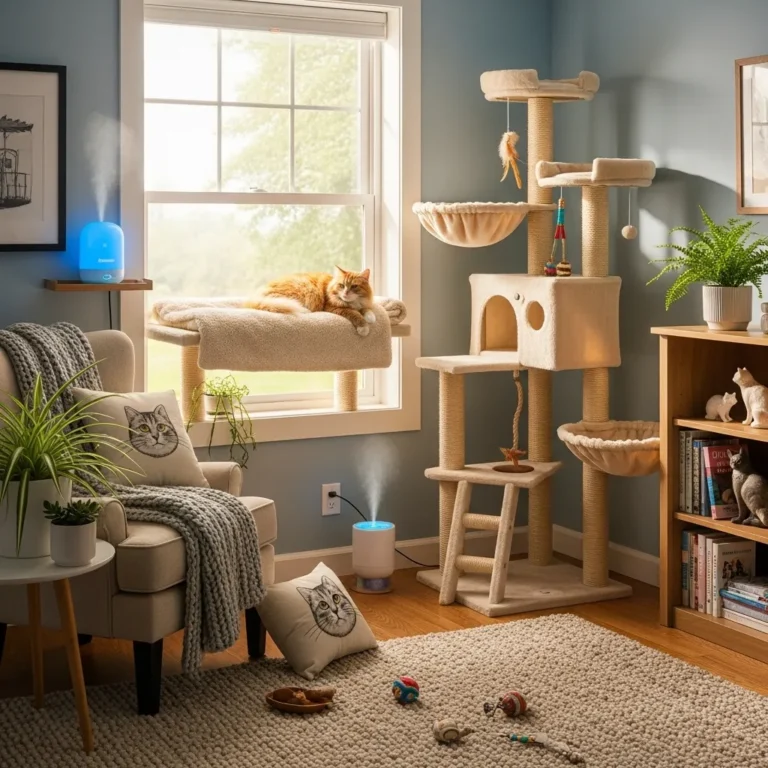
![Cozy dedicated cat room featuring wall shelves, scratching posts, and a window perch for ultimate feline comfort.]](https://catbloomhaven.com/wp-content/uploads/2025/12/Image_fx-2025-12-12T224934.281.webp "Cat Room Makeovers: 1")
Why Dedicated Cat Rooms Matter for Indoor Cats
Indoor cats live safer, longer lives, but they miss out on natural stimulation. A cat room makeover addresses this by creating an environment that mimics the outdoors. Cats are territorial; giving them their own space reduces conflicts and promotes confidence.
Veterinary behaviorists note that enriched environments lower risks of issues like obesity or destructive behavior. One study highlights that cats with access to vertical spaces and hiding spots show fewer signs of stress. For breeds like the energetic Bengal, these makeovers are essential for channeling high activity levels productively.
Discover more in our detailed guide on Bengal cat personality.
Planning Your Cat Room Makeover: Where to Start
Begin by assessing your space. A spare bedroom works well for full makeovers, offering room for climbing walls and multiple zones. In smaller homes, repurpose a closet, under-stairs area, or sunny corner.
Choose a quiet location away from high traffic to help cats feel secure. Natural light is key cats love basking and watching birds. Ensure easy access with a cat door if closing off the room.
Consider your cat’s age and personality. Kittens need more play areas; seniors prefer low-entry beds and ramps.
Essential Elements Every Cat Room Needs
- Litter box area: Hidden in furniture or a discreet corner.
- Feeding station: Elevated to prevent spills.
- Resting spots: Multiple beds at different heights.
- Scratching surfaces: Posts or pads to protect your furniture.
- Play and climbing features: Trees, shelves, or tunnels.
Explore our tips in stop cats scratching furniture.
Vertical Space: The Heart of Any Cat Room Makeover
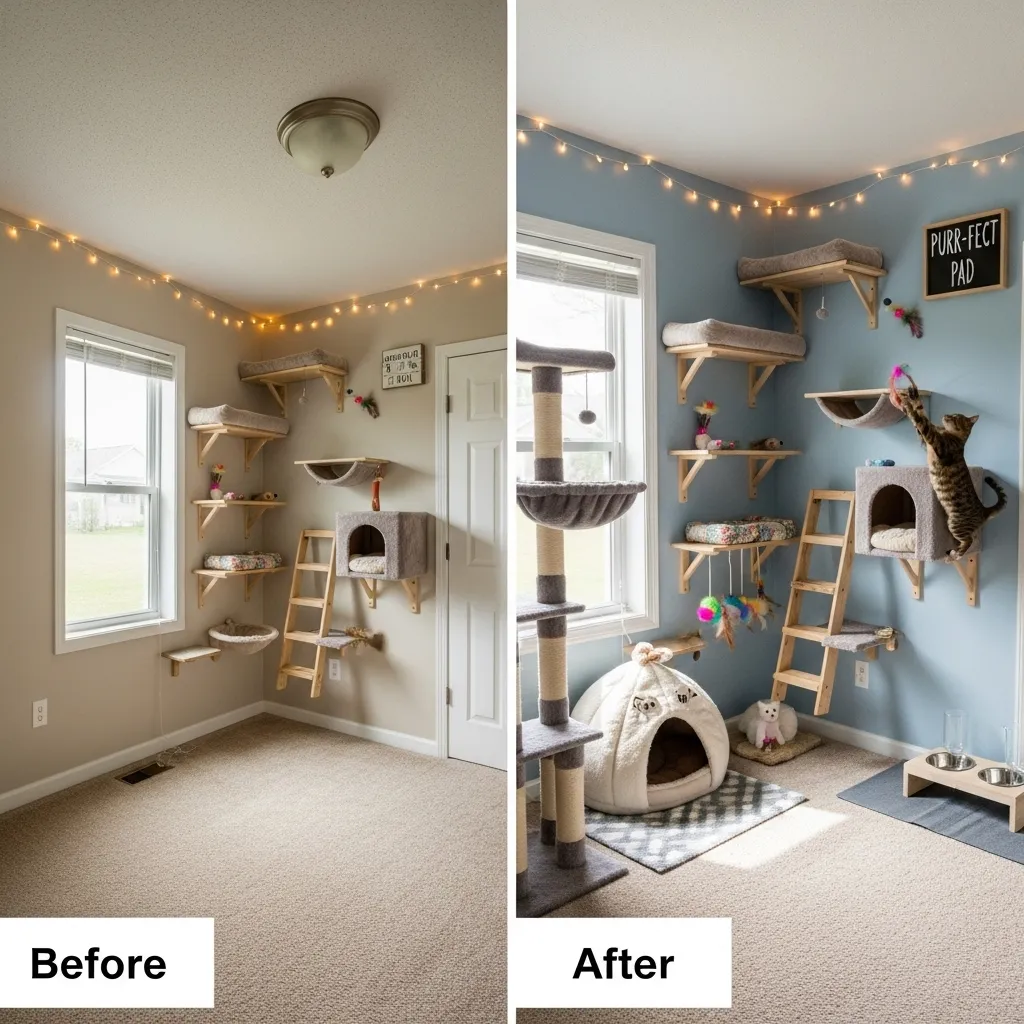
Cats crave height for safety and observation. Wall-mounted shelves, bridges, and perches turn walls into playgrounds, saving floor space.
DIY options include IKEA hacks or carpet-wrapped boards secured to studs. For larger setups, add hammocks or escape hatches for fun pathways.
Space shelves 12-18 inches apart vertically for easy jumping. Include grippy surfaces for traction, especially for older cats.
See our related article on best beds for American Shorthair cats for cozy resting ideas.
[Place image here: DIY cat wall climbing system with bridges and hammocks. Prompt: Modern cat wall setup with wooden shelves, fabric bridges, hammocks, and climbing steps in a stylish living room. Alt text: DIY cat wall climbing system featuring bridges and hammocks for vertical enrichment.]
![DIY cat wall climbing system featuring bridges and hammocks for vertical enrichment.]](https://catbloomhaven.com/wp-content/uploads/2025/12/Image_fx-2025-12-12T224552.151.webp "Cat Room Makeovers: 3")
Cozy Corners and Hiding Spots
Cats need private retreats. Add enclosed beds, tunnels, or cardboard boxes (rotated for novelty). Window perches provide entertainment with outdoor views.
In small spaces, use multi-level furniture that doubles as hiding spots.
Incorporating Cat-Safe Greenery
Add life with non-toxic plants like spider plants, Boston ferns, or cat grass. These purify air and offer safe nibbling.
Place plants high or in hanging baskets to prevent tipping.
Learn more in our guide to best indoor plants cat safe.
![Stylish cat-friendly room with safe indoor plants adding greenery and freshness.]](https://catbloomhaven.com/wp-content/uploads/2025/12/Image_fx-2025-12-12T224445.416.webp "Cat Room Makeovers: 4")
Outdoor Extensions: Building a Catio
For fresh air access, consider a catio an enclosed patio. Window-box styles attach directly; larger ones connect via tunnels.
Use escape-proof mesh and add shelves, perches, and shade. Catios provide safe outdoor time, reducing escape attempts.
Check out catio designs 2025 for inspiration.
[Place image here: Modern catio outdoor enclosure. Prompt: Sleek modern catio with wooden framing, mesh walls, ramps, and perches in a backyard setting. Alt text: Modern catio providing safe outdoor access with climbing features and shelter.]
Budget-Friendly DIY Cat Room Makeover Ideas
Transform on a budget with these projects:
- Cardboard castle: Stack and cut boxes into multi-level hideouts.
- Window perch: Use suction-cup models or DIY with plywood.
- Scratching posts: Wrap sisal rope around PVC or wood.
- Puzzle feeders: Repurpose egg cartons or muffin tins.
Hidden litter boxes in repurposed furniture keep things tidy and stylish.
![Minimalist cat-friendly living room featuring a discreet hidden litter box.]](https://catbloomhaven.com/wp-content/uploads/2025/12/Image_fx-2025-12-12T224243.724.webp "Cat Room Makeovers: 5")
Common Mistakes to Avoid in Cat Room Makeovers
Skip overcrowding ensure open pathways. Place litter boxes away from food. Use sturdy, stud-mounted items for safety.
Rotate toys to maintain interest. Monitor for wear and clean regularly.
For multi-cat homes, provide multiple resources to prevent tension. See our tips on Munchkin cats dogs coexistence.
Real-Life Cat Room Makeover Examples
One owner turned a spare closet into a compact paradise with shelves and a perch perfect for apartments. Another built a full-room playground with bridges, delighting multiple cats.
These transformations show how small changes yield big happiness.
FAQ: Cat Room Makeovers
What is the best location for a cat room makeover?
Choose a quiet, low-traffic area with natural light, like a spare bedroom or sunroom.
How much does a cat room makeover cost?
DIY versions start under $200; full setups with catios range $500–$2000+.
Are cat room makeovers suitable for small apartments?
Yes—focus on vertical space and multi-functional furniture.
How do I make my cat room smell fresh?
Use enclosed litter boxes, regular cleaning, and air purifiers.
Can I include plants in my cat room?
Absolutely, but stick to cat-safe options like Boston ferns or cat grass.
What if I have multiple cats?
Provide one litter box per cat plus one extra, and multiple perches.
How do catios enhance a cat room makeover?
They offer safe outdoor access, adding enrichment without risks.
Final Thoughts: Start Your Cat Room Makeover Today
A cat room makeover creates a space where your feline thrives physically active, mentally stimulated, and deeply content. Start small with a corner addition or go big with a full transformation. Your cat will thank you with more purrs and play.
Explore more expert cat care and behavior guides on Cat Bloom Haven, like our DIY cat tower cheap materials or cat wall climbing setups. Your perfect cat paradise awaits.