Best Indoor Plants That Are 100% Cat-Safe: The Ultimate 2025 Guide for Cat Parents Who Love Greenery
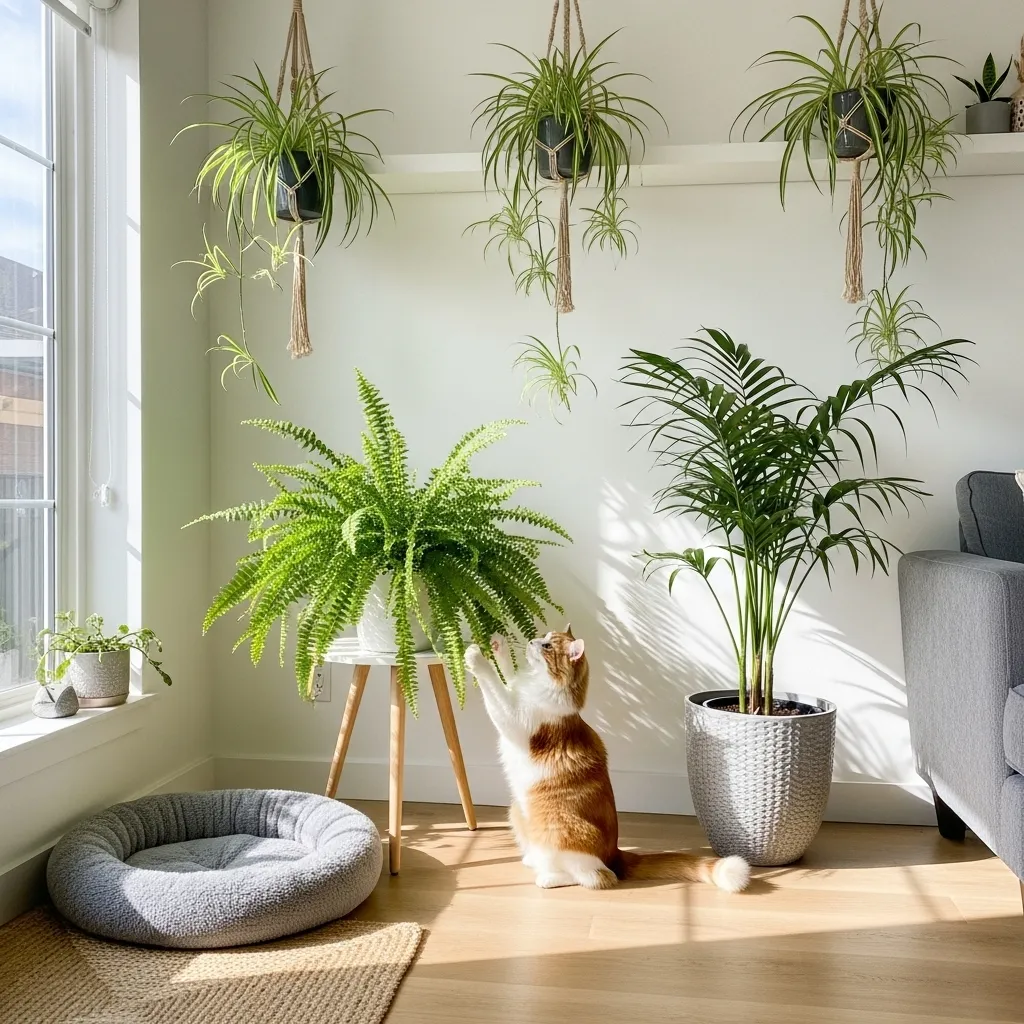
Living with cats and houseplants feels like walking a tightrope sometimes. One minute you’re admiring your lush jungle corner, the next you’re rushing to the emergency vet because your curious tabby decided a lily leaf looked tasty. I’ve been there. After my Bengal, Luna, nibbled on a peace lily years ago and spent a terrifying night at the clinic, I swore I’d never risk it again.
The good news? You don’t have to choose between a home full of plants and a healthy cat. There are dozens of stunning, low-maintenance indoor plants that are 100% cat-safe – verified non-toxic by the ASPCA, Pet Poison Helpline, and university toxicology departments. This guide covers the absolute best ones, plus exactly how to keep both your greenery and your feline thriving together.
Quick Summary: Top 10 Best Indoor Plants That Are 100% Cat-Safe
(Perfect for featured snippets and AI Overviews)
- Spider Plant (Chlorophytum comosum)
- Boston Fern (Nephrolepis exaltata)
- Parlor Palm (Chamaedorea elegans)
- Calathea (all varieties – orbifolia, rattlesnake, peacock, etc.)
- Peacock Plant (Goeppertia makoyana)
- Prayer Plant (Maranta leuconeura)
- Polka Dot Plant (Hypoestes phyllostachya)
- Friendship Plant (Pilea involucrata)
- Watermelon Peperomia (Peperomia argyreia)
- Haworthia & Gasteria (succulent “zebra” plants)
Full details, care tips, and styling ideas below.
Why Some Plants Are Deadly (And How to Spot Them Fast)
Before we celebrate the safe ones, a quick reality check. The ASPCA reports over 10,000 plant-related poisoning calls every year. The worst offenders for cats include:
- Lilies (all Lilium and Hemerocallis species) – even tiny amounts cause acute kidney failure
- Sago Palm – one seed can kill
- Oleander, Dieffenbachia, Philodendron (some), and Aloe vera – all contain irritating or toxic compounds
If you’re ever unsure, cross-check the scientific name on the ASPCA’s toxic plant database or call the Pet Poison Helpline (888-426-4435). Better safe than heartbroken.
The 15 Best Indoor Plants That Are 100% Cat-Safe (Detailed Breakdown)
1. Spider Plant – The Indestructible Classic
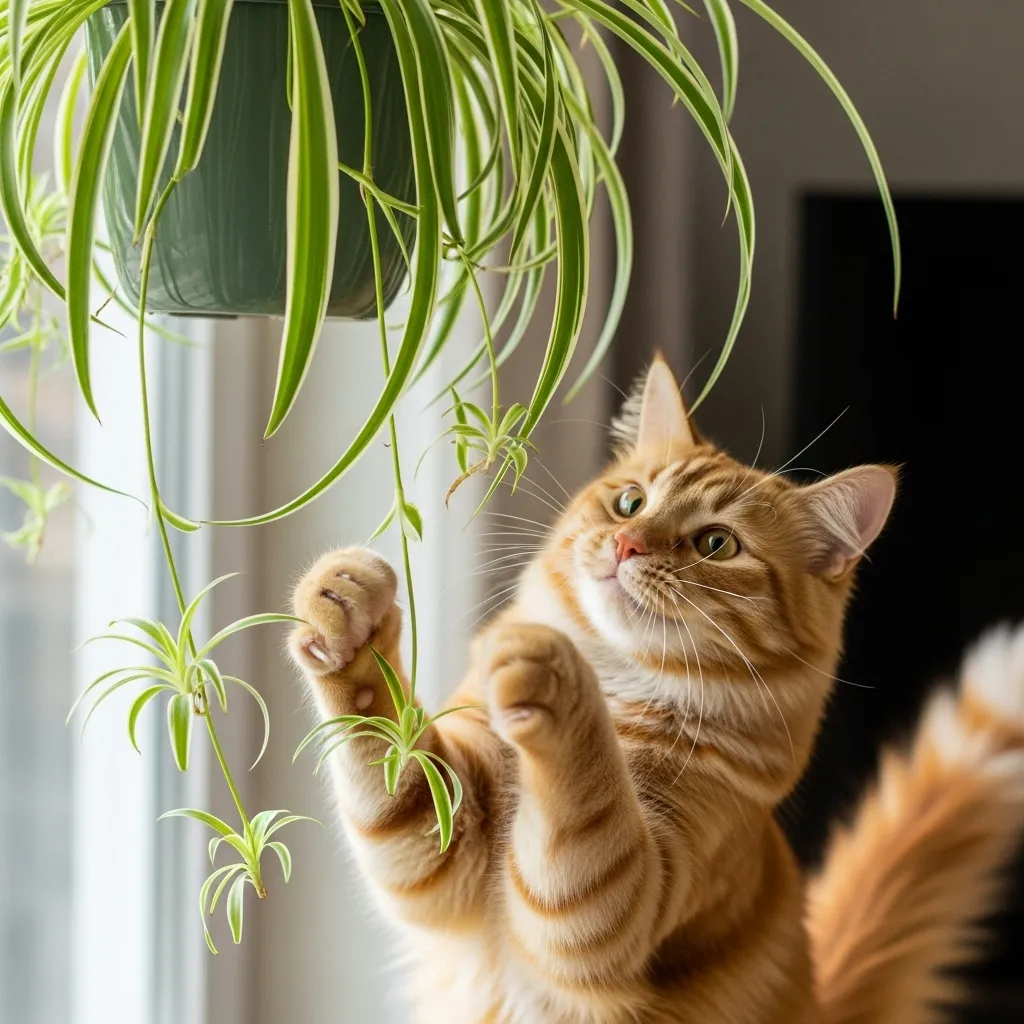
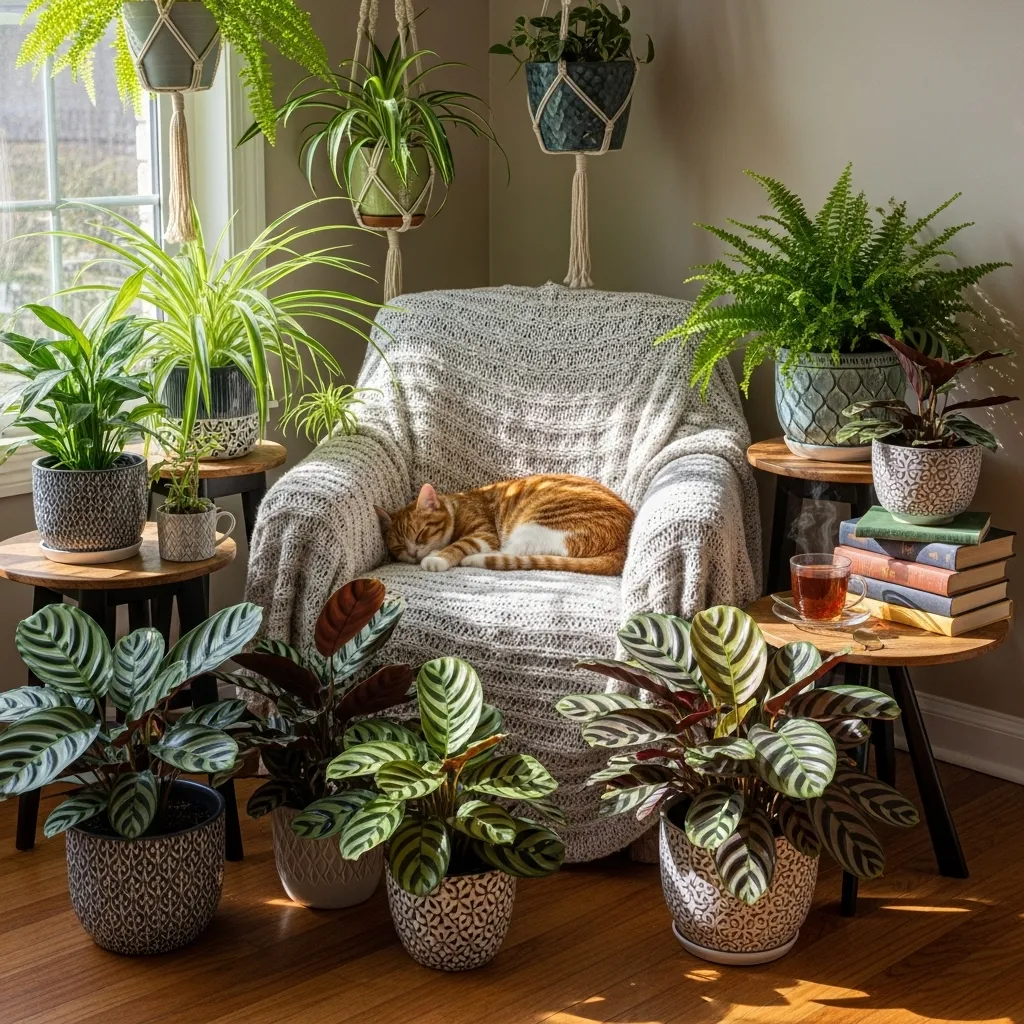
If you’ve ever killed a plant, start here. Spider plants laugh at neglect. They tolerate low light, irregular watering, and still pump out those adorable baby “spiders” that dangle like natural cat toys (and yes, they’re safe if chewed).
Care tips:
- Light: Bright indirect to low light
- Water: Let soil dry between waterings
- Bonus: NASA Clean Air Study plant – removes formaldehyde and xylene
Pro move: Hang them high in macramé holders. Cats love batting the babies, and they stay out of reach from serious munching.
2. Boston Fern – Lush, Feathery Drama
Want that “I secretly live in a rainforest” vibe? Boston ferns deliver. Their soft fronds are completely non-toxic and feel like velvet to curious noses.
Care reality check: They hate dry air. Mist daily or set on a pebble tray with water. Perfect bathroom or kitchen plant.
3. Parlor Palm – Elegant and Basically Immortal
Victorian-era favorite that still slays in 2025. Slow-growing, pet-safe, and thrives on neglect once established.
Light: Low to bright indirect (the ultimate apartment palm)
Height: Up to 6 feet indoors
Styling idea: Pair with a mid-century planter for instant chic.
4. Calathea Family – Living Art You Can’t Kill (Easily)
Calathea orbifolia, rattlesnake plant, medallion, peacock – every variety is 100% cat-safe. Their patterned leaves move throughout the day (nyctinasty), which cats find mesmerizing.
Care hack: Use distilled or rainwater. Tap water minerals cause brown edges fast.
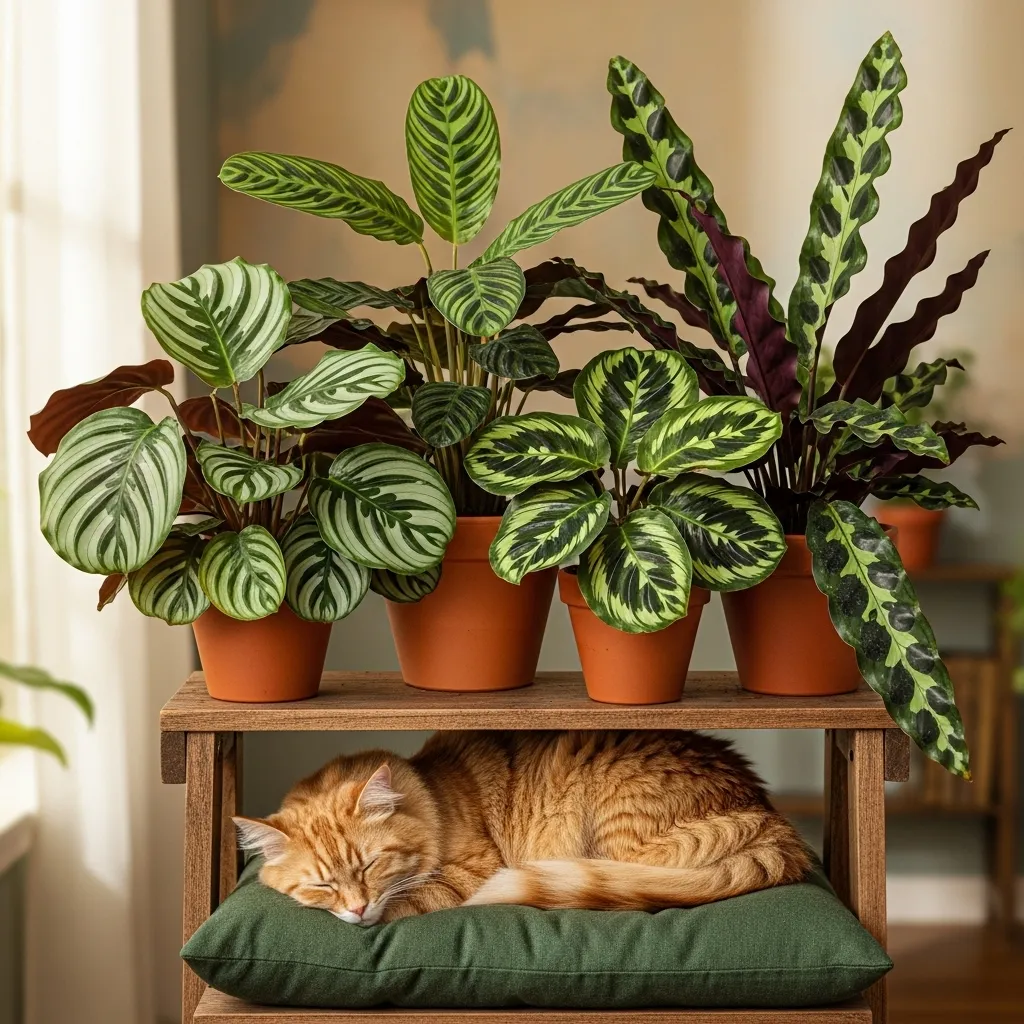
5. Prayer Plant & Peacock Plant
Maranta and Goeppertia species fold their leaves up at night like praying hands – hence the name. The red undersides and intricate patterns make them cat TV.
They’re safe even if your cat decides to taste-test a leaf or two.
6. Polka Dot Plant – Cotton-Candy Colors
Pink, white, or red speckles on green leaves. Stays compact (10-15 inches) and loves terrariums or fairy gardens.
7. Friendship Plant (Pilea involucrata)
Fuzzy textured leaves cats adore rubbing against. Super easy to propagate – break off a stem, stick in water, gift to friends (or grow an army).
8. Watermelon Peperomia
Thick, striped leaves that look exactly like tiny watermelons. Compact, slow-growing, and impossible to over-love.
9. Haworthia & Gasteria Succulents
Spiky but soft, rosette-forming succulents that are 100% safe. Perfect windowsill plants for busy cat parents.
Honorable Mentions That Still Made the Cut
- Baby Rubber Plant (Peperomia obtusifolia)
- Cast Iron Plant (Aspidistra elatior) – lives through anything
- Rattail Cactus (Disocactus flagelliformis) – dangling tails cats love to chase
- African Violet (Saintpaulia) – if kept out of reach of dusty paws
- Christmas Cactus (Schlumbergera) – blooms during the holidays
Plants That Are Safe-ish But Still Risky
Some sources list these as “non-toxic,” but I don’t recommend them:
- Pothos & Heartleaf Philodendron – contain calcium oxalate crystals that cause oral irritation
- Snake Plant – same irritating crystals (plus tough leaves can cause cuts)
- Monstera deliciosa – same family as philodendron
A nibble won’t kill your cat, but it can cause drooling, pawing at the mouth, and vomiting. Not worth the drama.
How to Create a Cat-Safe Plant Jungle (Without Constant Worry)
- Elevate whenever possible
Floating shelves, hanging planters, and tall plant stands are your best friends. - Use citrus deterrents
Cats hate citrus. Lightly spray leaves with diluted lemon water or place orange peels in soil. - Offer cat-safe alternatives
Grow cat grass or catnip nearby. Most cats will choose those over your calathea. - Secure heavy pots
A 6-foot parlor palm crashing down is worse than any nibble. - Regular “plant patrol”
Check for fallen leaves daily. Even safe plants can cause tummy upset if eaten in large quantities.
Final Thoughts: You Really Can Have Both
Your home can be a thriving green oasis and a safe haven for your cat at the same time. I currently have 47 plants (yes, I counted) and two very nosy Bengals. Not a single emergency vet visit in five years.
Start with a spider plant or Boston fern they’re practically bulletproof. Add a Calathea or parlor palm once you get the hang of it. Before you know it, you’ll be that person whose living room looks like a boutique jungle… with cats napping peacefully underneath.
Which plant are you bringing home first? Drop a comment below I answer every single one.
Ready for more expert cat care tips? Explore the rest of Cat Bloom Haven from breed guides and health advice to the funniest cat memes on the internet.
Stay green, stay safe, and keep loving those furry little plant supervisors.
P.S. If you want the printable checklist of these 15 plants with care notes and toxicity ratings, grab it here when it’s ready next week!
FAQ Best Indoor Plants That Are 100% Cat-Safe
Are spider plants really safe if my cat eats a lot?
Yes. Spider plants are classified as non-toxic. Large quantities might cause mild vomiting from fiber, but no serious harm.
What indoor plants are toxic to cats?
Lilies, sago palm, oleander, dieffenbachia, true aloe vera, and many philodendron species top the danger list.
Is it safe to have any succulents with cats?
Yes – Haworthia, Gasteria, and Echeveria are completely safe. Avoid jade plant, pencil cactus, and aloe.
Do cats actually eat houseplants often?
Some do (especially young or bored cats), others never touch them. It’s individual – always choose safe plants when in doubt.
What’s the most cat-friendly trailing plant?
Spider plant or rattlesnake calathea (which trails beautifully when mature). Both 100% safe.
Can I have a peace lily if I keep it completely unreachable?
No. Even tiny amounts of any lily can cause fatal kidney failure in cats. It’s never worth the risk.