Designing a Calm, Enriching Home Environment for Cats
Cats thrive when their surroundings feel safe, stimulating, and aligned with their instincts. Designing a calm, enriching home environment for cats means creating spaces where they can climb, hide, hunt, and rest without stress. Many indoor cats face boredom or anxiety from limited outlets for natural behaviors, leading to issues like excessive meowing, scratching furniture, or even health problems. The good news is that thoughtful changes can transform your home into a feline haven.
In this guide, you’ll learn practical, vet-backed strategies to build an environment that reduces stress and boosts well-being. We’ll cover vertical spaces, hiding spots, sensory stimulation, and more. By the end, you’ll have actionable steps to make your cat happier and more engaged.
Key Takeaways
- Prioritize safety and predictability: Consistent routines and resource abundance prevent stress.
- Encourage natural behaviors: Provide outlets for scratching, climbing, hunting, and hiding.
- Use vertical and sensory elements: Cats feel secure with height and novel smells/sights.
- Rotate enrichments: Keep things fresh to avoid boredom.
- Monitor for stress signs: Hiding excessively, aggression, or litter box issues signal needed changes.
Understanding Cat Needs in the Home
Cats descended from solitary hunters. Even domesticated ones retain strong instincts for territory, hunting, and vigilance. Indoor life protects them from dangers but can limit these expressions, causing frustration.
Veterinary experts emphasize the “five pillars” of feline environmental needs: safe places, multiple resources (food, water, litter), opportunities for play and scratching, positive human interaction, and sensory stimulation. A calm environment starts with predictability. Sudden changes, like new furniture or visitors, spike stress hormones.
Enrichment mimics the wild: “plenty” of options so cats feel in control. This approach prevents behavioral problems and supports physical health, like maintaining ideal weight through activity.
Creating Vertical Space: The Cat Superhighway
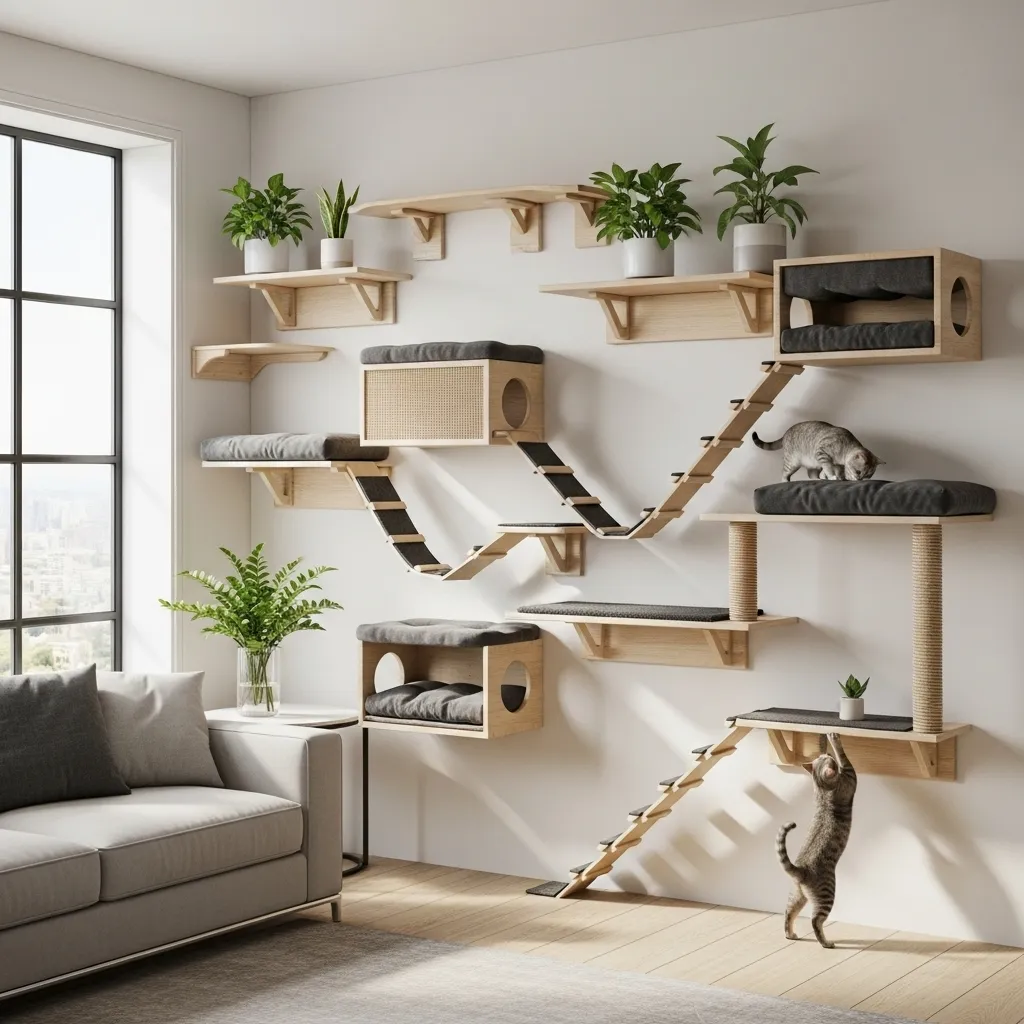
Cats love height. It lets them survey territory, escape threats, and feel secure. Designing a calm, enriching home environment for cats always includes vertical elements.
Start with window perches. Position them for views of birds or activity. Suction-cup or hammock styles work well in rentals.
Next, build “cat highways” with wall shelves or cat trees. Connect them for seamless movement. Place near windows or quiet corners.
In multi-cat homes, multiple levels reduce competition. Tall trees with platforms suit confident cats; lower shelves help seniors or shy ones.
Benefits include more exercise, less boredom, and fewer furniture scratches as cats prefer dedicated spots.
For inspiration, check our guides on cat room decor ideas or minimalist cat shelves at Cat Bloom Haven.
Essential Hiding and Resting Spots
Cats need retreats for decompression. Without them, stress builds.
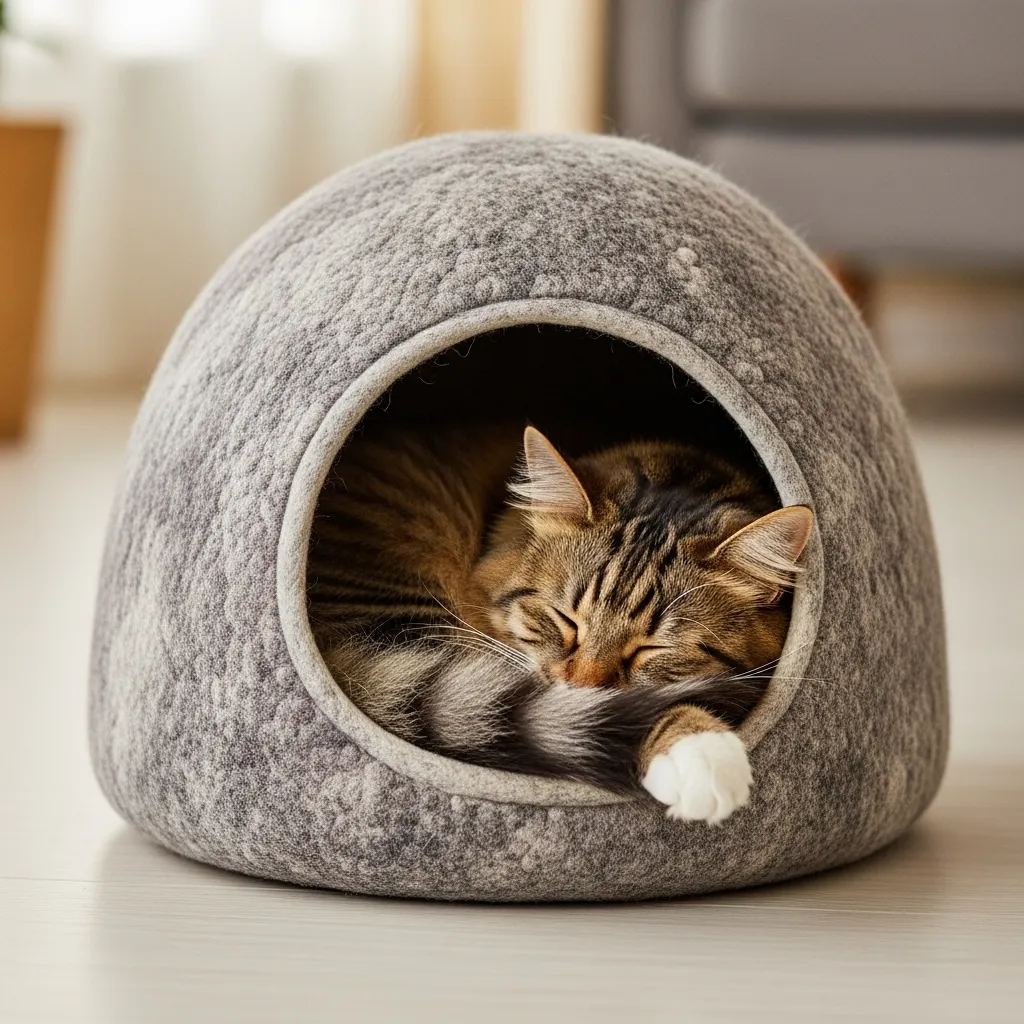
Provide cozy caves, covered beds, or cardboard boxes (cats love simple ones). Place in quiet areas, away from loud appliances.
Elevated hiding, like shelf cubbies, combines security with oversight.
Soft, washable materials ensure hygiene. Multiple spots prevent resource guarding in multi-cat setups.
These spots help anxious cats build confidence gradually.
Scratching: A Natural Necessity
Scratching maintains claws, stretches muscles, and marks territory. Denying outlets leads to furniture damage.
Offer variety: vertical sisal posts, horizontal cardboard scratchers, and angled options.
Place near sleeping areas or entrances for scent marking.
Tall, sturdy posts allow full stretches. Multiple ones suit multi-cat homes.
Rub with catnip initially to attract use.
This channels energy positively, reducing stress.
Play and Mental Stimulation: Hunting Instincts Indoors
Play mimics hunting, essential for mental health. Interactive sessions burn energy and strengthen bonds.
Use wand toys for chase-and-pounce. End with a “catch” for satisfaction.
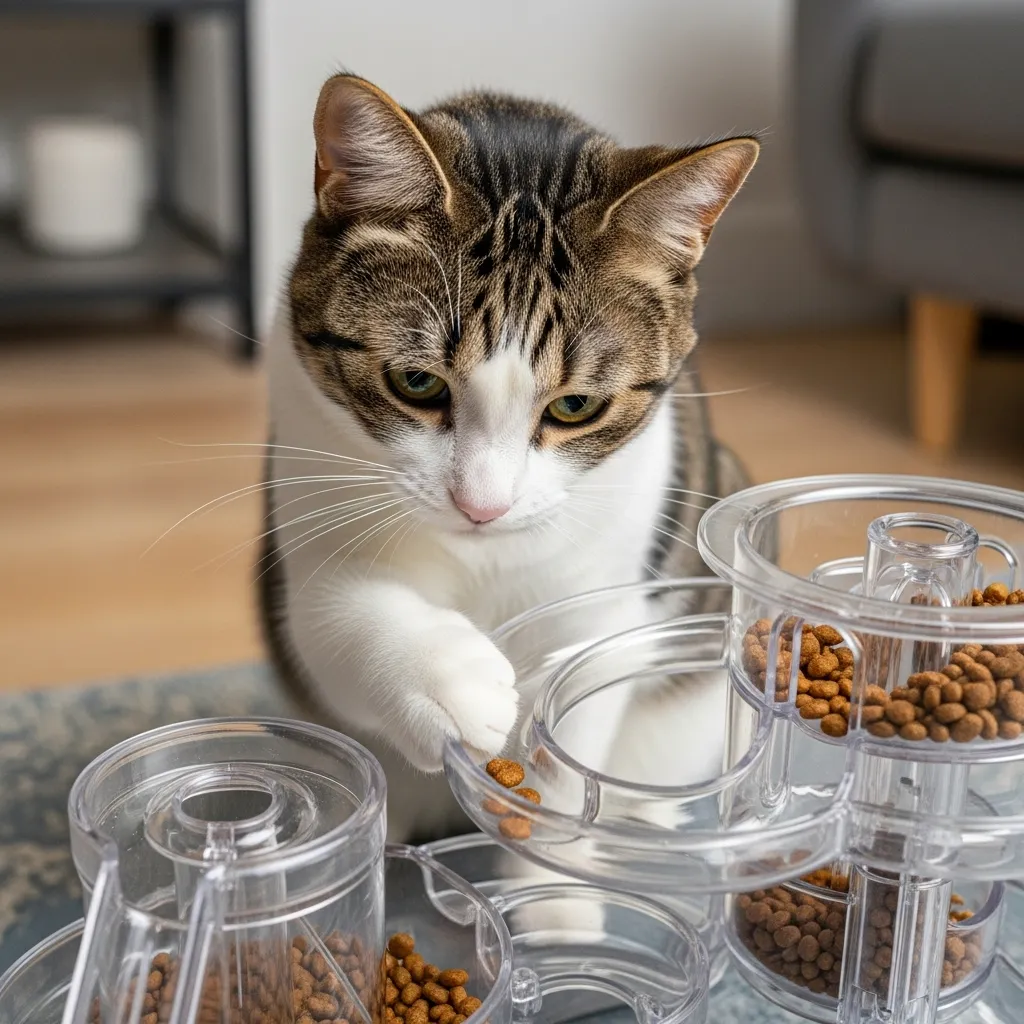
Puzzle feeders turn meals into challenges. Hide kibble in toys or around rooms for foraging.
Rotate toys weekly to maintain novelty. Food-dispensing balls encourage movement.
Daily 10-15 minute sessions prevent nighttime zoomies or destructive behavior.
Explore our DIY cat toys guide for budget ideas.
Sensory Enrichment: Smells, Sounds, and Sights
Engage all senses for a rich environment.
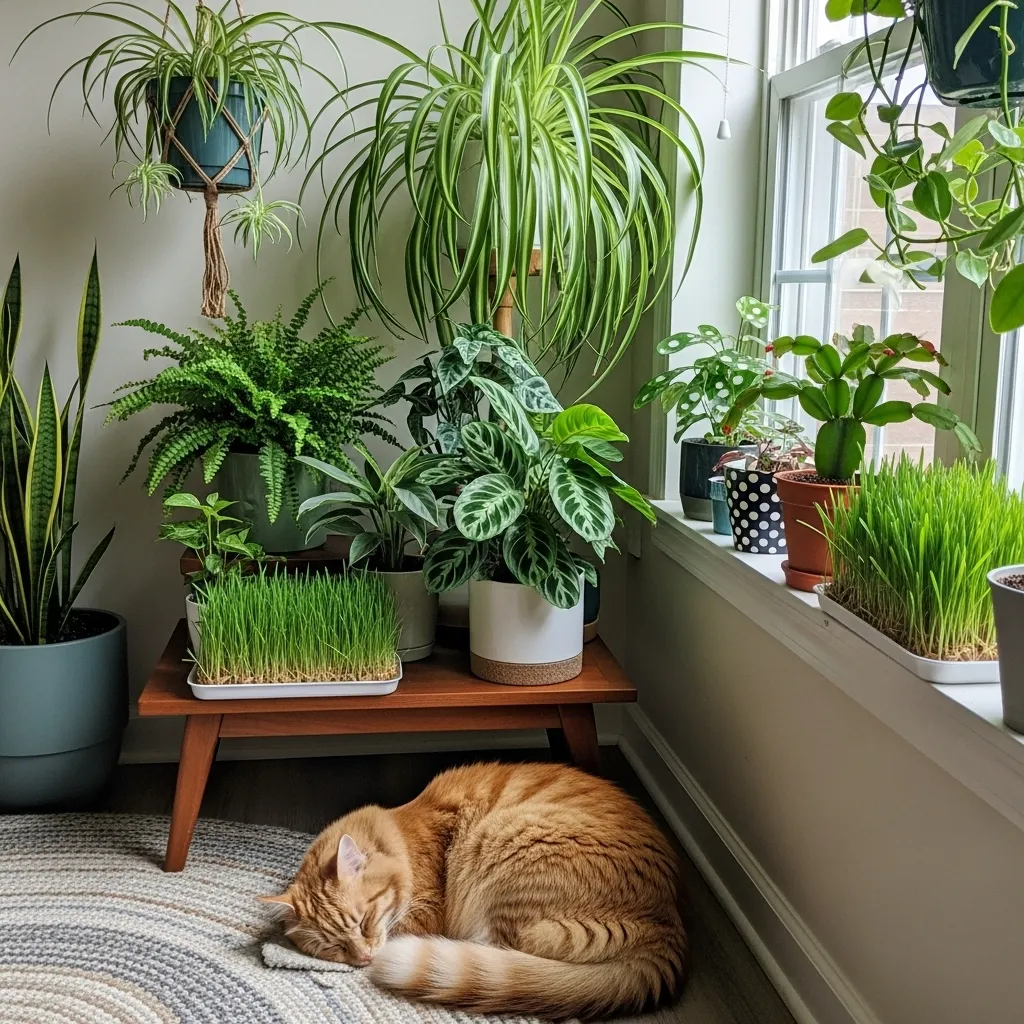
Safe plants like cat grass, catnip, or spider plants provide nibbling and scents.
Window views or “cat TV” videos offer visual stimulation.
Calming music or pheromone diffusers reduce anxiety.
Fresh air via secure screens brings outdoor smells.
Avoid strong household scents that overwhelm sensitive noses.
These elements make home feel alive and comforting.
Safe Outdoor Access: Catios and Balconies
For ultimate enrichment, provide controlled outdoor time.
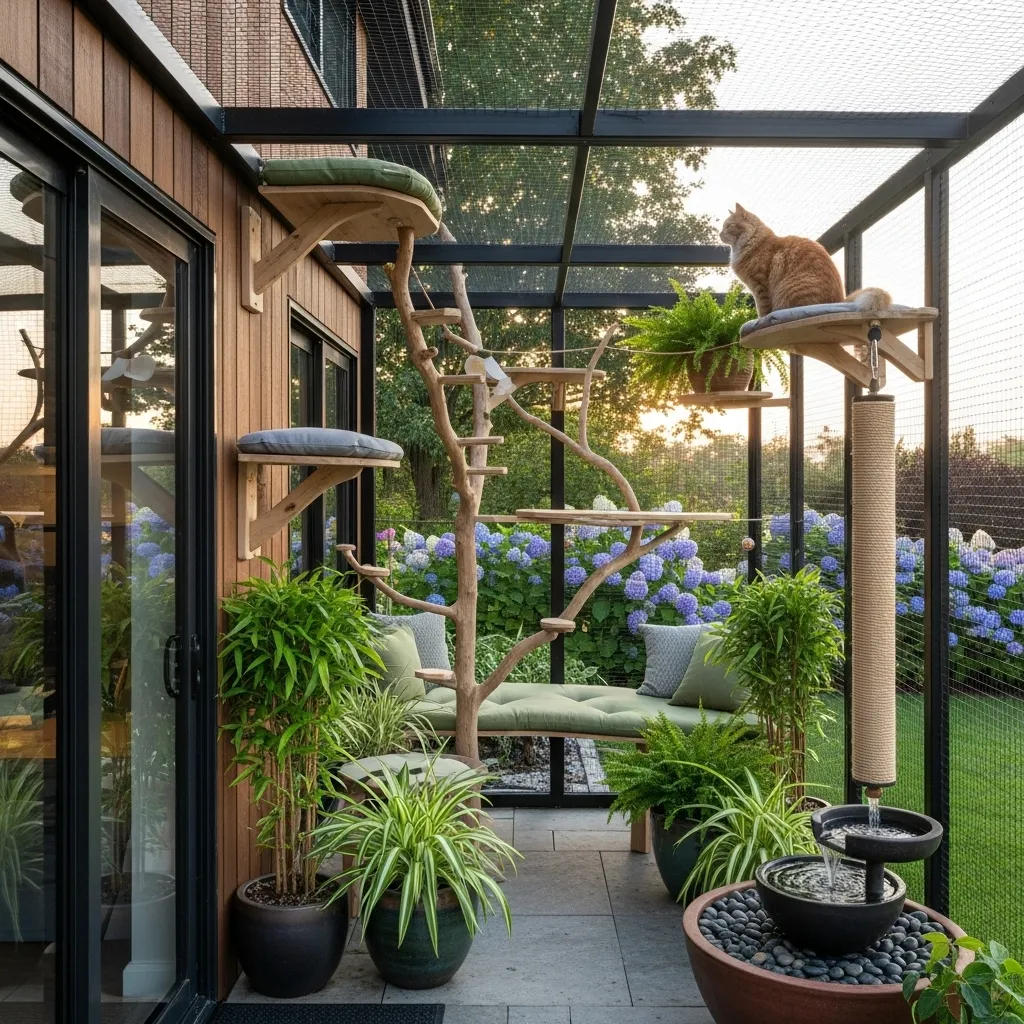
Catios (enclosed patios) let cats experience nature safely. Add shelves, plants, and perches.
Balcony netting or harness walks offer alternatives.
Benefits include fresh air, new stimuli, and reduced indoor boredom.
Start small to build confidence.
Discover more in our catio designs 2025 article.
Multi-Cat Considerations and Resource Placement
In multi-cat homes, competition causes stress.
Follow the “plus one” rule: one litter box per cat plus one, scattered privately.
Separate feeding stations prevent guarding.
Multiple water sources encourage hydration.
Vertical spaces allow escape routes.
Scent swapping or gradual introductions ease tensions.
Learn more in our cat introductions guide or multi-cat coexistence tips.
Common Mistakes to Avoid
Overloading with toys causes overwhelm; rotate instead.
Placing litter near food violates instincts.
Ignoring routine changes spikes stress.
Skipping vet checks misses underlying issues.
Minimal vertical space leaves cats ground-bound and anxious.
FAQ
How do I know if my cat’s environment is stressful?
Signs include hiding excessively, aggression, inappropriate elimination, over-grooming, or reduced appetite. Consult a vet to rule out medical causes.
What’s the best way to start enriching my home for cats?
Begin with basics: a scratching post, window perch, and interactive play daily. Add elements gradually based on your cat’s preferences.
Are puzzle feeders good for all cats?
Most benefit, especially overweight or bored ones. Start simple for seniors or picky eaters.
How much vertical space does a cat need?
At least one elevated perch per cat, ideally connected pathways. Taller setups suit active breeds.
Can plants really enrich a cat’s environment?
Yes, cat-safe ones provide scents and textures. Avoid toxic varieties like lilies.
What’s a catio, and is it worth it?
A secure outdoor enclosure. It offers immense enrichment for indoor cats, reducing boredom significantly.
Conclusion
Designing a calm, enriching home environment for cats transforms their daily life and yours. Small, intentional changes create a space where instincts flourish, stress fades, and bonds deepen.
Start observing your cat today. Note what engages them, then build from there. Your efforts will yield a contented, playful companion.
Explore more expert cat care and behavior guides on Cat Bloom Haven, from breed-specific tips like our Bengal cat guide or American Shorthair playful personality to enrichment ideas in cat room decor or DIY cat towers. Your cat deserves the best let’s make it happen.