The Hidden Reasons Your Cat is Obsessed with Food: A Science-Backed Guide
Ever feel like your cat has a single, overriding mission in life: acquiring food? Whether they’re meowing at the crack of dawn, weaving between your legs as you prepare dinner, or giving you that look when you open the fridge, a cat’s fixation on food can feel all-consuming. But is your feline friend just being greedy, or is there a deeper story behind their behavior?
This isn’t simply about appetite; it’s a complex mix of evolutionary instinct, psychological need, and sometimes, a signal for help. By understanding the science of cat food motivation psychology, you can transform mealtime from a source of frustration into an opportunity for enrichment, strengthening the bond you share with your feline companion.
Key Takeaways
- A cat’s food obsession is often rooted in natural feline feeding behavior: they are wired to hunt and eat 8-16 small meals throughout the day and night.
- Psychological factors like boredom, stress, and anxiety are major drivers of food-seeking behavior in indoor cats, who may use food as a coping mechanism.
- A sudden or extreme increase in appetite can signal a serious medical condition, such as hyperthyroidism, diabetes, or intestinal parasites, and requires a veterinary visit.
- You can manage food motivation by mimicking natural hunting with scheduled meals, food puzzles, and foraging games, which provide mental stimulation and physical activity.
- A nutritionally incomplete diet or poor feeding practices (like dirty bowls) can inadvertently contribute to food-obsessed behavior.
The Hunter’s Blueprint: How Evolution Programs Your Cat’s Brain
To understand your house cat, you must first understand their wild ancestry. The domestic cat food behavior you witness is a direct legacy of their survival as solitary, hyper-carnivorous predators.
The “Many Mini-Meals” Instinct
In the wild, a cat’s most common prey is the mouse, which provides only about 30 kilocalories of energy. To meet their needs, cats evolved to be opportunistic hunters, making anywhere from 8 to 16 successful “kills” (or meals) in a 24-hour period. Their stomachs are small and designed to process protein-rich meat quickly, leading to a cycle of hunt, eat, groom, and rest.
When we provide one or two large bowls of food a day, we are directly opposing millions of years of evolutionary programming. For a cat, a heaping bowl of kibble is an unnatural bonanza. Their cat brain and food response is still wired for scarcity and the rewarding effort of the hunt. This mismatch between instinct and modern convenience is a primary root of food motivation in house cats.
The “Work” is the Reward: Contrafreeloading and Cats
A fascinating concept in animal behavior is “contrafreeloading” the preference of many animals to work for food even when it is freely available. Interestingly, an early study suggested cats were an exception, preferring the free meal. However, this study had significant limitations, and observing natural cat behavior tells a different story.
In the wild, a cat’s hunting attempts are successful only about one-third of the time. They will continue to stalk and hunt even when not hungry and even with a previous kill nearby. This suggests the act of hunting itself the stalking, pouncing, and capturing is internally rewarding. The psychological reasons cats love food are intrinsically tied to the process of acquiring it. For an indoor cat with no outlet for this sequence, the singular focus can become the bowl itself, leading to begging, pestering, and overeating.
Beyond Hunger: The Psychological and Medical Drivers
When the drive for food seems excessive, it’s crucial to look beyond simple hunger. The underlying cause often falls into one of two categories: a psychological need or a medical problem.
Mind Over Bowl: Boredom, Stress, and Compulsion
Indoor living, while safe, can be profoundly under-stimulating for a predator’s mind. Without territory to patrol, prey to stalk, or puzzles to solve, cats can turn to food as their primary source of excitement and comfort.
- Boredom: This is one of the most common causes of emotional eating in cats. Eating becomes an activity, a way to pass the time. If your cat’s day consists of napping and waiting for you to come home, the highlight becomes mealtime. Do cats eat out of boredom? Absolutely, and it’s a fast track to obesity.
- Anxiety and Stress: Changes in the household, conflict with other pets, or a lack of secure hiding spots can make a cat anxious. For some, food becomes a soothing mechanism, much like stress-eating in humans. They may seek the comfort of the predictable ritual of being fed.
- Psychogenic Abnormal Feeding Behavior: In some cases, the obsession can reach a clinical level. Veterinarians may use this term for cats that exhibit extreme, food-focused behaviors like ravenous appetite, aggression around food, or eating non-food items, where all medical causes have been ruled out. This highlights that cat psychology explained must include mental health.
Important: If your cat’s food obsession is new, severe, or accompanied by other symptoms, a veterinary visit is the essential first step. What looks like a behavioral quirk could be a medical emergency.
When It’s a Signal for Help: Medical Conditions to Rule Out
A sudden or dramatic increase in appetite is a classic red flag in veterinary medicine. Before addressing behavior, these conditions must be excluded.
| Medical Condition | What It Is | Why It Increases Appetite | Key Signs Beyond Hunger |
|---|---|---|---|
| Hyperthyroidism | Overactive thyroid gland. | Skyrockets metabolism, burning energy too fast. | Weight loss, hyperactivity, increased thirst, unkempt coat. |
| Diabetes Mellitus | Inability to regulate blood sugar. | Cells are starved for energy despite high blood sugar. | Weight loss, excessive thirst/urination, lethargy. |
| Intestinal Parasites | Worms (e.g., tapeworms, roundworms). | Parasites consume nutrients meant for the cat. | Weight loss, pot-bellied appearance, visible worms in stool. |
| Poor Nutrient Absorption | Digestive diseases (e.g., IBD). | Body cannot absorb nutrients from food properly. | Weight loss, diarrhea, vomiting. |
| Certain Medications | Side effect of drugs like steroids. | Can artificially stimulate appetite. | Recent start of a new prescription. |
As you can see, weight loss paired with increased hunger is a particularly urgent combination that demands immediate veterinary attention. You can explore more on other subtle signs of illness in our guide on cat sick signs.
Crafting the Solution: From Problem to Enrichment
Managing a food-motivated cat isn’t about deprivation; it’s about redirection. The goal is to satisfy their instinctual needs in a healthy, engaging way. Here’s how to transform your cat’s feline feeding behavior for the better.
1. Master the Feeding Routine
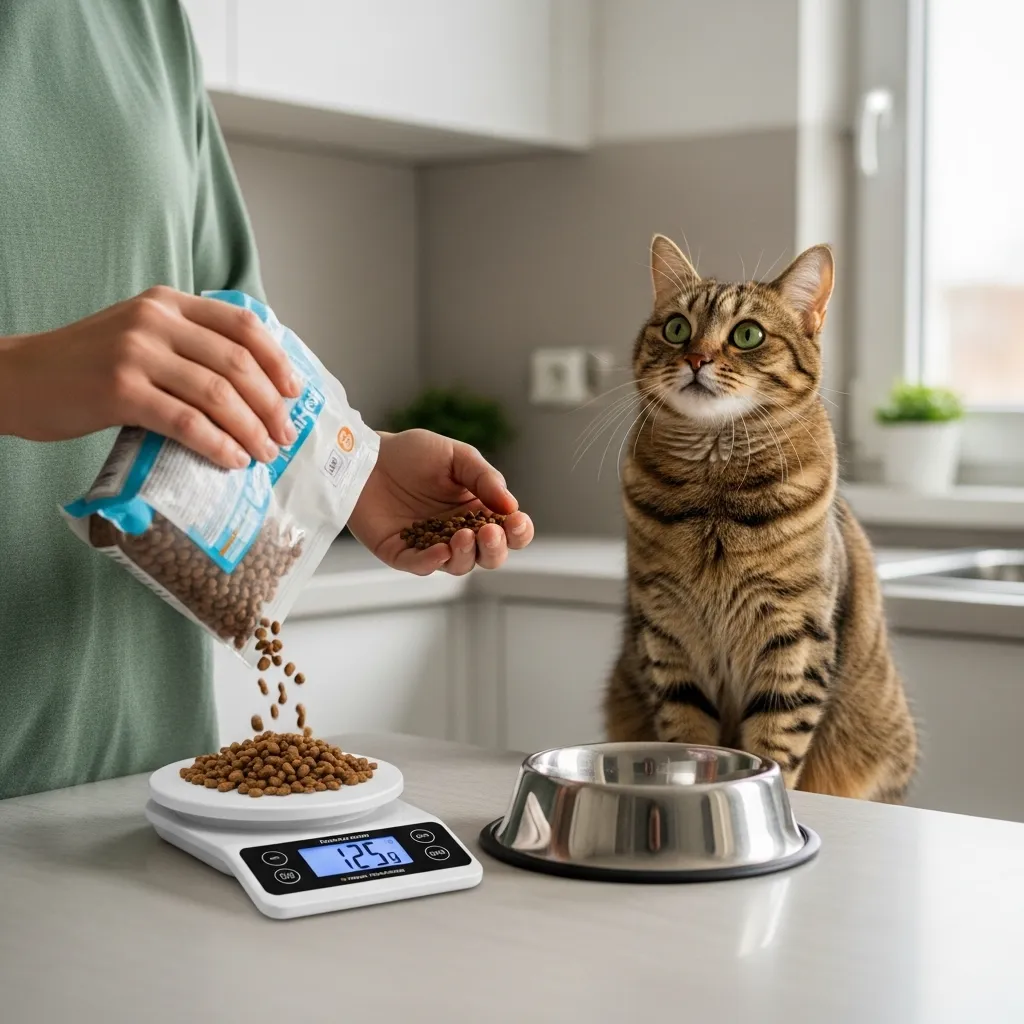
Consistency is key to security. Feed measured meals at the same times each day. Two meals is the minimum, but three or four is even better, aligning closer to their natural rhythm. Use a kitchen scale for absolute accuracy, as measuring cups can be misleading. This routine not only manages weight but also turns you into a predictable “food source,” reducing anxiety-driven begging.
For the chronic grazer, you can still create routine. Measure their entire daily portion in the morning and offer the bowl at set times, removing it after 20-30 minutes. This maintains the expectation of mealtimes.
2. Unleash the Forager: Introduce Food Puzzles
This is the single most effective strategy for a food-obsessed cat. Food puzzles are toys that require a cat to manipulate them to release kibble or treats. They turn eating into a rewarding mental and physical challenge.
- How they help: Puzzles slow down eating, provide mental stimulation, satisfy the contrafreeloading instinct, and can even increase moderate activity. They address the core psychological reasons cats love food by making them work for it.
- How to start: Begin with simple, easy puzzles (like a rolling ball with large holes or a stationary tray with shallow wells). Make it super easy at first so your cat feels instant success. Place part of their daily kibble allotment in the puzzle, not extra food.
- Types: Mobile puzzles (balls, barrels) encourage batting and chasing. Stationary puzzles (mats, boards) encourage pawing and digging. You can find excellent ideas and guides at resources like FoodPuzzlesForCats.com.
3. Create a Hunting Sequence
Recreate the natural “hunt, catch, kill, eat” cycle. This is more than just a puzzle; it’s an event.
- Play Before You Pay: Before each scheduled meal, engage your cat in a vigorous 5-10 minute play session. Use a wand toy to mimic prey (darting, hiding, skittering). Let them finally “catch” and bunny-kick the toy.
- The Reward: Immediately after this successful “hunt,” present their meal. This sequence satisfies their deep instinct, making the food a true reward and can significantly reduce demanding behavior at other times.
- Scatter Feeding: For part of their meal, toss kibble pieces across a clean floor or into a grassy patch on a catio for them to find. This taps directly into their natural search-and-forage behavior.
4. Optimize the Dining Environment
Small tweaks can make a big difference in your cat’s comfort and satisfaction.
- Cleanliness: Wash food and water bowls daily with soap and hot water. Residual saliva and fat can cause bacterial growth and make food unappealing.
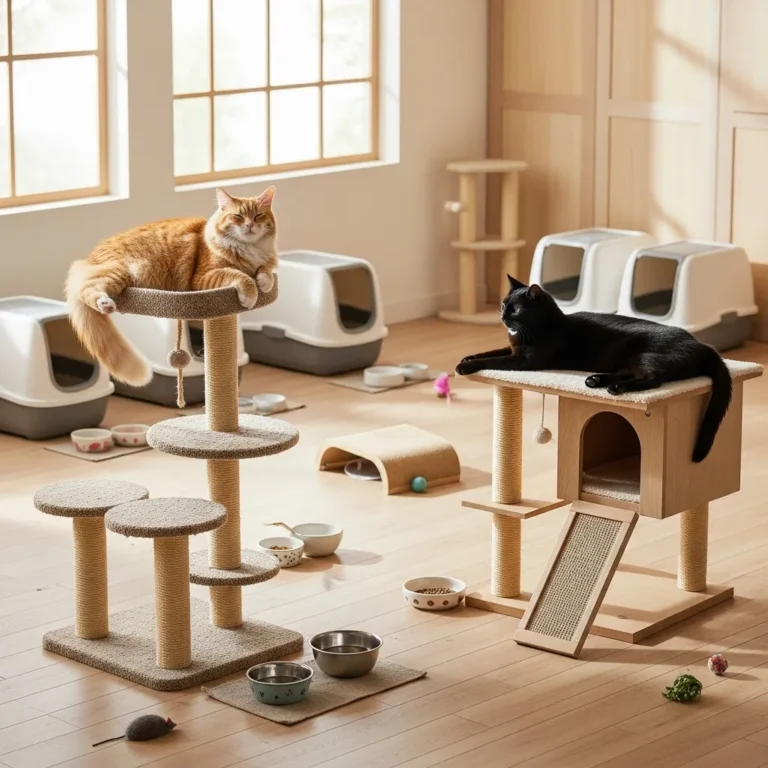
- Location and Privacy: Place food bowls in a quiet, low-traffic area where your cat won’t feel startled or compete with other pets. Some cats prefer to eat in solitude, as they would in the wild. Ensure food, water, and litter box areas are separate.
- Diet Quality: Consult your vet to ensure you’re feeding a high-quality, species-appropriate diet that is nutritionally complete. A cat eating a poor diet may feel perpetually unsatisfied and seek more food to meet its nutritional needs. Our guide on choosing cat food can help you navigate the options.
When to Pause Behavior Plans and Call the Vet
It is critical to remember that all behavioral strategies assume a healthy cat. Any new or escalating food obsession warrants a professional opinion.
Seek immediate veterinary advice if your cat shows:
- A sudden, dramatic increase in appetite, especially if they are an adult or senior cat.
- Increased appetite paired with weight loss.
- Any other new symptoms: excessive thirst/urination, vomiting, diarrhea, or lethargy.
- Sudden loss of appetite after a period of increased hunger.
Your veterinarian will perform a thorough physical exam and likely recommend diagnostic tests such as blood work, urinalysis, or fecal tests to rule out the medical conditions listed above.
Final Thoughts: Nourishing Body and Mind
Understanding why cats are obsessed with food is the first step toward a more harmonious life with your feline friend. Their drive isn’t a flaw or a personal failing on your part; it’s a powerful echo of their wild heritage colliding with the comforts of domestic life.
By shifting your perspective from seeing a greedy cat to understanding a frustrated hunter you can implement solutions that nourish both their body and their active mind. A consistent routine, the thoughtful use of food puzzles, and engaging play sessions do more than manage weight; they fulfill your cat’s deepest instincts, curbing obsessive behaviors at their source. The result is a calmer, more satisfied companion and a stronger, more empathetic bond between you.
Explore more expert insights into your cat’s world. For further reading on feline quirks, dive into our article on what your cat is thinking, or if the midnight cries are a problem, learn strategies in our guide to cat howling at night.