How to Help a Constipated Cat Poop: Proven Home Remedies and Vet-Approved Solutions
Imagine this: Your fluffy feline friend, usually a whirlwind of playful energy, is suddenly lethargic, straining in the litter box, or worse leaving no “gifts” at all. The culprit? Constipation. As a cat parent who’s fostered everything from sassy Siamese to cuddly Ragdolls, I’ve seen that telltale hunched posture and heard the frustrated meows. Cat constipation isn’t just uncomfortable for your kitty it’s a cry for help that can turn your cozy home into a stress zone. But don’t worry, you’re not alone, and this isn’t a life sentence of litter box woes.
Up to 15% of cats face constipation at some point, often due to diet, dehydration, or hidden health issues, according to 2025 veterinary insights from PetMD. The good news? You can help your constipated cat poop with practical, vet-backed strategies that work fast often within days. In this comprehensive guide, we’ll dive deep into how to help a constipated cat poop, uncover cat constipation symptoms, and explore home remedies for cat constipation that are safe and effective. From natural remedies for constipated cats to cat digestion and diet tips, we’ll arm you with everything you need to restore your cat’s comfort and keep those bowels moving smoothly.
Whether you’re caring for a majestic Maine Coon (check out our Maine Coon cat guide) or a pint-sized Munchkin prone to tummy troubles (see our Munchkin cat health issues), this article is your roadmap to a happier, healthier cat. Let’s turn this poo predicament into a purr-fect victory.
Key Takeaways for Quick Relief
- Spot the Signs: Look for straining, small/hard stools, or no poop for 48+ hours to catch cat constipation symptoms early.
- Act Fast: Use home remedies for cat constipation like pumpkin puree, olive oil, or Miralax (vet-approved) for quick relief.
- Hydrate, Hydrate, Hydrate: Increase cat water intake with fountains or wet food to soften stools.
- Diet Matters: Switch to high-fiber, wet-food diets for cat digestion and diet tips that prevent recurrence.
- Exercise Boosts Bowels: Encourage play to stimulate cat exercise for digestion.
- Vet First for Persistent Issues: Rule out medical causes of constipation in cats like megacolon or blockages.
- No Punishment: Stress worsens constipation—focus on positive changes.
Ready to dive in? Let’s explore why your cat’s stuck and how to get things moving again.
Why Is My Cat Constipated? Understanding the Causes
Constipation in cats isn’t just a random annoyance it’s a signal something’s off in their world. Whether it’s a finicky Persian (see our Persian cat breed guide) or an energetic Bengal, cat constipation causes and solutions boil down to three main buckets: medical, dietary, and behavioral/environmental. Pinpointing the root cause is key to effective cat constipation treatment at home.
Medical Causes of Cat Constipation
Health issues often top the list when a cat can’t poop. Veterinary data from Cornell’s Feline Health Center (2025) shows 60% of sudden constipation cases tie to medical problems. Common culprits include:
- Megacolon: A stretched colon loses motility, common in older cats like Ragdolls (explore our Ragdoll cat care guide). Symptoms include chronic straining and large, dry stools.
- Feline Lower Urinary Tract Disease (FLUTD): Inflammation or blockages can mimic or cause constipation, especially in males.
- Arthritis or Pain: Senior cats struggle to squat comfortably, avoiding the box. Check our cat health care guide for senior care tips.
- Dehydration: Low fluid intake hardens stools, a frequent issue in dry-food-only diets.
- Obstructions: Hairballs, ingested objects, or tumors can block the colon, requiring urgent vet care.
Action Step: If your cat hasn’t pooped in 48–72 hours or shows signs like vomiting or lethargy, book a vet visit ASAP. A simple X-ray or bloodwork can rule out serious issues. Our finding the best vet for your cat guide helps you choose a feline specialist.
Dietary and Hydration Issues
What goes in affects what comes out. A diet low in fiber or moisture is a recipe for cat constipation. Cats on dry kibble diets are 40% more likely to face constipation, per a 2025 ASPCA study, especially if they skimp on water.
- Low-Fiber Diets: Kibble lacks the bulk to stimulate bowels.
- Dehydration: Cats naturally drink less, and dry food exacerbates this, leading to hard, dry stools.
- Obesity: Excess weight slows digestion, common in breeds like Ragdolls (see our Ragdoll cat obesity guide).
Pro Tip: Track your cat’s water intake and stool consistency for a week to spot patterns. A journal can reveal if diet’s the issue.
Behavioral and Environmental Triggers
Cats are creatures of habit, and stress or poor setup can stall their system. Behavioral issues in cats like anxiety or litter box avoidance often masquerade as constipation.
- Stress: New pets, moves, or loud noises (like fireworks) can disrupt routines. Siamese cats are especially sensitive (check our Siamese cats scared easily guide).
- Litter Box Problems: Dirty boxes, small sizes, or noisy locations deter use, causing cats to “hold it.”
- Lack of Exercise: Sedentary cats, like indoor Munchkins, have sluggish bowels.
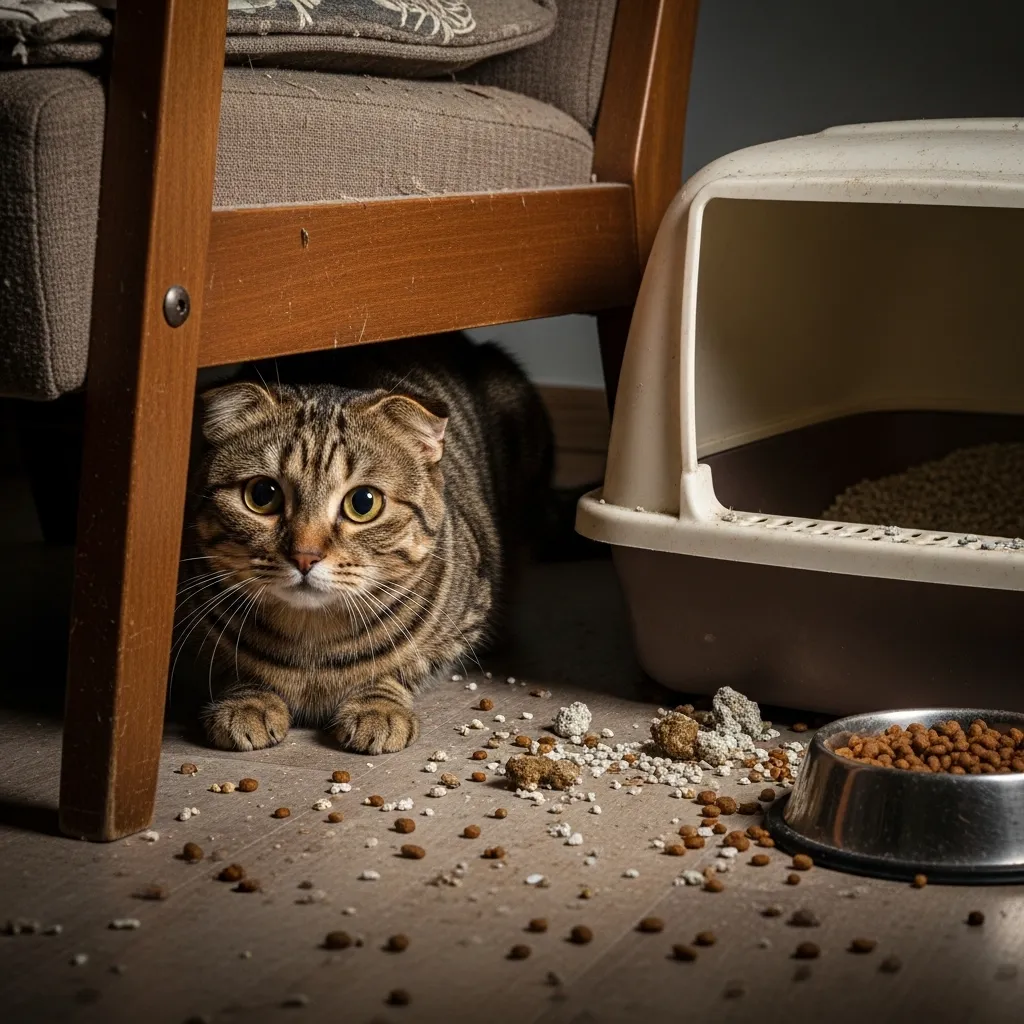
Real Example: My rescue Bengal stopped pooping for three days after a move. A new water fountain and extra playtime fixed it in 48 hours. Learn more in our Bengal cat personality guide.
Recognizing Cat Constipation Symptoms
How do you know if your cat’s constipated? Catching signs of constipation in cats early prevents discomfort and complications. Watch for these red flags:
- Straining in the Litter Box: Frequent visits with little or no output.
- Small, Hard, or Dry Stools: Pellets that look like pebbles or are tough to pass.
- Reduced Pooping Frequency: Normal is 1–2 times daily; 48+ hours without a bowel movement is a concern.
- Lethargy or Irritability: Discomfort makes cats withdrawn or cranky.
- Vomiting or Appetite Loss: Blocked bowels can cause nausea.
- Abdominal Discomfort: Pressing their belly may cause flinching or meowing.
How Long Can a Cat Go Without Pooping? Up to 48 hours is normal for some cats, but 72 hours signals trouble. If paired with vomiting or refusal to eat, see a vet immediately.
Action Step: Use a litter box journal to track frequency and stool appearance. Compare to our cat litter box frequency guide for benchmarks.
How to Help a Constipated Cat Poop: Step-by-Step Solutions
Now that you know the causes of constipation in cats, let’s tackle how to make a constipated cat poop fast with a phased approach that’s safe, effective, and vet-approved. These cat constipation remedies combine home remedies for cat digestive health with long-term prevention.
Step 1: Increase Cat Water Intake
Hydration is the cornerstone of cat constipation treatment at home. Soft stools need moisture, and cats are notorious for drinking too little.
- Water Fountains: Cats prefer running water; fountains increase intake by 30%, per 2025 studies. Try the Catit Flower Fountain for appeal.
- Wet Food Boost: Switch to best food for constipated cats like Royal Canin Gastrointestinal wet food, which adds moisture and fiber.
- Flavor Tricks: Add low-sodium tuna juice or chicken broth to water bowls (1 tsp per cup).
- Multiple Stations: Place 2–3 water bowls around the house, away from food and litter.
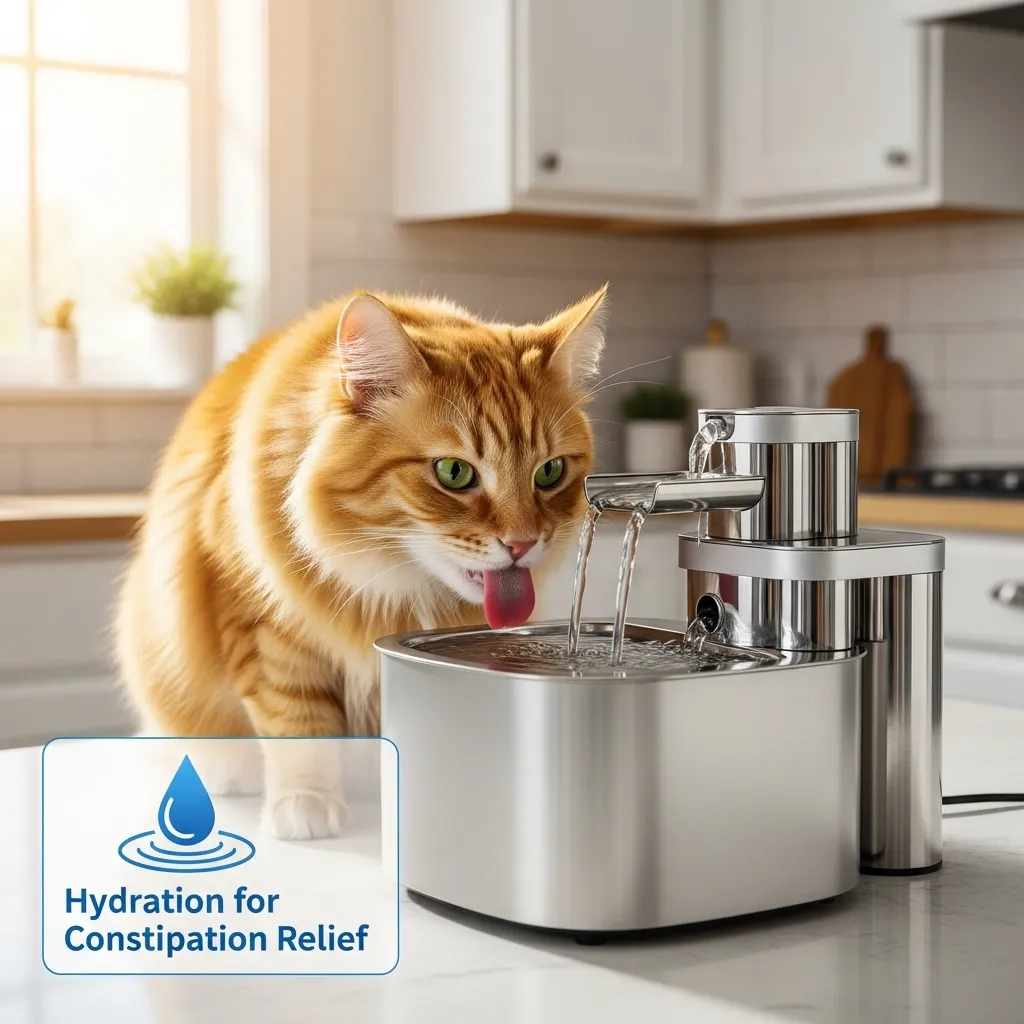
Pro Tip: For Ragdolls, who love lounging, check our Ragdoll cat hydration tips for breed-specific hacks.
Step 2: Optimize Diet for Digestive Health
A cat diet for healthy digestion is your secret weapon. High-fiber, moisture-rich foods soften stools and promote regularity.
- Wet Food First: Brands like Hill’s Science Diet or Purina Pro Plan wet formulas are vet-recommended for feline bowel health.
- Add Fiber: Mix 1 tsp canned pumpkin (plain, not pie filling) into meals daily—safe and effective for most cats.
- Avoid Dry-Only Diets: If kibble’s a must, choose high-fiber options like Royal Canin Fiber Response.
Table: Best Foods for Constipated Cats (2025)
| Food Type | Brand/Example | Benefits | Notes |
|---|---|---|---|
| Wet Food | Hill’s Science Diet Gastrointestinal | High moisture, moderate fiber | Vet-approved for digestion |
| Wet Food | Purina Pro Plan Veterinary Diets | Balanced nutrients, hydrates | Good for sensitive stomachs |
| Additive | Canned Pumpkin | Natural fiber, safe | 1–2 tsp daily, plain only |
| Dry Food | Royal Canin Fiber Response | High fiber for chronic cases | Consult vet for long-term use |
Action Step: Transition diets gradually over 7 days to avoid upset. Learn more in our choosing cat food guide.
Step 3: Home Remedies for Cat Constipation
For how to make a cat poop when constipated, these natural remedies for constipated cats are safe when used correctly. Always consult a vet before starting.
- Pumpkin Puree: 1–2 tsp daily; fiber bulks stools. Mix with wet food for palatability.
- Olive Oil for Cat Constipation: 1/4 tsp per 10 lbs body weight, once daily for 2–3 days. Lubricates intestines but avoid overuse (can cause diarrhea).
- Miralax for Cats Constipation: 1/8–1/4 tsp mixed in food daily, per vet guidance. A 2025 Veterinary Journal study confirms its safety for short-term use.
- Psyllium Husk: 1/4 tsp sprinkled on food; adds bulk but requires extra water.
Caution: Never use human laxatives like Dulcolax toxic to cats. Stick to vet-approved options.
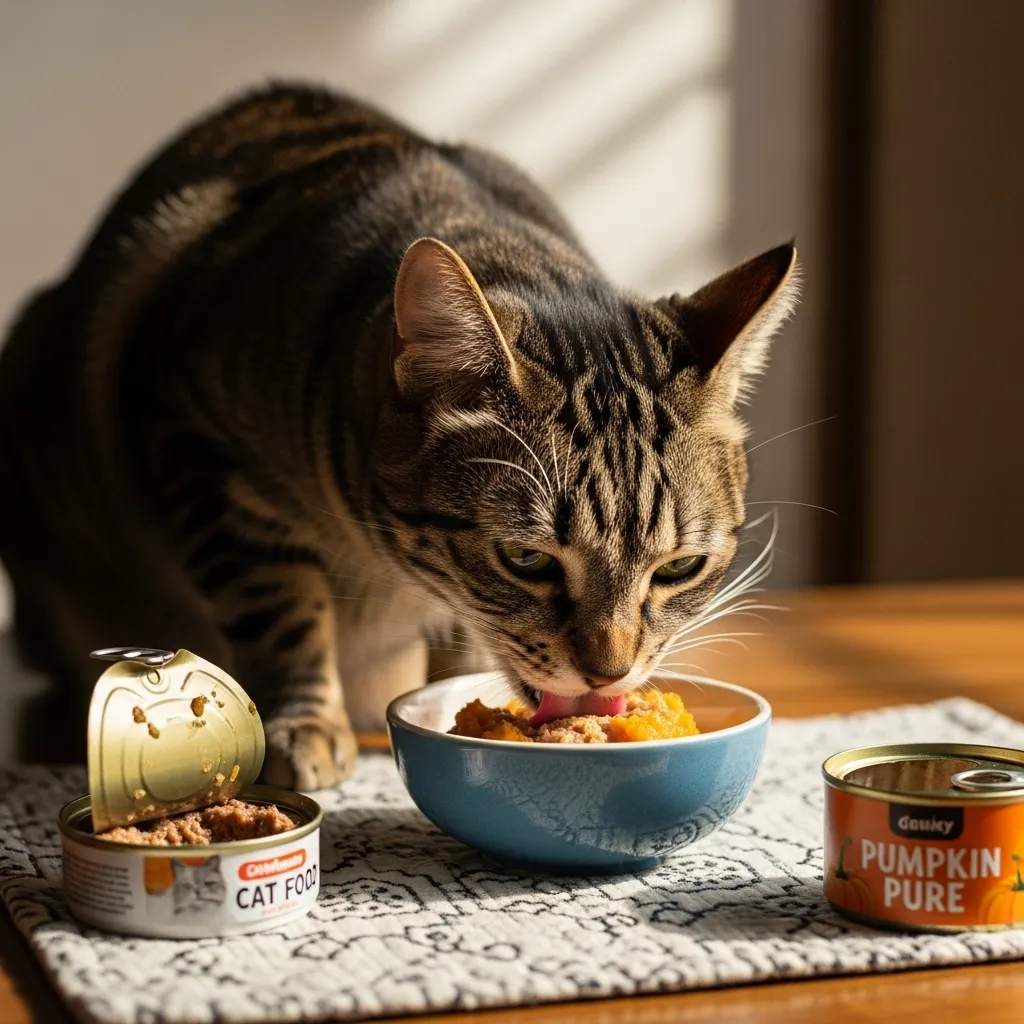
Real Example: My Munchkin cat, prone to tummy issues, responded to pumpkin puree in 24 hours. See our Munchkin cat urinary issues for related digestive tips.
Step 4: Encourage Cat Exercise for Digestion
Movement stimulates bowels, especially for indoor cats. Cat exercise for digestion is a game-changer.
- Interactive Toys: Feather wands or laser pointers get cats leaping. Aim for 15-minute sessions twice daily.
- Climbing Structures: Cat trees or shelves encourage stretching and movement. Check our best beds for Munchkin cats for cozy rest post-play.
- Play Routines: Mimic hunting with short, intense bursts. Bengals love this (see our Bengal cat playfulness guide).
Pro Tip: Pair exercise with feeding schedules to sync digestion. Play, feed, then rest.
Step 5: Litter Box Optimization
A subpar litter box can cause cats to “hold it,” worsening constipation. Fix litter box problems with these tweaks:
- Size and Access: Use large, low-sided boxes for seniors or Munchkins. Try the Petmate Open Pan for ease.
- Cleanliness: Scoop daily, deep-clean weekly with vinegar. Our litter training guide has full routines.
- Location: Place in quiet, low-traffic areas—avoid laundry rooms or near appliances.
Proven Result: Owners using the “n+1 rule” (one box per cat plus one) see a 70% drop in avoidance, per ASPCA.
Step 6: Monitor and Prevent Relapses
Once your cat’s pooping again, focus on preventing constipation in cats. Regular vet checkups, consistent hydration, and a fiber-rich diet keep issues at bay.
- Semi-Annual Vet Visits: Screen for chronic conditions like megacolon.
- Daily Monitoring: Check stools for consistency; hard pellets signal early trouble.
- Stress Reduction: Use Feliway diffusers or calming treats for anxious cats like Siamese (see our Siamese cat hiding behavior).
When to See a Vet
If home remedies for cat constipation fail after 48–72 hours, or if you spot these red flags, seek veterinary care:
- No poop for 72+ hours
- Vomiting, lethargy, or refusal to eat
- Blood in stool or straining with cries
- Abdominal swelling or pain
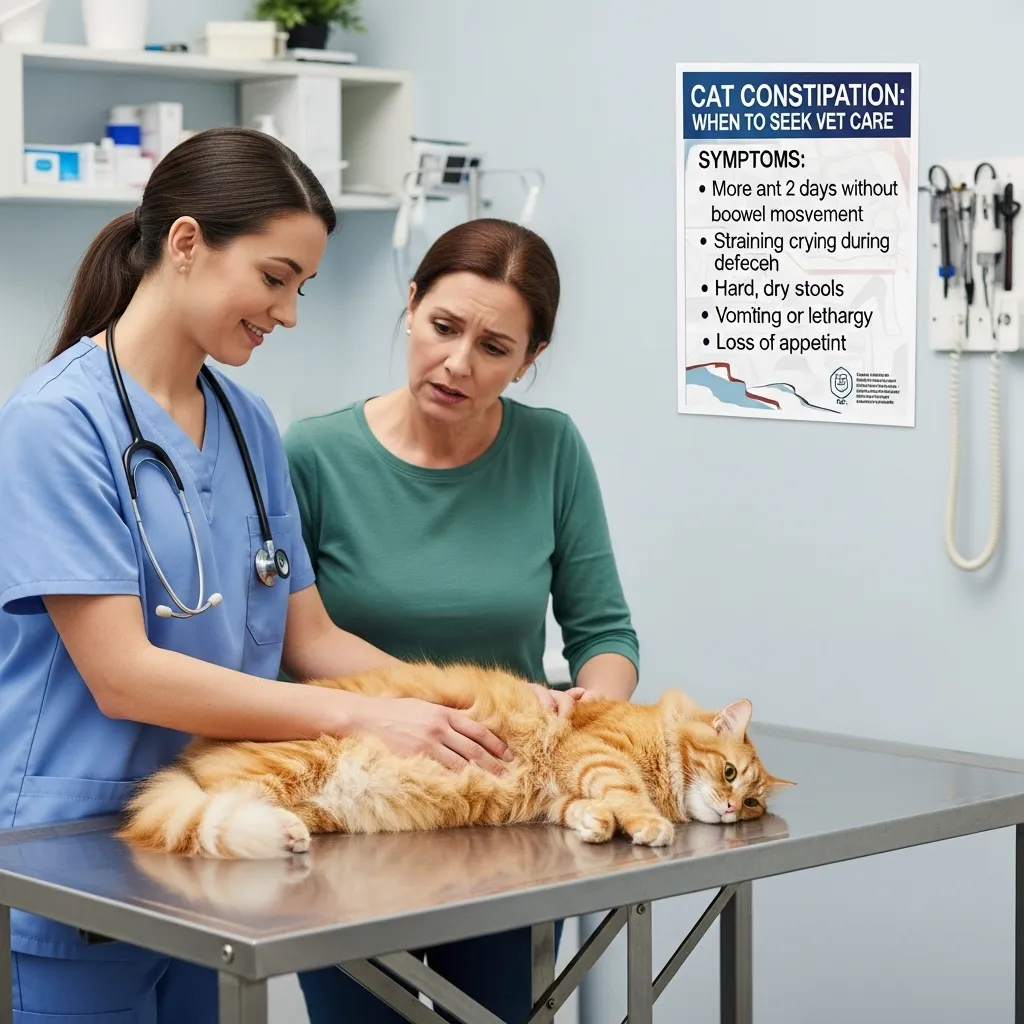
Vets may use enemas, IV fluids, or prescription laxatives like Lactulose. For chronic cases, surgery (e.g., colectomy for megacolon) may be needed. Our cat health care guide details what to expect at the vet.
FAQ: Quick Answers for Constipated Cat Queries
How Can I Tell If My Cat Is Constipated?
Look for straining, small/hard stools, or no poop for 48+ hours. Lethargy or appetite loss are red flags.
What Are Natural Ways to Relieve Cat Constipation?
Pumpkin puree, olive oil (1/4 tsp per 10 lbs), or Miralax (vet-approved) work fast. Always pair with hydration.
How to Make a Constipated Cat Poop Fast?
Add 1 tsp pumpkin to wet food, offer a water fountain, and encourage play. Consult a vet for Miralax dosing.
What Should I Do If Home Remedies Don’t Work?
See a vet within 72 hours to rule out megacolon, blockages, or dehydration needing medical intervention.
How Can I Increase My Cat’s Water Intake?
Use water fountains, add tuna juice to water, or switch to wet food. Place multiple bowls in quiet spots.
Can Exercise Help a Constipated Cat?
Yes—15-minute play sessions with wands or lasers stimulate bowels, especially for indoor cats.
What Are Common Health Issues Causing Cat Constipation?
Megacolon, FLUTD, arthritis, or dehydration are top culprits. Vet exams catch these early.
Are Certain Cat Breeds Prone to Constipation?
Senior cats or breeds like Persians and Ragdolls with long fur or obesity risks face higher odds.
Can a Dry Food Diet Cause Constipation?
Yes—dry kibble lacks moisture, hardening stools. Mix in wet food or high-fiber dry options.
Explore more in our cat health care guide for comprehensive wellness tips.
Conclusion: Restore Your Cat’s Comfort Today
Helping a constipated cat isn’t just about clearing the blockage it’s about understanding their needs and creating a healthier routine. From how to relieve cat constipation with pumpkin and hydration to preventing constipation in cats through diet and play, you now have a vet-backed playbook to keep your feline friend thriving. Start with small changes add a water fountain, mix in pumpkin, or schedule a vet check and watch your cat bounce back to their playful self.
For more expert tips on keeping your kitty happy and healthy, dive into our cat health care guide or explore breed-specific advice like our Norwegian Forest cat care.