The Secret Language of Whiskers: Decoding Your Cat’s Daily Habits and True Personality
Key Takeaways: What Your Cat’s Routine Reveals
Your cat’s daily habits aren’t random they’re a living diary of their personality, emotional state, and instincts. The way they move, sleep, eat, and interact forms a behavioral fingerprint as unique as their coat pattern. By observing their daily routine, you can uncover their personality traits, understand their communication, and strengthen your bond. This guide will translate your cat’s behavior patterns into clear insights about their inner world, helping you become fluent in the subtle language of cat body language and habits.
Introduction: Your Cat Is Telling You a Story Are You Listening?
If you’ve ever watched your cat stare intently at a sunbeam, perform their meticulous pre-meal “floor scratch,” or curl into a perfect donut on your favorite chair, you’ve witnessed more than just cute quirks. You’ve seen chapters of their personal story written in behavior. Every tail flick, every specific cat habit, every preferred napping spot is a data point in understanding cat personality traits.
Cats communicate volumes through their daily habits, but we often misinterpret or miss their messages entirely. Unlike dogs, whose emotions can be broad and obvious, feline communication is nuanced, subtle, and deeply tied to ancient instincts. A cat that brings you toys isn’t just playing—they might be showing love, practicing hunting, or seeking approval. A cat that sleeps pressed against you at night isn’t just seeking warmth—they’re demonstrating ultimate trust.
This comprehensive guide goes beyond simple explanations to explore the scientific meaning behind cat behavior, connecting the dots between your cat’s observable daily routine and their underlying personality. Whether you’re puzzling over a new behavior or simply want to know your companion better, you’ll learn to see your cat not just as a pet, but as a complex individual with rich emotional and instinctual drives.
Chapter 1: The Feline Blueprint Instincts That Shape Every Habit
Before decoding personality, we must understand the foundational software running every cat: their instincts. Modern domestic cats share 95.6% of their genetic makeup with African wildcats. This means their daily habits are often elegant compromises between their wild ancestry and domestic life.
The Predatory Sequence: Hunt, Catch, Kill, Eat, Groom, Sleep.
This hardwired loop governs your cat’s entire daily routine. Even a well-fed house cat will instinctively follow these steps. This is why your cat may:
- “Hunt” your ankles at dawn (the hunt phase).
- Batten and “kill” their toy mouse (catch/kill phases).
- Eat their breakfast (eat phase).
- Meticulously groom (groom phase).
- Nap for hours (sleep phase).
Understanding this sequence is crucial. A cat denied the opportunity to express these instincts through play may redirect them into behavior patterns we find problematic, like aggression or excessive nighttime activity. Providing structured play that mimics this sequence is key to a satisfied, well-behaved cat.
Image suggestion placed here: A split image showing an African wildcat stalking prey and a domestic cat poised to pounce on a feather toy. Alt text: “The innate hunting instinct links domestic cat behavior to their wild ancestors.”
Security and Territory: The “Safe Base” Principle.
Cats are both predator and prey. This dual identity makes them security-obsessed. Their territory isn’t just property it’s a survival map. They perform common cat habits like rubbing their cheeks on furniture (depositing scent via pheromones) and scratching vertical surfaces (visual and scent marking) to create a “scent-soaked” environment that screams “I am safe here.”
When you see your cat pawing at smooth surfaces around their water bowl, they’re not making a mess. This likely stems from an instinct to check the solidity of ground near water or to clear debris a habit explained scientifically by their ancestral need for safe drinking spots.
Chapter 2: The Personality Matrix – Mapping Your Cat’s True Nature
Personality in cats isn’t a single trait but a spectrum. Research, such as that published in Applied Animal Behaviour Science, often categorizes feline personality along several core axes. Your cat’s daily habits place them somewhere on each of these scales.
1. The Social Butterfly vs. The Solo Sovereign
- Social Butterfly: Seeks you out consistently, follows you room-to-room, greets you at the door, enjoys being in the same space. Their daily routine revolves around your presence. They may be more vocal and exhibit signs of cat personality that are outgoing and people-oriented.
- Solo Sovereign: Enjoans companionship on their own terms. They may nap nearby but not on you. They are less likely to initiate contact but can form deep, quiet bonds. Their independence is a strength, not aloofness.
2. The Confident Explorer vs. The Cautious Observer
- Confident Explorer: First to investigate new objects, bags, or people. Adapts quickly to change. Their cat behavior patterns show boldness and curiosity.
- Cautious Observer: Needs time to assess new situations from a distance. Hides when strangers visit. Prefers predictable routines. This isn’t fearfulness but a prudent strategy.
3. The Playful Hunter vs. The Serene Philosopher
- Playful Hunter: Maintains high toy drive into adulthood. Initiates play frequently. Exhibits common cat habits like bringing you toys or chattering at birds.
- Serene Philosopher: Prefers calm observation, cuddles, or passive play. May have shorter, more intense play bursts.
4. The Affection-Seeker vs. The Respectful Companion
- Affection-Seeker: Initiates physical contact—head-butts, lap-sits, prolonged purring sessions. Shows love through touch.
- Respectful Companion: Shows affection through proximity, slow blinks, or soft vocalizations. May only tolerate brief petting.
Most cats are blends. A cat might be a Confident Explorer with strangers but a Respectful Companion with affection. Track which habits they choose most to find their coordinates on this matrix.

Chapter 3: The Daily Diary Interpreting Key Habits and Routines
Let’s translate specific cat daily habits into insights about their feelings and personality traits.
The Morning Ritual: More Than Just “Feed Me”
Your cat’s morning behavior sets the tone for their day.
- Gentle Nudging vs. Piercing Yowls: A cat who wakes you with soft touches or purring is using polite, bonded communication. A cat who yowls or knocks items over is expressing high anxiety about resource security. This habit can be reshaped with automatic feeders or scheduled play before meals.
- The Post-Breakfast Zoomies: This burst of energy (cat zoomies) is often the “catch/kill” phase of the predatory sequence, triggered by the excitement of eating. It’s a sign of a healthy, energetic cat. For more on this energetic behavior, see our cat zoomies guide.
The Daytime Hours: Rest, Patrol, Play
- Napping Locations: Where your cat sleeps speaks volumes. A cat sleeping exposed in the middle of a room feels supremely confident and safe. A cat who sleeps under beds or in high enclaves may need more security assurances. A cat who always sleeps on your desk or laptop is combining warmth with a deep desire to be near you they are literally trying to merge with your daily routine.
- The “Dead Stare”: When your cat stares at a wall or empty corner, they are likely tracking a tiny insect or dust mote invisible to you, or hearing a sound in the wall. It’s a sign of their incredible senses at work, not a ghost. However, a sudden increase in this or other odd behavior patterns can warrant a vet check.
The Evening Unwind: Bonding and Territory Checks
- The Greeting Ritual: Does your cat meow, chirp, or silently approach when you come home? Their greeting style is a key sign of cat personality. Chirping (a trill) is often an excited, friendly greeting reserved for loved ones.
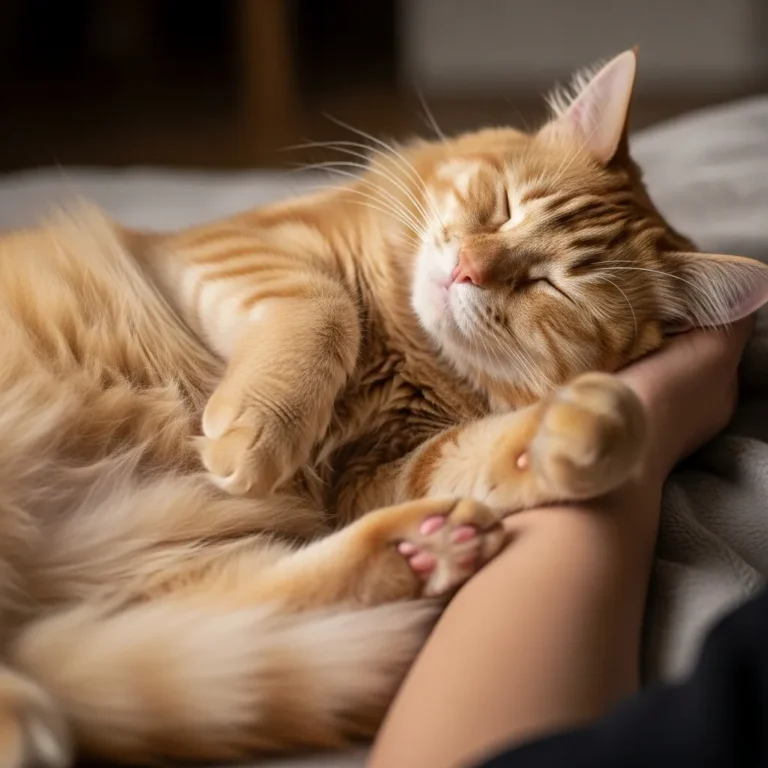
- Kneading and Purring on Your Lap: This is the ultimate sign of contentment, harkening back to kittenhood nursing behavior. It means they feel utterly safe and happy with you. When combined with drooling, it indicates they are in a state of deep, relaxed bliss. Learn more about this comforting behavior in our article on American Shorthair kneading.
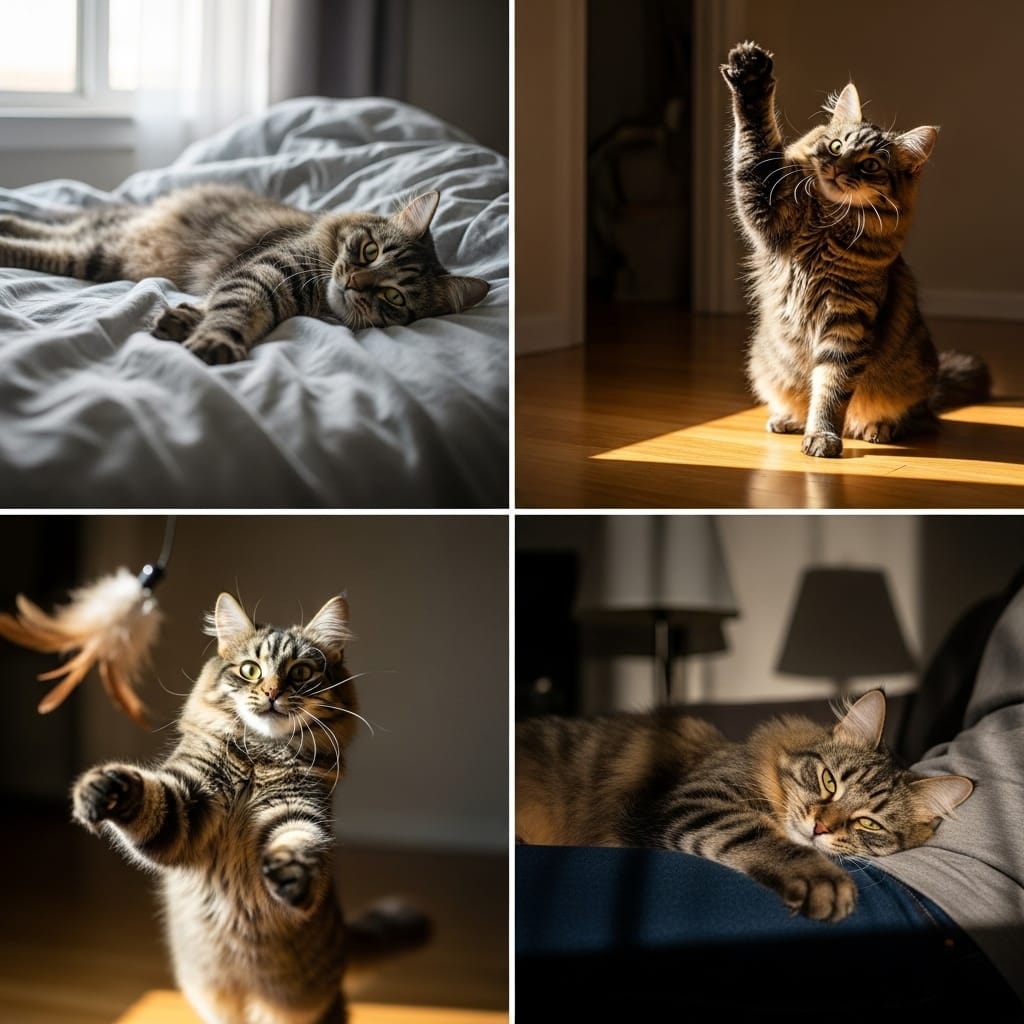
Chapter 4: The Language of Tail, Ears, and Whiskers – Silent Conversations
Cat body language meaning is decoded through clusters of signals, not single gestures.
The Tail: An Emotional Barometer
- Question Mark Curl: A tail held high with a curl at the tip = a happy, confident greeting.
- Low or Tucked Tail: Indicates fear, submission, or feeling unwell.
- Puffed Tail: Fear or aggressive arousal they’re trying to look bigger.
- Twitching Tip: Focused interest or mild irritation. A full, forceful thwacking tail is a clear “back off” signal.
The Eyes and Ears: Windows to Mood
- Slow Blink: A “cat kiss.” Directly returning a slow blink is one of the best ways to say “I love and trust you” in cat language.
- Dilated Pupils in Play: Excited engagement. Dilated pupils in a calm setting: Could be fear, arousal, or a medical issue.
- Ears Forward: Interested, engaged. Ears Swiveling: Listening intently. Ears Flattened (“Airplane Ears”): Fearful, defensive, or aggressive.
The Vocabulary of Sound
- Meow: Almost exclusively for humans. The tone, length, and context give it meaning.
- Purr: Not just for happiness. Cats also purr to self-soothe when in pain or stressed.
- Chirp/Trill: A friendly, excited sound, often used as a greeting or to get your attention.
- Hiss/Growl: A clear, defensive warning. Heed it.
Chapter 5: When Habits Change Reading the Red Flags
A change in daily routine is often the first and most important sign your cat is trying to tell you something is wrong. Personality doesn’t shift overnight, but behavior can due to stress, boredom, or illness.
Medical Urgency: Sudden changes like hiding, eliminating outside the litter box, decreased appetite, excessive vocalization, or aggression require an immediate veterinary visit. A cat that stops grooming might be in pain. A cat drinking excessive water could have kidney issues or diabetes. For a comprehensive list, read our guide on sick cat signs.
Behavioral Shifts:
- Increased Scratching: May signal anxiety or a need for more appropriate scratching posts.
- Over-grooming: Often a sign of stress, allergies, or pain. Learn about causes and solutions in our article on cat over-grooming.
- Nighttime Activity: Can be caused by lack of daytime stimulation. Implementing a play-eat-sleep routine before bed can help. For severe cases, explore our cat hyperactivity at night solutions.
Any persistent change warrants attention. Rule out health problems first with your vet, then address environmental and emotional factors.
Chapter 6: Nurturing Your Cat’s Best Self Aligning Care with Personality
The final step is using your understanding to enrich your cat’s life.
For the Solo Sovereign/Cautious Observer:
- Provide plenty of escape routes and high perches.
- Never force interaction; let them come to you.
- Use puzzle feeders to build confidence.
For the Social Butterfly/Confident Explorer:
- Ensure ample interactive playtime.
- Consider a companion animal if they seem lonely (proceed with careful introductions).
- Teach tricks or harness-train for supervised exploration.
For All Personalities:
- Create a Predictable Routine: Cats thrive on predictability for meals, play, and quiet time.
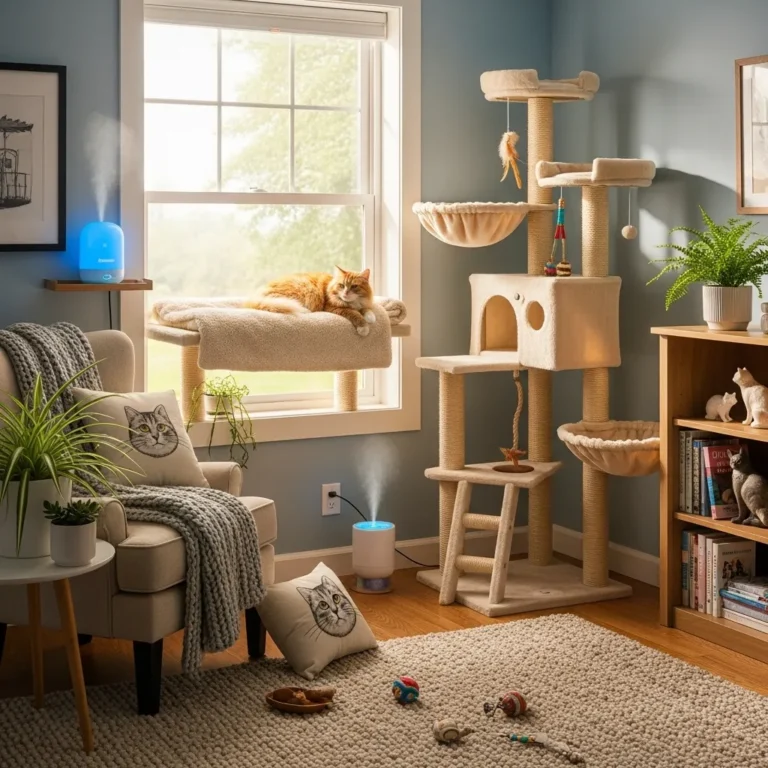
- Enrich Their Environment: Cat trees, window perches, scratching posts, and regular toy rotation are essential. Discover DIY cat enrichment ideas that look expensive but are affordable.
- Respect Their Communication: If they signal “enough,” stop petting. If they hide, give them space.
Your goal is not to change their core personality but to create a world where their unique self can thrive safely and happily.
Frequently Asked Questions (FAQ)
Q: What does it mean when my cat brings me dead animals?
A: This is a complex sign of affection and trust. They see you as a family member either a clumsy kitten who needs feeding or a colony member sharing the hunt. It’s a gift, albeit a gruesome one.
Q: Why does my cat follow me everywhere, even to the bathroom?
A: You are their core source of security and part of their social group. A bathroom, being a small enclosed space, also focuses your attention solely on them. It’s a sign of deep attachment and a common cat habit for bonded individuals.
Q: Can a cat’s personality change over time?
A: Core personality traits are relatively stable, but behavior and confidence can evolve significantly with positive experiences, security, and age. A fearful kitten can become a confident adult with patient, positive socialization.
Q: Why does my cat knock things off tables?
A: It’s often a combination of hunting play (the falling object triggers their prey-drive), a bid for your attention (it works perfectly!), and curiosity about cause and effect. It’s rarely “spite.”
Q: How can I tell if my cat is happy?
A: Look for the signs: a relaxed body, ears forward, slow blinking, healthy appetite, regular grooming, playful behavior, and a willingness to sleep in exposed, relaxed postures. The ultimate sign is a soft purr while resting near or on you.
Conclusion: Becoming Fluent in Feline
Understanding your cat is a lifelong, rewarding study. By viewing their daily habits not as oddities but as chapters in their story, you unlock a deeper, more empathetic relationship. You learn that the cat who sleeps with their bum toward you isn’t being rude they trust you to watch their back. The cat who bites gently during petting isn’t being mean they’re saying they’re overstimulated. The cat with a strict nightly routine isn’t obsessive they find comfort in the predictable rhythm you create together.
Your cat’s personality is a beautiful, intricate puzzle. Their habits are the pieces. By paying attention, you don’t just solve the puzzle you honor the unique, wonderful creature who chose to share their life with you.
Ready to dive deeper into the feline mind? Explore our library of expert-backed guides on everything from cat behavior explained to breed-specific traits and care at Cat Bloom Haven. Start with our comprehensive cat behavior guide or discover how to strengthen your bond in our article on what your cat is thinking.