Why Does My Cat Push His Head Against Me? Decoding Feline Headbutting and Affection
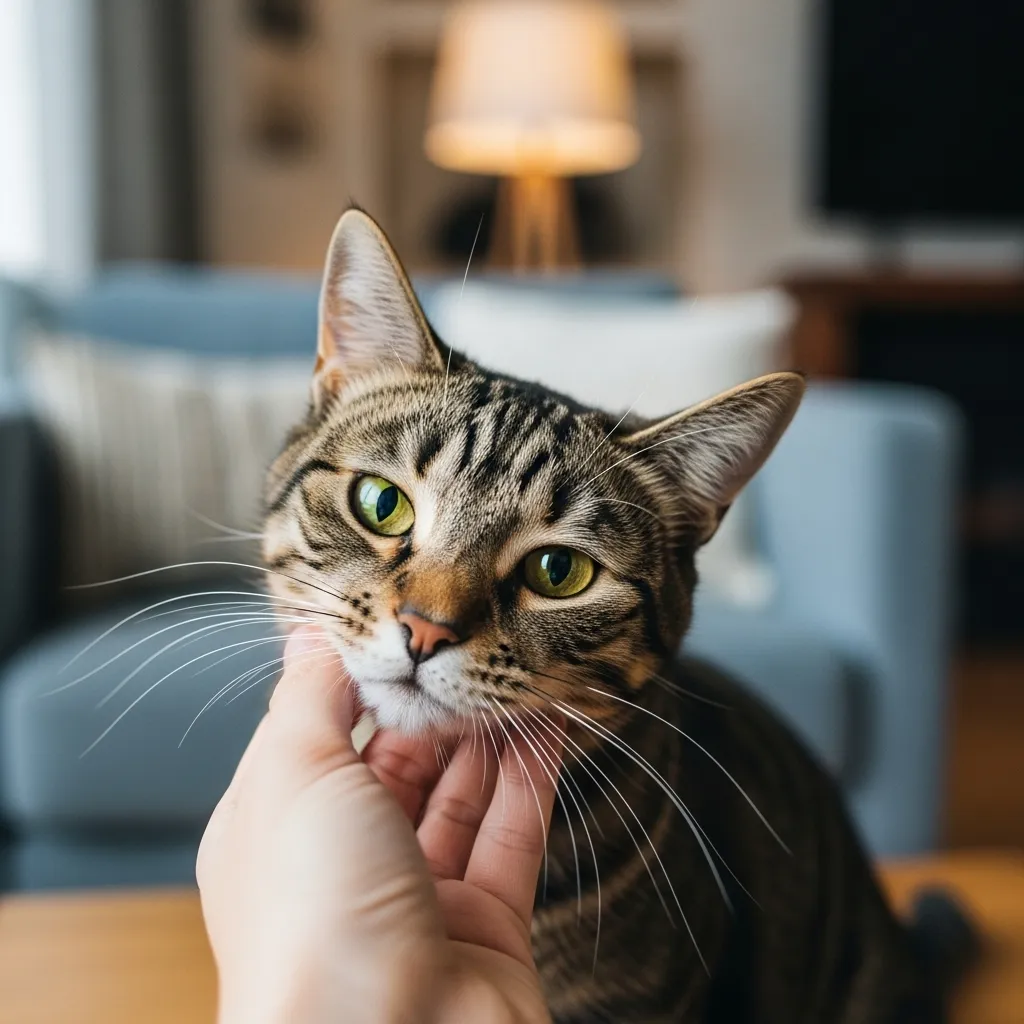
Imagine this: you’re lounging on the couch, your cat saunters over, and suddenly, they’re pressing their head against your arm with a gentle nudge, purring like a tiny motor. That soft bump known as cat headbutting behavior feels like a warm hug from your feline friend.
But what’s behind this quirky habit? Is it pure affection, a sneaky claim to your space, or something else entirely? As a cat parent who’s spent years decoding the antics of rescues like my spirited Bengal and cuddly Ragdoll, I’ve learned that feline head bunting is a window into your cat’s heart and instincts.
If you’re wondering, “Why does my cat push his head against me?” you’re not alone. This behavior puzzles many cat owners, yet it’s one of the most endearing ways cats communicate. In this guide, we’ll unravel the mystery of cat head rubbing meaning, explore why it’s a cornerstone of cat-human bonding, and distinguish it from concerning behaviors like cat head pressing. Backed by veterinary insights and real-world tips, you’ll discover why your cat headbutts, how to respond, and what it reveals about their trust in you. Whether you’re parenting a playful Munchkin or a regal Siamese, this article will equip you with a step-by-step plan to deepen your bond and keep your kitty thriving.
Here’s a quick peek at what you’ll learn:
- Key Takeaways:
- Cat headbutting behavior is a sign of affection, trust, and territory marking, rooted in feline scent glands and cat pheromones.
- Cats headbutt to strengthen bonds, mimic mother cat behavior, and release cat endorphins for comfort.
- Unlike feline head bunting, cat head pressing against walls may signal health issues—know the difference.
- Respond with gentle petting and enrich their environment to encourage cat affection signs.
- Use cat body language cues to decode their needs and build trust.
Let’s dive into the fascinating world of feline communication signs and uncover why your cat’s headbutt is more than just a cute quirk.
Why Cats Headbutt: The Science of Feline Affection
When your cat presses their head against you, it’s not random—it’s a deliberate act packed with meaning. Cat headbutting behavior, also called feline head bunting, is a natural instinct rooted in biology and behavior. Cats use their heads to communicate love, claim ownership, and gather information about their world. Here’s why it happens:
The Role of Feline Scent Glands in Headbutting
Cats have feline scent glands on their cheeks, forehead, and chin that release cat pheromones—chemical signals unique to each cat. When your cat rubs their head on you, they’re depositing these pheromones, effectively marking you as “theirs.” According to a 2025 Cornell Feline Health Center study, this cat scent marking behavior serves multiple purposes:
- Territory Marking: Your cat claims you as part of their safe space, blending their scent with yours.
- Social Bonding: Pheromones signal familiarity, reinforcing cat-human bonding.
- Stress Relief: The act releases cat endorphins, giving your cat a feel-good boost.
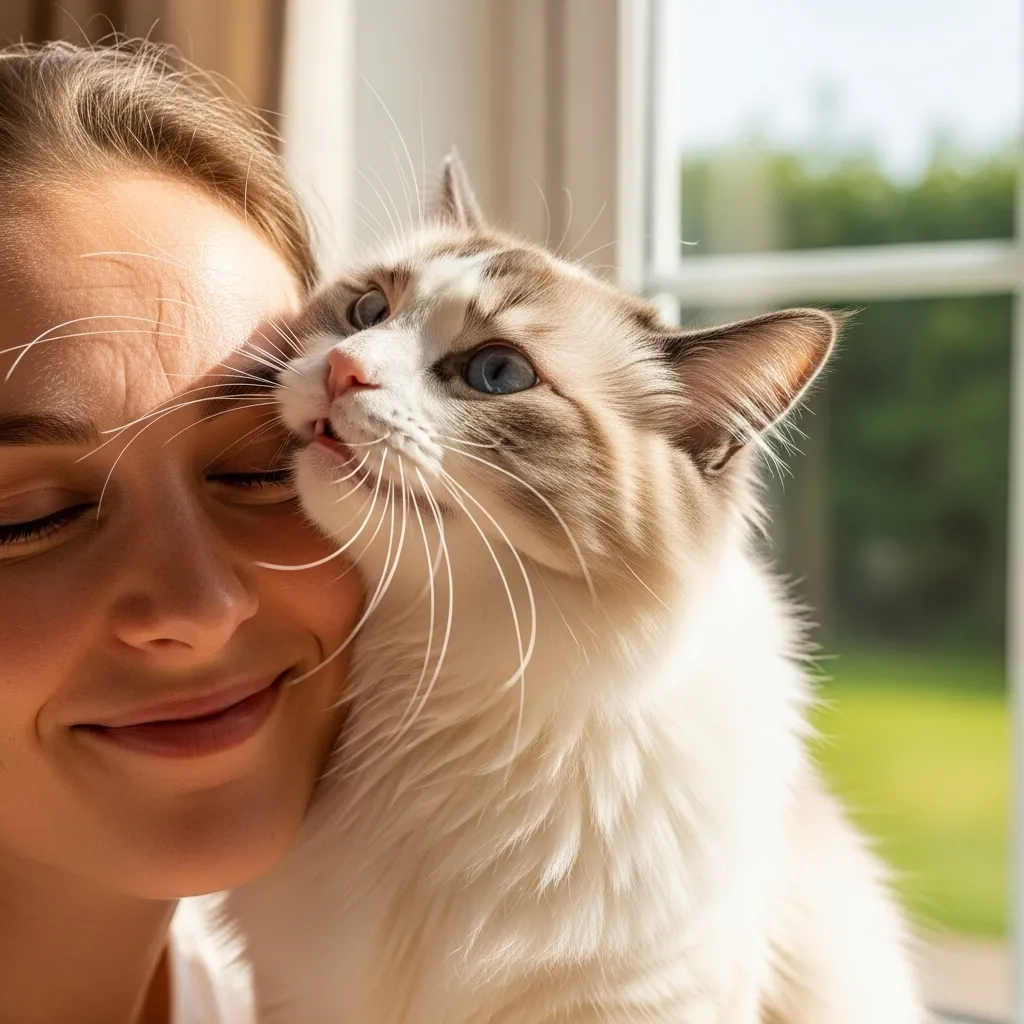
For example, my Bengal, Leo, headbutts my legs after I return from a trip, as if to say, “You’re back in my colony!” This aligns with feline territorial instincts, where cats create a shared scent profile in their environment. Explore more in our cat behavior explained guide.
Headbutting as a Sign of Trust and Affection
Cat head rubbing meaning often boils down to trust. When your cat headbutts you, they’re saying, “I feel safe with you.” This stems from mother cat behavior, where kittens learn to nuzzle for comfort and security. A 2025 PetMD report notes that cat affection signs like headbutting are most common in cats who view their owners as family. Breeds like Ragdolls, known for their docility (see our Ragdoll cat care guide), are especially prone to frequent bunting.
Real-life example: My Ragdoll, Luna, headbutts my hand before curling up beside me, a clear sign of cat trust behavior. If your cat pairs headbutting with purring or slow blinks, they’re doubling down on affection.
Headbutting vs. Head Pressing: Know the Difference
While feline head bunting is a healthy behavior, cat head pressing—where a cat pushes their head against a wall or object for extended periods—can signal medical issues like neurological disorders, pain, or toxicity. Per the ASPCA, head pressing often comes with symptoms like disorientation or vocalizing. If you notice this, consult a vet immediately. Our finding the best vet for your cat guide can help you choose a feline specialist.
Action Step: Observe your cat’s headbutting context. Is it brief, directed at you, and paired with purring? That’s normal bunting. Prolonged pressing against inanimate objects? Book a vet visit.
Decoding Cat Communication: Why Your Cat Chooses You
Cats don’t headbutt just anyone—they choose trusted humans or objects. Cat body language reveals their intentions, and headbutting is a key part of feline communication signs. Let’s break down why your cat targets you:
Marking Territory in Cats: You’re Part of Their World
Cats live in a scent-driven world, and marking territory in cats is a core instinct. By headbutting, your cat mixes their pheromones with your scent, creating a communal “colony scent” that signals safety. This is especially common in multi-cat homes, where cats like Bengals (check our Bengal cat personality guide) use headbutting to maintain harmony.
- Why You? Your scent is familiar, and headbutting reinforces their claim on you.
- Other Targets: Cats may headbutt furniture or other pets to expand their territory.
Pro Tip: If your cat headbutts new guests, they’re likely sizing them up or welcoming them into the “colony.” Learn more in our cat-human bonding guide.
Information Gathering: Cats “Reading” Their Humans
Headbutting isn’t just about leaving a scent—it’s also how cats gather intel. By rubbing against you, they pick up your scent and mood. A 2025 study from the Journal of Feline Medicine found that cats use feline scent glands to assess changes in their environment, like new smells from your clothes. This explains why your cat might headbutt more after you’ve been outside.
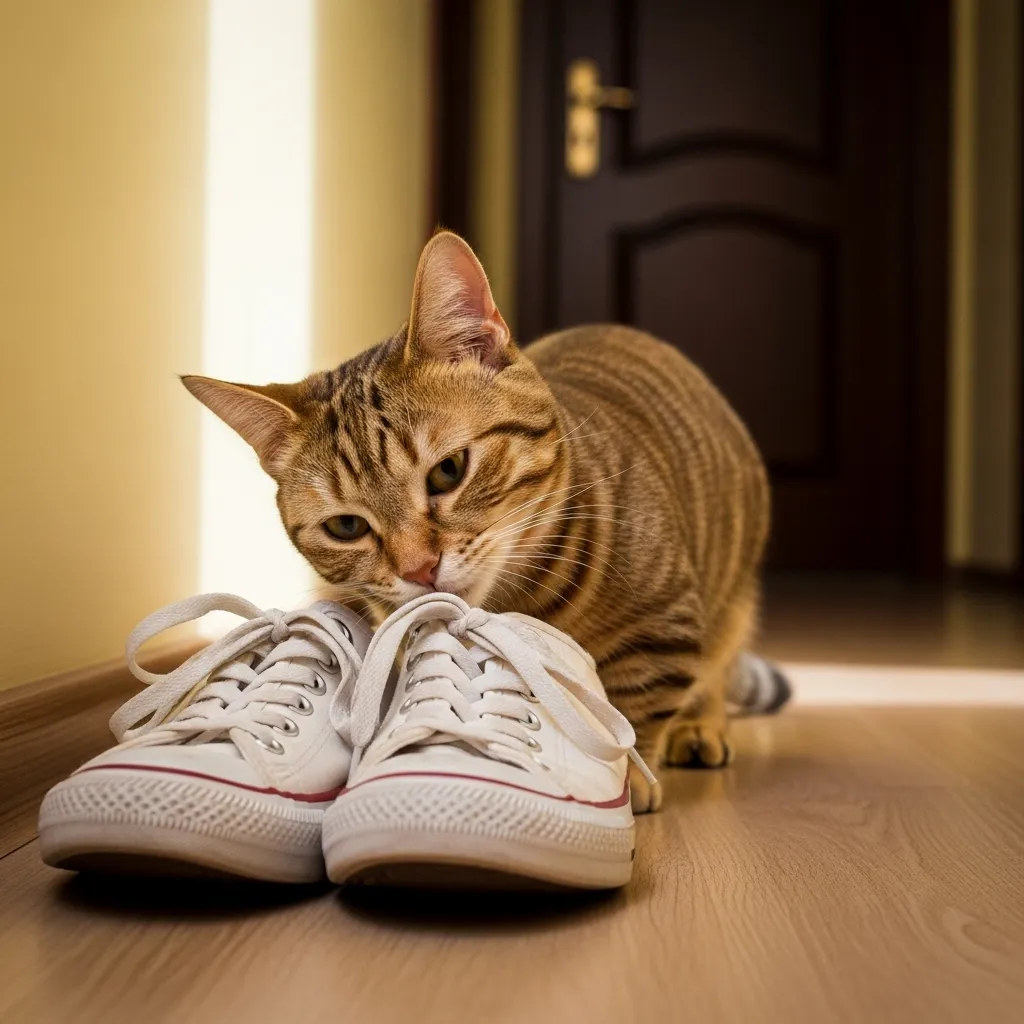
For instance, my Munchkin, Tinker, headbutts my shoes after I’ve been to the park (see our why cats rub on shoes guide). It’s their way of “updating their database” about your day.
Headbutting and Biting: Mixed Signals?
Sometimes, headbutting comes with cat rubbing and biting—a nip or gentle bite after a nuzzle. This isn’t aggression but often a playful or overstimulated response. Per the International Cat Care Association, cats combine these behaviors to demand attention or express excitement. If biting becomes excessive, redirect with toys. Our cat training behavior guide offers tips for managing overstimulation.
Environmental and Behavioral Influences on Headbutting
Your cat’s environment and emotional state shape their headbutting habits. Common cat behaviors and meanings like headbutting can vary based on stress, routine, or social dynamics.
Stress and Routine Changes
Cats thrive on predictability, and disruptions—like a new pet or rearranged furniture—can amplify cat headbutting behavior as a comfort-seeking act. For example, Siamese cats, known for sensitivity (see our Siamese cats scared easily guide), may headbutt more during stress. To reduce anxiety:
- Use Feliway diffusers to mimic calming pheromones.
- Maintain consistent feeding and play schedules.
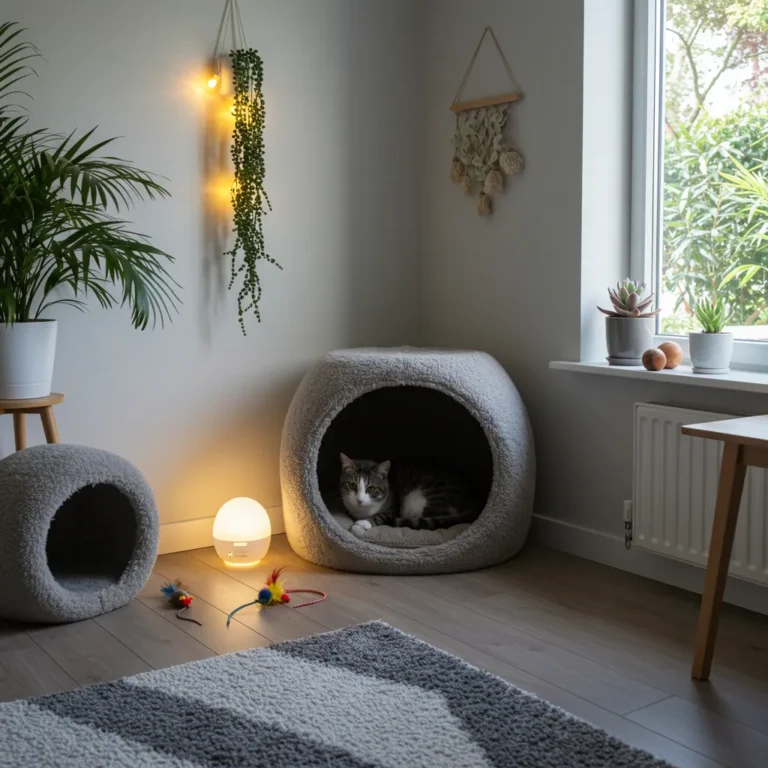
- Provide enriched environments with scratching posts and perches.
Multi-Cat Homes and Communal Scents
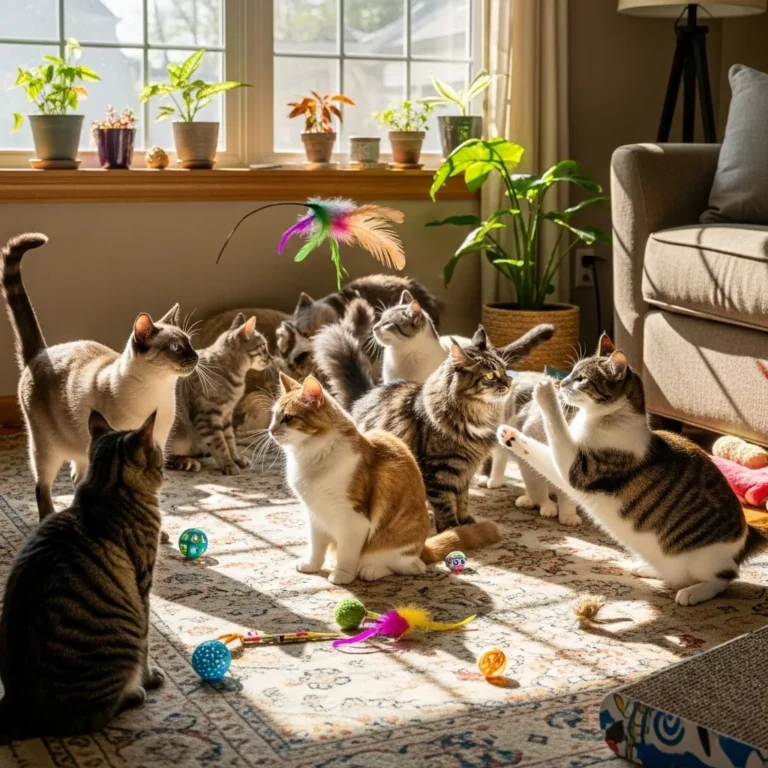
In households with multiple cats, headbutting helps create a shared scent profile, reducing territorial conflicts. A 2025 ASPCA study found that cats in colonies headbutt to reinforce group bonds. If your cats headbutt each other and you, they’re weaving you into their social fabric. For tips on harmony, check our Munchkin cats dogs coexistence guide.
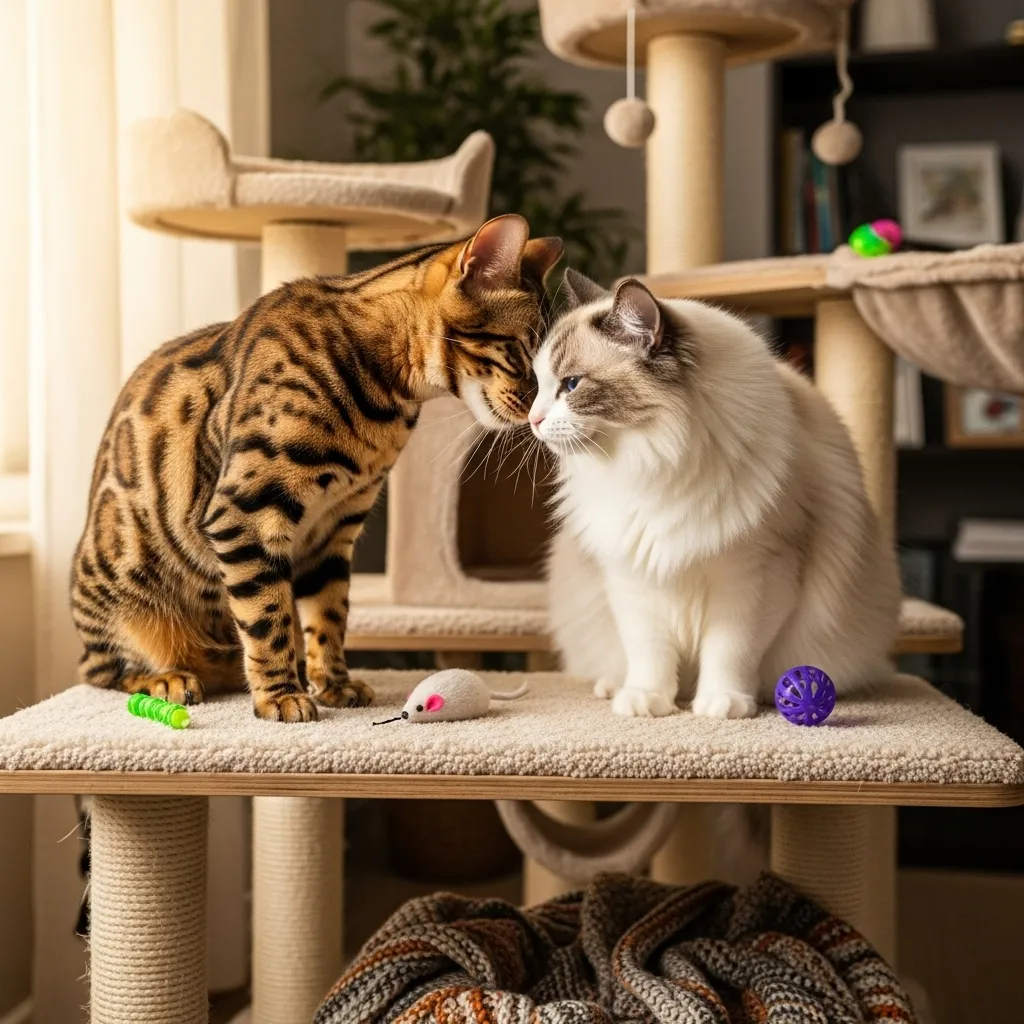
Breed-Specific Tendencies
Some breeds headbutt more due to their personalities:
- Ragdolls: Affectionate and prone to frequent bunting (see Ragdoll cat care guide).
- Bengals: High-energy and territorial, using headbutts to assert ownership (see Bengal cat introduction tips).
- Siamese: Vocal and social, headbutting to demand attention (see Siamese cat travel guide).
How to Respond to Cat Headbutting: Building the Bond
Your response to why cats headbutt humans can strengthen your connection. Here’s how to reciprocate and encourage cat affection signs:
- Gentle Petting: Return the love with soft scratches on their cheeks or chin, where scent glands are active. This reinforces trust.
- Mimic Slow Blinks: Slow blinking signals affection in cat body language. Pair it with a calm “Good kitty” for positive reinforcement.
- Enrich Their Space: Add cat trees or window perches to reduce stress and encourage bunting. Our Munchkin cat care tips suggest budget-friendly options.
- Avoid Overstimulation: If headbutting leads to biting, pause interaction and offer a toy to redirect energy.
- Monitor Health: Persistent headbutting paired with lethargy or appetite changes may hint at issues like cat stress signs (see our cat stress signs guide).
Real Example: When my Norwegian Forest Cat, Freya, headbutts my knee, I respond with a chin scratch and a slow blink. She purrs louder and settles in, showing cat trust behavior. Consistency builds this trust over time.
When Headbutting Signals a Need
Sometimes, cat headbutting behavior reflects unmet needs like hunger, attention, or play. Watch for these cues:
- Hunger: Headbutting near feeding time, especially with meows, may signal an empty bowl. Check our cat food nutrition guide for balanced diets.
- Attention: If your cat headbutts then stares, they’re likely saying, “Play with me!” Try puzzle feeders or fetch (see train American Shorthair kitten to fetch).
- Health Concerns: Excessive headbutting with vocalizing or hiding could indicate pain. Our cat health care guide covers red flags.
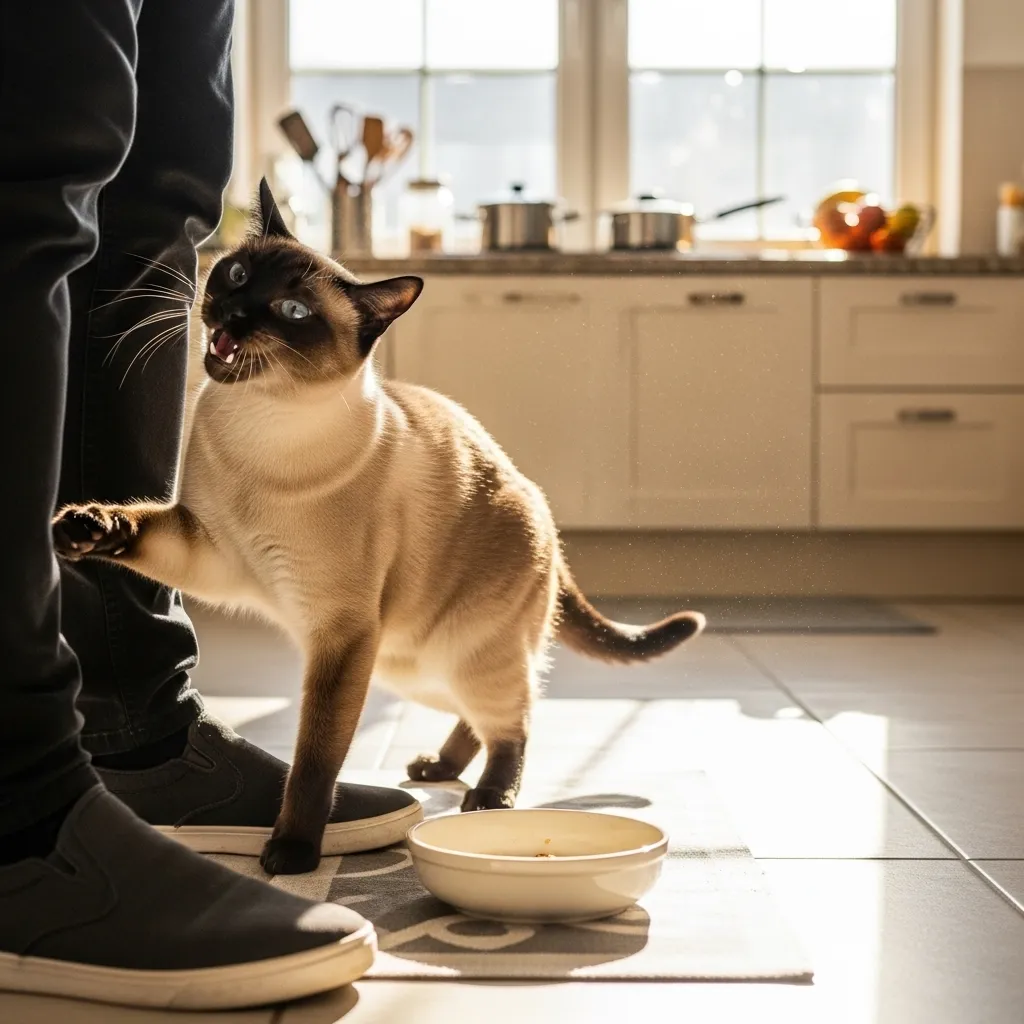
Pro Tip: Keep a journal of headbutting patterns—time, context, and accompanying behaviors—to spot needs or health shifts.
FAQ: Quick Answers to Common Questions
Why does my cat push his head against me?
It’s cat headbutting behavior, a sign of affection, trust, and territory marking using feline scent glands. They’re saying you’re part of their safe space.
What does it mean when a cat rubs its head on you?
Cat head rubbing meaning involves marking you with pheromones, bonding, and seeking comfort. It’s a positive cat affection sign.
Is cat headbutting a learned behavior?
Yes, kittens learn feline head bunting from mother cat behavior, nuzzling for milk and security, then adapt it to bond with humans.
Can headbutting indicate trust?
Absolutely. Cat trust behavior like headbutting shows they feel safe and view you as family. Paired with slow blinks, it’s pure love.
How do cats mark territory with headbutting?
They use feline scent glands to deposit pheromones, claiming you or objects as part of their territory, per marking territory in cats.
Why does my cat headbutt and bite?
Cat rubbing and biting often signals playfulness or overstimulation. Redirect with toys to avoid escalation (see our cat training behavior guide).
Does environment affect headbutting?
Yes, stress or changes can increase cat headbutting behavior as a comfort mechanism. Stable routines reduce this (see cat stress signs).
How can I tell if my cat’s head pressing is a health issue?
Cat head pressing against walls, not people, with disorientation or lethargy, may signal neurological issues. Consult a vet (see finding the best vet for your cat).
Conclusion: Embrace the Headbutt, Deepen the Bond
Why does my cat push his head against me? It’s their way of saying, “You’re mine, and I trust you.” Cat headbutting behavior weaves together affection, feline territorial instincts, and communication, rooted in cat pheromones and learned mother cat behavior. By understanding cat head rubbing meaning and responding with care, you strengthen your cat-human bonding. Distinguish it from cat head pressing, enrich their environment, and watch your feline friend thrive.
Ready to decode more feline quirks? Explore our expert guides on cat behavior explained or cat training behavior at Cat Bloom Haven.