Snow Cat Vehicles: The Ultimate Guide to Mastering Winter Terrains with Snow Grooming Machines in 2025
Imagine barreling through a blizzard, where regular trucks spin out and get stuck, but your machine glides effortlessly over deep powder, carving perfect paths for skiers or hauling gear to remote outposts. That’s the power of snow cat vehicles robust, tracked beasts built to conquer the harshest winter environments.
If you’ve ever wondered why ski resorts look so pristine each morning or how rescuers reach avalanche zones, snow cat vehicles are the unsung heroes behind it all. As a seasoned expert in winter machinery and all-terrain solutions, I’ve spent years analyzing these machines in action, from grooming alpine slopes to supporting polar expeditions.
In this in-depth guide, we’ll break down everything you need to know about snow cat vehicles, including how they work, their key applications, and the benefits that make them indispensable for winter operations. Whether you’re a ski resort manager eyeing snow grooming machines, an adventurer seeking all-terrain tracked vehicles, or someone curious about buying snow cats for personal use, you’ll get actionable insights backed by the latest 2025 innovations. We’ll also cover performance tips, maintenance essentials, and comparisons to alternatives like snowmobiles. By the end, you’ll be equipped to make informed decisions that could transform your winter adventures or business.
Before diving deeper, here’s a quick overview to get you oriented.
Key Takeaways
- Definition and Basics: Snow cat vehicles are enclosed, truck-sized tracked machines designed for snow travel, often used as snow groomers in ski resorts.
- Core Functionality: Powered by diesel or electric engines with independent tracks for superior traction; rear tillers and blades create smooth surfaces.
- Applications: From mountain snow grooming equipment at ski resorts to utility tasks like rescue, research, and tours.
- Benefits: Unmatched stability in deep snow, high payload capacity, and eco-friendly options reducing emissions.
- 2025 Trends: Rise of electric snow cats and autonomous features for sustainable snow grooming.
- Buying Tips: New models from top manufacturers start at $100,000+; used snow cats offer value from $20,000, but inspect tracks and hydraulics.
- Maintenance Essentials: Regular oil changes, track inspections, and indoor storage extend lifespan.
- Comparison: Snow cats excel in heavy-duty tasks over snowmobiles, which are better for speed and recreation.
Now, let’s explore the fascinating world of these winter warriors.
What Are Snow Cat Vehicles?
Snow cat vehicles, often simply called snowcats, are specialized all-terrain tracked vehicles engineered to navigate snowy, icy, or rugged landscapes where wheeled vehicles fail.
They combine the durability of a tank with the precision of a groomer, featuring an enclosed cab for operator comfort and wide tracks that distribute weight to prevent sinking. Unlike snowmobiles, which are smaller and rider-exposed, snow cats are truck-like in size and capability, often seating multiple passengers or carrying heavy loads.
Originating in the mid-20th century for polar exploration, snow cats have evolved into essential winter maintenance machinery. Major manufacturers like Prinoth, PistenBully, and Tucker Sno-Cat dominate the market, producing models tailored for ski resort snow vehicles or broader snow transportation needs. For instance, the Tucker Sno-Cat’s four-track system provides exceptional sidehill stability, making it ideal for steep terrains.

If you’re new to this, think of snow cats as the “big cats” of winter—powerful, adaptable, and ready to pounce on any snowy challenge. And speaking of cats, while these machines rule the snow, real felines like the Norwegian Forest Cat thrive in cold climates too. Explore our Norwegian Forest Cat care guide for tips on keeping your furry friend cozy in winter.
How Do Snow Cats Work?
At their core, snow cats operate on a simple yet ingenious principle: tracked propulsion for maximum grip. Powered by a diesel engine (or increasingly, electric in 2025 models), the vehicle uses hydraulic systems to drive its tracks, which are independently suspended for smooth navigation over uneven snow.
Here’s a step-by-step breakdown:
- Engine and Powertrain: A robust engine (e.g., Cummins or Detroit Diesel) generates power, transferred via hydrostatic transmission to the tracks. This allows precise speed control without gears.
- Tracks in Action: Wide, rubber or metal tracks with grousers (cleats) dig into snow for traction. Systems like Tucker’s pivoting tracks enable tight turns and climbing gradients up to 45 degrees.
- Grooming Attachments: For snow grooming machines, a front blade pushes snow, while a rear tiller churns and compacts it into corduroy patterns—perfect for skiing.
- Advanced Tech: Modern snow cats integrate GPS like SNOWsat for real-time snow depth mapping, optimizing grooming efficiency.
In practice, operators work overnight at resorts, grooming 500+ acres per shift. The result? Safer, more enjoyable slopes. For performance tips, maintain even track tension to avoid slippage a common issue in deep powder.
Snow Cat Tracks and Performance: The Heart of the Machine
Snow cat tracks are what set these vehicles apart, offering superior performance in extreme conditions. Unlike tires, tracks spread weight over a larger area, reducing ground pressure to as low as 1-2 PSI—less than a human foot.
Key features influencing snow cat performance:
- Track Design: Four-track setups (e.g., Tucker) provide better flotation and maneuverability than dual-track models.
- Material and Durability: Rubber tracks last 5,000+ hours with proper care; metal for heavy-duty use.
- Speed and Climbing: Top speeds reach 15-20 mph, with winch-assisted models handling 60% slopes.
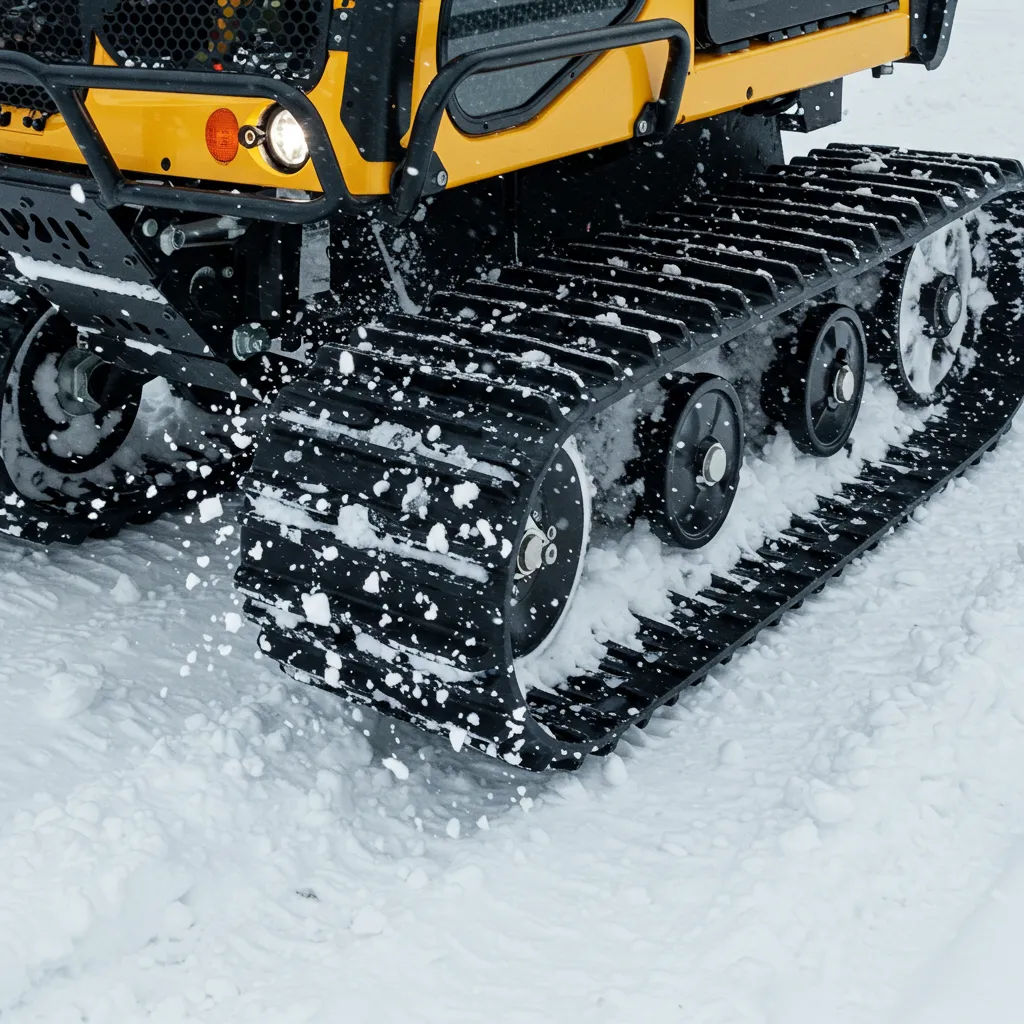
Benefits include minimal terrain damage and high reliability—essential for winter survival and adaptation machines. To boost performance, regularly lubricate bogie wheels and align tracks; this can extend life by 20-30%.
Snow Cat Applications: From Slopes to Expeditions
Snow cat vehicles shine in diverse roles, making them indispensable snow transportation vehicles.
- Ski Resort Grooming: Primary use—preparing trails for skiers, reducing injury risks by 30% with even surfaces.
- Cat Skiing and Tours: Transport groups to backcountry powder for exclusive experiences.
- Utility and Rescue: Haul supplies, evacuate injured, or support research in remote areas like Antarctica.
- Winter Maintenance: Clear roads, build snow parks, or even icebreaking.
Real-world example: In Colorado’s Vail Pass, snow cats like the 2025 Tucker Trail Boss handle tours and grooming seamlessly. For private use, compact models suit cabin access or hunting.
Benefits of Snow Cats: Why Choose These Over Other Winter Vehicles
The advantages of snow cats make them a top choice for mountain snow grooming equipment.
| Benefit | Description | Impact |
|---|---|---|
| Superior Traction | Tracks prevent sinking in deep snow | Handles 5+ feet of powder where trucks fail |
| High Capacity | Carry 10+ passengers or 5,000 lbs cargo | Ideal for group transport or heavy loads |
| Versatility | Attachments for grooming, plowing, craning | One machine, multiple tasks |
| Safety | Enclosed cab protects from elements | Reduces operator fatigue and exposure |
| Eco-Friendly Options | Electric models cut emissions by 90% | Aligns with sustainable practices |
Compared to wheeled alternatives, snow cats offer 50% better stability, per industry tests. Drawbacks? Higher cost and slower speeds, but benefits outweigh for professional use.
Snow Groomers: The Specialized Role of Snow Cats in Grooming
Snow groomers are snow cats optimized for trail maintenance, using blades and tillers to create ideal conditions. At resorts, they measure snow depth with tech like SNOWsat, ensuring consistent coverage.
Tips for optimal grooming:
- Start with base layers, then till for texture.
- Use winch cats for steep runs to avoid rollovers.

In 2025, autonomous snow groomers are emerging, promising 24/7 operation with AI pathing.
Snow Cat vs. Snowmobile: Choosing the Right Winter Ride
Snow cats and snowmobiles serve different needs in winter vehicle technology.
| Aspect | Snow Cat | Snowmobile |
|---|---|---|
| Size & Capacity | Large, multi-passenger | Small, 1-2 riders |
| Speed | 15-20 mph | 60+ mph |
| Terrain | Deep snow, steep slopes | Trails, light powder |
| Use | Grooming, transport | Recreation, quick access |
| Cost | $50k-$300k | $10k-$20k |
Snow cats win for heavy-duty tasks; snowmobiles for fun. If you’re into tracked vehicles for snow, start with snow cat driving techniques like gentle throttle on turns.
Innovations in Snow Grooming Tech: Best Snow Cats 2025
2025 brings exciting advancements in sustainable snow grooming machines.
- Electric Snow Cats: Models like xelom’s SNOW CAT offer zero-emission operation with fast charging, debuting at Interalpin.
- Hydrogen Power: Prinoth’s Leitwolf H2-Motion reduces fuel use.
- Autonomous Features: GPS-guided systems for precise grooming.
- Compact Options: Sno Trac’s 7-passenger models for private expeditions.
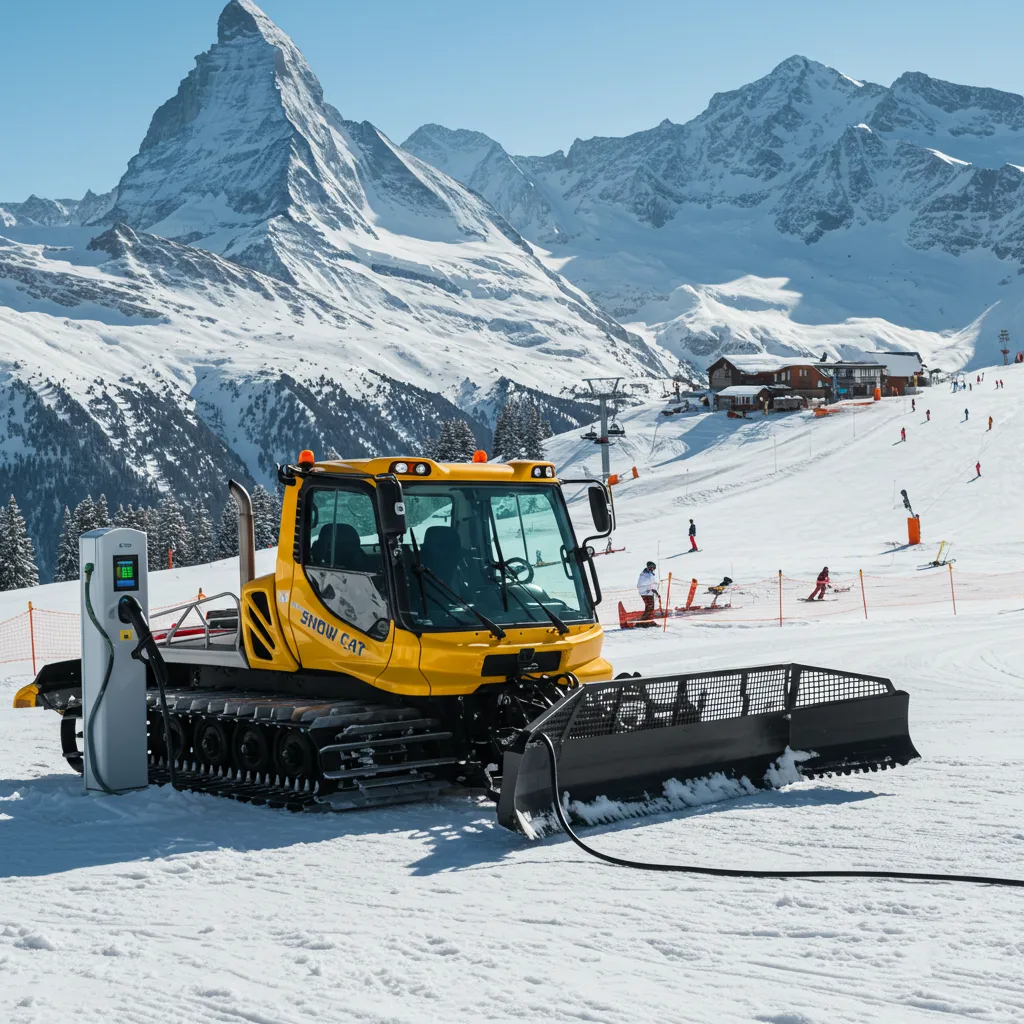
Top picks: Tucker Sno-Cat Trail Boss for versatility; Prinoth Husky e-Motion for green ops. These cut costs by 40% on fuel while boosting efficiency.
Buying a Snow Cat: Your Guide to Snow Cats for Sale
Ready to buy? Here’s a step-by-step guide.
- Assess Needs: Resort? Opt for groomers. Personal? Compact utility.
- New vs. Used: New from manufacturers like PistenBully ($200k+); used snow cats on sites like Resort Boneyard ($20k-$50k).
- Key Checks: Inspect tracks, engine hours (under 5,000 ideal), hydraulics.
- Budget: Factor in $5k/year maintenance.
- Where to Buy: Dealers like Peterson Equipment or online auctions.
Pro tip: Lease first to test many offer flexible terms. For winter prep, pair with our cat cool in summer guide? Wait, for your pets’ winter comfort, check Norwegian Forest Cat summer care adapted for all seasons.
Snow Cat Manufacturers: Leaders in the Field
- Prinoth (Italy): Eco-innovators with electric and hydrogen models.
- PistenBully (Germany): Top for alpine grooming, durable builds.
- Tucker Sno-Cat (USA): Four-track specialists for steep terrain.
- Sno Trac (USA): Affordable, compact options for private use.
- xelom: Newcomer focusing on electric innovations.
Choose based on needs Prinoth for sustainability, Tucker for performance.
Snow Cat Safety and Maintenance: Keeping Your Machine Running Smoothly
Safety first: Always train operators avoid steep unwinched slopes to prevent rollovers. Use PPE and check weather.
Maintenance tips:
- Daily: Inspect tracks, fluids; clear snow.
- Seasonal: Change oil, grease bearings; store indoors.
- Long-Term: Replace tracks every 3-5 years.
Following these extends life by 50%. For more on winter readiness, see our cat grass care guide for indoor alternatives during snow season.
Conclusion: Embrace the Power of Snow Cat Vehicles for Unbeatable Winter Performance
Snow cat vehicles aren’t just machines they’re gateways to mastering winter, from flawless ski slopes to safe backcountry access. With 2025’s electric and autonomous advancements, they’re more efficient and eco-friendly than ever. Whether grooming, touring, or exploring, investing in one could revolutionize your operations.
Ready for more winter wisdom? While mechanical snow cats handle the outdoors, keep your real cats thriving with our comprehensive Norwegian Forest Cat care guide or explore Munchkin cat care tips for playful indoor fun during blizzards. At Cat Bloom Haven, we’re your go-to for all things cat and now, snow cat vehicles too!
FAQ
What is a snow cat vehicle?
A snow cat vehicle is a fully tracked, enclosed machine designed for snow travel, commonly used for grooming and transport.
How do snow cats work?
They use tracked systems powered by engines to distribute weight and provide traction, with attachments for grooming snow.
What are the main applications of snow cats?
Primarily snow grooming at ski resorts, but also tours, rescues, and utility tasks in winter environments.
What are the benefits of snow cats?
Superior traction, high capacity, versatility, and safety in deep snow, with eco options reducing emissions.
How do snow cats compare to snowmobiles?
Snow cats are larger for heavy tasks; snowmobiles are faster for recreation.
What are the best snow cats in 2025?
Top models include Tucker Sno-Cat Trail Boss and xelom’s electric SNOW CAT for innovation.
How to buy a snow cat?
Assess needs, check used options starting at $20k, inspect thoroughly, and consider leasing.
What maintenance do snow cats require?
Regular track inspections, oil changes, and indoor storage to ensure longevity and safety.