How Old Is My Cat in Human Years? The Definitive Cat Age Chart, Calculator, and Lifespan Guide for 2025
Your cat stares at you with those wise eyes, and you wonder: just how old is this little creature in human terms?
If you’ve ever typed “cat years to human years,” “cat age chart,” or “how old is my cat in human years” into Google, you’re not alone. Millions of cat parents ask the same question every month. The good news? The old “one cat year = seven human years” myth is finally dead. Modern veterinary science gives us a far more accurate picture.
In this complete guide, we’ll hand you the most up-to-date cat-to-human age conversion, a ready-to-use cat age calculator, a printable cat lifespan chart, and everything you need to understand your cat’s real age from kitten chaos to graceful senior moments. Let’s get started.
Key Takeaways (For Quick Answers)
- The first year of a cat’s life equals about 15 human years.
- The second year adds another 9–10 human years.
- Every year after that adds roughly 4–5 human years (varies slightly by size and lifestyle).
- Indoor cats often live 15–18 years; some reach 20+.
- Outdoor cats average 10–12 years due to higher risks.
- A 10-year-old indoor cat is roughly equivalent to a 56-year-old human; a 15-year-old cat is about 76.
Why the 7:1 Myth Is Wrong (And What Science Says Instead)
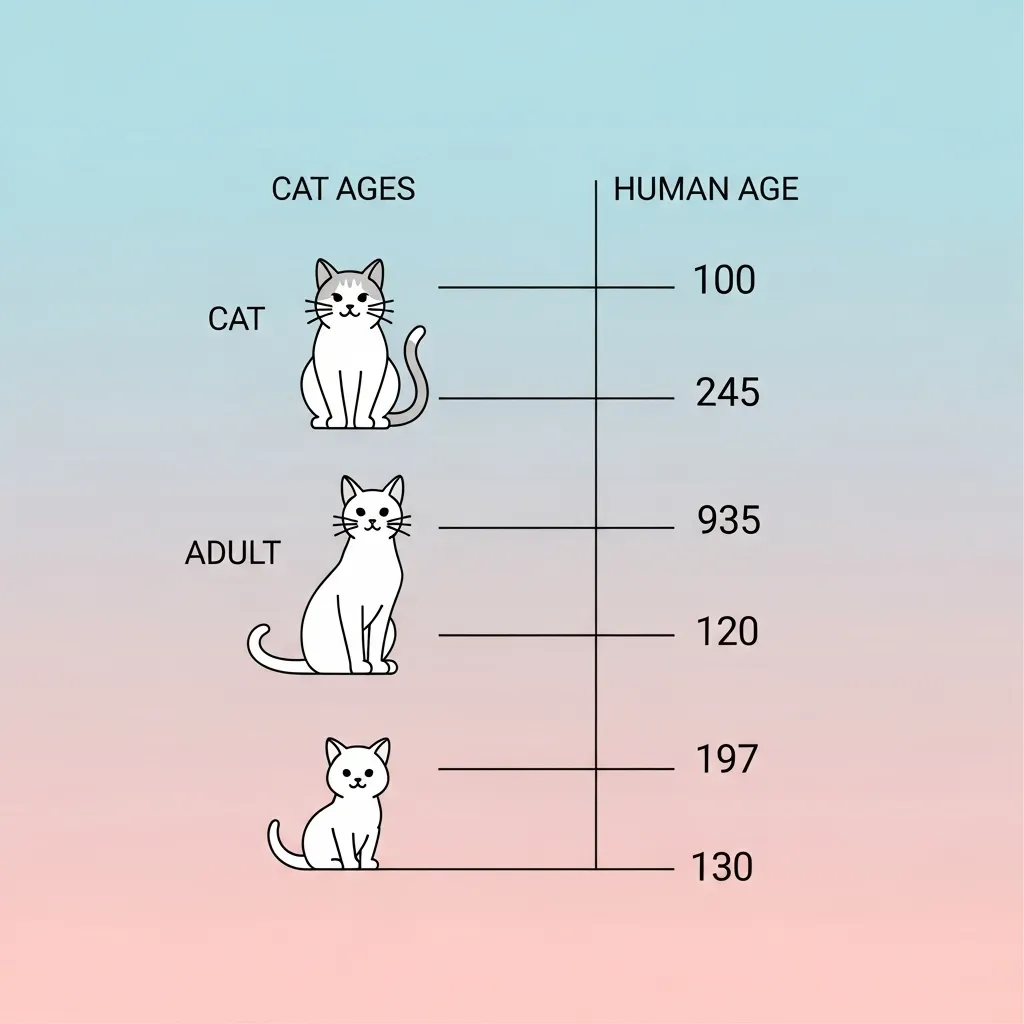
For decades, people multiplied cat age by seven. That rule came from a rough guess in the 1950s. Today, veterinarians and feline gerontology researchers agree: cats age much faster in the first two years, then slow down dramatically.
A kitten reaches physical and sexual maturity around 12 months something that takes humans about 15–18 years. By age two, most cats are fully grown adults, comparable to a 24–25-year-old person. After that, each additional year adds about four human years for indoor cats.
The Most Accurate Cat Age Chart (2025 Veterinary Consensus)
| Cat Age (Years) | Approximate Human Age | Life Stage | What You’ll Notice |
|---|---|---|---|
| 0–1 month | 0–1 year | Newborn | Eyes closed, fully dependent |
| 2–3 months | 2–4 years | Infant/Toddler | Playful, learning to jump, teething |
| 4–6 months | 6–10 years | Child | Endless energy, growth spurts |
| 7–12 months | 10–15 years | Teenager | Sexual maturity, sometimes rebellious behavior |
| 1 year | 15 years | Young adult | Peak muscle tone, full size |
| 2 years | 24 years | Early 20s | Prime of life, maximum agility |
| 3 years | 28 years | Late 20s | Fully mature, calmer |
| 4 years | 32 years | Early 30s | Still very active |
| 5 years | 36 years | Mid-30s | Slight slowing in high-intensity play |
| 6 years | 40 years | Early 40s | Prime adult |
| 7 years | 44 years | Mid-40s | May start napping more |
| 8 years | 48 years | Late 40s | Possible mild weight gain if diet isn’t adjusted |
| 9 years | 52 years | Early 50s | Routine vet bloodwork recommended |
| 10 years | 56 years | Mid-50s | Officially “senior” by most vets |
| 11 years | 60 years | Early 60s | Graying muzzle in some breeds |
| 12 years | 64 years | Mid-60s | Senior diet often beneficial |
| 13 years | 68 years | Late 60s | Possible arthritis, dental issues |
| 14 years | 72 years | Early 70s | Increased sleep, slower movement |
| 15 years | 76 years | Mid-70s | Regular senior wellness visits critical |
| 16 years | 80 years | Early 80s | May show feline cognitive dysfunction (cat dementia signs) |
| 17 years | 84 years | Mid-80s | Often thinner, muscle loss |
| 18 years | 88 years | Late 80s | Celebrate every day — exceptional longevity |
| 19–20+ years | 92–100+ | Centenarian territory | True feline super-seniors |

Quick Cat Age Calculator (No App Needed)
Just answer two questions:
- How old is your cat in years and months?
- Is your cat indoor-only, indoor/outdoor, or fully outdoor?
Example:
Cat age: 8 years 3 months, indoor-only
→ 8 × 4 = 32 + first-year 15 + second-year 9 = 56 human years
Use the chart above or bookmark this page it’s more accurate than most online cat age calculators in 2025.
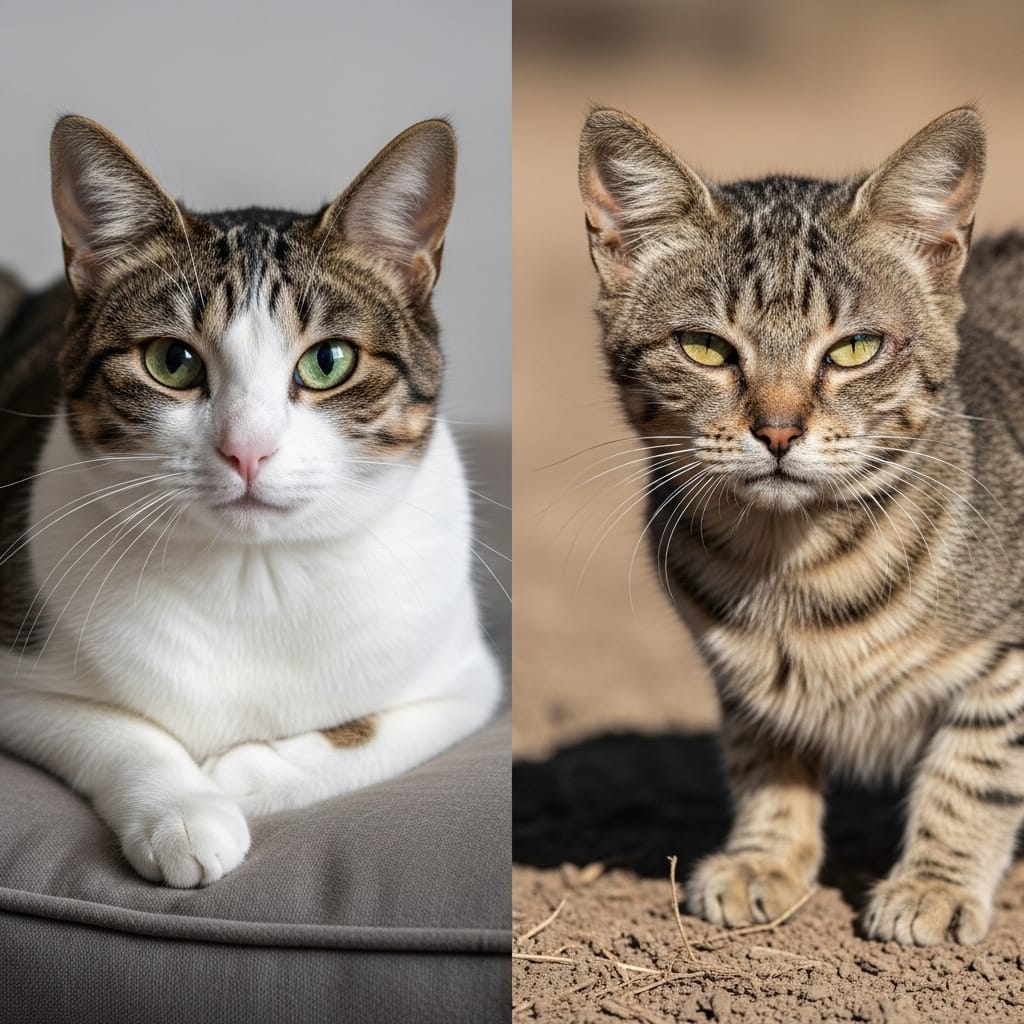
Indoor vs Outdoor Cat Lifespan: The Numbers Don’t Lie
- Average indoor cat lifespan: 15–18 years (many reach 20+)
- Average outdoor or indoor/outdoor lifespan: 10–12 years
- Reason: Traffic accidents, fights, predators, toxins, and disease exposure cut lives short.
Real story: One of our readers shared that her indoor Ragdoll just celebrated her 21st birthday. Her brother, who roamed outside, passed at age 9. Same genetics, very different outcomes.
Cat Development Stages Explained (So You Know What’s Normal)
Kitten (0–6 months)
Explosive growth, insane play drive, learning boundaries. Think toddler + ninja.
Junior (7 months–2 years)
Peak athleticism, occasional teenage attitude, zoomies at 3 a.m.
Prime Adult (3–6 years)
Calm confidence, perfect weight, glossy coat the “easy” years.
Mature Adult (7–10 years)
Still playful but prefers quality over quantity. First senior bloodwork recommended at 7–8.
Senior (11–14 years)
Slower pace, possible arthritis, loves heated beds. Switch to senior diet if weight loss appears.
Geriatric (15+ years)
Sleeps 20 hours a day, may forget the litter box occasionally, needs extra warmth and easy-access everything.
(Place image here: Four-panel collage showing the same cat at kitten, adult, senior, and geriatric stages. Alt text: “Cat development stages from kitten to geriatric – real cat aging timeline”)
When Is a Cat Considered Old?
Most veterinarians label cats “senior” at 11 years and “geriatric” at 15. But lifestyle matters more than the calendar. An active 13-year-old indoor cat can outplay a couch-potato 9-year-old.
Common Feline Aging Signs You Should Never Ignore
- Sudden weight loss or gain
- Drinking more water than usual
- Cloudy eyes or squinting
- Bad breath that doesn’t improve with dental care
- Stiffness when jumping up or down
- Confusion, getting lost in familiar rooms (possible cat dementia signs)
- Hiding more than usual
- Coughing or sneezing that lasts weeks
Early vet visits save lives. Many age-related diseases (hyperthyroidism, kidney disease, arthritis) are manageable if caught soon.
Senior Cat Care: How to Add Healthy Years
- Switch to a senior or kidney-support diet around age 9–10 (see our guide on best foods for senior cats).
- Annual bloodwork starting at age 7; twice-yearly after age 11.
- Provide ramps or steps to favorite spots.
- Heated beds for arthritis comfort.
- Multiple low-sided litter boxes.
- Puzzle feeders to keep the mind sharp.
- Daily gentle play even 5 minutes helps.
Read our complete senior cat care guide for a month-by-month checklist.
Cat Nutrition by Age: What to Feed at Every Stage
- Kittens: High-protein kitten formula until 12 months
- Adults: Maintenance diet, watch calories
- Seniors 7+: Lower phosphorus, higher antioxidants
- Geriatric 12–15+: Often benefit from warmed wet food and added water fountains
Real Indoor Cat Long Lifespan Stories
- Crème Puff (Texas): 38 years, 3 days Guinness record
- Many everyday indoor cats now reaching 22–25 thanks to better food and vet care
Your cat has a real shot at two decades of love if kept indoors, fed well, and given regular checkups.
FAQ Your Top Cat Age Questions Answered
Q: How old is a 10-year-old cat in human years?
A: Roughly 56 years old.
Q: At what age do cats become seniors?
A: Most vets say 11 years, though signs may appear earlier or later.
Q: Do larger breeds age faster?
A: Maine Coons and other giants sometimes show senior signs a year or two earlier than smaller cats.
Q: Is there a reliable cat age calculator online?
A: The chart on this page follows current American Animal Hospital Association guidelines and is more accurate than most apps.
Q: Why does my older cat cough or sneeze more?
A: Possible causes range from allergies to heart disease. Always get persistent respiratory symptoms checked.
Final Thoughts
Understanding cat years to human years isn’t just a fun party trick it helps you give your cat the right food, vet care, and love at every stage. Whether you have a bouncy 6-month-old kitten or a wise 17-year-old companion sleeping on your lap right now, every year together is precious.
Bookmark this cat age chart, share it with your cat-parent friends, and keep coming back as your feline friend grows older. We update it every year with the latest veterinary research.
Want more expert advice on keeping your cat healthy and happy for decades? Explore our guides on senior cat care, best nutrition by age, and recognizing subtle feline aging signs.
Because at Cat Bloom Haven, we believe every cat deserves to live their nine lives to the fullest.