Symptoms of Cat Ear Infection: Expert Guide to Treatment, Home Remedies, and Prevention

Imagine this: Your furry companion, maybe a playful Bengal or a cuddly Ragdoll, starts frantically scratching their ears or tilting their head like they’re auditioning for a quirky cat meme. You catch a whiff of something funky near their ears, or maybe they’re shaking their head like they’re trying to dislodge an invisible bug. As a cat parent who’s fostered dozens of felines,
I’ve seen these signs firsthand and they often point to a cat ear infection. It’s not just uncomfortable for your kitty; it’s a cry for help that can spiral into serious issues if ignored. Ear infections in cats affect up to 20% of felines at some point, according to a 2025 Veterinary Record study, and they’re more than just a nuisance they can lead to chronic pain or hearing loss if untreated.
But don’t worry—this guide is your roadmap to spotting symptoms of cat ear infection, mastering cat ear infection treatment, and exploring cat ear infection home remedies that actually work. We’ll dive into how to clean cat’s ears safely, decode cat ear infection signs, and pinpoint when to see a vet for cat ear problems. From cat ear infection medication to natural remedies for cat ear infection, we’ve got you covered with vet-backed strategies and real-world tips. Whether it’s distinguishing cat ear mites vs infection or learning how to prevent cat ear infections, this article will arm you with the tools to keep your cat’s ears healthy and your bond stronger than ever.
Before we dive deeper, here’s a quick snapshot of key takeaways to get you started:
Key Takeaways
- Spot the Signs Early: Look for symptoms of cat ear infection like scratching, head shaking, odor, or discharge—early action prevents complications.
- Vet Diagnosis is Crucial: Cat ear infection diagnosis often involves ear swabs and microscopy to confirm bacteria, yeast, or mites.
- Safe Treatments Work: Use vet-prescribed cat ear infection medication like antibiotic or antifungal drops; avoid human products.
- Home Remedies Help: Cleaning with vet-approved homemade cat ear cleaner and soothing herbs can support recovery.
- Prevention is Key: Regular ear cleaning and addressing allergies reduce risks of ear infections in cats.
- No DIY Risks: Consult a vet before trying cat ear infection home remedies to avoid worsening the issue.
Ready to turn those itchy ears into a distant memory? Let’s explore why your cat keeps scratching its ears and how to restore their feline swagger.
Why Do Cats Get Ear Infections? Unpacking the Causes
Ear infections in cats, or otitis externa, occur when bacteria, yeast, or parasites inflame the ear canal. Unlike humans, cats’ L-shaped ear canals trap moisture and debris, creating a cozy breeding ground for trouble. Understanding the causes of ear infection in cats is the first step to effective treatment and prevention.
Common Causes of Cat Ear Infections
- Ear Mites: These tiny parasites, especially common in kittens or outdoor cats, cause intense itching and secondary infections. A 2025 PetMD report notes mites account for 50% of ear issues in young cats.
- Bacterial or Yeast Overgrowth: Warm, moist ear canals invite bacteria (e.g., Staphylococcus) or yeast (e.g., Malassezia). Breeds like Persians with narrow canals are prone (see our Persian cat breed guide).
- Allergies: Food or environmental allergies, especially during cat scratching ear allergy season, trigger inflammation, leading to infections. Check our cat allergies guide for more.
- Ear Wax Buildup: Excess wax traps debris, fostering infections. Regular cleaning prevents this.
- Foreign Objects or Polyps: Grass seeds or growths irritate the canal, common in adventurous Bengals (explore our Bengal cat personality guide).
- Underlying Health Issues: Diabetes or immune disorders increase risk, especially in senior cats like Ragdolls (see Ragdoll cat care guide).
Why Is My Cat Scratching Its Ears?
Scratching or head shaking is a hallmark of ear discomfort. It’s your cat’s way of saying, “Something’s wrong!” For example, my rescue Siamese once scratched so hard she caused a small hematoma—vet tests revealed yeast from an undiagnosed food allergy. Tracking these behavioral cues, like cat keeps shaking head, helps pinpoint the issue early.
Action Step: Observe your cat for 24–48 hours. Note scratching frequency, head tilts, or ear odor. If persistent, book a vet visit (our finding the best vet for your cat guide helps you choose a pro).
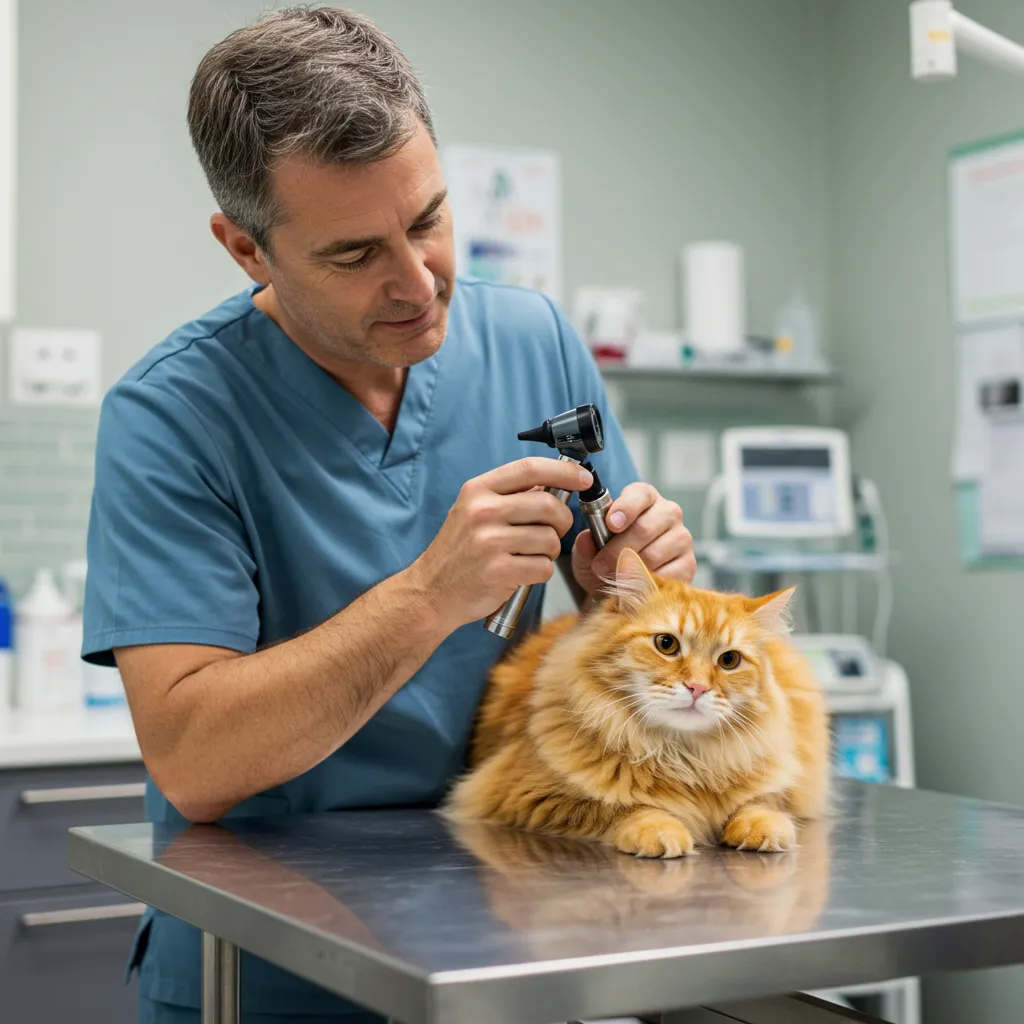
Symptoms of Cat Ear Infection: Spotting the Red Flags
Recognizing cat ear infection signs is critical to catching the problem before it escalates. Cats are masters at hiding pain, so subtle cues are your best clues.
Key Symptoms of Cat Ear Infection
- Persistent Scratching or Pawing: Excessive ear scratching, especially if one-sided, signals irritation.
- Head Shaking or Tilting: Cats shake their heads to relieve itch or pain; tilting may indicate deeper infection.
- Foul Odor: A yeasty or sour smell from the ears often points to bacteria or yeast.
- Discharge or Wax Buildup: Black, brown, or yellow gunk, sometimes crusty, is a telltale sign.
- Redness or Swelling: Inflamed ear canals look red or puffy, sometimes with scabs.
- Sensitivity to Touch: If your cat flinches when you touch their ears, it’s a red flag.
- Behavioral Changes: Lethargy, irritability, or hiding, especially in sensitive breeds like Siamese (see Siamese cats scared easily guide).
- Balance Issues or Hearing Loss: Rare but serious, indicating a middle ear infection.
Real Example: My Norwegian Forest Cat foster had crusty ears and kept shaking her head during playtime. A vet swab confirmed ear mites, which we treated with drops and cleaning—fixed in 10 days. Learn more about breed-specific care in our Norwegian Forest Cat care guide.
Pro Tip: Use a flashlight to check for discharge or redness, but don’t poke inside—leave that to vets. If you spot multiple symptoms, act fast to prevent complications like chronic otitis.
Cat Ear Mites vs Infection: How to Tell the Difference
Confusing cat ear mites vs infection is common, but misdiagnosis delays relief. Here’s a quick comparison:
| Factor | Ear Mites | Ear Infection |
|---|---|---|
| Cause | Parasites (Otodectes cynotis) | Bacteria, yeast, or allergies |
| Symptoms | Intense itching, dark “coffee ground” debris | Odor, discharge (yellow/brown), redness |
| Spread | Highly contagious to other pets | Not contagious, but can recur |
| Diagnosis | Vet microscopy confirms mites | Swab tests identify bacteria/yeast |
| Treatment | Miticide drops, thorough cleaning | Antibiotics, antifungals, or steroids |
Key Insight: Mites often trigger secondary infections, so both may coexist. My Munchkin foster had mites that led to a bacterial infection—vet-prescribed miticide and antibiotics cleared it up. Check our Munchkin cat health issues for breed tips.
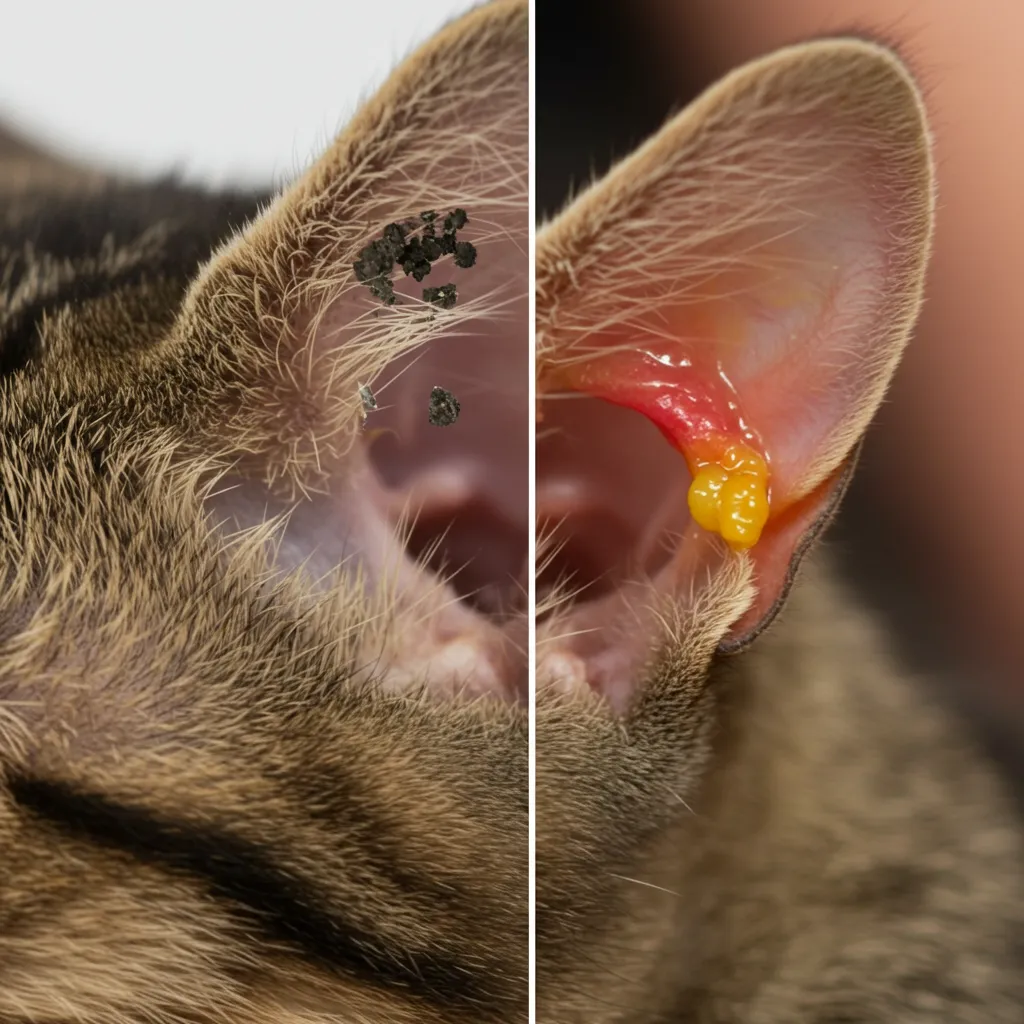
Action Step: If you suspect mites (common in multi-cat homes), isolate your cat and schedule a vet visit. Avoid over-the-counter mite treatments without confirmation—they can irritate infections.
Diagnosing Cat Ear Infections: What to Expect at the Vet
Cat ear infection diagnosis is a vet’s domain—DIY guesses can worsen things. Here’s how pros nail it:
- Physical Exam: Vets check for redness, swelling, or discharge and assess pain levels.
- Ear Swab and Microscopy: A sample of ear debris is examined for bacteria, yeast, or mites.
- Otoscopy: A scope visualizes the ear canal for blockages or polyps.
- Allergy or Blood Tests: If recurrent, tests rule out food allergies or systemic issues like diabetes.
When to See a Vet for Cat Ear Problems: Go immediately if you notice blood, pus, or balance issues, or if symptoms persist beyond 48 hours. Per a 2025 Cornell Feline Health Center report, 30% of untreated infections spread to the middle ear, risking hearing damage.
Pro Tip: Prep for the visit by noting symptoms and cleaning frequency. Our cat health care guide shares tips for stress-free vet trips.
Cat Ear Infection Treatment: Vet-Approved Solutions
Treating cat ear infections requires precision—wrong moves can prolong suffering. Here’s how to treat cat ear infection effectively.
Common Cat Ear Infection Medications
- Antibiotic Drops: For bacterial infections (e.g., Tresaderm, Otomax). Apply 2–4 drops twice daily for 7–14 days.
- Antifungal Drops: For yeast (e.g., Miconazole). Use as prescribed, typically 10 days.
- Steroid Drops: Reduce inflammation (e.g., Dexamethasone). Often combined with antibiotics.
- Oral Medications: For severe cases, like middle ear infections, vets may prescribe systemic antibiotics.
- Miticide Drops: For mites (e.g., Ivermectin-based drops). Safe ear drops for cats are vet-prescribed only—avoid human products.
How to Give Cat Ear Drops: Wrap your cat in a towel (burrito style), tilt their head, and apply drops without touching the dropper to the ear. Reward with treats. See our how to give cat ear drops guide for step-by-step tips.
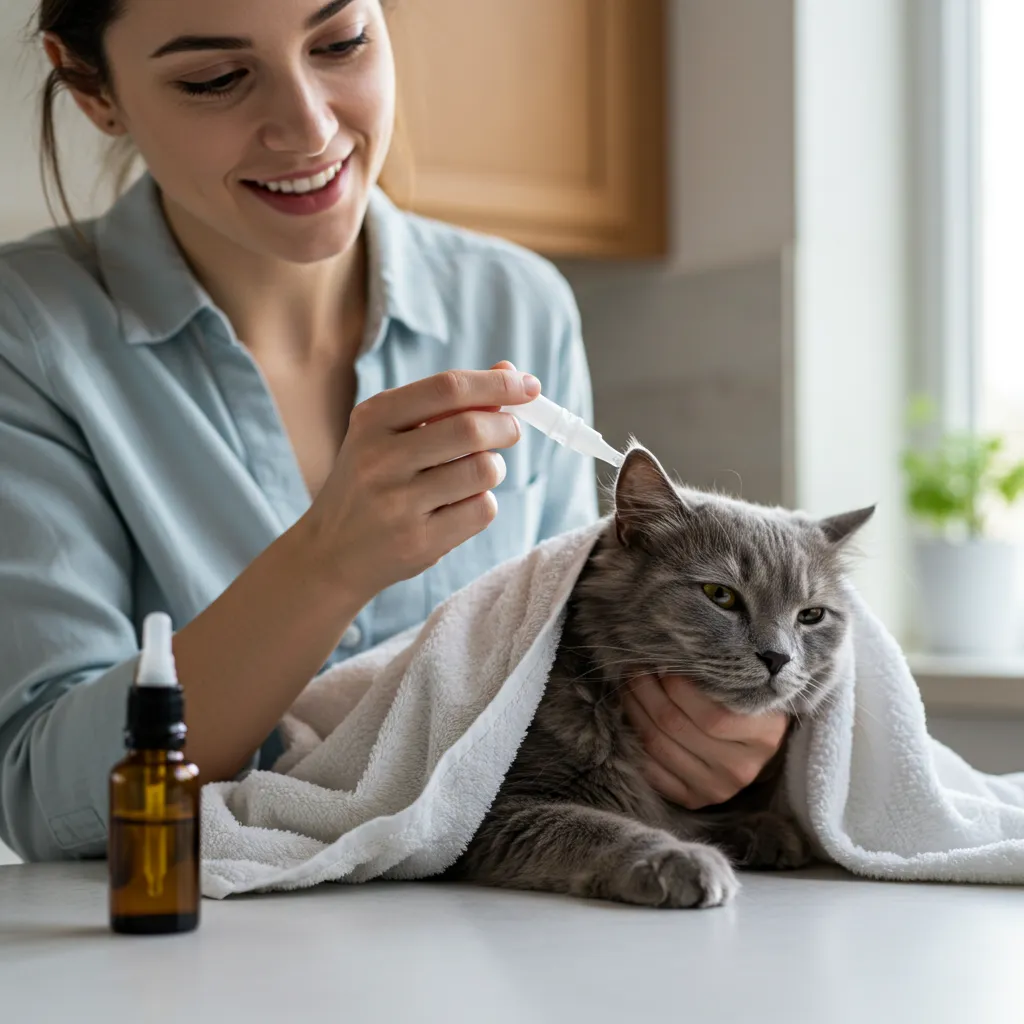
Real Example: My Ragdoll’s yeast infection cleared with Miconazole drops and weekly cleaning—vet follow-up confirmed full recovery in 12 days.
Caution: Never use expired meds or share between cats. Finish the full course to prevent resistance.
Cat Ear Infection Home Remedies: Safe and Effective Options
Cat ear infection home remedies can support vet treatments, but they’re not standalone cures. Always consult a vet before trying these.
How to Clean Cat’s Ears Safely
Cleaning removes debris, aiding recovery. Here’s a vet-approved method:
- Gather Supplies: Vet-approved cleaner (e.g., Epi-Otic), cotton balls, gloves.
- Position Cat: Secure gently in a towel; keep calm with soothing words.
- Apply Cleaner: Squirt a few drops into the ear canal, massage base for 30 seconds.
- Wipe Gently: Use cotton balls to remove debris; never use Q-tips (they push debris deeper).
- Reward: Treats or play reinforce positive vibes.
Homemade Cat Ear Cleaner: Mix 1:1 white vinegar and water, or 1:10 witch hazel with water. Use sparingly (once weekly) to avoid irritation. TikTok’s trending DIY cat ear cleaner recipes often include aloe vera, but vet approval is a must—some herbs irritate.
Natural Remedies for Cat Ear Infection
- Coconut Oil: Its antifungal properties soothe mild yeast issues. Apply a thin layer externally; avoid deep canal use.
- Chamomile Tea Rinse: Diluted, cooled tea (1:4 with water) calms inflammation. Use post-cleaning, once daily.
- Aloe Vera Gel: Soothes external redness; ensure it’s pet-safe and vet-approved.
Caution: Home remedies are adjuncts, not replacements. A 2025 Spruce Pets study found 60% of DIY treatments fail without vet oversight due to misdiagnosis.
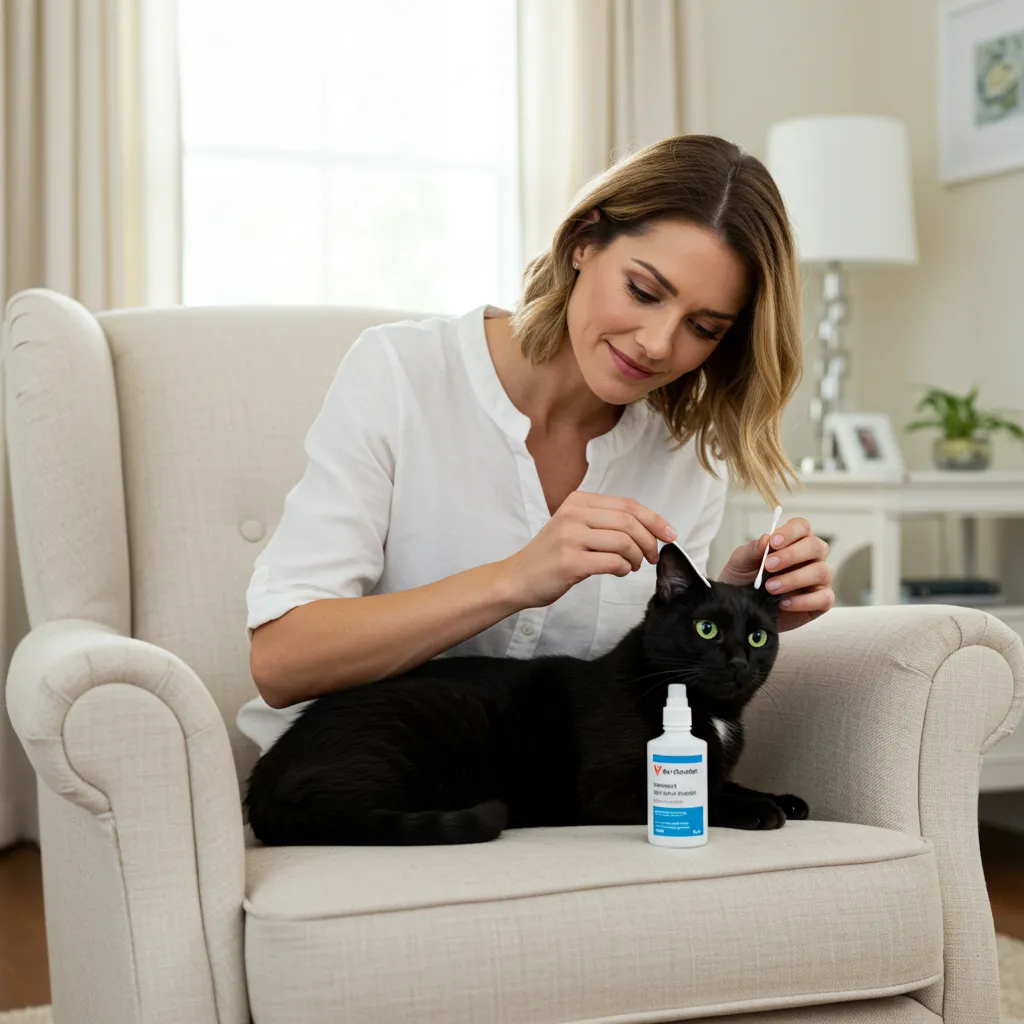
Pro Tip: For allergy-prone cats like Siamese, pair remedies with hypoallergenic diets (see Siamese cat vet visits guide).
How to Prevent Cat Ear Infections: Proactive Feline Ear Health
Prevention beats cure. Here’s how to keep your cat’s ears infection-free:
- Regular Ear Cleaning: Monthly cleaning with vet-approved solutions prevents cat ear wax buildup. Our cat ear care tips guide has more.
- Allergy Management: Identify triggers (e.g., pollen, food) to reduce inflammation. Check our cat allergies guide.
- Dry Ears Post-Bath: Water in ears breeds bacteria. Dry gently with a soft cloth.
- Routine Vet Checks: Annual exams catch early issues, especially for breeds like Munchkins (see Munchkin cat health issues).
- Flea and Mite Control: Use vet-approved preventatives to stop mites before they start.
2025 Trend: Natural cat care remedies, like herbal sprays, are gaining traction on TikTok, but vet-approved products remain safest. For outdoor cats like Norwegian Forest Cats, monthly checks are crucial (see Norwegian Forest Cat grooming guide).
FAQ: Quick Answers to Common Cat Ear Infection Questions
How can I tell if my cat has an ear infection?
Look for scratching, head shaking, foul odor, discharge, or redness. Persistent symptoms need a vet check.
How are ear infections in cats diagnosed?
Vets use ear swabs, microscopy, and otoscopy to identify bacteria, yeast, or mites.
Are there any home remedies for cat ear infections?
Yes, like vinegar-water cleaners or coconut oil, but only with vet approval to avoid harm.
What are the signs of ear infections in cats?
Scratching, head tilting, odor, discharge, or sensitivity to touch are key indicators.
How can I prevent cat ear infections?
Clean ears monthly, manage allergies, and keep ears dry. Regular vet visits help.
What are the best ear drops for cats in 2025?
Vet-prescribed drops like Tresaderm or Miconazole are top-rated; avoid over-the-counter human products.
What causes ear infections in cats?
Mites, bacteria, yeast, allergies, or wax buildup are common culprits.
Conclusion: Keep Your Cat’s Ears Purr-fectly Healthy
Ear infections in cats are more than a smelly nuisance—they’re a signal your feline friend needs care. By spotting symptoms of cat ear infection early, using vet-prescribed cat ear infection treatment, and incorporating safe cat ear infection home remedies, you can restore your cat’s comfort fast. From learning how to clean cat’s ears to preventing future issues with feline ear health tips, you’re now equipped to tackle this common problem with confidence.
For more expert advice, explore our cat health care guide or dive into breed-specific tips like our Bengal cat guide. At Cat Bloom Haven, we’re here to help every whisker shine—share your cat’s ear health journey in the comments!