Pastel Cat Corners: How to Create the Dreamiest, Coziest Nooks Your Cat Will Never Want to Leave
If you’ve ever caught your cat curled up in the tiniest, weirdest spot in the house (on top of a shoebox, behind the couch, or wedged between two cushions), you already know they’re masters at finding comfort in the strangest places. But what if you could give them something even better? Something soft, beautiful, and deliberately designed just for them? That’s where pastel cat corners come in: calm, Instagram-worthy little sanctuaries that blend perfectly with your home decor while making your cat feel like royalty.
These aren’t just cute shelves with a cushion slapped on top. The best pastel cat corners combine smart design, cat psychology, and that soft, muted color palette everyone is obsessed with right now. Done right, they become the spot your cat chooses every single time, which means less fur on your sofa and fewer midnight zoomies across your bed.
In this guide, I’m walking you through everything you need to know to build (or buy) pastel cat corners that are safe, functional, and so pretty you’ll want to sit in them yourself. Let’s get started.
Key Takeaways
- Pastel cat corners reduce stress, protect furniture, and look stunning in modern homes.
- Best colors: lavender, mint, blush pink, baby blue, pale peach, and creamy beige.
- Cats choose corners for safety and warmth; pastel tones make those instincts feel even cozier.
- You can DIY for under $80 or invest in high-end pieces that last years.
- Combine wall perches, floor beds, and hidden cubbies for the ultimate setup.
Why Cats Are Obsessed with Corners (and Why Pastel Makes It Better)
Cats are natural den animals. In the wild, they squeeze into tight spaces to feel protected on at least two sides. Corners give them that same security at home. Add soft textures and gentle colors, and you’re speaking straight to their nervous system.
Pastel shades work magic because they’re low-contrast and soothing. Harsh reds or bright yellows can overstimulate some cats (especially anxious or senior ones). Soft lavenders and mints calm them down the same way they calm us. One study from the University of Lincoln even showed that cats exposed to cooler, muted tones spent more time resting and less time pacing.
Real-life example: My friend’s Siamese used to scream at 3 a.m. every night. She built a small blush-pink corner with a hooded bed and a sheepskin rug. First night? Total silence. He hasn’t left that spot unless food is involved.
Planning Your Pastel Cat Corner: Location Is Everything
Before you buy a single cushion, scout your house like a cat would.
Best spots:
- Quiet corners away from loud appliances or heavy foot traffic
- Near a window for natural light and bird TV (but not in direct sun that overheats)
- Elevated if possible cats feel safest when they can survey their kingdom
- Close enough to the family that they still feel included
Pro tip: Watch your cat for three days. Wherever they already nap the longest is prime real estate.
Color Palette Ideas That Cats (and Your Feed) Will Love
- Lavender Dreams – calming, works with greys and whites
- Mint Whisper – fresh, pairs beautifully with wood tones
- Blush Cloud – romantic, perfect for feminine or Scandinavian spaces
- Baby Blue Serenity – classic and gender-neutral
- Peachy Cream – warm without being overwhelming
- Mixed Pastels – use two or three tones for depth (mint + blush is unbeatable)
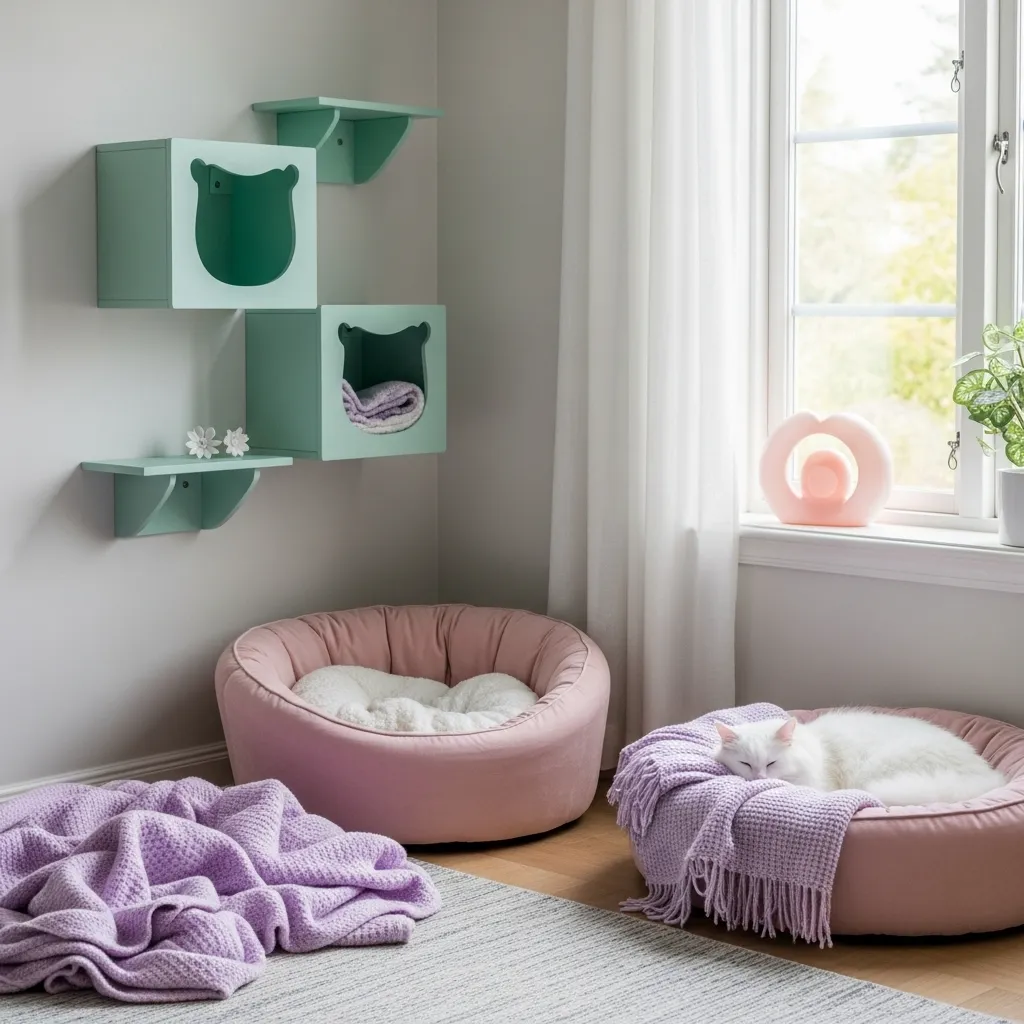
Budget-Friendly DIY Pastel Cat Corner (Under $80)
Materials you probably already have or can grab cheap:
- IKEA Lack shelf or two (paint them pastel with non-toxic spray paint)
- Old wooden crate or storage cube
- Sheepskin rug remnant (IKEA again, $15–20)
- Soft blanket in your chosen pastel
- Command hooks and sisal rope if you want a scratching post
Steps:
- Paint shelves with pet-safe chalk or milk paint (Behr and Country Chic are great).
- Mount one shelf 12–18 inches off the ground, another 36–40 inches (staggered looks best).
- Line the lower shelf or crate with a thick memory-foam cushion wrapped in a washable pastel cover.
- Add a small battery-powered LED puck light for extra coziness at night.
- Hang a lightweight curtain panel on tension rod if the corner feels too open.
Total time: one relaxed weekend afternoon.
For detailed step-by-step photos, check our DIY cat beds guide.
Mid-Range Ready-Made Options That Look Custom ($100–$300)
These pieces are worth every penny because they’re sturdy and gorgeous:
- Mau Lifestyle Cento Shelf (comes in soft sage and blush)
- Catastrophic Creations Deluxe Cat Hammock (canvas can be dyed pastel)
- Refined Feline Lotus Leaf Shelf (paintable bamboo)
- Tuft + Paw Grove Tower in limited-edition pastel finishes
Mix and match heights so your cat can hop from level to level without touching the floor – pure cat happiness.
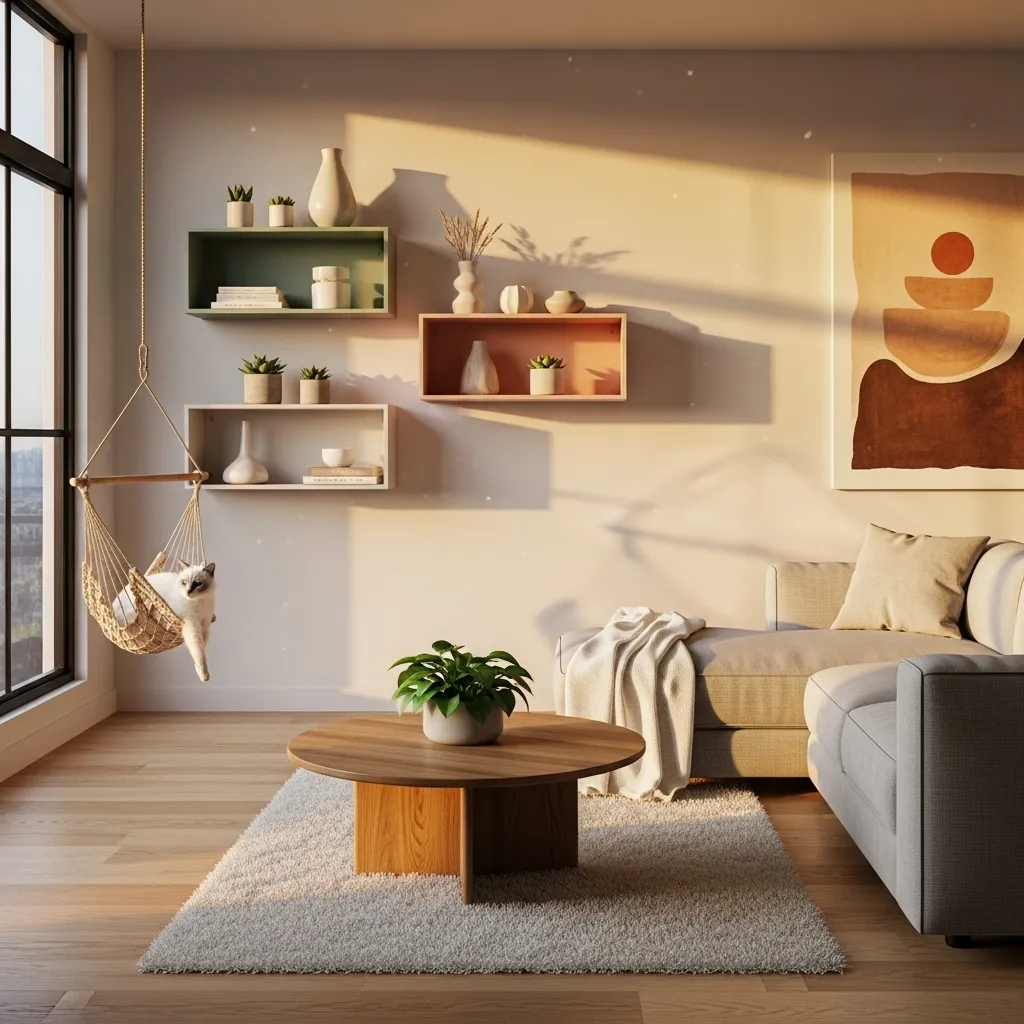
Luxury Pastel Cat Corners That Double as Art ($400+)
If you want your friends to gasp when they walk in:
- Hepper Pod Bed in limited-edition lavender
- MyZoo Spaceship Gamma (clear acrylic with pastel cushions)
- Goldtatze Big Ears Wall Lounger custom-upholstered in pale peach wool
- Custom-built cat wall by local carpenters using velvet-upholstered platforms
These pieces age beautifully and often come with 5–10 year warranties.
Essential Safety Rules (Never Skip These)
- Secure every wall-mounted piece to studs. A 12-pound cat jumping at full speed can rip drywall anchors out.
- No dangling cords or small parts a claw could get caught in.
- Use only pet-safe paints and fabrics (no latex or anything with formaldehyde).
- Check weight limits – Maine Coons and Ragdolls need heavy-duty hardware.
Accessories That Take It to the Next Level
- Faux sheepskin or merino wool blankets (washable!)
- Small ceramic water fountain in matching pastel
- Cat-safe plants like spider plant or Boston fern for extra softness
- Hidden storage ottoman underneath for toys and blankets
- Battery fairy lights tucked along the back wall (warm white, never colored)
How to Introduce Your Cat to Their New Pastel Paradise
Day 1–2: Place an old t-shirt you’ve worn in the corner so it smells like you.
Day 3: Sprinkle a tiny bit of catnip or silvervine on the cushion.
Day 4: Play with a wand toy that “accidentally” ends in the corner.
Most cats claim the space within a week. If yours is shy, be patient some take a month.
Maintenance Keep It Pretty Forever
- Vacuum sheepskin weekly with a brush attachment.
- Wash cushion covers every 2–3 weeks.
- Spot-clean walls with mild soap and water.
- Rotate toys so the corner stays novel.
Common Mistakes to Avoid
- Putting the corner right next to the litter box (obvious, but it happens)
- Using slippery fabrics – cats need traction
- Forgetting vertical space in small apartments
- Choosing aesthetics over stability
FAQ – Pastel Cat Corners
Q: Will pastel colors really calm my anxious cat?
A: Many cats respond positively to muted, cooler tones. Lavender and soft blues especially have a soothing effect similar to what we experience.
Q: Are pastel cat corners only for girl cats?
A: Absolutely not. Tons of tomcats love blush pink and mint. Color preference is more about the human’s style than the cat’s gender.
Q: Can I use regular wall paint for DIY shelves?
A: Only if it’s zero-VOC and fully cured for at least 30 days. Better options: milk paint, chalk paint, or pet-specific brands.
Q: My cat ignores the new corner. Help!
A: Make it smell familiar, add a warmed-up blanket straight from the dryer, and temporarily move their old bed away.
Q: How many corners does one cat need?
A: At least two one for active napping near the family, one for deep sleep in a quieter spot.
Final Thoughts
Creating pastel cat corners isn’t just about making your home look like a Pinterest board. It’s about giving your cat choices, reducing their stress, and honestly, making your own days better when you see them snuggled up looking like a cotton-candy cloud.
Start small one shelf, one soft blanket, one perfect corner. Watch what happens. Nine times out of ten, that becomes their new throne.
Ready for more ways to spoil your cat without sacrificing style? Explore our full collection of cat room decor ideas, minimalist cat shelves, and cozy corner inspiration at CatBloomHaven.
Your cat deserves a pastel palace. Go build it.