Why Does My Cat Climb Me? Unpacking Feline Climbing Instincts and How to Channel Them Safely
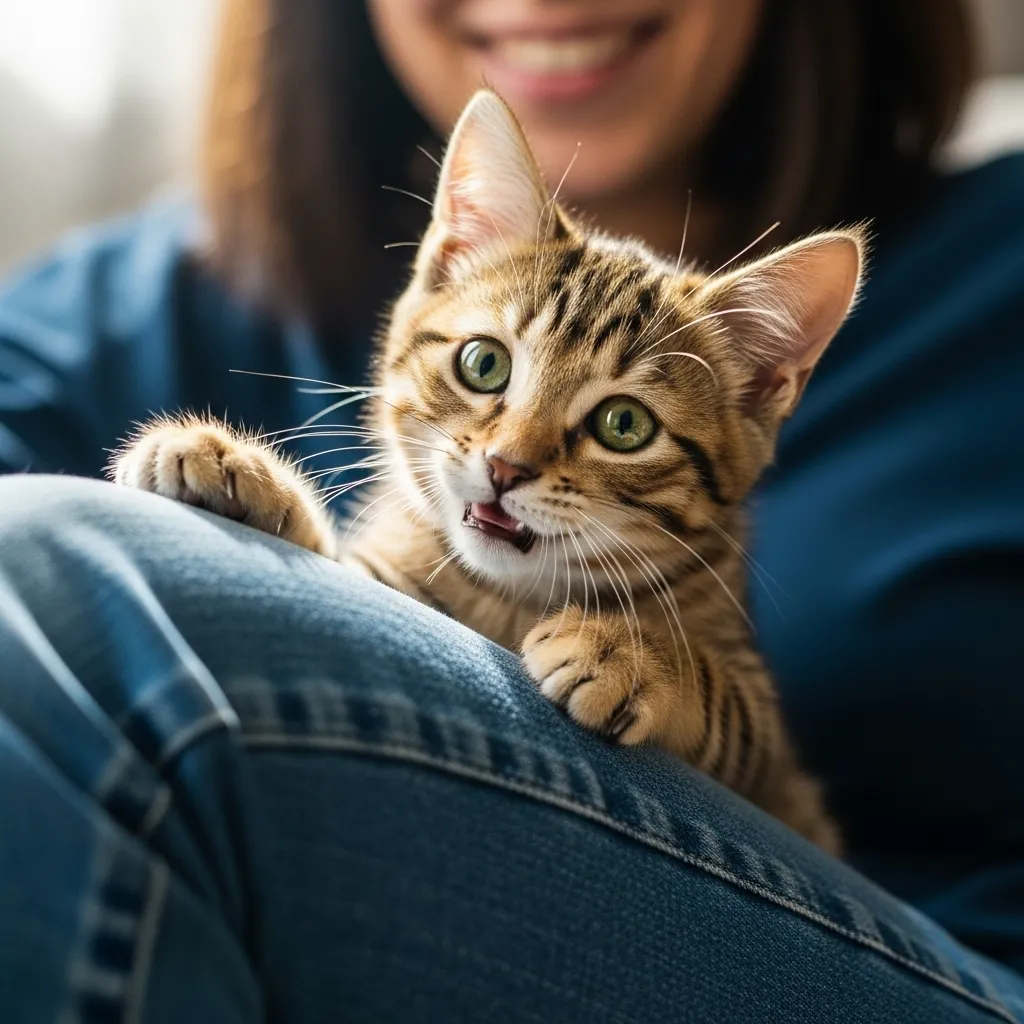
Picture this: you’re lounging on the couch when suddenly a furry blur launches up your leg, tiny claws digging in like pitons on a rock face. Your cat climbs you as if you’re the tallest tree in the savanna. Ouch and why? If “cat climbs me” is your daily reality, you’re not alone. This classic cat climbing behavior stems from deep feline instincts, playful energy, and a need for vertical territory. But it doesn’t have to leave you scratched up.
In this ultimate guide, we’ll decode why does my cat climb me, explore the roots of cat climbing behavior, and arm you with vet-approved, practical ways to redirect it. You’ll discover how to create vertical space for cats, pick the perfect cat trees and alternatives, and even build DIY cat climbing structures that keep claws off your skin. By the end, you’ll turn frantic scrambles into safe, enriching fun strengthening your bond along the way.
Key Takeaways
- Cats climb owners for instinct, play, attention, or security—not spite.
- Provide vertical cat furniture and interactive cat toys to satisfy urges.
- Trim claws regularly and use positive redirection to protect skin and furniture.
- Kittens climb more; adults settle with proper cat enrichment.
- High perches reduce stress and improve cat health and claws.
Ready to stop being a human jungle gym? Let’s climb into the details.
The Evolutionary Roots of Cat Climbing Behavior
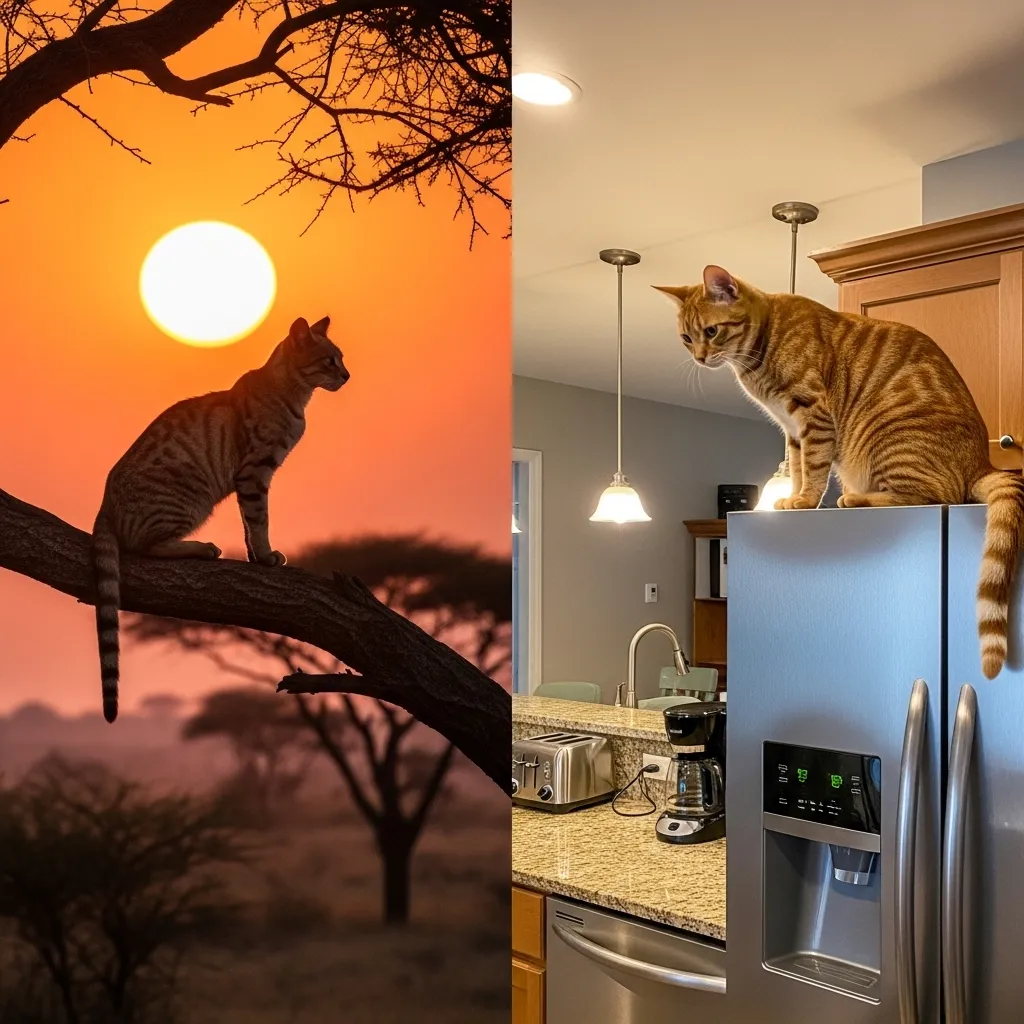
Domestic cats may nap 16 hours a day, but their DNA screams “apex predator.” Wild ancestors like the African wildcat scaled trees to hunt birds, escape lions, and survey territory. Those feline climbing instincts are hardwired.
Ancestral Advantages of Height
- Safety: Elevations kept kittens away from ground predators.
- Hunting: Branches offered ambush points for pouncing on prey.
- Thermoregulation: Tree shade cooled cats in scorching climates.
- Social signaling: Top perches displayed dominance in multi-cat groups.
Modern house cats retain these drives even without leopards at the door. Your shoulder? Prime real estate for a confident feline.
Vet Insight: Dr. Sarah Wooten, DVM, notes that “vertical space for cats mimics arboreal refuges, lowering cortisol and preventing stress-related illnesses like cystitis.” (Explore more cat health and claws tips in our cat care guide.)
Decoding Why Your Cat Climbs You Specifically
Not every cat picks their human as a cat climbing tree. Here’s what tips the scale:
1. Play Instinct in Cats Gone Vertical
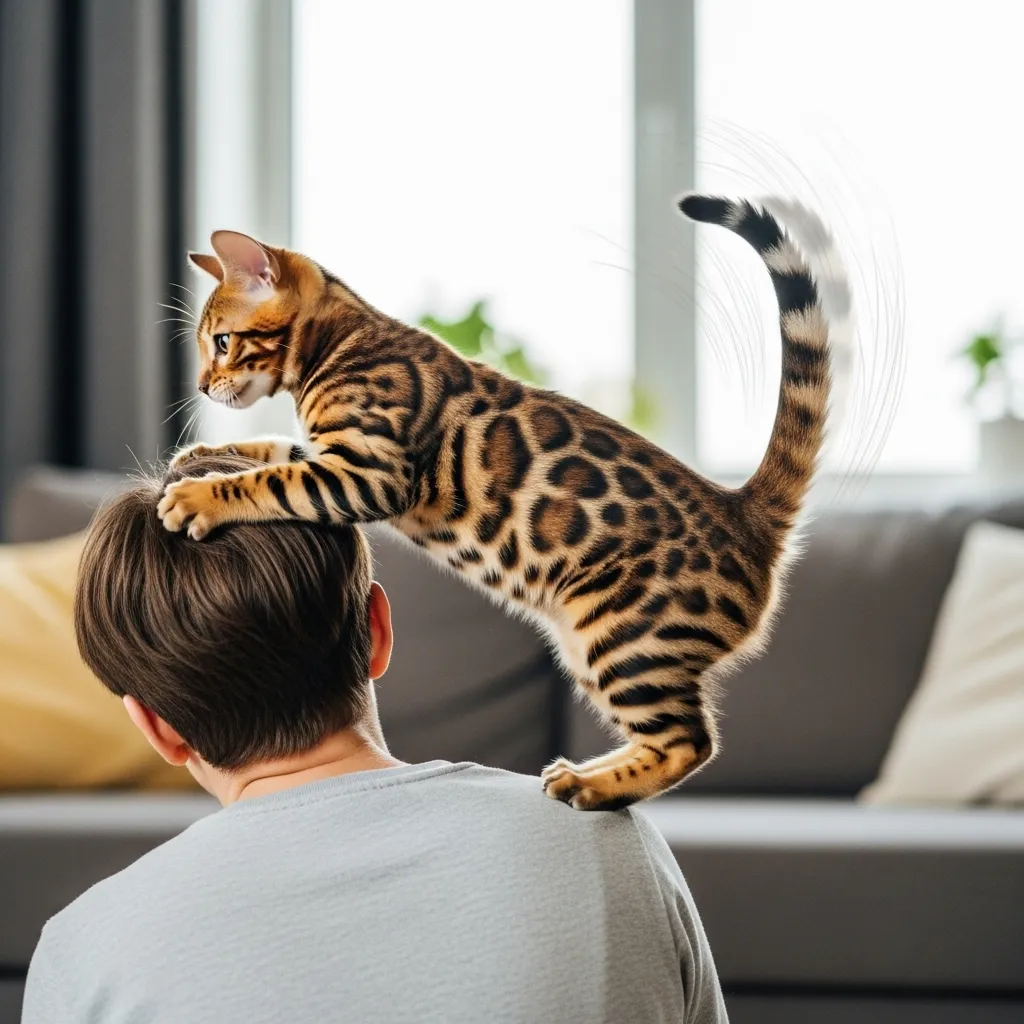
Kittens rehearse hunting through cat play behavior. Your moving legs = fleeing gazelle. Adult cats with surplus energy default to the same game. Breeds like Bengals or Siamese—known for cat agility and climbing—excel at this. (Dive deeper into energetic personalities in Bengal Cat Personality.)
2. Attention-Seeking & Bonding
Cats learn: climbing = instant reaction. A dramatic “OW!” reinforces the habit. Conversely, calm cats climb gently to snuggle closer—pure cats and humans bonding behavior.
3. Scent Marking & Ownership
Rubbing and climbing deposits pheromones. Translation: “This human is mine.”
4. Stress or Boredom Relief
Indoor cats lacking cat enrichment invent jobs. Climbing you beats staring at walls.
5. Kitten Climbing Behavior vs. Adults
Kitten development peaks climbing at 3–7 months when coordination skyrockets but impulse control lags. Most outgrow owner-as-gym by 1 year if alternatives exist.
Quick Test: Does climbing spike after meals or when you ignore playtime? Energy overflow confirmed.
Is Cat Climbing Owner Normal or a Red Flag?
99% of the time, yes—pure cat behavior. Watch for:
- Sudden onset in seniors → arthritis pain; vet check needed (Senior Cat Care).
- Excessive force + hissing → possible cat stress signs or redirected aggression.
- Bald patches on you or cat → allergy or overgrooming (Cat Allergies Guide).
Otherwise, celebrate the compliment: your cat feels safe enough to scale Mount You.
Health Perks of High Places for Cats
Elevated perches aren’t luxury they’re therapy.
| Benefit | How It Helps |
|---|---|
| Stress Reduction | Breaks line-of-sight with triggers (doorbells, dogs). |
| Joint Health | Controlled leaps build muscle without floor impact. |
| Confidence Boost | Shy cats observe from safety, easing cat escape behavior. |
| Weight Management | Climbing burns 3–4x more calories than walking. |
| Territory Satisfaction | Prevents cat climbing furniture wars in multi-cat homes. |
Pro Tip: Place a perch near a window for bird-watching TV ultimate creative cat enrichment.

Cat Trees and Alternatives: Store-Bought Winners for 2025
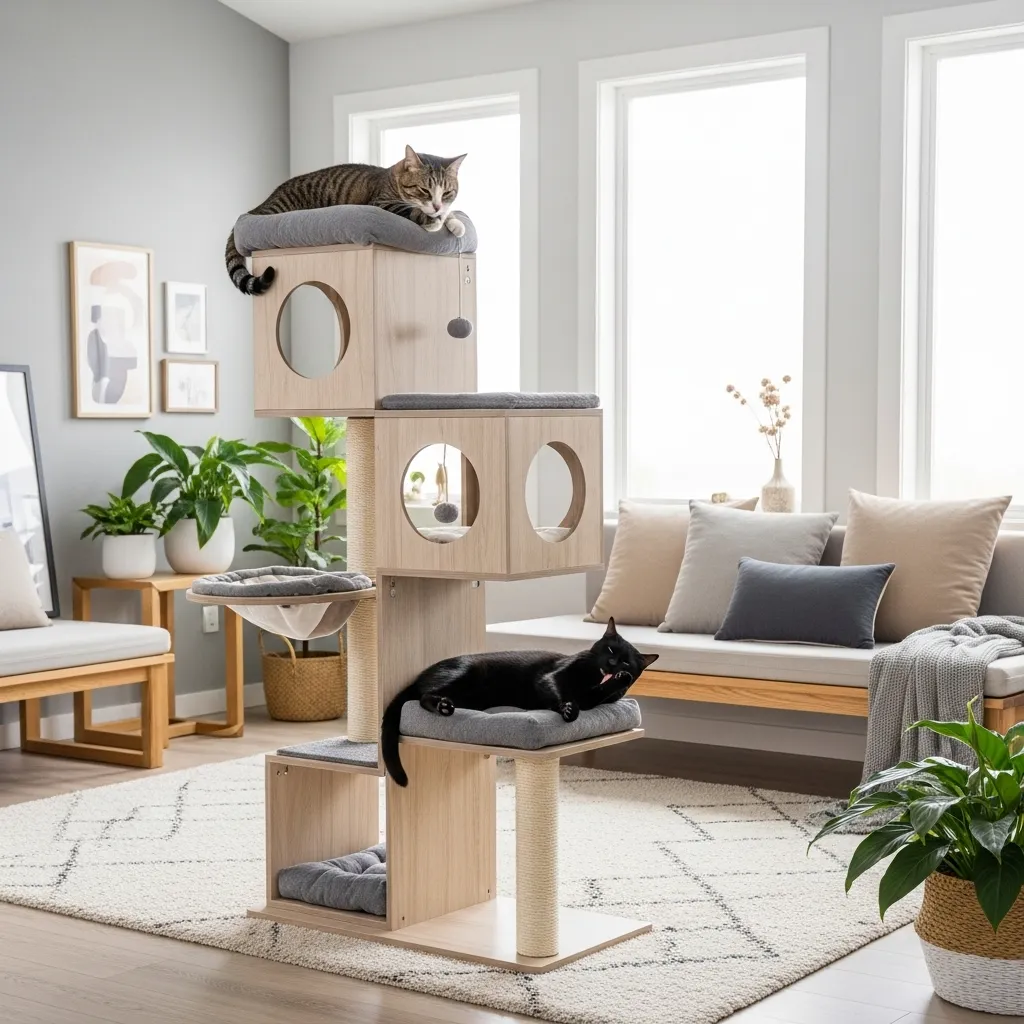
Ready-made cat trees 2025 models focus on stability, natural materials, and modularity. Top picks:
Budget (<$60)
- Armarkat Classic: 72″ tall, sisal posts, condo—perfect indoor cat climbing.
- Amazon Basics Activity Tree: Replaceable parts extend life.
Mid-Range ($60–$150)
- Frisco XXL Cat Tree: Hammock + tunnel for cat play behavior.
- Go Pet Club 80″ Tower: Ceiling tension rod = zero floor wobble.
Luxury (>$150)
- RHRQuality Cats Paradise: Real wood branches, customizable shelves.
- Catit Vesper Mansion: Minimalist walnut finish blends with décor.
Selection Checklist
- Height ≥ 5 ft for adult satisfaction.
- Base > 24″×24″ to prevent tipping.
- Natural sisal (not carpet) for maintaining cat claws.
- Washable cushions—life happens.
Learn vet-recommended gear in Best Carriers for Norwegian Forest Cats—principles overlap.
DIY Cat Climbing Structures: Build Bond + Save Cash
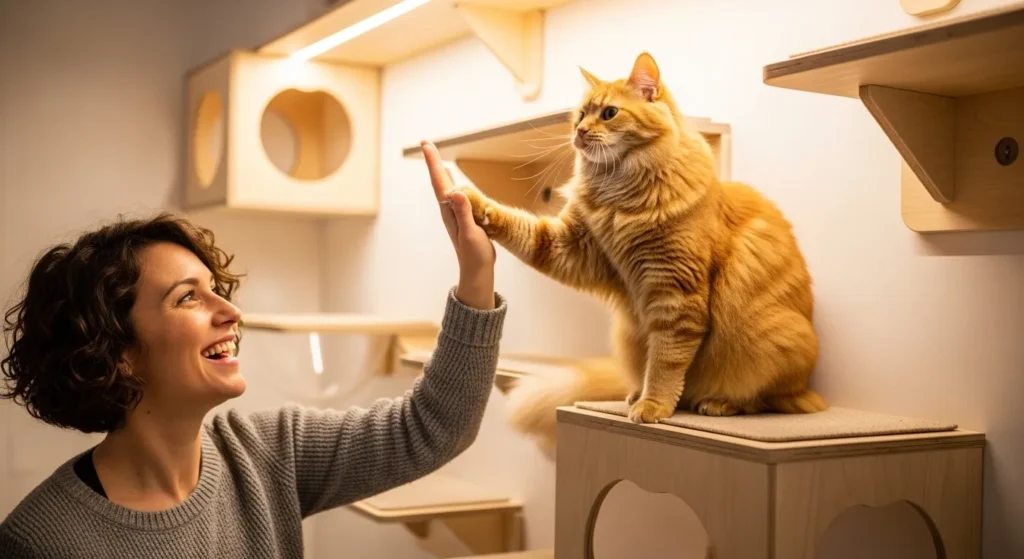
Love a project? These DIY cat furniture ideas rival retail.
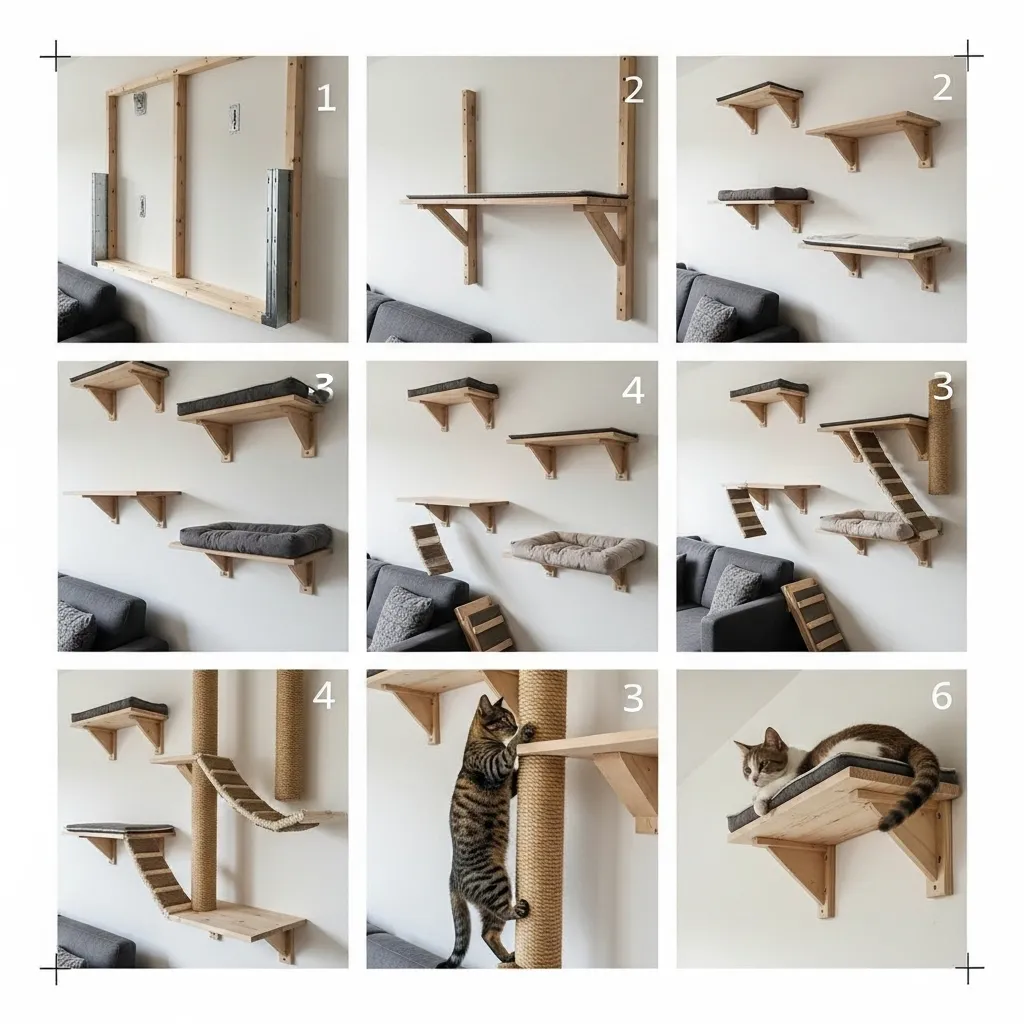
1. IKEA Hack Wall Gym
Materials:
- 3 LACK shelves
- Sisal rope
- Brackets
Steps:
- Mount shelves in staggered staircase.
- Wrap legs with sisal.
- Top with cushioned mat.
Cost: ~$45. Time: 2 hours. Skill: Beginner.
2. Real Branch Cat Tree
Source fallen oak/maple (bake 200°F × 1 hr to kill bugs). Anchor in heavy planter. Wrap junctions with rope. Bonus: smells like outdoors.
3. Cardboard Condo Castle
Stack boxes, cut doors, glue with non-toxic PVA. Rotate monthly for novelty—cat climbing hacks on a dime.
Safety first: anchor every structure to walls. Curious about more builds? See DIY Cat Collar for crafty inspiration.
Redirecting Cat Climbing Behavior: Positive Training Blueprint
Stop unwanted climbs without punishment cats don’t respond to “no.”
Step 1: Ignore the Behavior
Turn away the second claws touch skin. No eye contact, no sound. Extinction works in 3–7 days.
Step 2: Immediate Redirect
Keep a wand toy nearby. The instant paws lift, engage in horizontal chase. Reward landing on cat tree with treats.
Step 3: Scheduled Play Bursts
Two 10-minute sessions daily drain play instinct in cats. Try Da Bird or laser (end on physical catch to satisfy).
Step 4: Claw Maintenance Routine
Trim every 2 weeks (Trim Siamese Cats’ Nails). Provide horizontal scratchers and vertical sisal posts—variety prevents boredom.
Step 5: Pheromone Support
Feliway diffusers calm anxious climbers. Pair with new perches for positive association.
Timeline: Noticeable drop in 1 week; habit broken in 3–4 weeks.
Cat Climbing Furniture: Protect Sofas, Save Skin
Double-win: give cats legal targets.
- Sisal-wrapped table legs (Peel-and-stick rolls on Amazon).
- Corner scratchers with catnip pockets.
- Window hammocks—sun + height = instant hit.
Discover furniture-saving secrets in Stop Cats Scratching Furniture.
Indoor Cat Climbing: Breed-Specific Twists
Some cats scale more zealously:
| Breed | Climbing Style | Best Solution |
|---|---|---|
| Bengal | Olympic leaper | Ceiling-high modular trees |
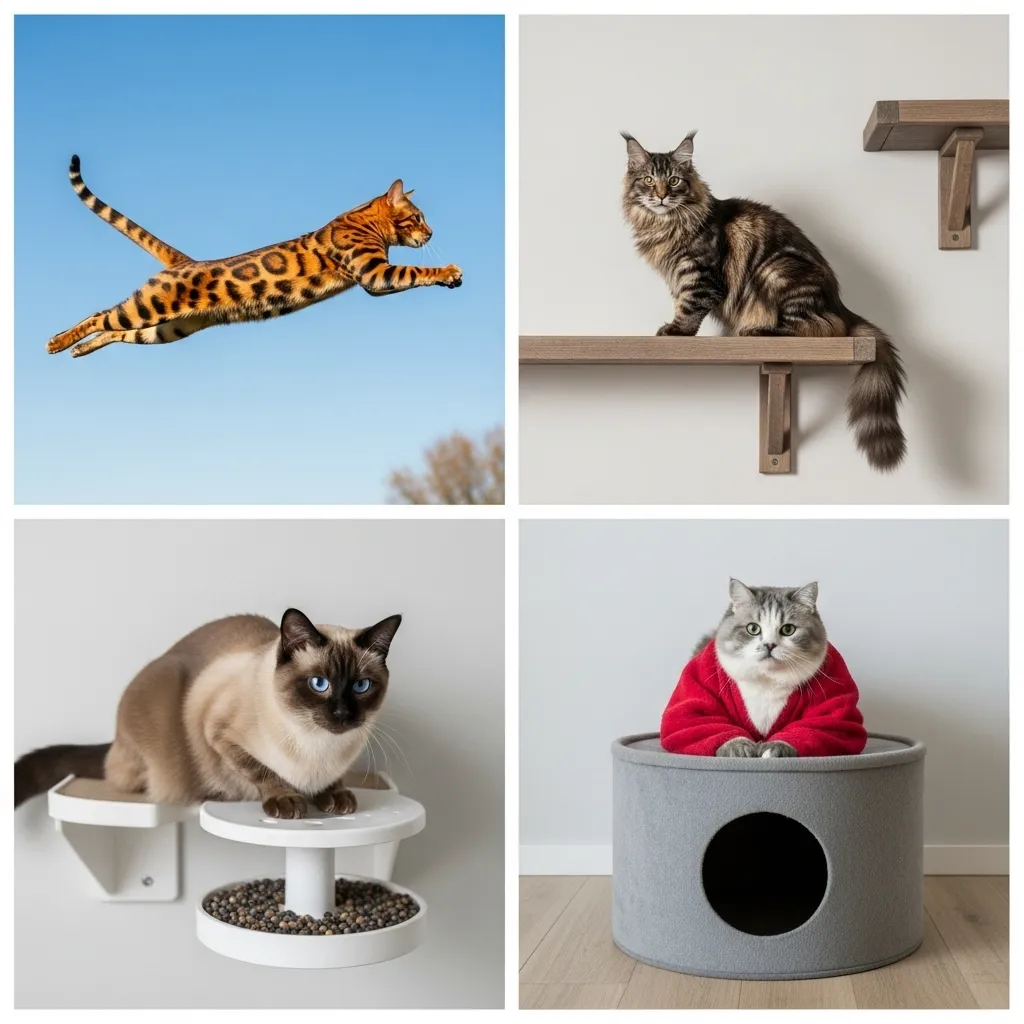
| Maine Coon | Heavy but determined | Reinforced real-wood platforms |
| Siamese | Attention-driven | Interactive puzzle perches |
| Persian | Low-energy | Short, wide condos |
Tailor setups—read breed deep-dives like Maine Coon Cat.
Cat Safety at Home: Preventing Climbing Mishaps
Falls cause 90% of high-rise syndrome in cats. Mitigate:
- Net balconies (even 2nd floor).
- Carpeted landings under tall trees.
- Breakaway collars only.
- Annual senior exams for arthritis (Cat Vet Visit Schedule).
Funny Cat Climbing Videos & Social Proof
Viral clips of cats parkouring refrigerators rack millions of views proof the behavior resonates. Film your own (safely) and tag #CatBloomHaven for reposts. Community laughter builds trust.
FAQs: Snippet-Ready Answers
Why does my cat climb me like a tree?
Instinct, play, or attention-seeking. Redirect with dedicated vertical cat furniture.
Is kitten climbing behavior normal?
Absolutely—peaks 3–7 months. Provide soft alternatives to protect skin.
How can I stop my cat climbing furniture?
Offer taller, more enticing cat trees and use double-sided tape temporarily.
What ancestral traits make cats climb?
Tree-dwelling wildcats hunted, escaped, and surveyed from heights—DNA remains.
Are cat trees worth it for indoor cats?
Yes. They satisfy feline instincts, reduce stress, and prevent unwanted cat climbing owner.
How do I build DIY cat climbing structures?
Use real branches, sisal rope, and wall shelves. Anchor securely.
Do high places benefit cat health?
Yes—lower stress hormones, better weight control, stronger muscles.
How do I maintain cat claws for safe climbing?
Trim biweekly, provide sisal posts, consider nail caps for persistent scratchers.
Why do cats climb their owners at night?
Boredom or routine disruption. Tire them with evening play.
Can I train an adult cat to stop climbing me?
Yes—consistency with redirection and rewards reshapes habits in weeks.
Final Climb: Create Your Cat’s Dream Habitat
Your cat doesn’t climb you to annoy they’re communicating primal needs in a domestic world. Meet those needs with vertical space for cats, scheduled play, and gentle redirection, and you’ll trade claw marks for purrs. Start small: add one shelf today, play one extra session tonight. Watch the transformation.
Explore more expert cat care tips, breed guides, and cat enrichment ideas across Cat Bloom Haven. From understanding cats to mastering cat training behavior, we’ve got your feline-covered.
Which cat climbing hack will you try first? Drop a comment we read every one! 🐾