Why Is My Cat Rubbing on Everything? The Ultimate Guide to Cat Rubbing Behavior
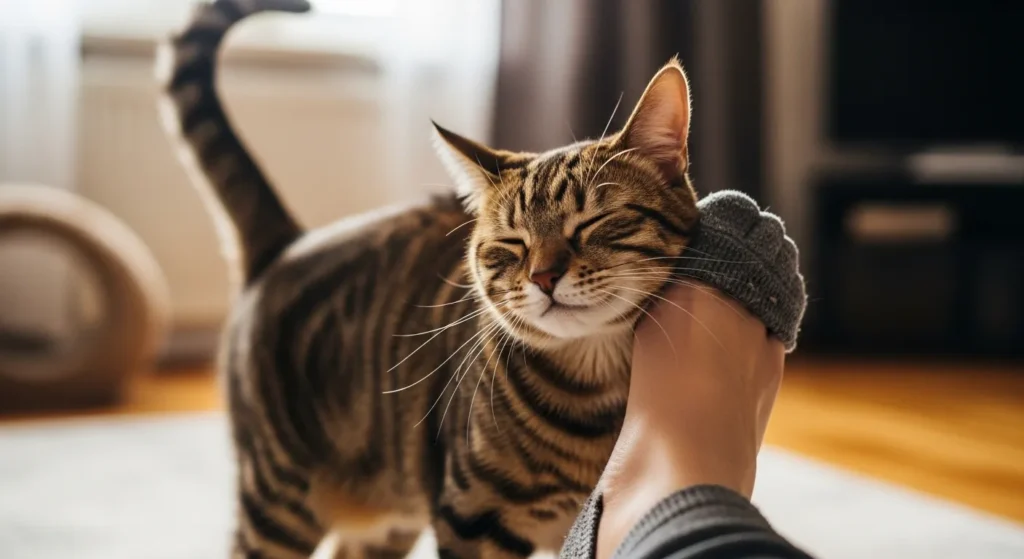
Picture this: You’ve just wiped down every surface in your living room, proud of the fresh, clean scent. Minutes later, your cat saunters in, tail high, and proceeds to rub her face, cheeks, and entire body along the couch, your legs, and even the freshly cleaned coffee table. Why is my cat rubbing on everything again? If this sounds familiar, you’re not alone. This quirky, endearing habit drives millions of cat parents to Google every month, and for good reason: cat rubbing behavior isn’t random. It’s a sophisticated mix of instinct, emotion, and communication.
In this comprehensive guide, we’ll decode why cats rub against things, from furniture to your ankles, and reveal what your feline friend is really saying. You’ll learn the science behind cat scent marking behavior, how cat pheromone communication works, and why your cat might be obsessed with rubbing after you clean. Plus, we’ll cover cat rubbing against me meaning, feline territorial behavior, and even the spiritual or emotional interpretations trending on TikTok and Reddit in 2025.
Key Takeaways:
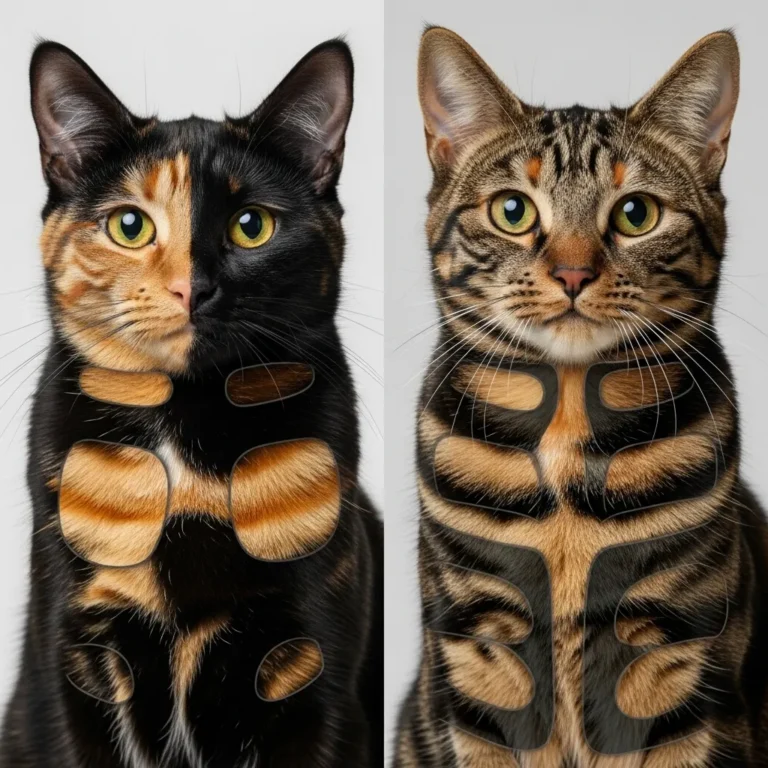
- Cats rub to deposit pheromones from glands in their face, flanks, and tail—claiming objects and people as “safe” and “theirs.”
- Rubbing is a sign of affection, trust, and social bonding—not dominance.
- Excessive rubbing can signal stress, allergies, or medical issues; context matters.
- Products like Feliway mimic calming pheromones and reduce unwanted marking.
- Understanding cat body language and affection strengthens your bond.
Ready to become fluent in feline? Let’s dive deep into cat behavior explained.
The Science Behind Cat Rubbing Behavior: More Than Meets the Eye
Cats don’t rub just because they’re itchy. They’re engaging in a hardwired ritual rooted in survival. When your cat presses her cheek against your shin or drags her body along the doorframe, she’s using specialized scent glands to leave chemical messages only other cats (and sensitive noses) can detect.
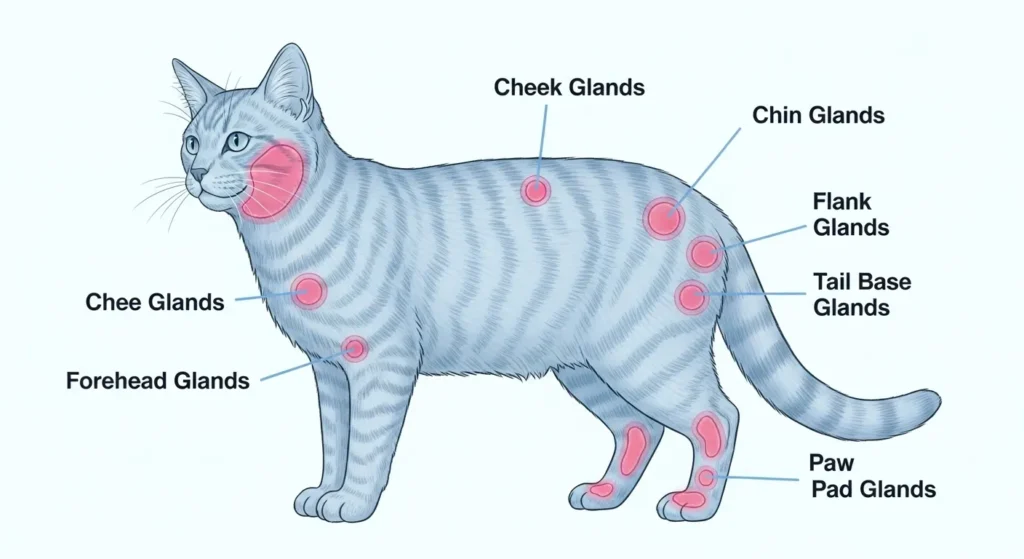
Where Are a Cat’s Scent Glands?
| Location | Gland Type | Primary Function |
|---|---|---|
| Cheeks & Chin | Facial pheromones (F3 faction) | Familiarity, comfort, ownership |
| Forehead | Temporal glands | Social greeting, bonding |
| Flanks & Base of Tail | Caudal glands | Territorial boundary marking |
| Paw Pads | Interdigital glands | Scratching + scent combo |
These glands secrete cat pheromones—odorless-to-humans compounds that convey identity, emotional state, and safety status. Think of it as your cat’s personal signature.
Vet Insight: Dr. Sarah Wooten, DVM, notes, “Rubbing is a cat’s way of saying, ‘This belongs to my family.’ It’s the feline equivalent of a group chat—everyone gets updated on who’s who.”
Why Do Cats Rub Against Things? The Top 5 Reasons
Let’s break down the most common motivations behind why cats rub on furniture, objects, and everything in sight.
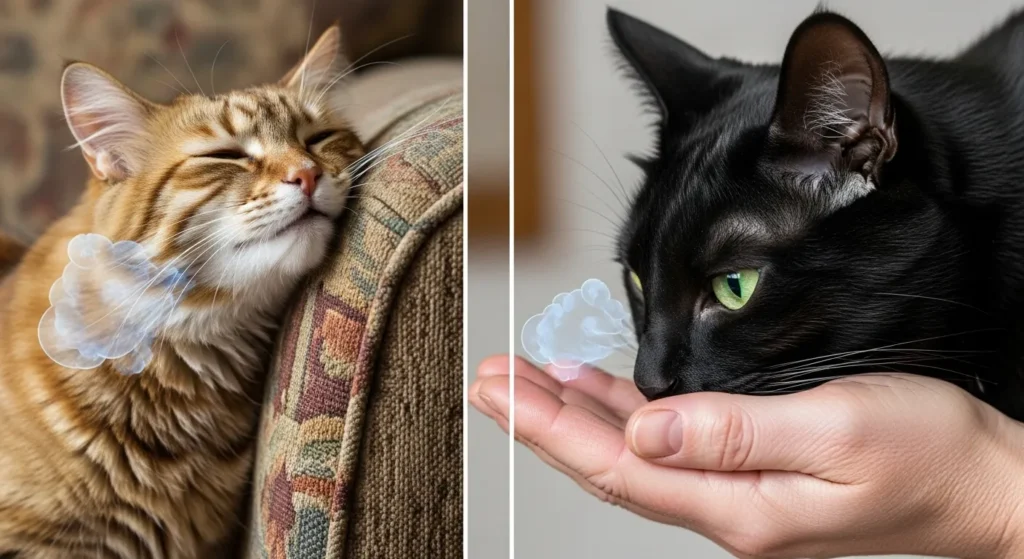
1. Cat Scent Marking Behavior: “This Is Mine”
Cats are territorial by nature. Rubbing deposits pheromones that mark territory without aggression. A rubbed object becomes part of the cat’s “colony scent profile”—a shared olfactory ID card.
- Why cats rub on furniture: Your couch isn’t just comfy; it’s a high-traffic billboard for scent.
- Why does my cat rub on everything after I clean? Cleaning removes their scent. Your cat is frantically “reclaiming” the space.
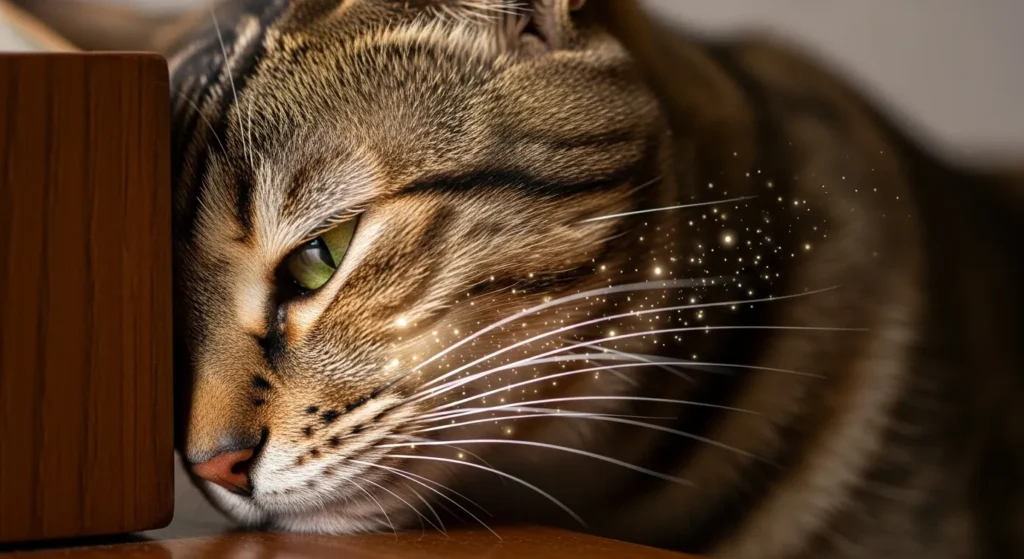
Pro Tip: Use enzyme cleaners (not ammonia-based) to fully neutralize odors. Otherwise, your cat will keep re-marking. Explore enzyme cleaner recommendations in our cat urine guide.
2. Cat Rubbing as Communication: Saying “Hello” and “I Trust You”
Rubbing isn’t just about objects—it’s social. When your cat rubs on you, she’s blending scents and reinforcing the human-feline bond.
- Cat rubbing against me meaning: “You’re family. I’m updating your scent profile.”
- Why cats rub on humans: You’re a walking security blanket. Your scent calms them.
Real-Life Example: Reddit user u/WhiskerWizard shared, “My cat only rubs on my boyfriend’s shoes after work. Turns out, she associates his scent with playtime!” (See similar bonding stories in Cat-Human Bonding Behavior)
3. Cat Pheromone Communication: Emotional Broadcasting
Pheromones aren’t just IDs—they carry mood. Happy cats release “friendly” pheromones (F3); stressed cats may over-mark.
| Pheromone Type | Released During | Effect on Other Cats |
|---|---|---|
| F3 (Facial) | Contentment, greeting | Calming, familiar |
| F4 (Flank) | Territory disputes | Warning, boundary |
| Worcestershire | Alarm pheromones | Flight response |
4. Feline Territorial Behavior in Multi-Cat Homes
In homes with multiple cats, rubbing creates a group scent. Cats rub on each other and shared objects to say, “We’re a team.” New cats? Expect a rubbing frenzy until scents sync.
5. Cat Body Language and Affection: The Love Language
Rubbing + tail-up + slow blink = peak affection. It’s one of the strongest cat affection signs.
TikTok Trend Alert (2025): Videos under #CatRubbingFaceMeaning often misinterpret rubbing as “spiritual cleansing.” In reality, it’s 99% pheromones, 1% magic.
Why Cats Rub Their Face on Everything: The Cheeky Truth
The face—especially cheeks and chin—contains the highest concentration of scent glands. Why cats rub their face on everything:
- Maximum pheromone deposit: Cheeks = prime real estate.
- Gathering intel: Cats rub to collect scents too, like a feline detective.
- Comfort seeking: Familiar scents reduce anxiety.
Fun Fact: Cats rub their faces on corners to create “scent posts”—olfactory landmarks in their territory.
Cat Rubbing on Humans: What Does It Really Mean?
When your cat weaves between your legs or headbutts your hand, it’s not just cute—it’s profound.
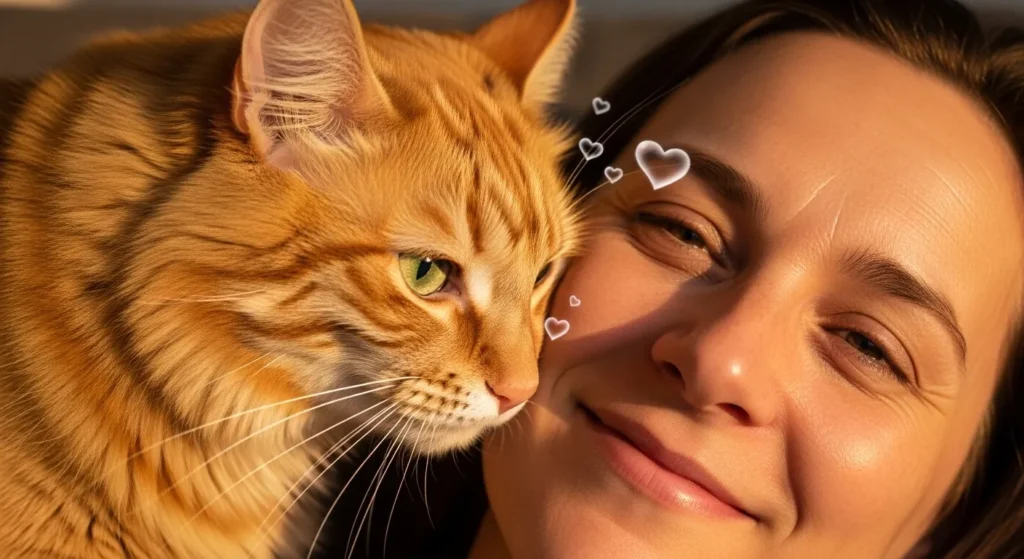
Cat Rubbing Against Me Meaning: Decoding the Message
| Behavior | Likely Meaning |
|---|---|
| Head bonk + purring | “I love you, human.” |
| Full-body rub + tail wrap | “You’re my favorite.” |
| Rubbing after absence | “Missed you—updating scent!” |
Spiritual/Emotional Interpretations (Trending on Reddit): Some believe cats rub to “absorb negative energy.” While scientifically unproven, the emotional bond is real—rubbing does lower human stress (and vice versa).
When Cat Rubbing Behavior Becomes Excessive
Not all rubbing is normal. Watch for:
- Sudden increase: Stress, new pets, or moving.
- Skin irritation: Allergies, fleas, or dermatitis.
- Rubbing + vocalizing: Pain or discomfort.
Vet Red Flags:
- Bald patches from over-rubbing
- Rubbing only one side of face (dental issues)
- Aggressive rubbing + hissing
Schedule a checkup—read Finding the Best Vet for Your Cat
Why My Cat Is Obsessed With Rubbing: 2025 Trends & Insights
Social media is buzzing. Here’s what’s trending:
| Platform | Trend | Insight |
|---|---|---|
| TikTok | #CatRubbingAfterCleaning | Cats hate scent erasure—expect re-marking. |
| r/CatAdvice | “My cat rubs on my phone—jealousy?” → Actually scent-mixing. | |
| X (Twitter) | #FeliwayHacks | Diffusers reduce stress-marking by 70% (per Ceva Animal Health). |
Feliway and Scent Marking: This synthetic pheromone plug-in mimics F3 facial pheromones. Ideal for:
- New homes
- Multi-cat tension
- Post-cleaning rub-fests
Explore calming solutions in Cat Stress Signs
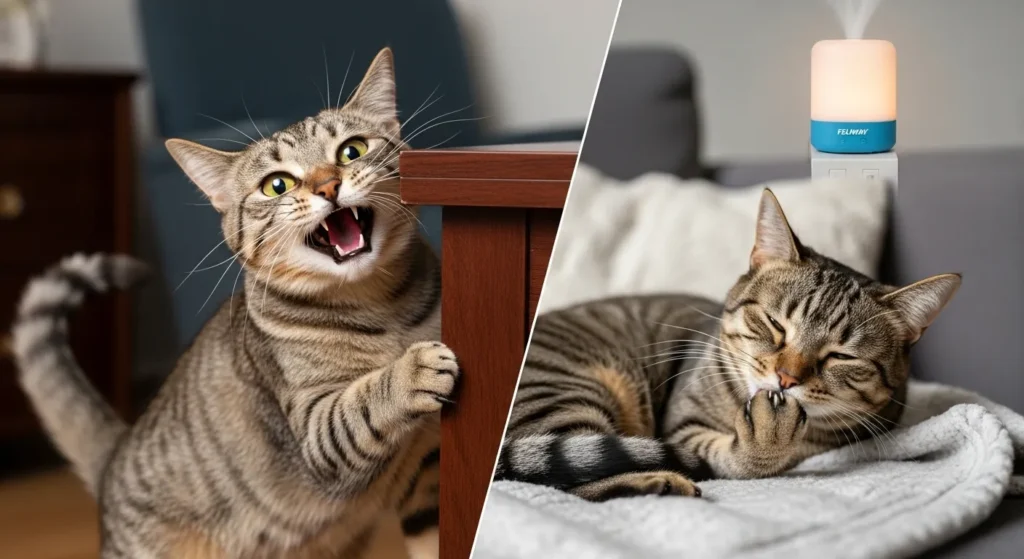
Cat Behavior Signs of Love: Rubbing in Context
Rubbing rarely happens alone. Combine with:
- Tail-up “question mark” posture
- Slow blinking
- Kneading
- Exposed belly (but don’t touch!)
These form the cat affection signs trifecta.
Discover more in Why Cats Show Bellies
How to Respond to Cat Rubbing (And What Not to Do)
Do:
- Reciprocate with slow blinks.
- Offer cheek scratches (most cats love this).
- Use a soft brush to “scent” yourself.
Don’t:
- Push them away (breaks trust).
- Use scented cleaners (triggers re-marking).
- Punish—rubbing is natural.
FAQ: Your Top Cat Rubbing Questions Answered
Why do cats rub against things?
Cats rub to deposit pheromones, mark territory, gather information, and bond socially. It’s instinctual communication.
What does it mean when a cat rubs against you?
It’s a sign of affection and trust. Your cat is blending scents and claiming you as family.
Why does my cat rub on everything after I clean?
Cleaning removes their scent. Your cat re-marks to restore familiarity and security.
Is cat rubbing a sign of dominance?
No. It’s about comfort and bonding, not hierarchy. Dominance myths are outdated.
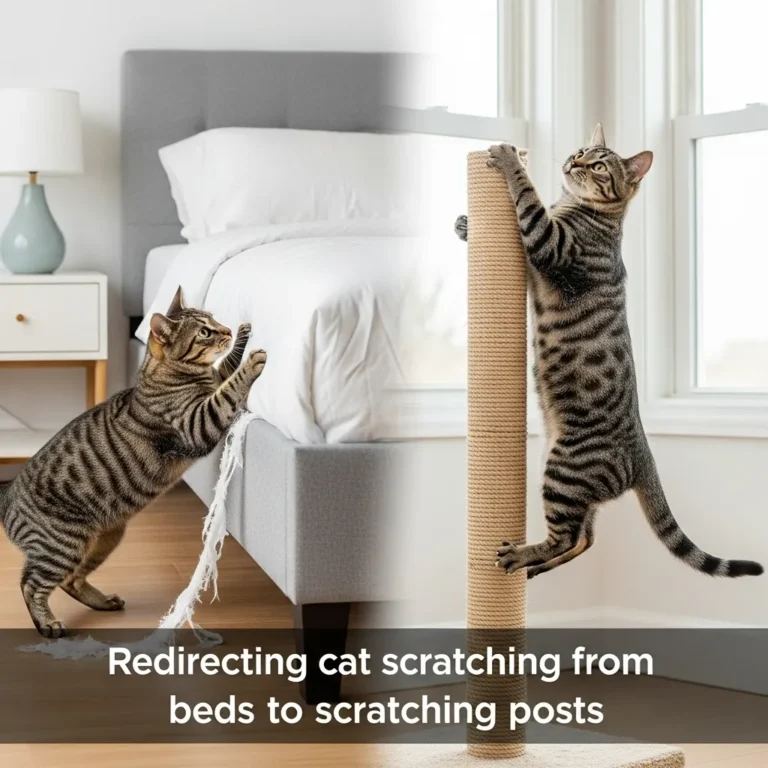
Should I stop my cat from rubbing on furniture?
Only if destructive. Provide alternatives like scratching posts with catnip. See Stop Cats Scratching Furniture
Can rubbing indicate health problems?
Yes. Excessive rubbing, especially with skin redness or hair loss, may signal allergies or pain. Consult a vet.
What is Feliway, and does it help with rubbing?
Feliway mimics calming pheromones. It reduces stress-related marking but won’t stop normal rubbing.
Understanding Feline Body Language: Beyond Rubbing
Rubbing is just one piece of the puzzle. Master the full language:
- Ears forward + rubbing = Happy greeting
- Ears flat + rubbing = Overstimulation warning
- Tail flicking + rubbing = Mixed emotions
Deep dive in Cat Tail Language Guide
Cat-Human Bonding Behavior: Building a Stronger Connection
Want more rubs? Earn them:
- Respect scent rituals — Let them rub first.
- Scent-swap — Sleep with a blanket, then place it in their bed.
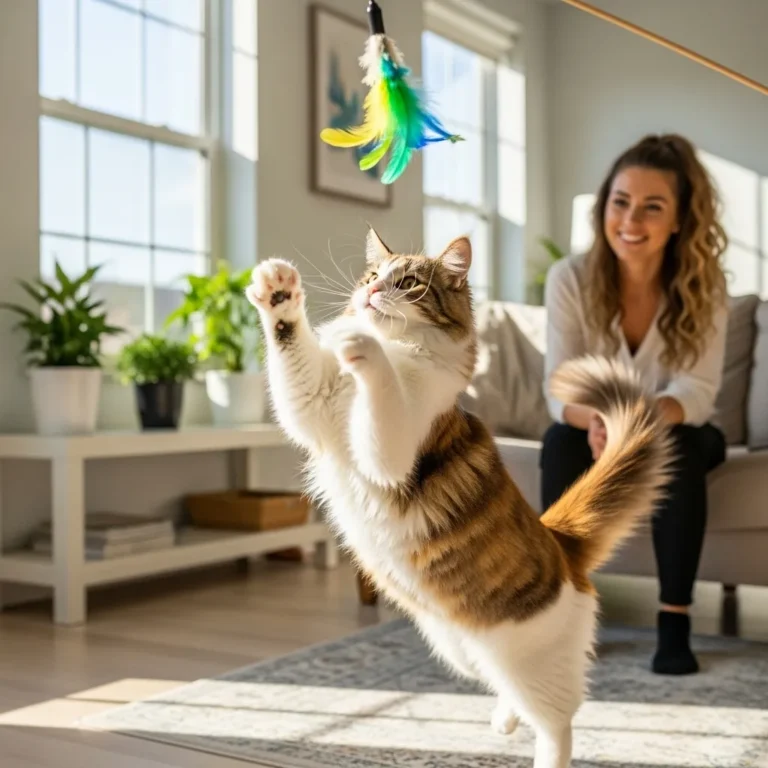
- Play daily — Active cats rub more (happy pheromones!).
Strengthen playtime with Teach Cat to Fetch
Conclusion: Your Cat’s Rubbing Is a Love Letter in Scent
So, why is my cat rubbing on everything? Because she’s writing her love, trust, and identity all over your world—one cheek at a time. This isn’t misbehavior; it’s cat communication through scent at its finest.
Next time your cat headbutts your ankle or reclaims the couch post-cleaning, smile. You’ve been officially adopted into her colony.
Explore more expert cat care and behavior guides on Cat Bloom Haven.
From understanding feline body language to territorial marking in cats, we’ve got your whiskered companion covered.