How Routine Builds Cat Confidence: The Unseen Framework for a Secure, Happy Feline
Key Takeaways:
- Predictability reduces feline anxiety and stress, creating a foundation for bold behavior.
- Consistent routines in feeding, play, and social interaction build trust and environmental mastery.
- A confident cat exhibits relaxed body language, playful exploration, and resilient coping skills.
- Structure is not rigidity; it’s a safety net that allows true personality to flourish.
We perceive our cats as creatures of whimsy spontaneous nappers, impulsive zoomie-havers, masters of the unpredictable pounce. This view, however, misses a profound truth hidden beneath their quirky exterior. Cats are not just creatures of habit; they are architects of it, and they thrive when we become their co-builders. The secret to transforming a skittish, hiding, or insecure cat into a confident, curious, and engaged companion isn’t found in a magic treat or a single training trick. It’s woven into the quiet, consistent tapestry of daily life. How routine builds cat confidence is the fundamental behavioral principle many owners overlook, yet it is the single most powerful tool for cultivating a secure and happy feline.
A cat without routine is like a sailor without a map in a sea of unpredictable stimuli. Every unexpected noise, schedule change, or moved piece of furniture is a potential threat. This constant, low-grade stress manifests as hiding, over-grooming, aggression, or lethargy the very opposite of confidence. Conversely, a cat who knows when to expect food, play, and quiet time possesses a cognitive map of their world. This predictability signals safety. From this foundation of safety springs the courage to explore new toys, accept guest visits with curiosity rather than fear, and express their full, delightful personality.
Understanding Feline Confidence: More Than Just Bravery
Before we build, we must understand the blueprint. Feline confidence isn’t about being the loudest or boldest animal in the room. It’s a state of secure relaxation and environmental mastery.
A Confident Cat:
- Body Language: Presents a loose, relaxed posture. Ears are forward and relaxed, whiskers are fanned and calm, the tail is held high with a gentle curve at the tip (the “question mark” tail of a happy, inquisitive cat).
- Behavior: Initiates gentle play, explores new objects after a cautious assessment, rests in open, vulnerable positions (belly partly exposed, stretched out), and uses vertical space (cat trees, shelves) proactively.
- Resilience: Recovers quickly from minor frights (e.g., a dropped pot) and displays curiosity toward controlled novelties.
An Insecure or Stressed Cat:
- Body Language: Crouched, tense posture, ears flattened or swiveling constantly, tail tucked or lashing, pupils dilated even in good light.
- Behavior: Excessive hiding, startling at minor sounds, over-dependence on or avoidance of an owner, over-grooming, or inappropriate elimination. Discover the subtle and not-so-subtle signs of cat stress to better understand your cat’s state of mind.
- Response: Becomes “stuck” in fear or aggression and avoids exploration.
The bridge from insecurity to confidence is built on predictability, which actively lowers cortisol (the stress hormone) and allows a cat to operate from their smarter, more adaptive “thinking brain” rather than their reactive “fear brain.”
The Pillars of a Confidence-Building Routine
Constructing a confidence-building routine isn’t about micromanaging every minute of your cat’s day. It’s about creating reliable pillars around their core natural drives: hunting, eating, grooming, and sleeping.
1. The Feeding Ritual: The Cornerstone of Trust
In the wild, a successful hunt is uncertain. In your home, you control the “prey.” How you deliver it is paramount.
- Consistency is Key: Feed at the same times each day, ideally in multiple small meals mimicking natural hunting cycles. This ends the anxiety of “when will food appear?”
- Location & Method: Use the same quiet area. Incorporate puzzle feeders or slow-feed bowls for mental stimulation, turning a passive act into an active, rewarding “hunt.” This provides a sense of accomplishment. For cats that need encouragement, our guide on how to get your cat to eat wet food offers practical, stress-free strategies.
- What This Builds: Food security directly translates to overall security. Your cat learns you are a predictable, benevolent provider.

2. The Hunt-Play-Eat-Sleep Cycle: Tapping Into Instinct
This sequence replicates the natural feline rhythm and is the engine of behavioral health.
- The Routine: Dedicate 10-15 minutes, twice daily, for interactive play (the “hunt”) with a wand toy. Mimic prey movements let them “catch” it periodically. Conclude the session with a small meal or high-value treat (the “eat”). This satisfied cat will naturally progress to grooming and then a deep, secure sleep.
- Why It Works: It channels predatory energy constructively, provides mental and physical exercise, and creates a clear, satisfying cause-and-effect chain. A cat that has “hunted” and “eaten” feels fulfilled and safe.
- What This Builds: Confidence in their own skills and a healthy outlet for energy, reducing anxiety-driven behaviors. Explore our collection of DIY cat toys for engaging, cost-effective play ideas that supercharge this cycle.
3. The Social Interaction Schedule: Predictable Bonding
Cats value quality, predictable interaction over constant, random attention.
- Scheduled Cuddle Time: If your cat is social, set aside predictable times for lap sitting or petting sessions, respecting their cues. For less tactile cats, try scheduled “companionable silence” in the same room.
- Training Sessions: Use the power of food motivation to teach simple cues like “come,” “sit,” or targeting. Keep sessions short (2-3 minutes) and positive. This builds communication and gives your cat agency—a huge confidence booster.
- What This Builds: Trust in the relationship. Your cat learns that interaction with you is positive, on their terms, and never a source of surprise or stress.
4. The Environmental Constant: A Safe Territory
Your home is your cat’s territory. Its predictability is their security.
- Litter Box Protocol: Scoop at least once daily, in a consistently accessible, low-traffic location. Any changes to litter type or box location should be gradual.
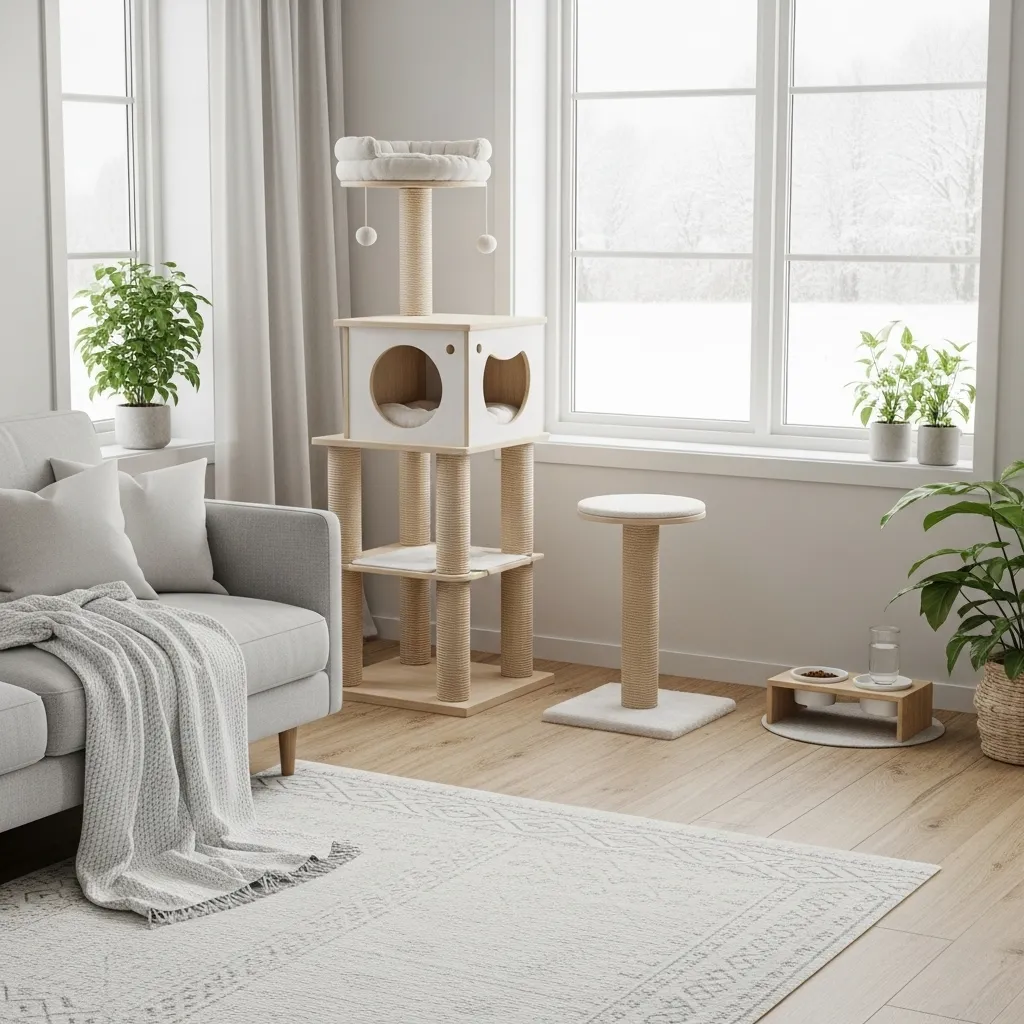
- Resource Stability: Keep food/water stations, scratching posts, and favorite beds in their designated places. Changes should be deliberate and managed.
- Controlled Novelty: Introduce new items (cat tree, carrier, bed) slowly. Leave them in place for days before encouraging use. This allows your cat to master new elements on their own terms. Learn how to create a calm and enriching cat home environment that balances stability with healthy stimulation.
Tailoring Routines for Specific Cats
The framework is universal, but the application is individual.
- For the Shy or Fearful Cat: Amplify predictability. Use soft, consistent talking. Avoid direct eye contact initially. Let routines be their anchor. The journey of a rescue cat glow-up often starts with exactly this structured, patient approach.
- For the New Kitten or Cat: The initial routine is everything. It’s their orientation to a new world. Be exceptionally consistent in the first few weeks to build a foundation of trust. Our cat adoption timeline guide helps set realistic expectations for this bonding period.
- For the Multi-Cat Household: This is where routine prevents conflict. Have separate, predictable feeding stations. Schedule individual play sessions for each cat. Ensure multiple, consistent resources (litter boxes, perches) to prevent competition stress. Managing training in multi-cat households requires careful planning around each individual’s routine.
- During Disruptions (Moving, Travel, Guests): Maintain core routine pillars (especially feeding and play) as immutable. Introduce carriers or new spaces gradually before the event. A familiar blanket or item with home scent is a portable piece of routine.
Signs Your Routine is Working: The Bloom of Confidence
Watch for these transformations, which are the true metrics of success:
- Increased Initiative: Your cat starts play sessions, greets you at feeding time, and explores new items sooner.
- Relaxed Presence: More sleeping in open areas, slower blinking in your direction, and a general decrease in startle responses.
- Adaptability: When a routine must change (a vet visit, a repair person), your cat recovers their equilibrium more quickly because their baseline state is secure.
- Personality Emergence: The quirky, funny, affectionate individual you knew was hiding inside begins to shine through consistently.

Troubleshooting: When Routines Stumble
Even the best plans need adjustment. If confidence seems to plateau or regress:
- Medical First: Sudden behavioral changes always warrant a vet check. Pain or illness can shatter confidence instantly.
- Audit Your Consistency: Have feeding or play times become erratic? Has a new piece of furniture disrupted a favorite lookout?
- Is the Environment Enriched? Routine without stimulation is boring. Ensure you’re providing novel toys, scratching surfaces, and vertical spaces within the predictable framework. Sometimes, understanding why cats ignore expensive toys can help you choose more engaging options.
- Re-evaluate the “Hunt”: Are play sessions truly engaging? Are you letting your cat “win”? The play must satisfy the instinct.
FAQ: How Routine Builds Cat Confidence
Q: My cat seems bored with the same routine. Don’t they need variety?
A: The framework is routine; the content can vary. Feed at the same time, but use different puzzle feeders. Play at the same hour, but rotate different wand toys. The security of “when” allows for novelty in “what.”
Q: How long does it take to see changes in my cat’s confidence?
A: For significant behavioral shifts, give it 4-8 weeks of iron-clad consistency. You may see small signs (less hiding, more approaching) within the first 1-2 weeks.
Q: Can a routine help with serious issues like aggression or inappropriate elimination?
A: Absolutely. While not a standalone cure for medical issues, routine is the essential first step in addressing stress-based behavioral problems. It removes environmental uncertainty, which is a common root cause. Always rule out medical issues first with your vet.
Q: I have an irregular work schedule. Can I still build a routine?
A: Yes. A “routine” for your cat is about your predictable pattern, not the clock. If you work nights, your “morning” play session happens when you get home. The key is sequencing (play, then eat, then quiet) and consistency relative to your presence.
Q: Will a strict routine make my cat less adaptable?
A: The opposite is true. A secure base, built by routine, creates a more resilient animal. Think of it like a child with a secure attachment they are more, not less, willing to explore the unknown because they know their safe home is waiting.
Conclusion: The Gift of Predictability
Building a routine for your cat is not an exercise in control; it is a profound act of empathy. It is you saying, in a language they deeply understand, “You are safe here. Your world is predictable. Your needs will be met.” From that solid ground, the true flower of your cat’s confidence can bloom not as a fragile, forced bravado, but as a steady, resilient sense of well-being.
They will reward you not with obedience, but with trust. Not with performative tricks, but with the quiet, glorious spectacle of a creature fully at ease in its own home: the slow blink from across the room, the contented purr as they knead their blanket, the high-tailed strut as they patrol a territory they know, without doubt, is theirs.
Ready to deepen your understanding of your feline friend? Explore our library of expert guides on cat behavior and training, from decoding cat tail language to mastering positive reinforcement techniques, all designed to help you build a stronger, more confident bond with your cat.
Explore more expert cat care and behavior guides on Cat Bloom Haven.