The Secret Synchrony: How Cats Master the Art of Living on Human Time
Have you ever wondered why your cat seems to know exactly when you’ll wake up, even before your alarm sounds? Or why they suddenly appear in the kitchen moments before your usual dinner time? This isn’t coincidence it’s a remarkable demonstration of feline intelligence and adaptability.
How cats adapt to human schedules is one of the most fascinating aspects of the human-feline bond, revealing creatures who are far more observant, flexible, and socially attuned than their independent reputations suggest. In this comprehensive guide, we’ll explore the science behind this synchronization, decode the behavioral mechanisms at play, and provide practical strategies to harmonize your lives together seamlessly.
Key Takeaways:
- Cats possess sophisticated internal clocks and observational skills that allow them to predict and align with human routines.
- This adaptation is driven by food security, social bonding, environmental enrichment, and instinctual survival mechanisms.
- Successful synchronization reduces feline stress, prevents behavioral issues, and deepens the human-animal bond.
- Strategic environmental design and consistent cue-based routines are key to helping cats thrive on human schedules.
The Feline Timekeeper: Understanding Your Cat’s Internal Clock
Cats are crepuscular by nature most active during dawn and dusk a trait inherited from their wild ancestors who hunted when prey was plentiful and light was optimal. This biological predisposition might seem at odds with our diurnal (day-active) lives, but domestic cats have shown extraordinary flexibility.
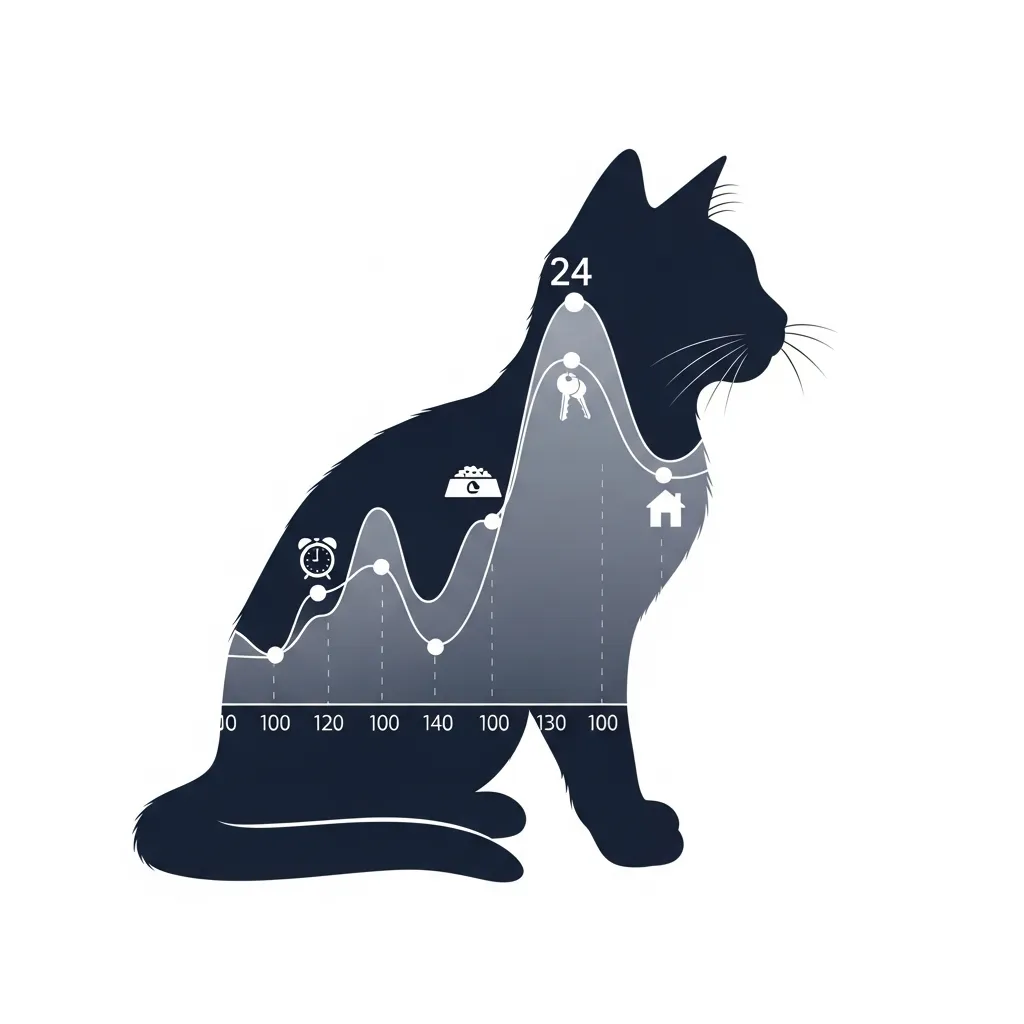
Their primary timekeeping mechanism is the suprachiasmatic nucleus (SCN), a tiny region in the hypothalamus that functions as a master circadian clock. This biological clock responds to external cues called zeitgebers (German for “time-givers”), with light being the most powerful. When you turn on lights at a consistent morning hour, or when sunlight patterns shift with seasonal changes, your cat’s SCN notes these patterns.
But cats don’t just rely on light. They are masters of secondary cue observation. The sound of your alarm clock, the specific footsteps of your morning routine, the scent of coffee brewing, the vibration of the garage door opening at 6 PM these become temporal landmarks in your cat’s day. Research suggests cats can distinguish time intervals of up to 24 hours with surprising accuracy when reinforced by consistent daily events.
The “Why” Behind the Synchronization: More Than Just Food
While the promise of breakfast is a powerful motivator, the drive for cats to adapt to human schedules runs deeper than mere hunger. Understanding these motivations helps us appreciate the complexity of their adaptation.
1. Security and Predictability
In the unpredictable wild, survival is uncertain. The domestic environment offers something precious: predictability. By learning your schedule, your cat creates a mental map of their safe world. They know when their primary companion (and protector) will be present, when resources (food, water, interaction) will be available, and when the environment might be quieter or more active. This predictability significantly reduces chronic low-grade stress, a common issue in pets that can lead to health and behavioral problems.
2. Social Bonding and Attachment
Cats form secure attachment bonds with their human caregivers, similar to infants with parents. Part of this bond involves seeking proximity and synchronizing activities. When your cat greets you at the door or naps nearby while you work, they’re engaging in social synchronization a sign of a healthy bond. Adapting to your schedule is their way of maximizing positive social contact, whether that’s through feeding, play, or quiet companionship. Discover more about how this bond forms in our guide on how cats choose their favorite person.
3. Environmental Enrichment and Stimulation
Your activities provide your cat’s primary source of entertainment and mental stimulation. The hum of a laptop, the movement of a vacuum cleaner, the rustle of grocery bags these are all events in their daily “soap opera.” Aligning their active periods with yours ensures they don’t miss the action. A cat left alone with no stimulation for long, irregular periods is more likely to develop boredom-based behaviors like excessive grooming, destructive scratching, or vocalization. Learn to create a stimulating environment with our tips for calm and enriching cat home environments.

The Mechanics of Adaptation: How Your Cat Learns Your Routine
Cats are brilliant associative learners. They don’t understand “7 AM” as a concept, but they build chains of events: Sound of alarm → Human moves → Bathroom light → Kitchen sounds → Food bowl fills. This process involves both classical and operant conditioning.
Classical Conditioning (The Pavlovian Response)
Your cat associates a neutral stimulus (your alarm) with a biologically significant event (feeding). After repetition, the neutral stimulus alone can trigger a feeding-time response (meowing, following you to the kitchen).
Operant Conditioning (Trial and Error)
If your cat meows at 5 AM and you get up to feed them (even just to shush them), they learn that meowing at 5 AM works. They are not being “manipulative” in a human sense; they are simply repeating a behavior that yielded a desired outcome.
The most successful adaptations happen when human schedules are consistent. Cats thrive on routine. If your wake-up time varies by three hours across the week, your cat will struggle to adapt and may resort to more persistent or anxious behaviors to elicit the desired response.
Blueprint for Harmony: Practical Steps to Sync Schedules Successfully
Creating a synchronized life with your cat requires intentionality, especially if your schedule is irregular or you’re dealing with problematic behaviors like nighttime wake-ups. Here’s a step-by-step framework.
Step 1: Audit Your Existing Routine
For one week, note key daily events: wake-up, meals, leaving/returning home, primary play sessions, your bedtime. Then note your cat’s behavior around these times. Look for patterns. Is their 5 AM meowing linked to the first person stirring? Does scratching begin precisely 30 minutes before dinner? This audit is your baseline.
Step 2: Establish Clear, Consistent Cues
Create unambiguous signals for different activities. For example:
- Morning: Use a specific phrase like “Good morning!” followed immediately by feeding. Never feed before this cue.
- Playtime: Use a distinct toy or sound.
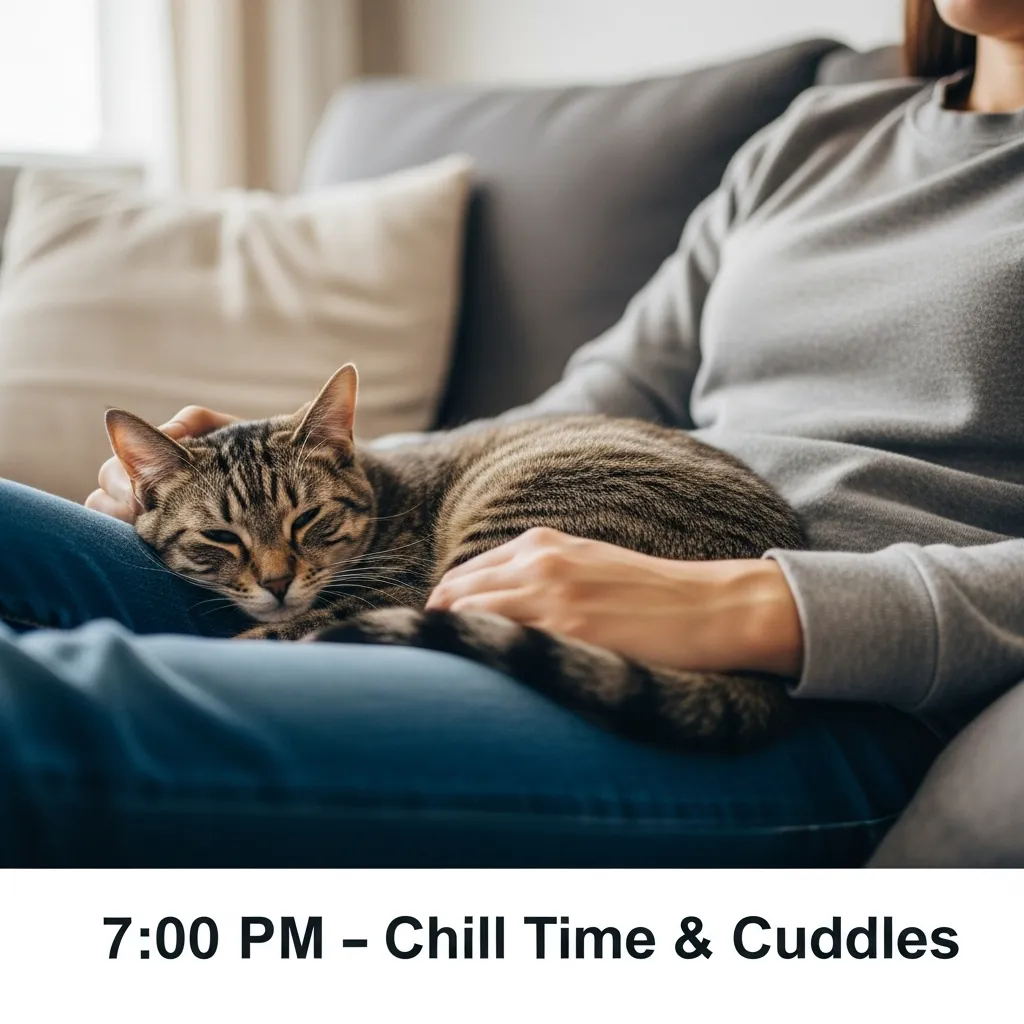
- Evening wind-down: A small, scheduled treat or a calming grooming session.
The key is consistency. Feed, play, and interact at roughly the same times daily. For help establishing feeding routines, see our cat feeding schedule guide.
Step 3: Address the “Witching Hour” and Nocturnal Activity
Cats are naturally more energetic at dawn and dusk. To prevent 5 AM serenades:
- Ignore attention-seeking behavior at unwanted times. Do not get up, speak to, or feed your cat if they wake you. This is crucial. Any reaction is a reward.
- Provide a robust pre-bedtime routine. Engage in 15-20 minutes of vigorous, interactive play (simulating the “hunt”) followed by a small meal. This mimics the natural hunt-eat-groom-sleep cycle and encourages them to sleep through the night.
- Consider an automatic feeder for morning meals. Set it to dispense breakfast 15 minutes after your typical wake-up time. This breaks the direct association between you waking and food appearing.
Step 4: Enrich Their Solitary Time
If you work outside the home, your absence shouldn’t be an empty void. Provide scheduled enrichment:
- Food puzzles for lunchtime engagement.
- Window perches with bird feeders outside.
- Rotating toys to prevent boredom.
- Calming background noise (like cat-specific music or quiet talk radio).
These strategies mimic environmental variety and give your cat constructive activities aligned with their alone time. For DIY enrichment ideas, explore our DIY cat toys and cat wall climbing setups guides.
Step 5: Manage Schedule Changes Gracefully
Life isn’t always regular. For shift work, weekends, or travel, help your cat adjust:
- For gradual changes: Shift feeding/play times by 15-30 minutes daily until you reach the new time.
- For sudden changes: Use puzzle feeders and extra enrichment to distract from the disrupted routine. A pet sitter can help maintain key rhythms.
- Maintain at least one or two “anchor” rituals (like a consistent bedtime snack or morning greeting) even when other things shift.
Special Considerations: Multi-Cat Households and Different Breeds
Synchronization becomes more complex with multiple cats, as each may adapt differently.
- Individual Personalities: A social, food-motivated Bengal may synch tightly to your schedule, while a shy rescue might only adapt to the quietest parts of your routine. Observe each cat’s patterns separately. For insights into breed-specific traits, read about the Bengal cat personality.
- Resource Management: Ensure multiple feeding stations and litter boxes to prevent resource-guarding stress around predictable schedule points.
- One-on-One Time: Schedule individual play or cuddle sessions with each cat to meet their unique social needs within the shared routine.
The Benefits: Why This Synchronization Matters
When cats successfully adapt to human schedules, the benefits are profound:
- Reduced Feline Anxiety: Predictability equals safety in the feline mind.
- Elimination of Problem Behaviors: Many issues like inappropriate scratching, excessive vocalization, and litter box avoidance are rooted in stress or unmet needs tied to unpredictable routines.
- Enhanced Bonding: Shared, predictable positive interactions build trust and security.
- Early Illness Detection: When you know your cat’s normal routine, you immediately notice deviations—like not greeting you at the door or altered eating times which can be early signs of health issues. Our guide on early warning signs of cat health issues explores this further.
Frequently Asked Questions (FAQs)
Q: My cat wakes me up at 4:30 AM every day. How do I stop this?
A: This is a classic case of learned behavior. Ensure their pre-bedtime includes vigorous play and a meal. At 4:30 AM, provide zero reaction no talking, pushing away, or feeding. Consistency is non-negotiable. Consider an automatic feeder set for your desired wake-up time to break the direct you-to-food link.
Q: I work irregular shifts. Can my cat ever adapt?
A: Yes, but focus on rituals over rigid clock times. Your “morning” ritual (play, then feed) should happen when you wake up, regardless of whether it’s 6 AM or 2 PM. Cats can learn to associate specific cues (like you putting on uniform) with upcoming alone time.
Q: Is it bad if my cat sleeps all day while I’m at work?
A: Not necessarily. Cats sleep 12-16 hours daily. The key is ensuring their waking hours are enriched. Provide puzzle feeders, window access, and safe exploring spaces. Engage them in active play when you are home to fulfill their stimulation needs.
Q: How long does it take for a cat to learn a new routine?
A: For simple associations (like a specific sound meaning food), it can take 1-2 weeks of consistent repetition. For completely overhauling a deeply ingrained habit (like nighttime wake-ups), expect 3-8 weeks of utterly consistent retraining.
Q: Does my cat know what day of the week it is (e.g., weekend)?
A: While they don’t understand “Saturday,” they are excellent at recognizing pattern variations. If your weekend routine involves sleeping later, different sounds (no alarm), and more prolonged lounging, they learn that this two-day pattern differs from the five-day pattern. They adapt their expectations accordingly.
Conclusion: A Dance of Mutual Understanding
The way cats adapt to human schedules is a testament to their intelligence, flexibility, and deep capacity for social connection. They are not just passive inhabitants of our homes but active participants who strive to understand and integrate into our world. By observing their methods, respecting their needs, and providing consistent, loving guidance, we don’t just train our cats we engage in a subtle, ongoing dance of mutual adaptation. The result is a harmonious home where both species feel understood, secure, and perfectly in sync.
Ready to deepen your understanding of your feline friend? Explore our library of expert guides on cat behavior, training, and care at Cat Bloom Haven. From decoding cat tail language to mastering introductions for kittens, we’re here to help you build a more fulfilling life with your cat.