The Secret Genius of Cats: Why Cats Are More Intelligent Than We Think

For centuries, cats have been wrapped in an enigma of their own making. Aloof, independent, and often inscrutable, they’ve been labeled as charmingly simple creatures of habit. But what if we’ve been misreading them entirely? The growing consensus among animal behaviorists, neuroscientists, and feline ethologists points to a startling truth: cats are far more intelligent than we think.
Their cognitive abilities, communication complexity, and problem-solving skills are not signs of a lesser intellect, but a profoundly different one one evolved for a solitary, predatory lifestyle that values efficiency, observation, and social nuance over overt obedience. This isn’t about measuring their intelligence against a dog’s yardstick; it’s about understanding the unique architecture of the feline mind. If you’ve ever wondered why your cat seems to solve puzzles you didn’t even set, or communicates with a subtlety that feels almost human, you are about to discover the fascinating science behind why cats are more intelligent than we think.
Key Takeaways: Decoding Feline Intelligence
- Cats possess sophisticated problem-solving skills, often preferring to observe and calculate before acting, a sign of strategic intelligence.
- Their memory is exceptional, particularly spatial and episodic memory, allowing them to map their environment and recall past events and people.
- Feline communication is a complex, multi-modal language of vocalizations, body postures, tail signals, and scent marking that we are only beginning to fully decode.
- Social intelligence in cats is subtle but profound, involving complex hierarchies, bonded relationships, and the ability to read human emotional cues.
- Their intelligence is specialized for survival, making them adept hunters, navigators, and situational analysts, which can sometimes mask their cognitive depth in a domestic setting.
The Feline Brain: A Neurobiological Powerhouse
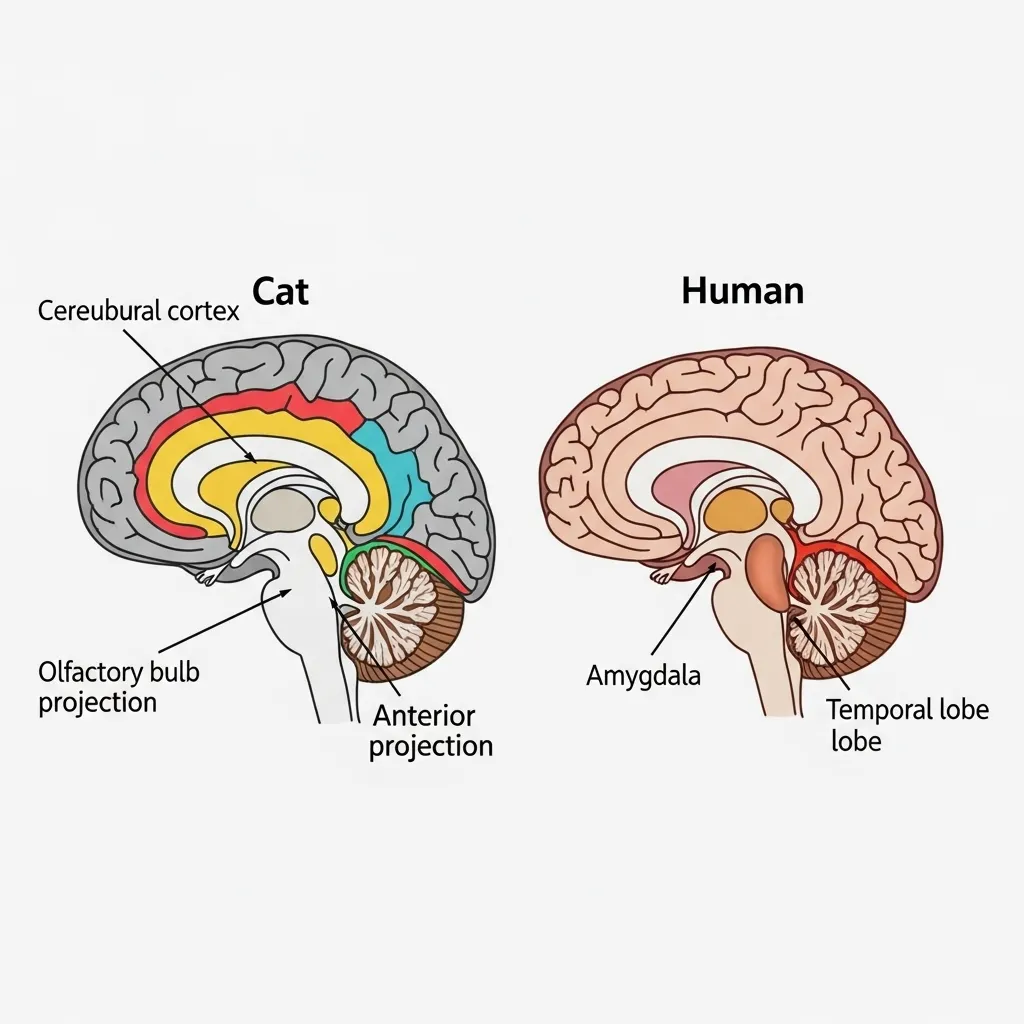
While a cat’s brain is about the size of a golf ball, its structure and processing power are remarkably efficient. The feline cerebral cortex the seat of complex thought, planning, and problem-solving contains around 300 million neurons. For context, a dog’s brain has about 160 million neurons in its cortex. This neurological density suggests a high capacity for information processing. Crucially, the regions associated with sensory integration, memory, and emotion (like the hippocampus and amygdala) are highly developed.
This neurobiology fuels their extraordinary senses, which are not just tools for hunting but data-gathering systems for a constantly updating internal model of their world. A cat’s intelligence is, therefore, deeply embodied and situational. They think with their entire being whiskers mapping air currents, ears rotating like radar dishes, and a nose processing a chemical world invisible to us. To understand why cats are more intelligent than we think, we must first appreciate that their cognition is inextricably linked to this hyper-aware physical presence. For more on how their senses guide behavior, explore our guide on what your cat is thinking.
The Proof is in the Behavior: Signs of Feline Genius
1. Advanced Problem-Solving and Tool Use
Cats are natural physicists and engineers. Opening cabinet doors, figuring out lever-style faucets, or dismantling puzzle feeders to get to treats are not acts of mischief but demonstrations of causal reasoning. They understand that action A (pawing the lever) leads to outcome B (water flows). Researchers have documented cats using tools, such as using a paw to drag a toy or food within reach. This shows an understanding of object permanence and spatial relationships that rivals that of young children.
Their approach is often one of “observational learning.” Unlike dogs, who may try-and-fail repeatedly, a cat will frequently sit and watch a mechanism a door, a puzzle box before executing a solution with startling efficiency on the first try. This calculated patience is a hallmark of higher intelligence.
2. Exceptional Memory: They Never Forget
A cat’s memory is a testament to their cognitive depth. They exhibit both spatial memory (creating detailed mental maps of their territory, even years later) and episodic-like memory (recalling specific past events).
- Spatial Intelligence: Have you ever moved furniture only to find your cat walks the exact same path, stepping over where the couch used to be? That’s their precise spatial map in action. This is also why they excel at navigating complex environments, a skill explored in our article on cat escape behavior.
- Social Memory: Cats remember people and other animals for years, associating them with positive or negative experiences. A cat that hides when certain guests arrive is likely recalling a past event, not just being shy. This long-term recall is a clear indicator of complex cognitive processing.
3. The Complex Language of Cats
To label the meow as a simple demand is to misunderstand a rich linguistic system. Cats have developed a tailored vocal language primarily for humans. Studies show they use different types of meows, chirps, and trills to communicate specific needs, with their owners learning to distinguish a “feed me” meow from a “let me out” meow.
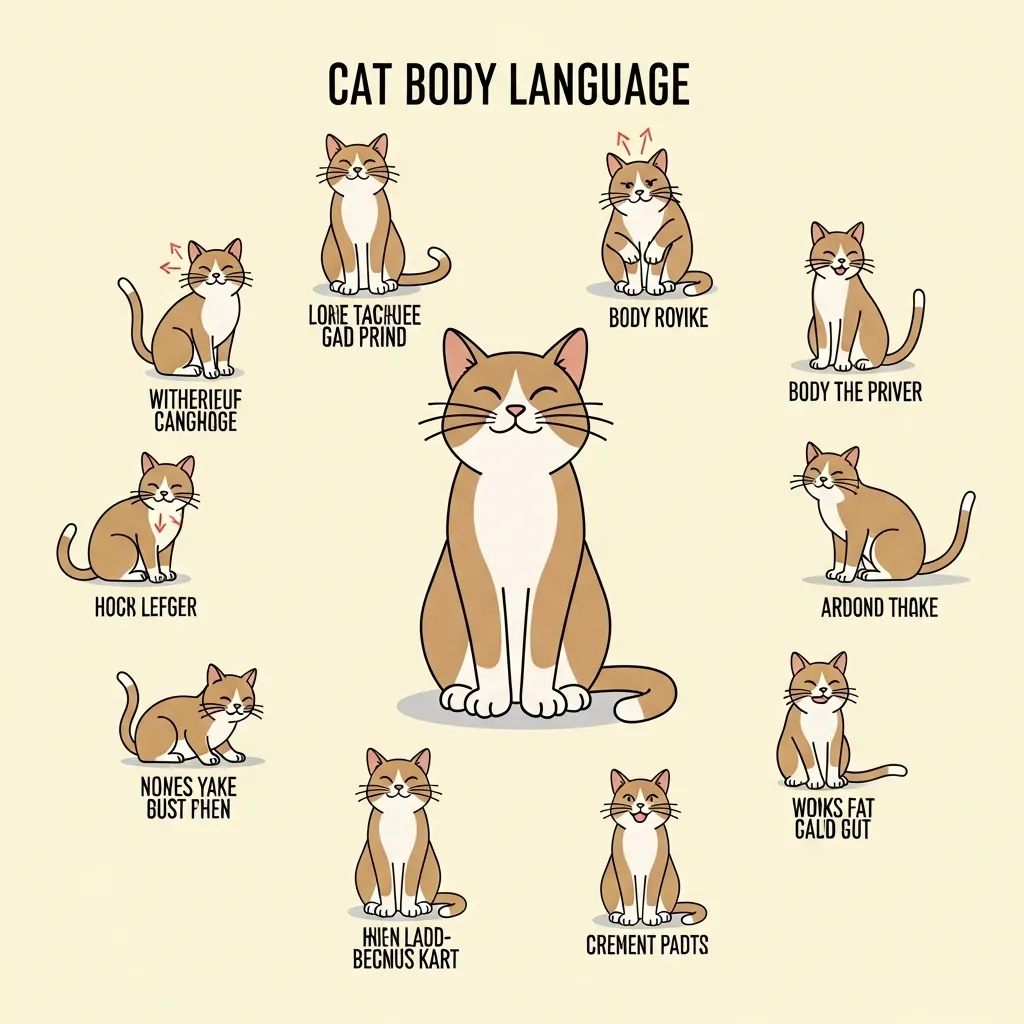
More sophisticated is their body language. The slow blink is a documented sign of trust and affection, often called a “cat kiss.” A twitching tail tip can signal focused hunting or irritation, while a fully puffed tail indicates fear. The position of their whiskers, the dilation of their pupils, and the orientation of their ears all contribute to a nuanced emotional and intentional state they are broadcasting. Learning this language is key to building a strong bond with your cat.
4. Profound Social and Emotional Intelligence
The stereotype of the solitary cat is misleading. While they are not pack animals, they form complex social structures and facultative relationships. In multi-cat homes or feral colonies, they establish fluid hierarchies based on respect and resources, not just brute force.
Most impressively, cats demonstrate a keen understanding of human social cues. They can follow a human’s pointing gesture to find food a task that requires understanding another being’s intention. They also read human emotion; studies and anecdotal evidence strongly suggest cats can distinguish between their owner’s happy, angry, or sad tones and may adjust their behavior accordingly. A cat that curls up with you when you’re upset is not just seeking warmth; it’s exhibiting empathetic-like behavior, a sign of high social awareness.
5. Object Permanence and Theory of Mind
Object permanence the understanding that things exist even when out of sight is a key developmental milestone in intelligence. Cats have it in spades. When a toy rolls under the sofa, they know it’s still there and will attempt to retrieve it.
More debated but compelling is evidence for a rudimentary “theory of mind” the ability to attribute mental states (knowledge, desires) to others. When a cat hides its poop or a caught mouse, some behaviorists argue it understands that you don’t want to see it, suggesting an awareness of your perspective. Their strategic behavior in multi-pet households, like waiting for the dog to leave before approaching a food bowl, also hints at this complex cognitive ability.
Nurturing Your Cat’s Native Intelligence
Understanding why cats are more intelligent than we think comes with a responsibility: to provide an environment that stimulates their minds. A bored cat is an unhappy cat, and mental stagnation can lead to behavioral issues.
- Puzzle Feeders & Food Games: Turn mealtime into a cognitive workout. This taps directly into their problem-solving instincts.
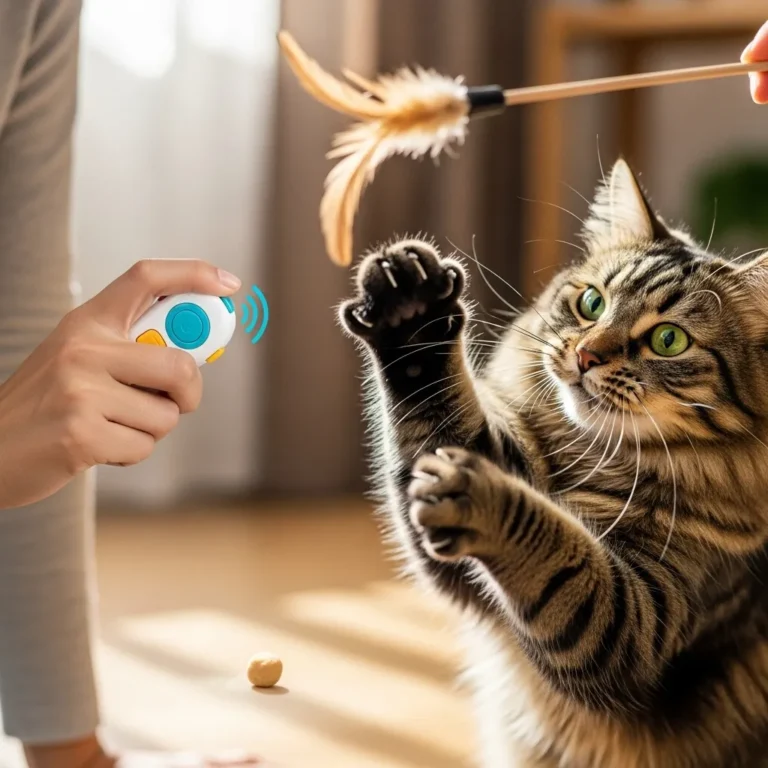
- Clicker Training: Yes, you can train a cat! Using positive reinforcement, you can teach tricks, which strengthens your bond and provides mental stimulation. Discover how in our guide on how to train your cat without punishment.
- Environmental Enrichment: Create vertical space with cat trees and shelves. Offer window perches for “cat TV.” Rotate toys to keep things novel. Simple DIY projects can make a huge difference, as shown in our ideas for DIY cat enrichment that looks expensive.
- Interactive Play: Mimic hunting sequences with wand toys stalking, chasing, pouncing, and capturing. This satisfies their deepest cognitive and physical programming.
Frequently Asked Questions (FAQ)
Q: Are cats smarter than dogs?
A: It’s not a matter of “smarter,” but different. Dogs are bred for cooperation and following human cues, making their intelligence more obvious. Cats are specialized for independent hunting and survival, exhibiting intelligence through observation, patience, and spatial problem-solving. Their brains are neurologically denser, suggesting high information-processing capability.
Q: How can I tell if my cat is intelligent?
A: Signs include: quickly learning how to open doors or cabinets, solving puzzle toys, having a wide range of distinct vocalizations for different needs, displaying a long memory for people or places, and exhibiting strategic behavior (e.g., distracting another pet to get their food).
Q: Do cats understand their names?
A: Yes, studies show that most cats can distinguish their name from other similar-sounding words. They learn to associate the sound with attention, food, or other events. However, their choice to respond is a separate matter of feline will! Learn more about the process in how long it takes a cat to learn its name.
Q: Why do cats sometimes seem to “ignore” us?
A: This is often a misinterpretation. Cats are highly observant. They may acknowledge you with a slight ear twitch or tail flick rather than a full-body response. Their “ignore” is often them processing the situation and deciding no action is required a sign of confident, calculated intelligence, not rudeness.
Q: Can a cat’s intelligence be measured with IQ tests?
A: There is no standardized “IQ” test for cats due to the unique nature of their intelligence. However, researchers use specific cognitive tests to measure memory, problem-solving, object permanence, and social cognition to understand their individual capabilities.
Conclusion: Seeing the Genius in the Quiet
The quiet cat gazing out the window is not merely daydreaming. It is processing a vast array of sensory data, maintaining a detailed map of its territory, and making calculated decisions. The cat that brings you a toy at 3 AM is not confused about the time; it is engaging in a complex, ritualized social behavior rooted in its predatory instincts. To understand why cats are more intelligent than we think is to shift our perspective from seeing them as simple pets to recognizing them as complex, cognitive beings sharing our homes.
Their intelligence is quiet, subtle, and magnificently adapted. It’s in the precise geometry of a jump, the nuanced shift of a tail, and the patient, observant eyes that miss nothing. By appreciating and nurturing this native genius, we do more than care for a pet we engage in a unique interspecies dialogue with one of nature’s most elegantly designed minds.
Ready to dive deeper into the fascinating world of feline behavior and cognition? Explore our library of expert guides on cat care, training, and understanding at Cat Bloom Haven.