The Invisible World of Cats: 7 Extraordinary Things Cats Notice That Humans Don’t
Meta Description: Discover the hidden sensory world of felines. From UV light detection to ultrasonic hearing, learn what cats notice that escapes human perception and how it shapes their mysterious behavior.
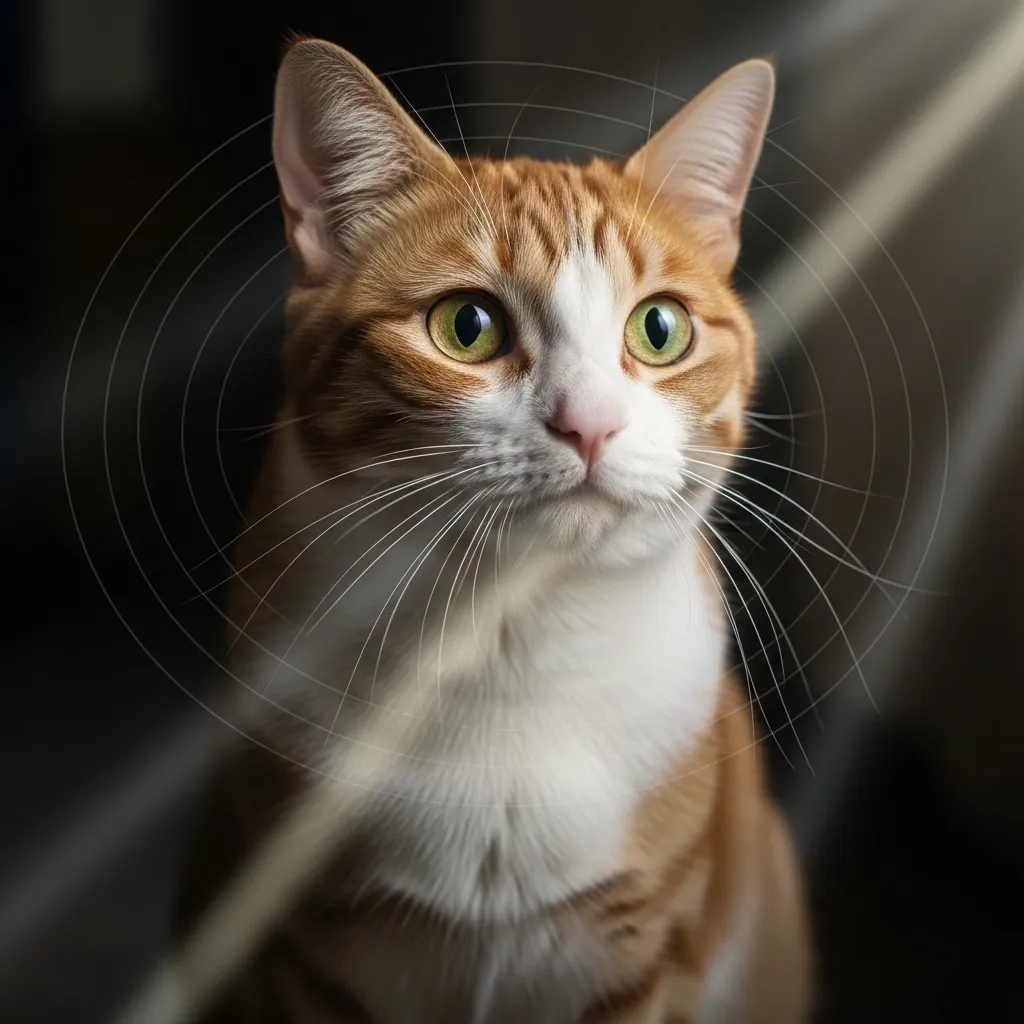
Have you ever watched your cat stare intently at an empty corner, ears twitching at silence, or sniff a seemingly clean spot with profound interest? That quizzical head tilt isn’t random your cat is perceiving a rich, complex world that exists just beyond the limits of your human senses. While we navigate life with our relatively limited perception, cats experience reality through a sophisticated sensory suite evolutionarily tuned for survival.
They don’t just share our space; they inhabit a parallel dimension of subtle vibrations, invisible light, and chemical stories written in the air. Understanding what things cats notice that humans don’t isn’t just fascinating it’s the key to deciphering their often-misunderstood behavior and deepening your bond with your enigmatic companion. This exploration will pull back the curtain on the feline sensory experience, transforming your view of your cat from a quirky pet into the highly-tuned perceiver they truly are.
Key Takeaways: The Feline Sensory Advantage
- Cats see a spectrum of ultraviolet (UV) light, revealing patterns on flowers, urine trails, and certain fabrics invisible to humans.
- Their hearing detects ultrasonic frequencies up to 64 kHz, allowing them to hear the high-pitched communication of rodents and insects.
- A cat’s sense of smell is 14 times more powerful than ours, powered by 200 million odor sensors and a vomeronasal organ for analyzing pheromones.
- Whiskers (vibrissae) are precise motion and spatial sensors, detecting minute air currents and measuring openings with millimeter accuracy.
- They perceive subtle electromagnetic and atmospheric changes, potentially sensing shifts in weather, earthquakes, or human emotional states through static electricity and pressure.
- Cats notice micro-expressions and physiological changes in humans, such as dilated pupils, increased heart rate, and subtle stress signals.
- Their time perception differs, allowing them to see faster movements, making flickering lights or fast insects more visible and stimulating.
1. The Ultraviolet Gaze: Seeing the Invisible Light Spectrum
Human vision operates within the “visible light” spectrum (roughly 380-700 nanometers). Beyond violet lies ultraviolet (UV) light, which our lens naturally filters out. Research, including studies from City University London, confirms that many mammals including cats, dogs, and reindeer possess lenses that allow some UV light to reach the retina. This means cats live in a world subtly glowing with patterns we cannot see.
What Cats See That We Miss:
- Urine Trails & Territorial Markings: The urine of many animals, including other cats, fluoresces under UV light. A simple stroll in the garden is, for your cat, a vivid, illuminated map of recent animal activity.
- Patterns on Flowers and Plants: Many flowers have “nectar guides” UV patterns that direct pollinators. To a cat, your bouquet or backyard garden may display striking, bright targets and pathways.
- Certain Fabrics and Cleaners: Some whitening agents, dyes, and detergents fluoresce under UV. That “clean” blanket or sofa may be covered in shimmering patterns visible only to your feline, explaining sudden pouncing or sniffing.
Behavioral Clue: When your cat stares “at nothing” on a wall or fabric, they may be fascinated by a UV pattern from a cleaning product or a subtle mineral stain. Explore our guide on why is my cat staring at nothing for more insights into this puzzling behavior.

2. The Ultrasonic Eavesdropper: Hearing the Unheard
A human’s hearing range caps at about 20 kilohertz (kHz). The feline ear, with its iconic rotational mobility, can detect frequencies up to 64 kHz well into the ultrasonic range. This evolutionary trait is a perfect predator’s tool, as many rodents and insects communicate using high-frequency calls between 20-50 kHz.
The Sounds of Their Secret World:
- Rodent Chatter: Mice and voles constantly emit ultrasonic squeaks. Your cat, sitting calmly in the kitchen, may be listening to a full-blown, inaudible rodent conversation inside the walls.
- Insect Activity: The wing beats of moths and certain beetles produce high-frequency sounds. That focused hunt on a buzzing fly involves tracking it by sound as much as sight.
- Electronic Whines: Many electronics, like older CRT televisions, chargers, or dimmer switches, emit high-frequency coil whine. Your cat’s aversion to a particular spot might be due to this annoying, inaudible drone.
This exceptional hearing also makes them sensitive to seemingly “quiet” environments that are, for them, filled with noise. It’s a key reason why cats prefer quiet households and can become stressed in acoustically chaotic ones. Learn how to create a calm and enriching cat home environment to support their sensitive senses.
3. The Chemical Novelist: Reading Scents as Stories
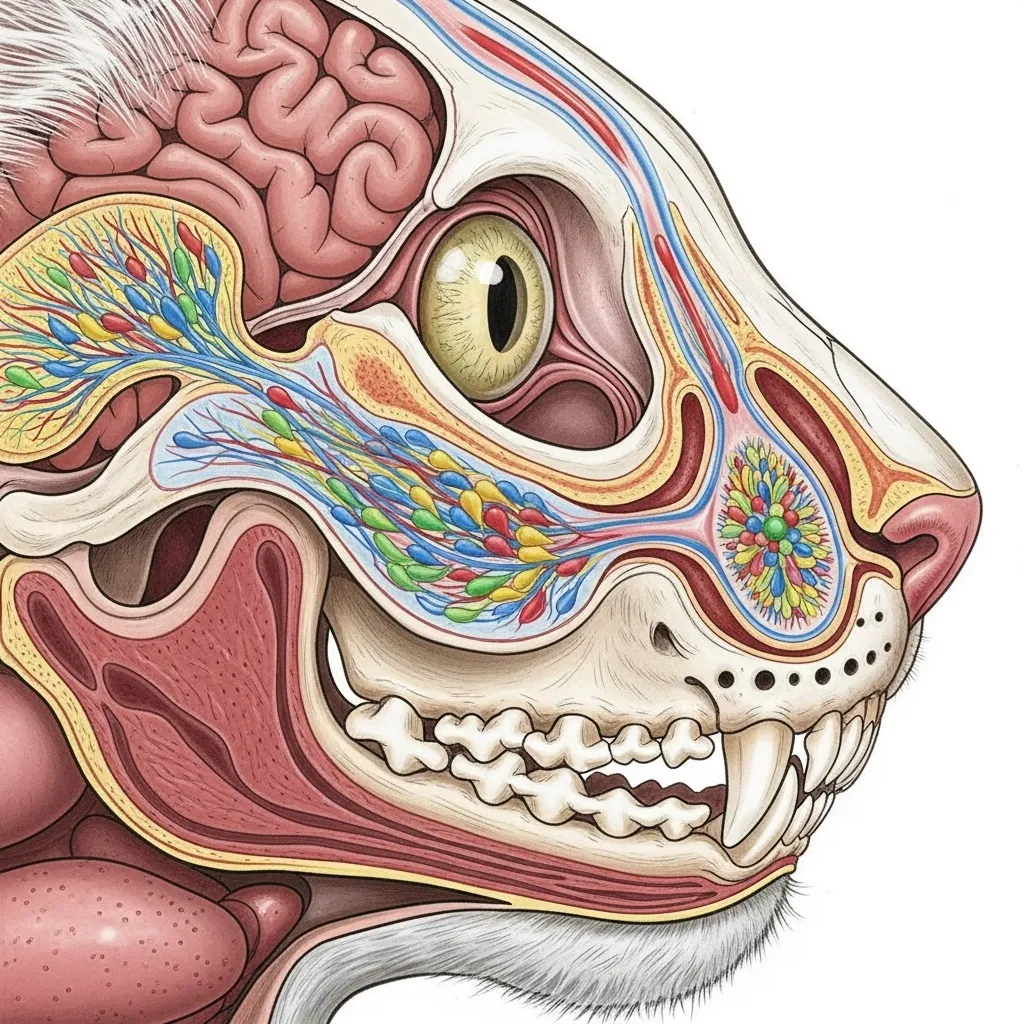
Where humans have roughly 5-6 million olfactory receptors, cats boast a staggering 200 million. Their sense of smell isn’t just stronger; it’s a primary mode of cognition. They don’t just detect odors; they construct detailed narratives from them. This is amplified by the vomeronasal organ (Jacobson’s organ) in the roof of their mouth, used for analyzing pheromones chemical messages from other cats.
The Stories Invisible to Our Nose:
- Emotional States: Cats can detect subtle shifts in human pheromones related to stress, fear, or happiness. Your cat may curl up with you when you’re sad not just out of empathy, but because they literally smell your emotional change.
- Health Changes: Emerging research suggests animals can detect metabolic changes associated with illnesses like cancer or diabetes through volatile organic compounds (VOCs) in our breath and sweat. Your cat’s intense sniffing of your face or body might be a health check.
- The Full History of a Space: When you enter a room, you see furniture. Your cat smells who was there, how long ago, their emotional state, their health, and if they are a potential friend or foe. It’s like reading a detailed, multi-layered history book.
This is why scent is so critical to feline well-being. Introducing a new item or person without considering scent can be deeply disruptive. Discover effective strategies for introducing kittens to resident cats using scent-first techniques.
4. The Whisper of Whiskers: Feeling the Air Itself
Whiskers (vibrissae) are not just thick hairs. They are deeply rooted in follicles packed with proprioceptors, making them exquisite tactile sensors. They detect the slightest vibration and change in air current, functioning as a precise environmental monitoring system.
What Their Whiskers Detect:
- Air Current Mapping: Tiny drafts from a window crack, the flow of air from a vent, or the disturbance caused by a moving object several feet away are all mapped by their whiskers. This helps them navigate flawlessly in pitch darkness.
- Spatial Measurement: The span of a cat’s whiskers roughly equals the width of their body. They use them to gauge whether an opening is passable without needing to see, detecting millimeter-level differences.
- Prey Proximity in Darkness: When a mouse is within striking distance in the dark, its movements create minute air disturbances that the whiskers on a cat’s legs and face pick up, triggering the final, precise pounce.
Never trim a cat’s whiskers. It’s akin to blindfolding them and removing their sense of spatial awareness, leading to disorientation and stress. For more on subtle signs of feline well-being, read about the subtle signs your cat feels secure at home.
5. The Barometric and Electrostatic Observer: Sensing Impending Change
Anecdotal evidence and some scientific inquiry suggest cats are sensitive to changes in atmospheric pressure, low-frequency vibrations, and even static electricity fields phenomena linked to weather shifts and seismic activity.
Possible Invisible Triggers:
- Approaching Storms: A drop in barometric pressure can cause joint discomfort or ear pressure changes. Your cat’s restless behavior before a storm might be a physical reaction we don’t experience as acutely.
- Geological Vibrations: The ability to feel minor, preliminary P-waves from earthquakes seconds before the larger S-waves arrive could explain reported “pre-earthquake” anxiety in animals.
- Static Electricity Fields: Dry weather creates static buildup. A cat’s fur is highly prone to this, and they may sense the impending discomfort of a shock before it happens, avoiding certain carpets or contacts.
This sensitivity to environmental energy makes them living barometers, reacting to shifts in the unseen physical forces around them. If your cat seems unusually clingy or anxious, consider environmental factors outlined in our cat stress signs guide.
6. The Physiological Lie Detector: Noticing Human Micro-Signals
Cats are masterful observers of minutiae. They spend hours watching us and become adept at reading the tiniest physical cues that even other humans miss.
The Human Cues They Catch:
- Pupil Dilation: Linked to interest, fear, or arousal, subtle pupil changes are easily spotted by a cat watching your face closely.
- Micro-muscle Tension: The slight tightening of your shoulders when stressed, the change in your breathing pattern when anxious, or the relaxed posture when content are all clear signals to your observant cat.
- Routine Deviations: Cats are creatures of habit and are exquisitely tuned to the normal rhythm of your day. The slight hesitation in your step, the sound of your keys being set down differently, or the timing of your evening routine are all noticed and analyzed.
This is how they often seem to “know” when you’re not feeling well or are upset. They’re reading the physical manuscript of your body. This deep observation is part of how cats choose their favorite person.

7. The High-Speed Vision: Perceiving a Faster World
Feline vision is optimized for detecting motion, especially in low light. Their visual refresh rate (flicker fusion frequency) is higher than ours. This means they require more frames per second to perceive a fluid image. A television screen that looks continuous to us may appear as a flickering, strobe-like series of images to a cat.
Implications of Their Faster Perception:
- Seeing “Faster” Movements: They can track incredibly rapid motion, like a buzzing insect’s wingbeats, with clarity that would be a blur to us.
- Different Screen Perception: Their interest or disinterest in TV may depend on the frame rate. High-definition, high-frame-rate content is more likely to capture their attention realistically.
- Enhanced Hunting Advantage: This allows them to time their pounces on fast-moving prey with extraordinary precision.
This different perception of time and motion is a core part of their predatory identity. It’s also why laser pointers, while initially engaging, can lead to frustration as they can never “catch” the light, lacking a tangible conclusion to the hunt. For healthier play, explore our list of engaging DIY cat toys that provide satisfying physical capture.
Practical Insights: Living With a Sensory Superpower
Understanding these seven hidden perceptions should fundamentally change how you interact with your cat.
- Respect the “Invisible”: When they stare or react to “nothing,” trust that they are perceiving something. Don’t dismiss it; observe it.
- Prioritize a Calm Environment: Their heightened senses mean loud noises, strong artificial scents (cleaners, plugins), and visual chaos are exponentially more stressful for them than for you.
- Use Scent for Introductions: When bringing in new items, pets, or people, use scent swapping techniques (rubbing with cloths) to make the unfamiliar familiar on their terms.
- Provide “Micro-Prey” Enrichment: Engage their ultrasonic hearing and high-speed vision with toys that mimic the sounds and erratic movements of real prey, like feather wands or toys with quiet squeakers.
- Observe the Observer: Pay attention to what your cat pays attention to. Their fascinations are windows into their richer perceptual world.
By acknowledging the vast sensory landscape that cats notice and humans don’t, we stop seeing their behavior as mysterious and start seeing it as logical, intelligent, and deeply rooted in a reality we are only just beginning to comprehend. It fosters patience, deeper empathy, and allows us to create homes that honor not just their physical, but their perceptual needs.
Frequently Asked Questions (FAQs)
Q: Can cats really see things that are “invisible” to us?
A: Yes, in a literal sense. Their ability to perceive ultraviolet light means they see patterns and fluorescences on surfaces, plants, and other animals that are completely invisible to the human eye. This is a scientifically documented trait, not just folklore.
Q: Why does my cat suddenly stare at an empty wall or ceiling?
A: It’s highly unlikely they are seeing “ghosts.” More probably, they are tracking the ultrasonic sounds of insects in the walls, detecting subtle UV patterns from stains or cleaners, or feeling minute drafts/air currents shifting in the room. Their intense focus is a sign of their superior senses at work.
Q: How can I tell if my cat is using its vomeronasal organ?
A: You’ll see the Flehmen response: your cat lifts its head, wrinkles its nose, opens its mouth slightly, and may appear to be “sneering.” This draws scent particles into the vomeronasal organ on the roof of their mouth for deep analysis, often after smelling another cat’s urine or a strong, interesting scent.
Q: Do cats know when I’m sick or sad?
A: While we can’t attribute complex human emotions like “empathy” with certainty, cats are exceptional at detecting physiological changes. They can smell hormonal shifts (like stress cortisol), sense changes in your body heat and breathing, and observe your altered behavior and micro-expressions. Their comforting response is likely a reaction to these detectable changes.
Q: Is it true cats can predict earthquakes or storms?
A: There is no conclusive proof of “prediction,” but ample anecdotal evidence and some scientific theory suggest they can detect the precursor signals such as minute changes in atmospheric pressure, ground vibrations (P-waves), or static electrical fields that occur just before these events become perceptible to humans.
The world through a cat’s eyes, ears, and nose is profoundly richer, more textured, and more informative than our own. Their reality is a tapestry woven with threads of ultraviolet light, ultrasonic sound, intricate chemical narratives, and subtle physical vibrations. When we begin to appreciate the depth of things cats notice that humans don’t, we stop being mere owners and become students of a different way of being. We learn to provide not just food and shelter, but an environment that respects their magnificent sensory capacity. By honoring their perception, we unlock a deeper, more harmonious connection with these extraordinary creatures who share our homes but inhabit a vastly different slice of reality.
Explore more expert insights into feline behavior, care, and the unique bond we share with cats in our comprehensive library of guides at Cat Bloom Haven.