How Long Does It Take for a Cat to Learn Its Name? The Ultimate Guide to Feline Name Recognition

Have you ever called your cat’s name only to be met with a blank stare or a flick of the tail? You’re not alone. Many cat owners wonder, How long does it take for a cat to learn its name? Whether you’ve just welcomed a new kitten or are trying to connect with an older feline friend, understanding cat name recognition can feel like decoding a mystery.
The good news? Cats can learn their names, and this article is your definitive guide to making it happen. Packed with science-backed insights, practical cat training tips, and real-life examples, we’ll cover everything you need to know to teach your cat its name, spot signs your cat knows its name, and strengthen your bond through positive reinforcement for cats. Let’s dive into the fascinating world of feline cognition and unlock the secrets to how cats learn their names!
Why Cats Learning Their Names Matters
Cats aren’t just aloof creatures lounging on your couch—they’re intelligent animals capable of remarkable feats. Teaching your cat its name isn’t just a party trick; it’s a gateway to better communication, stronger bonds, and even improved behavior. Knowing their name helps cats respond to commands, come when called, or feel secure in their environment. Plus, it’s a fun way to tap into cat intelligence research and explore how to bond with your cat.
In this guide, we’ll break down the science of cat learning behavior, share step-by-step cat training tips, and address common challenges. Whether you’re curious about how fast cats learn their names or want to know do cats respond to their owners’ voices, we’ve got you covered with actionable advice and expert insights.
Understanding Feline Cognition and Name Recognition

The Science of Cat Intelligence
Cats have long been underestimated when it comes to intelligence. Recent cat intelligence research shows they’re far more perceptive than we give them credit for. A 2019 study published in Scientific Reports by Japanese researchers found that cats can distinguish their names from other words, even in multi-cat households. This ability stems from their keen auditory processing and associative memory, key components of feline cognition.
Unlike dogs, who are often trained for tasks, cats rely on their instincts and environment to learn. Their brains are wired to associate sounds (like their name) with outcomes, such as treats or attention. This is why positive reinforcement for cats is so effective—it taps into their natural cat learning behavior.
How Cats Compare to Dogs
While dogs are often hailed as the gold standard for name recognition, cats aren’t far behind. Dogs may respond more consistently due to their pack-oriented nature, but cats can achieve similar results with the right approach. The key difference? Cats are more selective. They’re less likely to respond if they don’t see a reason to—like a tasty treat or a favorite toy. Understanding this distinction helps tailor your approach to how to train your cat to respond.
The Role of Memory in Name Recognition
Cats have excellent short-term and associative memory, which plays a big role in cat name recognition. They can remember sounds associated with positive experiences, like their name followed by a treat. However, their attention spans are shorter than dogs’, so training sessions need to be brief and engaging. This memory capacity also explains why consistency is crucial when teaching your cat its name.
How Long Does It Take for a Cat to Learn Its Name?
So, how long does it take for a cat to learn its name? The answer depends on several factors:
- Age: Kittens (8–16 weeks) learn faster due to their developing brains, often picking up their name in 1–4 weeks with consistent training. Adult cats may take 2–8 weeks, while senior cats might need longer due to slower cognitive processing.
- Personality: Curious, social cats learn quicker than shy or independent ones.
- Training Consistency: Daily, short sessions (5–10 minutes) yield faster results than sporadic efforts.
- Environment: A quiet, distraction-free space helps cats focus on learning their name.
- Positive Reinforcement: Using treats, praise, or play as rewards speeds up the process.
On average, most cats begin to show signs that they know their name within 2–6 weeks of consistent training. Some fast learners may respond in as little as 1–2 weeks, while others, especially rescues or less social cats, may take up to 2–3 months.
Factors That Speed Up or Slow Down Learning
| Factor | Impact on Learning Time |
|---|---|
| Kitten vs. Adult | Kittens learn faster (1–4 weeks); adults may take 2–8 weeks. |
| Training Frequency | Daily sessions speed up learning; irregular sessions slow it down. |
| Name Choice | Short, distinct names (e.g., “Luna”) are learned faster than long or similar-sounding ones. |
| Distractions | Quiet environments accelerate learning; noisy ones delay it. |
| Reward Quality | High-value treats or toys motivate faster responses. |
Real-Life Example: Sarah, a cat owner from Seattle, adopted a 1-year-old tabby named Milo. Using daily 5-minute sessions with treats and a consistent tone, Milo began responding to his name in just 3 weeks. However, her older cat, Whiskers, took nearly 2 months due to his cautious nature and slight hearing loss.
Step-by-Step Guide: How to Teach a Cat Its Name
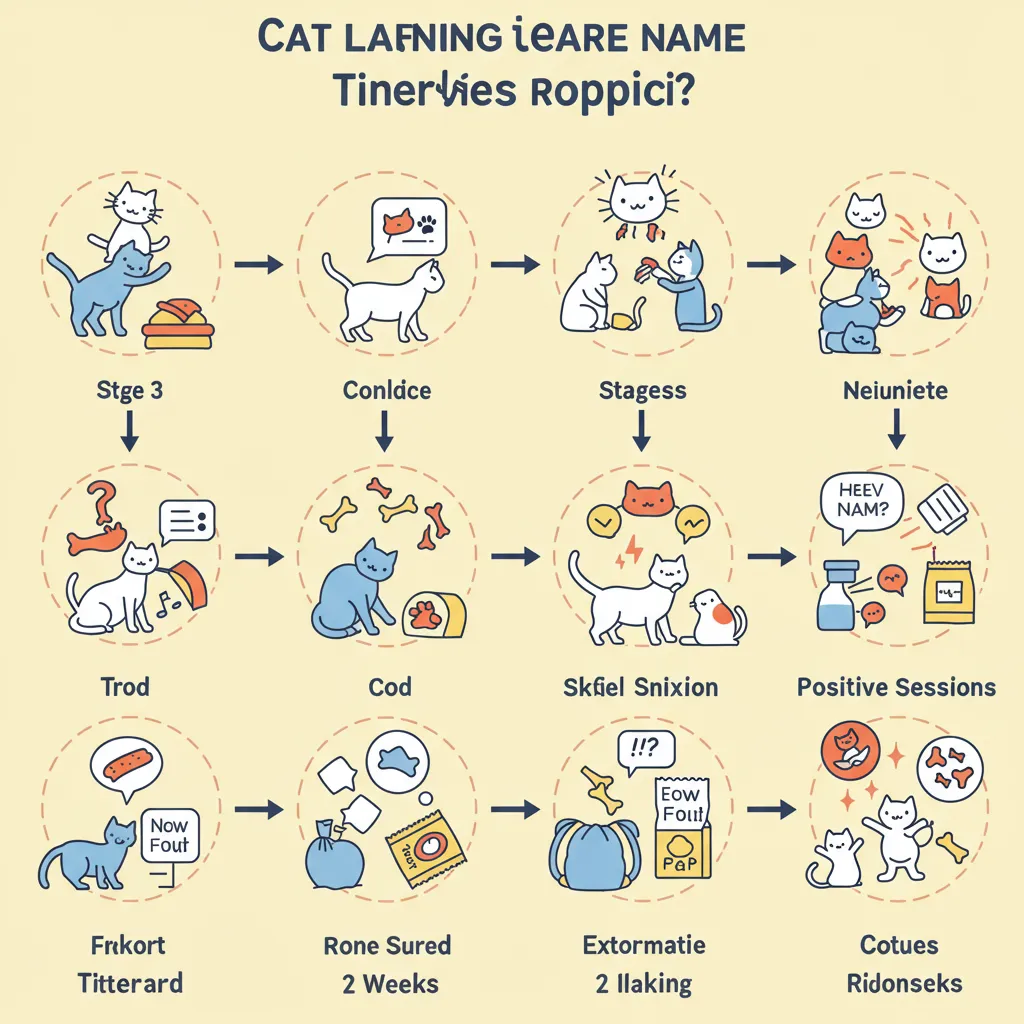
Ready to start training? Here’s a detailed, actionable guide to how to train your cat to recognize and respond to its name. Follow these steps for success:
Step 1: Choose a Distinctive Name
Pick a short, unique name with clear syllables, like “Max,” “Luna,” or “Toby.” Avoid names that sound like common words or other pets’ names to prevent confusion. For example, “Kit” might sound like “sit,” which could confuse your cat.
- Pro Tip: Names with sharp consonants (e.g., “K” or “T”) grab a cat’s attention better than soft sounds.
Step 2: Set Up a Distraction-Free Environment
Find a quiet space with minimal distractions—no loud TVs, other pets, or sudden noises. A calm setting helps your cat focus on your voice and associate it with their name.
Step 3: Use Positive Reinforcement
Cats respond best to rewards. Use high-value treats (like freeze-dried chicken), praise, or playtime to make learning fun. Here’s how:
- Say your cat’s name in a clear, upbeat tone (e.g., “Luna!”).
- When your cat looks at you or approaches, immediately reward them with a treat or praise.
- Repeat 5–10 times per session, keeping it short to maintain their interest.
Step 4: Be Consistent
Use the same tone and inflection every time you say their name. Consistency helps your cat associate the sound with the reward. Avoid using nicknames during training to keep things clear.
Step 5: Gradually Increase Difficulty
Once your cat responds reliably in a quiet setting, practice in slightly busier environments or at a distance. For example, call their name from across the room and reward them for coming to you.
Step 6: Incorporate Play and Bonding
Mix name training with playtime to make it engaging. For instance, call their name before tossing a favorite toy. This reinforces cat communication and intelligence while strengthening your bond.
Step 7: Avoid Common Mistakes
- Don’t Overuse Treats: Too many treats can lead to weight gain or reduced motivation. Use praise or play as alternatives.
- Don’t Punish: Never scold your cat for not responding—it can create negative associations with their name.
- Don’t Rush: Be patient. Forcing longer sessions can overwhelm your cat and slow progress.

Real-Life Example: James, a cat owner in Chicago, used a laser pointer to train his cat, Bella. He’d say “Bella!” before moving the laser, rewarding her with play when she responded. Within 4 weeks, Bella consistently turned her head or came running when called.
Signs Your Cat Knows Its Name
How can you tell if your cat has learned its name? Look for these signs that your cat knows its name:
- Head Turn or Ear Flick: Your cat turns its head or twitches its ears when you say its name, even from a distance.
- Eye Contact: They look at you directly after hearing their name, showing recognition.
- Approaching You: Your cat walks toward you or meows when called, especially if they expect a reward.
- Selective Response: They respond to their name but ignore similar-sounding words, indicating they’ve learned the specific sound.
- Body Language: Relaxed tail flicks, purring, or a raised head when you call their name suggest they associate it with positive experiences.
Pro Tip: Test their recognition by saying their name alongside other words in a neutral tone. If they only react to their name, they’ve likely learned it!

Common Challenges in Teaching a Cat Its Name
Teaching your cat its name isn’t always smooth sailing. Here are common hurdles and how to overcome them:
Challenge 1: Lack of Interest
Some cats are less motivated by treats or attention. Try experimenting with different rewards, like a favorite toy or a brushing session, to find what excites them.
Challenge 2: Distractions
If your cat is easily distracted, start in a quieter room and gradually introduce mild distractions as they improve. Keep sessions short to hold their focus.
Challenge 3: Inconsistent Response
Cats are notorious for responding only when they feel like it. If your cat ignores their name, ensure you’re using positive reinforcement for cats consistently and avoid calling their name for negative reasons (e.g., vet visits).
Challenge 4: Misconceptions About Cat Trainability
Many believe cats are “untrainable,” but cat training psychology proves otherwise. Cats are independent but capable of learning through association. Patience and persistence are key.
External Resource: For more on cat behavior and memory, check out The Humane Society’s guide to cat behavior for expert tips on understanding your feline friend.
The Role of Cat Communication and Intelligence
Do Cats Respond to Their Owners’ Voices?
Cat intelligence research suggests cats can distinguish their owner’s voice from strangers’. A 2023 study in Animal Cognition found that cats show stronger responses to familiar voices, especially when paired with their name. This means that how cats recognize human voices plays a big role in name recognition. Using a warm, consistent tone strengthens their connection to you and their name.
How Cats Use Communication
Cats communicate through body language, vocalizations, and behavior. When they learn their name, they’re essentially linking a sound (their name) to a meaningful interaction. This is why cat communication and intelligence are so closely tied to training success. A cat that associates its name with love, treats, or play is more likely to respond consistently.

Internal Linking Suggestion: Want to dive deeper into feline smarts? Check out our related post on Teaching Your Cat Tricks for more ways to tap into your cat’s intelligence.
Advanced Tips for Cat Name Training
Ready to take your training to the next level? Here are advanced cat training tips to boost cat name recognition:
- Use Clicker Training: Pair a clicker sound with treats to mark the moment your cat responds to its name. This sharpens their focus and speeds up learning.
- Vary Rewards: Alternate between treats, petting, and play to keep your cat engaged and prevent boredom.
- Train in Context: Practice calling their name during daily routines, like feeding or playtime, to reinforce real-world application.
- Teach Name Variations: Once they’ve mastered their name, introduce nicknames or variations to expand their recognition.
- Monitor Progress: Keep a training log to track sessions and responses, helping you identify patterns or plateaus.
Table: Training Tools for Cat Name Recognition
| Tool | Benefit | Example |
|---|---|---|
| High-Value Treats | Motivates quick responses | Freeze-dried salmon |
| Clicker | Marks’ correct behavior precisely | Basic pet clicker |
| Favorite Toy | Engages playful cats | Feather wand or laser pointer |
| Quiet Space | Reduces distractions for better focus | A calm bedroom or living room |

FAQs About Cat Name Recognition
How long does it take for a cat to learn its name?
Most cats learn their name in 2–6 weeks with consistent training. Kittens may take 1–4 weeks, while adult or senior cats might need 2–8 weeks or more, depending on personality and training frequency.
Can cats recognize their names?
Yes! Studies, like one from Scientific Reports (2019), show cats can distinguish their names from other words, especially when associated with rewards or familiar voices.
How do cats learn their names?
Cats learn their names through associative learning, linking the sound of their name to positive outcomes like treats, praise, or play. Consistency and positive reinforcement for cats are key.
How do I teach my cat its name?
Choose a short, distinct name, use a consistent tone, and reward your cat with treats or play when they respond. Practice in short, daily sessions in a quiet environment.
How can I tell if my cat knows its name?
Look for signs your cat knows its name, like head turns, ear twitches, eye contact, or approaching you when called. A selective response to their name over other words is a strong indicator.
Do cats always respond to their names?
Not always—cats are selective and may ignore their name if they’re distracted, uninterested, or don’t associate it with a reward. Consistent training helps improve response rates.
What are some common challenges in teaching a cat its name?
Challenges include a lack of interest, distractions, inconsistent training, or misconceptions about cat training psychology. Use high-value rewards and short sessions to overcome these.
How fast do cats learn their names?
Some cats, especially kittens, can learn their name in 1–2 weeks with daily training. Most take 2–6 weeks, but shy or older cats may need up to 2–3 months.
Conclusion: Unlock Your Cat’s Potential
Teaching your cat its name is more than a fun exercise it’s a way to deepen your bond, tap into cat communication and intelligence, and unlock their hidden potential. By understanding how cats learn their names and using positive reinforcement for cats, you can achieve results in as little as a few weeks. From choosing the right name to spotting signs your cat knows its name, this guide has equipped you with everything you need to succeed.
Let’s turn your cat into a name-recognizing superstar! 🐾