Decoding the Mystery: A Cat Owner’s Guide to Reading Cat Food Labels and What Ingredients Really Mean
Key Takeaways: Your 60-Second Guide to Smart Cat Food Choices
- Ingredients are listed by weight: The first five ingredients make up the bulk of the food. Look for named meat sources (e.g., “chicken,” “salmon”) at the very top.
- “Meal” is not a dirty word: High-quality, concentrated protein like “chicken meal” is a nutrient-dense, essential component.
- Beware of vague terms: “Meat by-products,” “animal digest,” and generic “ocean fish” lack transparency and can indicate variable quality.
- Grains aren’t inherently evil: While cats are obligate carnivores, digestible whole grains like rice can provide energy. The real villains are excessive fillers like corn gluten meal or wheat middlings.
- Guaranteed Analysis is your math test: It shows minimums and maximums, not exact amounts. Learn to calculate dry matter basis to compare wet and dry food accurately.
- The AAFCO statement is non-negotiable: This tiny print confirms the food is nutritionally “complete and balanced” for your cat’s specific life stage.
You stand in the pet food aisle, holding two brightly colored bags. One promises “natural flavor,” the other boasts “grain-free premium protein.” Both have pictures of blissful, healthy cats. The ingredient list reads like a chemistry textbook crossed with a farmyard inventory. Which one is truly the best for your feline companion? The confusion is real, and the stakes are high your cat’s health, energy, and longevity hinge on the choices you make from these labels.
Reading cat food labels doesn’t have to feel like deciphering a secret code. This guide will transform you from a confused shopper into a confident, label-savvy cat parent. We’ll move beyond the marketing hype on the front of the bag and dive deep into the facts on the back, explaining not just what ingredients mean, but why they matter for your cat’s unique biology. By the end, you’ll have the tools to make informed, empowered decisions about your cat’s nutrition.
Part 1: The Philosophy of Feline Feeding – Understanding the Obligate Carnivore
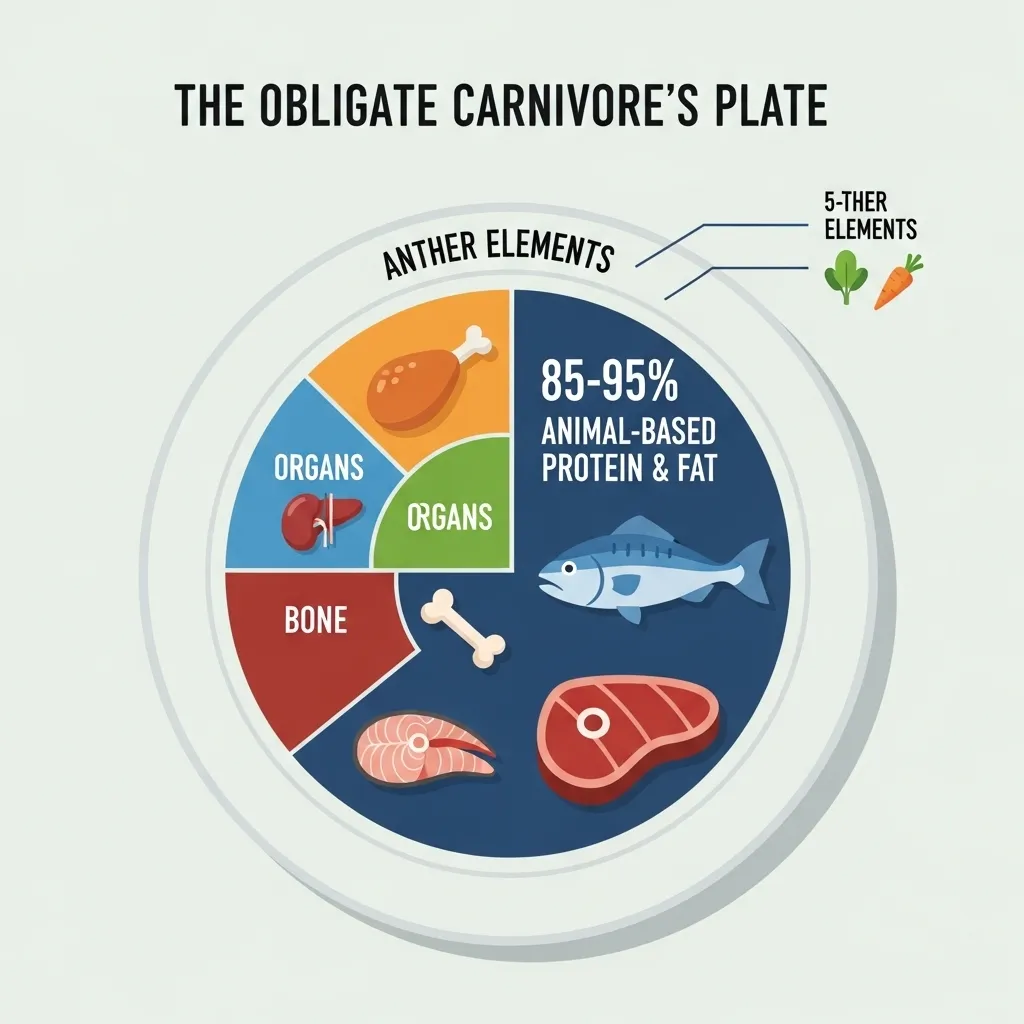
Before we dissect a single label, we must understand the animal we’re feeding. The domestic cat (Felis catus) is an obligate carnivore. This isn’t a preference; it’s a biological necessity shaped by millions of years of evolution. Unlike dogs or humans, cats have a metabolic machinery designed to derive critical nutrients from animal tissue.
Their bodies cannot synthesize certain essential nutrients, such as:
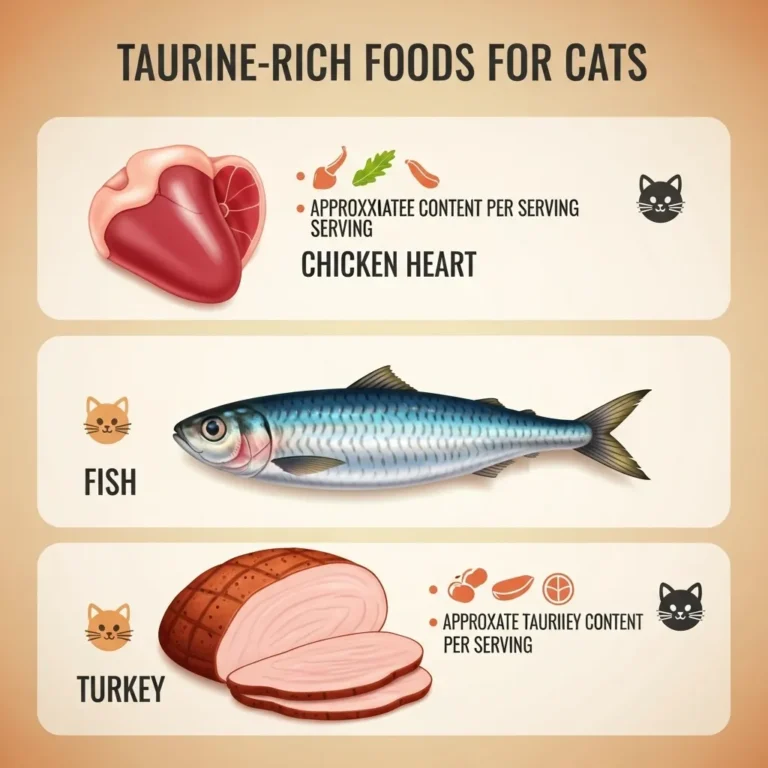
- Taurine: An amino acid vital for heart function, vision, and reproduction. A deficiency leads to irreversible heart disease (dilated cardiomyopathy) and blindness.
- Arachidonic Acid: A fatty acid required for skin health, kidney function, and inflammatory response.
- Pre-formed Vitamin A (Retinol): Cats cannot convert beta-carotene from plants into Vitamin A. They must consume it directly from liver and other organs.
- Vitamin B12 (Cobalamin): Crucial for nerve function and blood cell formation, sourced almost exclusively from meat.
Therefore, every time you read a cat food label, you must view it through this lens: Does this product provide a bioavailable, meat-centric profile that aligns with my cat’s evolutionary dietary needs? The answer lies not in the bold claims on the front, but in the meticulous details of the ingredient list and nutritional adequacy statement.
Part 2: Cracking the Code: The Ingredient List Decoded
The ingredient list, mandated by the AAFCO (Association of American Feed Control Officials), is your most powerful tool. Ingredients are listed in descending order by pre-cooking weight. This means water content heavily influences placement. A raw chicken breast weighs a lot because of its water, which evaporates during processing, potentially moving it down the list.
The Protein Power Players: What to Look For
- Named Animal Protein Sources (The Gold Standard): “Deboned Chicken,” “Salmon,” “Turkey,” “Lamb.” These are specific, high-quality muscle meats.
- Named Meat Meals (The Concentrated Workhorse): “Chicken Meal,” “Herring Meal.” This is meat with the water and fat removed, creating a dense protein powder. Contrary to some myths, a high-quality named meal is an excellent, nutrient-rich ingredient. It often ensures the protein stays at the top of the list after processing.
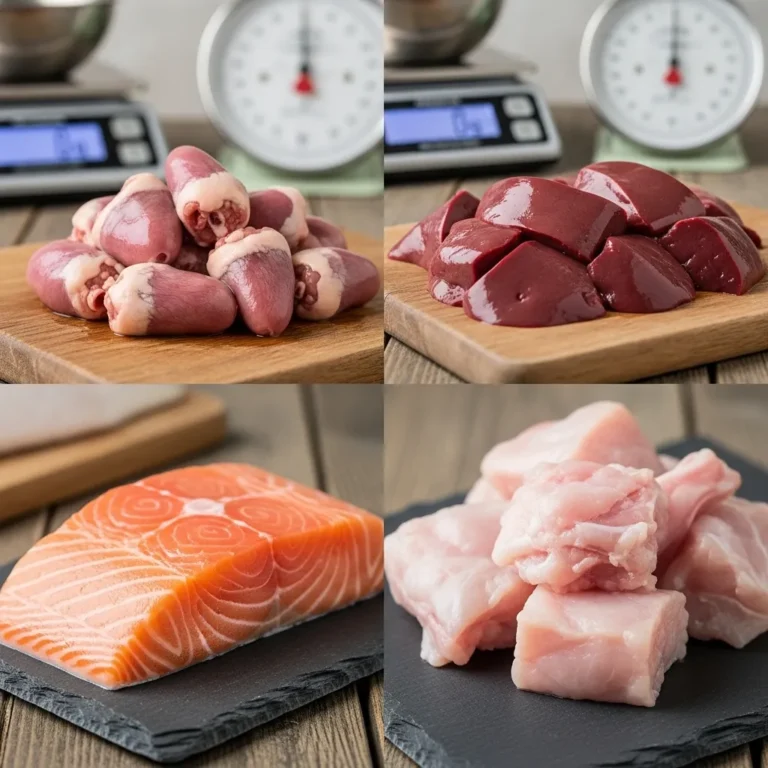
- Organ Meals: “Chicken Liver,” “Beef Heart.” These are nutrient powerhouses, providing the vitamins and minerals cats would naturally consume from prey.
The Red Flags & Ambiguous Terms
- Generic “Meat” or “Poultry” Meals: This could be from any animal (including euthanized shelter animals, which is illegal but a historical concern). Always opt for named sources.
- “By-Products” or “Meat By-Products”: This includes non-rendered, clean parts like organs, blood, and bone. While not inherently “bad” (cats eat organs in the wild), the term is non-specific. “Chicken by-products” is preferable to generic “meat by-products.”
- “Animal Digest”: A material treated with chemicals or enzymes to break it down. It’s often used as a palatability enhancer (flavor spray) but offers low nutritional transparency.
- Vague Seafood: “Ocean Fish,” “Whitefish.” This is a blend from unknown species and origins, which can raise concerns about sustainability and heavy metal accumulation.
Carbohydrates, Fillers, and Fiber: Friend or Foe?
Cats have no biological requirement for carbohydrates. However, they are used in kibble for binding, texture, and cost.
- Beneficial Carbs/Fiber (in moderation): Whole peas, sweet potatoes, pumpkin, lentils. These provide soluble fiber for gut health and manageable energy.
- Common Fillers (Use Sparingly): Corn, wheat, soy. These are less expensive protein sources but are plant-based and less digestible for cats. Watch for their derivatives: corn gluten meal (a cheap protein booster), brewers rice, wheat middlings.
- “Grain-Free” Caveat: The 2018 FDA investigation into a potential link between grain-free diets and Dilated Cardiomyopathy (DCM) in dogs raised questions for cats. The suspected culprits were diets high in legumes (peas, lentils, potatoes) as primary ingredients. While the link is less clear in cats, it’s a reminder that simply “grain-free” does not equal “carbohydrate-free” or “optimal.” The focus should be on the quality and proportion of animal protein.
Fats & Oils: The Energy Source
Look for named fats: “Chicken Fat” (preserved with mixed tocopherols/Vitamin E), “Salmon Oil,” “Coconut Oil.” Avoid generic “Animal Fat.”
Additives: Preservatives, Vitamins, and Flavors
- Natural Preservatives: Mixed tocopherols (Vitamins E & C), rosemary extract.
- Artificial Preservatives to Avoid: BHA, BHT, ethoxyquin.
- Probiotics & Prebiotics: “Dried Lactobacillus acidophilus,” “Inulin,” “Chicory Root.” Excellent for digestive and immune health.
- Artificial Colors/Flavors: Truly unnecessary. Cats don’t care if their kibble is red or green.
Part 3: Beyond the List – The Guaranteed Analysis and AAFCO Statement
Understanding the Guaranteed Analysis (GA)
This table shows the minimum or maximum percentages of key nutrients.
- Crude Protein (Min): The single most important number. Aim for high levels—at least 30%+ on a dry matter basis for adults, more for kittens and active cats.
- Crude Fat (Min): Provides energy and supports skin/coat. Look for 15-20% on a dry matter basis.
- Crude Fiber (Max): Indicates indigestible plant matter. Lower is usually better (ideally <5% on DMB), unless for specific digestive issues.
- Moisture (Max): Crucial for comparing wet vs. dry food.
The Dry Matter Basis Conversion – Your Superpower:
Because wet food is ~78% water and dry food is ~10% water, you must remove moisture to compare them equally.
- Find the % moisture on the GA. (e.g., Dry Food: 10% moisture; Wet Food: 78% moisture)
- Calculate Dry Matter (DM): 100% – % Moisture = % DM. (Dry: 90% DM; Wet: 22% DM)
- For a nutrient, say Protein (Dry: 34% min, Wet: 10% min): (GA % Protein / % DM) x 100 = % Protein on a Dry Matter Basis.
- Dry Food DMB Protein: (34 / 90) x 100 = 37.8%
- Wet Food DMB Protein: (10 / 22) x 100 = 45.5%
Suddenly, that wet food looks significantly richer in protein! This math is essential for honest comparison.
The AAFCO Nutritional Adequacy Statement – The Seal of Completeness
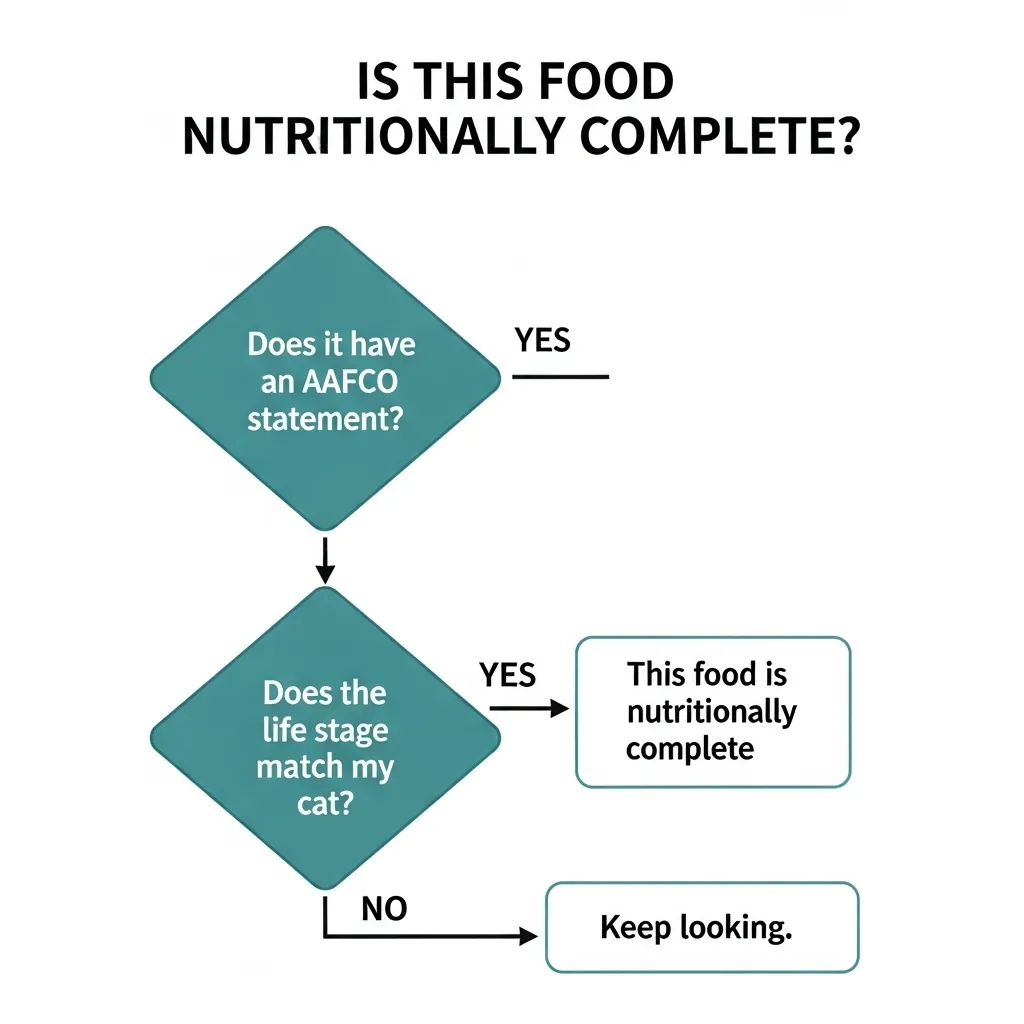
This small print is critical. It states the food provides complete and balanced nutrition.
- “[Product] is formulated to meet the nutritional levels established by the AAFCO Cat Food Nutrient Profiles for [Life Stage].” This means it was designed on paper to meet standards.
- “Animal feeding tests using AAFCO procedures substantiate that [Product] provides complete and balanced nutrition for [Life Stage].” This is the gold standard, meaning the food was actually fed to cats and proved to sustain them.
- Ensure the life stage matches your cat: Growth (kitten), Adult Maintenance, All Life Stages, or Gestation/Lactation.
Part 4: Special Considerations & Life Stages
- Kittens: Require more protein, fat, and calories for development. Look for “for Growth” on the AAFCO statement. Our guide on kitten to adult cat transition covers this shift in detail.
- Adult Cats: Focus on high-quality maintenance diets. Monitor calories to prevent obesity. Discover ideal weights in our cat obesity guide.
- Senior Cats (7+): Often need highly digestible protein to maintain muscle mass, and may benefit from joint support. Their needs vary widely; learn more in our senior cat care article.
- Cats with Health Issues:
- Kidney Disease: Requires reduced phosphorus and high-quality protein. Explore dietary management in our cat kidney failure guide.
- Urinary Health: Needs controlled magnesium/phosphorus and encourages hydration. Our cat urinary health article offers crucial insights.
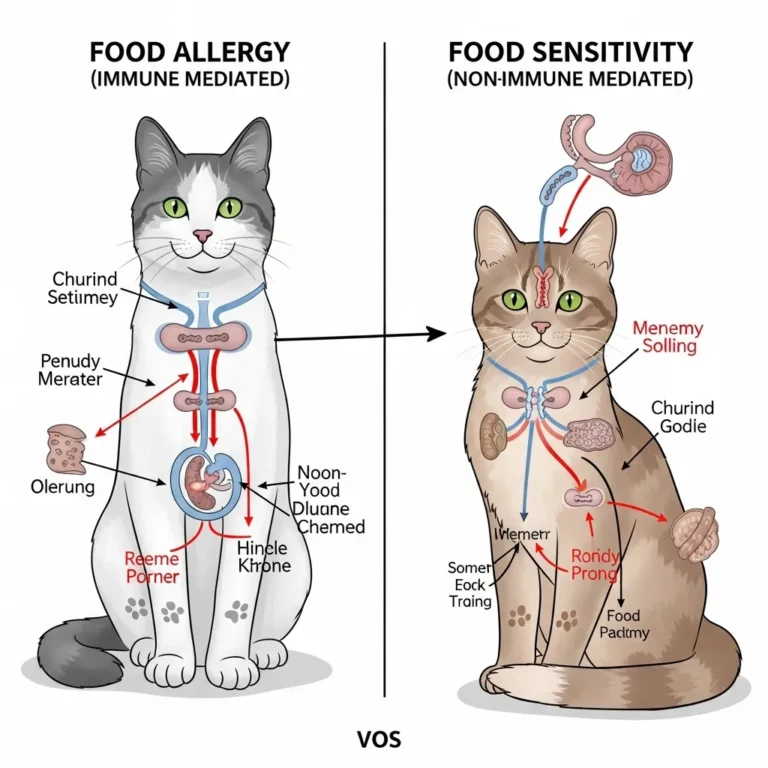
- Food Allergies/Sensitivities: May require novel protein (duck, rabbit) or hydrolyzed diets. For identifying issues, see our cat allergies guide.
- Wet vs. Dry Debate: Wet food superiorly hydrates, which is critical for urinary health. Dry food is convenient and can aid dental health (though not a substitute for brushing). A combination is often ideal. We break down the wet vs. dry cat food nutrition debate to help you decide.
Part 5: Frequently Asked Questions (FAQ)
Q: Is a “grain-free” diet always better for cats?
A: Not necessarily. While some cats are genuinely allergic to grains, the “grain-free” label is often a marketing tactic. The key is the overall carbohydrate content and the primary protein source. A grain-free diet packed with peas and potatoes may be higher in carbs than a diet with a small amount of rice and a huge amount of chicken.
Q: What does “human-grade” on cat food mean?
A: This is an unregulated marketing term in pet food. Legally, all pet food ingredients must be “feed grade.” While “human-grade” implies higher quality, there is no official standard enforcing it in the same way as for human food. Focus on the specific ingredient list instead.
Q: How often should I change my cat’s food?
A: For a healthy cat on a good-quality diet, frequent changes are unnecessary and can cause digestive upset. However, rotating between 2-3 high-quality formulas with different protein sources every few months can prevent pickiness and may offer nutritional variety. Always transition slowly over 7-10 days by mixing the old and new food.
Q: Are by-products really bad?
A: Not inherently. Named by-products (e.g., chicken by-products) include nutrient-rich organs (liver, heart, lungs) that cats would consume in the wild. The concern lies in the lack of specificity with generic “meat by-products.” Quality varies greatly by manufacturer.
Q: How can I tell if my cat is thriving on their current food?
A: Look for consistent energy levels, a soft and shiny coat, regular and firm bowel movements, healthy appetite, and maintaining an ideal body weight. Signs of a problem include dull coat, lethargy, digestive issues, or unexplained weight changes. Our guide on signs your cat’s diet needs a change delves deeper.
Conclusion: Empowerment Through Knowledge
Reading cat food labels is the ultimate act of informed love for your feline friend. It moves you from being swayed by clever packaging to being guided by nutritional science and an understanding of your cat’s unique biology. Remember the hierarchy of importance: 1) AAFCO Statement (for the correct life stage), 2) High-Quality, Named Protein Sources at the top of the ingredient list, 3) A Guaranteed Analysis that meets your cat’s needs when calculated on a dry matter basis.
Trust your newfound ability to see past the “natural,” “premium,” and “holistic” banners and focus on the substantive facts. Your cat depends on you to be their nutritional advocate. With this guide, you are now equipped to choose a diet that truly supports a long, vibrant, and healthy life.
Ready to explore more? Dive deeper into feline wellness with our comprehensive library of expert-backed guides. Learn how diet affects your cat’s daily life in how diet affects cat energy, coat, and behavior, or explore the fundamentals in our cat food nutrition hub. For all things feline, from behavior to health, continue your journey at Cat Bloom Haven.