How Diet Affects a Cat’s Energy, Coat, and Behavior: The Definitive Guide
Key Takeaways:
- Energy: A cat’s diet directly fuels its metabolism. The right balance of high-quality animal protein and fats sustains steady energy, while poor-quality or inappropriate diets lead to lethargy or hyperactivity.
- Coat: A glossy, soft coat is a hallmark of excellent nutrition, specifically from Omega-3 and Omega-6 fatty acids, digestible proteins, and proper hydration. Dull, greasy, or flaky skin often signals dietary deficiencies.
- Behavior: Food intolerances, blood sugar spikes from high-carb diets, and nutritional imbalances can manifest as aggression, anxiety, litter box issues, and excessive vocalization.
- The Core Principle: Cats are obligate carnivores. Their bodies are designed to thrive on moisture-rich, protein-dense diets low in carbohydrates. Ignoring this biological imperative impacts every aspect of their well-being.
Introduction: You Are What You Eat And So Is Your Cat
If you’ve ever wondered why your cat seems perpetually sleepy, why their fur lacks that lustrous shine, or why they’ve developed a sudden, puzzling habit of nighttime yowling, the answer may not lie in a behavioral quirk or a grooming issue. It may be in their food bowl.
The connection between how diet affects a cat’s energy, coat, and behavior is not just anecdotal; it’s rooted in feline physiology. As obligate carnivores, cats have evolved with specific, non-negotiable nutritional requirements. The modern pet food landscape, filled with countless options, can obscure this simple truth. Feeding a diet that conflicts with a cat’s biological needs doesn’t just lead to long-term health problems—it creates immediate, visible changes in their vitality, appearance, and personality.
This comprehensive guide moves beyond generic feeding advice. We will dissect the precise mechanisms by which proteins, fats, carbohydrates, and water influence your cat’s daily life. You’ll learn to decode the signals your cat is sending through their energy levels, the condition of their coat, and their actions. More importantly, you’ll gain the knowledge to make empowered, evidence-based choices about their nutrition, transforming their diet from mere sustenance into the foundation of a vibrant, healthy life.
In this article, you will discover:
- The science linking specific nutrients to feline energy metabolism.
- How to assess your cat’s coat health and what deficiencies it reveals.
- The direct line between food ingredients and common behavioral problems.
- A practical framework for evaluating your current cat food.
- Actionable steps to transition to a more species-appropriate diet.
Part 1: The Fuel Gauge – How Diet Dictates Feline Energy Levels
A cat’s energy is a direct reflection of their metabolic engine. This engine is designed to run on specific fuels. Provide the wrong type, and the system sputters, stalls, or races uncontrollably.
The Protein Imperative: The Primary Energy Source
Unlike humans and dogs, who can readily use carbohydrates for energy, cats have a liver enzyme system geared toward a constant breakdown of protein. High-quality animal protein (from meat, organs, and fish) provides amino acids like taurine and arginine, which are critical for heart function, vision, and efficient energy conversion.
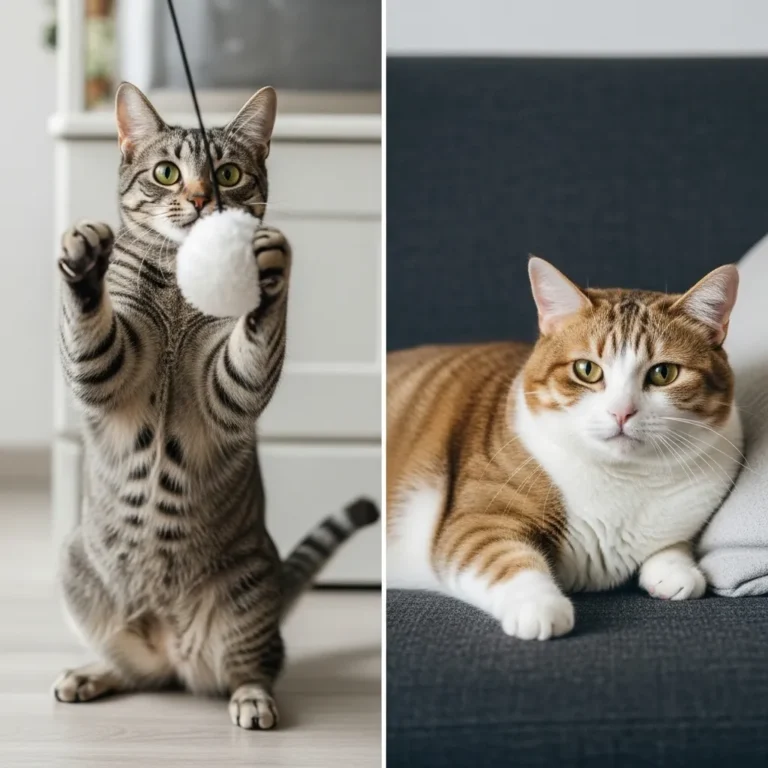
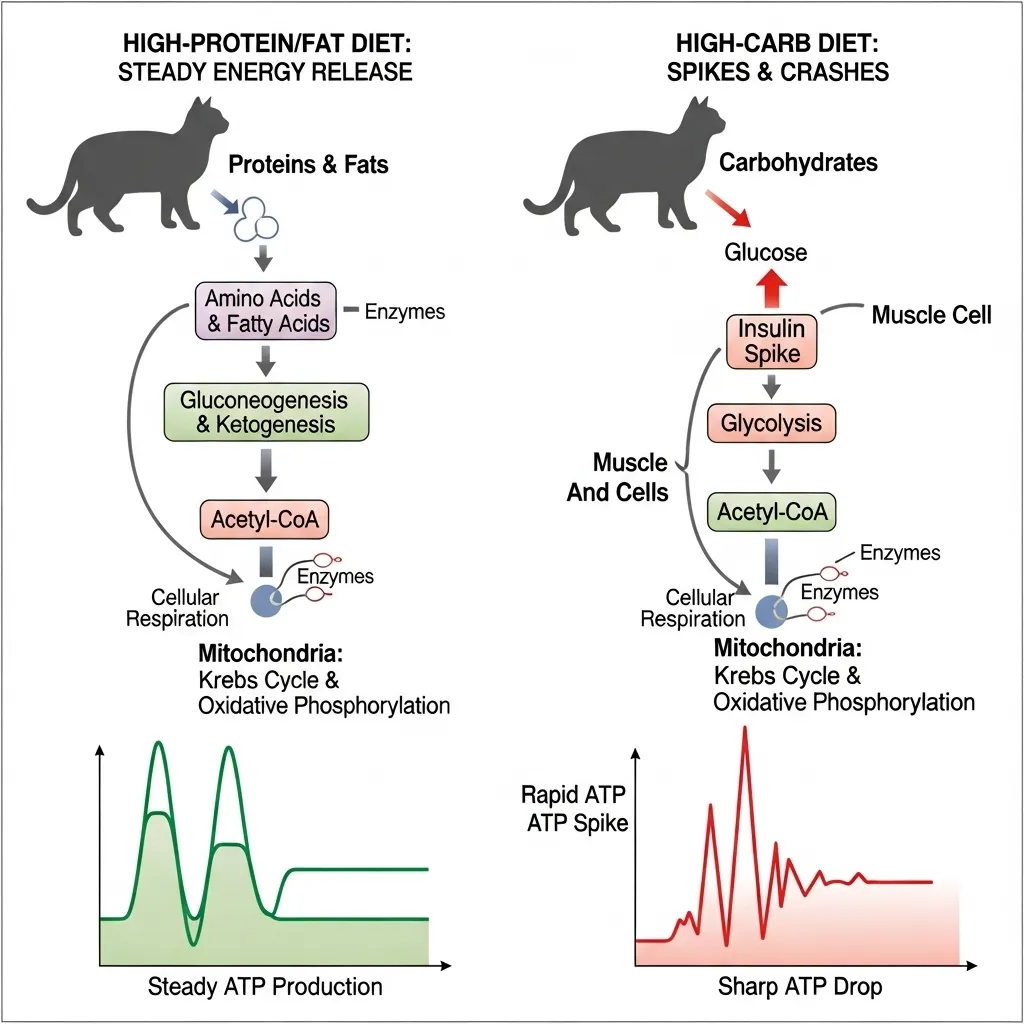
- High-Quality Protein Diet: Results in sustained, steady energy. Your cat will have appropriate periods of playful alertness followed by calm rest. Their body uses amino acids efficiently for tissue repair and fuel.
- Low-Quality or Insufficient Protein Diet: Often leads to lethargy and weakness. The body may start breaking down its own muscle mass to access essential amino acids, leading to a loss of body condition and profound tiredness. For a deeper dive into this vital nutrient, explore our dedicated guide on protein in cat food.
The Fat Factor: Concentrated Energy and Vitality
Fats are the most energy-dense nutrient, providing more than twice the energy of protein or carbs per gram. They supply essential fatty acids that cats cannot synthesize, which are crucial for brain health, cellular function, and the absorption of fat-soluble vitamins (A, D, E, K).
- Adequate Animal-Based Fats: Support robust energy reserves, a healthy nervous system, and a strong immune response. Your cat will have the stamina for play and exploration.
- Deficiency or Poor-Quality Fats: Can contribute to low energy, poor growth, and a weakened immune system. Dry, flaky skin is often an early visible sign.
The Carbohydrate Conundrum: The Unnecessary Fuel
Cats lack significant salivary amylase, the enzyme that starts carbohydrate digestion. Their short digestive tract is not optimized for processing high volumes of grains, potatoes, or legumes commonly found in many commercial foods.
- High-Carbohydrate Diets (common in many dry foods): Cause rapid spikes and subsequent crashes in blood sugar. This can create a cycle of brief hyperactivity followed by sudden lethargy. Over time, this taxes the pancreas and is a primary contributor to feline obesity and diabetes. Understanding your cat’s specific needs is key, especially for seniors; learn about the best foods for a senior Bengal cat as an example of life-stage tailoring.
Hydration: The Often-Ignored Energy Catalyst
Cats have a low thirst drive, a trait inherited from desert-dwelling ancestors who obtained most moisture from prey. Chronic, low-level dehydration is epidemic in cats fed exclusively dry food.
- Dehydration’s Impact: Even mild dehydration thickens the blood, reduces organ perfusion, and slows metabolism, leading to noticeable sluggishness, constipation, and overall dullness. A moisture-rich diet (wet food, broths, raw) is fundamental to maintaining energy and preventing serious conditions like cat urinary health issues.
Practical Energy Check: Is your cat bouncing off the walls for 5 minutes then collapsing for hours? Or are they consistently uninterested in play? Track their activity against their food. A shift from dry to wet, high-protein food often results in more balanced, sustained energy within weeks.
Part 2: The Mirror of Health – How Nutrition Shapes a Cat’s Coat and Skin
A cat’s coat is the most visible billboard of their internal health. It’s the first place nutrient deficiencies and excellences become apparent.
The Fatty Acid Foundation: Omega-3s and Omega-6s
These are the building blocks of healthy skin cells and the oils that keep the coat glossy and waterproof.
- Omega-6 Fatty Acids (found in poultry fat, eggs): Support skin barrier function and healthy coat growth.
- Omega-3 Fatty Acids (found in fish oil, krill oil, flaxseed): Are powerfully anti-inflammatory. They soothe itchy, irritated skin and add a noticeable “sheen” to the fur.
An ideal balance of these fats (typically between 5:1 and 10:1, Omega-6 to Omega-3) is key. An imbalance, often skewed too high in Omega-6s in processed diets, can promote inflammatory skin conditions.
Protein Quality and Coat Integrity
Hair is made of over 90% protein, primarily keratin. A diet lacking in digestible, bioavailable animal protein will directly result in poor coat quality.
- Signs of Protein Deficiency: The coat becomes dry, brittle, thin, and may shed excessively. Growth is slow, and the fur loses its vibrant color and soft texture.
- Allergies & Intolerances: Often triggered by low-grade, common proteins (like some meat meals or grains), leading to itchiness, over-grooming, bald patches, and skin bumps. If you notice skin issues, our guide on cat skin bumps on the neck can help you identify potential causes.
Vitamins and Minerals: The Micronutrient Magic
- Vitamin A: Essential for skin cell growth and repair. Deficiency causes a rough, scaly coat.
- Vitamin E: A potent antioxidant that protects skin cells from damage.
- B Vitamins (especially Biotin): Crucial for fat and protein metabolism, directly influencing skin and coat health.
- Zinc: Vital for wound healing and maintaining skin integrity.
A diet based on whole, fresh animal ingredients naturally contains these in balanced ratios. Heavily processed foods may have them added synthetically, which can be less bioavailable.
The Hydration-Skin Connection
The skin is the body’s largest organ. Adequate hydration ensures nutrients are delivered to skin cells and toxins are removed. A well-hydrated cat from a moisture-rich diet will have more elastic, supple skin and a softer coat. Dehydration leads to dry, inelastic skin and a lackluster coat, exacerbating problems like cat dandruff.
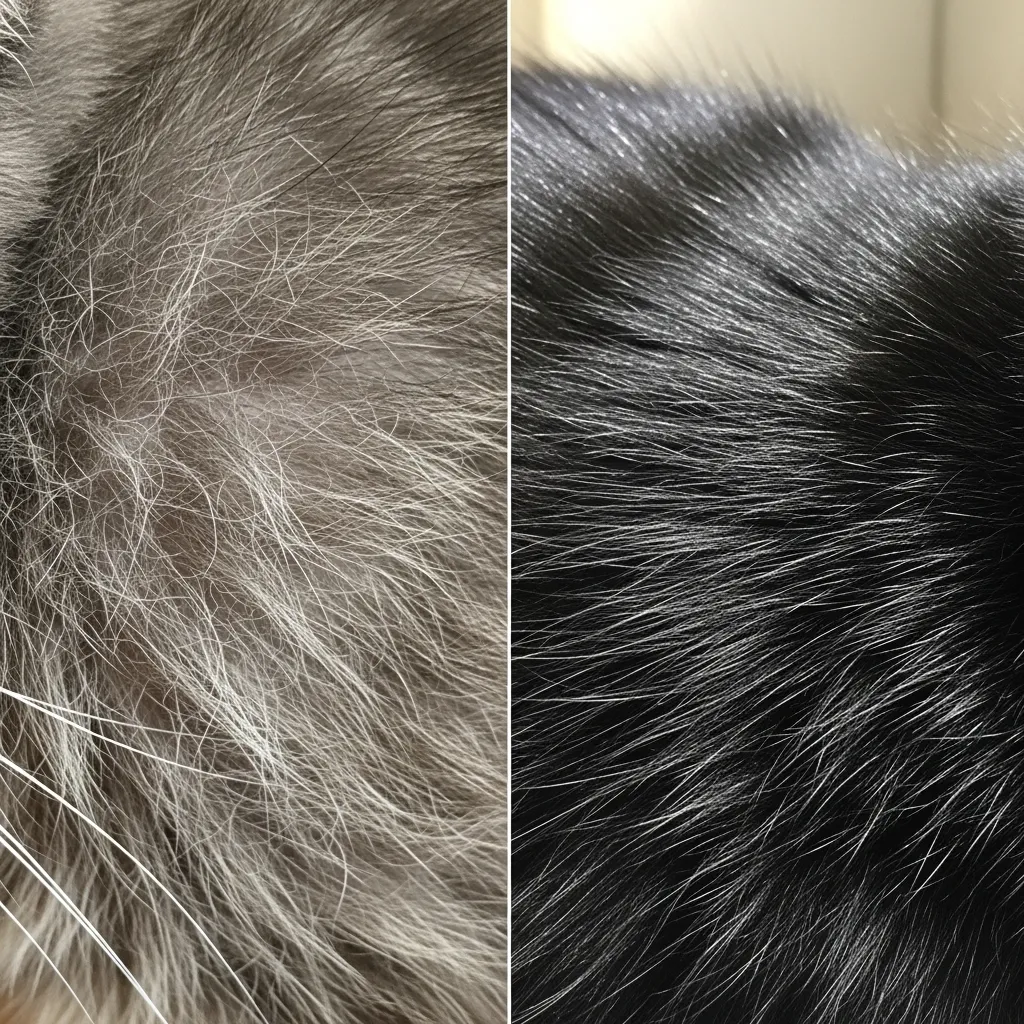
Coat Audit: Run your hands over your cat. Is the fur soft and smooth, or coarse and greasy? Does it part easily to reveal clean skin, or is there dander, redness, or oiliness? This tactile check is a simple, powerful diagnostic tool. For breeds with luxurious fur, like the Norwegian Forest Cat, proper nutrition is non-negotiable; see Norwegian Forest Cat grooming for breed-specific tips.
Part 3: The Mind-Body Link – How Food Influences Feline Behavior
Behavior is complex, but diet is a frequently overlooked modulator. What goes into the bowl can directly alter what happens in the brain and the home.
Blood Sugar Rollercoaster and Mood Swings
As discussed, high-carb meals cause glycemic spikes and crashes. This instability can manifest as:
- “Zoomies” and Hyperactivity: The spike phase.
- Irritability and Aggression: The crash phase, where the cat feels unwell and vulnerable. This can be mistaken for spontaneous sudden cat aggression.
- Anxiety and Restlessness: A constant state of metabolic imbalance stresses the body.
Food Intolerances and Discomfort
An ingredient that a cat struggles to digest or is sensitive to can cause chronic gastrointestinal inflammation, gas, and pain. A cat in pain is a cat with behavioral changes.
- Common Signs: Litter box avoidance (associating the box with pain), increased hiding, aggression when touched around the abdomen, and general irritability. If your cat is eliminating outside the box, rule out medical causes first, as outlined in our article on cat litter box problems.
The Protein-Satiety Connection
Protein is highly satiating. A diet rich in animal protein makes a cat feel truly full and satisfied, reducing food-obsessed behaviors like constant begging, counter surfing, and stealing. A cat on a low-protein, high-carb diet may act perpetually hungry because their body is not receiving the nutrient signals it needs.
Tryptophan and Serotonin: The “Calming” Pathway
Tryptophan is an amino acid found in animal protein that is a precursor to serotonin, a neurotransmitter that promotes feelings of calm and well-being. A diet sufficient in high-quality protein supports this natural calming pathway.
Essential Fatty Acids and Brain Function
DHA (an Omega-3) is critical for brain development and cognitive function. Adequate levels support learning and may help mitigate age-related cognitive decline and associated confusion or anxiety in older cats.
Behavioral Diary: Before labeling a behavior as “bad” or “random,” keep a simple log. Note the behavior, its time, and its proximity to feeding. You may discover patterns linking a specific food to episodes of hyperactivity, vocalization, or aggression. For example, nighttime antics might be solved not by discipline, but by diet; see our insights on cat hyperactivity at night solutions.
Part 4: Building the Optimal Diet – A Practical Framework
Understanding the why is essential, but applying the how is transformative. Here’s a step-by-step approach.
Step 1: Become a Label Detective
Ignore the marketing on the front. Turn the bag or can and read the ingredient list and guaranteed analysis.
- First Ingredient: Must be a named animal protein (e.g., “chicken,” “salmon,” “duck”), not “meat by-product” or “poultry meal.”
- Carbohydrate Sources: Identify them. Are grains, potatoes, peas, or lentils high on the list? The fewer and lower, the better.
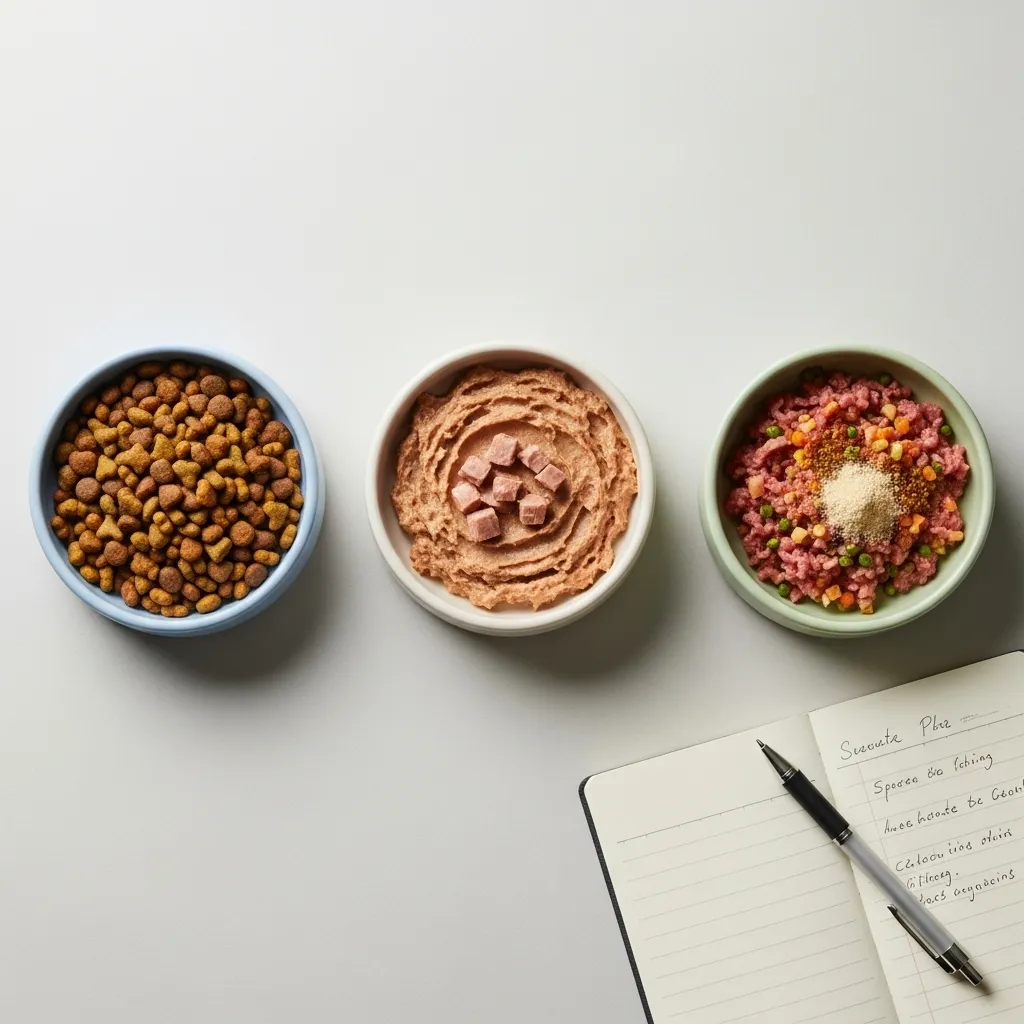
- Moisture Content: For dry food, it’s ~10%. For wet food, it’s 75-85%. This is the single biggest differentiator.
Step 2: Prioritize Moisture
This is the most impactful change you can make. Incorporate wet food. Start by replacing one dry meal a day. Explore pâtés, shreds, and broths. Even adding water or bone broth to dry food helps. For cats stubborn about wet food, we have strategies in how to get your cat to eat wet food.
Step 3: Maximize Animal-Based Protein and Fat
Choose foods where protein and fat come from clear animal sources. Look for a dry matter protein content of 40% or higher for most adult cats (calculate this using the guaranteed analysis).
Step 4: Transition Slowly and Observe
A sudden diet change causes stomach upset. Mix increasing amounts of new food with old over 7-10 days. During and after, be a scientist: observe energy, coat, stool quality, and behavior. Keep notes.
Step 5: Consider Life Stage and Individual Needs
A sprightly kitten, a sedentary senior, and an active Bengal have different caloric and nutrient density needs. Adjust accordingly. Always consult your vet for medical conditions. For instance, a cat with kidney issues requires a very specific diet, as discussed in our cat kidney failure guide.
Frequently Asked Questions (FAQs)
Q: My cat is lazy and sleeps all day. Could it be his food?
A: Absolutely. Chronic lethargy is a primary sign of a diet deficient in high-quality, bioavailable animal protein or one that causes metabolic stress (like high-carb diets). It can also indicate dehydration. Before assuming it’s just personality, evaluate the diet. Compare your cat’s habits to typical cat sleeping habits to gauge what’s normal.
Q: I feed a premium dry food. Isn’t that enough?
A: While premium dry foods are often nutritionally complete, they fail to address the critical issue of low moisture content. The metabolic cost of processing a consistently dry diet and the chronic dehydration it encourages can negatively impact energy, coat, and urinary tract health over time, even if the ingredient list looks good.
Q: Can diet really stop my cat from scratching the furniture?
A: Diet alone may not stop a natural instinct to scratch, but it can influence the behavior. Skin irritations from food allergies can make a cat itchy, leading to more frequent and frantic scratching. Addressing the allergy may reduce the intensity of the scratching. For behavioral management, see our guide on how to stop cats scratching furniture.
Q: How quickly will I see changes after improving my cat’s diet?
A: Timelines vary. Energy levels often show improvement within 1-3 weeks. Coat changes take longer, as hair grows in cycles; you may see reduced shedding and increased softness in 4-8 weeks, with a full glossy coat taking several months. Behavioral changes, if linked to food intolerances or blood sugar, can begin to improve within a few weeks.
Q: Is a raw diet the only way to achieve these benefits?
A: No. A high-quality, meat-rich canned wet food is a superb option that provides high protein, high moisture, and low carbohydrates. It addresses the core issues without the preparation and safety concerns of raw. The goal is to move closer to a cat’s natural dietary paradigm, and premium wet food is a highly effective and convenient way to do that.
Conclusion: Nourishment as the Foundation of Wellbeing
The journey to understanding how diet affects a cat’s energy, coat, and behavior is a journey toward seeing your cat not just as a pet, but as a complex biological being whose needs are beautifully specific. The food you choose is not merely calories; it is information that directs every cellular process, every burst of play, every gleam of their fur, and every interaction in your shared home.
By shifting focus from simply “feeding” to “nourishing,” you unlock the potential for a more vibrant, content, and healthy companion. Start with one change perhaps introducing a daily wet food meal or choosing a higher-protein option. Observe with curiosity. The proof will be in the playful pounce, the silkier fur under your hand, and the quieter, more peaceful nights.
Your cat’s vitality is, quite literally, in your hands. Make it count.
**Ready to delve deeper into creating a thriving life for your feline friend? Explore our library of expert-backed guides on everything from *cat nutrition* and behavior to breed-specific care on Cat Bloom Haven.**