How to Get Your Cat to Eat Wet Food: A Complete Guide to Transitioning Even the Pickiest Feline
If your cat turns up their nose at wet food the second you crack open a can, you’re not alone. Thousands of owners search “how to get cat to eat wet food” every single month because their once-eager kitten suddenly became a dry-kibble-only snob, or their senior cat stopped eating wet food overnight. The good news? With the right approach, almost every cat can learn to love (or at least tolerate) wet food again.
In this guide, you’ll discover exactly why cats refuse wet food, the proven benefits of adding it to their diet, and a step-by-step plan that has worked for hundreds of picky eaters I’ve helped over the years. Whether you’re transitioning cat from dry to wet food for the first time or trying to re-introduce canned food after a sudden refusal, you’ll walk away with practical tools you can start using tonight.
Key Takeaways (for quick scanning)
- Wet food is usually the single best way to boost hydration and prevent urinary issues.
- Most refusals come down to temperature, texture, smell, or past negative experiences – not stubbornness.
- A slow, 10–14 day transition beats force-feeding every single time.
- Warming, topping, and hand-feeding are the three most powerful “make cat like wet food” tricks.
Why Wet Food Matters More Than Most Owners Realize
Before we dive into tactics, let’s settle the wet cat food vs dry cat food debate once and for all.
| Benefit | Wet Food (canned or pouch) | Dry Food (kibble) |
|---|---|---|
| Moisture content | 70–80% | 8–10% |
| Helps prevent FLUTD/UTI | Excellent (dilutes urine) | Poor |
| Dental health | Minimal tartar benefit | Slight mechanical cleaning |
| Calorie density | Lower – great for weight control | Higher – easy to overfeed |
| Smell & palatability | Very strong aroma | Moderate |
Veterinarians now recommend wet food as at least 50% of the diet for most cats, especially males, because of the dramatic drop in urinary blockages when hydration improves. If your cat drinks almost nothing from the bowl (super common), canned food becomes non-negotiable for long-term health.
Why Cats Refuse Wet Food: The Real Reasons Behind the Snub
Understanding why your cat won’t touch wet food is half the battle. Here are the top reasons I see in practice:
- Temperature too cold
Food straight from the fridge smells weak and feels unpleasant on sensitive whiskers. - Texture aversion
Some cats hate pâté but love shreds; others want chunks in gravy. Texture preference is wired early. - Strong or “fishy” smell
Ironically, the stronger the smell to us, the more off-putting it can be if it’s a brand switch. - Negative association
If they once vomited after eating a certain flavor or brand, they’ll remember for months. - Dental pain or nausea
Senior cats who suddenly stop eating wet food often have sore mouths or early kidney disease. - Whisker fatigue from deep cans
Yes, this is real. Wide, shallow bowls make a surprising difference. - Habit
A cat raised on kibble from kittenhood literally doesn’t recognize wet food as “food” at first.
The 10–14 Day Transition Plan That Actually Works
This is the exact schedule I give clients when transitioning cat from dry to wet food. It’s slow, but it boasts over 90% success.
| Day | Wet Food % | Dry Food % | Notes |
|---|---|---|---|
| 1–3 | 10% | 90% | Mix a teaspoon of wet into normal kibble |
| 4–6 | 25% | 75% | Slightly warm the wet portion |
| 7–9 | 50% | 50% | Start offering wet meals separately |
| 10–12 | 75% | 25% | Dry only as “dessert” if needed |
| 13–14 | 100% | 0% | Celebrate! |
Pro tip: If your cat walks away at any stage, drop back 10–15% for two extra days. Never starve them into submission – that backfires and creates food aversion.
7 Proven Tricks to Make Wet Food Irresistible
When the slow mix isn’t enough, pull out these veterinarian-approved hacks:
- Warm it up (the #1 game-changer)
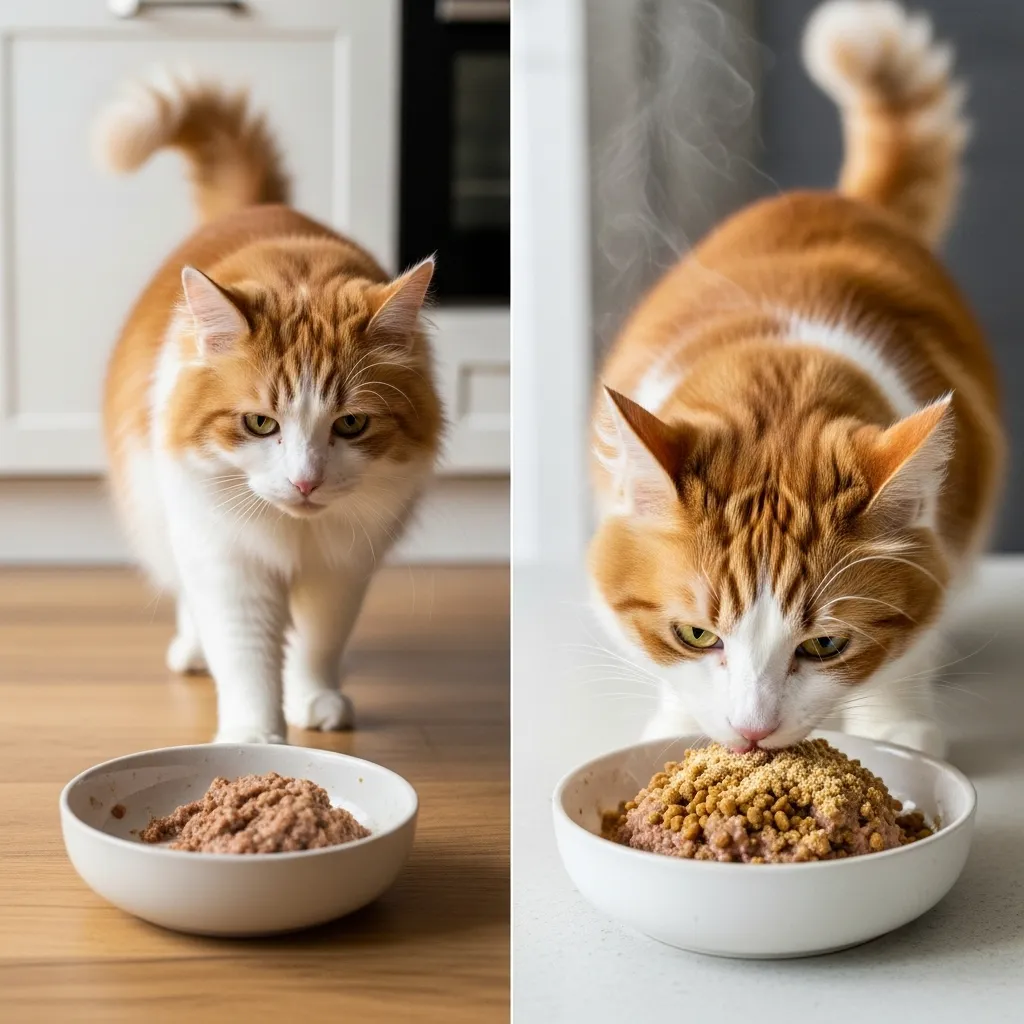
10–15 seconds in the microwave or stir into hot water until just body temperature (around 38°C/100°F). Warming up wet cat food releases aroma and mimics fresh prey temperature. - Add a “topper” jackpot
Crush a few pieces of their favorite kibble on top, sprinkle freeze-dried chicken, or drizzle a tiny bit of tuna juice. - Change the texture
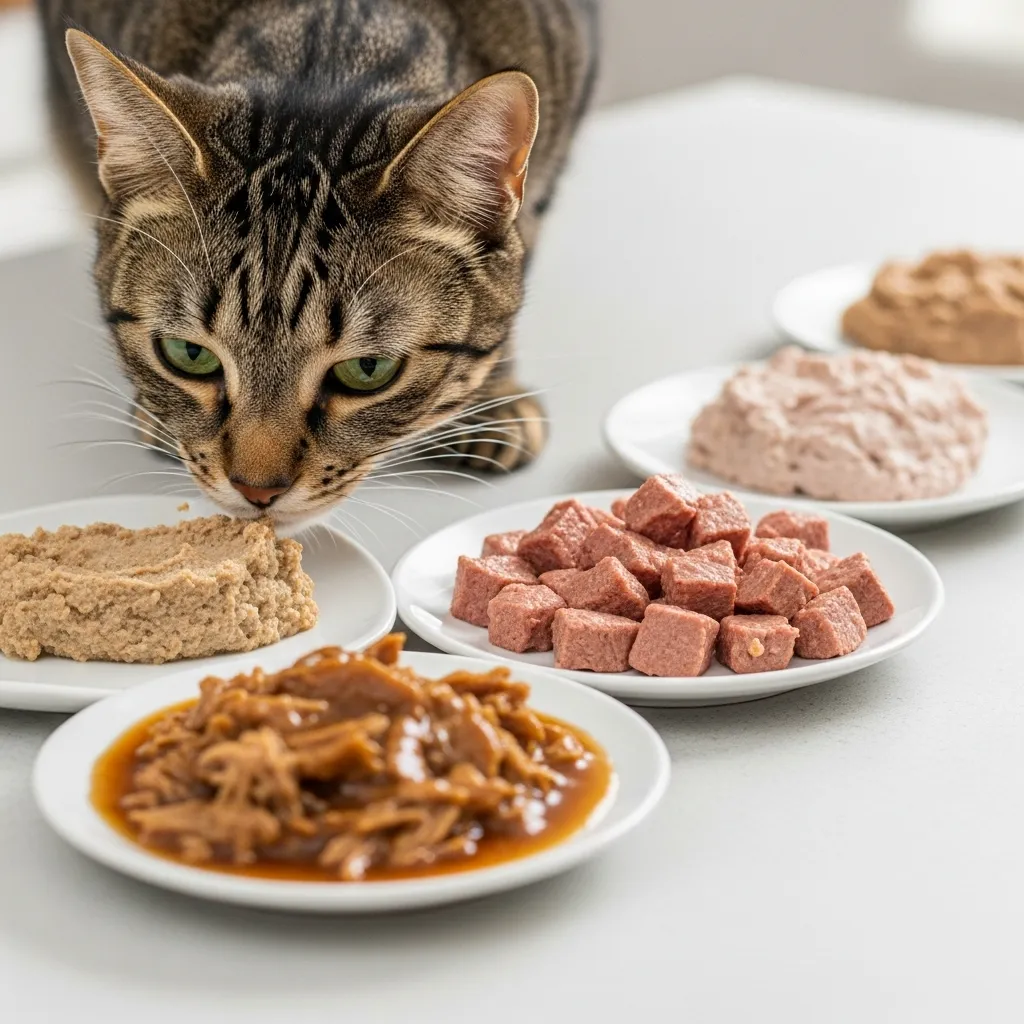
If pâté fails, try shredded, chunks, or mousse. Many cats who hate one style devour another. - Hand-feed or finger-feed the first few bites
Yes, it feels silly, but it rebuilds positive association fast. - Switch to shallow, wide ceramic or glass plates
No more whisker stress. - Offer multiple small meals
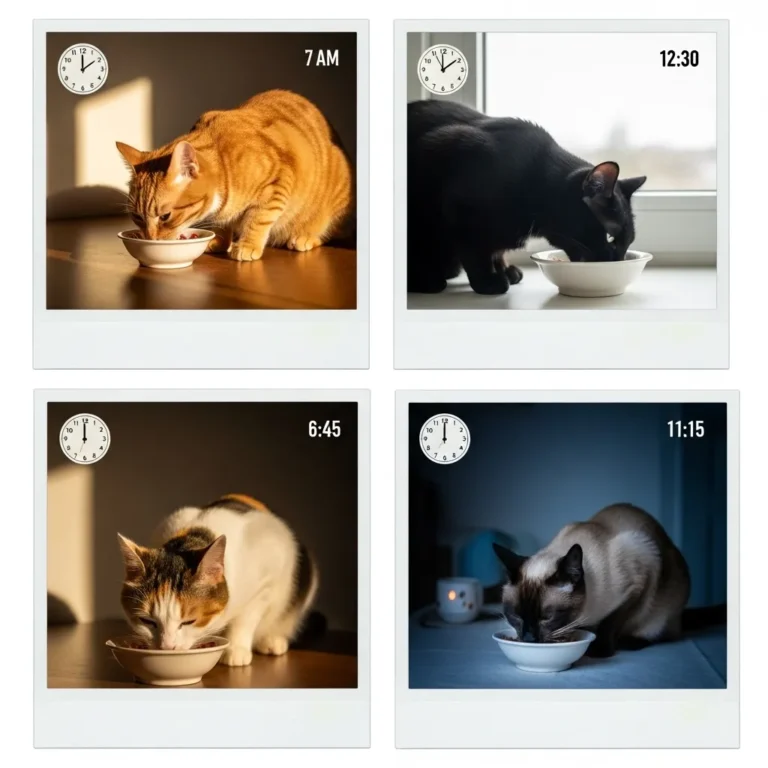
Four to six mini portions spread through the day often works better than two big ones. - Rotate proteins and brands every few cans
Novelty prevents boredom and reduces the chance of developing new dislikes.
What to Do If Your Cat Stopped Eating Wet Food Suddenly
A sudden refusal in a cat who previously loved canned food is usually a red flag. Check these in order:
- Dental pain (broken tooth, gingivitis, stomatitis)
- Nausea from kidney disease, GI upset, or pancreatitis
- Stress (new pet, moved furniture, construction noise)
- Expired or rancid food (always smell the can)
If the refusal lasts more than 24–36 hours, or you notice weight loss, vomiting, or lethargy, call your vet the same day. Cats can develop hepatic lipidosis (fatal liver failure) in as little as 2–3 days without eating.
Related: Why your cat is not eating anymore – full guide
Natural Cat Appetite Stimulants That Are Vet-Safe
Sometimes you need a gentle boost. These are my go-to recommendations:
- FortiFlora probiotic powder (sprinkle on food)
- A drop of low-sodium chicken broth or tuna water
- Pet Wellbeing “Thrive” herbal appetite tincture
- Mirataz (prescription ointment on the ear – works miracles for seniors)
Never use human appetite stimulants like mirtazapine pills without veterinary guidance.
Storing Wet Cat Food Properly (So It Doesn’t Turn Your Cat Off)
- Opened cans: transfer to glass or plastic container with tight lid, refrigerate max 3–4 days.
- Never serve straight from the metal can – it can taste metallic.
- Freeze in ice-cube trays for perfect single portions if your cat only eats a tablespoon at a time.
See our complete guide: storing wet cat food properly
Frequently Asked Questions
How can I make wet food more appetizing for my cat?
Warm it slightly, add a tasty topper, and serve in a wide shallow dish. Temperature is usually the biggest factor.
Is it OK if my cat only eats dry food?
Short term, yes. Long term, no – especially for male cats prone to urinary crystals and blockages.
Why did my cat suddenly stop eating wet food?
Dental pain and nausea are the two most common medical causes. Stress and food rancidity are close runners-up.
What foods are irresistible to most cats?
Warm chicken or turkey baby food (no onion/garlic), Tiki Cat After Dark, Weruva Paw Lickin’ Chicken, and plain boiled chicken are consistent winners.
Can I mix wet and dry food forever?
Absolutely. Many owners settle at 70% wet / 30% dry and everyone stays happy and healthy.
Final Thoughts
Getting your cat to eat wet food doesn’t have to be a daily battle. Start with warmth, respect their texture preferences, and move slowly. Most cats who “hate” wet food simply haven’t been offered it in the way nature intended fresh, body-temperature, and full of aroma.
Once they make the switch, you’ll notice shinier coats, smaller and less smelly poop, and most importantly fewer scary emergency vet visits for urinary issues.
Ready for more practical cat parenting advice? Explore the rest of Cat Bloom Haven – from breed-specific guides to senior cat care and everything in between.
Your cat’s nine lives will thank you.
Discover more cat feeding tips and nutrition guides here at Cat Bloom Haven