Protein in Cat Food: The Ultimate Guide to Fueling Your Feline’s Health and Vitality
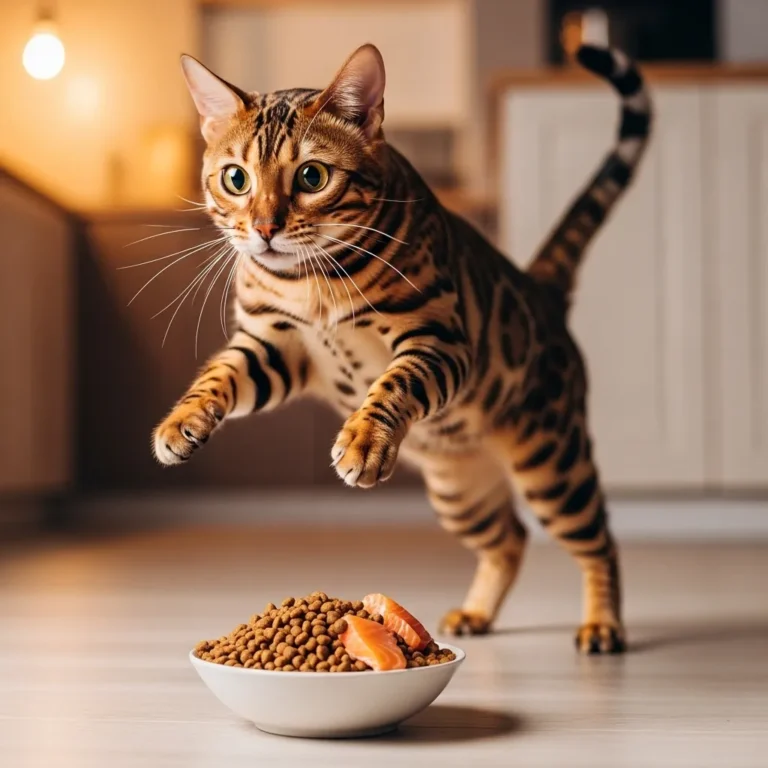
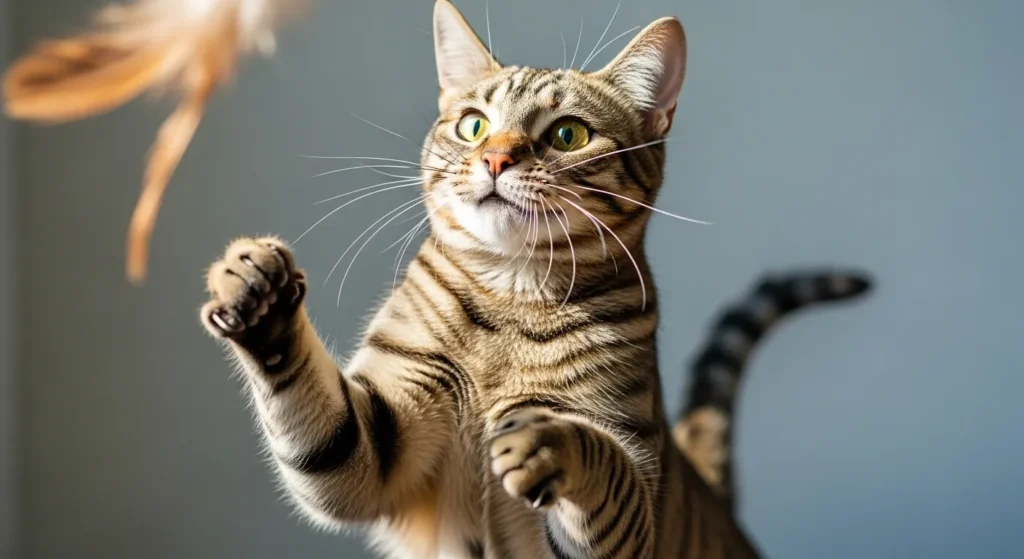
Picture this: Your sleek, playful cat leaps onto the counter, eyes locked on the treat jar, muscles rippling under glossy fur. That energy, that grace it all starts with one critical nutrient: protein in cat food. But here’s the catch most owners miss: not all protein is created equal, and feeding the wrong kind (or wrong amount) can quietly sabotage your cat’s health over time.
If you’ve ever stared at a cat food label wondering “How much protein should cat food have?” or felt confused by terms like “crude protein” and “dry matter basis,” you’re not alone. This comprehensive cat nutrition guide cuts through the noise to give you vet-backed, actionable answers—plus the exact tools to analyze any label like a pro.
Key Takeaways (Read This First):
- Cats are obligate carnivores—they must get most calories from animal-based protein.
- Adult cats need 26–30% protein on a dry matter basis; kittens need 30–40%.
- “Crude protein” on labels doesn’t tell the full story—focus on protein quality and digestibility.
- Wet food often delivers higher usable protein than dry kibble.
- Too little protein = muscle loss, dull coat, weak immunity. Too much? Only a myth for healthy cats.
Ready to become your cat’s personal nutritionist? Let’s dive in.
Why Protein Is Non-Negotiable in Your Cat’s Diet
Cats aren’t just carnivores—they’re obligate carnivores. That means their bodies evolved to thrive on meat, not plants. Unlike dogs (or humans), cats can’t efficiently convert plant proteins into essential amino acids like taurine, arginine, and methionine.
Vet Insight: “A cat deprived of animal protein will develop heart disease, blindness, and organ failure within months,” says Dr. Lisa Pierson, DVM, founder of CatInfo.org.
Without adequate high-protein cat food, your cat’s body starts breaking down its own muscle for fuel—a process called catabolism. You’ll notice:
- Thinning fur
- Lethargy
- Frequent infections
- Slow wound healing
Explore our detailed guide on taurine for cats to see why this amino acid is a literal lifesaver.
How Much Protein Should Cat Food Have? The Science-Backed Numbers
The Association of American Feed Control Officials (AAFCO) sets minimums, but top vets recommend higher for optimal health.
| Life Stage | AAFCO Minimum (Dry Matter) | Optimal Range (Dry Matter) |
|---|---|---|
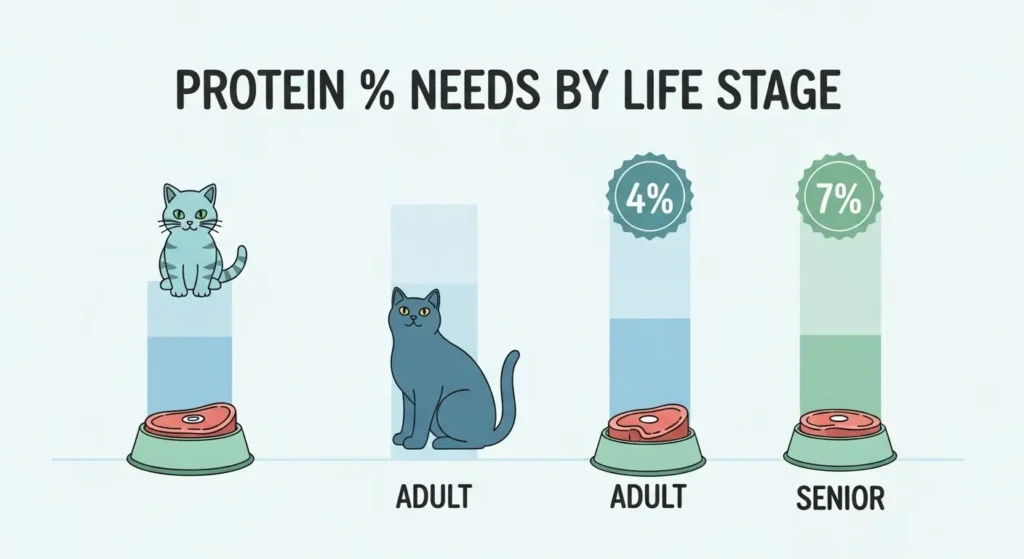
| Kittens (0–12 mo) | 30% | 35–40% |
| Adult Cats | 26% | 30–35% |
| Senior Cats | 26% | 28–32% |
| Pregnant/Nursing | 30% | 35–45% |
Pro Tip: Always evaluate cat food protein content on a dry matter basis—more on how to calculate this below.
Protein for Kittens vs Adult Cats: Why Growing Cats Need More
Kittens aren’t just mini adults—they’re growth machines. Their protein needs skyrocket to build:
- Muscle tissue
- Immune cells
- Brain development
- Organ systems
A 6-month-old kitten eating adult food risks stunted growth and developmental delays. Switch to kitten formulas until 12 months (or 18 months for large breeds like Maine Coons—discover more in our Maine Coon cat guide).
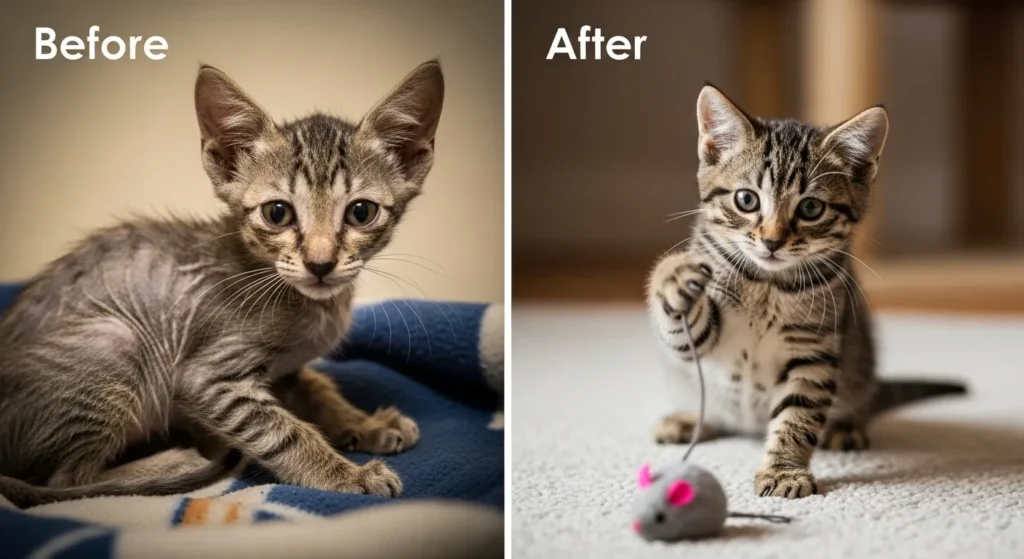
Real-Life Example: Sarah adopted a rescue kitten fed grocery-store adult kibble. At 8 months, he was half the size of his littermates. A switch to 38% protein wet food sparked a 3-month growth spurt—he caught up completely.
Animal vs Plant Protein in Cat Food: The Digestibility Difference
Not all proteins are equal. Here’s the breakdown:
| Protein Type | Digestibility | Taurine? | Best For Cats? |
|---|---|---|---|
| Chicken, Fish, Turkey | 90–98% | Yes | ⭐⭐⭐⭐⭐ |
| Beef, Lamb, Duck | 85–95% | Yes | ⭐⭐⭐⭐ |
| Egg, Dairy | 95–100% | Yes | ⭐⭐⭐⭐⭐ |
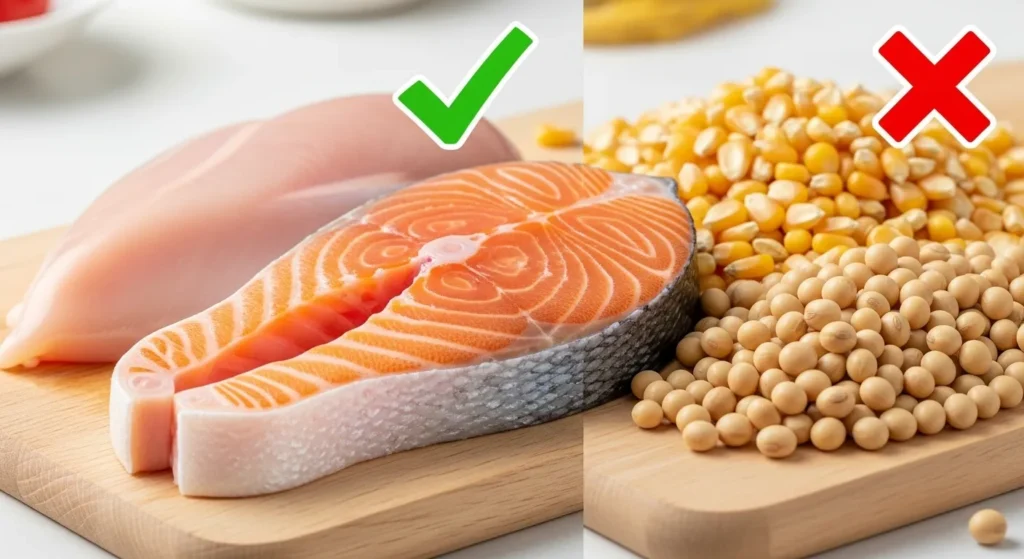
| Soy, Corn, Wheat | 70–80% | No | ❌ Avoid |
Why It Matters: Cats digest animal protein nearly completely. Plant proteins pass through mostly unused—meaning your cat gets fewer usable amino acids despite a high “crude protein” number.
Sneaky Label Trick: A food listing “corn gluten meal” as the first ingredient may hit 32% crude protein—but your cat only absorbs ~70% of it.
What Does Crude Protein Mean in Cat Food? (And Why It’s Misleading)
Crude protein is a lab estimate of total protein based on nitrogen content. It includes:
- Usable amino acids
- Non-protein nitrogen (feathers, hooves, beaks)
- Indigestible fiber
The Problem: Two foods can both say “30% crude protein,” but one fuels muscle while the other fuels… the litter box.
How to Spot Quality:
- First 3 ingredients = named meats (e.g., “chicken,” not “meat by-products”)
- No “corn gluten” or “wheat gluten” in top 5
- Includes taurine (listed separately)
Learn more in our guide on meat by-products in cat food to decode sneaky labels.

How to Calculate Protein in Cat Food (Dry Matter Basis)
Wet food is 78% water. Dry food is 10%. Comparing “as-fed” percentages is useless.
Step-by-Step Formula:
- Find moisture % on label
- Subtract from 100 → dry matter %
- Divide crude protein % by dry matter %
- Multiply by 100
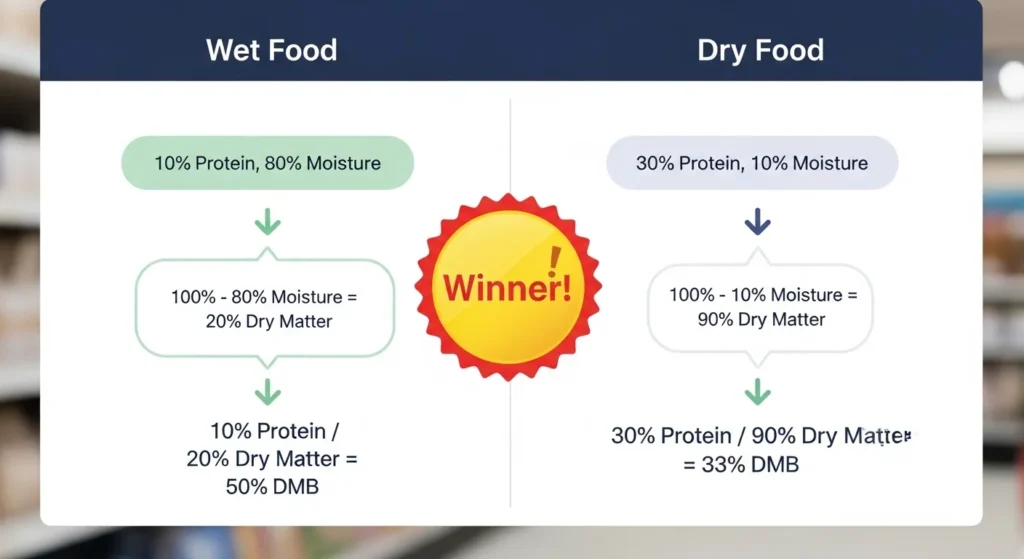
Example: Wet Food Label
- Crude Protein: 10%
- Moisture: 80%
- Dry Matter = 100 – 80 = 20%
- Protein (DMB) = (10 ÷ 20) × 100 = 50%
Example: Dry Food Label
- Crude Protein: 30%
- Moisture: 10%
- Dry Matter = 90%
- Protein (DMB) = (30 ÷ 90) × 100 = 33.3%
Winner? The wet food—by a landslide.
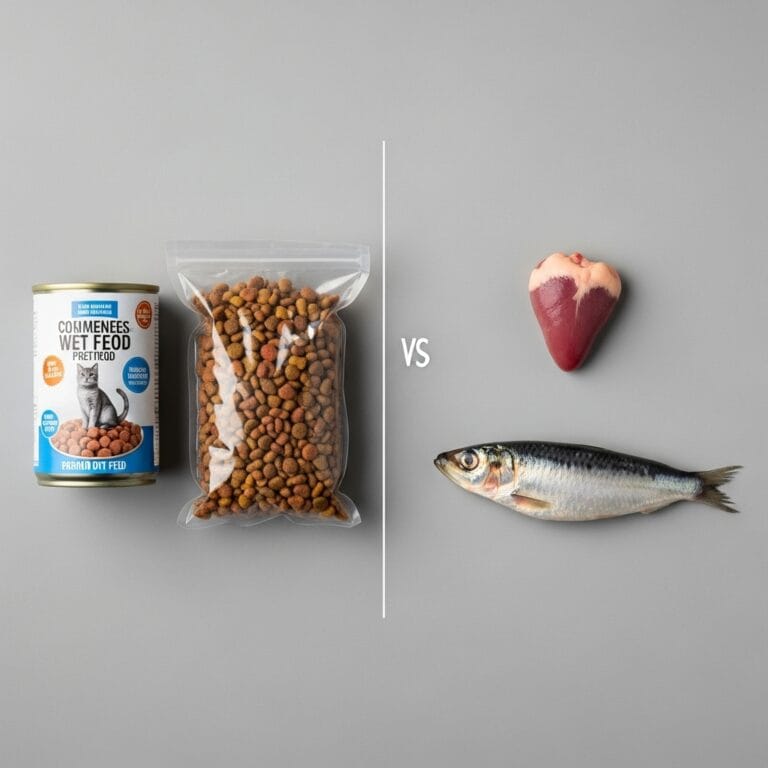
Dry vs Wet Cat Food Protein: Which Delivers More Usable Fuel?
| Factor | Dry Food | Wet Food |
|---|---|---|
| Protein (DMB) | 30–40% | 40–55% |
| Moisture | 10% | 75–80% |
| Carbs | 25–50% | <10% |
| Calories/cup | High | Lower |
| Hydration Boost | ❌ No | ✅ Yes |
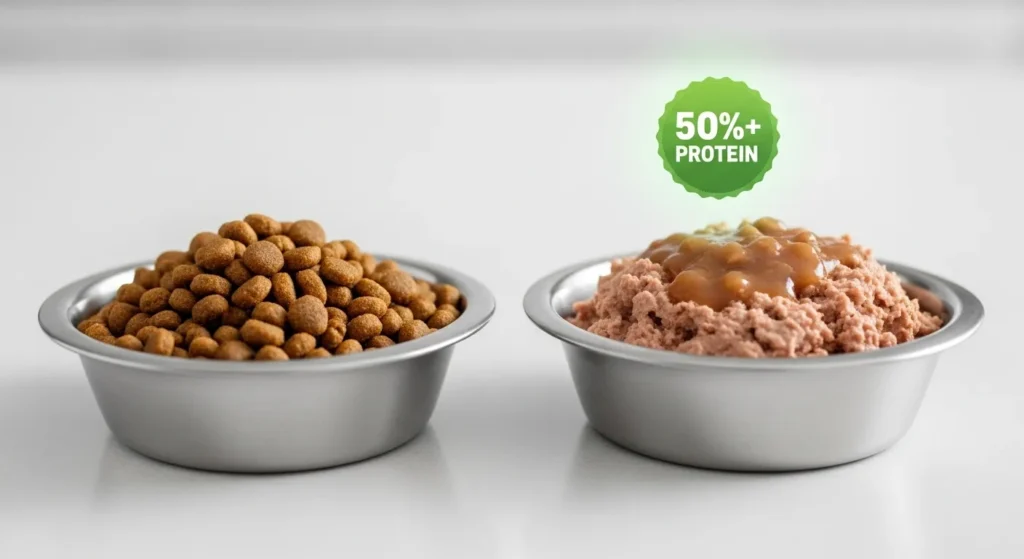
Bottom Line: Wet food wins for protein quality, hydration, and weight control. Use dry as a supplement or for dental health.
Is Too Much Protein Bad for Cats? Busting the Kidney Myth
You’ve heard it: “High protein damages kidneys.” False—for healthy cats.
The Truth:
- No evidence links high-protein diets to kidney disease in healthy cats.
- Cats with existing CKD may need moderated protein—but only under vet guidance.
- Excess protein is safely converted to energy or excreted.
Study Spotlight: A 2023 study in Journal of Feline Medicine and Surgery found cats on 45% protein diets had better muscle mass and no kidney stress vs. 30% diets.
Best Protein Sources for Cats: From Classic to Cutting-Edge
Top Tier (95%+ Digestibility)
- Whole chicken/turkey
- Salmon, sardines, mackerel
- Egg whites
- Duck, rabbit
Emerging Stars (Sustainable & Novel)
- Insect protein (black soldier fly larvae) – 90% digestible, eco-friendly
- Cultured meat – lab-grown chicken (coming 2026)
- Single-cell protein – yeast-based, hypoallergenic
Trending: High-protein grain-free cat food with insect protein is exploding—perfect for allergies and sustainability. Explore sustainable protein sources in cat food.
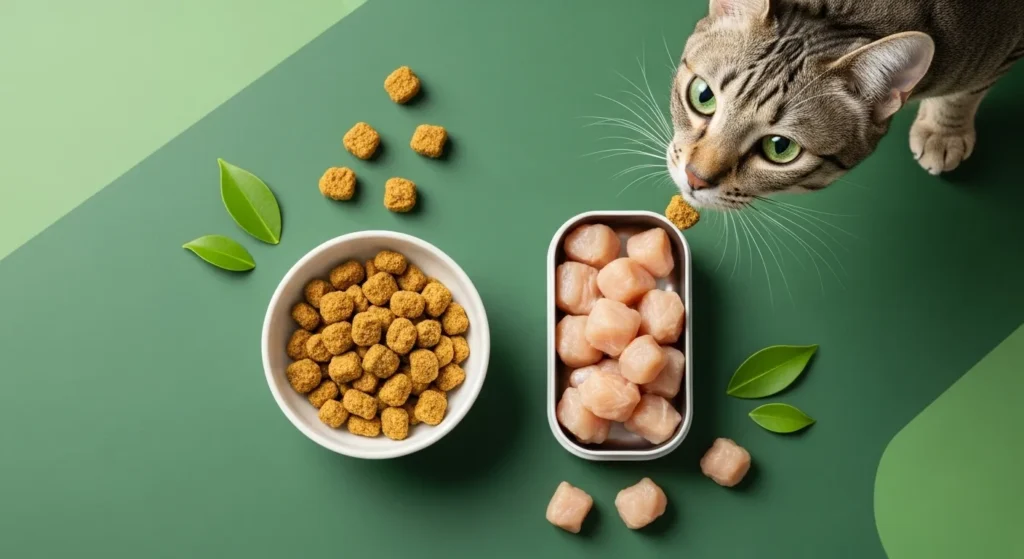
How to Read Cat Food Protein Labels Like a Pro
Guaranteed Analysis is your roadmap. Here’s what to check:
| Label Term | What It Means | Red Flag? |
|---|---|---|
| Crude Protein (min) | Minimum % (as-fed) | Low % |
| Ingredients List | First = most abundant | By-products #1 |
| Taurine (min) | Essential amino acid | Missing |
| AAFCO Statement | Meets nutritional standards | “Intermittent feeding” |
Pro Move: Scan for “complete and balanced” + named meats in top 3.
Protein Requirements for Cats: Tailoring to Life Stage & Lifestyle
Kittens (0–12 months)
- 35–40% DMB
- 3–4 meals/day
- Wet food preferred
Adult Cats (1–7 years)
- 30–35% DMB
- 2 meals/day
- Adjust for activity (indoor vs outdoor)
Senior Cats (7+ years)
- 28–32% DMB
- Highly digestible sourcesp
- Add joint support (see senior cat care)
Special Cases
| Condition | Protein Adjustment |
|---|---|
| Hyperthyroidism | ↑ 35–40% |
| Kidney Disease (early) | ↓ 26–30% (vet-guided) |
| Obesity | ↑ Protein, ↓ Carbs |
High-Protein Cat Food Benefits: Beyond Muscle
- Lean muscle maintenance
- Satiety → less overeating
- Shiny coat (from amino acids)
- Strong immunity
- Stable energy (no carb crashes)
Case Study: A Bengal owner switched from 28% kibble to 52% wet food. Result? 1 lb fat loss, zero muscle loss, and endless zoomies.
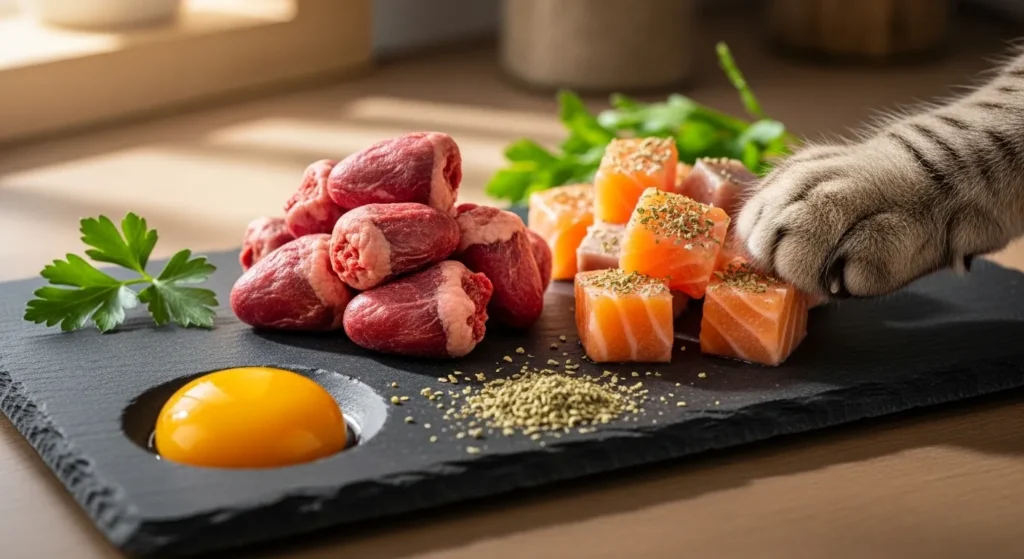
Veterinarian-Recommended High-Protein Cat Food Strategies
- Rotate proteins (chicken → fish → duck) to prevent allergies
- Combine wet + dry for dental + hydration benefits
- Transition slowly over 7–10 days
- Monitor body condition monthly
Book a vet visit? Check our guide to finding the best vet for your cat.
Raw Diet for Cats: Protein Paradise or Risky Business?
Raw diets deliver 50–60% protein (DMB) with zero carbs. Benefits:
- Maximal digestibility
- Natural enzymes
- Dental health
Risks:
- Bacterial contamination (Salmonella, E. coli)
- Nutrient imbalances (if homemade)
Safest Bet: Commercially prepared freeze-dried cat food protein or human-grade raw with HPP (high-pressure pasteurization).
Cat Food Label Analysis: Your 60-Second Checklist
- Moisture <78%? → Wet food likely higher protein
- First ingredient = meat? ✅
- Taurine listed? ✅
- Grain-free or low-carb? Bonus
- AAFCO “all life stages”? Ideal for multi-cat homes
FAQ: Your Protein in Cat Food Questions Answered
What is the best protein level for cats?
30–35% on dry matter for adults; 35–40% for kittens. Prioritize animal sources.
How do I calculate protein on dry matter basis?
(Crude Protein % ÷ (100 – Moisture %)) × 100
Is crude protein the same as usable protein?
No. Crude includes indigestible parts. Focus on ingredient quality.
Can cats have too much protein?
Only if they have kidney disease. Healthy cats thrive on 40%+.
What’s the best protein source for cats?
Named meats (chicken, fish, turkey) or egg. Avoid plant proteins.
Wet or dry food for higher protein?
Wet—often 45–55% DMB vs. dry’s 30–40%.
Do senior cats need less protein?
No. They need highly digestible protein to maintain muscle.
Final Thoughts: Feed for Life, Not Just for Dinner
Your cat’s food isn’t just calories—it’s the blueprint for every purr, leap, and midnight zoomie. By prioritizing high-quality protein in cat food, you’re investing in:
- A stronger heart
- A sharper mind
- A longer, happier life
Start tonight: Grab a can of wet food with 45%+ protein (DMB), calculate it yourself, and watch your cat transform.
Hungry for more? Explore expert cat care and behavior guides on Cat Bloom Haven. From American Shorthair playful personalities to Norwegian Forest cat weight guides, we’ve got your feline covered.
Your cat’s health starts in the bowl. Make it count. 🐾