The Essential Guide to Taurine for Cats: Why This Amino Acid Is Non-Negotiable for Feline Health
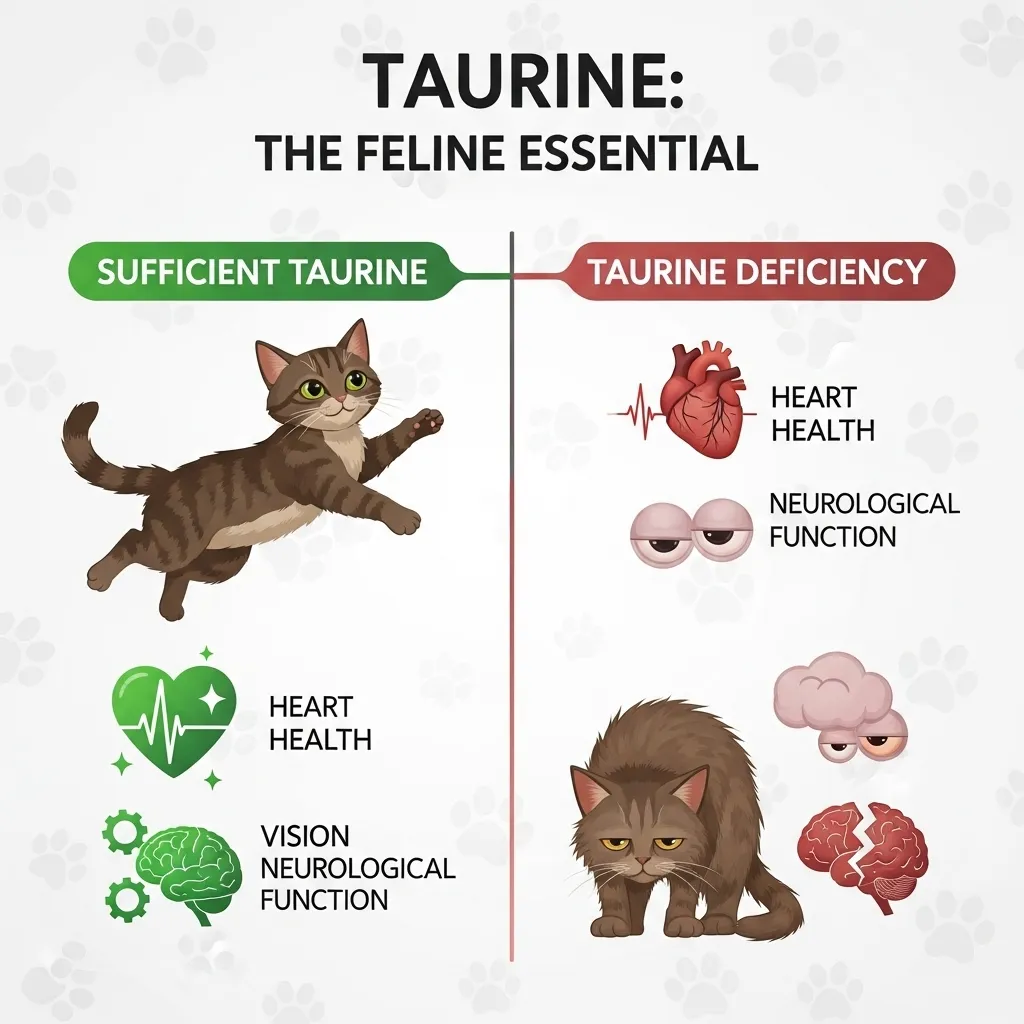
If you’ve ever turned over a bag of cat food and scanned the ingredients, you’ve likely seen “taurine” listed near the top. But what is this nutrient, and why is its presence so critical that it’s added to every commercially prepared cat food? The role of taurine in feline health and diets is not just a minor detail it’s the cornerstone of your cat’s vitality, affecting everything from their vision and heart to their ability to reproduce.
Unlike humans and dogs, cats cannot synthesize enough taurine internally and must obtain it directly from their diet. A deficiency can lead to devastating, irreversible health conditions. This comprehensive guide will dive deep into the science of taurine, explain why it’s indispensable for cats, and provide you with the practical knowledge to ensure your feline friend thrives for years to come.
Key Takeaways: Taurine at a Glance
Before we explore the depths, here are the most critical points every cat owner must know:
- Absolute Requirement: Taurine is an essential amino acid for cats. Their bodies cannot produce enough of it, making dietary intake mandatory.
- Critical Functions: It is vital for vision, heart muscle function, digestion, and a healthy immune and nervous system.
- Deficiency is Serious: A lack of taurine can lead to feline central retinal degeneration (blindness), dilated cardiomyopathy (a fatal heart disease), and reproductive failures.
- Found in Meat: Taurine is found almost exclusively in animal-based proteins meat, fish, and organs. It is not present in plant matter.
- Cooking Can Destroy It: High-heat processing can degrade taurine, which is why commercial foods are carefully fortified after cooking.
- Homemade Diets are Risky: Preparing a taurine-sufficient homemade diet is complex and requires veterinary guidance to avoid severe deficiency.
Understanding the role of taurine in feline health and diets is the first step in becoming a truly informed and proactive pet parent. Let’s unravel the science behind this tiny but mighty molecule.
What Exactly is Taurine? Beyond the Label
Taurine is a sulfur-containing amino acid, often referred to as a “conditional” or “essential” amino acid. While humans and some other animals can synthesize taurine from other amino acids (cysteine and methionine), cats have a severely limited enzymatic capacity to do this. Their liver produces only negligible amounts, which is biologically insignificant for their needs.
This evolutionary quirk is tied directly to the feline identity as obligate carnivores. In the wild, a cat’s diet of rodents, birds, and small prey provided ample taurine from fresh muscle meat and organs, particularly the heart and eyes. There was never a biological pressure to develop the internal machinery to make it; their food always supplied it. This is why the role of taurine in feline health and diets is so absolute it’s a nutrient hardwired into their carnivorous blueprint.
The Lifesaving Functions of Taurine in Your Cat’s Body
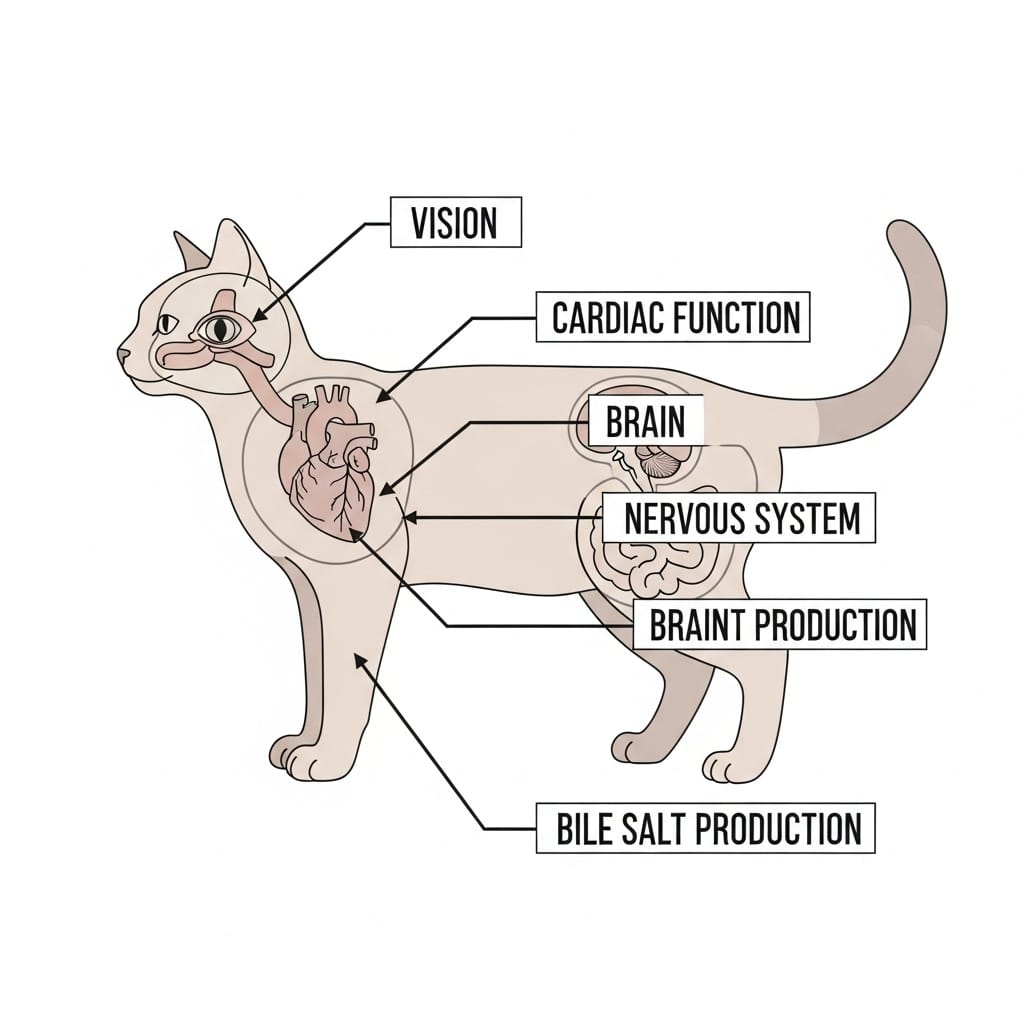
To call taurine “important” is an understatement. It is a fundamental building block for health. Here’s how it operates system by system:
1. Guardian of Vision: Protecting the Retina
The photoreceptor cells in a cat’s retina contain some of the highest concentrations of taurine in their entire body. Taurine acts as a photoreceptor stabilizer and antioxidant, protecting these delicate cells from light-induced damage and degeneration.
- Consequence of Deficiency: Without sufficient taurine, these cells begin to die. This condition, called Feline Central Retinal Degeneration (FCRD), leads to irreversible blindness. The scary part? It’s a gradual process. You may not notice your cat’s failing sight until significant damage is done, as cats adapt remarkably well to decreasing vision in familiar environments.
2. The Heart’s Best Friend: Preventing Dilated Cardiomyopathy (DCM)
Taurine is crucial for maintaining the normal contractile strength of the heart muscle. It regulates calcium flow in and out of heart cells, ensuring strong, regular beats.
- Consequence of Deficiency: A taurine-deficient heart muscle weakens, thins, and dilates—a condition known as Dilated Cardiomyopathy (DCM). The heart becomes a floppy, inefficient pump, leading to congestive heart failure. In the late 1980s, a surge in DCM cases was directly linked to taurine-deficient commercial diets. Once the industry corrected taurine levels, the incidence of diet-related DCM plummeted. This historical event cemented the non-negotiable role of taurine in feline health and diets.
3. The Digestive Partner: Forming Bile Salts
Taurine is a key component for conjugating bile acids in the liver. These taurine-conjugated bile salts are secreted into the intestines to emulsify and absorb dietary fats and fat-soluble vitamins (A, D, E, K).
- Consequence of Deficiency: Poor fat digestion can lead to steatorrhea (fatty, greasy stools), weight loss despite a good appetite, and deficiencies in critical fat-soluble vitamins.
4. Supporting the Nervous & Immune Systems
Taurine acts as a neuromodulator, helping to calm the nervous system. It’s involved in the development and function of the central nervous system and may have anti-anxiety and neuroprotective properties. It also supports immune cell function, helping your cat fight off infections.
5. Reproduction and Growth
Taurine is vital for fetal development and kitten growth. Deficient queen cats (mothers) experience poor fertility, small litter sizes, low birth weights, and kittens with congenital abnormalities. Kitten survival rates are drastically reduced.
Taurine in Commercial Cat Food: How It’s Managed
Knowing that cooking destroys taurine, you might wonder how dry kibble, which is extruded at high temperatures, contains any at all. The pet food industry manages this through a process called post-processing fortification.
- Loss: High-heat cooking (canning, extrusion for kibble) degrades a significant portion of the naturally occurring taurine in the raw meat ingredients.
- Analysis & Addition: After cooking, the finished product is tested. Synthetic or natural taurine (derived from animal sources) is then sprayed onto the kibble or mixed into canned food to bring levels back up to—and often above the established minimum requirements set by organizations like the Association of American Feed Control Officials (AAFCO).
This is why all AAFCO-compliant commercial cat foods are reliable sources of taurine. The formulation is precise and tested for nutritional adequacy.
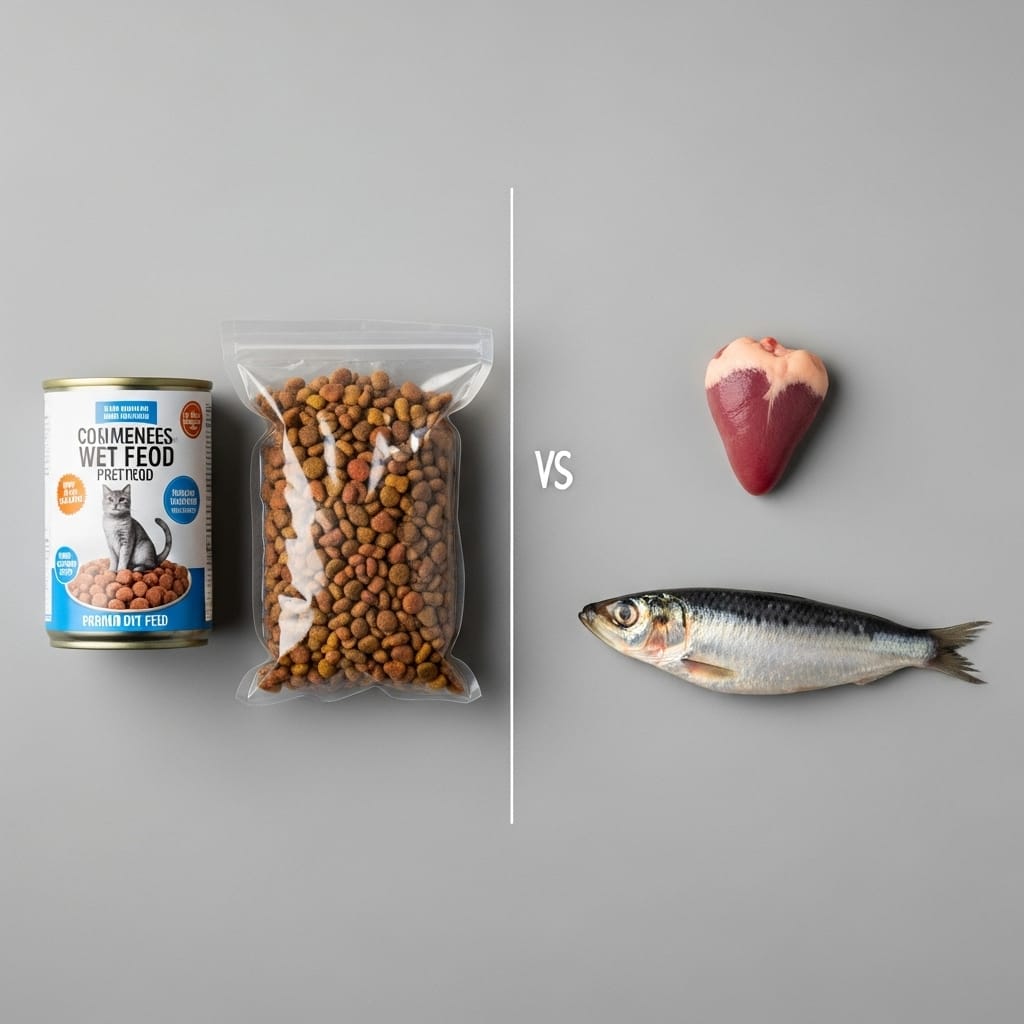
The High-Risk Path: Taurine in Homemade and Alternative Diets
This is where understanding the role of taurine in feline health and diets becomes critically practical. The rise in popularity of homemade raw or cooked diets, while often well-intentioned, poses the single greatest risk for taurine deficiency in modern cats.
- Homemade Diets: Simply grinding up chicken breast and adding vegetables is a recipe for disaster. Muscle meat alone is not sufficient. Specific organs (like heart) are richer sources, but the balance is delicate. Any homemade diet must be formulated by a veterinary nutritionist (DACVIM) who will prescribe a precise taurine supplement.
- Vegan/Vegetarian Diets: These are profoundly dangerous and unethical for cats. There is no plant-based source of taurine that meets a cat’s requirements. Synthetic taurine used to fortify plant-based commercial products may not be bioavailable enough, and these diets fail as obligate carnivore nutrition on multiple other levels (protein, vitamin A, arachidonic acid, etc.).
- Dog Food: Feeding dog food to a cat is a severe taurine risk. Dog food is not fortified with taurine to feline levels, as dogs can synthesize it. Chronic dog food consumption will lead to a fatal deficiency.
Explore our detailed guide on cat food nutrition to understand the full spectrum of feline dietary needs beyond taurine.
Do Cats Need Taurine Supplements?
For the vast majority of cats eating a high-quality, AAFCO-compliant commercial diet, additional taurine supplements are unnecessary and not beneficial. It is a water-soluble vitamin; excess is simply excreted in urine.
However, supplementation is crucial and life-saving in specific scenarios under veterinary supervision:
- Diagnosed Deficiency or DCM: Cats with DCM are immediately placed on high-dose taurine supplements, which can lead to dramatic improvements in heart function.
- Veterinary-Formulated Homemade Diets: As prescribed by a nutritionist.
- Certain Medical Conditions: Some diseases affecting digestion or kidney function may increase taurine loss or decrease absorption.
Never supplement blindly. If you are concerned about your cat’s diet, discuss it with your vet. Discover more tips in our article on choosing the right cat food.
Signs of Taurine Deficiency: What to Watch For
Deficiency develops slowly, over months or even years. Be vigilant for these subtle signs, especially if your cat is on a non-standard diet:
- Gradual vision loss: Bumping into objects, difficulty seeing in dim light, dilated pupils.
- Lethargy and weakness: Reduced interest in play or climbing.
- Poor coat quality: Dull, unkempt fur.
- Dental issues: Possibly linked to broader nutritional imbalances.
- Weight loss: Despite a normal or increased appetite.
- Reproductive problems: In unspayed females.
- In advanced stages: Symptoms of heart failure like labored breathing, coughing, or hind leg weakness due to blood clots.
If you notice any of these signs, consult your veterinarian immediately. A simple blood test can measure plasma taurine levels.
Frequently Asked Questions (FAQs)
Q: Can my cat get taurine from tuna or other “human” fish?
A: While fish like tuna and sardines contain taurine, feeding them as a primary diet is unbalanced and risky. “Tuna junkie” cats can develop nutritional deficiencies and are at risk for mercury exposure. Fish should only be an occasional treat.
Q: Is more taurine better for my cat?
A: No. Once the body’s needs are met, excess taurine is excreted. There is no proven health benefit to “megadosing,” and it places unnecessary strain on the kidneys. Stick to diets formulated to meet AAFCO standards.
Q: Does the type of protein (chicken, beef, fish) affect taurine levels?
A: Yes, bioavailability can vary. Dark poultry meat generally has more taurine than white meat. The pet food company accounts for this in their formulations, which is another reason trusting a complete commercial diet is safest.
Q: My cat is a picky eater and only likes one brand of food. Is that okay?
A: If that single brand is a nutritionally complete and balanced cat food, it is perfectly fine. Consistency is often better for a cat’s digestive system. Learn more about finicky felines in our guide why cats suddenly refuse food.
Q: Are some cat breeds more susceptible to taurine deficiency?
A: The requirement is universal across all domestic cats. However, cats with chronic diarrhea or digestive disorders (like inflammatory bowel disease) may have impaired absorption, making them more prone to deficiency regardless of diet.
Conclusion: The Simple Path to Ensuring Taurine Sufficiency
The profound role of taurine in feline health and diets underscores a beautiful simplicity in cat care: feed them like the carnivores they are. By providing a nutritionally complete and balanced commercial cat food from a reputable brand, you effortlessly fulfill this most basic and critical requirement. You protect their sight, fortify their heart, and support their entire well-being.
Resist the urge to experiment with unverified homemade recipes or trendy diets that deviate from their biological needs. The stakes your cat’s vision, heart health, and life are too high. When in doubt, your veterinarian and veterinary nutritionists are your best resources for navigating your cat’s nutritional journey.
Explore more expert cat care, behavior, and in-depth nutritional guides on Cat Bloom Haven. From understanding protein in cat food to managing specific health conditions, we’re here to help you create a flourishing life for your feline companion.