How to Read Cat Food Labels the Right Way
Feeding your cat well starts with understanding what is in their bowl. Many owners grab the first bag or can that looks appealing, but the label holds the real story. Learning how to read cat food labels the right way helps you spot quality nutrition and avoid misleading claims. It empowers you to make choices that support your cat’s health, from shiny coats to strong muscles and steady energy.
Cats are obligate carnivores. They thrive on animal-based proteins, not fillers or plant-heavy formulas. A good label reflects that biology. In this guide, we break down every section of a typical cat food label, explain common pitfalls, and share practical tips to choose better food.
Key Takeaways for Quick Reference
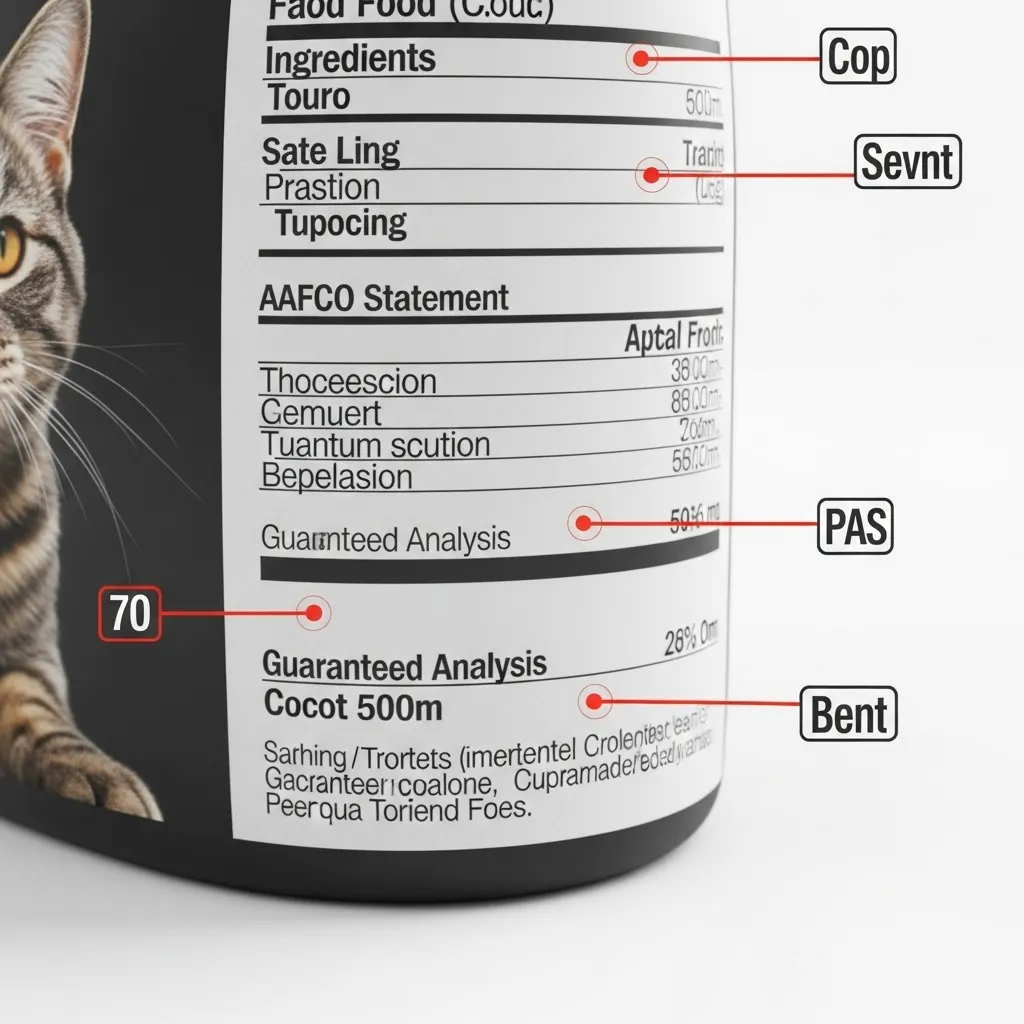
- Always check for an AAFCO statement confirming the food is “complete and balanced” for your cat’s life stage.
- Prioritize named animal proteins (like chicken or salmon) as the first ingredients.
- Compare foods on a dry matter basis to account for moisture differences between wet and dry options.
- Avoid vague terms like “meat by-products” without specifics and unnecessary fillers like corn or wheat.
- Look beyond marketing words like “premium” or “natural,” which often mean little.
These steps help you cut through the noise and pick food that truly nourishes your cat.
Why Reading Cat Food Labels Matters
Cat food labels follow strict rules from the FDA and AAFCO. They must list ingredients by weight and provide basic nutrient info. Yet marketing can obscure the truth. A bag with a happy cat and “gourmet” on the front might hide low-quality contents.
Poor nutrition leads to issues like obesity, urinary problems, dull coats, or digestive upset. High-quality food prevents these and supports longevity. Reading labels takes minutes but pays off in fewer vet visits and a happier cat.
The Main Parts of a Cat Food Label
Labels include several key sections. Start at the front, then move to the back or side for details.
1. Product Name and What It Really Means
The name reveals ingredient amounts through specific rules:
- “Chicken Cat Food”: At least 95% chicken (excluding water).
- “Chicken Dinner” or “Chicken Entrée”: At least 25% chicken.
- “With Chicken”: At least 3% chicken.
- “Chicken Flavor”: Just enough for taste, often minimal.
A name like “Tuna and Salmon Recipe” means those two together make up at least 25%, with tuna outweighing salmon.
Tip: Choose products where a named meat leads the name for substantial protein.
2. The AAFCO Nutritional Adequacy Statement
This is the most crucial part. It confirms if the food is complete and balanced.
Look for phrases like:
- “Formulated to meet AAFCO Cat Food Nutrient Profiles” (lab-tested recipe).
- “Animal feeding tests using AAFCO procedures substantiate…” (real cat trials, often preferred).
It specifies the life stage: kitten (growth), adult maintenance, or all life stages.
Avoid foods without this or labeled for “intermittent feeding” only.
3. Ingredients List: The Heart of the Label
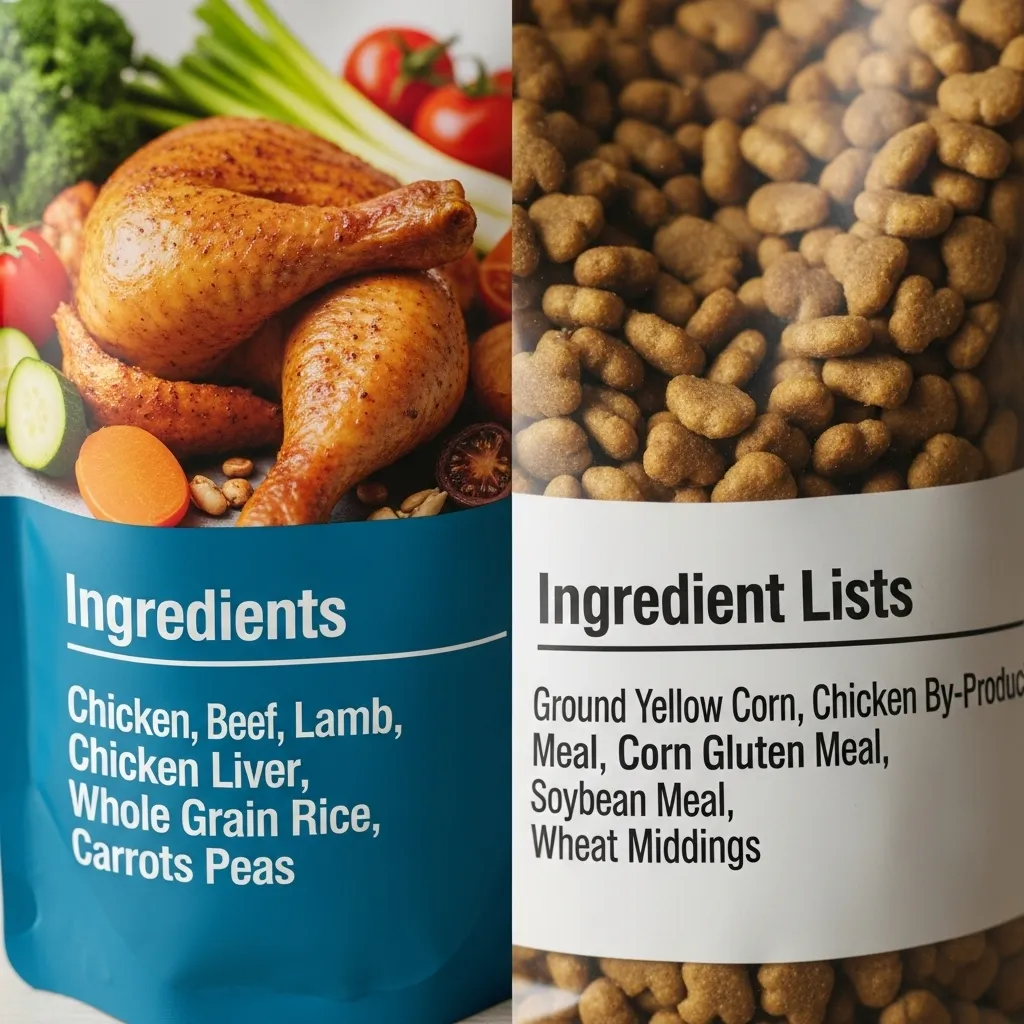
Ingredients appear in descending order by pre-cooking weight.
What to seek:
- Named animal proteins first: Chicken, turkey, salmon, lamb.
- Specific sources: “Chicken meal” (concentrated protein) beats vague “poultry by-product.”
- Organ meats like liver for natural nutrients.
What to watch:
- Fillers high on the list: Corn, wheat, soy (cheap carbs cats digest poorly).
- Vague terms: “Meat by-products” or “animal digest” (can include lower-quality parts).
- Artificial additives: Colors, BHA/BHT preservatives, carrageenan (linked to inflammation).
Shorter lists with recognizable items often signal higher quality.
4. Guaranteed Analysis: Nutrient Breakdown
This shows minimums for protein and fat, maximums for fiber and moisture.
It uses “as fed” basis, so wet food (78% moisture) looks lower in protein than dry.
To compare fairly:
- Calculate dry matter: Subtract moisture from 100%.
- Divide nutrient by dry matter percentage, then multiply by 100.
Example: Wet food with 10% protein and 78% moisture = (10 / 22) × 100 ≈ 45% protein on dry matter.
Adult cats need at least 26% protein and 9% fat (dry matter).
5. Feeding Guidelines and Calorie Info
These suggest daily amounts by weight. Adjust for your cat’s activity and body condition.
Calorie statements (kcal/kg or per can/cup) help manage weight.
6. Manufacturer Details
Reputable brands list contact info. Reach out with questions; good companies respond openly.
Wet vs. Dry Cat Food: Label Differences to Note
Wet and dry foods differ in moisture, affecting label numbers.
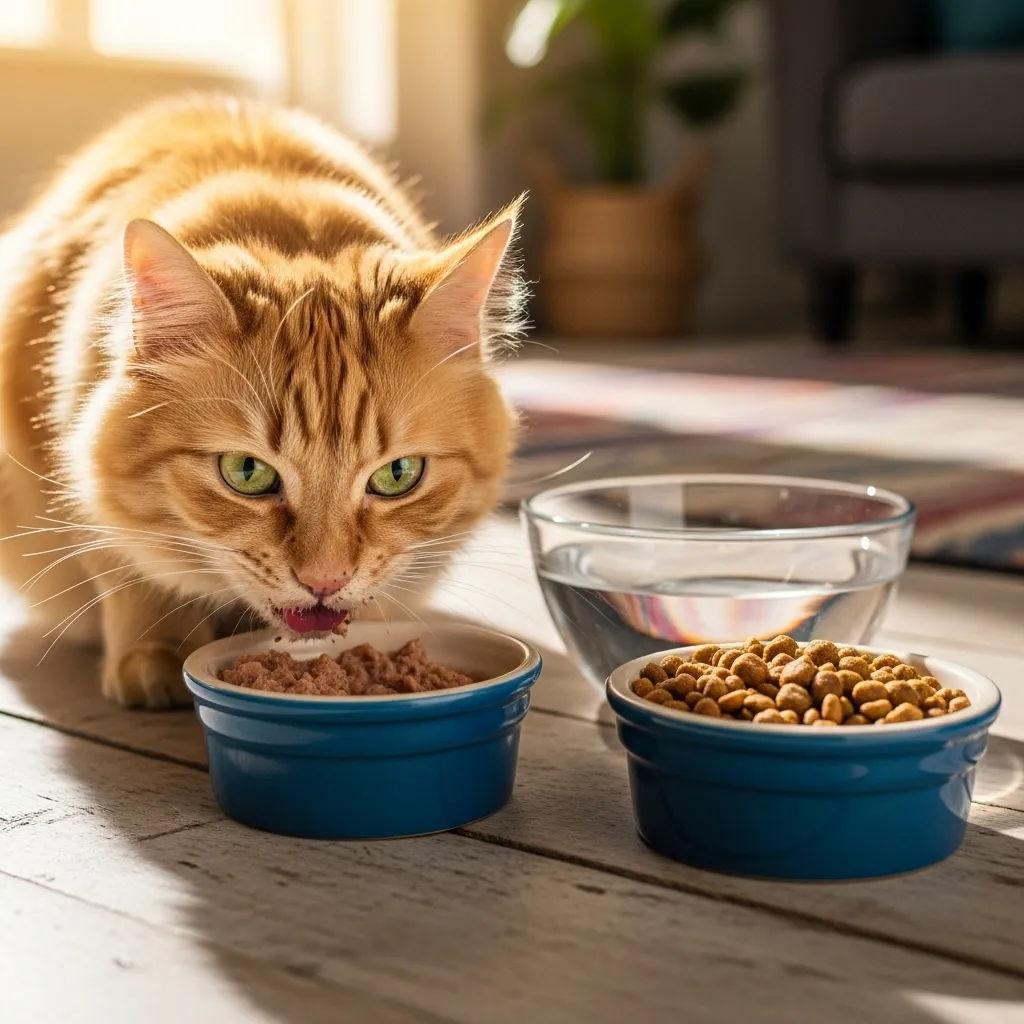
Wet:
- 70-80% moisture → Higher hydration, often more protein-focused.
- Labels show lower crude protein (but higher on dry matter).
Dry:
- 10-12% moisture → Convenient, but cats may need extra water.
- Often higher carbs for kibble structure.
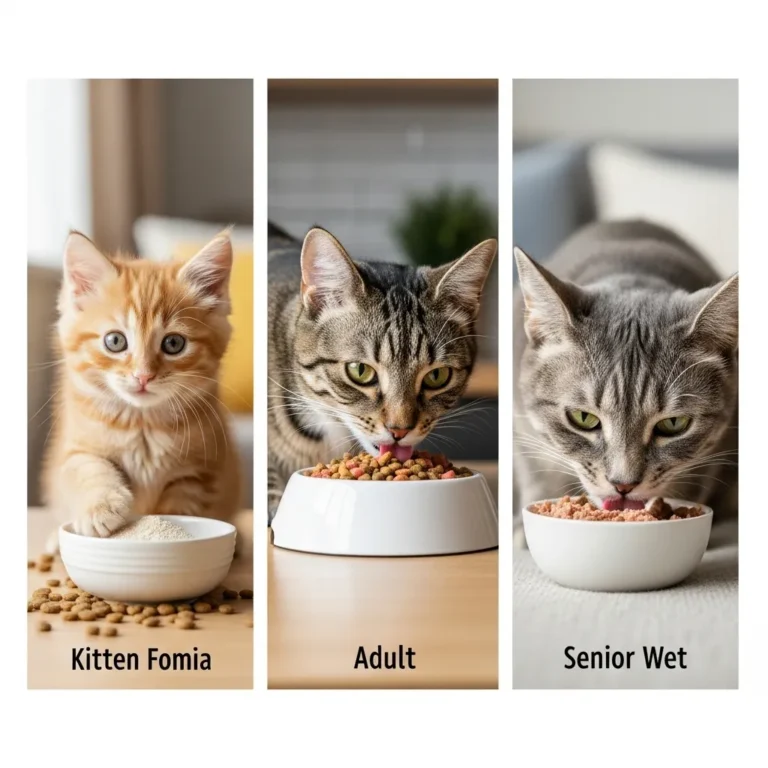
Many cats benefit from both: Wet for moisture, dry for convenience.
Common Misleading Claims and Red Flags
Marketing terms lack regulation:
- “Premium,” “gourmet,” “holistic”: No standards.
- “Natural”: Means minimal processing, but allows additives.
- “Grain-free”: Often swaps grains for peas/potatoes (still carby).
Red flags:
- Split ingredients (corn, corn gluten, corn meal) to hide carb volume.
- Heavy plant proteins early.
- Unnamed fats (“animal fat” vs. “chicken fat”).
Step-by-Step: Choosing High-Quality Cat Food
- Confirm AAFCO complete and balanced for your cat’s stage.
- Check first 3-5 ingredients for named meats.
- Review guaranteed analysis (dry matter for fairness).
- Skip unnecessary fillers and additives.
- Consider your cat’s needs (e.g., urinary support, weight control).
- Test small amounts and monitor response.
Explore our detailed guide on choosing cat food or best wet cat food for more tips.
Real-Life Examples
Consider two labels:
Budget dry: Ingredients start with corn, chicken by-product meal. Protein 30% (as fed), heavy fillers.
Premium wet: Chicken, chicken liver, turkey first. Protein 10% (as fed), but 45%+ dry matter.
The second aligns better with feline needs.
FAQ
How do I compare wet and dry cat food labels?
Convert to dry matter basis for accurate nutrient comparison.
Are by-products always bad?
Not necessarily; named ones (chicken by-product) can include nutritious organs. Avoid unnamed.
What if the label says “natural”?
It means limited processing, but check ingredients fully.
Is grain-free better?
No; cats handle some grains, but excess carbs from any source aren’t ideal.
How much protein does my cat need?
At least 26-30% on dry matter for adults; higher for kittens.
Can I trust “human-grade” claims?
Verify sourcing; it’s a bonus, not a guarantee.
Final Thoughts
Reading cat food labels the right way turns guesswork into confidence. Focus on animal proteins, balanced nutrients, and transparency over flashy packaging.
Your cat relies on you for these choices. Start with one label today and see the difference.
Explore more expert cat care and behavior guides on Cat Bloom Haven, like our cat health care section or best beds for American Shorthair cats.