Taurine for Cats: The Essential Nutrient That Safeguards Your Feline’s Heart, Eyes, and Lifelong Vitality
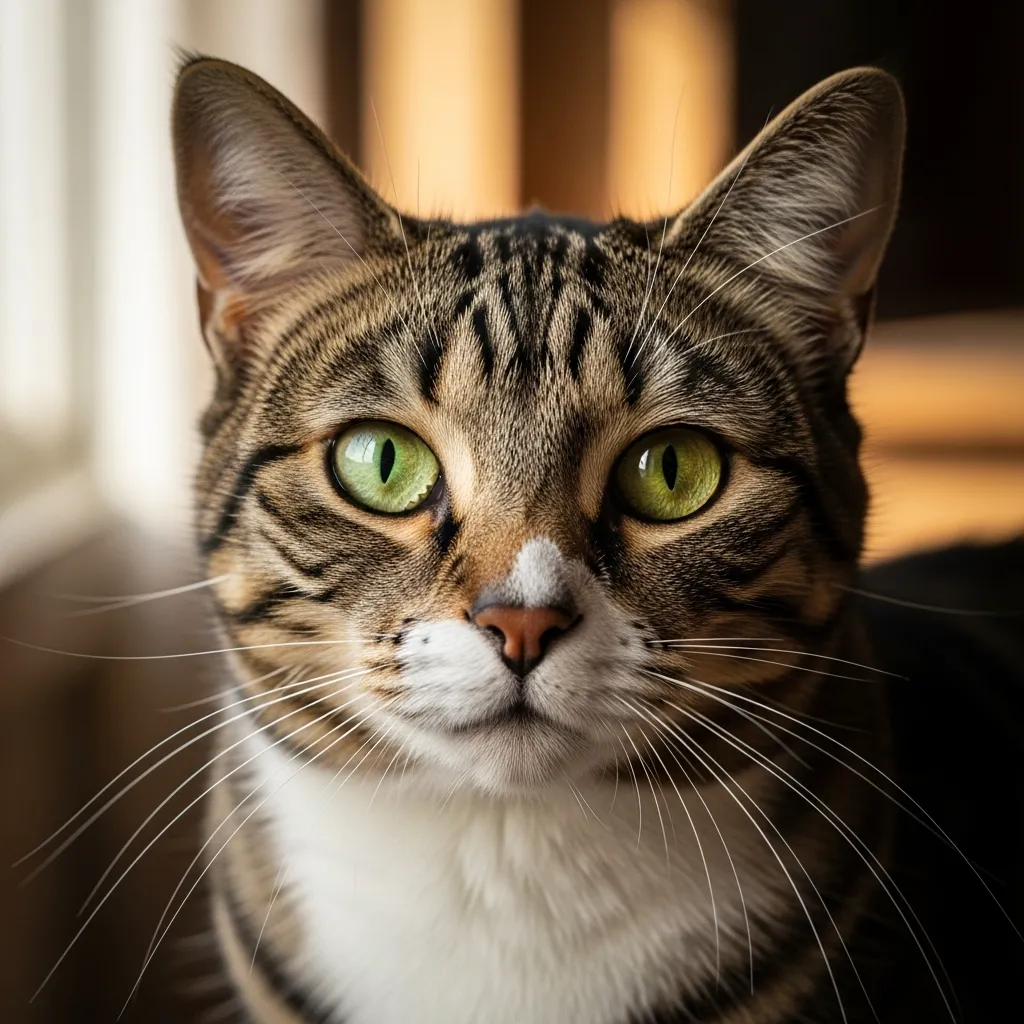
Imagine your sleek, playful cat suddenly bumping into furniture, squinting in bright light, or lethargically curling up instead of chasing that laser dot. These subtle shifts can signal a silent crisis brewing inside one tied directly to taurine for cats, an amino acid most pet parents overlook until it’s too late.
In this complete cat health guide, you’ll discover exactly why taurine isn’t optional in feline nutrition, how to spot taurine deficiency in cats before irreversible damage sets in, and how to choose taurine-rich cat food in 2025 that keeps indoor cats thriving. From daily taurine intake for cats to vet-approved taurine supplementation for cats, we’re breaking it all down with science, real-world examples, and zero fluff.
Key Takeaways Upfront (AEO-Friendly):
- Cats cannot synthesize taurine they must get it from diet.
- Minimum taurine requirements for cats: 10 mg/kg body weight daily (dry food); higher in wet formats.
- Early taurine deficiency symptoms: dilated pupils, central blindness, heart murmurs.
- Top taurine benefits for cats: prevents feline central retinal degeneration (FCRD) and dilated cardiomyopathy (DCM).
- Always verify cat food labels taurine content look for “taurine” listed separately, not bundled in “amino acids.”
Ready to give your cat the nutritional edge? Let’s dive into the science and practical steps that make cat wellbeing effortless.
What Is Taurine and Why Is It Non-Negotiable in Cat Nutrition Essentials?
Taurine is a sulfur-containing amino acid that dogs and humans can produce internally. Cats? Not so much. Evolution trimmed away the enzymes needed, leaving felines 100% reliant on dietary sources.
Think of taurine as the spark plug in your cat’s metabolic engine. It powers:
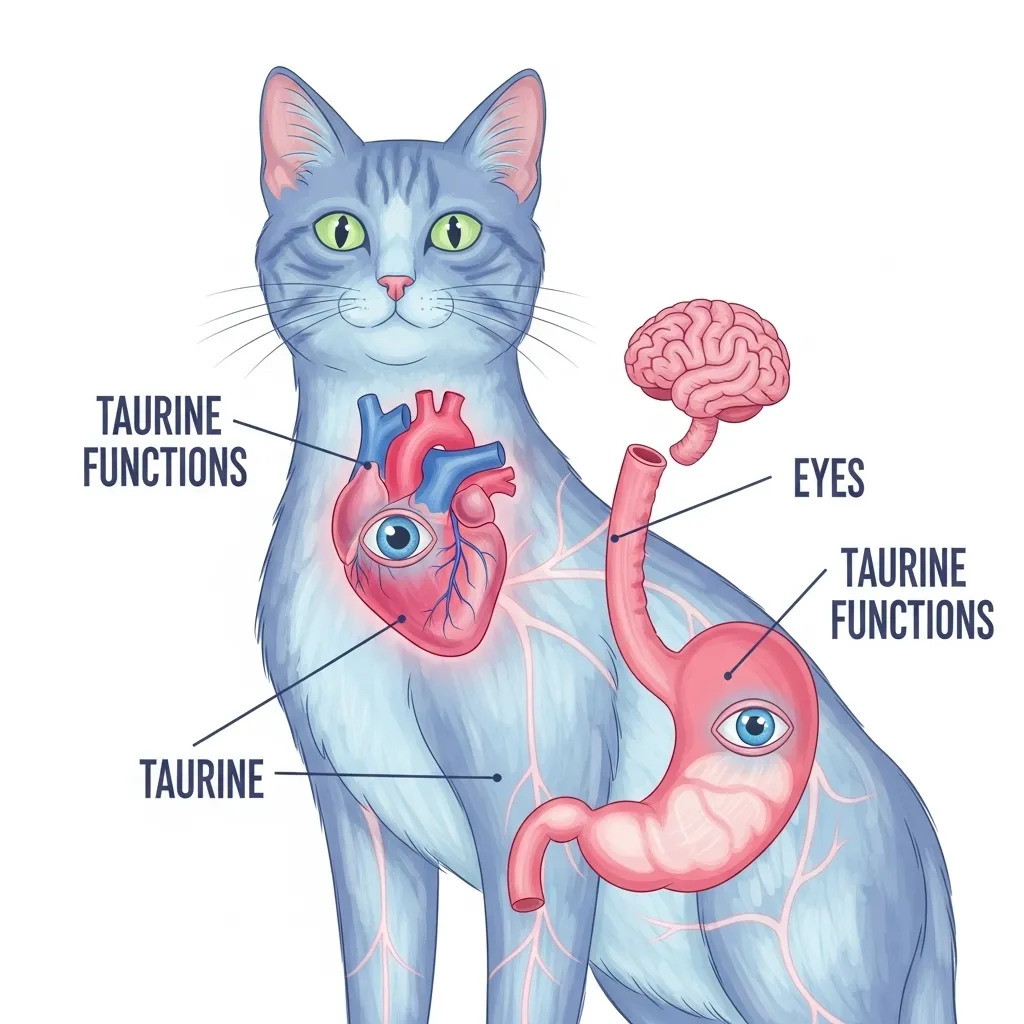
- Cat cardiac health by regulating heartbeat rhythm and preventing myocardial weakening.
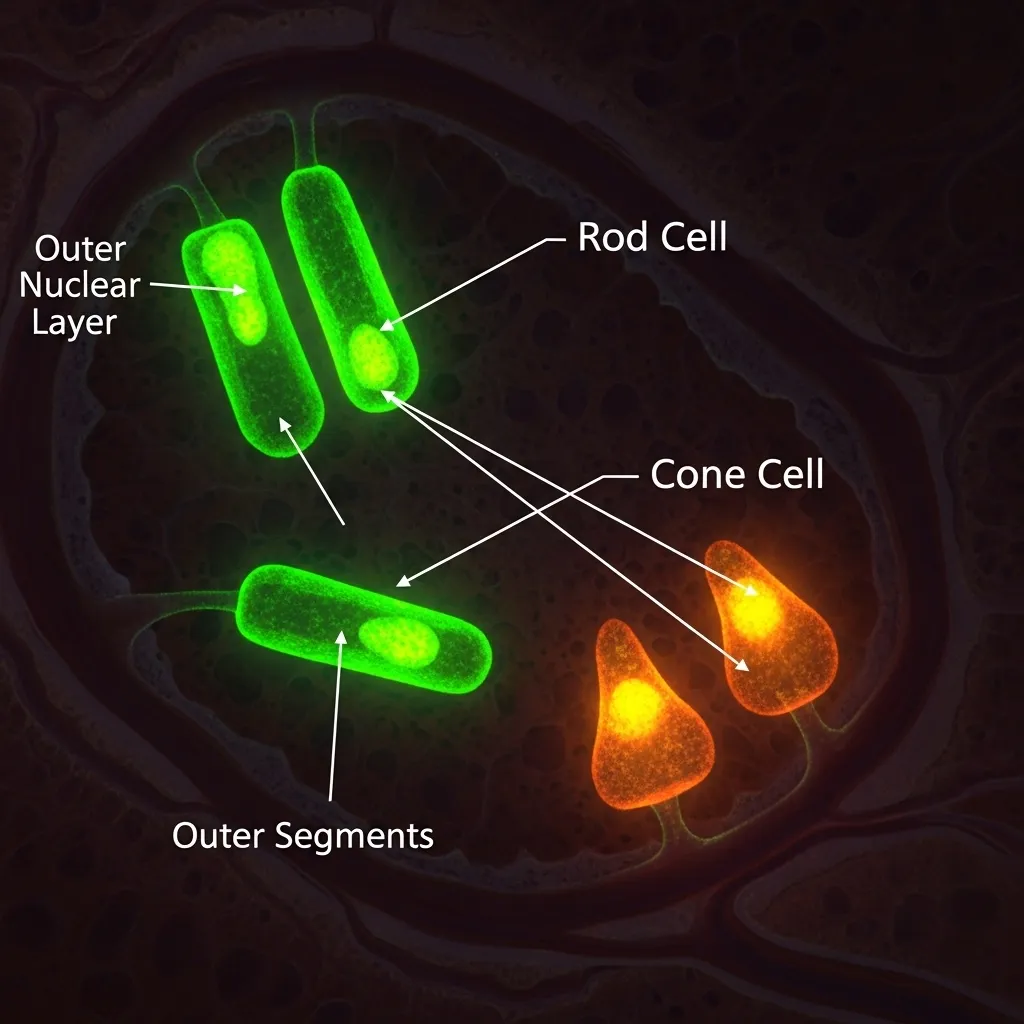
- Cat vision care through retinal photoreceptor maintenance—without it, rods and cones literally disintegrate.
- Reproductive health, immune response, and antioxidant defense.
Vet Insight: “I’ve seen 3-year-old cats go blind from bargain kibble lacking guaranteed taurine,” says Dr. Elena Marquez, DVM, feline cardiologist. “Once retinal degeneration in cats hits the central blindness stage, there’s no reversal—only prevention.”
Explore our detailed guide on cat food nutrition to understand how macronutrients and micronutrients interplay.
Taurine Requirements for Cats: Daily Intake, Life Stage Adjustments, and AAFCO Standards
The Association of American Feed Control Officials (AAFCO) sets the floor, not the ceiling. Here’s the vetted breakdown:
| Life Stage | Minimum Taurine (Dry Matter Basis) | Minimum Taurine (Wet Food, 78% Moisture) |
|---|---|---|
| Kittens (growth) | 0.10% (1,000 mg/kg) | 0.20% (2,000 mg/kg) |
| Adult Maintenance | 0.10% (1,000 mg/kg) | 0.20% (2,000 mg/kg) |
| Pregnant/Nursing Queens | 0.12–0.15% | 0.25–0.30% |
Practical Translation:
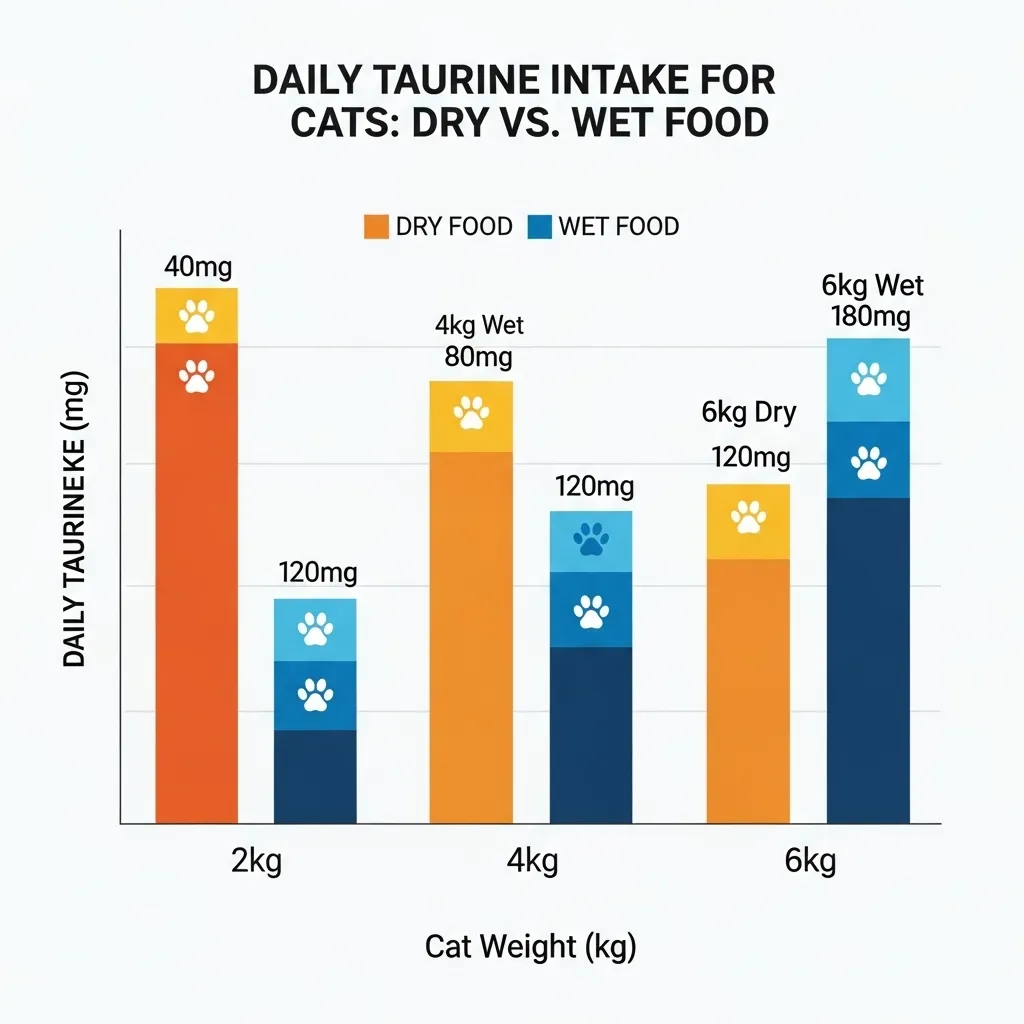
- A 4 kg (8.8 lb) adult cat needs at least 40 mg taurine daily on dry food.
- Same cat on canned food? Closer to 80 mg because water dilutes concentration.
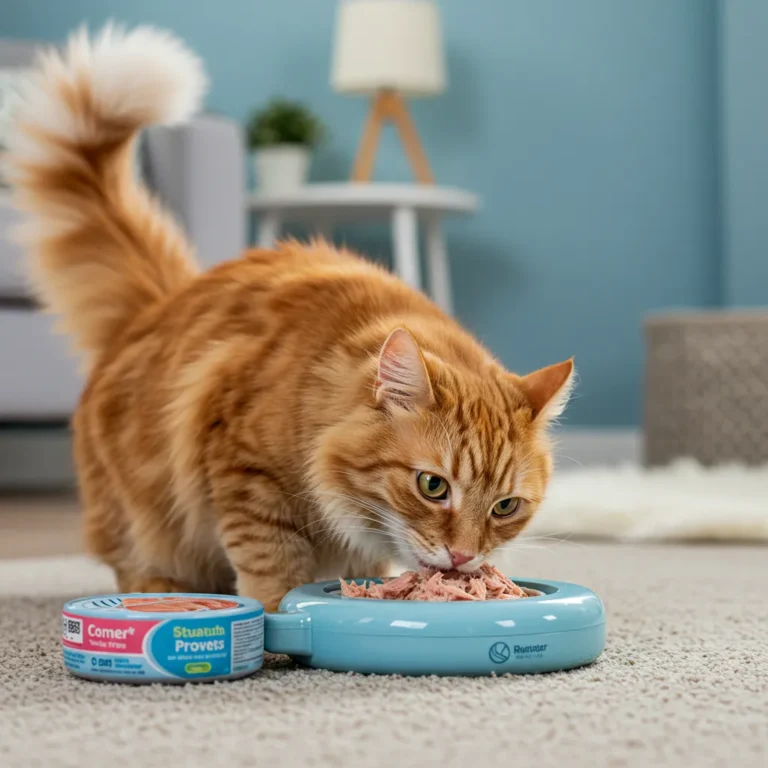
Pro Tip: Indoor cats often eat less overall volume. Choose calorie-dense, taurine-fortified recipes to hit targets without overfeeding. Discover more tips in choosing cat food.
Taurine in Cat Food: Decoding Labels, Natural vs Synthetic, and 2025 Trends
Walk any pet aisle and you’ll spot “taurine added” on premium bags. But not all taurine is equal.
Natural vs Synthetic Taurine
| Source | Pros | Cons | Common Foods |
|---|---|---|---|
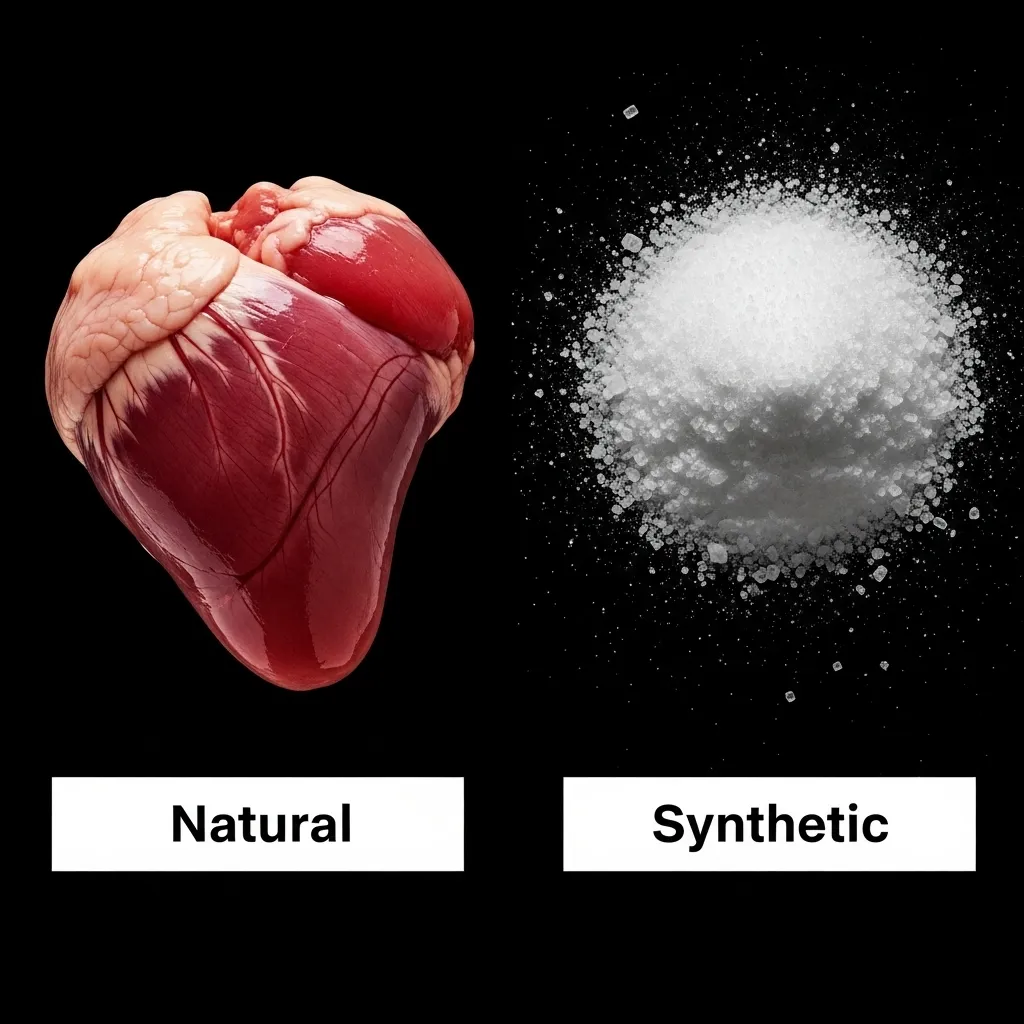
| Natural (animal tissues) | Bioavailable, co-factors intact | Heat-labile; degrades >50% in extrusion | Raw mouse (≈400 mg/100 g), chicken heart, clams |
| Synthetic (lab-produced) | Heat-stable, precise dosing | Isolated molecule; no synergistic nutrients | Added post-extrusion in kibble |
2025 Trend: Hybrid formulas—kibble coated with freeze-dried raw organs + synthetic taurine for guaranteed potency. Look for brands listing “taurine (min X mg/kg)” and organ meats in top five ingredients.
How to Read Cat Food Labels Taurine Content
- Guaranteed Analysis → “Taurine … min 0.1%”
- Ingredients → “Taurine” listed separately = post-cooking addition (good sign).
- Avoid vague “amino acid blend.”
Real-Life Label Win:
“Chicken, chicken meal, peas… taurine, dried chicken liver…” → natural + synthetic combo.
Taurine Deficiency in Cats: Symptoms, Progression, and Irreversible Damage
Taurine deficiency sneaks up over 6–18 months. Early intervention = full recovery. Late detection = heartbreak.
Stage 1: Subclinical (1–3 months low intake)
- Slightly dilated pupils in bright light
- Mild exercise intolerance
Stage 2: Clinical Retinal Degeneration (3–6 months)
- Cat vision problems: night blindness, bumping into walls at dusk
- Fundoscopic exam reveals hyper-reflective tapetal streaks
Stage 3: Central Blindness + Heart Involvement (6–18 months)
- Complete retinal degeneration in cats → pupils fixed and dilated
- Taurine and cat heart disease: dilated cardiomyopathy, gallop rhythms, congestive heart failure
Case Study: Milo, a 2-year-old Bengal, presented with sudden blindness. Owner fed grocery-store “light” kibble (0.05% taurine). Switched to veterinary retinal-support diet + taurine supplementation for cats—vision stabilized, but central blind spots remain permanent. Read more breed-specific nutrition in Bengal cat guide.
Taurine Benefits for Cats: Beyond Heart and Eyes
While cat cardiac health and cat vision care steal the spotlight, taurine multitasks:
| System | Taurine’s Role | Deficiency Impact |
|---|---|---|
| Neurological | GABA modulation, seizure threshold | Increased anxiety, rare seizures |
| Reproductive | Sperm motility, fetal brain development | Infertility, kitten neurological defects |
| Immune | Neutrophil function | Recurrent URI in kittens |
| GI | Bile acid conjugation | Fat malabsorption, diarrhea |
Best Taurine Supplements for Cats: When and How to Use Them Safely
Commercial diets should suffice, but these scenarios warrant extra:
- Home-cooked or raw diets without organ meats
- Senior cats with reduced appetite
- Feline IBD limiting nutrient absorption
- Post-DCM diagnosis (veterinary guidance only)
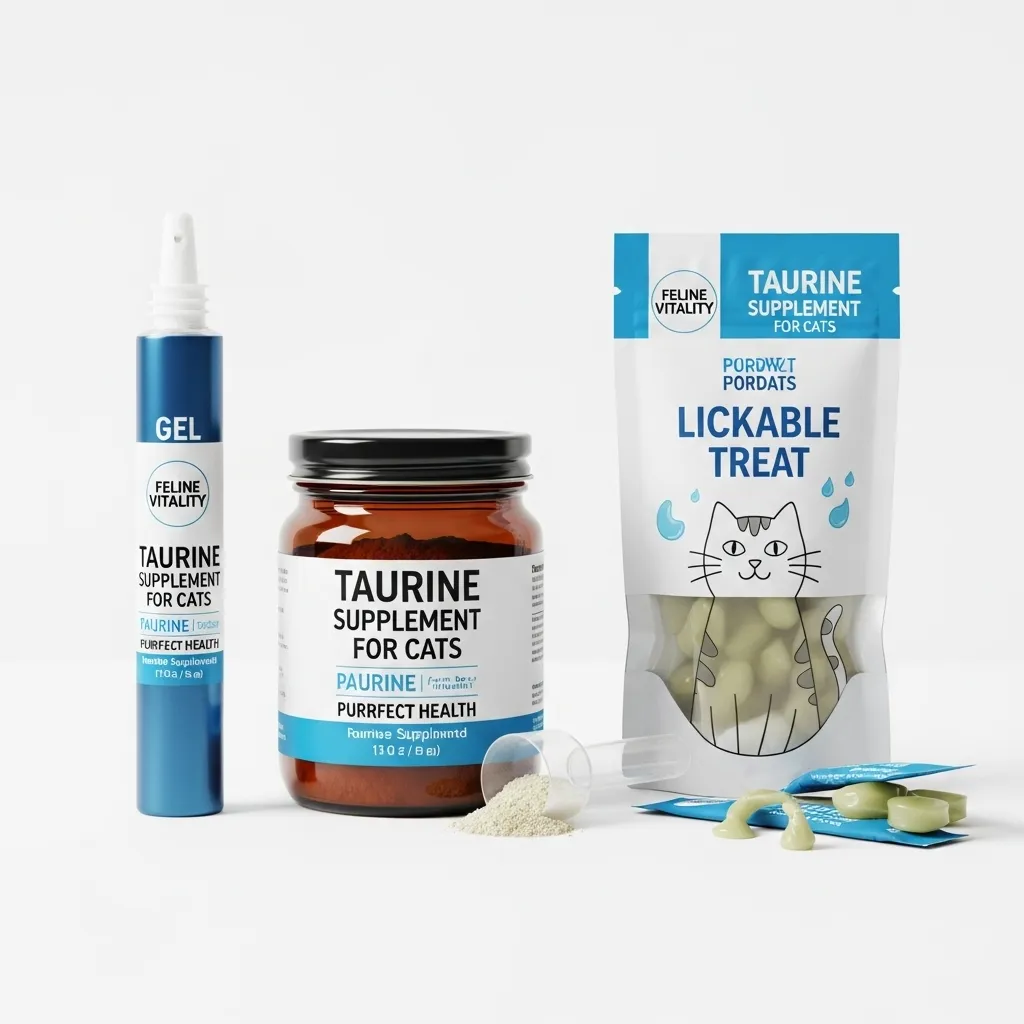
Top Vet-Approved Supplements (2025)
| Product | Form | Dose | Notes |
|---|---|---|---|
| Tomlyn High Calorie Nutri-Cal + Taurine | Gel | ¼ tsp daily | Palatable, hides in food |
| Vetoquinol Viralys Powder | L-lysine + taurine combo | 500 mg scoop BID | URI-prone cats |
| Pure Taurine Powder (food-grade) | Powder | 250–500 mg/day | Mix with wet food; avoid excess |
Never exceed 1,000 mg/day without bloodwork—hypertaurinemia is rare but possible.
Taurine-Rich Cat Food 2025: Wet, Dry, and Raw Recommendations
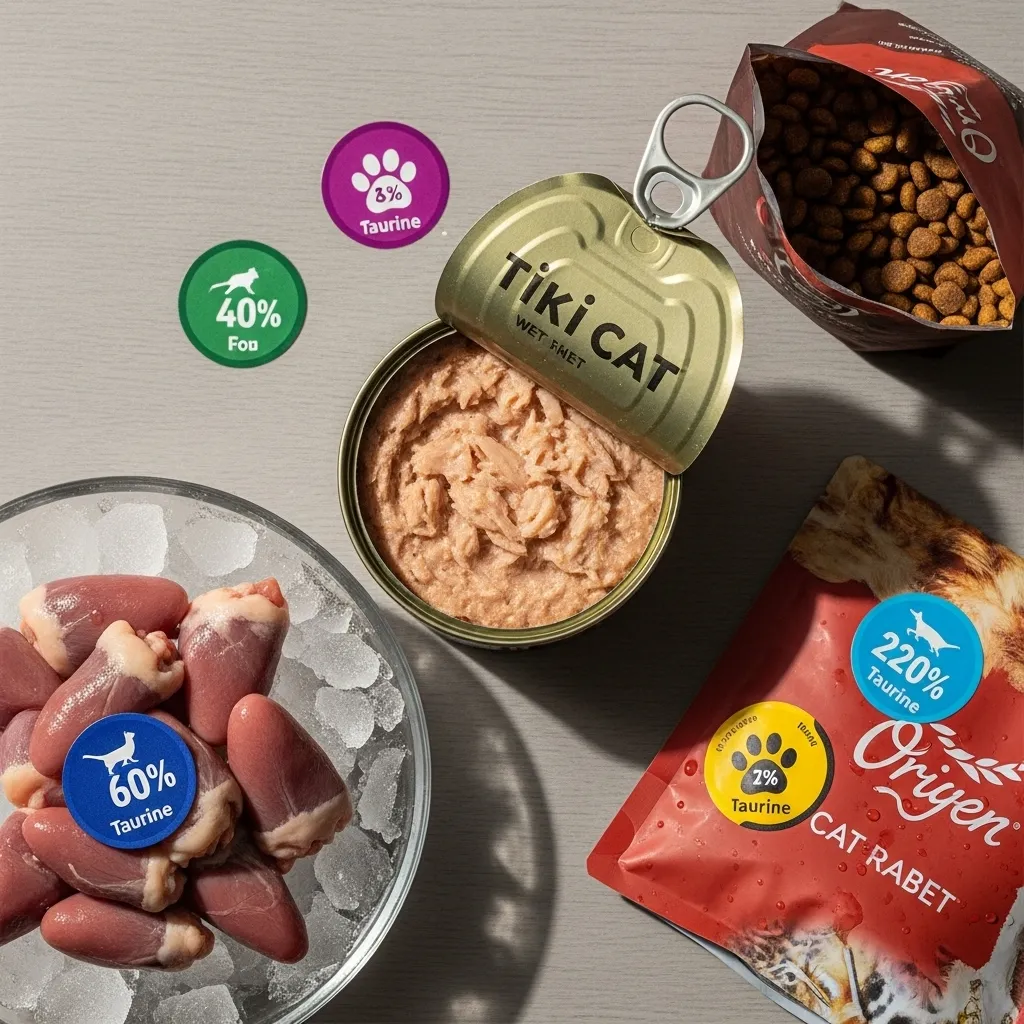
Wet Food (Highest Bioavailability)
- Tiki Cat After Dark Chicken & Quail Egg – 0.34% taurine (DM), organs first
- Weruva Cats in the Kitchen Funky Chunky – 0.28% + bonito flakes
Dry Food (Convenient + Fortified)
- Orijen Six Fish – 0.25% + freeze-dried liver coating
- Farmina N&D Ocean Cod & Orange – 0.22% + herring
Raw/Homemade Boosters
- 1 oz chicken heart = 110 mg taurine
- ½ oz clams = 140 mg
Pair any switch with gradual transition over 10 days. Learn transition tips in cat moving kittens guide.
Taurine for Indoor Cats: Why They’re at Higher Risk
Indoor cats eat 20–30% fewer calories than outdoor hunters, concentrating nutrient gaps. Plus:
- Limited access to whole-prey taurine sources
- Higher stress → increased taurine excretion in urine
Action Step: Weigh your cat monthly. If under 3,800 g (female) or 4,500 g (male) yet eating full portions, request a plasma taurine test.
Diagnosing Taurine Deficiency: What Your Vet Sees
| Test | Normal Range | Deficiency Cutoff |
|---|---|---|
| Plasma Taurine | 60–120 nmol/mL | <40 nmol/mL |
| Whole Blood Taurine | 300–600 nmol/mL | <200 nmol/mL |
| Echocardiogram | EF >55% | EF <40% = DCM |
| Ophthalmic Exam | Normal tapetal reflection | Hyper-reflective lesions |
Cost: $150–$300 (blood + echo). Worth every penny versus lifelong blindness.
Preventing Taurine Deficiency: Your 5-Step Lifelong Plan
- Choose AAFCO-compliant food with explicit taurine guarantee.
- Rotate proteins monthly—muscle meat alone won’t cut it.
- Store dry food <6 months; taurine degrades in heat/humidity.
- Annual senior bloodwork (age 7+) includes taurine panel.
- Never feed dog food—taurine optional for canines, fatal for cats.
Discover more preventive strategies in cat health care.
FAQ: Quick Answers for Common Taurine Queries
How much taurine does a cat need daily?
At least 10 mg per kg body weight on dry food; double on wet.
What are taurine deficiency symptoms in cats?
Night blindness, dilated pupils, lethargy, heart murmurs, collapse.
Can I give human taurine supplements to cats?
Only if labeled food-grade and dosed precisely—consult your vet.
Is taurine supplementation necessary for cats on commercial food?
Rarely, unless homemade diets or medical conditions apply.
What’s the best taurine-rich cat food in 2025?
Tiki Cat After Dark or Orijen Six Fish for guaranteed levels + whole-prey ingredients.
Does cooking destroy taurine in cat food?
Yes—up to 50% loss in extrusion. Reputable brands add synthetic taurine post-cooking.
Final Thoughts: Secure Your Cat’s Future with Taurine-Smart Choices
From the moment you crack open a can to the day your senior cat suns on the windowsill, taurine for cats remains the invisible guardian of their sparkle. One simple label check today prevents a lifetime of regret tomorrow.
Ready for more science-backed ways to level-up feline wellness? Explore our expert cat care and behavior guides on Cat Bloom Haven. Whether it’s best wet cat food or senior cat care, we’ve got your whiskered companion covered.