Grain-Free Cat Food: A Science-Backed Guide to Benefits, Risks, and Smart Choices
The pet food aisle can be overwhelming, with “grain-free” labels promising a healthier, more natural life for your cat. But is this trend a nutritional breakthrough or a clever marketing ploy? The truth about grain-free cat food is nuanced, lying somewhere between genuine benefits for some cats and potential risks for others, wrapped in widespread misconceptions.
This comprehensive guide cuts through the hype. We’ll explore the science, separate fact from fiction, and provide you with the clear, evidence-based information you need to make the best decision for your feline friend’s unique health.
Key Takeaways:
- Grain-free diets can be beneficial for the small percentage of cats with genuine grain allergies or specific carbohydrate sensitivities, often improving skin and digestive issues.
- The primary risk is not the absence of grains but what replaces them, particularly legume-rich ingredients linked to dietary dilated cardiomyopathy (DCM) in dogs; ongoing research is investigating a similar potential concern in cats.
- Most cats do not require a grain-free diet. Grains like rice, corn, and wheat are not inherently bad and can be valuable sources of digestible energy, fiber, and nutrients in a balanced formula.
- The ultimate goal is a balanced, species-appropriate diet. Whether grain-free or not, the food must be complete, balanced, and high in animal-based protein, with your veterinarian’s guidance being the most critical factor.
Decoding the Label: What “Grain-Free” Really Means
At its simplest, grain-free cat food is formulated without common cereal grains such as wheat, corn, rice, barley, oats, and rye. It’s a direct response to the perception that cats, as obligate carnivores, did not evolve to eat grains.
However, “grain-free” is not synonymous with “carbohydrate-free” or “low-carb.” To bind the kibble or provide energy, manufacturers often use alternative carbohydrate sources. Common substitutes include:
- Potatoes (white and sweet)
- Peas
- Lentils
- Chickpeas
- Tapioca
Understanding this substitution is key. When evaluating a grain-free food, your first question shouldn’t be “Where are the grains?” but rather “What has replaced the grains, and is the overall formulation appropriate?”
Potential Benefits of a Grain-Free Diet: When It Makes Sense
For most healthy cats, a high-quality grain-inclusive diet is perfectly suitable. However, there are specific scenarios where a well-formulated grain-free diet can be a helpful tool.
- Managing True Food Allergies: While rare (affecting only about 1% of cats), some felines can develop allergies to specific grain proteins. Symptoms often include chronic itchy skin, ear infections, and gastrointestinal upset like vomiting or diarrhea. In these diagnosed cases, eliminating the allergen is essential. Discover more about identifying sensitivities in our guide to cat allergies.
- Supporting Diabetic Cats: Cats with diabetes mellitus often benefit from a diet low in carbohydrates to help regulate blood sugar levels. Some grain-free diets are formulated to be lower in carbs, but it’s vital to check the guaranteed analysis and consult your vet, as not all grain-free foods are low-carb.
- Addressing Digestive Sensitivities: Individual cats may have difficulty digesting certain grains, leading to gas, bloating, or irregular stools. A trial on a grain-free diet with easily digestible carb sources may improve these symptoms.
Important Note: Any dietary change aimed at managing a medical condition should be undertaken with the guidance of your veterinarian.
Understanding the Risks and Ongoing Scientific Concerns
The grain-free conversation changed significantly in 2018 when the FDA began investigating a potential link between certain grain-free, legume-rich diets and a heart condition called dilated cardiomyopathy (DCM) in dogs. While the definitive cause is still under investigation, it raised crucial questions for cat owners.
- The DCM Concern: The focus is on diets containing high levels of peas, lentils, legumes, or potatoes as primary ingredients. The hypothesis is that these ingredients might interfere with the absorption or synthesis of taurine an amino acid critical for heart health. Cats are especially vulnerable to taurine deficiency, which is well-documented to cause DCM. Learn about the critical role of taurine in your cat’s diet.
- Nutritional Imbalance: A poorly formulated grain-free diet (or any diet) that doesn’t meet AAFCO nutrient profiles can lead to deficiencies or excesses over time.
- Higher Cost for No Reason: If your cat has no medical need to avoid grains, you may be paying a premium for a diet that offers them no distinct advantage.
Busting Common Grain-Free Misconceptions
Let’s clarify the most pervasive myths to help you make an informed choice.
Myth 1: “Grain-free is more natural and biologically appropriate.”
Reality: While cats are obligate carnivores requiring meat, their wild ancestors consumed the stomach contents of their prey, which often contained digested grains and plants. The issue is not grains themselves, but the excessive use of low-quality carbohydrates as cheap fillers in some low-tier foods.
Myth 2: “Grains are just fillers with no nutritional value.”
Reality: Quality grains provide essential nutrients. They are sources of digestible energy, essential fatty acids, fiber for digestive health, and vitamins like B vitamins and vitamin E.
Myth 3: “Grain-free automatically means higher protein and lower carb.”
Reality: This is a crucial distinction. Always read the label. Some grain-free foods simply swap grains for other starchy carbs and may not be significantly higher in animal-based protein. The guaranteed analysis and ingredient list are your best tools.
How to Make an Informed Choice: A Practical Checklist
Choosing food isn’t about trends; it’s about your individual cat. Follow this checklist.
- Consult Your Veterinarian: This is the non-negotiable first step. Discuss your cat’s age, weight, activity level, and any health concerns. Their recommendation is your most valuable resource.
- Look Beyond the “Free-From” Marketing: Ignore the front label and turn the bag over. The ingredient list and nutritional adequacy statement are what matter.
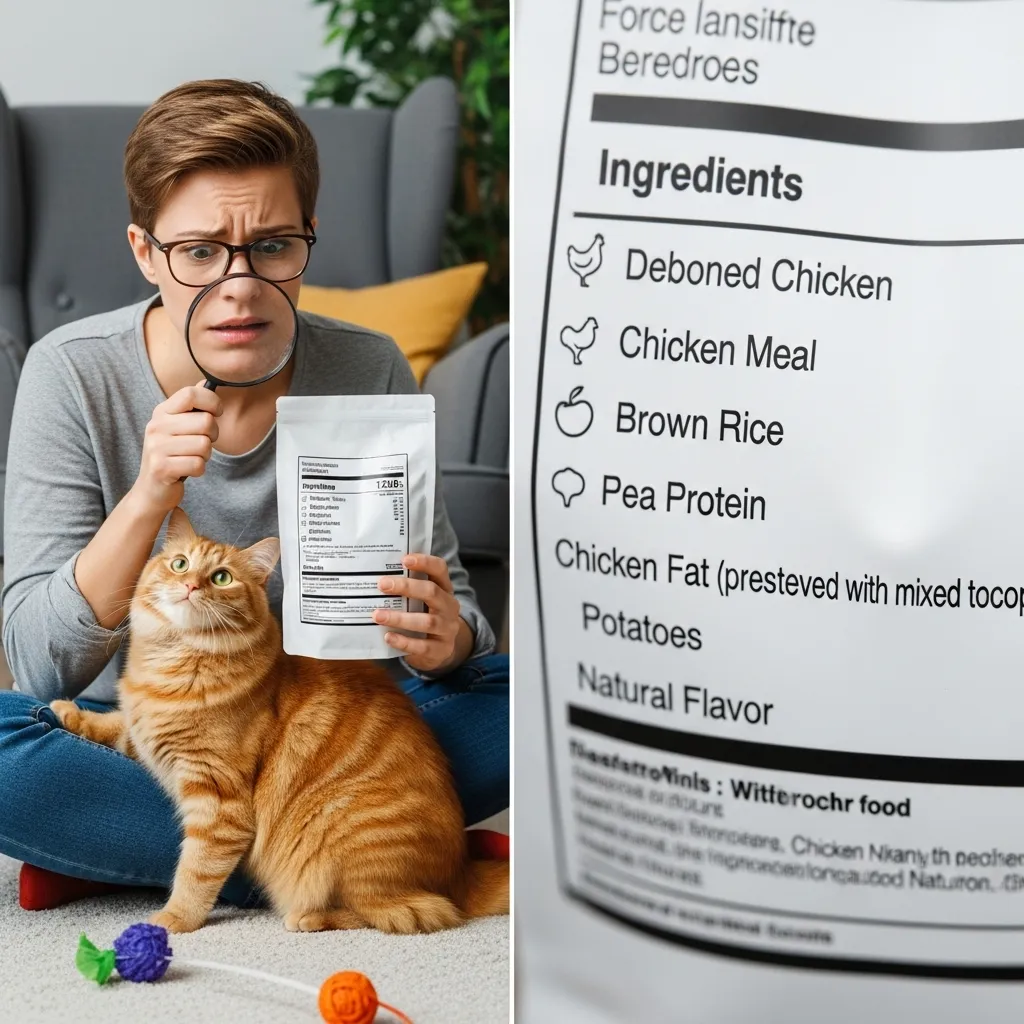
- Analyze the Ingredient List: The first 3-5 ingredients are the main components. Look for named animal proteins (e.g., chicken, salmon, turkey meal) at the top. Ask: do alternative carbs like peas or potatoes dominate the list?
- Verify It’s “Complete and Balanced”: The label must state the food meets the nutritional levels established by the AAFCO (Association of American Feed Control Officials) for your cat’s life stage (e.g., growth, adult maintenance, all life stages).
- Consider Your Cat’s Response: After any transition (done gradually over 7-10 days), observe your cat. Is their energy good? Is their coat shiny? Are their stools consistent and firm? This practical feedback is invaluable. For tips on a smooth switch, see our article on how to get your cat to eat wet food, as the principles are similar.
Grain-Free vs. Grain-Inclusive: A Side-by-Side Comparison
| Feature | Grain-Free Diet | Grain-Inclusive Diet |
|---|---|---|
| Core Philosophy | Eliminates grains; may use alternative carb sources. | May include digestible grains as an energy source. |
| Primary Carbs | Potatoes, peas, lentils, chickpeas, tapioca. | Rice, corn, wheat, barley, oats. |
| Best For | Cats with diagnosed grain allergies/sensitivities; some diabetic cats (if low-carb). | The vast majority of healthy cats with no grain issues. |
| Key Consideration | Potential link to DCM with legume-heavy formulas; often more expensive. | Ensure grains are not low-quality fillers at the top of the ingredient list. |
| Veterinary Input | Essential before switching, especially for long-term use. | Recommended to ensure quality and appropriateness. |
Frequently Asked Questions (FAQ)
Q: How do I know if my cat is allergic to grains?
A: True grain allergies are uncommon. Symptoms mimic other allergies and include itchy skin, hair loss, ear infections, vomiting, or diarrhea. Diagnosis requires a veterinary-supervised elimination diet trial, not guesswork.
Q: Should I be worried about the FDA’s DCM investigation for my cat?
A: It’s a reason for informed caution, not panic. If your cat is on a grain-free diet, especially one high in peas, lentils, or potatoes, discuss it with your vet. They may recommend a diet change or check taurine levels and heart health.
Q: Are there certain cat breeds that do better on grain-free food?
A: No breed has a universal requirement for grain-free food. Individual health needs matter more than breed. However, some breeds prone to food sensitivities or digestive issues, like the Siamese or Bengal, might be part of trials to identify triggers, under veterinary care.
Q: What’s more important than grains in cat food?
A: The quality and source of animal protein is paramount. Cats require animal-based protein to thrive. Adequate moisture content (making wet cat food a great option), appropriate fat levels, and the correct balance of vitamins and minerals are all more critical than the presence or absence of grains.
Conclusion: Your Cat’s Health is the Bottom Line
The grain-free debate underscores a vital principle in feline nutrition: there is no one-size-fits-all solution. The best diet for your cat is one that is nutritionally complete, balanced, appropriate for their life stage and health status, and made with high-quality ingredients.
Whether you choose a grain-free or grain-inclusive formula, let science and professional guidance not marketing lead the way. Your veterinarian is your partner in navigating these choices to ensure your cat leads a long, vibrant, and healthy life.
Ready to explore more about nurturing your cat’s well-being? Dive into our comprehensive library of expert guides on feline nutrition, behavior, and breed-specific care on Cat Bloom Haven.