Wet vs Dry Cat Food: Nutritional Differences Explained
For cat owners standing in the pet food aisle, the choice between wet and dry food can feel overwhelming. With marketing claims, price considerations, and your cat’s particular preferences all competing for attention, how do you make the truly nutritional best choice? This comprehensive guide cuts through the confusion to explain the fundamental nutritional differences between wet and dry cat food, empowering you to make informed decisions for your feline companion’s health and happiness.
Key Takeaways:
- Moisture content is the primary differentiator: wet food contains 75-85% water, dry food only 6-10%.
- Protein and fat levels can be similar, but ingredient quality varies dramatically between formulas.
- Dental health claims about dry food are largely myth; neither format cleans teeth effectively without specific dental diets.
- Wet food supports urinary tract health through increased hydration, crucial for preventing common feline issues.
- A combination feeding approach often provides optimal balance, but individual cat needs should guide final decisions.
The Fundamental Difference: It Starts With Water
The most significant distinction between wet and dry cat food isn’t about protein sources or premium ingredients it’s about moisture. This single factor influences everything from nutritional density to health outcomes.
Understanding Moisture Content
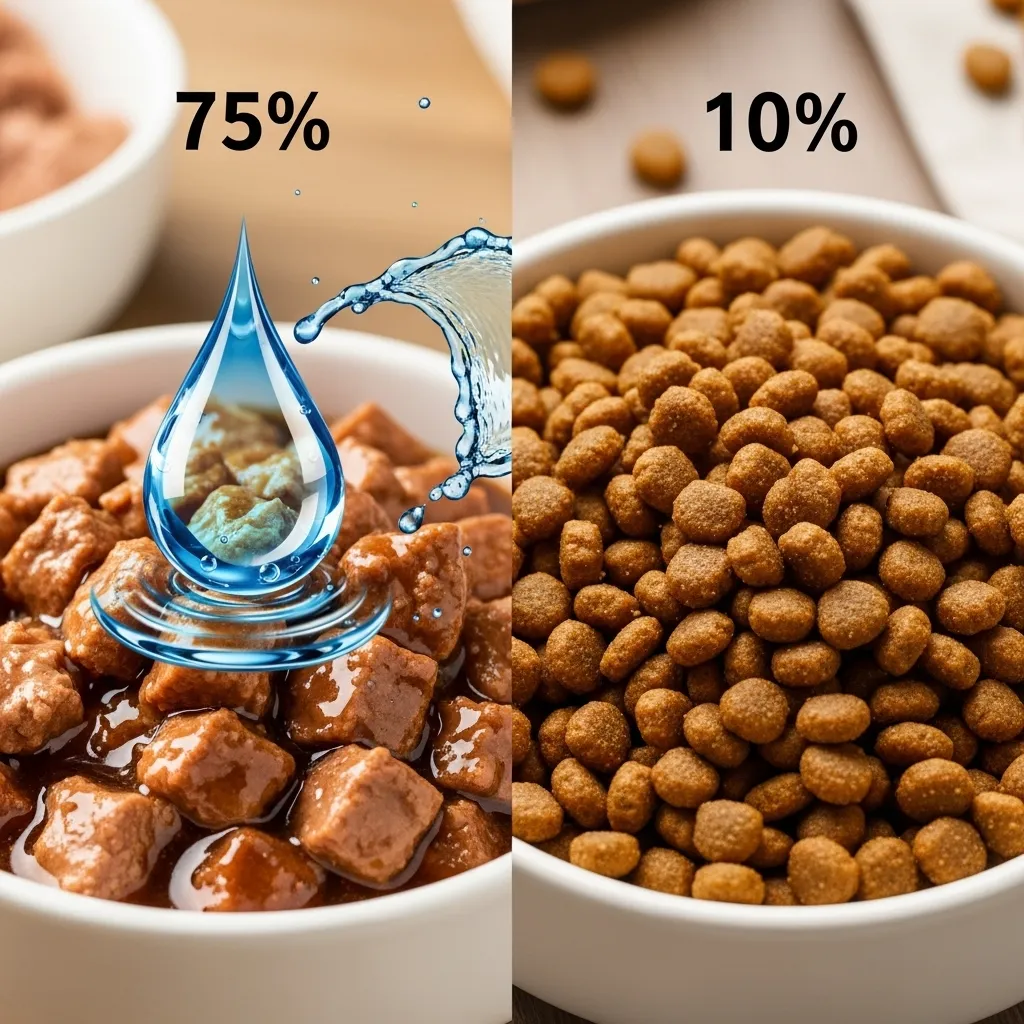
Wet cat food, typically sold in cans, pouches, or trays, contains approximately 75-85% water. This high moisture content closely mimics the natural prey diet of cats, which consists of about 70-75% water. When you open a can of wet food, you’re serving nutrition in a hydration package.
Dry cat food (kibble) contains only 6-10% moisture. The extrusion process that creates those uniform pieces requires removing nearly all water to achieve shelf stability. This means cats eating exclusively dry food must compensate by drinking significantly more water a behavior that doesn’t come naturally to many felines descended from desert-dwelling ancestors.
Macronutrient Breakdown: Beyond the Basics
When comparing “as-fed” labels, wet food appears lower in protein and fat because water dilutes these percentages. However, when evaluated on a dry matter basis (removing all moisture), the nutrient profiles can be surprisingly similar or reveal important differences.
Protein: Quality Over Quantity
Both wet and dry foods can provide adequate protein, but source quality and bioavailability differ. Wet food often contains higher-quality animal proteins as primary ingredients, while dry foods may rely more on plant proteins or meat by-products to meet protein percentages economically.
Table: Protein Comparison on Dry Matter Basis
| Food Type | Average Protein % (As Fed) | Average Protein % (Dry Matter) | Common Primary Sources |
|---|---|---|---|
| Premium Wet Food | 8-12% | 40-50% | Chicken, turkey, fish, organ meats |
| Premium Dry Food | 30-40% | 32-45% | Chicken meal, fish meal, plant proteins |
| Economy Dry Food | 28-32% | 30-35% | Corn gluten, soy, meat by-products |
Carbohydrates: The Hidden Variable
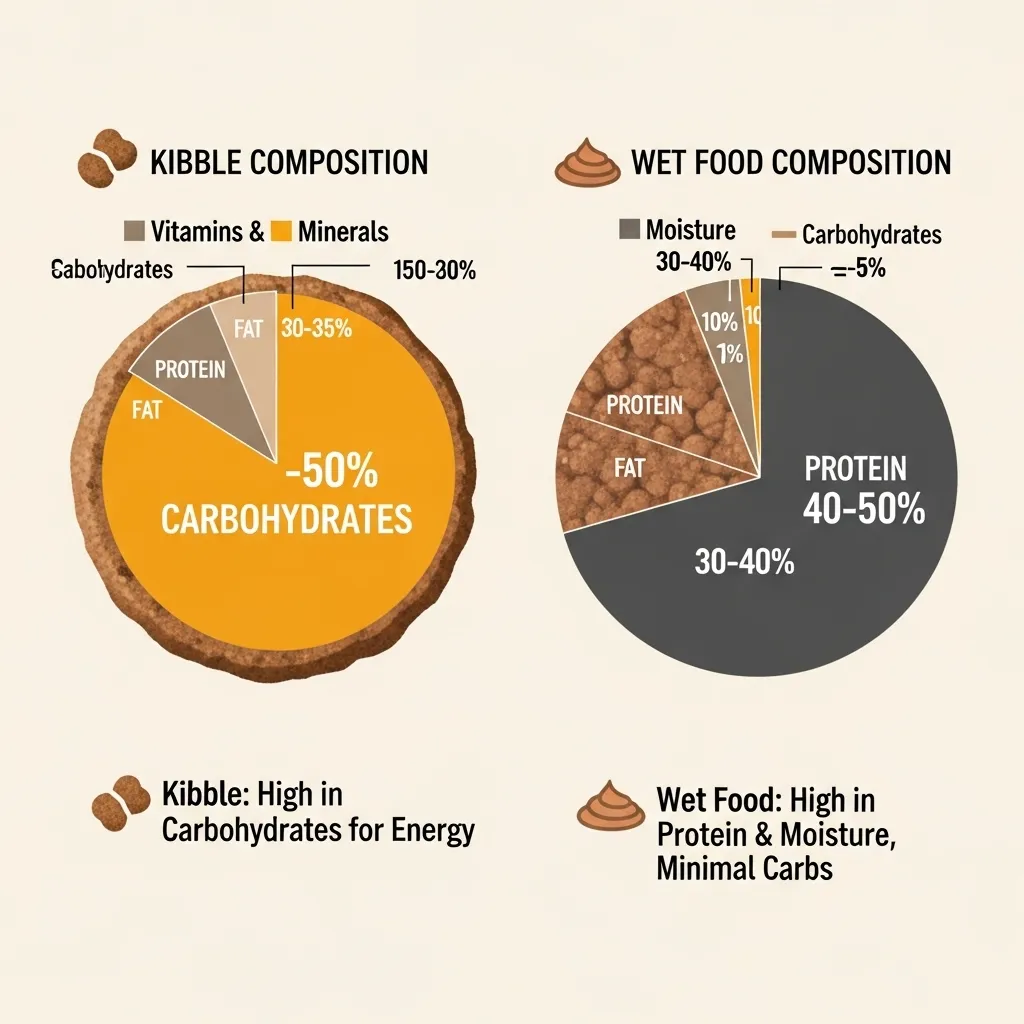
Here lies one of the most substantial nutritional differences. Dry food requires carbohydrates (typically 25-50% on dry matter basis) to form the kibble structure through starch gelatinization during extrusion. These carbs often come from grains, potatoes, or legumes.
Wet food contains minimal carbohydrates (usually 3-15% on dry matter basis), as it doesn’t require binding agents. This lower carbohydrate content better aligns with a cat’s natural carnivorous physiology, which has limited ability to process carbohydrates efficiently.
Health Implications: How Format Affects Wellbeing
The nutritional differences between wet and dry food translate directly to health outcomes. Understanding these connections helps you make preventive choices.
Urinary Tract Health: Hydration Is Prevention
Cats are prone to urinary tract issues, including crystals, stones, and idiopathic cystitis. The concentrated urine produced by cats on dry-only diets creates an environment where these problems flourish.
Wet food’s high moisture content produces more diluted urine, reducing mineral concentration and flushing the urinary system regularly. Research indicates that cats eating wet food produce approximately double the urine volume of those eating dry food, significantly lowering the risk of urinary tract diseases.
For cats with a history of urinary issues or those prone to them (like male cats), incorporating wet food isn’t just beneficial it can be medically necessary. Our guide on cat urinary health explores this critical topic in greater depth.
Weight Management: Calorie Density Matters
Dry food is calorically dense, with approximately 4 calories per gram compared to wet food’s 0.8-1.2 calories per gram. This difference, combined with the free-feeding approach many owners use with kibble, contributes to the feline obesity epidemic.
Wet food provides greater volume for fewer calories, creating satiety while controlling intake. The higher protein and lower carbohydrate profile also supports lean muscle mass maintenance during weight loss.
However, weight management success depends on measured portions regardless of food type. Our cat obesity guide provides practical strategies for maintaining healthy weight through all life stages.
Dental Health: Debunking the Kibble Myth
A persistent belief suggests that dry food cleans teeth through abrasive action. Veterinary dentistry research contradicts this: kibble shatters on contact with teeth, providing minimal cleaning effect on the surfaces where plaque accumulates most at the gumline.
Neither wet nor dry food prevents dental disease without specific formulation. Some prescription dental diets have a larger kibble size and fibrous texture designed to provide mechanical cleaning, but these are exceptions. Regular tooth brushing and veterinary dental care remain essential regardless of diet. For techniques on how to clean cat teeth at home, explore our dedicated guide.
Diabetes Management: The Carbohydrate Connection
Feline diabetes often responds dramatically to dietary change. The high carbohydrate content of many dry foods can exacerbate insulin resistance, while low-carbohydrate wet foods help stabilize blood glucose levels.
Cats with diabetes frequently show improved regulation sometimes even achieving remission when switched to high-protein, low-carbohydrate wet foods. Monitoring and veterinary guidance remain crucial, as explored in our article on feline diabetes and insulin management.
Ingredient Quality and Processing: What Happens Before the Bowl
How food is made affects its nutritional value as much as what goes into it.
Processing Methods and Nutrient Preservation
Wet food undergoes cooking at high temperatures in sealed containers, which preserves many nutrients while destroying pathogens. The minimal processing typically retains more natural nutrient integrity.
Dry food production involves high-heat extrusion (often above 200°F/93°C), which can degrade heat-sensitive nutrients like certain vitamins, amino acids, and antioxidants. Manufacturers compensate by adding synthetic versions after processing, but bioavailability may differ from naturally occurring nutrients.
Additives and Preservatives
Dry food requires preservatives to prevent fat rancidity during storage. Natural preservatives like mixed tocopherols (vitamin E) are common in premium foods, while economical options may use chemical preservatives like BHA, BHT, or ethoxyquin.
Wet food’s sealed packaging and sterilization eliminate the need for most preservatives, though some contain gums or thickeners for texture. Reading labels helps identify unnecessary additives in both formats.
Special Considerations: Life Stages and Health Conditions
Kittens: Growth and Development Needs
Kittens require approximately twice the calories per pound as adult cats, with specific needs for protein, fat, calcium, and phosphorus. Both wet and dry kitten formulations exist, but many veterinarians recommend wet food for its easier consumption, higher moisture content during weaning, and typically superior ingredient quality.
The transition from kitten to adult cat involves careful dietary adjustment. Our guide outlines this process with specific nutrient focus.
Senior Cats: Changing Requirements
Older cats face multiple challenges: decreased kidney function, reduced sense of smell and taste, dental issues, and often lower activity levels. Wet food addresses many of these concerns through enhanced palatability, easier chewing, and built-in hydration support for kidney health.
However, some seniors benefit from the convenience and dental support of specialized senior dry formulas. Monitoring and regular veterinary assessment guide optimal choices for aging felines. Learn more about comprehensive senior cat care approaches.
Cats with Kidney Disease
Chronic kidney disease affects approximately 30% of cats over age 15. These cats require reduced phosphorus and high-quality protein in controlled amounts, with maximal hydration support. Prescription renal diets come in both wet and dry forms, but the wet versions provide crucial fluid intake that can delay disease progression.
For cats with kidney issues, the moisture advantage of wet food becomes a therapeutic necessity rather than mere preference. Our article on cat kidney failure provides comprehensive management strategies.
Practical Feeding Strategies: Making It Work
Combination Feeding: The Best of Both Worlds
Many nutritionists recommend combining wet and dry food to leverage each format’s advantages:
- Morning: Serve measured wet food to provide hydration and protein
- Evening: Offer controlled portions of quality dry food for convenience and dental satisfaction
- Always: Ensure fresh water is available in multiple locations
This approach provides hydration benefits while accommodating busy schedules and addressing natural grazing behaviors.
Transitioning Between Formats
Cats are creatures of habit with sensitive digestive systems. Any dietary change should occur gradually over 7-10 days:
- Days 1-3: Mix 25% new food with 75% current food
- Days 4-6: Use a 50/50 blend
- Days 7-9: Mix 75% new food with 25% current food
- Day 10: Complete transition to new food
Monitor for digestive upset or refusal, and slow the transition if needed. For cats resistant to wet food, try warming it slightly or offering novel protein sources.
Portion Control and Feeding Frequency
Regardless of format, measured feeding prevents obesity. Follow package guidelines as starting points, adjusting based on your cat’s body condition score (easily felt ribs with minimal fat covering).
Cats naturally eat multiple small meals (10-16 daily). Consider:
- Automatic feeders for dry food portions
- Scheduled wet food meals twice daily
- Food puzzles to stimulate natural foraging behavior
Our cat feeding schedule guide provides detailed templates for different lifestyles.
Cost Considerations: Beyond the Price Tag
While wet food typically costs more per calorie, consider the complete financial picture:
- Veterinary savings: Preventive health benefits may reduce urinary, kidney, and diabetes treatments
- Reduced waste: Cats often eat all offered wet food, while dry food may stale or be ignored
- Subscription discounts: Many retailers offer 5-20% off for auto-delivery
- Mixed approach: Combining formats balances cost and benefits
Calculate cost per feeding rather than per container, and factor in potential health savings. For budget-conscious strategies, see our analysis of cat food costs in 2025.
Frequently Asked Questions
Can I feed my cat only dry food?
Yes, but ensure unlimited fresh water access and monitor urinary health closely. Consider adding water or broth to kibble to increase moisture intake. Regular veterinary checkups become especially important for dry-food-only cats.
Is wet food bad for cat teeth?
No, this is a common misconception. Neither wet nor standard dry food cleans teeth effectively. Dental health requires specific dental diets, regular brushing, or veterinary cleanings. The notion that dry food prevents dental disease is not supported by veterinary research.
How much wet food should I feed my cat?
Average adult cats need 20-30 calories per pound daily. An average 5.5oz can contains 150-200 calories. A 10-pound cat might need 1-1.5 cans daily, adjusted for activity and metabolism. Always follow specific product guidelines and consult your veterinarian.
Can I leave wet food out all day?
No, wet food spoils quickly at room temperature. Remove uneaten portions after 30-60 minutes. For free-choice feeding, use dry food or a timed feeder with cooling function.
Do cats need both wet and dry food?
Not necessarily, but combining formats offers hydration benefits of wet food with convenience of dry. Many cats thrive on high-quality single-format diets when portion-controlled and monitored.
Is grain-free better for cats?
Not inherently. While cats don’t require grains, grain-free diets often substitute with legumes or potatoes, which may not be superior. Focus on high animal protein, low carbohydrates, and appropriate moisture content rather than grain-free labeling.
How do I store opened wet cat food?
Refrigerate unused portions immediately in airtight containers. Use within 48-72 hours. Never freeze and thaw repeatedly. For storage tips, see our guide on storing wet cat food.
Conclusion: Making Your Informed Choice
The wet vs dry cat food debate ultimately resolves to understanding nutritional differences and applying them to your individual cat’s needs. Wet food provides crucial hydration and aligns with feline physiology through higher protein and lower carbohydrates. Dry food offers convenience, energy density, and economic advantages.
For most cats, a balanced approach incorporating both formats delivers optimal benefits. Start by assessing your cat’s specific requirements: age, health status, activity level, and preferences. Consult your veterinarian, particularly for cats with medical conditions.
Remember that within each category, quality varies tremendously. Look for named animal protein sources as first ingredients, appropriate life stage formulation, and reputable manufacturers. Whether you choose wet, dry, or both, informed selection supports your cat’s health and vitality through all nine lives.
Ready to explore more expert guidance on feline nutrition and care? Discover comprehensive resources on specialized diets, feeding techniques, and health optimization across our collection of cat food and nutrition articles at Cat Bloom Haven. From protein in cat food to best wet cat food selections, we provide the research-backed information you need to nourish your feline companion confidently.