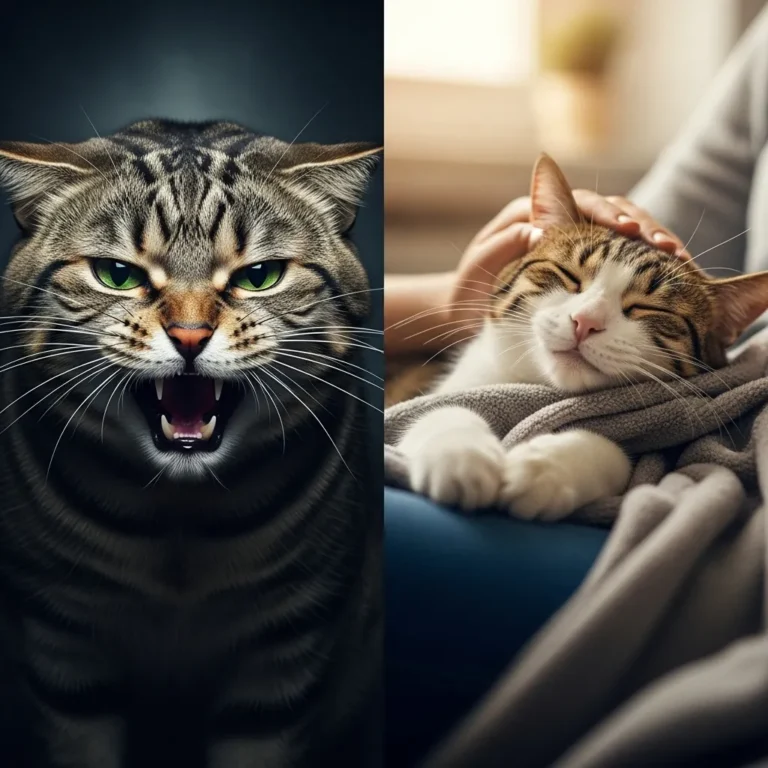
The Ultimate Guide to Indoor vs. Outdoor Cat Nutrition: Fueling Their Different Worlds
Key Takeaways:
- Outdoor cats need 15-50% more calories than indoor cats due to higher activity levels and thermoregulation
- Indoor cats face higher risks of obesity and urinary issues without proper dietary management
- Protein quality and taurine requirements remain equally critical for both lifestyles
- Environmental enrichment directly impacts nutritional needs and feeding behaviors
- Transitioning between lifestyles requires gradual dietary adjustment over 2-4 weeks
Understanding the Fundamental Divide: Why Lifestyle Dictates Diet
When we consider the dietary needs of indoor vs outdoor cats, we’re not just comparing two living arrangements we’re examining two entirely different biological realities. The domestic cat who patrols a suburban backyard experiences a world fundamentally different from their counterpart who knows only the boundaries of a 900-square-foot apartment. This distinction goes beyond preference; it reaches into their metabolism, energy expenditure, stress levels, and even their relationship with food itself.
As a feline nutrition specialist with over fifteen years of clinical practice, I’ve witnessed firsthand how mismatched diets lead to preventable health issues. The outdoor cat fed an indoor formula often becomes undernourished despite eating heartily. The indoor cat given high-calorie “active” food gradually transforms into a lethargic, overweight shadow of their potential. Understanding these differences isn’t just academic it’s essential for giving every cat their best, healthiest life.
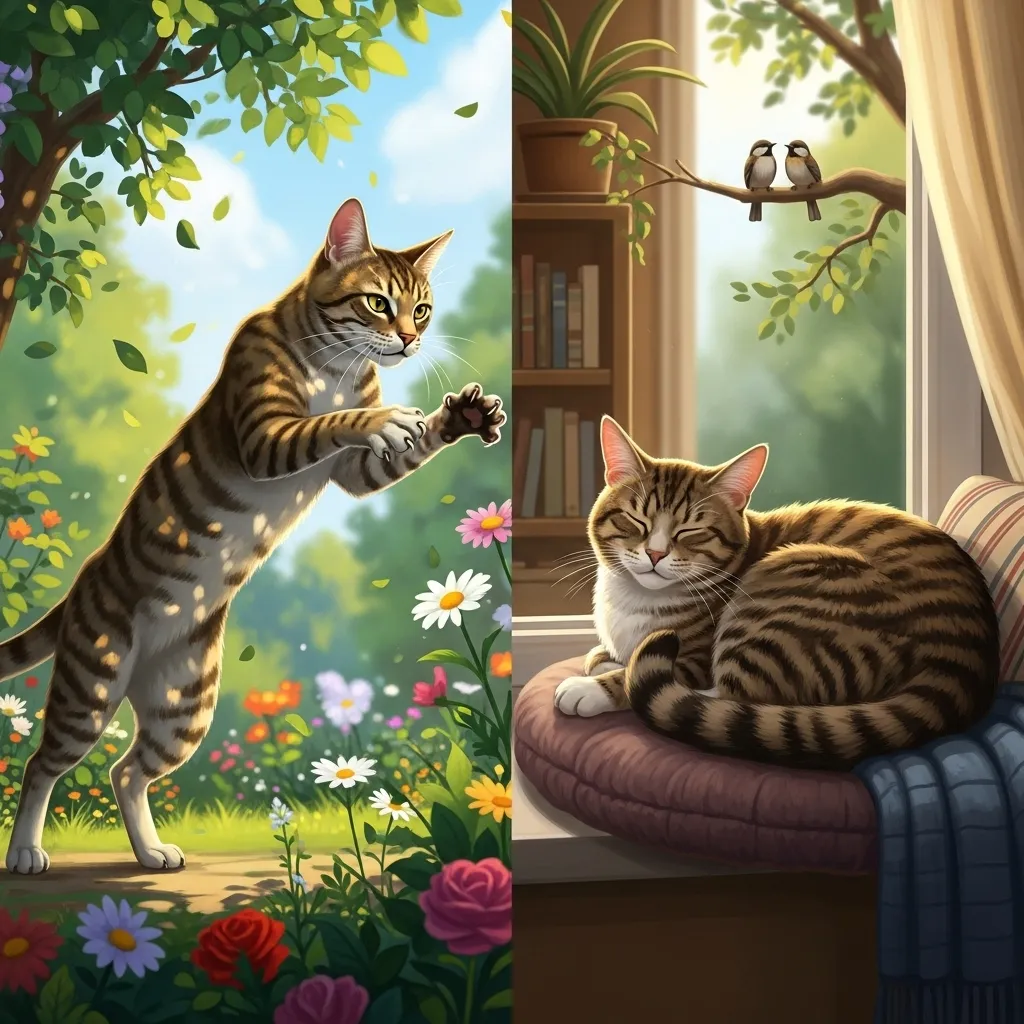
The Outdoor Cat: Athlete, Hunter, Survivor
Energy Demands: More Than Just Calories
Outdoor cats are natural athletes. Their daily energy expenditure includes not just voluntary activities like hunting and exploring, but involuntary thermoregulation maintaining body temperature against weather extremes. During winter months, an outdoor cat’s caloric needs can spike by up to 50% simply to stay warm. Summer brings different challenges: increased water loss through panting and higher metabolic rates during the hottest parts of the day.
The macronutrient breakdown for outdoor cats shifts significantly:
- Protein: 40-50% of calories (vs. 30-40% for indoor cats)
- Fat: 30-40% for sustained energy release
- Carbohydrates: Minimal, as cats utilize fat and protein more efficiently
This high-protein, moderate-fat profile mimics their natural prey composition. Unlike indoor cats who might benefit from controlled carbohydrate sources for weight management, outdoor cats thrive on diets that prioritize animal-based nutrients.
The Hunter’s Reality: Supplementing the Diet
Even the most successful hunter rarely meets all nutritional needs through prey alone. Studies of feral cat colonies show nutritional gaps in calcium, taurine, and certain vitamins despite regular hunting. This is why outdoor cat food must be nutritionally complete rather than supplemental.
The psychological aspect of hunting remains crucial. Outdoor cats who hunt but are fed complete diets typically don’t consume their prey they’re satisfying instinctual behaviors rather than nutritional needs. This is normal and shouldn’t concern owners, provided the primary diet is balanced.
Hydration: The Often-Overlooked Critical Need
Outdoor cats face significant hydration challenges. They may travel considerable distances between water sources, and natural sources (puddles, streams) can contain parasites or contaminants. Unlike indoor cats who typically have constant access to fresh water, outdoor cats may drink intermittently.
Solution: Wet food becomes particularly valuable for outdoor cats. The moisture content (typically 75-80%) provides substantial hydration. Consider placing multiple weather-protected water stations around your property, using heated bowls in winter, and adding water fountains to encourage drinking. For more on feline hydration strategies, explore our detailed guide on Ragdoll cat hydration tips which applies to all breeds.
The Indoor Cat: Managed Environment, Managed Nutrition
The Sedentary Reality and Obesity Prevention
Indoor cats live in climate-controlled environments with limited space and predictable routines. Their energy expenditure can be 30-50% lower than outdoor counterparts. This isn’t inherently problematic it simply requires adjusted nutrition.
The most significant risk for indoor cats is obesity, which affects approximately 60% of domestic cats in developed countries. Excess weight contributes to diabetes, arthritis, urinary issues, and reduced lifespan. Prevention starts with understanding that most indoor cats need fewer calories than packaging suggestions, which are often calculated for “average” cats with outdoor access.
Practical portion strategy:
- Calculate resting energy requirements (RER): 70 × (body weight in kg)^0.75
- Multiply by activity factor: 1.2 for sedentary indoor cats, 1.4 for active indoor cats
- Adjust based on body condition score every 2-4 weeks
Environmental Enrichment: The Missing Piece in Indoor Nutrition
Nutrition doesn’t exist in a vacuum. An indoor cat’s relationship with food is profoundly influenced by their environment. Boredom eating is a real phenomenon cats with insufficient mental stimulation may turn to food for entertainment.
Enrichment feeding strategies:
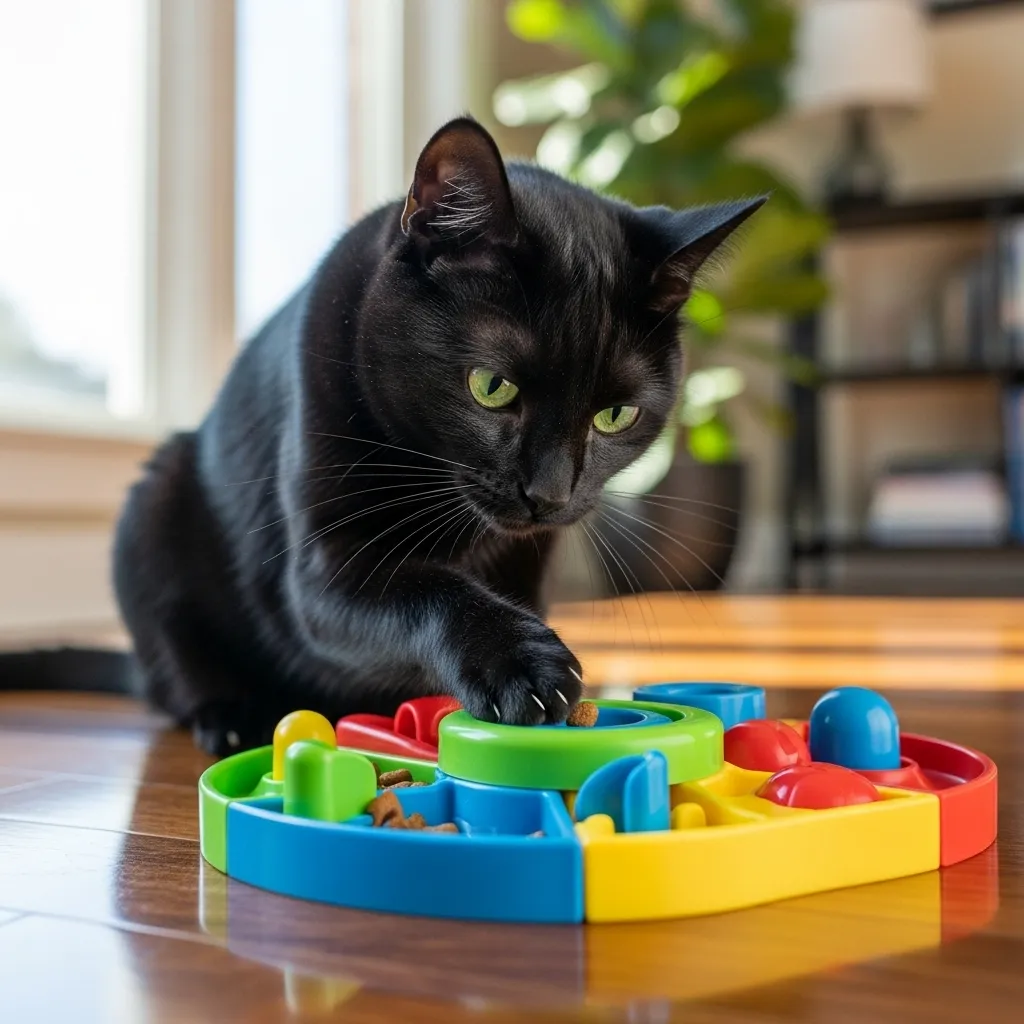
- Puzzle feeders: Increase meal time from seconds to minutes
- Scatter feeding: Mimics foraging behavior
- Scheduled small meals: Prevents grazing and creates positive routines
- Training with food: Uses portions of daily intake for mental stimulation
These approaches address the psychological aspects of feeding while managing caloric intake. Discover more about creating engaging environments in our article on how to keep cats entertained, which includes feeding-related enrichment ideas.
Urinary Health: The Indoor Cat’s Vulnerability
Indoor cats, particularly males, face higher risks of urinary issues including crystals, stones, and FIC (Feline Idiopathic Cystitis). Multiple factors contribute:
- Lower water intake compared to outdoor cats
- Increased stress from confined spaces or multi-cat households
- Less frequent urination due to sedentary lifestyle
Dietary interventions for urinary health:
- Increased moisture: Wet food should comprise at least 50% of diet
- Controlled minerals: Magnesium, phosphorus, and calcium balanced to prevent crystal formation
- pH management: Diets formulated to maintain slightly acidic urine (6.0-6.5 pH)
- Stress-reducing nutrients: Added tryptophan, alpha-casozepine, or fish oils
For cats with recurrent issues, our cat urinary health guide offers comprehensive management strategies that complement nutritional approaches.
Macronutrient Breakdown: Beyond Simple Percentages
Protein Quality Over Quantity
Both indoor and outdoor cats require high-quality, animal-based protein. The difference lies in amount and purpose. Outdoor cats use protein for energy and tissue repair from physical activity. Indoor cats primarily use protein for maintenance, with excess converted to fat if not needed.
Essential amino acids remain non-negotiable:
- Taurine: Cardiac and visual health; identical requirements for both lifestyles
- Arginine: Ammonia detoxification; critical regardless of activity level
- Methionine and cysteine: Coat health and antioxidant function
Quality indicators include named meat sources (chicken, salmon) rather than generic “meat meal” and biological value scores. Learn to decode labels in our essential guide to reading cat food labels.
Fat: Energy Source and So Much More
Fat provides concentrated energy for outdoor cats over twice the calories per gram compared to protein or carbohydrates. For indoor cats, fat supports skin/coat health and carries fat-soluble vitamins without contributing excessive calories if properly balanced.
Optimal fat sources:
- Animal-based (chicken fat, fish oil)
- Omega-3 to Omega-6 ratio between 1:2 and 1:5
- Added EPA/DHA for anti-inflammatory benefits
Carbohydrates: The Controversial Component
Cats have no nutritional requirement for carbohydrates. However, indoor cats may benefit from small amounts of complex carbohydrates (peas, sweet potatoes) for:
- Weight management through fiber
- Blood sugar regulation
- Prebiotic effects for gut health
Outdoor cats generally perform better with minimal carbohydrates (<10% of calories), as their systems are optimized for fat and protein metabolism.
Life Stage Considerations Across Lifestyles
Kittens: Surprisingly Similar Needs
Whether destined for indoor or outdoor life, kittens have nearly identical nutritional needs during their first year. High protein (35-50%), moderate fat, and ample calories support rapid growth. The divergence begins around 12 months as adult lifestyles solidify.
Critical for all kittens: Frequent meals (3-4 daily) and consistent calorie supply regardless of eventual lifestyle. Our kitten to adult cat transition guide covers this developmental period in detail.
Senior Cats: Convergence of Needs
As cats age, activity levels often equalize. The 15-year-old outdoor cat may roam far less than in youth, while the indoor cat maintains steady activity. Senior diets should focus on:
- Increased protein to combat sarcopenia (muscle loss)
- Joint support (glucosamine, chondroitin, EPA)
- Reduced phosphorus for kidney health
- Enhanced palatability as senses diminish
The lifestyle distinction becomes less critical than addressing age-related changes. For specialized guidance, see our recommendations for best foods for senior cats.
Special Conditions: When Lifestyle and Health Intersect
Some health conditions interact significantly with lifestyle:
- Diabetes: Outdoor cats may require adjusted insulin doses with activity changes
- Hyperthyroidism: Outdoor cats burn even more calories, requiring careful weight monitoring
- Arthritis: Indoor cats need weight management; outdoor cats may need restricted territory
- Dental disease: Affects both equally, but outdoor cats may hide discomfort during hunting
Transitioning Between Lifestyles: A Gradual Process
Indoor to Outdoor Transitions
Moving a lifelong indoor cat outside requires nutritional adjustment over 3-4 weeks:
- Weeks 1-2: Increase calories by 10-15% with same food
- Weeks 3-4: Gradually shift to higher-protein outdoor formula
- Monitor weight: Weekly checks ensure adequate intake
- Increase feeding frequency: Outdoor cats benefit from 3-4 smaller meals
Simultaneously, ensure vaccinations and parasite prevention are current. The stress of transition can temporarily weaken immune responses.
Outdoor to Indoor Transitions
Former outdoor cats adjusting to indoor life need careful calorie reduction to prevent rapid weight gain:
- Immediate reduction: Cut calories by 20-25% from outdoor intake
- Gradual transition: Shift to indoor formula over 2-3 weeks
- Environmental enrichment: Critical to prevent stress-related overeating
- Regular weigh-ins: Every 2 weeks for first 3 months
These cats often benefit from scheduled feedings rather than free-choice to establish new routines.
Practical Feeding Strategies for Each Lifestyle
Outdoor Cat Feeding Logistics
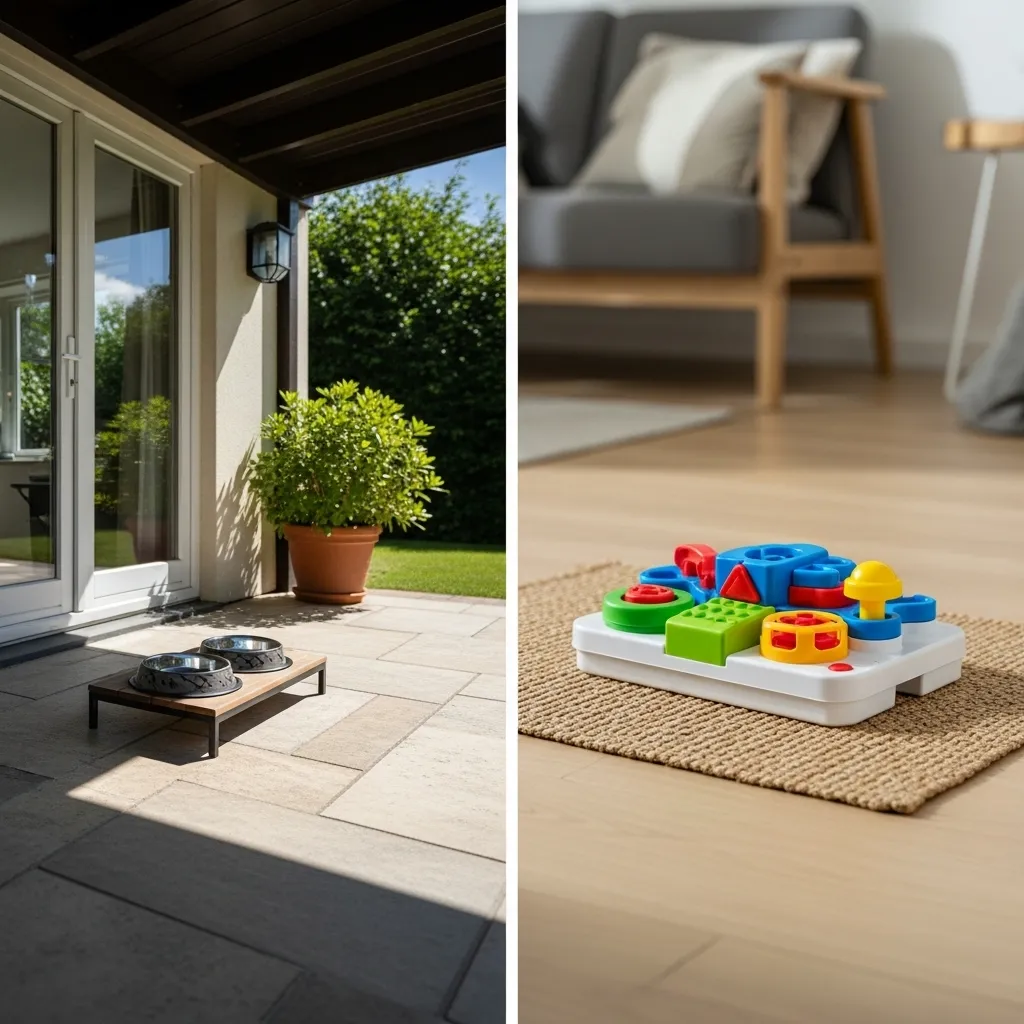
Location matters: Feed in sheltered areas protected from weather and predators. Consistent locations help cats feel secure.
Timing considerations: Feed during daylight hours to discourage wildlife visitors. Remove uneaten food within 30 minutes.
Multiple cats: Provide separate stations to reduce competition stress. This is particularly important for managing the dietary needs of indoor vs outdoor cats in multi-cat households where lifestyles differ.
Indoor Cat Feeding Innovations
Automated feeders: Provide precise portions and scheduled meals. Particularly useful for weight management. Our automatic cat feeder guide compares options for different needs.
Interactive feeding: As discussed earlier, puzzle feeders and food-dispensing toys turn meals into enrichment opportunities.
Vertical feeding: Placing food bowls on cat trees or shelves can reduce stress in multi-cat homes and encourage light exercise.
The Supplement Question: What’s Necessary?
Outdoor Cat Supplements
- Fish oil: For skin/coat protection against elements
- Probiotics: For immune support with environmental exposures
- Joint supplements: Earlier introduction (age 5+) due to higher impact activity
Indoor Cat Supplements
- Fiber: For hairball control and weight management
- Urinary supplements: Cranberry, D-mannose, or prescription formulas if prone to issues
- Vitamin D: Some indoor cats with limited sun exposure may benefit, but only under veterinary guidance
Important: Neither lifestyle requires multivitamins if fed balanced commercial diets. Oversupplementation can cause imbalances.
Common Myths Debunked
Myth: Outdoor cats need more carbohydrates for energy.
Truth: Cats utilize fat and protein more efficiently for sustained energy. Excessive carbohydrates can lead to weight gain and insulin resistance regardless of lifestyle.
Myth: Indoor cats should always be fed less.
Truth: While average needs are lower, individual variation exists. Some active indoor cats need more calories than sedentary outdoor cats. Assess each cat individually.
Myth: Wet food isn’t necessary for cats with water access.
Truth: All cats benefit from wet food’s hydration and protein content. Outdoor cats particularly need the moisture boost during temperature extremes.
Myth: Once set, dietary needs don’t change.
Truth: Seasonal changes affect outdoor cats (more calories in winter), while indoor cats may need adjustment with routine changes (new family members, schedule shifts).
FAQ: Answering Your Top Questions
Q: Can I feed my indoor/outdoor cat the same food if they’re siblings?
A: Not ideally. Their different activity levels require different nutritional profiles. If you must feed the same food, monitor weight closely and adjust portions individually. The outdoor cat will likely need more food.
Q: How much more should I feed my outdoor cat in winter?
A: Increase by 15-25% during freezing temperatures. Provide unfrozen water and consider sheltered feeding areas. Monitor body condition monthly.
Q: My indoor cat seems hungry constantly. Should I feed more?
A: First rule out medical issues (hyperthyroidism, diabetes). Then assess environmental enrichment. Often, “hunger” is boredom. Try puzzle feeders before increasing calories.
Q: Is raw diet better for outdoor cats since they’d eat prey?
A: Not necessarily. Commercial raw diets vary in quality, and prey alone doesn’t provide complete nutrition. Any diet raw, wet, or dry must be balanced. Outdoor cats face higher parasite risks with raw feeding.
Q: How do I manage different diets in a multi-cat household?
A: Use microchip feeders, separate rooms, or scheduled feedings. Consistency prevents food stealing and stress. Our guide on stop cat eating other cats food offers practical solutions.
Q: Do outdoor cats need special dental care diets?
A: All cats benefit from dental care, but outdoor cats’ natural chewing on prey or grass may provide some mechanical cleaning. However, this doesn’t replace proper dental care. Both lifestyles need regular dental attention.
Conclusion: Respecting the Difference
Understanding the distinct dietary needs of indoor vs outdoor cats represents one of the most significant contributions we can make to our cats’ long-term health and happiness. These needs aren’t preferences or minor adjustments they’re fundamental requirements shaped by environment, evolution, and individual circumstance.
The outdoor cat thrives on diets supporting their athletic lifestyle and environmental challenges. The indoor cat flourishes with nutrition calibrated to their contained world and managed routine. Neither is “better” they’re simply different paths to feline wellbeing.
As responsible caretakers, our role involves observing, adjusting, and respecting these differences. It requires noticing when the outdoor cat needs more calories during a cold snap, or when the indoor cat’s decreased activity signals a need for portion adjustment. This ongoing attention paired with quality nutrition allows cats in either lifestyle to live fully, healthily, and contentedly.
Remember that nutrition exists in context. The perfect diet underperforms without proper environment, enrichment, and veterinary care. Likewise, the best environment cannot compensate for inadequate nutrition. Balance across all aspects of care creates the foundation for a thriving feline life, whether their world ends at the back porch or extends to the neighborhood at large.
Explore more expert cat care and behavior guides on Cat Bloom Haven. From breed-specific nutrition to behavioral enrichment, our library offers comprehensive resources for every aspect of feline wellbeing.