Why Is My Cat So Fat? A Complete Guide to Understanding, Assessing, and Fixing Cat Obesity
Your cat curls up on the couch, a fluffy ball of purrs and softness. But lately, that belly seems to touch the floor before their paws do. You scoop them up and feel more than muscle under the fur. If you’ve whispered, “Why is my cat so fat?” you’re not alone. Cat obesity affects over 60% of domestic cats in the U.S., according to the Association for Pet Obesity Prevention.
The good news? You can reverse it. This guide walks you through every step: spotting the problem, uncovering causes, protecting health, and creating a sustainable cat weight management plan that actually works.
Key Takeaways
- Cat obesity isn’t just “cute chonk” – it shortens lives and invites serious disease.
- Use the cat body condition score (BCS) chart to assess weight accurately at home.
- Weight gain in neutered cats and indoor cats is common but preventable.
- Combine portion-controlled feeding, low-calorie cat food options, and daily play for safe cat weight loss.
- Always involve your vet before starting any cat diet for weight loss.
Is Your Cat Truly Overweight? How to Tell Beyond the Scale
Scales lie. A 15-pound Maine Coon can be lean; a 10-pound domestic shorthair can be obese. Healthy cat weight depends on breed, frame size, and muscle mass. The gold standard? The cat body condition score system, used by vets worldwide.
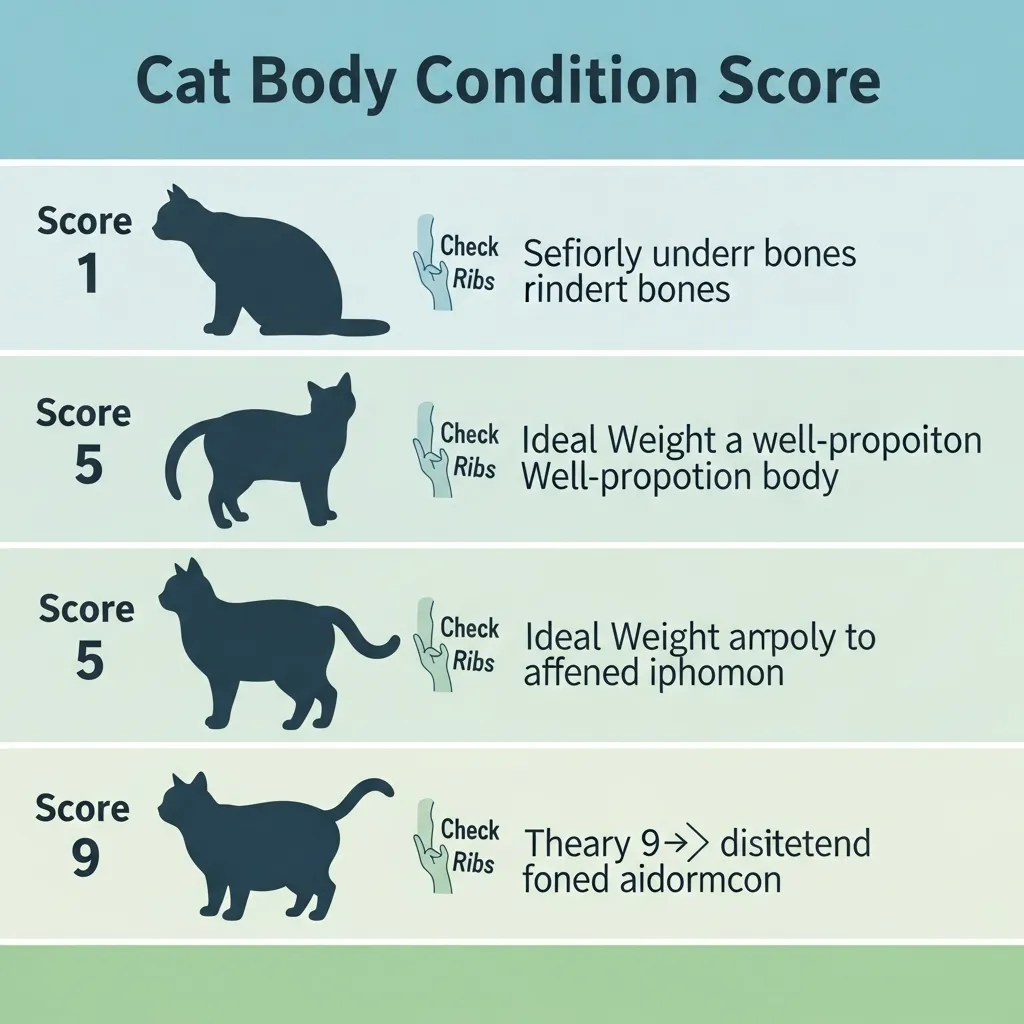
The 9-Point Body Condition Score Chart (Simplified)
| Score | Ribs | Waist (from above) | Belly (side view) | Description |
|---|---|---|---|---|
| 1-3 | Easily felt, bony | Sharp tuck | Severe abdominal tuck | Too thin |
| 4-5 | Easily felt, slight fat cover | Visible waist | Slight tuck | Ideal |
| 6 | Felt with pressure | Waist barely visible | Slight pouch | Overweight |
| 7-9 | Hard to feel, thick fat | No waist | Large pendulous belly | Obese |
How to check at home: Run your hands along your cat’s sides. You should feel ribs with light pressure, like the back of your hand. Look from above: a gentle hourglass shape means healthy cat weight. From the side, a slight abdominal tuck (not a sway) is normal.
Pro tip: Photograph your cat weekly from above and the side. Subtle cat weight problems creep up over months.
Common Signs of Obese Cats You Might Miss
Cat gaining weight doesn’t always announce itself with a giant belly. Watch for:
- Lethargy: Skips the zoomies; prefers napping over play.
- Grooming changes: Can’t reach back or belly to clean properly (matted fur, dandruff).
- Breathing trouble: Open-mouth panting after minimal effort.
- Mobility issues: Hesitates to jump on counters or stairs.
- Litter box struggles: Hard to squat or step in/out of high-sided boxes.
These signal more than laziness – they’re red flags for cat health and weight decline.
Why Cats Pack on Pounds: The Real Causes of Weight Gain in Cats
No single villain causes cat obesity. It’s a perfect storm of biology, lifestyle, and human habits.
1. Neutering and Hormonal Shifts
Weight gain in neutered cats is real. Spaying or neutering drops metabolism by 20-30%. Without calorie cuts, cats gain 1-2 pounds in the first year post-surgery. Learn more in our early neutering risks guide.
2. Free-Feeding vs Portion Feeding
Leaving a full bowl 24/7? That’s a recipe for overfeeding cats. Cats self-regulate poorly on dry kibble. Studies show free-fed cats eat 20% more than needed.
3. Indoor Cat Weight Issues
Indoor cats burn 50% fewer calories than outdoor roamers. No hunting, no territory patrols – just naps and snacks. See our how to keep indoor cats active guide for solutions.
4. High-Calorie Cat Food Concerns
Cheap kibble is calorie-dense (400+ kcal/cup) and low in protein. Cats eat until protein needs are met, overeating carbs and fats along the way.
5. Age and Activity Level
Kittens and seniors move less. Cat activity level and weight are tightly linked. A 7-year-old cat needs half the playtime of a 1-year-old to stay lean.
6. Medical Triggers
- Hypothyroidism (rare but rising)
- Cushing’s disease
- Insulin resistance leading to feline diabetes signs
Always schedule a vet check-up for overweight cats to rule these out. Explore thyroid issues in cats for deeper insight.
The Hidden Dangers: Cat Obesity Risks You Can’t Ignore
Obesity isn’t cosmetic. It’s a disease that steals years.
| Risk | Impact |
|---|---|
| Feline diabetes | 4x higher risk; daily insulin shots |
| Arthritis | Joint stress from extra weight |
| Heart disease | High blood pressure, strain |
| Urinary issues | Bladder stones, blockage risk |
| Cancer | Linked to chronic inflammation |
| Shortened lifespan | Obese cats live 2-5 years less |
One study found obese cats have a 50% higher anesthesia risk during surgery. Every pound matters.
Your Action Plan: Safe and Effective Cat Weight Loss
Slow and steady wins. Aim for 0.5-1% body weight loss per week. Crash diets cause hepatic lipidosis, a fatal liver disease.
Step 1: Vet-Approved Cat Weight Control Programs
Your vet calculates your cat’s resting energy requirement (RER) and sets a calorie target. Example:
- 10-lb ideal weight cat → ~180 kcal/day for weight loss
- Never drop below 150 kcal/day without supervision
Step 2: Switch to a Cat Diet for Weight Loss
- Prescription diets (Hill’s Metabolic, Royal Canin Satiety) – proven 11% weight loss in 2 months
- High-protein, low-carb wet food – 2.5-3 oz per meal, twice daily
- Low-calorie cat food options – look for <300 kcal/cup dry or <80 kcal/3oz can
See our best wet cat food roundup for vetted picks.
Step 3: End Free-Feeding – Master Portion Control
| Cat Weight | Daily Calories (Loss) | Wet Food (3oz cans) | Dry Food (cups) |
|---|---|---|---|
| 8 lbs | 160 | 2 | ⅓ |
| 12 lbs | 220 | 2.5 | ½ |
| 15 lbs | 280 | 3.5 | ⅔ |
Use a digital kitchen scale. Measure every gram.
Step 4: Boost Cat Exercise Ideas
Cats don’t “walk” like dogs, but they play.
- Interactive toys for cats: Da Bird, laser pointers, flirt poles
- Food puzzles: Doc & Phoebe’s Indoor Hunting Feeder
- Vertical space: Cat trees, window perches
- Scheduled play: Two 10-minute sessions daily
Discover more in interactive toys for cats.
Real-Life Success: How One Owner Dropped 4 Pounds in 4 Months
Meet Luna, a 6-year-old Ragdoll. At 17 pounds, she wheezed climbing stairs. Her owner:
- Switched to portioned wet food (2.5 cans/day)
- Added 15-minute laser chase sessions
- Replaced the food bowl with a puzzle feeder
Result? 13 pounds in 16 weeks. No hunger yowls. Full energy. Read more owner stories in ragdoll cat obesity guide.
Cat Weight Management Myths Busted
| Myth | Truth |
|---|---|
| “Dry food cleans teeth” | No – kibble adds calories, not dental health |
| “Senior cats need less food” | They need higher protein, just fewer calories |
| “Treats are fine in moderation” | One Greenies dental treat = 1/10th daily calories |
Monitoring Progress: Track Cat Weight Loss Like a Pro
- Weigh weekly – same time, same scale (baby scale works)
- BCS monthly – feel ribs, check waist
- Photo log – visual proof motivates
- Vet rechecks – every 4-6 weeks
Slow weight loss in cats (under 1% weekly) is safest.
FAQ: Your Top Cat Weight Questions Answered
What is a healthy cat weight by breed?
- Domestic shorthair: 8-10 lbs
- Maine Coon: 12-18 lbs (males)
- Siamese: 6-10 lbs
Use BCS, not scale alone.
How do I know if my cat is obese?
Feel for ribs (hard = too thin, impossible = obese). Look for no waist and a swaying belly. Use the BCS chart above.
Why do indoor cats gain weight so easily?
Low activity + constant food access. Indoor cat weight issues stem from boredom and overfeeding.
What’s the best food for overweight cats?
High-protein wet food or prescription weight loss diets. Avoid “light” kibble – often just smaller portions of the same calories.
Can cats lose weight too fast?
Yes. Over 2% weekly risks hepatic lipidosis. Aim for gradual cat weight loss.
Do treats ruin cat weight loss?
Not if budgeted. 10% of daily calories max. One small treat = one less tablespoon of kibble.
When should I worry about cat overeating reasons?
Sudden ravenous hunger can signal hyperthyroidism or diabetes. See a vet.
The Bottom Line: Your Cat’s Health Is in Your Hands
Cat obesity isn’t inevitable. With measured meals, daily play, and regular vet check-ups, your overweight cat can reclaim energy, grace, and years. Start tonight: weigh their food, hide a treat in a puzzle toy, and schedule that vet visit.
Ready for more feline health wins? Explore our cat wellness hub or dive into cat nutrition deep dive. Your cat’s nine lives thank you.