Why Cat Urine Smells So Bad: Causes, Health Concerns, and Proven Solutions
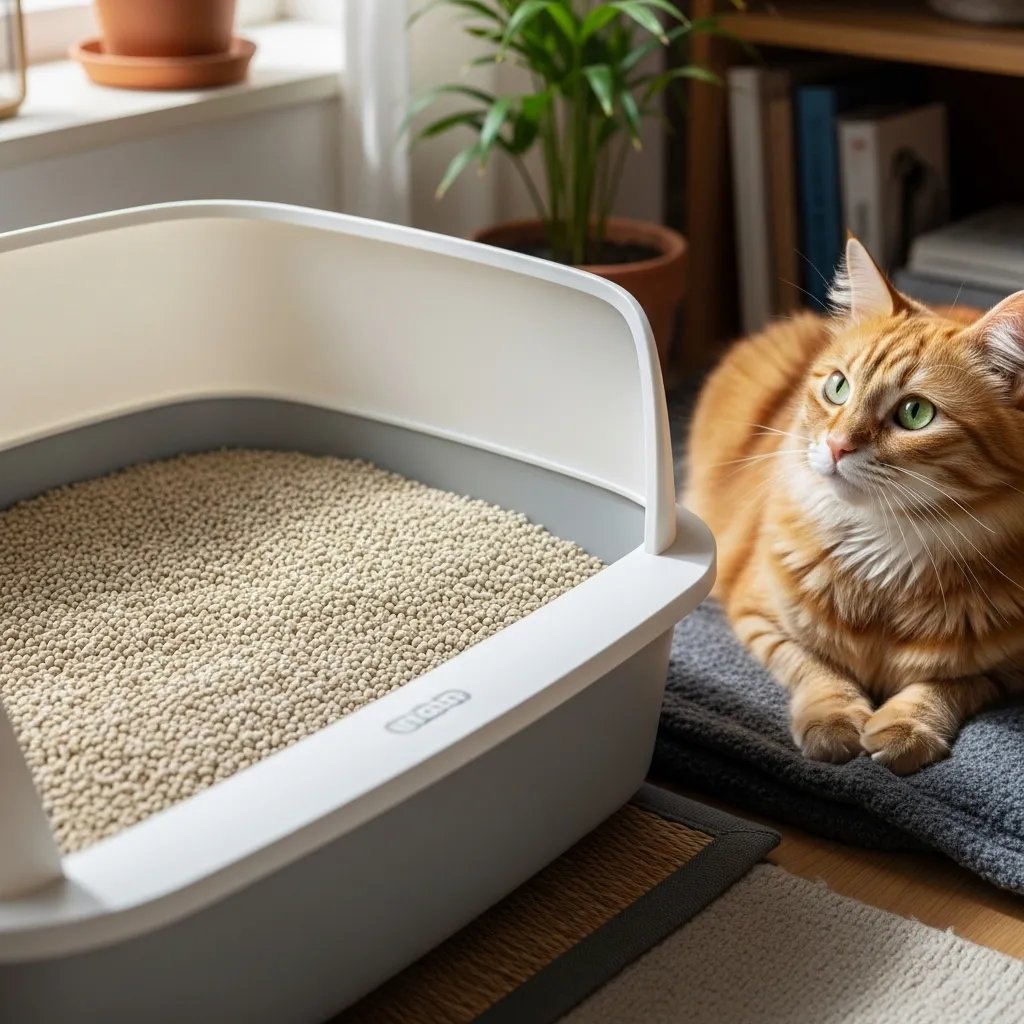
If you’ve ever caught a whiff of cat urine, you know it’s not just a smell it’s an experience. That pungent, lingering odor can make your home feel less inviting and leave you wondering, why does cat urine smell so bad? Whether it’s a sudden change in your cat’s urine odor or a persistent issue driving you up the wall, understanding the science behind strong-smelling cat urine and its potential causes is the first step to tackling it. At Cat Bloom Haven, we’re here to break down the reasons behind that unmistakable cat pee smell, explore what it might mean for your cat’s health, and share expert-backed solutions to eliminate it for good.
In this guide, you’ll discover:
- The chemical compounds in cat urine that make it so potent.
- Why a sudden change in urine smell could signal health issues like feline UTI, diabetes, or kidney disease.
- Practical, vet-approved tips to remove cat urine odor from your home.
- How to keep your cat healthy and your space odor-free.
Let’s dive into the science and solutions to conquer cat urine smell once and for all.
Key Takeaways
- Cat urine smells bad due to chemical compounds like ammonia, mercaptans, and urea, intensified by bacterial breakdown.
- Sudden changes in odor may indicate health issues like feline UTI, diabetes, or kidney disease—consult a vet if you notice differences.
- Effective odor removal involves enzyme cleaners, proper litter box maintenance, and addressing the root cause.
- Health monitoring is key: Strong or unusual urine smells can be an early warning sign of serious conditions.
- Explore more cat health tips in our cat health care guide.
What Makes Cat Urine Smell So Bad?
Cat urine has a reputation for its strong, lingering odor, and there’s a scientific reason why it’s so potent. Unlike human urine, cat urine contains unique chemical compounds that amplify its smell, especially as it breaks down. Let’s break it down.
The Chemistry Behind the Smell
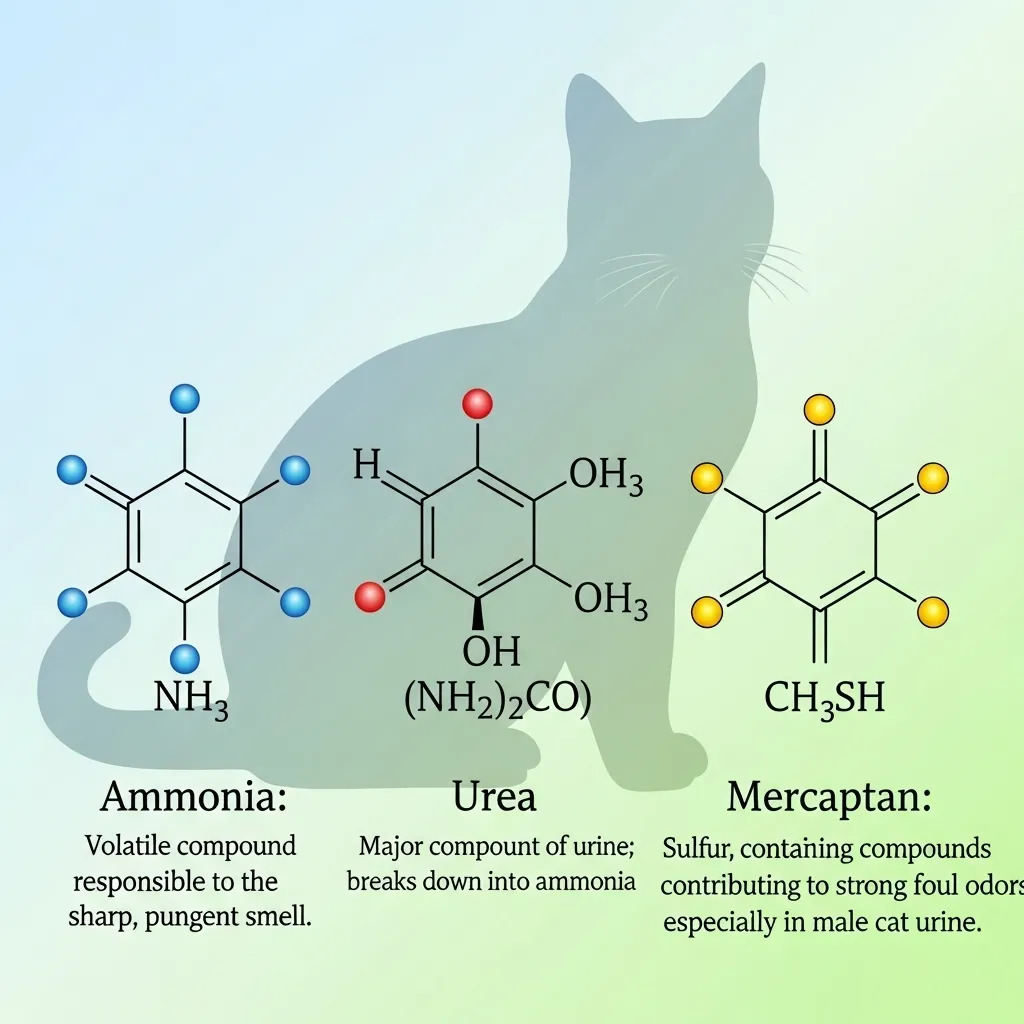
Cat urine contains several key components that contribute to its odor:
- Urea: A nitrogen-rich compound that, when fresh, is relatively odorless. However, as urine sits, bacteria break down urea into ammonia, creating that sharp, pungent smell.
- Ammonia in cat urine: Ammonia is the primary culprit behind the strong, chemical-like odor. It becomes more concentrated as urine decomposes, making the smell worse over time.
- Mercaptans in cat urine: These sulfur-containing compounds give cat pee its distinctive “skunky” or rotten smell, similar to what you’d find in skunk spray. Mercaptans are especially potent and cling to surfaces.
- Felinin: A unique amino acid in cat urine, more prevalent in unneutered males, that intensifies odor when it breaks down.
These compounds combine to create a smell that’s not only strong but also stubborn, sticking to carpets, furniture, and even walls.
Bacterial Breakdown of Cat Urine
When cat urine sits outside the litter box, bacteria in the environment begin to break it down. This process, known as cat urine decomposition, accelerates the release of ammonia and other volatile compounds. The longer the urine sits, the worse the smell becomes, as bacteria thrive in warm, moist conditions. This is why a missed spot in your home can turn into a lingering problem.
Why Cat Urine Smells Worse Than Other Pets
Cats are obligate carnivores, meaning their diet is high in protein. This high-protein diet leads to higher concentrations of nitrogen-based compounds like urea and ammonia in their urine compared to dogs or other pets. The result? A more intense and persistent odor.
Is Strong-Smelling Cat Urine Normal?
A certain level of odor is normal for cat urine due to its chemical makeup, but an unusually strong or sudden change in smell could be a red flag. If your cat’s urine smells stronger than usual or has a different odor (like ammonia or sulfur), it’s worth investigating. Here’s why.
Normal vs. Abnormal Urine Odor
- Normal: Fresh cat urine has a mild, slightly musky smell that becomes stronger as it sits. Regular litter box cleaning minimizes this.
- Abnormal: A sudden shift to a very strong ammonia smell, sulfur-like odor, or even a sweet smell could indicate health issues or environmental factors.
If you’re noticing a persistent or worsening odor despite cleaning, it’s time to look deeper. Learn more about cat urinary health to understand what’s normal for your feline friend.
Health Problems Indicated by Cat Urine Odor
A change in your cat’s urine smell can be more than just a cleaning issue—it might signal a health problem. Here are the most common conditions linked to strong-smelling cat urine and their symptoms.
1. Feline Urinary Tract Infection (UTI)
A feline UTI can cause a sudden change in cat urine smell, often making it smell strongly of ammonia or even fishy. Bacteria in the urinary tract alter the urine’s composition, leading to a more pungent odor.
Symptoms of feline UTI:
- Frequent urination or straining in the litter box.
- Blood in the urine.
- Excessive grooming of the genital area.
- Vocalizing or crying while urinating.
What to do: Schedule a vet visit immediately. UTIs require antibiotics and can worsen if untreated. Explore our guide on munchkin cat urinary issues for breed-specific insights.
2. Feline Diabetes
Cat diabetes can cause urine to smell sweet or fruity due to excess glucose. This is a serious condition that needs prompt attention.
Symptoms of feline diabetes:
- Increased thirst and urination.
- Weight loss despite a normal or increased appetite.
- Lethargy or weakness.
- Sweet-smelling urine.
What to do: A vet can diagnose diabetes with blood and urine tests. Early intervention, including diet changes or insulin, can manage the condition. Check out our cat diabetes guide for detailed advice.
3. Kidney Disease
Feline kidney disease often causes a strong ammonia-like smell in urine due to the kidneys’ reduced ability to filter waste. This is common in older cats.
Symptoms of feline kidney disease:
- Increased thirst and urination.
- Weight loss or poor appetite.
- Bad breath or vomiting.
- Strong, concentrated urine odor.
What to do: Kidney disease requires veterinary diagnosis through bloodwork and urinalysis. Dietary changes and medications can help manage symptoms. Discover more in our senior cat care guide.
4. Dehydration
Dehydration concentrates urine, making it smell stronger and more ammonia-like. This can happen if your cat isn’t drinking enough water or is stressed.
Symptoms of dehydration:
- Dry gums or sunken eyes.
- Lethargy or reduced activity.
- Reduced skin elasticity (skin doesn’t snap back when gently pinched).
What to do: Encourage hydration with fresh water, wet food, or a cat fountain. Severe cases need veterinary attention. Learn hydration tips in our cat hydration guide.
5. Diet or Hormonal Changes
A high-protein diet or hormonal changes (especially in unneutered cats) can intensify urine odor. Unneutered males produce more felinin, which makes their urine smell stronger.
What to do: Consider neutering to reduce odor and consult a vet about diet adjustments. Check out our guide on choosing cat food for dietary tips.
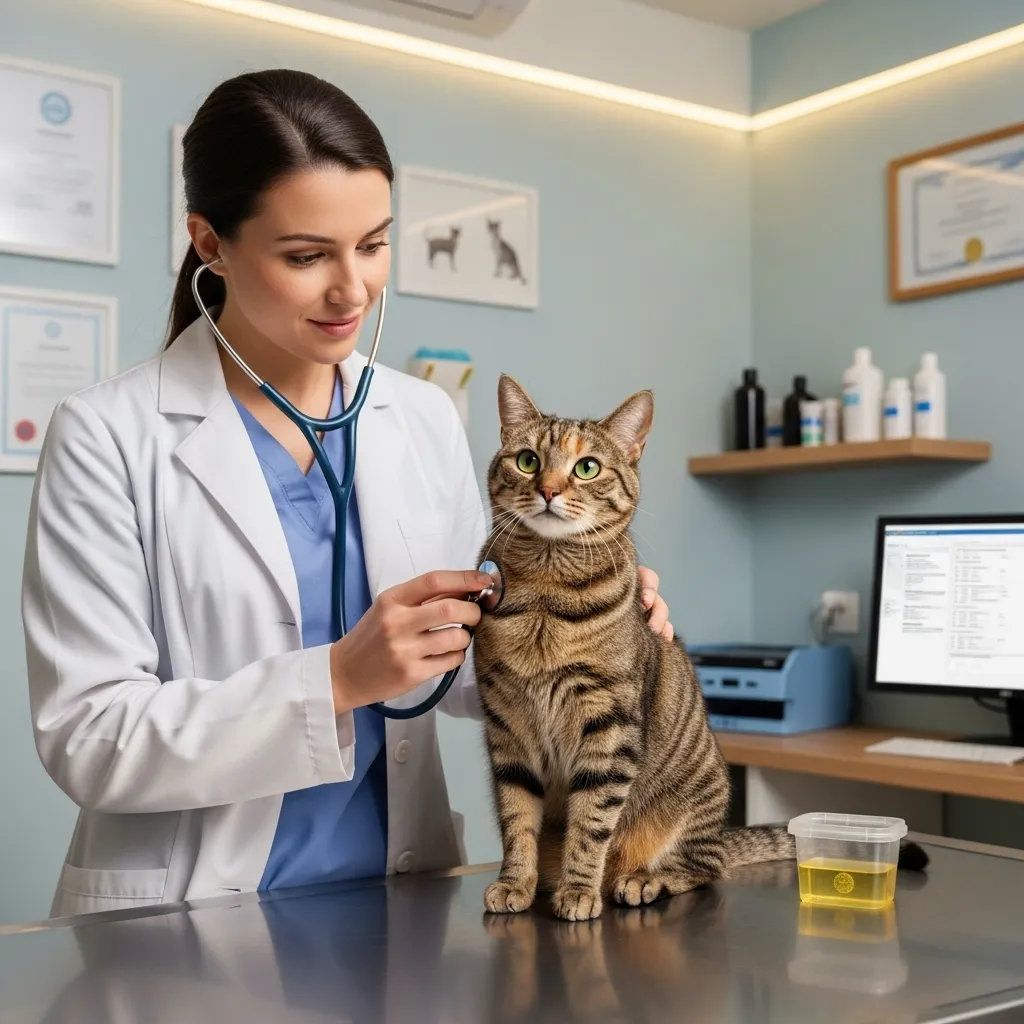
Why Does My Cat’s Urine Smell Different All of a Sudden?
A sudden change in cat urine smell is often a sign something’s off. Here are common triggers and what to do:
- Health issues: As mentioned, UTIs, diabetes, or kidney disease can alter urine odor. Monitor for other symptoms and consult a vet.
- Litter box neglect: Infrequent cleaning allows bacteria to thrive, worsening the smell. Clean the box daily and replace litter weekly.
- Stress or behavior: Stress can lead to spraying or urinating outside the box, spreading the odor. Learn about cat stress signs to address behavioral issues.
- Diet changes: New foods can alter urine composition. Gradually transition to new diets to minimize changes.
If the smell persists or worsens, a vet visit is crucial to rule out health problems.
How to Get Rid of Cat Urine Odor in Your Home
Eliminating cat pee smell requires addressing both the source and the lingering odor. Here are vet-approved, practical steps to restore your home’s freshness.
Step 1: Find and Clean the Source
- Locate the spot: Use a blacklight to find urine stains, which glow under UV light.
- Blot, don’t scrub: Absorb fresh urine with paper towels to prevent spreading.
- Use an enzyme cleaner: Enzyme-based cleaners (like those specifically for pet odors) break down urea and ammonia, neutralizing the smell. Avoid bleach or ammonia-based cleaners, as they can worsen the odor or attract cats to remark the spot. Learn more about enzyme cleaners for cat urine.
Step 2: Deep Clean Affected Areas
- Carpets and rugs: Apply an enzyme cleaner, let it sit for 10–15 minutes, then blot dry. For stubborn stains, consider professional cleaning.
- Furniture: Use enzyme sprays and wash removable covers. Test cleaners on a small area first to avoid damage.
- Hard surfaces: Wipe with enzyme cleaner and rinse thoroughly to remove residue.
Step 3: Maintain a Clean Litter Box
- Daily scooping: Remove waste daily to prevent odor buildup.
- Weekly cleaning: Empty and wash the litter box with mild soap and water.
- Choose the right litter: Clumping litters with odor control (like silica or activated charcoal) can reduce smells. Explore our litter training guide for more tips.
Step 4: Neutralize Lingering Odors
- Baking soda: Sprinkle on carpets or furniture, let sit, then vacuum.
- Vinegar solution: Mix equal parts water and white vinegar to neutralize odors on hard surfaces.
- Air purifiers: Use a HEPA air purifier to remove lingering particles.
Step 5: Prevent Repeat Incidents
- Address behavioral issues: Stress or territorial marking can cause inappropriate urination. Check our guide on stopping cat spraying indoors.
- Provide multiple litter boxes: The rule is one box per cat, plus one extra, in quiet, accessible locations.
- Monitor health: Regular vet checkups catch issues early. See our cat vet visit schedule.
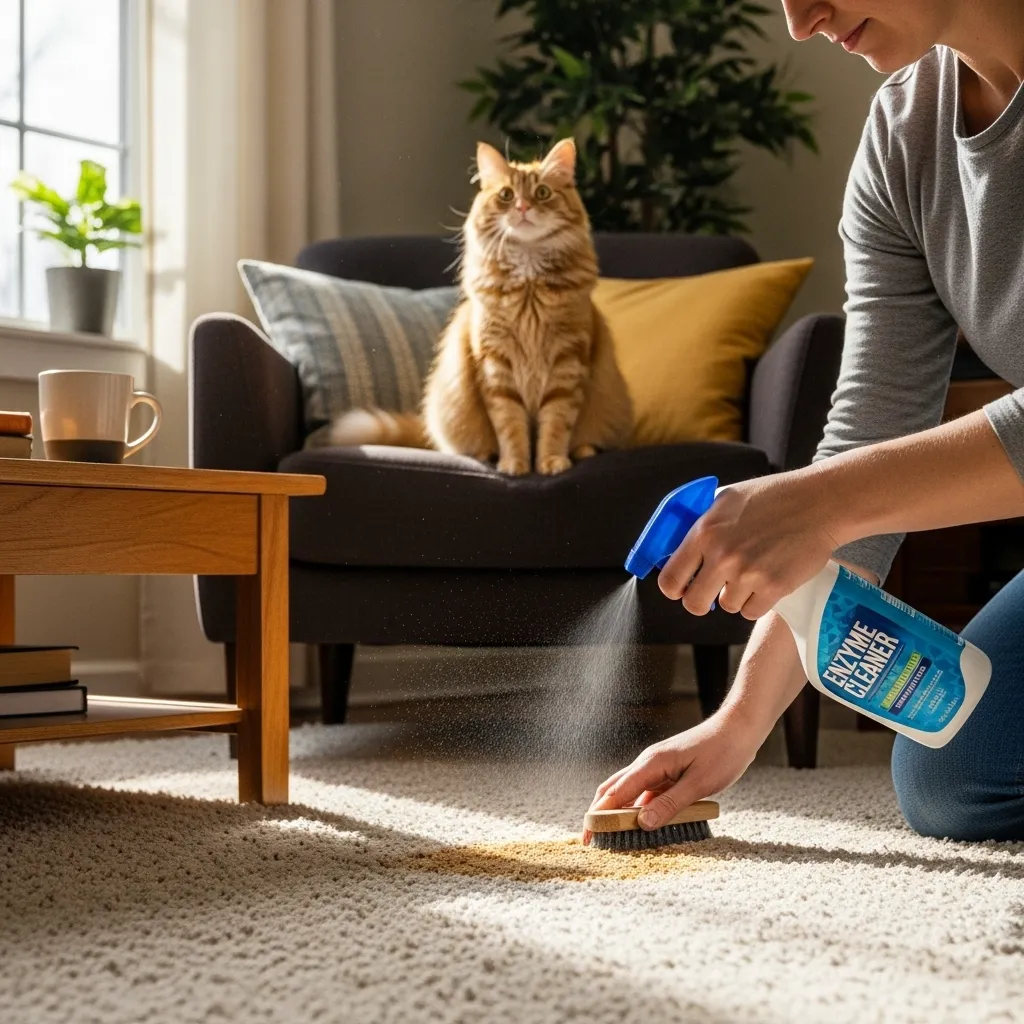
Table: Common Cat Urine Smell Causes and Solutions
| Cause | Symptoms | Solution |
|---|---|---|
| Feline UTI | Strong ammonia or fishy smell, frequent urination | Vet visit, antibiotics |
| Feline Diabetes | Sweet or fruity urine smell, increased thirst | Vet diagnosis, diet changes, insulin |
| Kidney Disease | Strong ammonia smell, weight loss | Vet tests, dietary management |
| Dehydration | Concentrated, strong-smelling urine | Encourage hydration, vet check |
| Poor Litter Box Maintenance | Persistent odor in box | Daily scooping, weekly cleaning |
| Bacterial Decomposition | Worsening smell over time | Enzyme cleaners, prompt cleanup |
Real-Life Example: Tackling a Persistent Cat Urine Smell
Take Sarah, a cat owner who noticed her Maine Coon’s urine smelled unusually strong, almost like sulfur. Initially, she blamed the litter box, but after deep cleaning, the odor persisted. A vet visit revealed a UTI, which was treated with antibiotics. Sarah also switched to an enzyme cleaner for her carpets and added a second litter box to prevent stress-related accidents. Within two weeks, the smell was gone, and her cat was back to normal. This shows how addressing both health and environmental factors can solve the problem. Learn more about Maine Coon care.
FAQ: Quick Answers to Common Cat Urine Smell Questions
Why is cat urine smell so powerful?
Cat urine contains ammonia, mercaptans, and urea, which create a potent, lingering odor, especially as bacteria break it down.
Is strong-smelling cat urine normal?
Mild odor is normal, but a very strong or sudden change in smell could indicate health issues or poor litter box maintenance.
What causes cat pee to smell so bad?
The smell comes from ammonia, mercaptans, and felinin, intensified by bacterial decomposition and a high-protein diet.
Can the smell of cat urine indicate health problems?
Yes, strong or unusual odors (ammonia, sweet, or sulfur-like) can signal UTIs, diabetes, or kidney disease. Consult a vet.
How can I eliminate cat pee odor from my home?
Use enzyme cleaners, clean the litter box daily, and address health or behavioral issues. See our guide on removing cat pee odor from couches.
What are signs of a feline UTI from urine smell?
A strong ammonia or fishy smell, frequent urination, or straining are key signs. Seek veterinary care promptly.
Why does my cat’s urine smell like ammonia all of a sudden?
This could indicate a UTI, dehydration, or kidney issues. A vet visit is essential to diagnose the cause.
How do I know if my cat’s urine smell is due to diabetes?
Sweet or fruity-smelling urine, paired with increased thirst and weight loss, may suggest diabetes. Get a vet diagnosis.
Conclusion: Take Control of Cat Urine Smell Today
The pungent smell of cat urine doesn’t have to take over your home or your peace of mind. By understanding the chemical compounds in cat urine like ammonia and mercaptans you can see why it’s so potent. More importantly, a sudden change in your cat’s urine smell could be a clue to health issues like feline UTI, diabetes, or kidney disease, so don’t ignore it. With prompt vet care, proper litter box maintenance, and enzyme-based cleaning, you can keep your home fresh and your cat healthy.
Ready to dive deeper into cat care? Explore more expert guides at Cat Bloom Haven, from cat urinary health to litter box solutions. Your feline friend deserves the best—let’s make their world (and yours) odor-free!