How to Tell a Cat’s Age by Whiskers: The Truth Behind the Myth and What Really Works
Ever stared into your cat’s mysterious face and wondered, “Just how old are you?” Those long, elegant cat whiskers twitch with every breeze, every emotion, and every midnight zoomie session. Naturally, you’ve heard the rumor: “You can tell a cat’s age by whiskers!” But is it true? Can cat whisker length and thickness really reveal whether your feline friend is a sprightly kitten or a wise senior?
Spoiler: No whiskers don’t work like tree rings. But that doesn’t mean they’re useless in the age-guessing game. In this ultimate guide from Cat Bloom Haven, we’ll bust myths, dive deep into cat whisker development, and show you real cat age estimation methods that actually work all backed by vet science, real-world examples, and pro tips you won’t find anywhere else.
Key Takeaways :
- Whiskers do NOT directly indicate age like rings on a tree.
- Cat whisker length and thickness vary by breed, genetics, and health not years lived.
- Kittens are born without whiskers, which grow in over the first 2–3 weeks.
- Do whiskers show a cat’s age? Only indirectly through wear, breakage, or discoloration in seniors.
- Use teeth, eyes, coat, and behavior for accurate age estimation.
- Proper nutrition for healthy whiskers supports overall feline wellness.
Let’s separate fact from furry fiction and help you decode your cat’s true timeline.
The Magic (and Science) Behind Cat Whiskers
Before we talk age, let’s honor what makes whiskers whiskers.
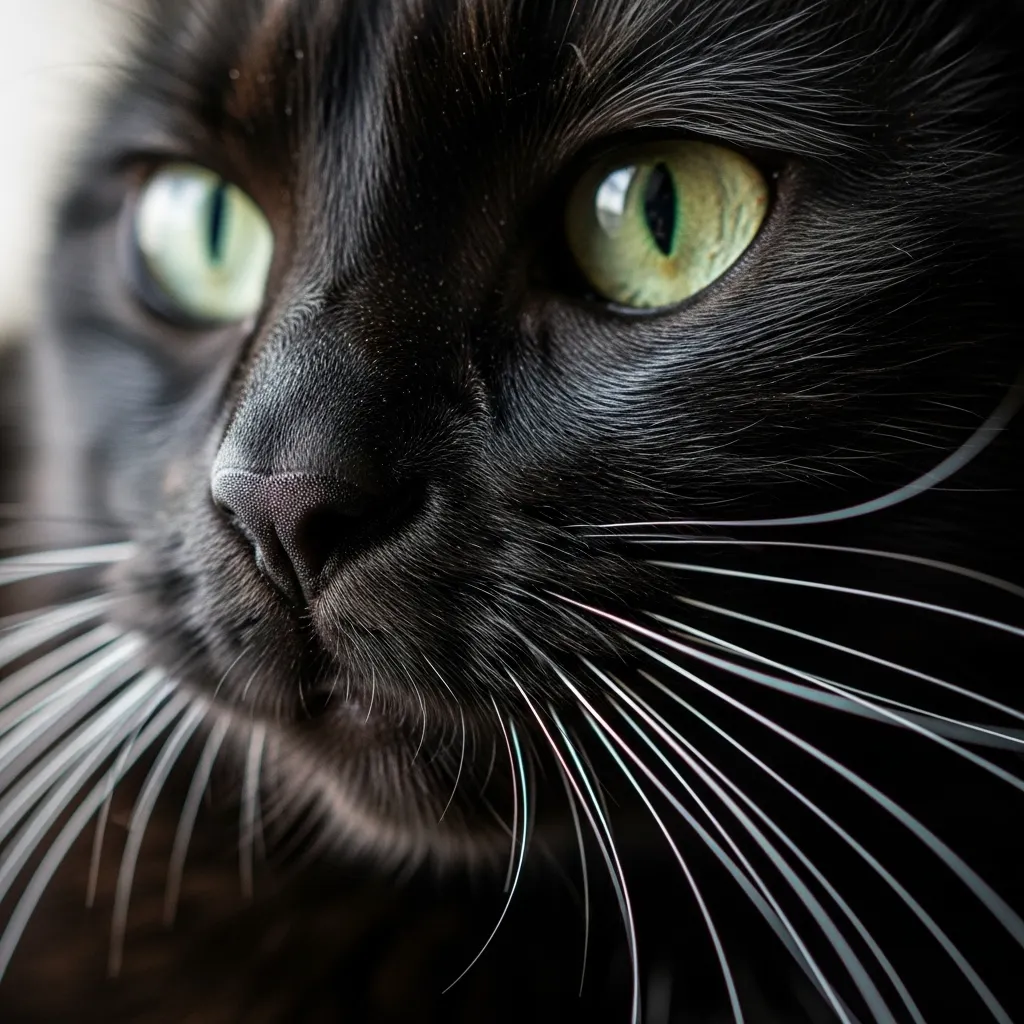
Cat whiskers scientifically called vibrissae aren’t just fancy facial hair. They’re high-tech sensory tools embedded deep in nerve-rich follicles, three times thicker than regular fur.
Purpose of Cat Whiskers: More Than Decoration
- Navigation: Whiskers detect air currents, helping cats judge tight spaces. That’s why they hate narrow doorways their whiskers brush the sides first.
- Hunting: Even in total darkness, whiskers sense prey movement via air displacement.
- Emotional radar: Whisker position reveals mood forward = curious, flattened = scared or angry.
- Balance & spatial awareness: Though not directly tied to the inner ear, whiskers help cats land on their feet.
“Whiskers are like a cat’s third set of eyes,” says Dr. Elena Rodriguez, DVM, feline behavior specialist. “They’re wired straight to the brain’s sensory cortex no middleman.”
Do Whiskers Show a Cat’s Age? The Big Myth Debunked
Let’s tackle the core question: How to tell a cat’s age by whiskers?
Short answer: You can’t. Not reliably.
Despite viral TikToks and old wives’ tales, cat whiskers and age have no direct correlation. Here’s why:
| Myth | Reality |
|---|---|
| Longer whiskers = older cat | Length is determined by genetics and breed, not age |
| Thicker whiskers = maturity | Thickness peaks around 1–2 years, then stabilizes |
| Graying whiskers = senior cat | Pigment loss can happen early due to stress or diet |
Example: A Maine Coon may have 5-inch whiskers at age 1. A Siamese might never exceed 3 inches — even at 15.
So if cat whisker length and thickness aren’t aging clocks, what are they telling you?
Cat Whisker Development: A Timeline from Kitten to Senior
Understanding cat whisker development helps separate normal growth from potential health red flags.
Phase 1: Newborn (0–2 Weeks)
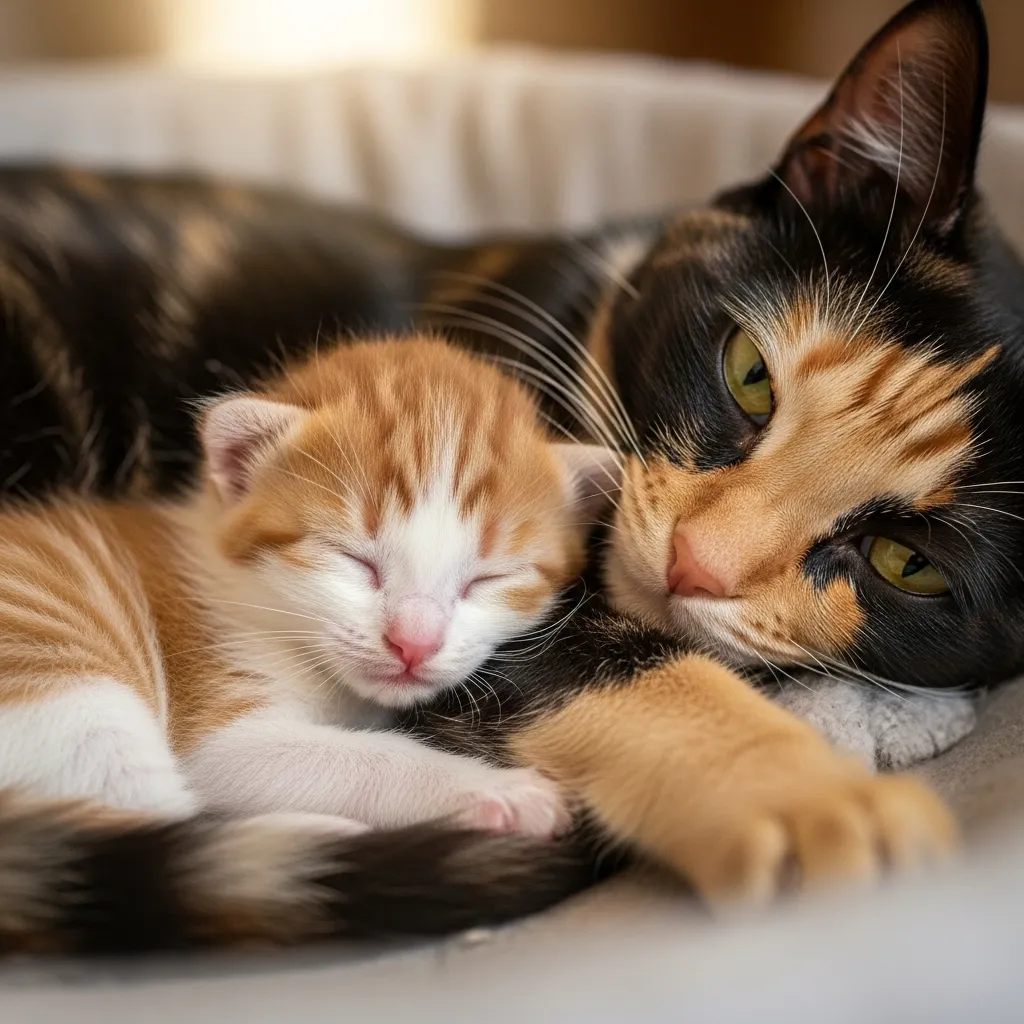
- Kittens are born blind, deaf, and whisker-less.
- Tiny whisker buds appear by day 7–10.
- By week 2, short, fine whiskers emerge about 1 cm long.
Phase 2: Juvenile (3 Weeks – 6 Months)
- Whiskers rapidly lengthen and thicken.
- Reach ~70% of adult length by 3 months.
- Color matches coat (black, white, etc.).
Phase 3: Young Adult (6 Months – 3 Years)
- Full adult whisker length achieved.
- Most cats have 24 mystacial whiskers (12 per side) plus eyebrow and chin whiskers.
- Peak sensitivity this is when cats are most agile.
Phase 4: Mature Adult (3–10 Years)
- Whiskers maintain length but may show minor wear at tips.
- Occasional breakage from play or grooming.
Phase 5: Senior (11+ Years)
- Feline aging signs in whiskers may include:
- Slight brittleness
- Rare graying (not universal)
- Slower regrowth after shedding
Pro Tip: A 12-year-old cat with pristine, long, glossy whiskers? Likely excellent nutrition for healthy whiskers and low-stress lifestyle.
Factors Affecting Whisker Growth and Appearance
Even if whiskers don’t reveal age, certain factors influence how they look and some can hint at underlying issues.
1. Genetics of Whisker Development
- Breed matters:
- Maine Coon, Norwegian Forest Cat → long, dramatic whiskers (explore Norwegian Forest Cat care)
- Sphynx, Cornish Rex → short, curly, or nearly absent
- Polydactyl cats sometimes have extra whisker pads.
2. Environmental Effects on Whiskers
- Stress → overgrooming → broken or sparse whiskers
- Indoor vs outdoor: Outdoor cats may have more nicked or dirty whiskers
- Bowl shape matters: Deep, narrow bowls cause whisker fatigue → stress eating (learn more in our cat feeding guide)
3. Nutrition for Healthy Whiskers
Whiskers are made of keratin same as claws and human hair. Support growth with:
| Nutrient | Role | Best Sources |
|---|---|---|
| Protein (>=30% dry matter) | Keratin building block | Chicken, fish, egg |
| Biotin | Prevents brittleness | Liver, salmon, supplements |
| Omega-3s | Reduces inflammation | Fish oil, sardines |
| Zinc | Supports follicle health | Beef, pumpkin seeds |
Vet-backed tip: Sudden whisker loss or curling? Could signal food allergies or ringworm. See your vet ASAP.
Whisker Health Care Tips: Keep Them Functional and Fabulous
Never trim whiskers but you can support their health:
- Use wide, shallow food/water bowls to prevent whisker stress.
- Avoid tight collars they can rub and break whiskers.
- Regular grooming: Gently clean crusty whiskers with a damp cloth.
- Monitor for asymmetry: One side shorter? Possible nerve damage or injury.
- Senior cats: Add joint supplements mobility affects whisker use in hunting play.
Learn more in our Senior Cat Care Guide
Misconceptions About Cat Whiskers (You’ve Probably Heard These)
Let’s clear the air on common misconceptions about cat whiskers:
| Myth | Truth |
|---|---|
| “Cutting whiskers improves behavior” | Causes disorientation, anxiety, and balance issues |
| “Whiskers fall out with age like human hair” | They shed naturally every few months regrow identical |
| “All cats have white whiskers when old” | Only some; most keep original color |
| “Kittens don’t need whiskers” | They do! Early sensory input shapes brain development |
Real Cat Age Estimation Methods (That Actually Work)
Since cat whiskers and age aren’t linked, here are vet-approved ways to determine a cat’s age:
1. Teeth: The Most Reliable Indicator
| Age | Dental Signs |
|---|---|
| 2–4 weeks | Baby teeth erupt |
| 3–4 months | Permanent incisors |
| 1 year | Clean, white, sharp |
| 3–5 years | Slight tartar |
| 7–10 years | Moderate wear, possible missing teeth |
| 10+ years | Heavy tartar, gum recession |
See our full Cat Dental Care Guide
2. Eyes: Windows to Maturity
- Kittens: Cloudy blue-gray until 6–7 weeks
- Young adults: Clear, bright
- Seniors: Lens clouding (nuclear sclerosis), iris fraying
3. Coat and Skin
- Kittens: Soft, fluffy
- Prime adults: Glossy, thick
- Seniors: Thinner coat, possible dandruff or lumps
4. Behavior and Energy
- Kittens: Constant play, poor impulse control
- Adults: Balanced activity
- Seniors: More sleeping, less jumping (explore senior hydration tips)
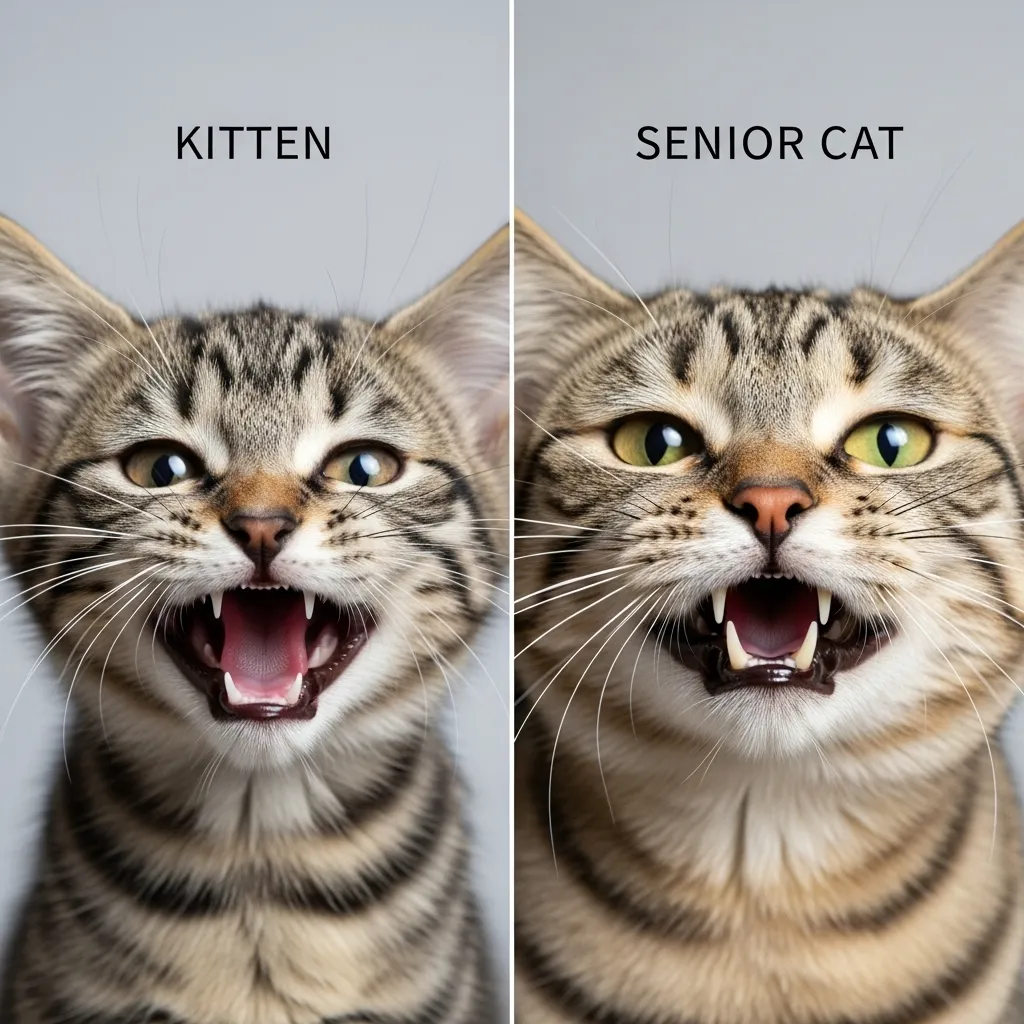
Cat Maturation Indicators Beyond Whiskers
Want a full picture of cat growth and development? Combine these signs:
- Weight milestones:
- 4 weeks: ~1 lb
- 12 weeks: ~3 lbs
- 1 year: 7–12 lbs (breed dependent)
- Sexual maturity: 5–8 months (spay/neuter time!)
- Bone development: Growth plates close by 12–18 months
Confused about your cat’s size? Check our Maine Coon Size Guide
FAQ: Your Top Whisker + Age Questions Answered
Can you tell a cat’s age by its whiskers?
No. Whisker length, thickness, and color are influenced by genetics, breed, and health not chronological age.
What is the primary purpose of cat whiskers?
Navigation, hunting, balance, and emotional expression. They’re touch sensors connected directly to the brain.
Do whiskers change as cats age?
Only slightly. Seniors may have brittle or slower-regrowing whiskers, but this varies widely.
Are cat whisker health issues common?
Rarely. Breakage, curling, or loss usually signals stress, allergies, or infection.
How can I support whisker health care?
Use wide bowls, feed high-protein food, avoid trimming, and monitor for asymmetry.
What are better cat age estimation methods?
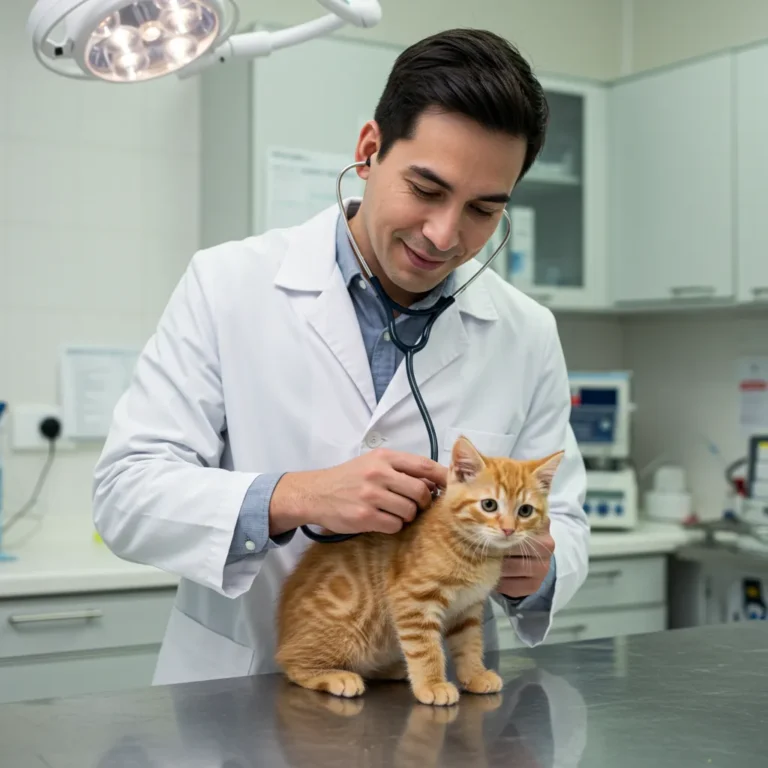
Examine teeth, eyes, coat, muscle tone, and behavior. Vet exams are most accurate.
Final Whisker Wisdom: Love the Cat, Not the Myth
So, how to tell a cat’s age by whiskers? You don’t. But now you do know how to read your cat’s whiskers like a pro from sensory superpower to subtle health clue.
Whiskers don’t count birthdays. They help your cat conquer the world one cautious step, one midnight pounce, one affectionate headbutt at a time.
Whether you’re raising a rambunctious kitten or cherishing a silver-whiskered senior, every twitch tells a story. And now, you’re fluent in whisker.
Ready for more feline decoding?
🐾 Explore our Complete Cat Anatomy Basics
🐾 Discover Cat Behavior and Sensory Abilities
🐾 Dive into Feline Aging Signs
*Welcome to Cat Bloom Haven where cat parents become cat *experts. 🌿