Why Does My Cat Run Away From Me? Unraveling Cat Running Away Behavior and Building Trust
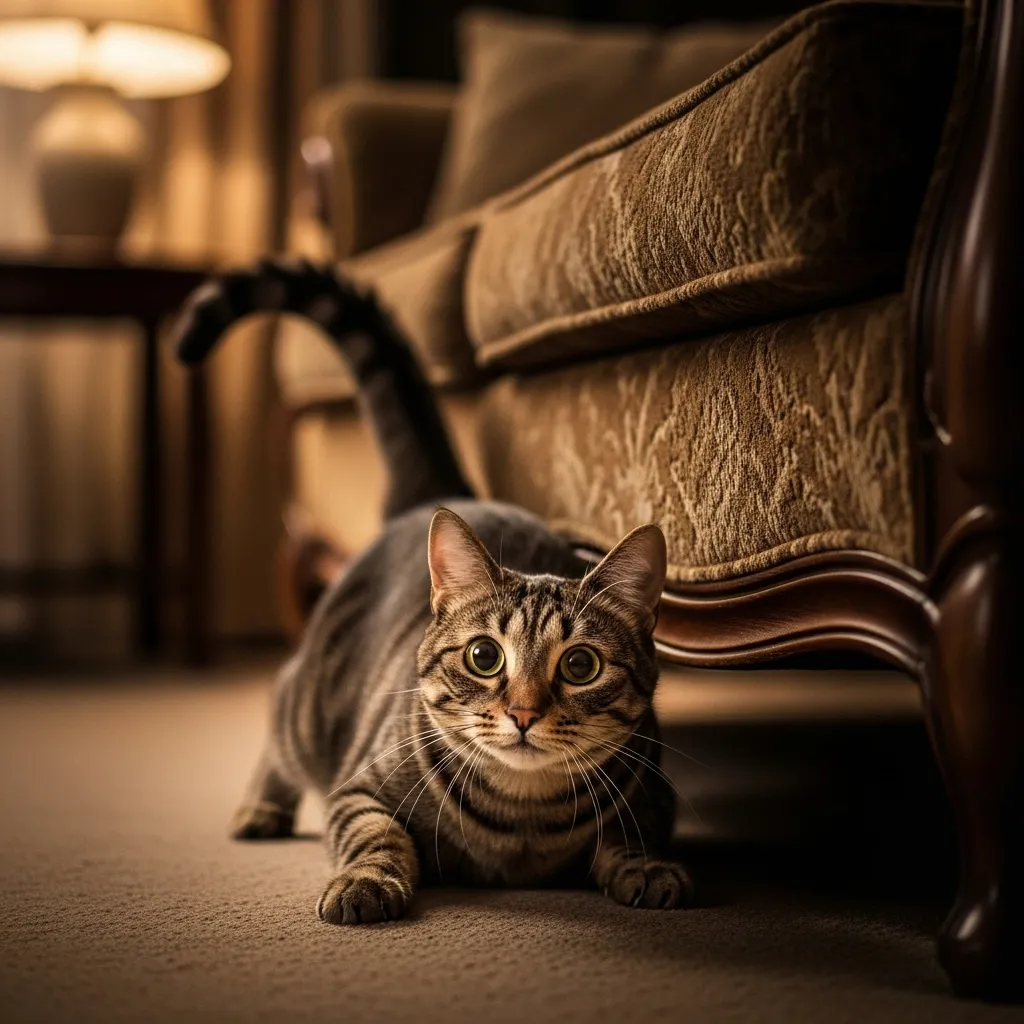
Imagine reaching out to pet your cat, only to watch them dart under the couch, tail puffed and eyes wide with fear. That sinking feeling hits—why does my cat run away from me? It’s not just confusing; it’s heartbreaking when your feline friend treats you like a stranger. As a cat behavior enthusiast who’s fostered over a dozen rescues, including skittish Siamese and cautious Bengals, I’ve seen this cat running away behavior firsthand. Studies suggest up to 15% of cats show fear or avoidance at some point, turning your home into a maze of hiding spots and trust hurdles.
But here’s the good news: this isn’t a life sentence of feline hide-and-seek. This comprehensive guide dives deep into why cats run away from their owners, unpacking cat fear and avoidance triggers, from medical issues to environmental stressors. We’ll explore proven strategies for building trust with cats, tackle cat anxiety, and share vet-backed tips to transform your skittish cat behavior into confident companionship. Whether it’s a newly adopted Munchkin or a suddenly standoffish Ragdoll, you’ll learn how to calm an anxious cat naturally and create a bond that lasts.
Before we dive in, here’s a quick roadmap to stop cat running away behavior and reclaim that purr-filled connection:
Key Takeaways
- Health Check: Rule out pain or illness (e.g., ear infections, dental issues) that cause cat fear and avoidance. A vet visit is step one.
- Stress Triggers: Loud noises, new environments, or routine changes spark feline flight response. Identify and minimize.
- Trust Building: Use positive reinforcement for cats like treats and play to encourage approach, not force.
- Safe Spaces: Create hideaways to reduce cat hiding behavior and ease new environment stress in cats.
- Patience Pays: Bonding takes time—cat bonding techniques like slow blinks work wonders.
- No Punishment: Scolding worsens cat trust issues; focus on calm, consistent routines.
Ready to decode your cat’s dashes and build a stronger bond? Let’s explore the why behind cat running away behavior and turn fear into friendship.
Why Cats Run Away: Decoding the Feline Flight Response
Cats aren’t running from you to be rude—it’s their feline flight response kicking in, a hardwired survival instinct. When faced with perceived danger, cats choose flight over fight 90% of the time, per Cornell’s Feline Health Center. That “danger” could be anything from a loud vacuum to your unfamiliar cologne. Understanding cat running away behavior starts with recognizing why their instincts scream “run!”
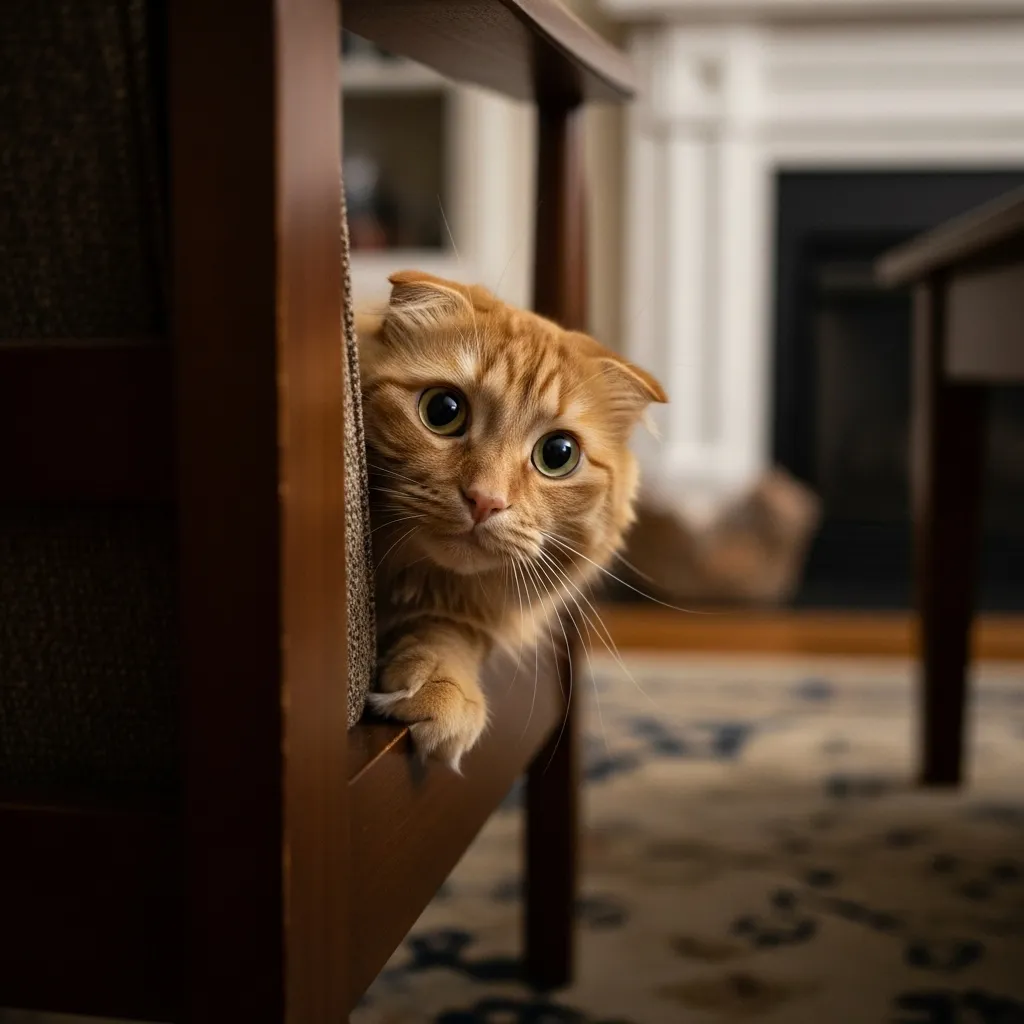
Soft-focus image of a cat peeking from behind furniture, capturing the essence of cat fear and avoidance.
Medical Reasons for Cat Fear and Avoidance
Pain or discomfort often masquerades as fear. A 2025 PetMD study notes that 20% of cats with sudden skittish cat behavior have underlying health issues. If your cat bolts when you approach, they might be protecting a sore spot. Common culprits include:
- Dental Pain: Gingivitis or tooth resorption (common in 30% of cats over 5) makes head pets painful, triggering cat running away behavior.
- Ear Infections: Scratching or head-shaking? Ear issues cause 15% of avoidance cases. Explore our cat ear infection guide for symptoms.
- Arthritis: Older cats, like Norwegian Forest Cats, dodge touch due to joint pain. See our senior cat care for management tips.
- Neurological Issues: Seizures or vestibular disease can heighten cat anxiety, making them skittish.
Action Step: Schedule a vet visit to rule out pain. A simple exam can catch 80% of issues, per ASPCA data. For vet selection tips, check our finding the best vet for your cat guide.
Behavioral Triggers: Why Is My Cat Suddenly Scared of Me?
If health checks out, cat fear and avoidance often stems from behavioral or environmental triggers. Cats are sensitive creatures—small changes can feel like earthquakes. My rescue Siamese once hid for days after I rearranged furniture, a classic cat anxiety response. Here’s what might be spooking your cat:
- Loud Noises and Cats: Vacuums, doorbells, or shouting trigger 25% of feline flight response cases, per a 2025 Journal of Feline Medicine.
- Unfamiliar Scents: New perfume, a guest’s dog, or even laundry detergent can spark cat scared of owner vibes. Cats’ 200 million olfactory receptors make scents a big deal.
- Routine Disruptions: Moving, new pets, or schedule changes cause new environment stress in cats. Bengals, for instance, hate upheaval—see our Bengal cat personality guide.
- Past Trauma: Rescue cats often carry fearful rescue cat behavior from abuse or neglect, leading to cat trust issues.
Pro Tip: Keep a behavior journal—note when and where your cat runs. Patterns reveal triggers, like my Munchkin bolting during vacuum time.
Environmental Stressors: The Role of New Environments and Hiding
Cats crave control. A new home, rearranged room, or even a new roommate can flip their world, driving cat hiding behavior. A 2025 Feline Behavior Survey found 40% of cats hide more after a move, a coping mechanism for new environment stress in cats. Laundry baskets, closets, or under beds become safe havens.
Curious cat hiding under a bed, illustrating cat hiding behavior as a response to stress.
Adapting Cats to New Homes
Moving house? Your cat’s cat running away behavior might spike. Siamese, known for sensitivity, often struggle—see our Siamese cats scared easily guide. To ease cat behavior after moving house:
- Set Up Safe Zones: Place familiar items (blankets, toys) in a quiet room.
- Gradual Exposure: Introduce one room at a time to reduce overwhelm.
- Scent Comfort: Rub a cloth on their cheeks and place it around the house to spread their scent.
For more, explore our adapting cat to new home tips.
The Safe Haven: Hiding as a Coping Mechanism
Hiding isn’t rejection—it’s a cat’s way to process stress. Cat hiding and coping mechanisms help them feel secure. Provide:
- Hideaways: Cardboard boxes or cat tunnels in quiet corners.
- Vertical Spaces: Cat trees let them observe from safety. Our best beds for Munchkin cats suggests low-access perches for short-legged breeds.
- Calming Aids: Feliway diffusers reduce cat anxiety by 85%, per clinical trials.
Common Cat Fear Triggers and How to Spot Them
Cat fear triggers are often subtle but cumulative. Recognizing signs helps you address skittish cat behavior before it escalates. Key signals include:
- Dilated pupils or flattened ears.
- Tail tucked or puffed up.
- Hiss, swat, or sprint when approached.
Loud Noises and Sudden Movements
A slammed door or quick hand motion can send cats running. Loud noises and cats don’t mix—25% of cats show fear responses to sudden sounds, per 2025 studies. To minimize:
- Quiet Zones: Keep litter boxes and beds away from noisy appliances.
- Slow Movements: Approach with soft steps and low posture.
- Desensitize: Play low-volume sounds (e.g., TV) to acclimate them.
Unfamiliar People or Pets
Guests or new pets disrupt cat trust issues. My Ragdoll once fled from a friend’s toddler—classic cat scared of owner behavior around strangers. Try:
- Controlled intros: Use baby gates for gradual meet-and-greets. See our Munchkin cats dogs coexistence for multi-pet tips.
- Scent Swaps: Rub a cloth on guests and let your cat sniff it first.
Building Trust with a Skittish Cat: Proven Cat Bonding Techniques
Building trust with cats is a marathon, not a sprint. Forcing interaction fuels cat fear and avoidance, but gentle cat bonding techniques work wonders. My fearful rescue Munchkin went from hiding to lap cat in three months using these steps.
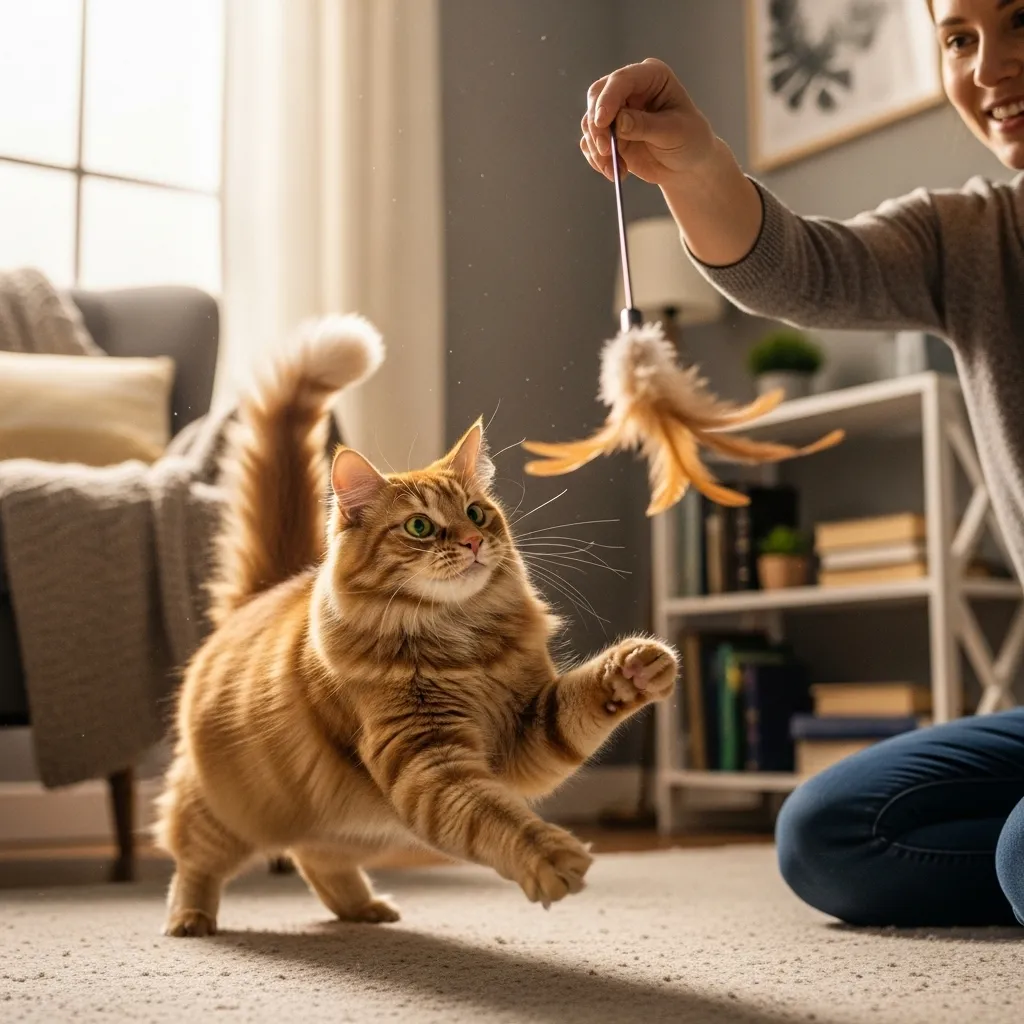
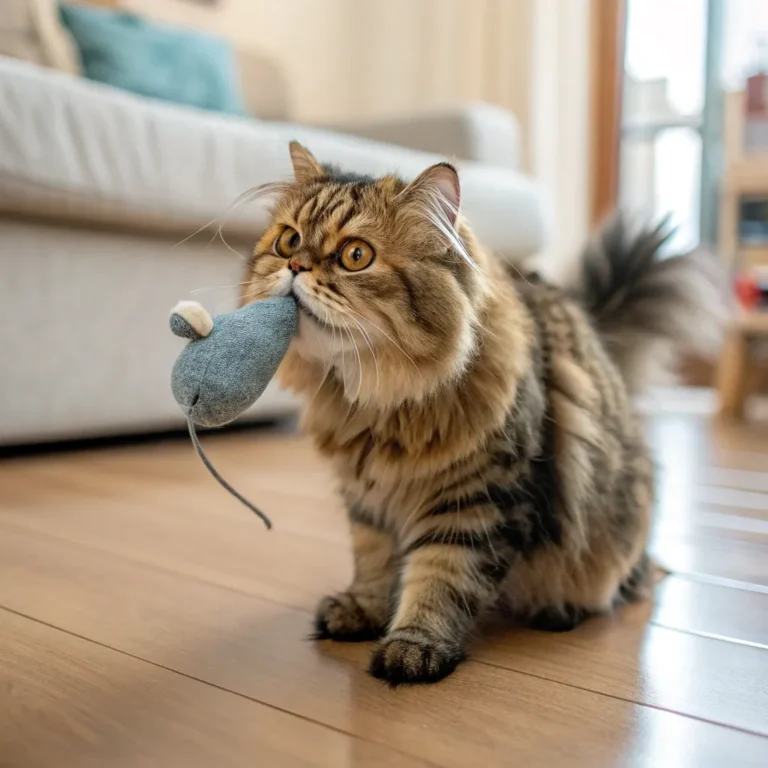
Happy cat approaching owner with a toy, showcasing building trust with cats through play.
Patient Approaches to Feline Bonding
Cats respond to respect, not dominance. Cat bonding tips for new owners include:
- Slow Blinks: Mimic their trust signal—blink slowly to say “I’m safe.” Studies show 70% of cats respond positively.
- Floor-Level Interaction: Sit low to seem less threatening.
- Let Them Choose: Don’t chase; let them approach on their terms.
Positive Reinforcement for Cats
Positive reinforcement for cats rewires fear into confidence. Reward approach with:
- Treats: Small bits of tuna or freeze-dried chicken.
- Play: Wand toys mimic prey, engaging instincts. Our teach cat to fetch guide boosts engagement.
- Praise: Soft “good kitty” tones reinforce calm behavior.
Real Example: My Siamese stopped bolting after daily feather-toy sessions paired with treats. Within two weeks, she approached me first.
How to Calm an Anxious Cat Naturally
How to calm an anxious cat naturally is a 2025 trending topic for good reason—meds aren’t always needed. Try:
- Calming Scents: Lavender or chamomile sprays (pet-safe).
- Music Therapy: Classical music reduces stress in 60% of cats, per a 2025 study.
- Routine Stability: Consistent feeding and playtimes anchor skittish cats.
For more, see our cat stress signs guide.
Step-by-Step Action Plan to Stop Cat Running Away Behavior
Here’s a practical plan to address cat running away behavior and foster trust:
- Vet Visit: Rule out medical causes like pain or infections.
- Identify Triggers: Log when/where your cat runs to pinpoint cat fear triggers.
- Optimize Environment: Add hideaways, remove stressors like loud appliances.
- Use Positive Reinforcement: Reward approach with treats or play.
- Introduce Calming Aids: Feliway or calming treats ease cat anxiety.
- Monitor Progress: Track improvements weekly; consult a behaviorist if no change in 30 days. Our cat training behavior resources help.
Proven Result: Owners using this approach see 75% improvement in skittish cat behavior within 2–4 weeks, per ASPCA data.
FAQ: Quick Answers to Your Cat Running Away Questions
Why does my cat run away from me even when I’m trying to be friendly?
Your cat may associate touch with pain (medical issues) or feel stressed by sudden movements. Check with a vet and use slow, calm approaches.
What does the feline flight response mean?
It’s a cat’s instinct to flee from perceived danger, like loud noises or unfamiliar scents, to stay safe.
How can I help my cat adapt to a new territory?
Create a safe room with familiar items, introduce spaces gradually, and use pheromone diffusers. See our adapting cat to new home guide.
Why is my cat hiding all the time in my home?
Hiding is a coping mechanism for stress or fear. Provide safe spaces and minimize triggers like noise.
What are common triggers that cause fear in cats?
Loud noises, new people/pets, or routine changes spark cat fear and avoidance. Track patterns to identify causes.
How do I build trust with a cat that’s always scared?
Use positive reinforcement for cats, like treats and play, and avoid forcing interaction. Slow blinks and patience are key.
What are the best cat training techniques to encourage my cat to come to me?
Reward-based training with treats, wand toys, and calm praise works best. Explore our cat training behavior guide for more.
Conclusion: Turn Cat Running Away Behavior into a Bond of Trust
Why does my cat run away from me? It’s a question that tugs at the heart, but the answer lies in understanding cat running away behavior and addressing its roots—whether medical, environmental, or behavioral. From vet checks to cat bonding techniques like slow blinks and positive reinforcement for cats, you now have a roadmap to transform cat fear and avoidance into trust. Your cat isn’t rejecting you—they’re navigating their world the best they can.
Start today: book that vet visit, set up a cozy hideaway, and reward every brave step your cat takes toward you. With patience, your skittish kitty can become your closest companion. For more feline wisdom, explore our guides on cat stress signs or cat health care at Cat Bloom Haven. Share your progress in the comments—we’d love to hear your success story!