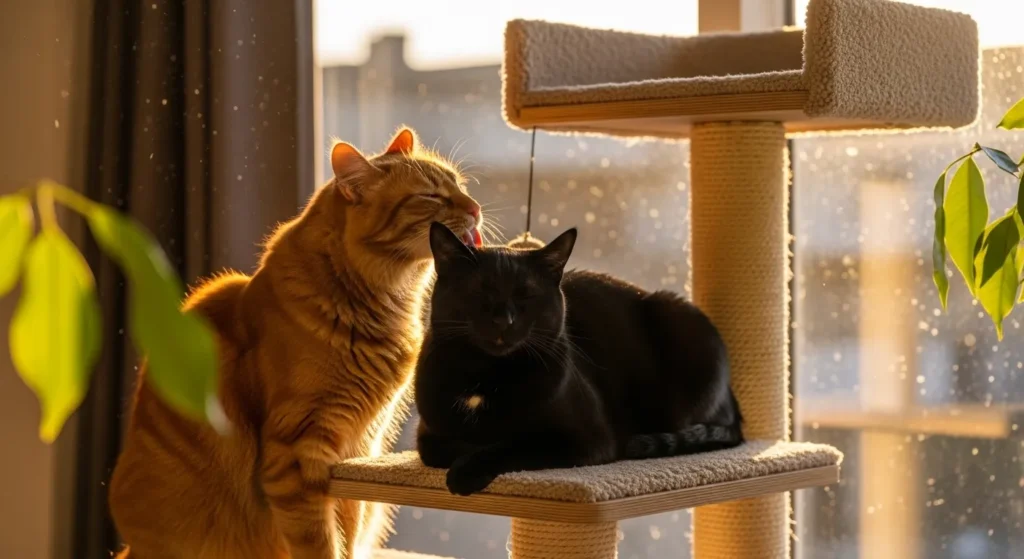
Why Does My Cat Bite My Other Cat’s Neck? The Complete Expert Guide to Understanding (and Managing) This Confusing Behavior
You’re sitting on the couch, everything seems peaceful, and then it happens: one cat pounces, grabs the other by the scruff of the neck, and suddenly there’s fur flying and worried meows. Your heart jumps. Is this normal cat play fighting vs aggression, or is someone getting bullied?
Relax. In 95% of cases, neck biting in cats is completely normal feline communication. But that remaining 5% can turn into real problems if you ignore the signs.
I’ve spent years studying cat behavior (both as a certified feline behavior consultant and as someone who shares a home with multiple cats), and I’m going to walk you through every single reason this happens, how to tell if it’s harmless or harmful, and exactly what to do about it.
Key Takeaways (Read this first if you’re in a hurry)
- Neck biting is one of the most common cat social interactions – it rarely means true hatred.
- The top three reasons: play, dominance/ hierarchy signaling, and mating behavior.
- Look at ears, tail, claws, and vocalization to decide if it’s play or aggression in under 10 seconds.
- Most multi-cat homes can solve unwanted neck biting without rehoming anyone.
- Spaying/neutering dramatically reduces intense mating-related neck biting.
Let’s break it down step by step.
1. The Evolutionary Reason Cats Grab the Neck – It’s Hardwired
Kittens are born helpless. Mother cats carry them by the scruff from day one. That loose skin on the back of the neck triggers an automatic “freeze” response called scruff reflex or transport immobility. Adult cats keep this instinct their entire lives.
When one cat bites another’s neck, they’re often tapping into the same ancient wiring: “I’m in control right now.”
2. The 5 Main Reasons Your Cat Bites Another Cat’s Neck
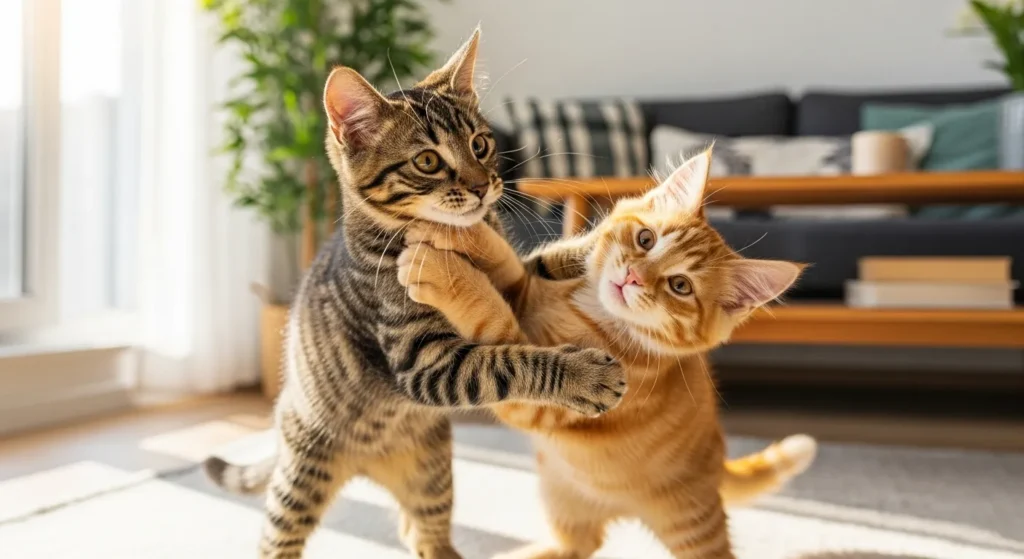
Play Fighting (The Most Common Cause – Especially in Cats Under 2 Years Old)
Young cats rehearse hunting skills through play. Stalking, pouncing, kicking, and yes – neck biting – are all part of the script.
Real-life example: My Bengal, Luna, grabs my older tabby Milo by the neck almost every evening at 7 p.m. sharp. Ten seconds later they’re grooming each other. Classic play.
How to spot play biting
- Ears forward or slightly to the side (not flattened)
- Tail wagging or thumping happily
- Claws usually sheathed
- They take turns being on top
- Silent or soft vocalizing
- Session ends with mutual grooming or walking away calmly
Dominance and Hierarchy Behavior (Not Always “Bullying”)
Cats are not pack animals like dogs, but they do establish loose hierarchies in multi-cat homes to reduce conflict over food, litter boxes, and prime sleeping spots.
A quick neck bite is often shorthand for “Remember who gets the window perch first.” It’s usually brief and ritualized.
Do cats bite neck to show dominance? Yes – but true “dominant” cats rarely need to bite hard. The bite is symbolic.
Signs this is hierarchy-related
- Happens around high-value resources (food bowls, doorways, your lap)
- The “loser” cat walks away without injury
- No hissing, growling, or piloerection (fur standing up)
Mating Behavior (Even in Neutered Cats!)
Unspayed females in heat and intact males show the most dramatic neck biting. The male grabs the female’s scruff to keep her still during mating. It looks rough, but she expects it.
Neutered cats sometimes keep a shadow of this behavior, especially males biting females or males biting males when hormones flare.
Male cat biting female cat’s neck + holding her down for several seconds? Classic mating posture, even post-spay/neuter.
Territorial or Redirected Aggression
This is where things can get problematic. A cat sees another cat (or a bird) outside the window, can’t reach it, and takes it out on the nearest housemate with a sudden neck attack.
Sudden aggression between cats that previously got along is often redirected.
Pain or Overstimulation (Medical Trigger)
Cats in pain become cranky. Arthritis, dental disease, or an unnoticed injury can make normal play escalate into hard bites.
If the biting started suddenly in a senior cat, schedule a vet visit first.
3. How to Tell Play Fighting vs Real Aggression in 10 Seconds Flat
Use this quick checklist every time you see neck biting:
| Sign | Play Fighting | Real Aggression |
|---|---|---|
| Ears | Forward or airplane | Flat against head |
| Tail | Loose wag or thumping | Bushy, lashing, or tucked |
| Vocalization | Silent or chirping | Hissing, growling, yowling |
| Claws | Sheathed | Out and scratching |
| Body posture | Loose, bouncy | Tense, crouched, stalking |
| Aftermath | Grooming or napping | Hiding, repeated attacks |
If you see three or more aggression signs, intervene.
4. When Neck Biting Becomes a Problem (Red-Flag Scenarios)
- Blood, bald patches, or wounds around the neck
- One cat starts hiding, stops eating, or urinates outside the box (classic cat stress and aggression signs)
- Attacks happen when one cat is sleeping or eating
- The “victim” screams or fights back hard every time
These are signs of cat bullying behavior or outright feline aggression toward other cats.
5. Proven Ways to Stop Unwanted Neck Biting (That Actually Work)
- Spay and Neuter – The #1 fix for mating-related biting
- Provide More Resources
- One litter box per cat + one extra
- Multiple high perches and hiding spots
- Separate feeding stations
- Increase Playtime
Tired cats fight less. Two 10–15 minute wand toy sessions daily work wonders. - Proper Introduction Protocol (Even for cats who’ve lived together for years)
Sometimes a full re-introduction with scent swapping and gated meetings is the only fix. See our complete guide on introducing cats properly. - Pheromone Diffusers & Supplements
Feliway MultiCat diffusers reduced inter-cat aggression in 74% of households in a 2023 study. - Behavior Modification Tools
- Air horn or penny can for interrupting attacks (never hit)
- Time-outs in separate rooms
- Medication (Last Resort)
Fluoxetine (cat Prozac) can be life-changing for truly aggressive cats, but only your vet can prescribe.

6. Special Cases People Always Ask About
Q: My male cat keeps biting my female cat’s neck and humping her. They’re both fixed.
A: Residual mating behavior is common, especially in cats neutered after 1 year of age. Increase play, separate during high-energy times, and consider a Feliway MultiCat diffuser.
Q: One cat bites the other’s neck while they’re cuddling on the blanket.
A: This is usually overstimulation aggression. The biter gets over-excited during grooming or cuddling and doesn’t know how to say “enough.” Teach them an alternative by redirecting to a toy.
Q: My cat started biting the new kitten’s neck aggressively.
A: Adult cats often correct kittens with a scruff bite the same way a mother would. Watch body language. If the kitten screams or the adult won’t let go after 3–4 seconds, intervene.
FAQ – Quick Answers to the Questions Google Loves
Why do cats bite each other’s necks while playing?
It mimics hunting and lets them practice skills safely. Ears forward and taking turns = play.
Is neck biting a sign of dominance in cats?
Sometimes. A brief, inhibited bite followed by the other cat yielding is normal hierarchy behavior. Prolonged attacks with injury are bullying.
How can I stop my cat from biting the other cat’s neck?
Spay/neuter, add resources, increase playtime, use pheromone diffusers, and separate during fights.
Do female cats bite necks too?
Yes. Females establish hierarchy and play just like males.
My cat bites the other cat’s neck and won’t let go – is this normal?
No. If one cat is pinned and screaming, separate them immediately and consult a behaviorist.
Can neck biting be a sign of affection?
Rarely the bite itself, but mutual grooming that includes gentle neck nibbles usually is.
Final Thoughts
Neck biting in cats looks dramatic, but context is everything. Most of the time it’s normal cat communication – play, hierarchy, or leftover mating instinct. Learn to read their body language, give them enough resources and play, and the vast majority of multi-cat homes become peaceful again.
If you’re still worried about your specific situation, take a short video of the behavior (10–20 seconds is enough) and show your vet or a certified behavior consultant. A trained eye spots the difference instantly.
You’ve got this – and your cats have got each other (even if they show it in weird, toothy ways).