Why Does My Cat Sleep at the End of My Bed? Unpacking Feline Sleep Habits, Bonding, and Comfort Choices
Picture this: you slide under the covers after a long day, only to feel a soft thump at the foot of your bed. Your cat curls into a perfect cinnamon roll at the very edge, claiming that spot like it’s prime real estate. But why the end of the bed and not your pillow, your chest, or even their fancy orthopedic cat bed in the corner?
If you’ve ever wondered, “Why does my cat sleep at the end of my bed?” you’re not alone. This quirky habit ties into deep-rooted cat sleeping habits, instinctual safety needs, and subtle ways your feline friend shows trust and affection. In this ultimate guide, we’ll decode cat behavior and sleeping patterns, explore why cats sleep on beds (and specifically at the foot), and reveal what their chosen spot says about comfort, bonding, and even health.
Key Takeaways Up Front :
- Cats choose the foot of the bed for safety, warmth, independence, and quick escape routes.
- Sleeping near you (but not on you) reflects cat bonding with owner while preserving cat independence and personal space.
- Elevated sleeping positions for cats like bed edges offer vantage points—perfect for monitoring the room.
- Feline sleep positions and meanings reveal mood: curled tight = conserving heat; sprawled = total trust.
- Your cat isn’t ignoring you—they’re strategically placing themselves in a safe sleeping spot for cats that balances closeness and control.
Ready to finally understand your cat’s bedtime logic? Let’s dive into the science, instinct, and heart behind this beloved ritual.
The Instinctive Drive: Why Safety Shapes Cat Sleeping Habits
Cats are crepuscular creatures—most active at dawn and dusk—which means their sleep isn’t just rest; it’s strategic downtime. In the wild, a sleeping cat is vulnerable. Domestic cats carry that DNA, so every nap spot gets vetted like a five-star security system.
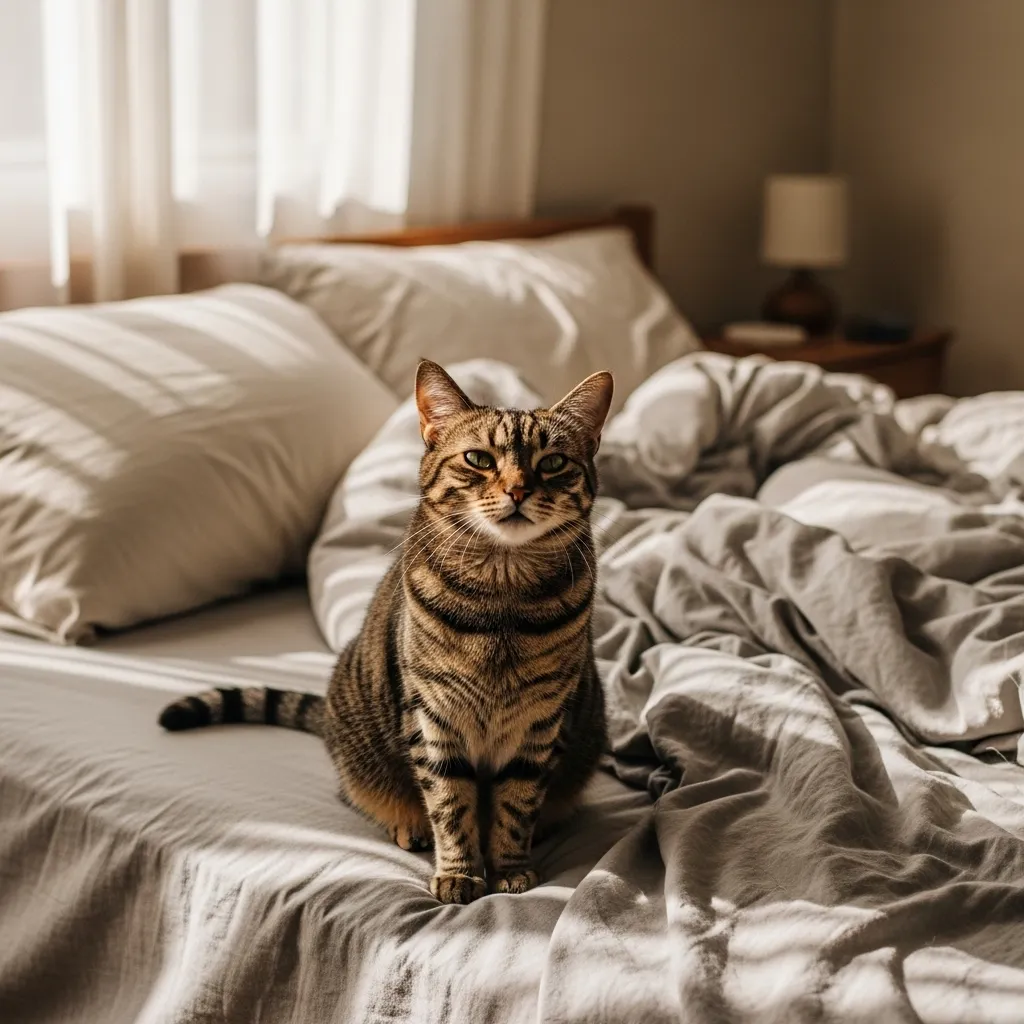
Why the Foot of the Bed Feels Like Fort Knox
The end of the bed checks every box on a cat’s safety checklist:
- Elevated vantage point: Even a few inches off the floor gives cats a bird’s-eye view of doors, windows, and movement.
- Two escape routes: One leap left or right, and they’re off the bed—ideal for cats who hate feeling trapped.
- Distance from chaos: Your tossing, turning, or snoring? Minimal at the foot. Head-of-bed sleepers risk getting squished.
Pro Insight: Dr. Sarah Wooten, DVM, notes that cats prefer sleeping spots with “multiple egress points.” The foot of the bed offers exactly that—unlike a closed cat cave or a laundry basket.
This explains why cats choose certain sleeping spots with military precision. It’s not random—it’s survival.
Curious about how breed affects sleep style? Explore our detailed guide on American Shorthair cats’ playful personality—even laid-back breeds follow these rules.
Warmth, Texture, and Scent: The Sensory Pull of Your Bed
Cats are heat-seeking missiles. With a normal body temperature of 101–102.5°F, they crave spots that help them maintain warmth without overheating.
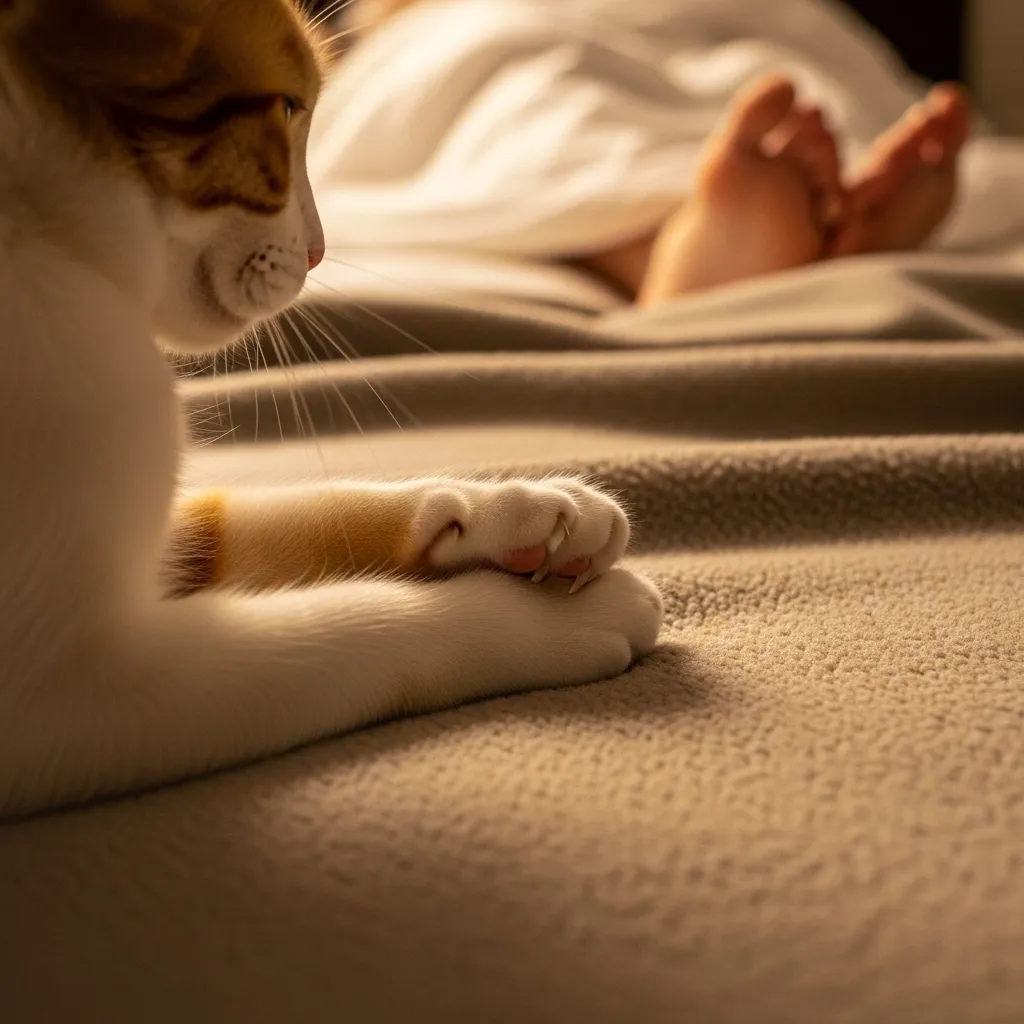
Body Heat and Cat Comfort: Why Your Feet Are a Furnace
Your feet might be cold to you—but to your cat? They’re radiating cozy vibes under the blanket. Add in:
- Blanket texture: Soft cotton, fleece, or that worn-in quilt corner = instant cat magnet.
- Your scent: Cats are obsessed with familiar smells. Your bedding is soaked in you—a walking security blanket.
- Circadian sync: You’re warmest at night. Cats sync their sleep cycles to yours, making cats sleeping at night with owners a natural rhythm.
| Factor | Why Cats Love It at the Foot of the Bed |
|---|---|
| Body Heat | Consistent warmth without full-body contact |
| Scent Marking | Your smell = safety; they add theirs via cheek rubs |
| Softness | Blankets > hardwood floors |
| Airflow | Cooler than mid-bed; prevents overheating |
This combo explains cats seeking warmth on beds—and why even in summer, they might pick a lightweight sheet over a sunbeam.
Struggling with a cat who rejects their bed? Discover more in best beds for American Shorthair cats—the same principles apply across breeds.
Cat Independence and Personal Space: “I Love You, But Not That Much”
Cats aren’t dogs. They bond deeply—but on their terms. Sleeping at the foot of the bed is the ultimate compromise:
- Close enough to monitor you (and steal warmth)
- Far enough to retain autonomy
The “Perimeter Bond” Phenomenon
Veterinary behaviorist Dr. Meghan Herron calls this cat sleeping near owner but not on them the “perimeter bond.” It’s common in:
- Newly adopted cats
- Senior cats who overheat easily
- Breeds like Siamese or Bengal with high independence streaks
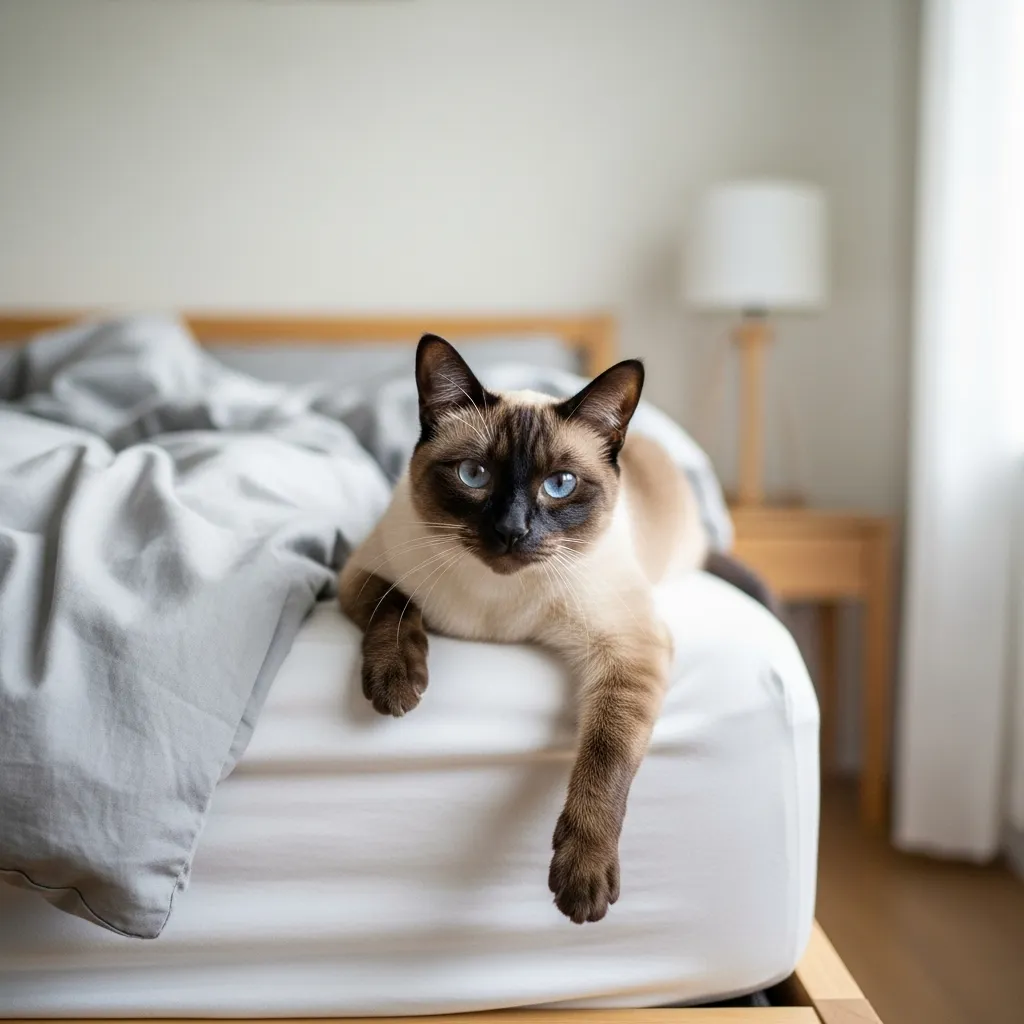
Real Owner Story: “My Siamese, Luna, sleeps at my ankles every night. If I move my feet, she grumbles and re-positions. It’s her way of saying, ‘I’m here… but don’t crowd me.’” – Tara, Cat Bloom Haven community member
This balance of cat independence and personal space is why you’ll rarely see a cat glued to your side like a dog—unless they’re sick or stressed.
Decoding Feline Sleep Positions and Meanings
Ever notice your cat’s pose changes night to night? Cat sleeping positions aren’t random they’re mood rings.
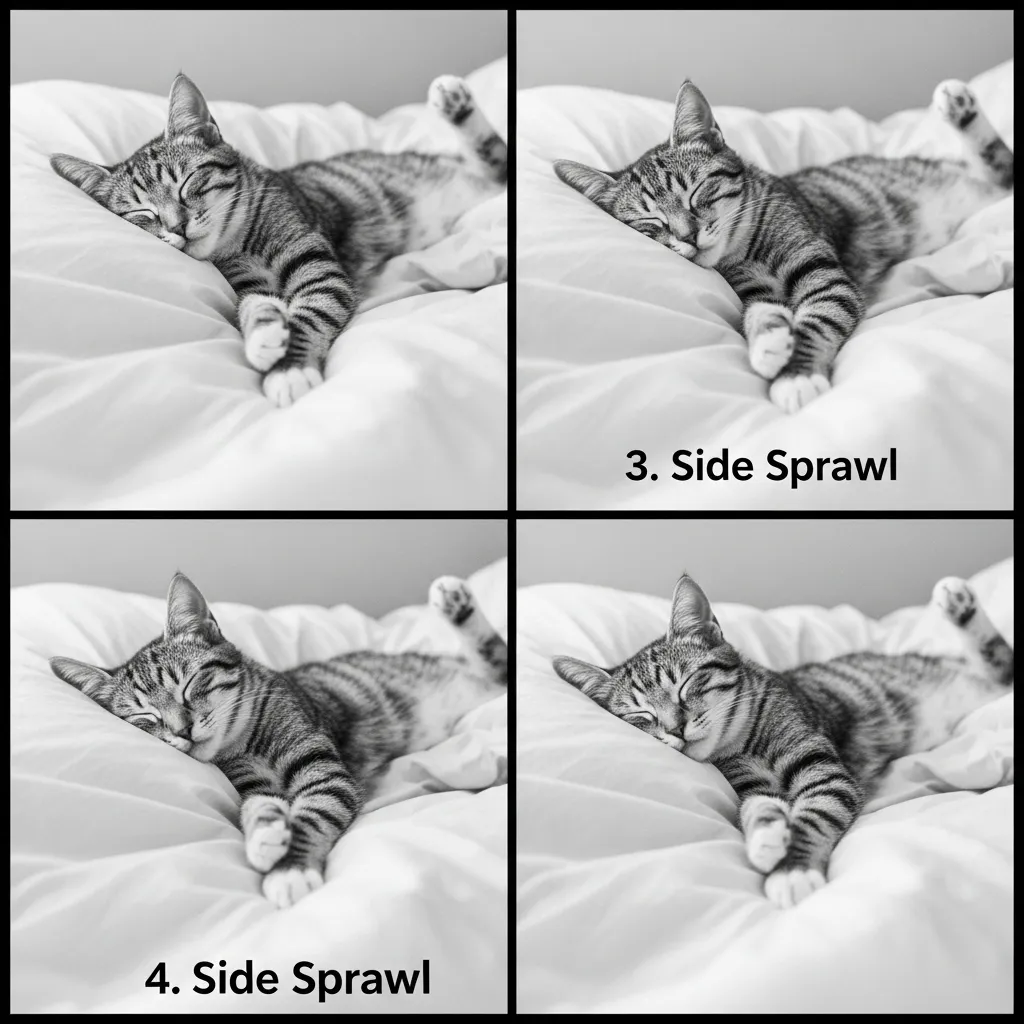
Common Positions at the Foot of the Bed (And What They Mean)
| Position | Meaning | Trust Level |
|---|---|---|
| Curled in a Ball | Conserving heat, feeling secure | High (common in new homes) |
| Sphinx Pose (Head Up) | Light sleep, on alert | Moderate—ready to bolt |
| Side-Sprawl (Belly Exposed) | Total relaxation, deep trust | Very High (rare at first) |
| Paws Over Eyes | Blocking light or self-soothing | Normal—helps REM sleep |
Pro Tip: If your cat suddenly switches from sprawled to tightly curled, check for drafts, stress, or illness. Learn more in cat sleeping positions sick.
Environmental Preferences for Cats: Why Your Bed Wins Every Time
Cats are Goldilocks with whiskers. Too hot? Too cold? Too loud? They’ll relocate faster than you can say “treat.”
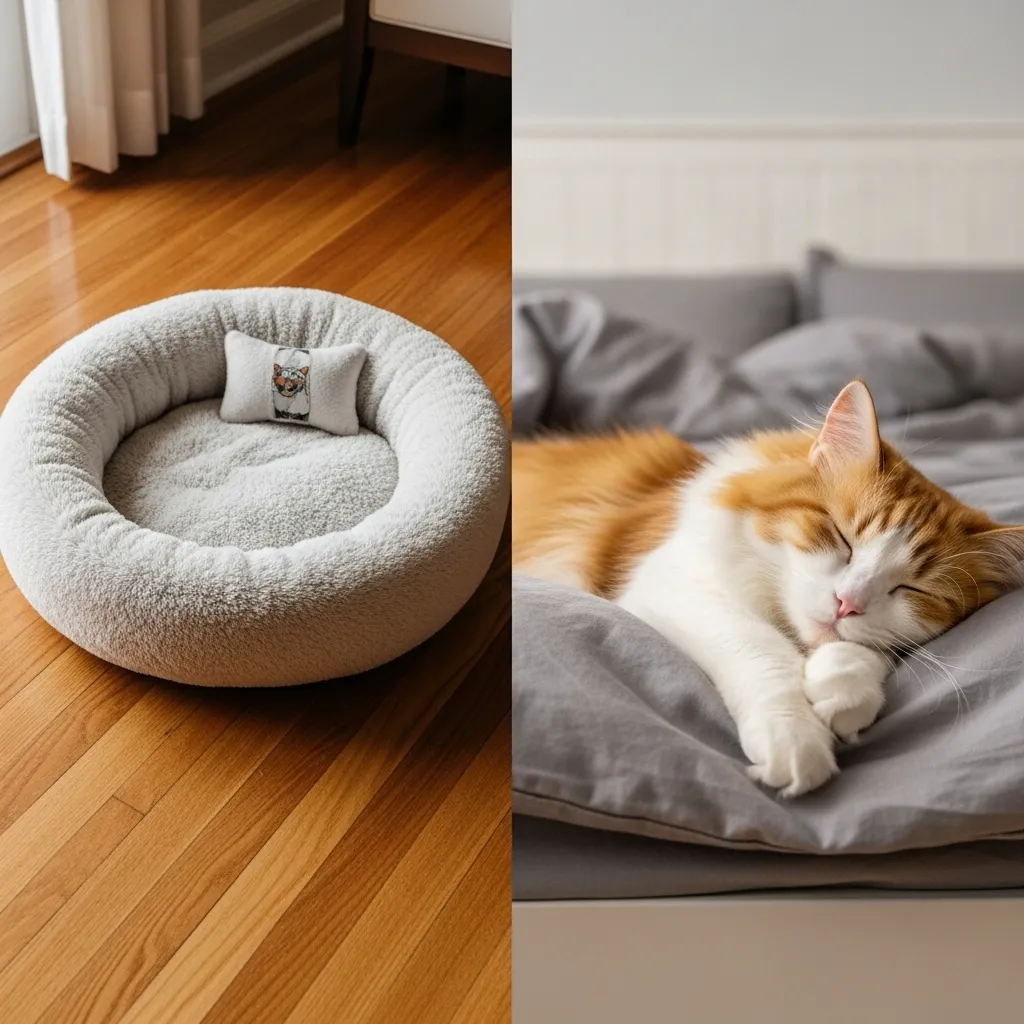
The Bed vs. Cat Bed Showdown
| Feature | Human Bed (Foot) | Store-Bought Cat Bed |
|---|---|---|
| Temperature | Regulated by you | Often too warm/isolated |
| Scent | Familiar & comforting | Neutral or “new” smell |
| Height | Elevated & safe | Usually floor-level |
| Noise Buffering | Muffled by blankets | Exposed to footsteps |
No wonder cat bed preferences lean heavily toward your bed. Even heated cat beds can’t compete with the full sensory package.
Want to encourage cat bed use? Check best beds for Munchkin cats—low-entry designs work wonders for short-legged breeds.
Cat Behavior and Bonding: What “Foot-Sleeping” Really Says About Your Relationship
Yes your cat choosing the foot of the bed is a love language.
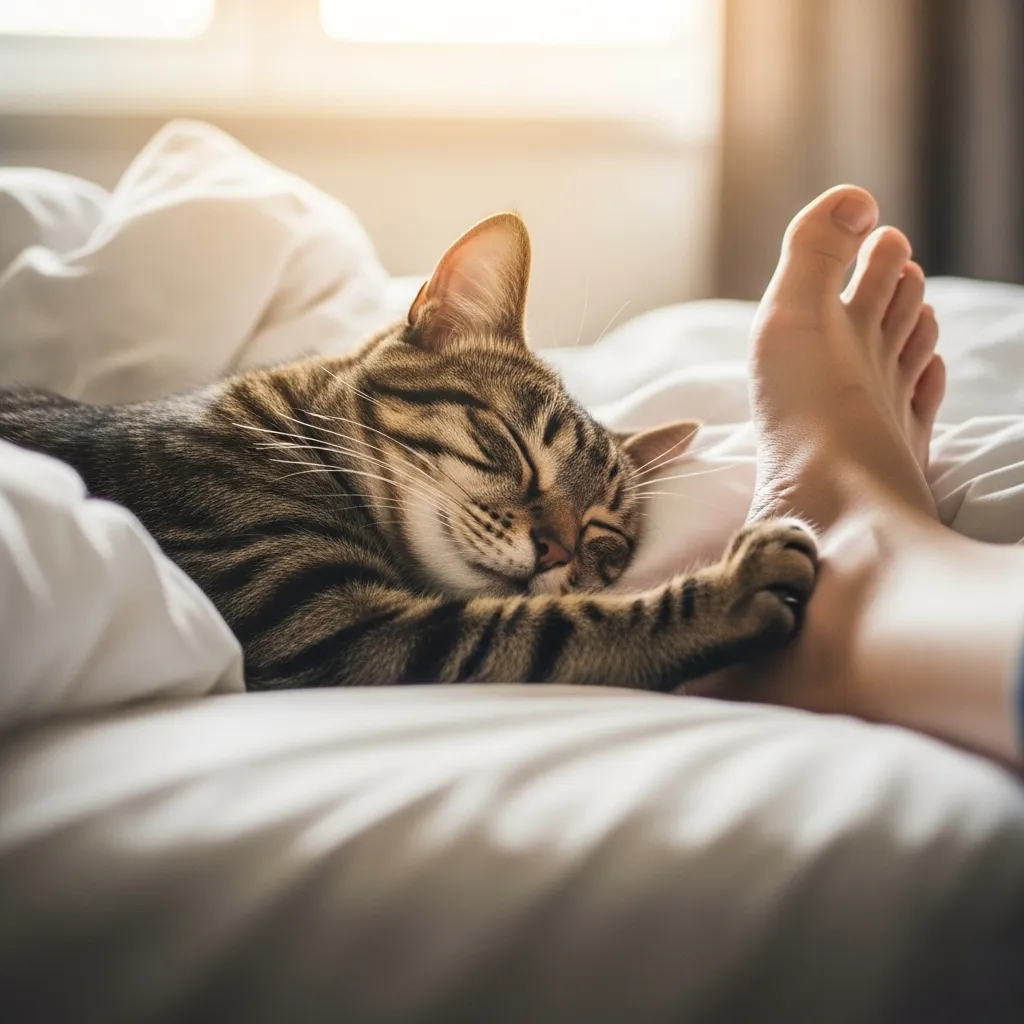
The Science of Scent and Attachment
When your cat sleeps near you:
- They’re scent-soaking—absorbing your smell.
- They’re leaving pheromones via cheek glands and paw pads.
- They’re saying: “You’re my safe person.”
This is especially true for:
- Rescued cats (gradual trust-building)
- Only cats (you = entire social world)
- Kittens raised with you (imprinting)
Vet-Backed Fact: A 2023 study in Anthrozoös found cats who sleep on owner beds show 37% lower stress markers than those confined to other rooms.
So next time your cat parks at your toes, know it’s not rejection—it’s cat bonding with owner in feline speak.
Health Clues Hidden in Sleeping Habits
Sudden changes in cat sleep patterns can signal issues. Watch for:
- Sleeping more at the foot: Could indicate joint pain (harder to jump to mid-bed).
- Avoiding the bed entirely: Stress, illness, or new household tension.
- Vocalization at night: Pain, cognitive decline (common in seniors).
Concerned about changes? Dive into senior cat care for early warning signs.
How to Encourage (or Discourage) Bed-Sharing Without Drama
Want your cat closer? Farther? Here’s how to nudge gently.
To Invite Mid-Bed Cuddles:
- Use a scent-soaked T-shirt as a pillowcase.
- Try a donut bed on your pillow—gradual transition.
- Reward with treats for proximity (positive reinforcement).
To Keep the Foot (or Off the Bed):
- Provide an elevated perch nearby (window shelf, cat tree).
- Use a heated pad in their bed—mimics your warmth.
- Close the door gradually (start with 10-minute increments).
Struggling with nighttime zoomies? Explore cat hyperactivity night solutions.
Breed Spotlight: Does Personality Affect Bed Position?
Some patterns emerge by breed:
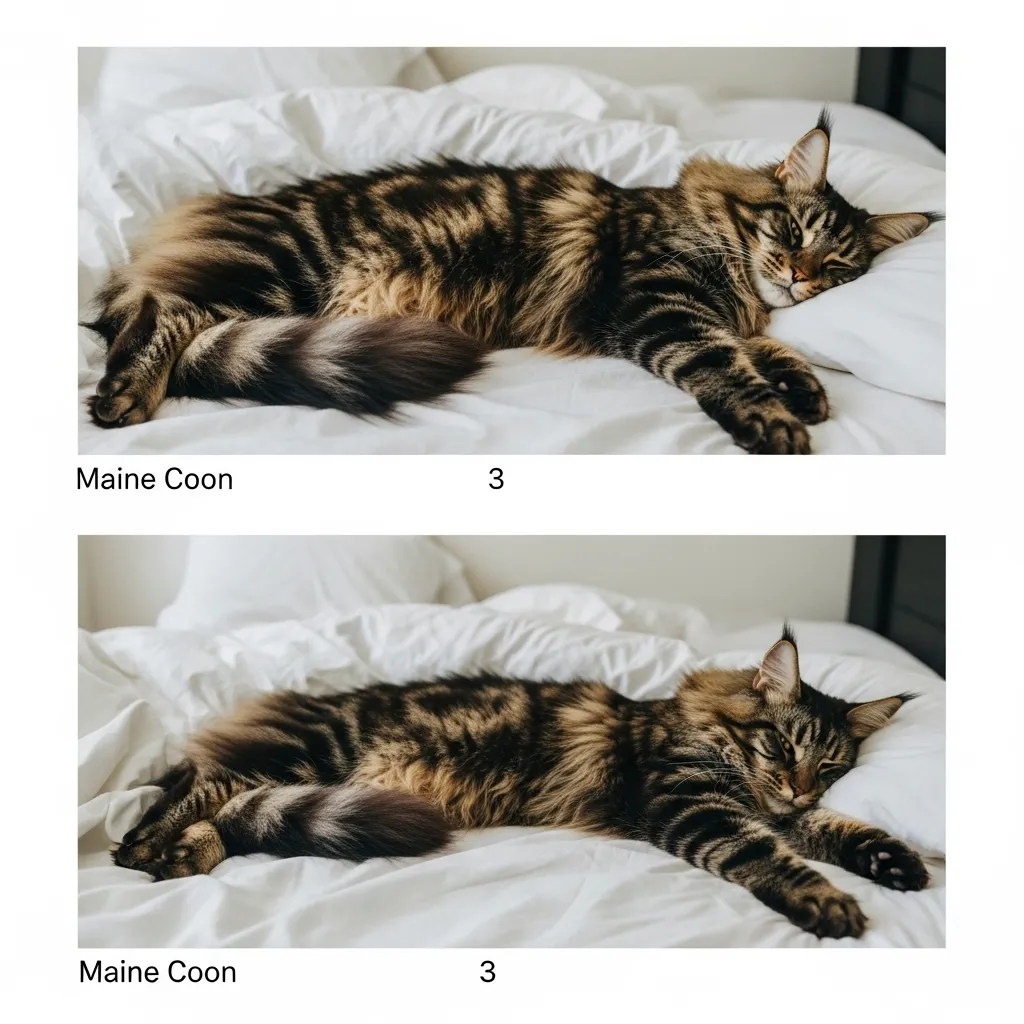
| Breed | Typical Bed Spot | Why |
|---|---|---|
| Siamese | Foot or edge | Vocal, independent, likes oversight |
| Ragdoll | Mid-bed or chest | Docile, heat-seeking, ultra-bonded |
| Maine Coon | Foot or floor nearby | Large size = needs stretch space |
| Bengal | Rotating spots | High energy, patrols territory |
Love big fluffballs? Read Norwegian Forest Cat size 2025—these giants often pick the foot for leg room.
FAQ: Your Top Cat Sleep Questions Answered
Why does my cat sleep at the end of my bed instead of the middle?
They want warmth and proximity—without risking a midnight elbow to the face. The foot offers safety, escape routes, and temperature control.
Do cats sleep at the foot of the bed to protect their owners?
Not quite. It’s more about self-preservation than guardianship. Though some believe cats station themselves to “guard” the pack—sweet, but unlikely.
Why does my cat sleep at my feet but not my head?
Your feet move less, radiate steady heat, and keep their face free. Head-of-bed sleepers risk hair in the mouth or accidental smothering.
Is it normal for cats to change sleeping spots nightly?
Yes! Cat sleep patterns shift with temperature, mood, and household activity. Consistency returns with routine.
Should I stop my cat from sleeping on the bed?
Only if allergies, hygiene, or sleep disruption are issues. Otherwise, it’s a sign of trust. Use washable blankets and vacuum regularly.
What does it mean if my cat suddenly stops sleeping on the bed?
Check for pain, stress, or environmental changes. A vet visit rules out arthritis, UTI, or anxiety. Learn more in cat stress signs.
Final Thoughts: Your Cat’s Bedtime Choice Is a Love Letter in Disguise
So, why does my cat sleep at the end of my bed? It’s a masterclass in feline logic: part survival instinct, part comfort hack, part subtle affection. They’re not avoiding you—they’re curating the perfect balance of safety, warmth, and independence, all while keeping you in their orbit.
Next time you feel that familiar weight settle at your toes, smile. Your cat isn’t just sleeping—they’re saying, “You’re home. You’re mine. And this spot? It’s perfect.”
Explore more expert cat care and behavior guides on Cat Bloom Haven. From decoding why cats burrow under blankets to mastering cat tail language, we’ve got your feline friendship covered.
Share your cat’s quirky sleep spot in the comments—we read every one! 🐾