Decoding Feline Mysteries: 12 Common Misinterpretations of Cat Behavior Explained
Cats often seem like enigmatic little aliens sharing our homes. Their behaviors can be puzzling, sometimes even seeming rude, aloof, or intentionally mischievous. This misunderstanding is at the heart of many strained relationships between cats and their people. We view their actions through a human lens, applying our social rules to creatures with a completely different operating system. When a cat bites during a petting session or knocks a glass off the table, it’s easy to feel frustrated or think, “Why are you like this?”
The truth is, there is always a reason. Every twitch of the tail, slow blink, or 3 a.m. sprint is a piece of communication rooted in feline instinct, emotion, or need. By learning to translate these common misinterpretations of cat behavior, we can move from confusion to connection. This guide will decode twelve of the most frequent feline misunderstandings, replacing frustration with understanding and building a stronger, happier bond with your cat.
Key Takeaways
- Cats communicate differently: Their “language” is based on body posture, scent, and subtle signals, not human social norms. What looks like spite or anger is usually fear, play, or instinct.
- Context is everything: A single behavior, like biting or scratching, can have multiple meanings. It’s crucial to look at the whole situation your cat’s body language, the timing, and the environment.
- Prevention is better than punishment: You cannot punish a cat out of natural behavior. Instead, manage the environment (e.g., provide ample scratching posts) and redirect energy into appropriate outlets.
- Sudden changes matter: If a well-established behavior changes abruptly like a cat suddenly avoiding the litter box or hiding it’s a red flag for potential illness or pain, and a veterinary visit is needed.
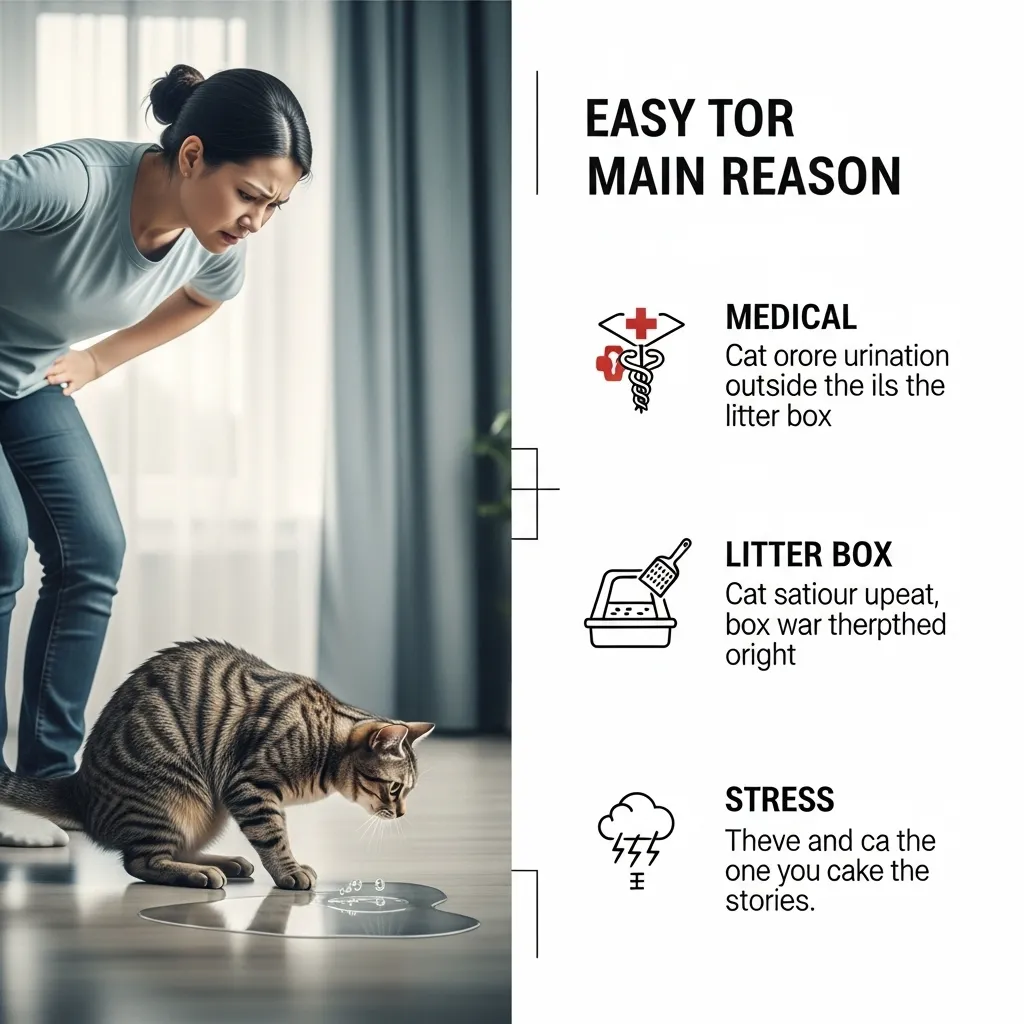
1. “My cat is being spiteful by peeing outside the litter box.”
The Common Interpretation: After an argument, a missed meal, or a change in routine, you find a puddle on your bed or laundry. It feels like a deliberate, vindictive act.
The Feline Reality: Cats do not have the complex emotional capacity for spite or revenge. Inappropriate elimination is a cry for help, not a protest. The cause is usually one of three things:
- A Medical Issue: This is the first possibility to rule out. Urinary tract infections (UTIs), bladder stones, kidney disease, or arthritis (making it painful to enter the box) are common culprits. Explore our guide on cat urinary health for more on symptoms.
- Litter Box Displeasure: The box might be too dirty, in a noisy/high-traffic location, the wrong type (covered vs. open), or filled with a litter texture your cat dislikes. Learn more about cat litter box problems and solutions.
- Stress or Anxiety: Changes like a new pet, a new baby, construction, or even a new piece of furniture can trigger stress-marking. The scent of their own urine is comforting and helps them feel secure.
What to Do: Scoop boxes daily, have one more box than the number of cats, place them in quiet areas, and see a vet immediately to rule out illness before treating it as a behavioral issue.
2. “My cat’s belly display is an invitation for rubs.”
The Common Interpretation: Your cat rolls over, exposing a soft, fluffy belly. It looks like the ultimate sign of trust and an open invitation for a belly rub, just like a dog.
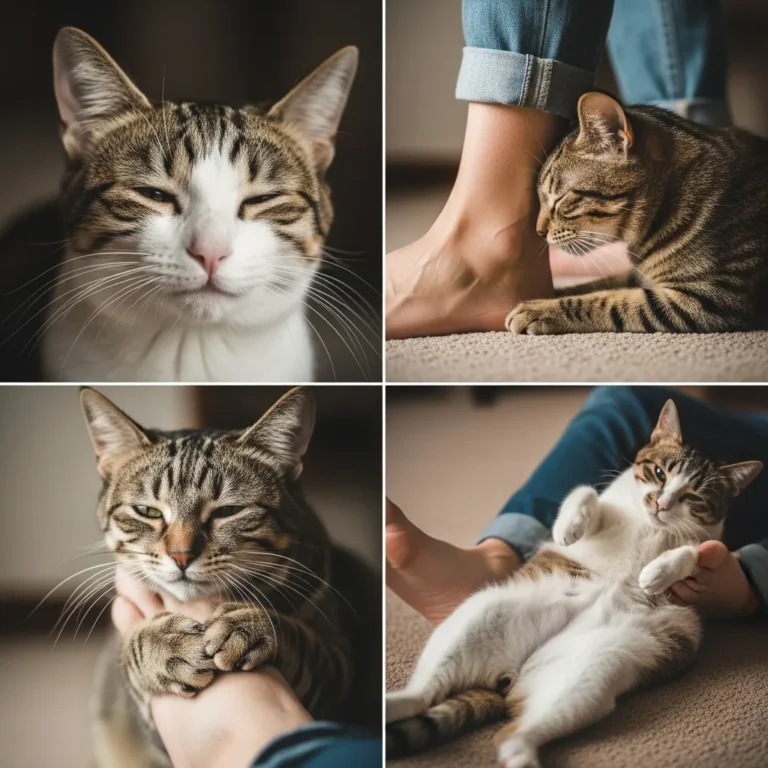
The Feline Reality: This is one of the most classic misinterpretations of cat behavior. While a belly-up pose can signal contentment and trust in your presence, it is often a defensive posture. When playing or feeling vulnerable, cats expose their belly because it allows them to use all four sets of claws and their teeth to defend themselves. A belly rub can trigger a sudden, reflexive grab, bite, and bunny-kick.
What to Do: Admire the belly from a distance. Consider it a compliment that your cat feels safe enough to let its guard down around you. If you want to interact, gently pet the head or chin instead. Discover what your cat’s tail is really saying in our cat tail language guide.
3. “My cat is ‘playing’ too rough and attacking me.”
The Common Interpretation: Your cat ambushes your ankles, bites your hands during petting, or attacks your moving feet under the blanket. It seems like aggressive, mean play.
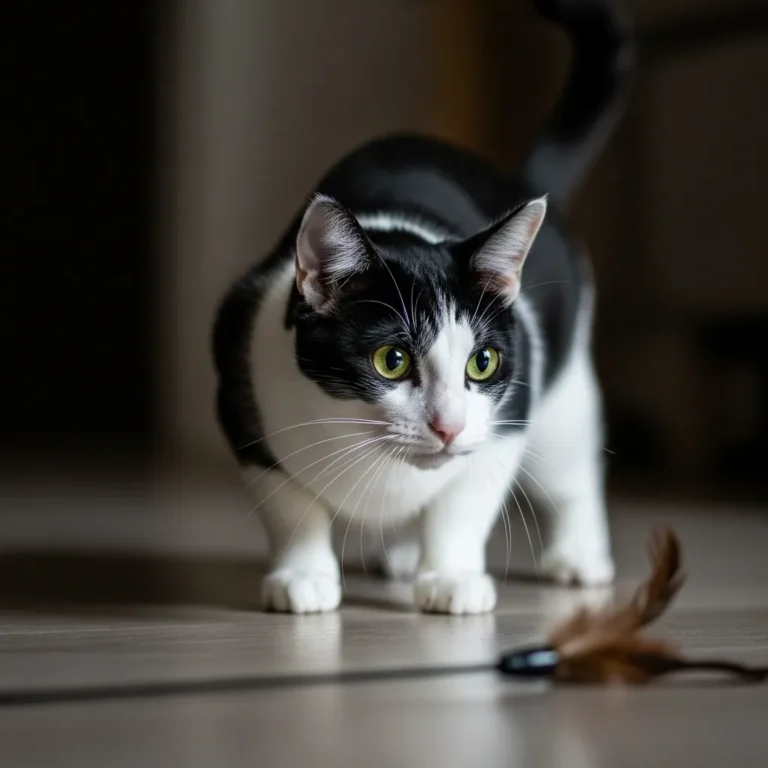
The Feline Reality: This is almost always a case of unmet instinctual needs. Domestic cats retain the hardwired hunting sequence: stalk, pounce, kill, eat. Without appropriate outlets, that energy gets directed at moving human body parts. What we see as “attacks” are usually mock-hunting behaviors. The “love bite” during petting is different; it’s a signal that your cat is overstimulated and needs a break.
What to Do: Never use your hands as toys. Schedule daily interactive play sessions (10-15 minutes, twice a day) with wand toys to let your cat complete the hunting sequence. Follow play with a meal or treat to simulate the “kill, eat” conclusion. For persistent issues, our guide on how to stop cat biting offers more detailed strategies.
4. “My cat is just knocking things over to be a jerk.”
The Common Interpretation: Your cat makes deliberate, eye-contact swipes at your coffee cup, vase, or phone, sending it crashing to the floor. It feels like a calculated act of defiance or boredom.
The Feline Reality: While the action may seem intentional, the motivation isn’t malice. Cats are curious explorers who use their paws to test and understand their environment. The sound and movement of a falling object is inherently interesting. Sometimes, it’s also a bid for attention if knocking something over reliably makes you get up and interact (even if you’re yelling), your cat has learned a powerful way to get your focus.
What to Do: Cat-proof valuable items. Provide more engaging, vertical territory (cat trees, shelves) and puzzle feeders. If the behavior is attention-seeking, ignore the bad behavior completely and instead, reward calm behavior with attention and treats on your terms.
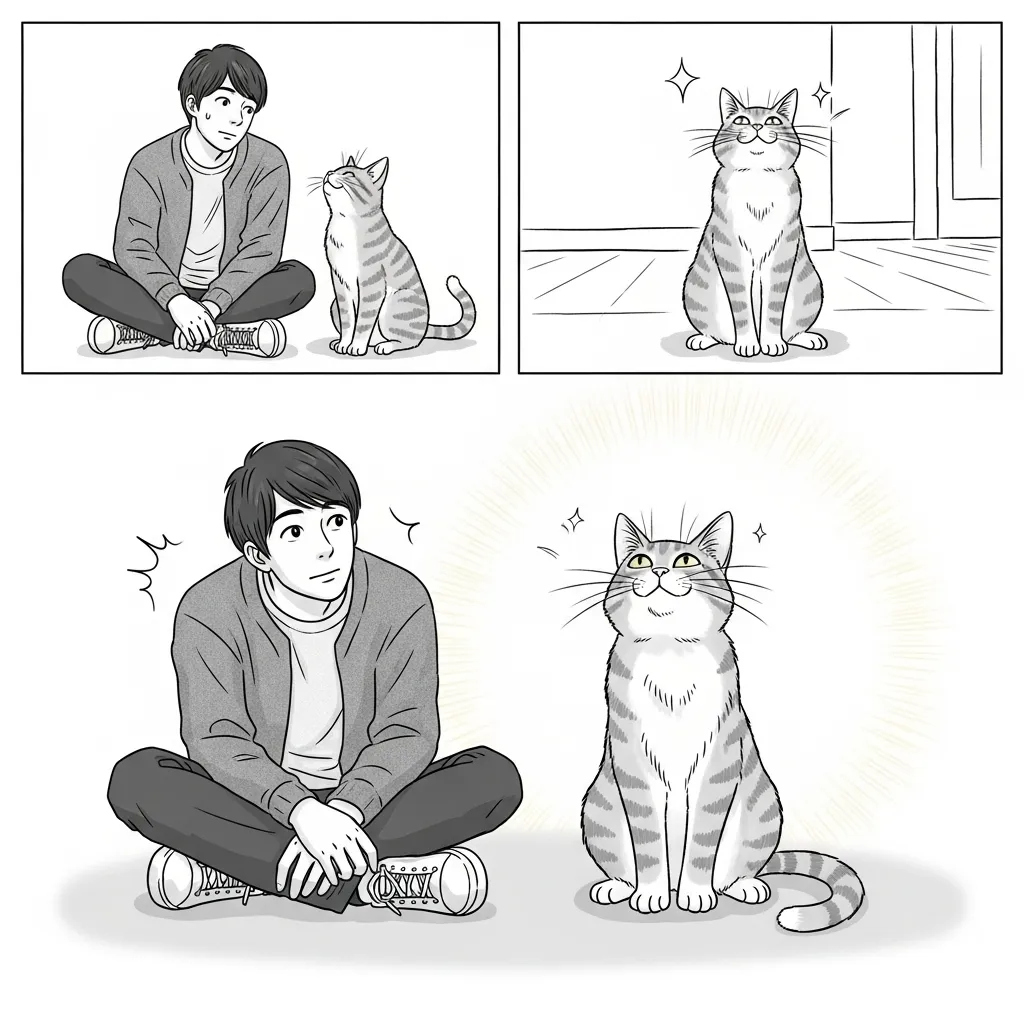
5. “Slow blinking is just my cat being sleepy.”
The Common Interpretation: You notice your cat gazing at you and slowly closing its eyes. It looks like it’s fighting off a nap or just zoning out.
The Feline Reality: This is the cat equivalent of a warm smile or a kiss. Known as a “cat kiss” or slow blink, this is a deliberate signal of trust, affection, and contentment. In cat language, closing one’s eyes in the presence of another is the ultimate sign that they feel safe and non-threatening. A cat that slow blinks at you is saying, “I like you, and I feel relaxed with you.”
What to Do: You can speak back! When your cat is calm and looking at you, try slowly closing and opening your own eyes. Hold the “blink” for a second. You may be surprised to see your cat return the gesture, deepening your mutual bond. Learn more about this and other trust-building signals in our article on cat trust.
6. “My cat is ‘guarding’ the bedroom door to control me.”
The Common Interpretation: Your cat sits rigidly outside a closed door, especially a bedroom door at night, sometimes pawing or crying. It seems like they’re being possessive, controlling, or purposely trying to keep you from your space.
The Feline Reality: This behavior is more about confusion and anxiety than control. Cats are both territorial and social creatures. A suddenly closed door disrupts their mental map of their territory and, more importantly, can trigger separation anxiety. They may worry about where you are or feel stressed being blocked from their social group (you). The crying or pawing is an attempt to restore access and reunite the “colony.”
What to Do: Consider if the door needs to be closed. If it does (e.g., for safety), help your cat adjust by providing a high-value treat or a favorite blanket on their side of the door to create a positive association. For a deeper dive into this quirky habit, read our exploration of why cats guard bedroom doors.
7. “My cat brings me dead animals as a ‘gift’ to disgust me.”
The Common Interpretation: Your cat proudly deposits a dead mouse, bird, or insect at your feet. It’s gross, unsettling, and feels like a weird, morbid prank.
The Feline Reality: This is a profound compliment and a sign of instinctual caregiving. In the feline world, mothers bring dead or injured prey to their kittens to teach them how to hunt. By bringing you their “catch,” your cat is including you in their family unit and trying to teach you, their clumsy, hairless kitten, how to provide for yourself. They are sharing their success and contributing to the group’s resources.
What to Do: While you can’t (and shouldn’t try to) fully extinguish this natural instinct, you can minimize it by keeping your cat indoors, which also protects local wildlife. If you receive a “gift,” dispose of it calmly without scolding your cat, as they are expressing natural behavior.
8. “My cat is scratching the furniture to ruin it.”
The Common Interpretation: Your cat bypasses the expensive scratching post to meticulously shred the corner of your sofa or armchair. It feels like a direct, destructive assault on your belongings.
The Feline Reality: Scratching is a vital, non-negotiable feline behavior with multiple purposes: it conditions claws by removing dead outer sheaths, stretches back and shoulder muscles, and leaves both a visual mark and a scent mark from glands in their paws. They are not ruining furniture; they are claiming it as part of their territory in the most fundamental way they know.
What to Do: You cannot stop scratching, but you can redirect it. Provide sturdy, appealing scratching posts (sisal rope is often a favorite) placed directly next to the “off-limits” furniture. Use catnip or pheromone sprays to attract them to the post. Protect furniture with temporary vinyl covers or double-sided tape. For a full battle plan, see our guide on how to stop cats from scratching furniture.
9. “My cat is ignoring me because it’s mad or doesn’t care.”
The Common Interpretation: You come home, call your cat’s name, and they don’t come running. They might be sitting across the room, looking away. It feels like a snub or proof of their famed “indifference.”
The Feline Reality: Direct, prolonged staring is threatening in cat culture. When your cat avoids eye contact or looks away slowly, they are often practicing polite feline etiquette, signaling that they are not a threat. Their “ignoring” you can be a sign of respect and comfort they know you’re there and don’t feel the need for a boisterous greeting. Some breeds, like the independent British Shorthair, are naturally more reserved.
What to Do: Don’t force interaction. Let your cat initiate contact on their terms. Speak softly and offer a slow blink. You’ll often find that the “ignoring” cat is the one who later curls up quietly by your side, showing affection in their own subtle way.
10. “The ‘zoomies’ mean my cat is crazy or has behavioral problems.”
The Common Interpretation: Out of nowhere, your cat erupts into a frenzied sprint, racing up walls, over furniture, and through the house like a possessed fury. It seems like random, inexplicable madness.
The Feline Reality: These Frenetic Random Activity Periods (FRAPs), or “zoomies,” are a completely normal release of pent-up energy. They are most common in young cats and often occur after periods of rest (like after using the litter box) or in the evening/night when cats are naturally more active (crepuscular hunters). It’s simply a burst of essential exercise and play.
What to Do: Ensure your cat gets enough structured play during the day to burn energy. Make sure their environment has vertical space for climbing. Enjoy the show it’s a sign of a healthy, energetic cat! For more on this hilarious phenomenon, check out our cat zoomies guide.
11. “My cat is ‘kneading’ me because it’s confused or anxious.”
The Common Interpretation: Your cat rhythmically pushes its paws in and out against your lap, a blanket, or a soft surface. It seems like a strange, repetitive habit, perhaps rooted in nervousness.
The Feline Reality: Kneading, or “making biscuits,” is a deeply ingrained, comforting behavior from kittenhood. Kittens knead their mother’s belly to stimulate milk flow. Adult cats carry this behavior into adulthood when they are feeling extremely relaxed, happy, and secure. The action releases endorphins, making them feel good. It’s a throwback to their earliest moments of comfort and safety, and they are sharing that blissful state with you.
What to Do: Take it as a huge compliment! Your cat associates you with the ultimate comfort of their mother. Keep their claws trimmed if it becomes uncomfortable, or place a soft blanket on your lap as a buffer.
12. “My cat is vocalizing at night to punish me for sleeping.”
The Common Interpretation: Just as you fall asleep, or at 5 a.m., your cat begins loud meowing, yowling, or patting your face. It feels like a selfish demand or an attempt to deprive you of rest.
The Feline Reality: Nighttime vocalization, especially in older cats, can be a sign of cognitive decline, disorientation, or underlying illness like hyperthyroidism. In younger cats, it’s usually a combination of natural crepuscular instincts (they’re wired to be active at dawn/dusk) and boredom. They’ve slept all day and are ready to “hunt.” The meowing is a bid for interaction, food, or play.
What to Do: Rule out medical issues with a vet first. Tire your cat out with a vigorous play session right before your bedtime. Consider an automatic feeder to provide a small meal at dawn so they associate the feeder with food, not you. Never reward the vocalization by getting up; wait for a moment of quiet before responding.
Moving from Misunderstanding to True Connection
Understanding these common misinterpretations of cat behavior transforms our relationship with our feline friends. What we once labeled as spite, aggression, or aloofness is revealed as communication, instinct, or even love, expressed in a foreign tongue. By learning their language the slow blinks, the territorial scratches, the “gifts,” and the energetic zoomies we stop taking their actions personally and start responding to their actual needs.
This shift is the foundation of a deeper, more respectful bond. It allows us to provide an environment where our cats can express their natural behaviors in appropriate ways, leading to less frustration for us and less stress for them. The enigmatic creature on your couch becomes a knowable, fascinating companion with a rich inner world.
Ready to dive deeper into the feline mind? Explore more expert cat care and behavior guides on Cat Bloom Haven. From breed-specific traits to solving behavioral puzzles, we’re here to help you build the best possible life with your cat.