Why Won’t My Cat Leave Me Alone? The Real Reasons Your Cat Is Obsessed With You (And What Every Behavior Actually Means)
If you’ve ever asked yourself, “Why is my cat constantly following me, sitting behind me, stealing my seat, bringing me socks, or licking my beard the second I step out of the shower?” – you’re not alone. Thousands of cat owners search these exact questions every month because feline affection can feel overwhelming, hilarious, and occasionally borderline stalker-level intense.
The truth? Your cat isn’t trying to annoy you. Every “clingy” habit – from parking themselves in the bathroom sink to meowing the moment you cough – is rooted in instinct, love, trust, or a very specific need they’re trying to communicate. In this ultimate guide, we’ll decode the 13 most common “my cat won’t leave me alone” behaviors with vet-backed explanations, body-language science, and practical fixes (including the ones nobody else talks about).
Quick Summary for Busy Cat Parents
- Sitting behind you = protection + affection
- Bringing socks or toys = hunting gift + pride
- Meowing when you cough = concern or learned response
- Sink obsession = cool surface + water fascination
- Licking you after shower = reclaiming your scent
- Stealing your spot = your scent + warmth + dominance display
- Rubbing on shoes = scent exchange (yes, even the stinky ones)
Keep reading for the full breakdown, step-by-step solutions, and exactly what to do next.
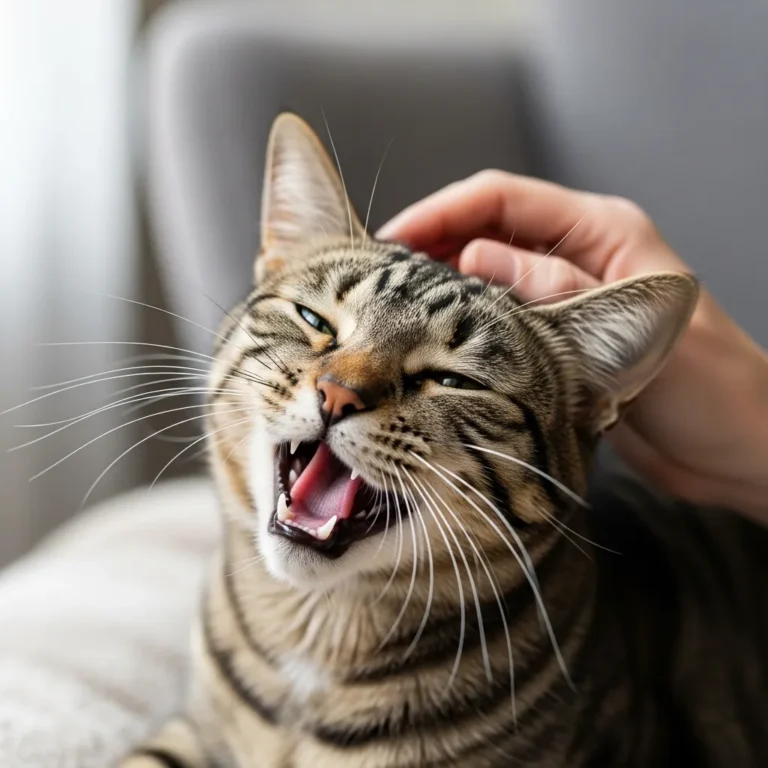
[Image placement 1 – Hero image directly under the H1]
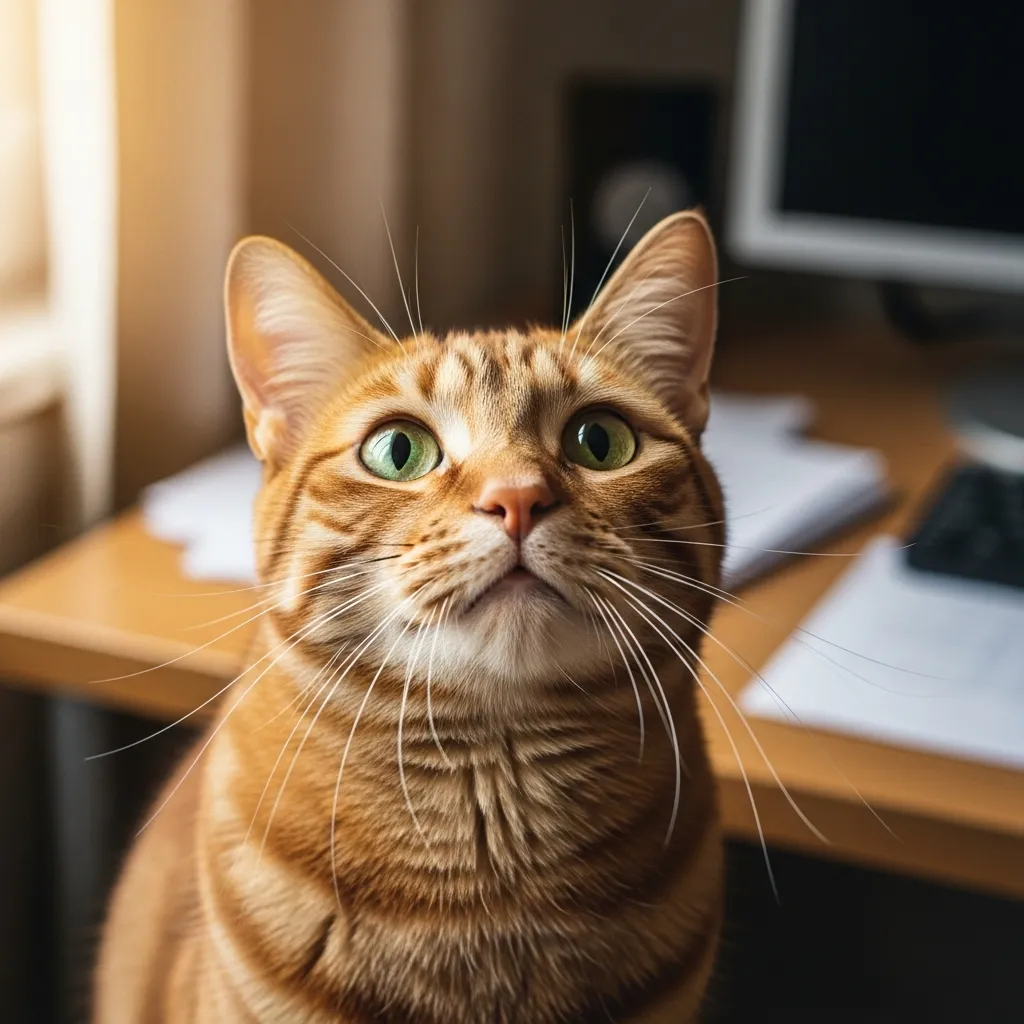
Prompt: A close-up of an adorable tabby cat staring lovingly staring at their owner while the owner works at a desk, soft natural window light, shallow depth of field.
Alt text: Cat staring lovingly at owner while working – common sign of feline affection and attachment
Why Does My Cat Always Sit Behind Me on the Chair?
This is one of the top-searched cat behaviors for a reason. You sit down, and two seconds later a furry butt wedges itself between your back and the chair.
The 4 Real Reasons Cats Sit Behind Their Owners
- Protection mode – In the wild, cats sit with their back guarded. By sitting behind you, they feel safe because you’re their shield.
- Temperature regulation – Your body heat radiates backward; the spot behind you is the coziest micro-climate in the room.
- 360-degree awareness – They can watch the room while keeping tabs on their favorite human.
- Quiet affection – Many cats are too proud for lap-sitting but still want contact. The back-of-chair perch is their compromise.
Pro tip most articles miss: If your cat only started doing this after a house move, new pet, or schedule change, it’s often stress-related attachment. Increase playtime and add a tall cat tree near your workspace so they can “guard” you from a higher vantage point instead.
Related deeper dive → Why Cats Sit Behind Owners (Full Behavior Guide)
Why Does My Cat Bring Me Socks, Toys, or Random Objects?
Congratulations you’ve been promoted to proud parent of a mighty hunter.
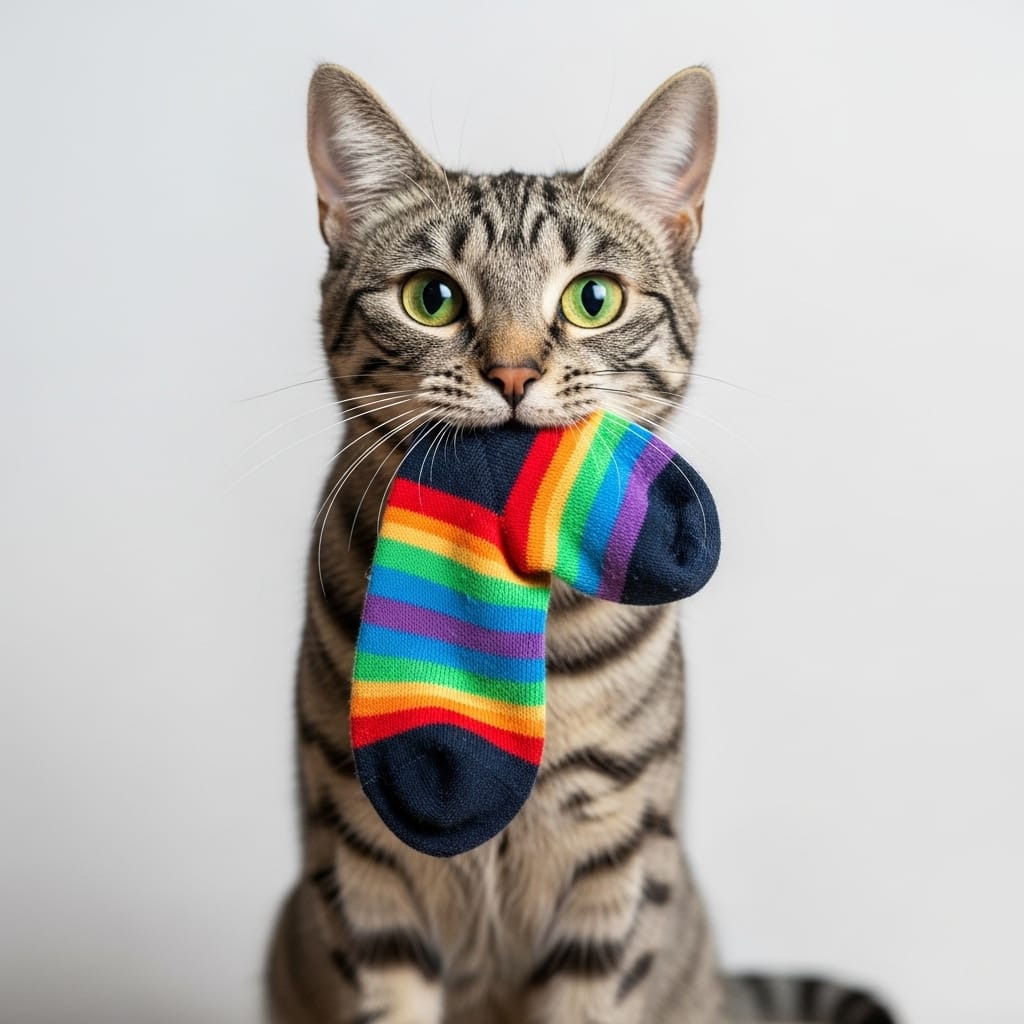
When your cat drops a balled-up sock, hair tie, or (in extreme cases) an actual dead mouse at your feet and looks at you with sparkling eyes, they’re doing three things:
- Showing off their hunting prowess
- Teaching you to hunt (yes, really – you’re a terrible hunter in their eyes)
- Sharing resources with their colony members (you’re family)
Nighttime sock parades are common because that’s prime hunting time for cats. Leave a few soft toys near their food bowl at night; many cats will “gift” those instead of your laundry.
Related → Why Cats Bring Gifts and How to Encourage Appropriate Ones
Why Does My Cat Meow When I Cough, Sneeze, or Talk on the Phone?
This one always gets laughs out of people until it happens at 3 a.m.
Possible explanations:
- Concern – Sudden loud human noises can startle them; the meow is “Are you okay?!”
- Mimicry – Cats sometimes copy sounds they hear frequently (cough = new vocabulary word)
- Attention trigger – If you ever you responded to a cough with pets or sweet talk, they learned “human makes weird noise → I get attention”
Solution that actually works: Completely ignore the meow (no eye contact, no talking). Reward quiet behavior with a treat when they stay silent after your next cough.
Why Is My Cat Obsessed With the Bathroom Sink?
Cool porcelain + dripping faucet + you’re trapped in a small room = cat heaven.
Cats love sinks because:
- The curve perfectly fits their body
- Porcelain stays cooler than the floor in summer
- Dripping water is more entertaining (and tastes better) than a still bowl
- It smells strongly of you
Try placing a cooling mat in summer or a cat water fountain to reduce sink camping.
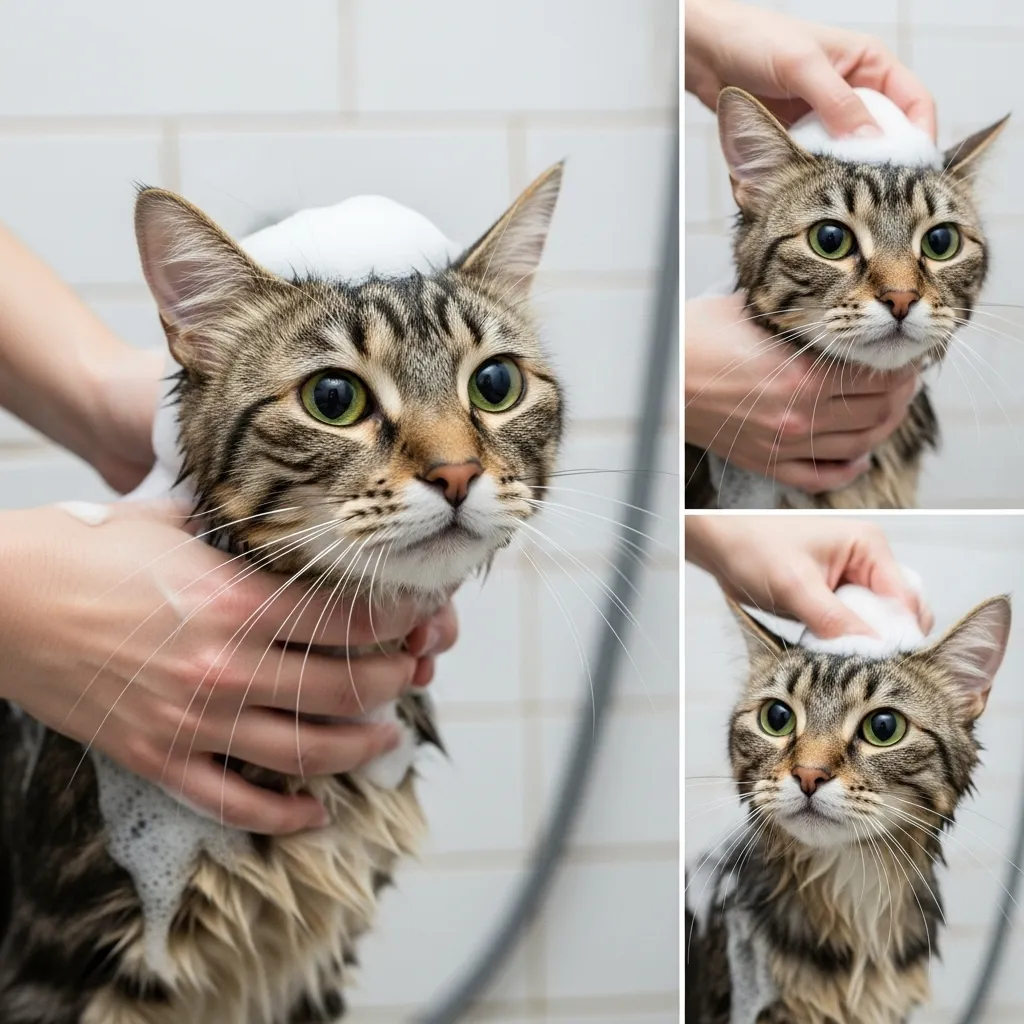
How to Safely Bathe a Cat (And Why Most Cats Secretly Don’t Hate It As Much As You Think)
Yes, we’re covering “bathe a cat” because a shocking number of clingy behaviors explode after bath time – licking you nonstop, rubbing on everything, following you for hours.
Step-by-Step Stress-Free Cat Bath Method (2025 Updated)
- Use a sink or laundry tub, never a full bathtub
- Water level: only up to their elbows
- Temperature: 100-102 °F (slightly warmer than human baby bath)
- Tools: cat-specific shampoo, two thick towels, treat pouch within arm’s reach
- Trim nails 12-24 hours before
- Wear long sleeves or use the “burrito” towel technique
Most cats tolerate bathing far better when you start young or after positive play sessions. Bengal and Maine Coon owners report almost zero resistance once routine is established.
Full tutorial → How to Bathe a Cat Without Losing a Limb (or Your Sanity)
Why Does My Cat Lick Me Right After I Shower?
You just removed every trace of your natural scent. To a cat, you temporarily smell “wrong.”
Post-shower licking is scent reclamation – they’re putting their smell back on you so other cats (or the dog) know you’re taken. It’s one of the highest compliments a cat can give.
Why Does My Cat Rub on My Shoes – Even the Really Stinky Ones?
Scent glands in cheeks and paws + your shoes = strongest concentration of “you” smell in the house. Rubbing deposits their pheromones and collects yours. The stinkier the shoe, the more information it carries about where you’ve been.
Why Is My Cat Licking the Carpet, Carpet, Blankets, or Walls?
Occasional licking is normal grooming transfer. Persistent non-food licking can indicate:
- Stress or boredom
- Nutritional deficiency (rare)
- Pica (especially wool or fabric sucking in Siamese and Oriental breeds)
- Early GI discomfort
Track patterns. If it’s only the bathroom rug after you clean with bleach-scented products, it’s likely the smell. If it’s every textile, schedule a vet check for nausea or dental pain.
Why Does My Cat Steal My Seat the Second I Stand Up?
Three reasons, usually in combination:
- Residual warmth (your butt print is 98.6 °F heaven)
- Scent soaking – they want to absorb as much of you as possible
- Mild power move – “This spot is now claimed in the name of cat”
The jealousy theory is mostly myth; it’s 95 % about warmth and scent.
Quick fix: Keep a heated cat bed or your worn T-shirt on a nearby chair. Most cats happily switch.
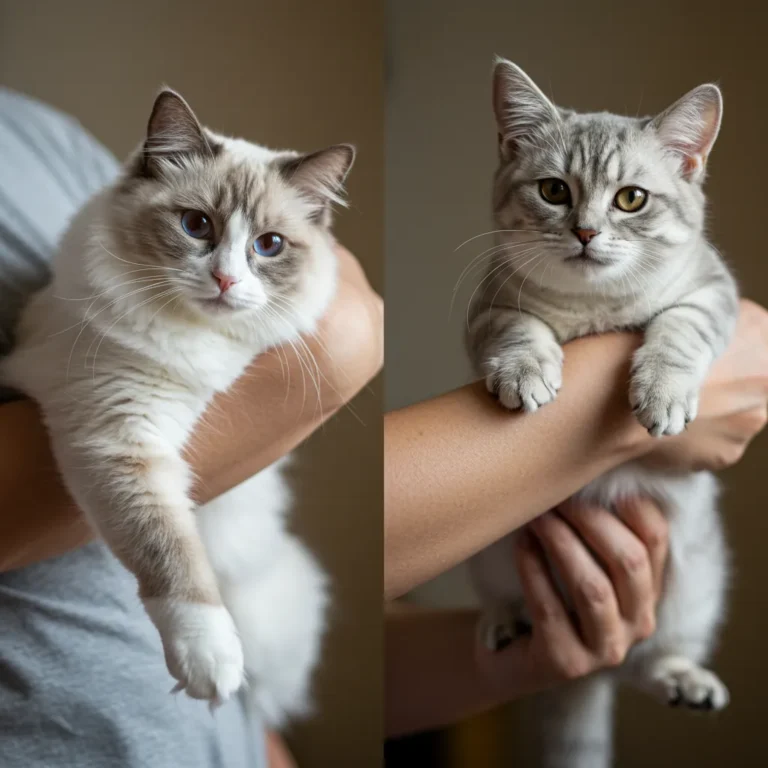
How to Get Your Cat to Cuddle (When They Currently Hate Being Held)
Not all cats are natural lap cats, but almost all can become cuddlier with the right approach.
Proven 5-Week Protocol
Week 1-2: Respect the “no pick-up” boundary. Use wand toys to build positive association.
Week 3: Start “lap invitations” – sit still with treats on your lap, let them choose to jump up.
Week 4: Gentle chin scratches only when they initiate contact.
Week 5: Slowly introduce short lifts (3-5 seconds) followed by jackpot treats.
Breeds that rarely become lap cats: Bengal, Abyssinian, Siamese (unless raised with constant handling). Breeds that usually melt: Ragdoll, Maine Coon, Persian, Scottish Fold.

How Long Does It Take for Cat Fur to Grow Back?
Timeline after shaving or surgery:
- 4-6 weeks: Guard hairs start
- 8-12 weeks: 70 % regrowth
- 3-6 months: Full coat (long-haired breeds take longer)
Speed tips: High-protein diet, omega-3 supplements (vet-approved), regular brushing to stimulate follicles, stress reduction.
FAQ Your Top “Cat Won’t Leave Me Alone” Questions Answered
Q: Is it normal for my cat to follow me into the bathroom every single time?
A: Yes. You’re vulnerable (sitting still), the room smells strongly of you, and there’s running water. It’s peak bonding territory.
Q: My cat only became clingy after I got home from hospital. Will it stop?
A: Usually yes, within 2-4 weeks as your scent and routine normalize. Keep play sessions consistent.
Q: Why does my cat lick my beard but not my arms or hands?
A: Beard traps food smells, sweat, and has coarse texture similar to another cat’s fur – perfect grooming target.
Q: Should I be worried if my cat sleeps pressed against me every night?
A: No. It’s the ultimate trust signal. Cats only sleep deeply when they feel 100 % safe.
Q: How do I set boundaries without hurting feelings?
A: Provide acceptable alternatives (heated bed, cardboard box with your worn shirt) and reward calm independent behavior.
Final Thoughts
Your cat’s constant presence isn’t them being “needy” it’s the highest form of feline love language. They’ve chosen you as their safe person, their hunting partner, their warmth source, and their entire world. Once you understand the why behind each quirky behavior, it stops feeling like clinginess and starts feeling like the profound privilege it actually is.
Want to dive deeper into any of these behaviors or breed-specific quirks? Explore hundreds of expert guides, memes, and care tips at Cat Bloom Haven.
→ Start here: American Shorthair Personality | Bengal Cat Behavior | Ragdoll Cuddling Guide | Why Cats Love Boxes (Yes, Really)
You’ve got this – and your cat definitely thinks you’re worth following around all day.